The Atol amphibian flew for the first time in Rovaniemi, Finland on August 23, 1988.
The first prototype was destroyed in a storm in the fall of 1989 but, with insurance indemnity and by using the first prototype’s front fuselage and wings, the second prototype was built. The second prototype made its first flight in Norvajärvi on October 12, 1990. Martekno Finland Ltd delivered assembly kits for five airplanes.
In 1993 Atol Avion Ltd was established, and the company acquired Martekno Finland Ltd’s bankruptcy estate.
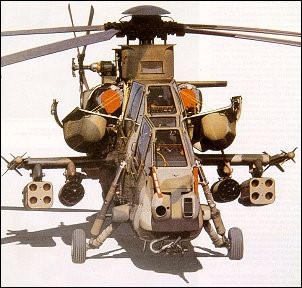
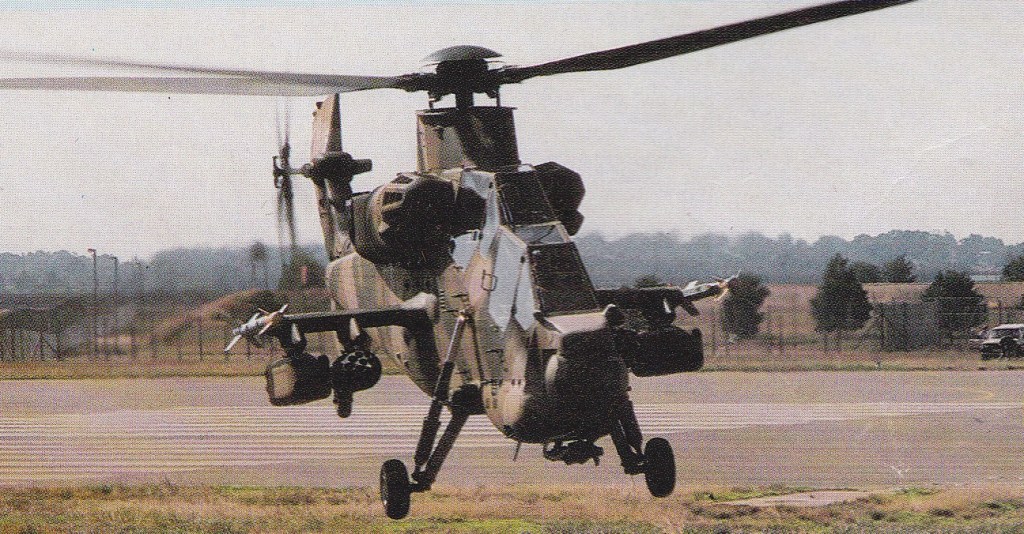
Born out of the South African Air Force’s need for an escort and close air support helicopter, the Rooivalk programme was initiated in the early 1980s by Atlas Aviation. The Alpha XH-1 was purely a test-bed for weapon and cockpit systems. It was fitted with a GA-1 Rattler 20mm cannon in a steerable turret, linked to a Kukri helmet-mounted sight. Following on from the Alpha XH-1 research, Denel comimssioned two Puma helicopters to develop the systems required for the Rooivalk. During 1987, the first of two XTP-1 Puma-based test-beds were built and used to evaluate engines, avionics, optronics, weapons and associated control systems for the larger airframe. These test-beds also included the use of locally-produced composite materials used in both airframe and rotor systems. Puma J1 first flew in 1986 and was the primary avionics, weapons and flight control systems’ test bed.
A highly modified version of the Aérospatiale SA.330 Puma, the XTP-1 has been under development since 1981, and a prototype was revealed in May 1987. Principal upgrades include the installation of an under-fuselage GA-1 20mm cannon turret with a helmet-mounted sight for the gunner and internal ammunition storage, two large stub wings with a total of four pylons for rocket pods, and a redesigned tail unit with a ventral fin and modified horizontal stabiliser.
Puma J2 flew shortly afterwards, its primary task being to develop the weapons systems and integrate them with the aircraft and the other on hoard systems. Concurrently two missile tests were conducted: the first studied the effect of missile blast on the tail boom and the other studied the accuracy of the weapons and associated systems.
The first Rooivalk prototype was unveiled in January 1990 and the second prototype, or advanced design model, flew for the first time in May 1992. It differed from the original experimental design model in having the production 1553B databus and full anti-armour mission equipment fitted. It was also armed with the 20mm cannon fitted in a TC-20 chin turret.
From the J model Pumas the Rooivalk started to take shape in the form of the initial experimental development model (XDM). XDM first flew on 11 February 1990 and began testing aircraft dynamics before progressing on to validate mechanical, aerodynamic and structural design, moving through to expand the flight envelope. It is fitted with an articulated rotor head which allows it to loop, giving it that per¬formance edge over an adversary. Denel also claims that the maximum speed was taken out of the design envelope allowing 196kt in forward flight.
The Rooivalk’s fuselage is mostly metal but with some composites. It has stepped tandem cockpits, with the pilot in the rear and the co-pilot/gunner in the front. The cockpit canopies are formed from flat plate on single curvature sheets to minimise glint from the sun. The twin Topaz turboshaft engines are uprated versions of the Turbomeca Turmo IV and the main rotor is similar to that fitted to the Aerospatiale Puma. An automatic flight control system is fitted, with auto-hover and auto-land. The Rooivalk is designed to operate at low level (under 15m) and at high speeds.
This tandem-seat helicopter is based around a Puma transmission and dynamics and has been built using composite materials. Powered by two Turbomeca Makila turboshafts developing 1175kW it has an all-up-weight of 3245kg. The helicopter can be armed with an assortment of weapons and is capable of operating day or night. Weapons include: 20mm cannon fitted in a TC-20 chin turret or larger DEFA 30mm cannon in a TC-30 chin turret, 2 x 18-tube rocket pods, 2 box launchers for 4 laser beam-riding ZT-35 anti-tank guided missiles, 2 Kukri or Darter Infra-Red homing air-to-air missiles.
The South African Air Force purchased four Rooivalk CHS-2s in 1993 and intend to eventually operate a Squadron of at least 16 Rooivalks. The Rooivalk entered service in late 1996.The Rooivalk was also offered to the British Army to fulfil their Attack Helicopter requirement.
By 1999 was called the Red Hawk.
CSH-2 Engine: 2 x Turbomeca Makila 1A2, 1470kW. Instant pwr: 1492 kW. Rotor dia: 15.58 m. Length with rotors turning: 18.73m Fuselage length: 16.4m Height: 4.59m Empty weight: 5910kg MTOW: 8750 kg. Payload: 2030 kg. Max speed: 167 kt / 309km/h Max cruise: 150 kt / 278km/h Max range (internal fuel): 700 km. Range with max fuel: 705km Range MTOW with external fuel: 1260km Service ceiling: 6100m HIGE: 18,200 ft. HOGE: 16,500 ft / 5545m Crew: 2
Engine: 2 x Topaz (Turboméca Makila 1K2), 1794 shp Rotor diameter: 51.115 ft / 15.58 m Length: 54.626 ft / 16.65 m Height: 17.028 ft / 5.19 m Max take off weight: 19293.8 lb / 8750.0 kg Weight empty: 13031.6 lb / 5910.0 kg Max. speed: 167 kt / 309 km/h Cruising speed: 150 kt / 278 km/h Initial climb rate: 2198.82 ft/min / 11.17 m/s Service ceiling: 16503 ft / 5030 m Maximum range: 680 nm / 1260 km Range: 378 nm / 700 km Endurance: 4 h Crew: 2 Armament: 1x MG 20mm, 8-16 Miss. ext., 4x A/A Miss. V3B Kukri, max. 2030kg
The Atlas Cheetah came about through a need by the South African Air Force to update / replace its series of aging fighters while its bordering neighbors were receiving updated Soviet Bloc aircraft. Embargos limited the options available and the decision was made to modify existing SAAF Mirage III’s to a new standard.
It is believed that Atlas received some level of assistance from IAI of Israel. This brought the South African Mirage III to a new standard, implementing various proven Israeli avionics and computer systems and to the airframe, canards.
Though retaining roughly 50 percent of the existing Mirage III airframe, the Cheetah was basically an all-new aircraft. The aircraft would appear in a few variants including single-seat and twin-seat derivatives. A static inflight refueling probe was added and additional underfuselage hardpoints (wingtip hardpoints were trialed successfully for the Mirage IIIR2Z which would have become the “Cheetah R” dedicated reconnaissance platform but these never put into production). More powerful engines were also added.
Armament was centered around twin 30mm DEFA cannons and air-to-air and air-to-surface munitions of various types. The definitive Cheetah would become the single seat “Cheetah C”.
The first Cheetah conversion was revealed in July 1986, and resembles the IAI Kfir in appearance, although Atlas denies any overseas assistance with the programme. Intake mounted canards and dog-tooth leading edges are among a number of structural modifications which, together with upgraded flight systems, significantly improve the aircraft’s manceuvring performance.
Mirage 3/5/50, some having been upgraded to Cheetah standard. There are about 16 Cheetah-E conversions (all out of service); 38 Cheetah-C conversions; 16 Cheetah-D conversions; and one Cheetah-R conversion.
The Cheetah is set to be replaced in the South African Air Force beginning with the arrival of the Saab JAS J39 Gripen, of which an initial batch were ordered in 1999.
Atlas Cheetah EZ Engine: 1 x SNECMA Atar 9C turbojet, 13,670lbs thrust with afterburner. Length: 50.85ft (15.5m) Wingspan: 26.97ft (8.22m) Height: 14.76ft (4.50m) Empty Weight: 14,568lbs (6,608kg) Maximum Take-Off Weight: 30,203lbs (13,700kg) Maximum Speed: 1,453mph (2,338kmh; 1,262kts) Maximum Range: 746miles (1,200km) Rate-of-Climb: 8,666ft/min (2,641m/min) Service Ceiling: 55,774ft (17,000m) Armament: 2 x 30mm DEFA 552 cannons Hardpoints: 7 Crew: 1
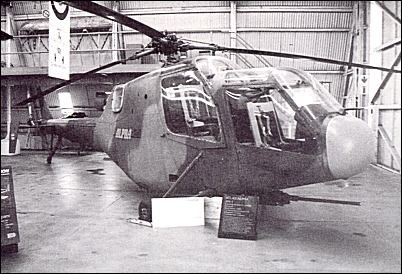
Relying on their own resources, due to trade embargoes with South Africa, Atlas Aviation produced an experimental tandem-seat attack helicopter. Based on the Aérospatiale Alouette III, the Alpha XH-1 tandem-seat attack helicopter was developed under a Government design and manufacture contract signed in 1981.
The Alpha XH-1 was purely a test-bed for weapon and cockpit systems. It was fitted with a GA-1 Rattler 20mm cannon in a steerable turret, linked to a Kukri helmet-mounted sight. During 1987, the first of two XTP-1 Puma-based test-beds were built and used to evaluate engines, avionics, optronics, weapons and associated control systems for the larger airframe. These test-beds also included the use of locally-produced composite materials used in both airframe and rotor systems.
The XH-1 first flew on February 3, 1985. Engine and transmission systems are from the Alouette III, but apart from the tail boom the airframe is a completely new design. Stub wings for weapons carriage were a projected development, while the gun turret is able to accept an alternative arrangement of four 7.62mm machine guns.
Registered as a private company at Kempton Park, Transvaal, in 1964 to establish an aircraft industry in South Africa, jointly with the Industrial Development Corporation. Completed manufacture of Impala (M.B.326M) under Aermacchi license. Developed C4M Kudu utility STOL light transport, first flown February 1974. First flew in 1986 its Cheetah multirole fighter, fighter-bomber, and reconnaissance aircraft conversion of the Mirage III for the SAAF, allowing initial operational capability in 1987. ACE all-composite turboprop trainer first flew April 1991 but later canceled. Developed Rooivalk attack helicopter, Puma gunship, and Oryx. Company also held marketing rights for several foreign aircraft and undertook extensive maintenance and overhaul work for SAAF. Merged with Simera in April 1996 under new Denel Aviation name, having been a division of Denel (Pty) Ltd. within the latter’s Aerospace Group. 1995: A division of Denel (Pty) Ltd, PO Box 11, Atlas Rd, Kempton Park 1620, South Africa. Earlier Denel (Pty.) Ltd. encompassed Atlas Aviation and Simera as divisions of its Aerospace Group. Took the Denel name in April 1996 after merging Atlas and Simera, with new subdivisions created as Tactical Aircraft Support, Transport Aircraft Support, Aircraft Manufacturing and Airmotive. Cooperating with DaimlerChrysler of Germany on AT-2000 Mako program. Cooperates with Aerospatiale of France on aircraft and missiles. Full range of maintenance, repair, and modification facilities, plus component manufacturing. Continuing programs of former Atlas include Cheetah C and D fighter conversion of Mirage III, development and production of AH-2A Rooivalk antiarmour/ attack helicopter (first flown February 1990 and for delivery from 1999), development of the Cirstel (Combined Infra-Red Suppression and Tail rotor Elimination system) tail-rotorless conversion of an Alouette helicopter as a technology demonstrator (first flown 1998), development and production of a variant of the SA 330 Puma helicopter as the Oryx, and development of a modular weapon suite for the Puma helicopter to convert it into a gunship.
The Pegastol is effectively a Zenair CH 701 STOL improved by fitting a longer wing equipped with auto-retracting leading edge slats and new flaperons. The lift coefficient measures 3.6.
Engine: Rotax 503, 52 hp Empty weight: 225 kg Wing span: 8.85 m Wing area: 13 sq.m Fuel capacity: 50 lt Certification: Canada MAUW: 453 kg Seats: 2 Max speed: 160 kph Cruise speed: 148 kph Minimum speed: 32 kph Climb rate: 4.4 m/s Price (1998): Can$6500 wing only