Designed by Jean-Rene Lapage, the Canadian designed and built Club first flew in May 1985 and has since entered production at around six a month. The de luxe version of the Club is powered by a HAPI Magnum 75 hp engine.
The Pelican ‘Club’ GS has a composite fuselage has two undercarriage positions moulded in and it is possible to change from tricycle to taildragger configuration in about one hour. This arrangement also makes it easy to fit floats. Dual controls are standard and differential brakes can be fitted. The wings, tailplane and rudder can be demounted in about half an hour so that you can take the ‘Club’ home and hangar it in the lounge.
The fully comprehensive airframe kit contains a 350 page instruction manual, composite fuselage halves factory joined, wing ‘D’ cells factory jigged and all components to complete aircraft to painting stage. Approximate time required is 200 to 250 hours.
The Club VS can be up-graded to S or GS version
The Pelican Sport 450 is a two place single-engine, high wing airplane of conventional configuration consisting of a composite fuselage and metal wings. It is equipped with a fixed tricycle landing gear.
Pelican 450 Engine: Rotax 912, 80 hp Wing span: 10 m Wing area: 11.16 sq.m MAUW: 450 kg Empty weight: 280 kg Fuel capacity: 57 lt Max speed: 254 kph Cruise speed: 195 kph Minimum speed: 65 kph Climb rate: 6 m/s Fuel consumption: 11.3 lt/hr Certification: Canada Seats: 2 Price (1998): $49,995 Kit price (1998): $16,450
Pelican Club GS Engine: Rotax 582, 65 hp Height: 7.6 ft Length: 19.5 ft Wing Span: 34.4 ft Wing Area: 158 sq. ft Empty Weight: 500 lbs Gross Weight: 1050 lbs Fuel Capacity: 22 US gal Top Speed: 115 mph Cruise: 100 mph Range: 500 sm Stall: 33 mph Rate of Climb: 800 fpm Take Off Distance: 300 ft Landing Distance: 425 ft Service Ceiling: 15,000 ft Seats: 2 Landing Gear type: Trigear or Taildragger Kit Cost 2009: $12,500 US
Club GS 912 Engine: Rotax 912, 80 hp MAUW: 1200 lb
Pelican PL Engine: Rotax 912, 80 hp Height: 8.1 ft Length: 19.8 ft Wing Span: 29.5 ft Wing Area: 108 sq. ft Aspect Ratio: 8 Cabin Width: 40 – 46in Headroom: 41 in Seats: 2 Landing Gear: Trigear or Taildragger G Loading: +4, -2 Empty Weight: 750 lbs Gross Weight: 1400 lbs Baggage Capacity: 75 lbs Fuel Capacity: 26 US gal Top Speed: 142 mph 75% Cruise: 115 mph 65% Cruise: 110 mph at 6500 ft Range: 920 sm Stall: 37 mph Rate of Climb: 1000 fpm Take Off Distance: 650 ft Landing Distance: 550 ft Service Ceiling: 16,000 ft Kit Cost 2009: $16,000 US
Pelican PL Engine: Rotax 914, 115 hp Height: 8.1 ft Length: 19.8 ft Wing Span: 29.5 ft Wing Area: 108 sq. ft Aspect Ratio: 8 Cabin Width: 40 – 46in Headroom: 41 in Seats: 2 Landing Gear: Trigear or Taildragger G Loading: +4, -2 Empty Weight: 800 lbs Gross Weight: 1400 lbs Baggage Capacity: 75 lbs Fuel Capacity: 26 US gal Top Speed: 142 mph 75% Cruise: 140 mph 65% Cruise: 130 mph at 12500 ft Range: 920 sm Stall: 38 mph Rate of Climb: 1800 fpm Take Off Distance: 400 ft Landing Distance: 500 ft Service Ceiling: 20,000 ft Kit Cost 2009: $16,000 US
Pelican PL Engine: Rotax Wing span: 9 m Wing area: 9.94 sq.m MAUW: 635 kg Empty weight: 340 kg Fuel capacity: 98 lt Max speed: 241 kph Cruise speed: 233 kph Minimum speed: 71 kph Climb rate: 9 m/s Seats: 2 Kit price (1998): $16,600
Club S Engine: Rotax 582, 65 hp Speed max: 115 mph Cruise: 100 mph Range: 500 sm Stall: 33 mph ROC: 800 fpm Take-off dist: 300 ft Landing dist: 425 ft Service ceiling: 15,000 ft Fuel cap: 22 USG Weight empty: 500 lbs Gross: 1050 lbs Height: 7.6 ft Length: 19.5 ft Wing span: 34.4 ft Wing area: 158 sq.ft Seats: 2 Landing gear: nose or tail wheel
Club VS Engine: Rotax 503, 52 hp Speed max: 100 mph Cruise: 80 mph Range: 290 sm Stall: 35 mph ROC: 600 fpm Take-off dist: 300 ft Landing dist: 500 ft Service ceiling: 13,000 ft Fuel cap: 11 USG Weight empty: 450 lb Gross: 950 lb Height: 7.6 ft Length: 19.5 ft Wing span: 34.4 ft Wing area: 158 sq.ft Seats: 2 Landing gear: tail wheel
Pelican Sport 450 S Stall: 34 kt / 39 mph / 63 kmh Cruise: 111 kt / 127 mph / 205 kmh VNE: 123 kt / 142 mph / 228 kmh Empty Weight: 280 kg / 617 lbs MTOW Weight: 523 kg / 1153 lbs Climb Ratio: 1400 ft/min / 7,6 m/s Take-off distance (50ft obstacle): 490 ft / 150 m
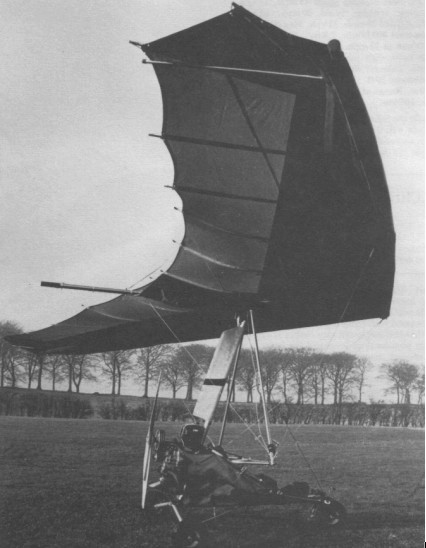
The Ultrasports/ Southdown Sailwings Puma 330 is a weight shift tandem two seat single engined flex wing aircraft with weight shift control. Rogallo wing with fin. Pilot suspended below wing in trike unit, using bar to control pitch and yaw/roll by altering relative positions of trike unit and wing. Wing braced from above by kingpost and cables, from below by cables; floating cross tube construction with >75% double surface enclosing cross tube; preformed ribs. Undercarriage has three wheels in tricycle formation; no suspension on any wheels. Push right go left nosewheel steering independent from yaw control. No brakes. Aluminium tube trike unit, without pod. Engine mounted below wing driving pusher propeller. Aluminium tubing to British HT30TT specification, anodised. Wing fittings made from stainless steel. Wing fabric Dacron.
The Puma in both 330 and 440 forms was obsolete by 1982. Consisting of an Ultrasports two-seat trike unit and the Lightning DS wing of Southdown Sailwings, the Puma was introduced early in 1982 and was by no means the first two seat trike. It was, however, the first to use a floating cross tube double surface wing and quickly became known for its vice free handling, good performance and reliability.
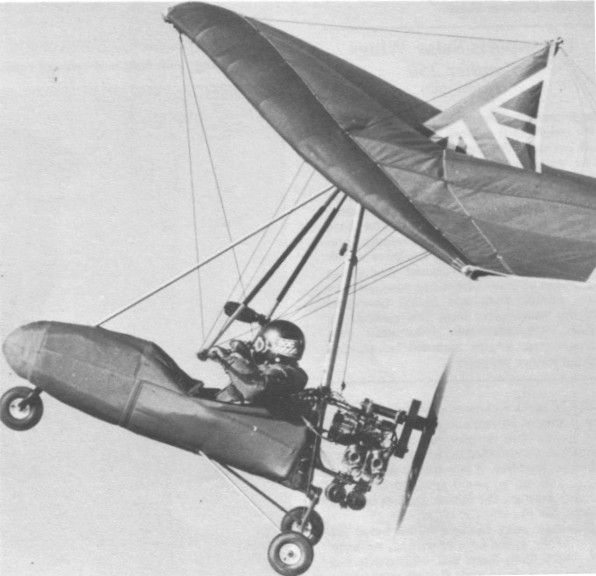
The Ultrasports/Southdown Sailwings RB1/Lightning DS is a single seat single engined flex wing aircraft with weight shift control. Rogallo wing with fin. Pilot suspended below wing in trike unit, using bar to control pitch and yaw/roll by altering relative positions of trike unit and wing. Wing braced from above by kingpost and cables, from below by cables; floating cross tube construction with > 75 % double surface enclosing cross tube; preformed ribs. Undercarriage has three wheels in tricycle formation; optional steel spring suspension on nosewheel and no suspension on main wheels. Push right go left nosewheel steering independent from yaw control. No brakes. Aluminium tube trike unit, with optional pod. Engine mounted below wing driving pusher propeller. Trike unit has pod.
The RB1/Lightning DS was constructed specially for an attempt on the world microlight altitude record, it consists of a specially lightened Tripacer trike unit with a big Southdown Sailwings Lightning DS wing, more usually found on two seaters.
The engine, an experimental unit from British Robin importer Nicklow Engineering, consisted basically of two Robin 250 cc barrels on a 440cc crankcase, giving the benefit of 488cc without expensive machining. To in-crease the power still further, the cooling fan is removed, the engine relying on free air cooling.
Even in its original form the trike did the job it was designed to do, taking Bob Calvert to a new world record of 19,250ft (5900m) off the Lan¬cashire coast on 19 February 1983 and breaking by over 3000 ft (900 m) Bob’s own record set a year earlier in a Mainair Tri Flyer 330.
Engine: Robin EC488PM, 65 hp at 6500 rpm Prop¬eller diameter and pitch 60x30ft, 1.52×0.76m Toothed belt reduction, ratio 2.8/1 Max static thrust 350 lb, 159 kg Power per unit area 0.33 hp/sq.ft, 3.6 hp/sq.m Fuel capacity 4.8 US gal, 4.0 Imp gal, 18.2 litre Wing span 32.0ft, 9.75m Chord at root 8.0ft, 2.44m Chord at tip 3.0ft, 0.91m Dihedral 0 deg Sweepback 30 deg Total wing area 175 sq.ft, 16.3 sq.m Wing aspect ratio 5.8/1 Height overall 11.0 ft, 3.35 m Empty weight 231 lb, 105kg Max take off weight 531 lb, 241kg Payload 300 lb, 136kg Max wing loading 2.72 lb/sq.ft, 13.3 kg/sq.m Max power loading 8.2 lb/hp, 3.7kg/hp Load factors +4.0, 2.0 design; +6.0, 3.0 ulti¬mate Never exceed speed 65mph, 105kph Max cruising speed 50 mph, 80 kph Economic cruising speed 40 mph, 64 kph Stalling speed 28 mph, 45 kph Max climb rate at sea level 1700 ft/min, 8.6 m/s Min sink rate 300 ft/min at 32 mph, 1.5 m/s at 51 kph Best glide ratio with power off 6/1 at 35 mph, 56 kph Take off distance 30ft, 10 m Landing distance 40ft, 12 m Range at average cruising speed 345 mile, 555 km
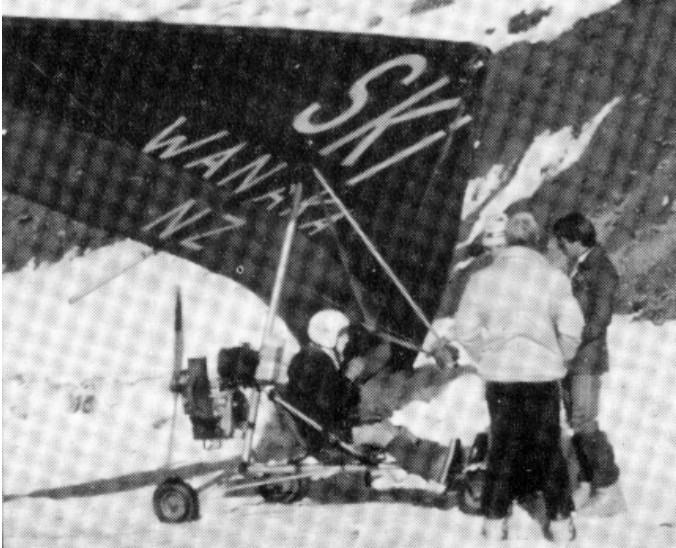
The Ultrasports/Solar Wings Panther 250 is a single seat single engined flex wing aircraft with weight shift control. Rogallo wing with keel pocket. Pilot suspended below wing in trike unit, using bar to control pitch and yaw/roll by altering relative positions of trike unit and wing. Wing braced from above by kingpost and cables, from below by cables; floating cross tube construction with 80% double surface enclosing cross tube; preformed ribs. Undercarriage has three wheels in tricycle formation; optional steel spring suspension on nosewheel and no suspension on main wheels. Push right go left nosewheel steering independent from yaw control. No brakes. Aluminium tube trike unit, with optional pod. Engine mounted below wing driving pusher propeller.
Ultrasports’ Tripacer trike unit is a simple mono pole design and can be found attached to a wide variety of wings, the Hiway Demon being a particularly popular choice. Ultrasports teamed up with British hang glider manufacturer, Solar Wings, to market its trike units as complete aircraft under the name Panther.
The cheapest Panther is the 250, which consists of a combination of the Tripacer 250 trike unit and Typhoon S wing. The trike unit has been updated for its new role by the addition of optional front suspension, and if required can still be bought without wing, either complete or as a kit. Power comes from a single cylinder Robin engine of 250 cc, driving through V belts. At one time all Ultrasports trike units used V belt transmission, but by 1982 all but the 250 have been engineered for toothed belts.
A glass fibre and nylon pod is optional.
The Ultrasports/Solar Wings Panther 330 is a weight shift single seat single engined flex wing aircraft with weight shift control. Rogallo wing with keel pocket. Pilot suspended below wing in trike unit, using bar to control pitch and yaw/roll by altering relative positions of trike unit and wing. Wing braced from above by kingpost and cables, from below by cables; floating cross tube construction with 80% double surface enclosing cross tube; preformed ribs. Undercarriage has three wheels in tricycle formation; standard steel spring suspension on nosewheel and no suspension on main wheels. Push right go left nosewheel steering independent from yaw control. No brakes. Aluminium tube trike unit, with optional pod. Engine mounted below wing driving pusher propeller.
The Panther 330 was Ultrasports’ main single seater. Although structurally similar to the Panther 250, the twin cylinder model has been considerably updated for 1983. Not only does it include as standard the trailing link and coil spring front suspension which is optional on the 250, but a new engine mounting system has been devised, placing the Robin ‘right way up’ and thus giving much more clearance between propeller and ground. It also eliminates plug fouling when the aircraft is left standing. A further change is the use of a stronger rear axle, of 11/8 inch (29min) diameter.
Like the Panther 250, the Panther 330 is sold as a complete aircraft and uses the Typhoon S wing. However, it too can be bought without wing if desired, in which case the trike unit reverts to its original name of Tripacer 330. A pod is optional.
The Ultrasports/Solar Wings Panther Dual 330 is a weight shift tandem two seat single engined flex wing aircraft with weight shift control. Rogallo wing with keel pocket. Pilot suspended below wing in trike unit, using bar to control pitch and yaw/roll by altering relative positions of trike unit and wing. Wing braced from above by kingpost and cables, from below by cables; floating cross tube construction with 50% double surface enclosing cross tube; preformed ribs. Undercarriage has three wheels in tricycle formation; steel spring suspension on nosewheel and no suspension on main wheels. Push right go left nosewheel steering independent from yaw control. No brakes. Aluminium tube trike unit, with optional pod. Engine mounted below wing driving pusher propeller.
The Panther Dual is Ultrasports’ replacement for the Puma. As with the single seat Panthers, the Panther Dual in both 330 and 440 forms uses a Rogallo from Solar Wings, in this case the Typhoon XL model. The change from a Southdown wing, is not, however, likely to radically alter the flying characteristics of the aircraft, as the wing areas are identical and both are concealed floating cross tube designs. The Typhoon XL is a little heavier (122 lb, 55 kg against 106 lb, 48 kg) and has less double surface and a conventional keel pocket rather than a fin. With British airworthiness regulations in mind, the XL has been static tested to 1.85 Imp ton (2.07 US ton, 1.88 tonne), a load which produced no permanent deformation of the structure.
The trike unit is similar to that used for the Puma but has been updated in a parallel fashion to the single seater, with front sus¬pension by trailing link and coil spring and an engine mounting ‘right way up’. Toothed belt transmission is standard. A pod is optional.
The Ultrasports/Solar Wings Panther Dual 440 is a weight shift single seat single engined flex wing aircraft with weight shift control. Rogallo wing with keel pocket. Pilot suspended below wing in trike unit, using bar to control pitch and yaw/roll by altering relative positions of trike unit and wing. Wing braced from above by kingpost and cables, from below by cables; floating cross tube construction with 80% double surface enclosing cross tube; preformed ribs. Undercarriage has three wheels in tricycle formation; standard steel spring suspension on nosewheel and no suspension on main wheels. Push right go left nosewheel steering independent from yaw control. No brakes. Aluminium tube trike unit, with optional pod. Engine mounted below wing driving pusher propeller.
Panther 250 Engine: Robin EC25PS, 18 hp at 6500 rpm Propeller diameter and pitch 54 x 27 inch, 1.37 x 0.69 m V belt reduction, ratio 2.3/1 Max static thrust 150 lb, 68 kg Power per unit area 0.10 hp/sq.ft, 1.1 hp/sq.m Fuel capacity 2.6 US gal, 2.2 Imp gal, 10.0 litre Length overall 12.0 ft, 3.66 m Height overall 10.0ft, 3.05m Wing span 32.0ft, 9.75m Chord at root 8.0ft, 2.44m Chord at tip 3.0ft, 0.91m Dihedral 0 deg Sweepback 30 deg Total wing area 175 sq.ft, 16.3 sq.m Wing aspect ratio 5.8/1 Wheel track 5.0 ft, 1.52 m Wheel. base 6.0 ft, 1.83 m Nosewheel diameter overall 12 inch, 30 cm Main wheels diameter overall 12 inch, 30 cm Empty weight 180 lb, 82kg Max take off weight 380 lb, 172kg Payload 200 lb, 91kg Max wing loading 2.17 lb/sq.ft, 10.6 kg/sq.m Max power loading 21.1 lb/hp, 9.6kg/hp Load factors +6.5, 4.5 design Max level speed 50mph, 80kph Never exceed speed 60mph, 97kph Max cruising speed 45mph, 72kph Economic cruising speed 40mph, 64kph Stalling speed 20 mph, 32 kph Max climb rate at sea level 400 ft/min, 2.0 m/s Min sink rate 275 ft/min at 25 mph, 1.4 m/s at 40 kph Best glide ratio with power off 5/1 at 30 mph, 48 kph Take off distance 100 ft, 30 m Land¬ing distance 50 ft, 15 m Service ceiling 7000 ft, 2130 m Range at average cruising speed 115 mile, 185 km
Panther 330 Engine: Robin EC34PM, 32 hp at 6500 rpm Propeller diameter and pitch 54x30inch, 1.37×0.76m Toothed belt reduction, ratio 2.5/1 Max static thrust 225 lb, 102kg Power per unit area 0.18hp/sq.ft, 2.0hp/sq.m Fuel capacity 2.6 US gal, 2.2 Imp gal, 10.0 litre Length overall 12.0 ft, 3.66 m Height overall 10.0ft, 3.05m Wing span 32.0ft, 9.75m Chord at root 8.0ft, 2.44m Chord at tip 3.0ft, 0.91m Dihedral 0 deg Sweepback 30 deg Total wing area 175 sq.ft, 16.3 sq.m Wing aspect ratio 5.8/1 Wheel track 5.0 ft, 1.52 m Wheel. base 6.0 ft, 1.83 m Nosewheel diameter overall 12 inch, 30 cm Main wheels diameter overall 12 inch, 30 cm Empty weight 202 lb, 92kg Max take off weight 444 lb, 201kg Payload 242 lb, 110kg Max wing loading 2.541b/sq.ft, 12.3 kg/sq.m Max power loading 13.9 lb/hp, 6.3kg/hp Load factors +6.5, 4.5 design Max level speed 55 mph, 88 kph Never exceed speed 65 mph, 105 kph Max cruising speed 45 mph, 72 kph Economic cruising speed 38 mph, 61 kph Stalling speed 22 mph, 35 kph Max climb rate at sea level 700 ft/min, 3.6 m/s Min sink rate 350 ft/min at 28 mph, 1.8 m/s at 45 kph Best glide ratio with power off 5/1 at 30 mph, 48 kph Take off distance 75 ft, 23 m Landing distance 50 ft, 15 m Service ceiling 12,000 ft, 3660 m Range at average cruising speed 115 mile, 185 km
Panther Dual 330 Engine: Robin EC34PM, 32 hp at 6500 rpm Propeller diameter and pitch 54x30inch, 1.37×0.76m V belt reduction, ratio 2.5/1 Max static thrust 225 lb, 102kg Power per unit area 0.16hp/sq.ft, 1.8hp/sq.m Length overall 13.0 ft, 3.96 m Height overall 11.0ft, 3.35m Wing span 34.0ft, 10.36m Chord at root 10.0ft, 3.05m Chord at tip 3.5ft, 1.07m Dihedral 0 deg Sweepback 30 deg Total wing area 195 sq.ft, 18.1 sq.m Wing aspect. ratio 5.6/1 Wheel track 5.0 ft, 1.52 m Wheelbase 6.0ft, 1.83 m Nosewheel diameter overall 14 inch, 36 cm Main wheels diameter overall 14 inch, 36 cm Empty weight 280 lb, 127kg Max take off weight 634 lb, 288kg Payload 354 lb, 161kg Max wing loading 3.25 lb/sq.ft, 15.9 kg/sq.m Max power loading 19.8 lb/hp, 9.0kg/hp Load factors +6.5, 4.5 ultimate Max level speed 55mph, 88kph Never exceed speed 65mph, 105 kph Max cruising speed 45 mph, 72 kph Economic cruising speed 38 mph, 61 kph Stalling speed 22 mph, 35 kph Max climb rate at sea level 300 ft/min, 1.5 m/s Min sink rate 350 ft/min at 28 mph, 1.8 m/s at 45 kph Best glide ratio with power off 5/1 at 35 mph, 56 kph Take off distance 150 ft, 45 m Land¬ing distance 75ft, 23m Service ceiling 15,000ft, 4570 m Range at average cruising speed 60 mile, 97 km
Panther Dual 440 Engine: Robin EC44, 50hp at 6500rpm Propeller diameter and pitch 60 x 30 inch, 1.52 x 0.76 m Toothed belt reduction, ratio 2.8/1 Max static thrust 320 lb, 145kg Power per unit area 0.26 hp/sq.ft, 2.8hp/sq.m Fuel capacity 2.6 US gal, 2.2 Imp gal, 10.0 litre Length overall 13.0 ft, 3.96 m Height overall 11.0ft, 3.35m Wing span 34.0ft, 10.36m Chord at root 10.0ft, 3.05m Chord at tip 3.5ft, 1.07m Dihedral 0 deg Sweepback 30 deg Total wing area 195 sq.ft, 18.1 sq.m Wing aspect. ratio 5.6/1 Wheel track 5.0 ft, 1.52 m Wheel¬base 6.0ft, 1.83 m Nosewheel diameter over¬all 14 inch, 36 cm Main wheels diameter overall 14 inch, 36 cm Empty weight 292 lb, 132kg Max take off weight 730 lb, 331 kg Payload 438 lb, 199 kg Max wing loading 3.74 lb/sq.ft, 18.3 kg/sq.m Max power loading 14.6 lb/hp, 6.6 kg/hp Load factors; +6.5, 4.5 ultimate Max level speed 55mph, 88kph Never exceed speed 65mph, 105 kph Max cruising speed 45 mph, 72 kph Economic cruising speed 38 mph, 61 kph Stalling speed 22 mph, 35 kph Max climb rate at sea level 600 ft/min, 3.0 m/s Min sink rate 350 ft/min at 28 mph, 1.8 m/s at 45 kph Best glide ratio with power off 5/1 at 35 mph, 56 kph Take off distance 150 ft, 45 m Land¬ing distance 75ft, 23m Service ceiling 15,000ft, 4570 m Range at average cruising speed 50 mile, 80 km
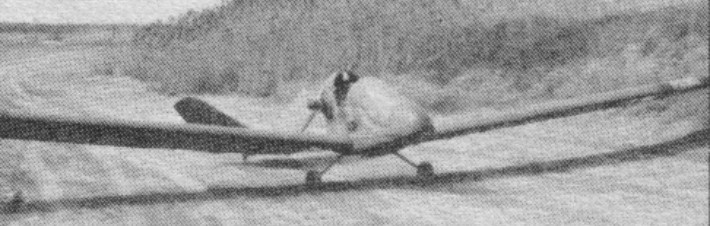
US Aviation Cloud Dancer is a single seat low wing monoplane with a V tail; power comes from a Rotax 277 engine. Centre mounted joy stick, rudder pedals, simultaneous spoilers, tail wheel steerable through rudder pedals.
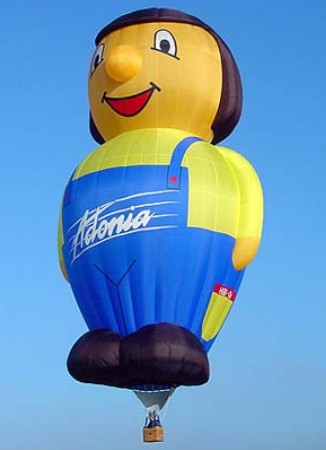
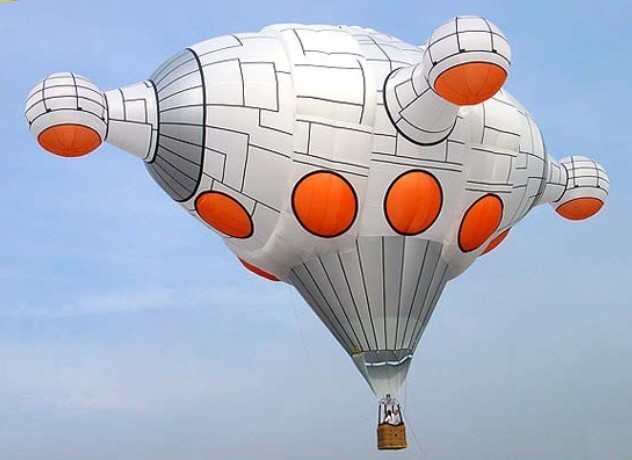
Ultramagic, as a Hot Air Balloon manufacturer, is equipped with design and engineering capabilities for Special Shape Balloons to ensure a precise replica of your product and logo.
The most spectacular way for a product to get noticed.
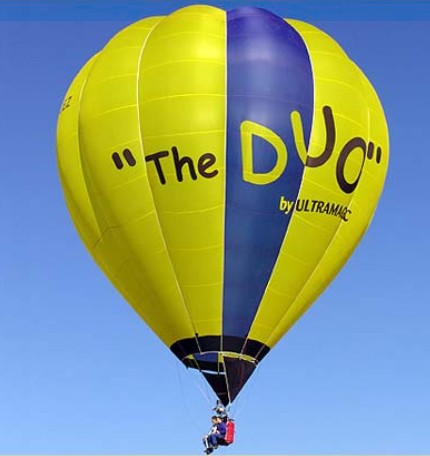
The excitement and fun of flying free under a balloon in your own separate securely fastened seat and harness for two. Following The Solo, after a long period of development and testing, Ultramagic announced the “ultimate flying machine for two” – The Duo.
Designed again with special attention to safety, security and comfort, The Duo gives you everything that you have come to expect from an Ultramagic balloon but with all the benefits of an exciting simple to operate light weight two person system.
The Duo pilot support system is constructed from an aircraft quality stainless steel frame. Designed for secure attachment of cylinders whilst maintaining easy removal for transportation or refuelling, and allows the installation of either 20kg or 30kg standard cylinders.
Fitted with two separate comfortable adjustable padded seats, footrests and a comfortable headrest, the Duo is equipped with two easy to use three-point safety harnesses with a quick release buckle.
The main frame can be folded in half and the burner frame can be easily removed for transportation and storage. The burner frame offers full gimbal of the burner in both directions to assist with that windy inflation.
The Duo burner and fuel system has dual systems with: Two separate fuel take offs with their own additional quick shut off valve at the burner. Two main burner valves. Two liquid fire valves. Two pressure gauges. Two liquid pilot lights each with its own piezo igniter system.
The Duo fuel system allows you to manage your fuel safely by having a separate mirror to view each fuel gauge. And if all of these special features are not enough you also have the option of having a hydraulic actuated valve fitted so that you can operate the burner without lifting your hand above your head at no extra charge.
The Duo is available with a choice of envelope sizes including the H42 and H56 and they come as standard in Ultralite fabric. This gives you the benefits of a high strength silicon elastomer coated fabric whilst keeping the weight down to the minimum. All Duo envelopes come with rotation vents for ease of landing whilst keeping the control lines free at all times for easy access and operation.






 All Aero