Celier Aviation is an aircraft manufacturer, founded by Raphael Celier in France in 1993. The company was moved to Piotrków Trybunalski, Poland in 2006 and Safi, Malta in 2017. The company specializes in the design and manufacture of autogyros available in kit form and also as fully assembled aircraft.
The company established its reputation with the two-seat side-by-side configuration Celier Xenon 2 series of autogyros. By 2011 over 100 of these were flying. Celier subsequently developed a tandem-seat design, the Kiss, but it was not produced in large numbers. By 2014 the company was offering only the Xenon 4, a development of the Xenon 2.
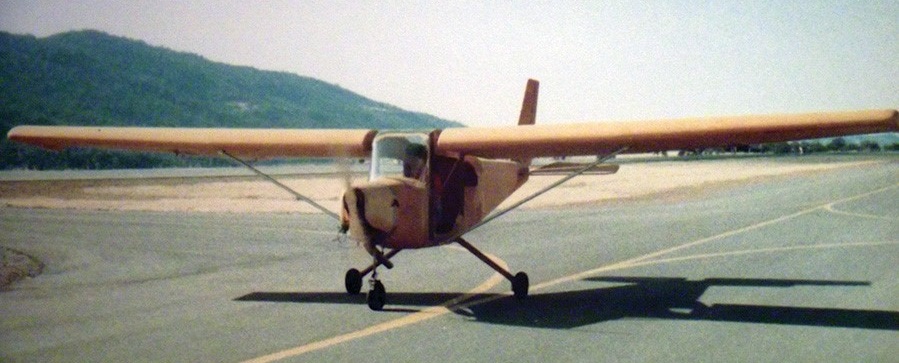
The company also developed the XeWing, a fixed wing light aircraft using the fuselage and engine of the Xenon 2, but mounting a folding strut-braced parasol wing in place of the autogyro’s main rotor. The design was shown at AERO Friedrichshafen in 2009, but was never offered for sale and it is unlikely it was ever developed beyond a single prototype.
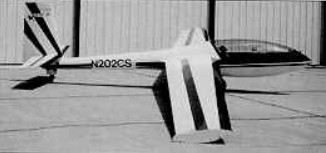
Designed by South African power aerobatics champion Peter Celliers and first flown in 1989, is a new composite aerobatic glider, the Celair Celstar GA 1, designed to JAR 22 specifications (10 g) for competition flying. The machine is stressed to +10g and 10g, with a best glide angle of 23:1. It has full span mass balanced ailerons. Airbrakes are used for approach control. The main wheel is retractable.
South Africa Developed Eagle 300 six-seat STOL cabin lightplane (first flown 1990); program later offered for sale. Also developed Celstar CG-1 composites aerobatic glider.
Originally developed by Cabrinha as the Free Spirit Mk I and first flown 1986. A composite design with forward swept wing and 2+1 seating. First flown in 1995. The kit price in 1998 was US$24,950.
Engine: Continental IO-360, 210 hp. Speed max: 265 mph. Cruise: 220 mph. Range: 1400 sm. Stall: 52 mph. ROC: 2000 fpm. Take-off dist: 600 ft. Landing dist: 750 ft. Service ceiling: 24,000 ft. Fuel cap: 52 USG. Weight empty: 1150 lbs. Gross: 2150 lbs. Height: 7.5 ft. Length: 20.6 ft. Wing span: 30.3 ft. Wing area: 85 sq.ft. Seats: 3. Landing gear: retractable nose wheel.
1995-7: 345 Woodside Way, Auburn, CA 95603, USA. Markets kits to construct the Free Spirit Mk II two-seat low-wing monoplane, originally developed by Cabrinha as the Free Spirit Mk I and first flown 1986.
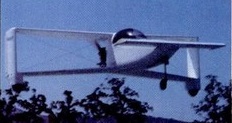
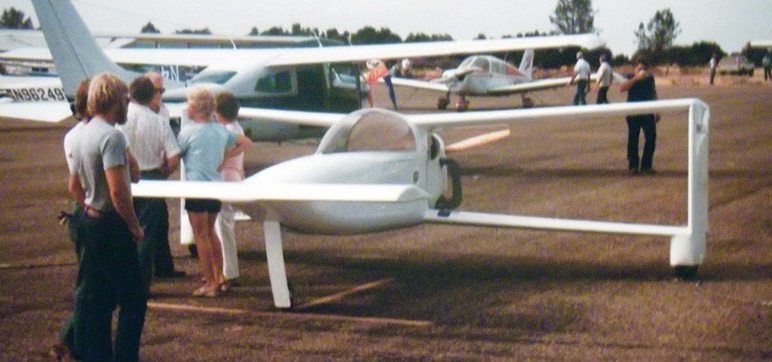
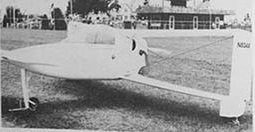
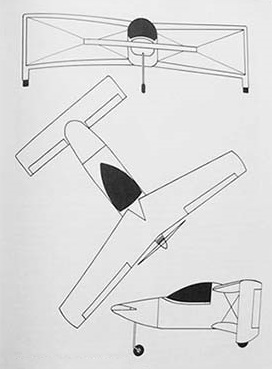
The Catto Acro-X, a pusher canard biplane, was on static display at the 1983 ARV competition in Oshkosh.
The aircraft cost about $8000 with a 50 hp engine.
Catto was forced to bail out and parachute from 500 feet when the Acro-X lost its canopy, jamming in the wing cross brace wires. He got out, and parachuted into the trees.
The cassutt 111 M Sport Racer was designed as a Formula 1 racing aircraft by Tom Cassutt, an airline pilot, built in 1954, and is mid-wing. The Cassutt is a single place, full cantilever, high performance aircraft. It is fully aerobatic and meets the specifications for competitive racing, “G” loading, safety characteristics and visibility.
The airframe is basically a welded chrome moly steel tube structure, the fin being built integral with the fuselage. Similarly, the full span ailerons, tailplane, rudder and elevators are welded steel tube and fabric covered members. The area of the cockpit is skinned with aluminium alloy sheet or molded fiberglass cowlings from the cockpit forward. A sheet metal spine decking rounds off the sharp apex of the fuselage behind the cockpit.
The wing is one piece of constant chord and incorporates 18 built up ribs spruce, 3 ply laminated main spar, solid leading edge and rear spar and covered with a 45 degree bias ply skin. Truss ribs are built of spruce with skins comprised of four sheets of 3 ply plywood. The ultimate load factor is +-12g. The undercarriage consists of a spring steel one piece main gear bolted to the fuselage with four bolts and a steerable tailwheel. A 9 Imp gallon fuel tank is located behind the firewall. Full span ailerons driven by two push rods within the fuselage. Stabilizer and elevator are one piece tube assembly. Stabilizer mounts to longeron with four bolts and elevator mounts to stabilizer with three hinges. The length, height and width of the canopy and cockpit can be altered as desired during construction as required to fit the builder.
As part of a scheme to introduce this kind of air racing in Britain, Airmark Ltd built in 1969 their first Airmark/ Cassutt 111 M. Powered by a 95 hp RollsRoyce/Continental engine it has a maximum level speed of 196 mph (315 km/h).
Powered by the Continental 0-200, 100 H.P. engine, it cruises at 185-200 MPH at approximately 6 gallons per hour.
IIIM Engine: 1 x Continental C-95, 95 hp. Wing span: 14 ft 0 in (4.54 m). Length: 16 ft 0 in (4.88 m). Height: 4 ft 3 in (1.3 m). Max TO wt: 830 lb (376 kg). Max level speed: 207 mph (333 kph).
Sport Model Engine Continental 0-200, 100 hp Wing span 17 foot Wing cord 54 inch Wing area 76.5 sq.ft Wing loading 11.1 lbs/sq ft. Fuselage length 16 feet Overall height 4 feet Cockpit length 4 ft 6 in Fuel capacity 15 USgallons Range 450 miles Empty weight 500 lbs Gross Weight 850 lbs Stall speed 65 mph Climb rate 2000 ft/min G load limit 7 G load ultimate 11 Top speed 200 mph plus Cruising speed 190 mph plus fully aerobatic.
Engine: Continental O-200 Wing span: 4.57 m Wing area: 6.28 sq.m MAUW: 400 kg Empty weight: 250 kg Fuel capacity: 53 lt Max speed: 440 kph Cruise speed: 300 kph Minimum speed: 105 kph Climb rate: 12.5 m/s Seats: 1 Plan price (1998): $125 Kit price (1998): $11,850