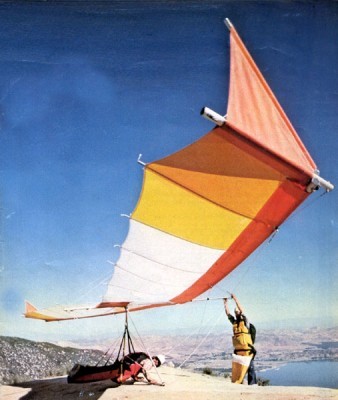
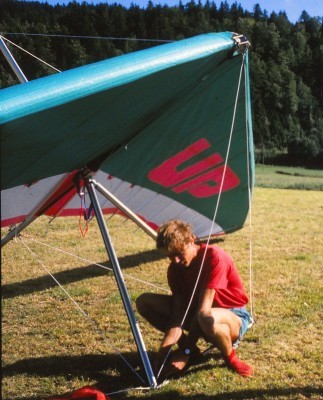
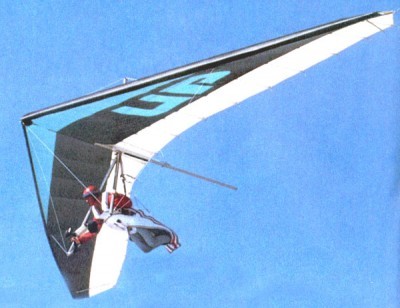
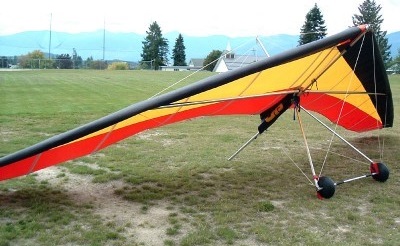
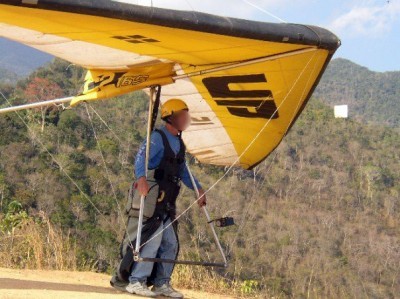
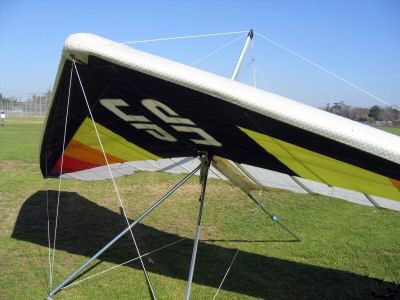
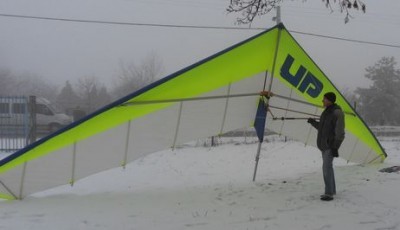
UP XTR

The 1992 XTR wing flies very slow and also flies very fast and it lands easily. The sink rate in still air is about 225 ft/min. The launch is very easy, even a 6000 ft site.

XTR 145
Wing area: 13.25 m²
Wing span: 10.4 m
Aspect ratio: 8.1
Hang glider weight: 31 kg
Minimum pilot weight: 50 kg
Maximum pilot weight: 80 kg
Packed length: 5.8 m
Packed length short: 3.7 m
Number of battens: 23
Nose angle: 127°

UP XTC

A 1993 hang glider.

DS 150
Wing area: 13.25 m²
Wing span: 10.4 m
Aspect ratio: 7.4
Minimum pilot weight: 50 kg
Maximum pilot weight: 80 kg
Nose angle: 127°

150
Wing area: 13.7 m²
Wing span: 9.1 m
Hang glider weight: 27 kg
Minimum pilot weight: 50 kg
Maximum pilot weight: 90 kg
Packed length: 5.7 m
Packed length short: 3.7 m
Number of battens: 17
Nose angle: 127°

DS 170
Wing area: 14.7 m²
Wing span: 10.9 m
Aspect ratio: 7.4
Minimum pilot weight: 75 kg
Maximum pilot weight: 100 kg
Nose angle: 127°

170
Wing area: 15.1 m²
Wing span: 9.6 m
Hang glider weight: 28 kg
Minimum pilot weight: 70 kg
Maximum pilot weight: 115 kg
Packed length: 5.8 m
Packed length short: 3.7 m
Number of battens: 21
Nose angle: 127°

BI 202
Wing area: 17.3 m²
Wing span: 11.6 m
Aspect ratio: 7.4
Minimum pilot weight: 140 kg
Maximum pilot weight: 200 kg

UP TRX

The 1991 TRX is a performance wing with a classic wing tip, finished with a plastic molding. Carbon fiber is widely used in the construction of the structure.

TRX 140
Wing area: 13.7 m²
Wing span: 10.4 m
Aspect ratio: 7.7
Hang glider weight: 30 kg
Minimum pilot weight: 50 kg
Maximum pilot weight: 80 kg
Packed length: 5.8 m
Packed length short: 3.7 m
Number of battens: 31
Nose angle: 127°

TRX 160
Wing area: 14.7 m²
Wing span: 10.9 m
Aspect ratio: 8.1
Hang glider weight: 32 kg
Minimum pilot weight: 75 kg
Maximum pilot weight: 110 kg
Packed length: 6 m
Packed length short: 3.7 m
Number of battens: 33
Nose angle: 127°

UP Speed

The 1997 Speed was a design developed by UP Europe, intended to be an easy to fly, high performance glider. The downside of this glider was that the crossbar met the leading edge relatively inboard as compared to other similar designs and this allowed the leading edges to flex, so while the handling was great, upper speed performance suffered from leading edge flex.

They did fly well, but it is necessary to adjust the centering to not have to climb into the spiral trapeze (high siding).

Speed S
Wing area: 12.4 m²
Wing span: 9.65 m
Aspect ratio: 7.5
Hang glider weight: 30 kg
Minimum speed: 25 km/h
Maximum speed: 80 km/h
Packed length: 5.6 m
Packed length short: 3.8 m
Nose angle: 127°

Speed
Wing area: 13.4 m²
Wing span: 10.5 m
Aspect ratio: 8.2
Hang glider weight: 32 kg
Minimum speed: 25 km/h
Maximum speed: 80 km/h
Packed length: 6 m
Packed length short: 4.1 m
Nose angle: 127°

Speed TL
Wing area: 13.4 m²
Wing span: 10.5 m
Aspect ratio: 8.2
Hang glider weight: 35 kg
Minimum pilot weight: 65 kg
Maximum pilot weight: 95 kg
Minimum speed: 25 km/h
Maximum speed: 80 km/h
Packed length: 6 m
Packed length short: 4.1 m
Nose angle: 127°

Speed XL
Wing area: 19.3 m²
Wing span: 10.5 m
Aspect ratio: 5.7
Hang glider weight: 35 kg
Minimum pilot weight: 100 kg
Maximum pilot weight: 210 kg
Minimum speed: 25 km/h
Maximum speed: 80 km/h
Packed length: 6 m
Packed length short: 4.1 m
Nose angle: 127°

UP Mosquito

Designed by Roy Haggard, chief designer at Ultralite Product since 1974, UP released the Mosquito almost at the same time as the Comet (1980). The Mosquito is a crossbar-less bowsprit glider with thinner leading edges (in diameter) that could be bent at high speed by tensioning the sail. Therefore, it had a light handling at low speeds and good penetration when flying faster. With its ultra-flat sail and its truncated ends, the Mosquito is a direct descendant of the Spyder of UP.

Twenty pre-production prototypes were built for U.S. level racers to assess their capabilities in the world’s toughest cross-contry event, the XC “Classic” and “open” in Owens Valley. The results were: First place: Rich Pfeiffer – U.P. Mosquito. In addition, there were 4 U.P. Mosquito in the first 8 places, they won all the speed events and set 3 new world records in free flight.

Its assembly is a bit complicated the first time … there are cables everywhere. Very solid wing with oversized cables. The wing tips are connected with a cable on the nose via a pulley. When you turn it tilts the ailerons.

Mosquito
Wingspan: 11.40 m

Mosquito 146
Wing area: 13.4 m²
Wing span: 10 m
Aspect ratio: 7.4
Hang glider weight: 23 kg
Minimum pilot weight: 56 kg
Maximum pilot weight: 83 kg
Nose angle: 127°

Mosquito 166
Wing area: 15.1 m²
Wing span: 10.61 m
Aspect ratio: 7.4
Hang glider weight: 25 kg
Minimum pilot weight: 64 kg
Maximum pilot weight: 94 kg
Nose angle: 127°

Mosquito 196
Wing area: 18.02 m²
Wing span: 11.55 m
Aspect ratio: 7.4
Hang glider weight: 29 kg
Minimum pilot weight: 78 kg
Maximum pilot weight: 113 kg
Nose angle: 127°
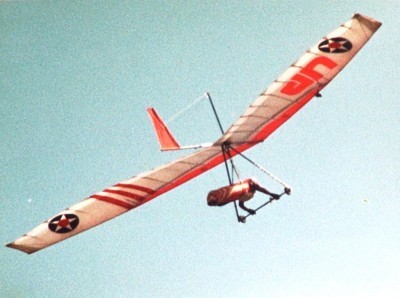
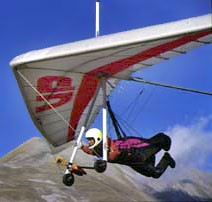
UP GZ / Glidezilla / GZE

GZ

The GZ was a 1985 hang glider.

The Glidezilla appeared in 1986. Glidezilla from UP (which was manufactured in France with parts from La Mouette) was also named UP GZE.

Glidezilla

The glider has pronounced adversed yaw effect. The glider featured a LDS sail with a metal component: UV resistant and durable but rather tough for a flexwing.

GZ 155

Glidezilla
Wing area: 15 m²
Wing span: 10.6 m
Aspect ratio: 7.49
Hang glider weight: 32 kg
Nose angle: 127°

UP Comet

Comet

The 1980 Comet was for advanved pilots. The early Airwave-built Comet 165 was very soft, predictable handling in roll and a really good sink rate. Exceptionally easy to land with a soft, progressive approach to the stall.

All these gliders were built by Dick Cheney out of Layton UT.

The Comet 2 appeared in 1983.

Comet 2

The Comet C3 appeared in 1989.

Comet C3

The Comet 3 glider was comperable to the large Axis, with better handling qualities. This was also a heavy glider at approx. 85+ lbs.

Comet 165
Wing area: 15 m²
Wing span: 9.80 m
Aspect ratio: 6.5
Hang glider weight: 30 kg
Minimum pilot weight: 60 kg
Maximum pilot weight: 95 kg
Minimum speed: 27 km/h
Max glide ratio (L/H): 8.5
Minimum sink rate: 0.9 m/s
Packed length: 5.70 m
Number of battens: 19
Nose angle: 120°

Comet 185

Comet OVR

Comet 2 165

Comet 2 185

Comet 3
Nose angle: 125°
Span: 34.8 ft
Wing area: 185 sq.ft
Aspect ratio: 6.5
Wt. range 170 – 290 lbs
Battens: 25

UP Birdy

A 1989, very easy glider to fly, it gives a lot of confidence and gives the pilot the opportunity to get the feeling of how to handle a hanglider.

In mountain conditions when thermalling, it’s fun, but heavy flying.