Dudek Elf

Paraglider circa 1998.

Elf 24
Wing area: 24.1 sq.m
Pilot weight: 50/75 kg
No. of cells: 35
Wing span: 10.4 m
Aspect ratio: 3.5
Min sink: 1.2 m/s
Max speed: 40 kph
Price (1998) 1,200 Pounds

Elf 27
Wing area: 26.4 sq.m
Pilot weight: 65/95 kg
No. of cells: 37
Wing span: 10.8 m
Aspect ratio: 3.5
Min sink: 1.2 m/s
Max speed: 40 kph
Price (1998) 1,275 Pounds

Elf 30
Wing area: 30.3 sq.m
Pilot weight: 85/120 kg
No. of cells: 39
Wing span: 11.6 m
Aspect ratio: 3.5
Min sink: 1.2 m/s
Max speed: 40 kph
Price (1998) 1,395 Pounds
Dudek Alt

Paraglider circa 1998.

Alt 24
Wing area: 24.1 sq.m
Pilot weight: 50/75 kg
No. of cells: 27
Wing span: 10.1 m
Aspect ratio: 4.2
Min sink: 1.3 m/s
Max speed: 38 kph
Price (1998) 1,145 Pounds

Alt 27
Wing area: 27.1 sq.m
Pilot weight: 65/95 kg
No. of cells: 29
Wing span: 10.7 m
Aspect ratio: 4.2
Min sink: 1.3 m/s
Max speed: 38 kph
Price (1998) 1,1225 Pounds

Dudek Paragliders

Dudek Paragliders started operating in the summer of 1995. It was founded by:
Piotr Dudek – paragliding designer and instructor, active in the sport since 1987,
Wojciech Domański – paragliding enthusiast since 1995,
and Dariusz Filipowicz – also fascinated by paragliding since 1995.

1998: ul, Szancera 2 / Xlp, PL-85 792 Bydgoszcz, sp 75, Poland

Dube Aerocruiser

The Aerocruiser 2+2 has the same shape as the two seat version, with has identical dimensions but a redesigned cabin layout in which the rear bench seat folds back. The fuselage is fabric covered and the wings are all aluminium.

Aerocruiser 2+2
Engine: Lycoming O-360, 180 hp
Wing span: 9.75 m
Wing area: 16 sq.m
MAUW: 997 kg
Empty weight: 494 kg
Fuel capacity: 265 lt
Max speed: 260 kph
Cruise speed: 195 kph
Minimum speed: 65 kph
Climb rate: 5 m/s
Seats: 4
Fuel consumption: 38 lt/hr
Price (1998): Can$95,000

DSK Airmotive Hawk

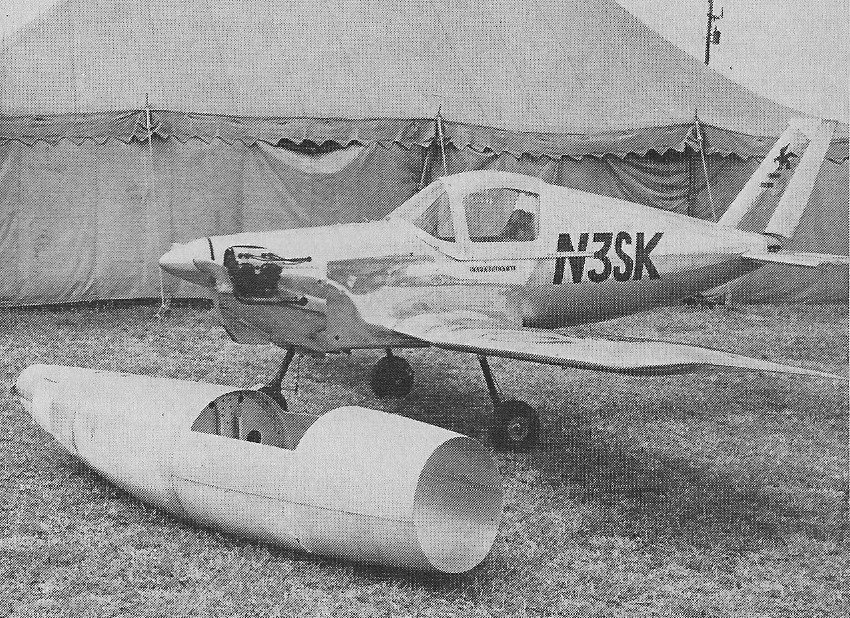
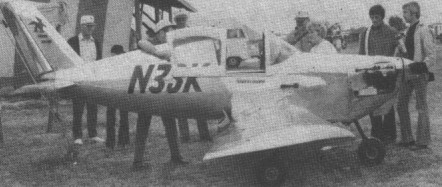
The Hawk is a single-seat, low-wing monoplane stressed to 9G’s. Originally it was designed by Dick Killingsworth to be built around a surplus 200-gal drop-tank, but plans also provide for a bulkhead and stressed skin structure, The wings are built with twin light-alley spars and the landing gear is the non-retractable tricycle type. Fuel is carried in a forward tank with the capacity of nine gallons, but an optional 14-gallon tank can be added in the aft section.

Powered by a Lycoming O-145B-2, the Hawk was designed to be built with ordinary hand tools, pop rivets and very little welding or machine work. By 1974 over 250 sets of plans had been sold, at $50 each.

Gross Wt. 893 lbs.
Empty Wt. 525 lbs.
Fuel capacity 9-23 USG.
Wingspan 20’4”.
Length 15’.
Engine 65-hp Lycoming.
Top speed 156 mph.
Cruise 141 mph.
Stall 50 mph.
Climb rate 1500 fpm.
Ceiling 12,000 ft.
Takeoff run 600 ft.
Landing roll 550 ft.
Range (14 gals) 480 sm.