A tandem two-seat microlight
1980->
Eurofly
Italy
Produces FireFox and simplified BasicFox tandem two-seat microlights.
1998:
Via Ca’Onorai, 50
I-35015 Galliera Veneta(PD)
Italy
Eurofighter / EF-2000 / Typhoon
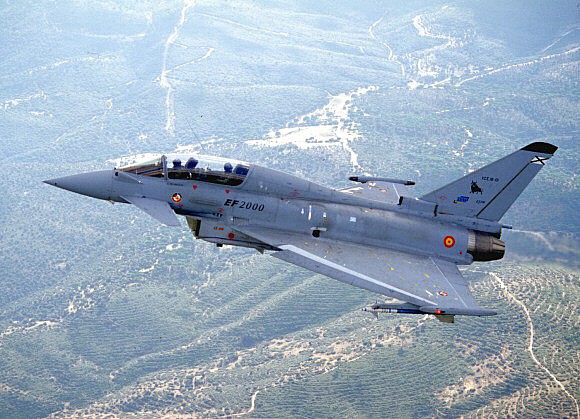
The Eurofighter program started in 1992. The aircraft is a canard delta with a maximum take-off weight of 17,000kg, a wing area of 50sq.m, and two turbofans giving a total thrust of l80kN. The prototypes was to have either Turbo-Union RB.199 or General Electric F404 engines, but production aircraft were to be powered by Eurojet EJ.200s, which was being developed by a consortium consisting of Rolls-Royce, Fiat, MTU, and SENER. A multimode pulse-Doppler radar fitted, and armament was to include an internal gun plus AIM-120 Amraam and AIM-132 Asraam. The Eurofighter will be optimised for air-to-air roles but will have a secondary air-to-surface capability.
Eurofighter EF-2000 / Typhoon Article
The design features a delta wing design with canards set well forward of the wing. These features combined with two powerful EJ200 engines and digital flight control systems produce a highly agile fighter.
The Eurofighter design has been named Typhoon by the Royal Air Force, dropping the EF2000 project name. Spain and Italy and the industry have taken on the name Typhoon as well.
The first prototype DA.1 flew in Germany on 27 March 1994. Seven development aircraft (DA) were built, as well as several Instrumented Production Aircraft for evaluation, weapons and systems testing.
Tranche 1 production aircraft are used primarily for evaluation, instructor and pilot conversion training, but have also entered operation attending large-scale exercises and taking on the air defense role.
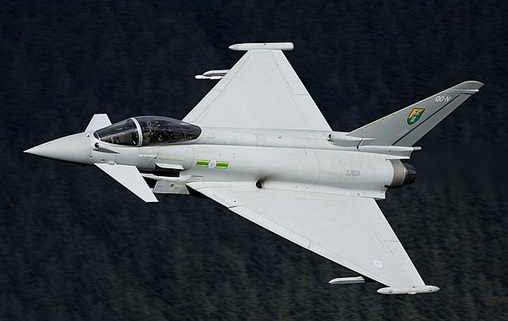
A total of 620 aircraft have been ordered by the participating countries. Delivered aircraft were being upgraded to the latest Tranche 1 production standard, Block 5, to bring all Tranche 1 aircraft to a near-common standard, including limited air-to-ground capability with a selection of precision guided weapons.
The RAF is primarily replacing the Tornano F.3 air defence fighters, but has also retired its remaining Jaguar fighter-bombers. The Eurofighters for the Luftwaffe will replace its fleet of F-4F Phantom IIs (and fill the gap left by the retirement of the MiG-29 Fulcrum-C). Italy has retired its last F-104ASA Starfighters and returned the leased RAF Tornado F.3s. However because of the delays in the program, it had to lease ex-USAF F-16 ADF to fill the gap. It has equipped its third wing with the Typhoon. Spain has equipped its first squadron with the Eurofighter, but the Mirage F1 aircraft have been put through a modernisation program to keep them in service for some years.
Although Greece was the first to sign a contract for delivery of a first batch of Eurofighters, having initially ordered 60 aircraft with an option for 30 more. However the contract was cancelled and any order would be postponed until after the Olympic Games. It remains to be seen if Greece would renew the Eurofighter contract.
Austria ordered 18 Eurofighter Typhoons, with an option for six more, the contract was revised in 2007 and the number was reduced to 15 aircraft of Tranche 1 standard. .
Saudi Arabia signed a declaration of understanding with regards to the purchase of 24 Typhoons in Trache 2 standard to replace its Tornado ADV fleet. Follow-on is expected as it is reported Saudi Arabia has a requirement for at least 72 Typhoons.
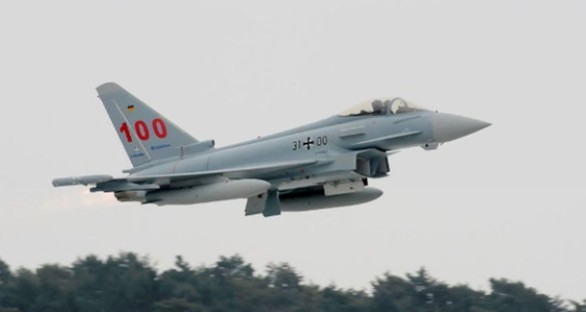
The Eurofighter Typhoon was once the epitome of European airpower. Fast, agile, and lethal, it was a Cold War-era air superiority fighter optimized for an age when speed, maneuverability, and firepower conferred dominance in the skies.
But as air superiority and supremacy is increasingly a function of stealth, sensor fusion, and network-centric operations, the Typhoon is beginning to show its age by 2025. It is not yet entirely obsolete, but it is fighting an increasingly desperate rearguard action against the steadily advancing forces of future aerial warfare.
The uncomfortable reality is that fourth-generation platforms like the Eurofighter Typhoon, no matter how upgraded, are becoming increasingly less able to hold their own in high-intensity conflicts.
With a powerful twin-engine design, excellent thrust-to-weight ratio, and canard-delta aerodynamics, it outmaneuvers most of its contemporaries. Its supercruise capability gives it an edge over other fourth-generation jets, allowing it to maintain supersonic speeds without afterburners.
Armed with the Meteor missile, one of the most advanced air-to-air weapons out there, it poses a serious threat to any enemy aircraft that enters its engagement range. Recent upgrades, such as the integration of the CAPTOR-E AESA radar and enhanced electronic warfare suites, have further extended its lifespan and improved its lethality and survivability.
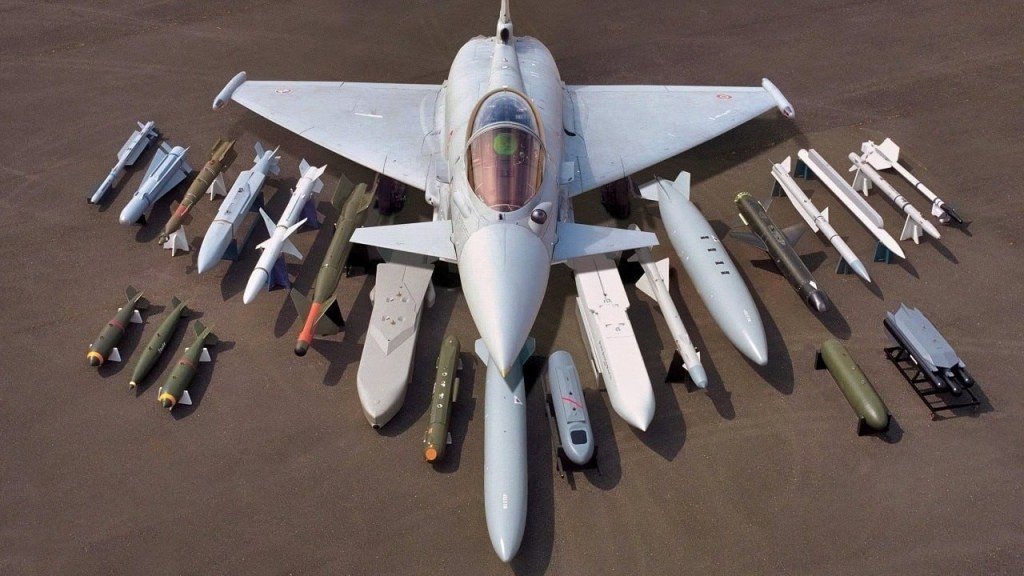
Yet, despite all of these upgrades, the Typhoon remains fundamentally disadvantaged against fifth-generation stealth aircraft. The transformation of air combat over the past two decades has been revolutionary. It is no longer about raw flight performance or even missile range – rather, it is about situational awareness, sensor fusion, and the ability to strike pre-emptively without being seen.
A stealth fighter like the F-35 or China’s J-20 does not simply enjoy reduced radar visibility; it enjoys advantages derived from the fact that it is a node within an information network, receiving data from satellites, drones, and other assets that radically enhance its survivability and lethality.
The simple fact is that in a contested environment, a Typhoon will be detected, targeted and shot down long before it can locate its stealthy adversary. Even with AESA radar and electronic countermeasures, it cannot change the fundamental physics of radar cross-section reduction and detection timelines. Air combat has always favored the pilot who sees first, shoots first, and eliminates the enemy before they can react. In that equation, the Typhoon is on the losing end against modern stealth fighters.
Variants:
DA
IPA
Tranche 1 / RAF F.2 single-seat / T.1 two-seat
Tranche 2
Typhoon
Engines: two 90 kN (20,250 lb st) Eurojet EJ200 afterburning turbofans
Length 15.96m (52 ft 4 in)
Height 5.28m (17 ft 4 in)
Wing span: 10.95m (35 ft 11 in)
Aspect ratio : 2.21
Wing area: 551.117 sq.ft / 51.2 sq.m
Empty weight: 10.995 kg (24,239 lb)
Max Take-Off Weight: 23000 kg (50,700 lb)
Max level speed clean at 11000 m (36,0069 ft): Mach 2.0 / 2125 km/h (1,321 mph)
Landing speed: 130 kt / 241 km/h
Service ceiling: 15,240+m (50,000+ ft)
g limits +9/-3
Runway requirement: 700m (2,300ft)
Armament: one Mauser Mk27 27mm cannon/ 150rds; up to 6500 kg (14,330lb) ordnance
Hardpoints: 13
Auxiliary fuel: three tanks
Crew: 1
DA.1
Engines: 2 x Eurojet EJ.200 turbofans, total thrust of l80kN.
MTOW: 17,000kg.
Wing area: 50sq.m.
DA.2
DA.7
Eurofighter Jagdflugzeug GmbH
Aeritalia, British Aerospace, CASA and MBB formally launched EuroFighter in June 1986 as collaboration between four nations to develop a new Mach 2 air-superiority fighter with attack and reconnaissance capabilities, what was the European Fighter Aircraft (EFA), known simply as Eurofighter (named Typhoon by RAF).
By 1995 the consortium incorporated Aerospatiale Matra, Daimler Chrysler and Construcciones Aeronautics.
Shareholding was DaimlerChrysler of Germany (33 percent), Alenia of Italy (21 percent), CASA of Spain (13 percent) and British Aerospace (33 percent). Powered by two Eurojet EJ200 afterburning turbofans with fully variable nozzles, has been designed for supersonic, beyond-visual-range air defense, offering also high performance and agility in subsonic close air combat. Has fly-by-wire control system and low radar cross section. First flown March 1994, and well over 700 test flights achieved by seven development aircraft by mid- 1998. RAF expected to receive at least 232 from year 2002, Germany 140 air defense and 40 multirole from 2003, Italy 130 from 2002 and Spain 87 from 2003; interest from several other nations.
Euroenaer
In 1997, once the basics of engineering and financing were solved, Euroenaer was created, based at the airport in Den Helder, whose objectives were generally produce structural analysis and design, product design and production of aircraft technology. The company was organized according to 21 JAA (Joint Aviation Authorities) requirements and was certified as an organization design and production organization to achieve design type certificate of aircraft. Subsequently Euroenaer sought FAA certification, using the Euro-Enaer EE-10 Eaglet CC-PZL.
Monetary contributions came from several European investors and other institutes that were linked to the Eaglet Project.
1) ENAER accounted for 21% of the capital;
2) The Aerospace Business Group (owned by Hein Langendijk), grew to 51% of the company;
3) TIFAN (a fund formed by universities and local banks) and the holding Thresoor Bunshoten, 10%;
4) A number of other small investors like Jan Van Toorn.
The technical-academic institutions that were supporting the project, include:
1) Faculty of Aerospace Engineering of Delft University of Technology;
2) The Dutch Technical Research Institute / Centre of Lightweight Structures (TNO), experts in the field the VISA project – Vacuum Injection Small Aircraft, with the concept of Resin Transfer Moulding RTM.
3) Also participate as a contractor of the project in the Netherlands was Aircraft Company Renegade CV (GRA-CV) [a company of K3C Group], which designed and built production molds for the windshield, central panel and column, flaps and slots, Mount Compass, dummy instruments, and several other small parts. It also established the facilities for testing wing design (although the windscreen and doors were actually manufactured by Mecaplex, Switzerland).
The final certification of design and manufacturing rights for the Euro-Enaer EE-10 Eaglet took longer than desired, and that during this delay EuroEnaer began with financial difficulties that made it go bankrupt. Additionally, the participating contractor gamely Renegade Aircraft CV ( GRA -CV ) , in 2001 provided additional problems to the project by way of claiming the protection of their rights related Eaglet and threatened with lawsuits to be taken advantage of such designs , including specifically related companies Eaglet .
Eurocopter EC-635

The EC 635 Military version of the EC 155 mockup was a conversion of first preproduction EC 135 (D-HECX). Offered (unsuccessfully) to South Africa and unveiled at Aerospace Africa Air Show on 28 April 1998. First customer was Portuguese Army, which ordered nine EC 635T1s on 22 October 1999 for delivery from June 2001. However, these retrospectively cancelled on 14 August 2002, following delay in post-delivery modifications; all sold to Jordan which, in March 2003, increased its order to 16.
The EC 635 underwent testing with FN Herstal HMP 400 12.7mm machine gun, Giat NC621 20mm gun and 12-round 70mm rocket launcher.
EC-635 D-HECM (c/n 0529), the first of the type for the Swiss Air Force, first flew, from the Donauwörth facility in Germany, on 23 May 2007.
Eurocopter Tiger
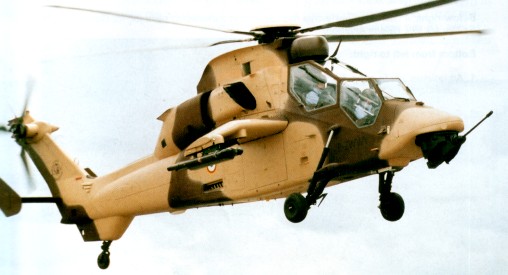
France and Germany agreed in 1984 to develop a common combat helicopter, and Eurocopter Tiger GmbH was formed on 18 September 1985 to manage development and manufacture for French and German armies. It was not a full member of Eurocopter because it was working on a single government contract. Executive authority for programme is DFHB (Deutsch Franzosisches Hubschrauberburo) in Koblenz; procurement agency is German government BWB (Bundesamt fur Wehrtechnik und Beschaffung).
The original 1984 MoU was amended 13 November 1987; FSD approved 8 December 1987; main development contract awarded 30 November 1989, when name Tiger (Germany)/Tigre (France) adopted.
Original partners require three versions in two basic configurations with about 80% commonality: U-Tiger is basis of the UHT and ÍÀÑ, both with mast-mounted sight and Trigat missiles; HCP (Helicoptere de Combat Polyvalent) is basis of the HAP (roof sight and turreted gun). Other variants proposed to meet export requirements.

Tigre HAP: Helicoptere d’Appui et de Protection; name Gerfaut dropped late 1993; escort and fire support version for French Army; armed with 30mm Giat AM-30781 automatic cannon in undernose turret, with 150 to 450 rounds of ammunition; four Mistral air-to-air missiles and two pods each with twenty-two 68mm unguided TDA rockets delivering armour-piercing darts, mounted on stub-wmgs, or 12-round rocket pod instead of each pair of Mistrals, making total of 68 rockets; roof-mounted sight, with TV, FLIR, laser range-finder and direct view optics sensors; image intensifiers integrated, in helmets; and extended self-defence system. ÍAÐ configuration was approved by late 1998, permitting òóðå qualification in December 2002. Deliveries from Marignane in 2003; final aircraft due in 2010.
UHT: Unterstutzangshubschrauber Tiger (previously designated UHU); German Army multirole ‘utility’ or muttirole anti-tank and fire-support helicopter for delivery from 2002; replaces dedicated anti-tank PAH-2 Tiger; type qualification due in December 2002; final assembly at Donauwörth. Underwing pylons for HOT 3 or (from 2006) Trigat missiles, Stinger self-defence missiles, unguided rockets, gun pod and extended self-defence system; mast-mounted TV/FLIR/laser ranger sight for gunner; nose-mounted FLIR for piloting. A mid-life upgrade for the UHT may integrate the Mauser 30mm gun in a chin turret which traverses ±140° in azimuth and from +20 to -45° in elevation.
Tigre ÍÀÑ: Helicoptere Anti-Char; anti-tank variant for French Army; final assembly at Donauwörth. Type qualification due in third quarter of 2011; same weapon options (except Mistral AAM in place of Stinger), mast-mounted sight and pilot FLIR system as UHT. A mid-life upgrade to the HCP could see addition of a mast-mounted automatic air surveillance and warning system, in the form of DAV pulse Doppler radar, together with HUMS and an IR jammer.
Five development aircraft built, including three unarmed aerodynamic prototypes, used also for core avionics testing (PT1, 2 and 3), one (PT4) in HAP (initially called Gerfaut) configuration and one (PT5) as UHT prototype; PT1 rolled out 4 February 1991; first flight 27 April 1991; fifth prototype flew on 21 February 1996, at which time the first four aircraft had accumulated 1,090 flying hours; total of 2,869 hours flown by five prototypes up to June 2001. Germany confirmed purchase of full 212 required, 1994, having considered cut to 138, but later reconsidered.
PT1/F-ZWWW: Aerodynamic prototype; basic avionics; first flight 27 April 1991. Successively fitted with aerodynamic mockups of mast-mounted and roof-mounted sights, nose-mounted gun and weapon containers. Relegated to ground fatigue testing and static display in early 1996 on completion of flight programme. Flown 502 hours.
PT2/F-ZWWY: HAP aerodynamic configuration; full core avionics; rolled out 9 November 1992; first flight 22 April 1993. Used for radar cross-section and detectability tests. Retrofit with HAP systems completed in November 1996; redesigned PT2R. Mistral launch trials at Landes ranges 14/15 December 1998; Technical assessment by French Army at Valence between 17 May and 3 June 1999; rocket qualification, June 1999. Used for HAP version qualification (redesignated PT2R2) at Landes test centre between 4 April and 12 May 2000. Redesignated PT2X in 2001 to serve as multimission demonstrator, adding LFK/ SAGEM sighting system for HOT 3 anti-tank missiles in addition to original Mistral missiles and rockets. Deck landing trials, May 2002, aboard FS Siroco, an amphibious landing ship.
PT3/9823: Full core avionics (including navigation and autopilot); first flight (as F-ZWWT) 19 November 1993. Retrofit with UHT systems began in February 1997; redesignated PT3R; Euromep Ñ (see Avionics) from late 1997. ÏÎÒ launches with mast sight at extreme range in night and smoke conditions, June 1999; hot weather trials at Bateen AB in Abu Dhabi September 1999. Moved back to France for ÍÀÑ development,
PT4/F-ZWWU: HAP aerodynamic configuration and avionics (including roof sight, HUD and Topowl helmet sight; first Tiger with live weapons system); first flight 15 December 1994. Sighting system trials early 1995; Giat cannon trials (15 ground-based tests) completed at Toulon, April 1995; full testing began at CEV Cazaux, 21 September 1995 and, by late November, had demonstrated airborne cannon firing and launch of Mistral AAM (without seeker); by 1 January 1997 had fired eight Mistrals, 3,000 cannon rounds and 50 rockets; 1997 trials included two more Mistrals, rockets and tests of gun controls. Painted in three-tone disruptive camouflage. Winter trials in Sweden, early 1997 with skid/skis landing gear. Flown 296 hours to 1 December 1997; crashed during night low-level evaluation by Australian Army 17 February 1998.
PT5/9825: Full UHT avionics; first flight 21 February 1996. Undertook German Army weapon trials (Stinger, HOT 2 and 12.7mm podded gun) in 1997 including the firing of six HOT 2s using Euromep Osiris mast-mounted sight. Retrofitted as PT5R with production-standard weapon system; first flight 8 October 1999.
PT6 and PT7: Static test airframes for fatigue and crash-resistance trials.
PS1/F-ZVLJ: Ðòå-series HAP built at Marignane on production tooling; laid down in third quarter of 1998; first flight 21 December 2000. Tasks include validation of production methods and planned production configuration.
UHT S01/9826: First true production aircraft; planned to fly on 1 March 2002, but not rolled out until 22 March; first flight 2 August 2002; used for six-month techeval/opeval trials, replacing PT5R.
HAP S01: First production French Tiger, first flight (F-ZKDB) 26 March 2003; delivery to French Army in July 2003.
Industrialisation phase brought forward by two years to strengthen export prospects and Franco-German MoU signed 30 June 1995; timetable then was first deliveries in 1999 to France (approximately 10) and for export, but France announced spending moratorium in November 1995, postponing authorisation of further funding commitments until signature of a FFr2.5 billion (DM733.6 million) production investment contract on 20 June 1997. Deliveries then expected in 2001, but further delayed to July 2003 (for HAP; 2011 for ÍÀÑ) by May 1996 defence plan, which envisaged procurement of only 25 Tigres in 2000-2002 budgets.
In October 1996, Germany announced a 12-month delay in launching Tiger production because of funding constraints. However, the government planned to recoup lost time by accelerating production when eventually begun, maintaining in-service date (ISD) of 2001 and having 50 delivered by 2006, after which the manufacturing tempo would be reduced. However, by 1999, first UHT delivery planned in December 2002. France indicated in early 1997 that it would be prepared to see a single Tiger production line located at Donauwörth in Germany which, combined with other economies, would reduce French expenditure by FFr13.5 billion, but a second assembly line at Marignane was subsequently confirmed. Production investment agreed June 1997.
On 20 May 1998, France and Germany signed a commitment to order an initial joint batch of 160 Tigers. However, planned late 1998 placing of contracts was delayed by requirement of new German government to conduct a defence review; options included delaying ISD; or reducing numbers; or even cancelling UHT and procuring French HAP version. Production contract was finally signed on 18 June 1999 for the full 160 aircraft; first deliveries in 2002. HAP deliveries to include two in 2003, eight in 2004 and 10 per year in 2005-10; first production aircraft (9826) flew in Germany, 2 August 2002. Production of the first batch of 320 engines (plus 12 spares) began during 2000, and will continue through 2011. June 1999 contract also formalised German contract change from PAH2 to UHT and French change from HAP to HAP-F (Finalise).
Joint team at Marignane is flight testing basic helicopter, updating avionics during trials, and testing HAP variant; similar team at Ottobrünn is qualifying basic avionics, Euromep mission equipment package, and integrating weapons system. Rotor downwash problems resulted in trial forward positioning of horizontal stabiliser; by mid-1994 definitive solution adopted of reversion to original position, but halving area. By January 1998, the design had been frozen, and the development programme was more than 90% complete.
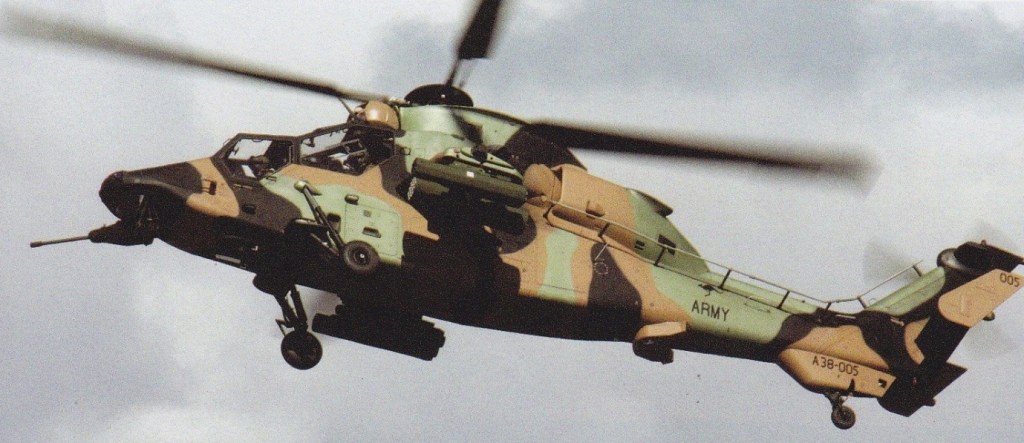
First export order for Tiger confirmed 14 August 2001, when Australia announced selection to meet AIR 87 requirement. Contract signed 21 December 2001 for 22 helicopters. MoU on co-operation and exchange of information, to lead to production and delivery, signed by Eurocopter and Australian Defence Science and Technology Organisation on 12 July 2002.
The first locally-assembled Eurocopter Tiger for the Australian Army, A38-005, was handed over at Brisbane on 18 July 2005.
Tiger development cost, shared equally by France and Germany, reported DM2.2 billion. Production tooling cost FFr2.6 billion (US$500 million) (1996). Unit cost (1996) for UH estimated as US$ 11 million, including launchers and all government-furnished equipment. Initial batch of 160 assigned FFr21.5 billion, of which FFr13 billion for 80 German helicopters and FFr8.5 billion for 80 French (1998). Australian programme unit cost US$30.6 million (2001).
Original requirement was for 427 (France 75 HÀÐ and 140 ÍÀÑ, Germany 212 PAH-2); UHU (later UHT) version substituted for PAH-2s in 1993; French order amended by 1994 to 115 HAP and 100 ÍÀÑ but may be reduced to overall total of 180; in mid-2001 French Army expressed preference for multirole Helicoptere d’Appui-Destructiou (HAD) version in place of two subvariants now on order. Germany committed to 212, of which 112 to be funded between 2001 and 2009; initial commitment of 20 May 1998 confirmed 80 each by France (70 HAP, 10 ÍÀÑ) and Germany (80 UHT), as agreed by Franco-German Security Council on 9 December 1996. By 2002, official German sources suggesting full requirement only 110 and Eurocopter resigned to total of 240 between two launch partners. Germany’s Tigers are required to equip four 48-aircraft regiments, each supporting an Army division, first being established in 2009-11. A joint training school at le Luc is being established as the Ecole Franco-Allemand, or EFA with a Thomson Training and Simulation/STN Atlas aircrew training system, including six-axis motion simulators and wide-angle visual systems. Training course lasts 28 weeks for a crew chief, or 19 weeks for a pilot. Fleet of 14 German and 14 French Tigers will be assigned by 2006, with eleven simulators. In October 2000 there were reports that the German MoD was considering reducing its Tiger buy to 100 helicopters.
A tandem-seat design with pylon-mounted armament, FEL (fibre elastomer) main rotor has infinite life except for inspection of elastomeric elements at more than 2,500-hour intervals; hub consists of titanium centrepiece (including duct for mast-mounted sight) with composites starplates bolted above and below; flap and lead/lag motions of blades allowed by elastic bending of neck region and pitch change by elastic part of elastomeric bearings; lead/lag damping by solid-state viscoelastic damper struts faired into trailing-edge of each blade root; equivalent flapping hinge offset of 10.5% gives high control power; SARIB passive vibration damping system between transmission and airframe; three-blade Spheriflex tail rotor has composites blades with fork roots; built-in ram air engine exhaust suppressors.
Flying controls are fully powered hydraulic controls by SAMM/Liebherr; Labinal/Electrometal servo trim; horizontal tail mounted beneath tail rotor; autopilot is part of basic avionics system.
The structure is 80% CFRP, block and sandwich and Kevlar sandwich; 6% titanium and 11% aluminium; airframe structure protected against lightning and EMP by embedded copper/bronze grid and copper bonding foil; stub-wings of aluminium spars with CFRP ribs and skins; titanium engine deck may be replaced by GFRP; airframe tolerates crash impacts at 10.5m/s and meets MIL-STD-1290 crashworthiness standards; titanium main rotor hub centrepiece and tail rotor Spheriflcx integral hub/mast; blade spars filament-wound; GFRP, CFRP skins and subsidiary spars and foam filling. French plants building transmission, tail rotor, centre-fuselage (including engine installation), aerodynamics, fuel and electrical systems, weight control, maintainability, reliability and survivability; Eurocopter Deutschland responsible for main rotor, flight control and hydraulic systems, front and rear fuselage (including cockpits), prototype assembly, flight characteristics and performance, stress and vibration testing and simulation.
Th landing gear is a tail wheel type, non-retractable, with single wheel on each unit. Designed to absorb impacts of up to 6m/s. Main gear by Messier-Bugatti, tail gear by Liebherr Aerotechnik.
Power is from two MTU/Rolls-Royce/Turbomeca MTR 390 modular turboshaft engines mounted side by side above centre-fuselage, divided by armour plate ‘keel’ (engine first flown in Panther testbed 14 February 1991); power ratings are maximum T-O 958kW, super emergency 1,160kW, maximum continuous 873kW. LHTEC has proposed the T800-801 as a potential alternative power plant for export variants of the Tiger. Self-sealing crashworthy fuel tanks, with explosion suppression and with non-return valves, which minimise leakage in a crash; total capacity 1,360 litres. Provision for two external tanks, one on each inboard pylon, each of approximately 350 litres capacity. Gearbox has specified 30 minutes’ dry running capability (demonstrated 65 minutes, November 1994).
The crew of two is in tandem, with pilot in front and weapons system operator at rear; full dual controls; both crew members can perform all tasks and weapon operation except that anti-tank missile firing only available to gunner. Armoured, impact-absorbing seats; stepped cockpits, with flat-plate windscreens and slightly curved non-glint transparencies.
Redundant hydraulic, electrical and fuel systems. Primary power generation by two 20kVA alternators; DC power generation by two 300A 28V transformer/rectifiers and two 23Ah Ni/Cd batteries.
Dual redundant AFCS provides four-axis command and stability augmentation. Basic AFCS modes: attitude hold, heading hold. Higher AFCS modes: Heading/acquire/hold, barometric altitude capture/hold, altitude acquire, airspeed hold, vertical speed acquire/hold, nav coupling, radar height hold. Doppler hover hold, line of sight acquisition/ hold. Other AFCS functions: gun recoil force compensation, axis decoupling and tactical mode (follow-up trim on override of break-out forces).
Basic or core avionics common to all three versions include bus/display system, com radio (French and German systems vary), autonomous nav system and radio/DoppIer navaids, Thales TSC 2000 IFF Mk 12, NH 90-based ECM suite (including laser warning) and AFCS, all connected to and controlled through redundant MIL-STD-1553B data highway. Flight: Navigation system, by Thales, Teldix and EADS, is fully redundant; system contains two Thales PIXYZ three-axis ring laser gyro units, two air data computers, two magnetic sensors, one Teldix/BAE Canada CMA 2012 Doppler radar, a radio altimeter and GPS providing data to Dornier EuroGrid digital map system; these sensors also provide signals for flight control, information display and guidance; integrated duplex AFCS by Thales and Nord Micro; AFCS computers produced by Thales, VDO-Luft and Litef. Instrumentation: Colour liquid crystal flight displays showing symbology and imagery (two per cockpit for flight and weapon/systems information) by Thales and VDO-Luft; each crewman has central control/display unit for inputting all radio, electronic systems and navigation selections; digital map display system by Dormer and VDO-Luft (incorporating NH 90’s Eurogrid map generation system); engine and systems data are fed into the databus for in-flight indication find subsequent maintenance analysis. BAE Systems Knighthelm fully integrated day and night helmet ordered for German Tigers; French Tigres have similar Thales Topowl helmet-mounted sights, with integrated night vision (image intensifiers), FLIR, video and synthetic raster symbology. Mission: Euromep (European mission equipment package) includes SATEL Condor 2 pilot vision subsystem (PVS), air-to-air subsystem (Stinger or Mistral), mast-mounted sight and missile subsystem and Euromep management system all connected to separate MIL-STD-1553B data highway. Euromep Standard  avionics first flew February 1995 (PT5); Standard Ñ testing began in late 1997 (PT3R). PVS has 40×30° instantaneous field of view (with ±110 x 35° total field of view) thermal imaging sensor steered by helmet position detector giving both crewmen day/night/bad weather vision, flight symbology and air-to-air aiming in helmet-mounted display; mast-mounted sight, gunner sight electronics and gunner’s head-in target acquisition display and ATGW 3 subsystem connected by separate data highway; HOT 3 missile system also available. Thales armament control panel and fire-control computer.
HAP combat support mission equipment package includes SFIM STRIX gyrostabilised roof-mounted sight (with IRCCD IR channel) above rear cockpit; includes direct view optics with folding sight tube, television and IR channels and laser ranger/designator. Self-defence: EADS C-model EW suite (as in NH 90) is one element in HAP’s fully integrated avionics suite. This has an EADS laser warning receiver, EADS missile launch warning device (Lenkflugkörpersysteme) and Thales EW processor and radar warning receiver. Also chaff and flare dispensers (with up to 144 cartridges, sequenced by a Saphir M system). UH is similar, but with option of fitting IR jammer.
The Tiger has four outboard weapon stations or auxiliary fuel tank. HCP (HAP) options all include one 30mm Giat AM-30781 automatic cannon with up to 450 rounds (traversing from +33 to -30° in elevation and through ±90° in azimuth).
Interest shown by Spain in 25 Tigers to be delivered from 2010; in early 2002, contract discussions reached impasse over R&D funding for specific Spanish multirole HAD variant.
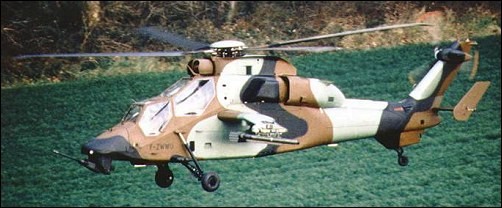
The Tiger was being built in three variants, the PAH-2, HAC and HAP versions to undertake the anti-tank, close support and fighter helicopter roles. The Tiger will form the backbone of the German Heeresflieger anti-tank helicopter fleet (PAH-2) and the French ALAT fleet, undertaking both the antitank (HAC-3) and combat support role (HAP).
The two anti-tank versions (PAH-2/HAC-3) will be almost identical except for some armament, communications and navigation systems. Both versions will be fitted with a mast-mounted sight, nose-mounted thermal imager and helmet-mounted sight/display and can be armed with either 8 x HOT 2/3 or TRIGAT anti-tank missiles, 4 x Stinger or Mistral air-to-air missiles. The HAP escort/attack version is fitted with a roof-mounted STRIX sight and 30mm turret-mounted GIAT AM-30781 cannon, 4 x Mistral air-to-air missiles, 2 x 22 rockets and each stub wing has tip-mounts for additional air-to-air missiles.
Versions built are:
ARH Tiger (HCP): Hybrid Tiger variant to meet Australian Army Air 87 requirement. Based on French HAP, with undernose Giat 30-781 30mm cannon, roof-mounted sight and provision for underwing rocket pods, but with added anti-tank capability, initially with HOT missile then (from 2006) with Trigat AC3G. Australia also requires integration of the AGM-114 Hellfire ATM. Maximum mission weight of 6,100 to 6,300kg. A$1,300 million (US$674 million) contract for 22 signed 21 December 2001. First four from European production; remaining 18 to be assembled in Brisbane, beginning April 2003. First European deliveries (two) due December 2004; Australian-built deliveries between July 2005 and April 2008.
HCP Tiger (HCP): Export version based on French Army HAP with the same undernose gun turret and roof-mounted sight, HOT 3 and Trigat missiles; Hellfire optional. Strix roof sight (direct view optics optional) and additional laser designator plus video signal interfacing for Trigat operation. Either Mistral or Stinger air-to-air missiles. A mid-life upgrade to the HCP could see addition of a DAV mast-mounted air surveillance radar (pulse Doppler type) or a mast-mounted MMW radar for automatic ground and air surveillance. No gun pod option.
Tigre HAD: Helicoptere d’Appui-Destruction. Multirole version; development cost estimated as ˆ152 million (2002). Offered to Spain. Uprated engines, roof sight for Trigat ATMs.
Tiger T800: LHTEC T800 or CTS800 engines proposed as an engine option for the Tiger. Turkey is sales prospect, as Army has reservations about growth potential of MTR390.
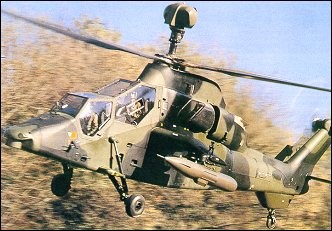
The first two Eurocopter Tiger for the Australian Army were handed over on 15 December 2005. The first four were manufactured in France and remaining 18 assembled by Eurocopter’s Australian Aerospace facility at Brisbane airport. The first of these was flown on 21 December 2005.
Tiger
Engine: 2 x MTU/R-R Turbomeca MTR 390, 1267 shp.
Instant pwr: 958 kW.
Rotor dia: 13 m.
Length: 15m.
Height: 3.83m.
Rotor diameter : 42.651 ft / 13.0 m
Fuselage width 1.11m
MTOW: 12789.0 lb / 5800 kg.
Weight empty : 7276.5 lb / 3300.0 kg
Payload: 6000 kg.
Max speed: 269 kts.
Cruise (armed) 150 knots
Cruise (econ) 130 knots
De¬sign limit speed 175 knots.
Max range: 670 km.
Endurance 2 h 50 mm (incl reserve)
Ferry range 700 nm (1300 km).
HOGE: 10,655 ft.
Initial climb rate: 1968.5 ft/min / 10.0 m/s
Service ceiling: 13,000 ft / 3960 m.
Crew: 2.
Typical weapons load: 30mm turreted gun (450 rounds); plus up to 8 HOT (anti-armor) and 4 Mis¬tral (air-to-air) missiles; or 44 rock¬ets and 4 Mistral missiles; or 68 rockets; or two ferry tanks.
Eurocopter Tiger UT
Engine: 2 x MTU/R-R Turbomeca MTR 390, 1267 shp.
Main rotor diameter: 13.0m
Tail rotor diameter: 2.70m
Length overall, with rotors turning: 15.80m
Fuselage length: 14.08m
Height to top of rotor head: 3.84m
Height to top of tail rotor disc: 4.32m
Width over weapon pylons: 4.53m
Internal fuel weight: 1080kg
External fuel weight (two tanks): 555kg
Mission take-off weight: 5300-6100kg
Max take-off weight: 6100kg
Cruising speed: 230km/h
Range on internal fuel: 800km
Range with ferry tanks: 1280km
Endurance: operational mission: 2h 50min
Endurance: max external fuel: 3h 25min
Eurocopter Tiger HCP
Engine: 2 x MTU/R-R Turbomeca MTR 390, 1267 shp.
Main rotor diameter: 13.0m
Tail rotor diameter: 2.70m
Length overall, with rotors turning: 15.80m
Height to top of rotor head: 3.84m
Height to top of tail rotor disc: 4.32m
Width over weapon pylons: 4.53m
Empty weight: 4200kg
Internal fuel weight: 1080kg
External fuel weight (two tanks): 555kg
Mission take-off weight: 5300-6100kg
Max take-off weight: 6100kg
Never-exceed speed: 322km/h
Max level speed: 278km/h
Cruising speed: 230km/h
Range on internal fuel: 800km
Range with ferry tanks: 1280km
Endurance: operational mission: 2h 50min
Endurance: max external fuel: 3h 25min
Eurocopter Tiger HAP
Engine: 2 x MTU/R-R Turbomeca MTR 390, 1267 shp.
Main rotor diameter: 13.0m
Tail rotor diameter: 2.70m
Length overall, with rotors turning: 15.80m
Height to top of rotor head: 3.84m
Height to top of tail rotor disc: 4.32m
Width over weapon pylons: 4.53m
Internal fuel weight: 1080kg
External fuel weight (two tanks): 555kg
Mission take-off weight: 5300-6100kg
Max take-off weight: 6100kg
Never-exceed speed: 322km/h
Cruising speed: 230km/h
Max rate of climb at sea level: 690m/min
Vertical rate of climb: 384m/min
Hovering ceiling OGE: 3500m
Range on internal fuel: 800km
Range with ferry tanks: 1280km
Endurance: operational mission: 2h 50min
Endurance: max external fuel: 3h 25min

Eurocopter EC-155

The programme was launched in September 1996, as further development of the Dauphin 2. Announced at the 1997 Paris Air Show, when known as the AS 365N4 Dauphin 2, with a wide 12-passenger fuselage, five-blade main rotor and improved avionics suite.
The first flight was as a conversion of DGV testbed F-WDFK (AS 365N3 Dauphin 2), on 16 June 1997. 1,000 flying hours was achieved by February 1998.
The new, EC 155 designation was revealed at the February 1998 HAI convention.

The first production EC 155 (F-WWGZ) flew on 11 March 1998 and JAR certification was received on 9 December 1998. Certification for single pilot in IFR issued 25 January 2000.
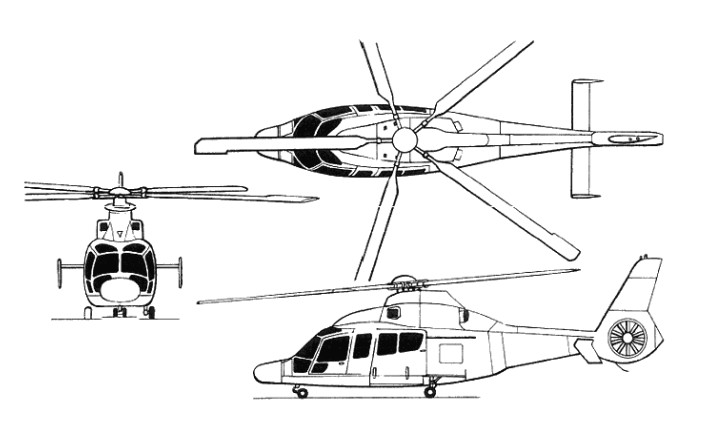
The EC 155B1, compared to earlier Dauphin models, has bulged sliding cabin doors, redesigned cabin windows and 40% larger cabin area. Five-blade Spheriflex main rotor and 10-blade Fenestron rotor with unevenly spaced blades to reduce noise.
Power is from two FADEÑ-equipped Turbomeca Arriel 2C2 turboshafts, each rated at 697kW for T-O, 645kW max continuous power and 780kW for 30 seconds. Standard fuel in six tanks, total capacity 1,257 litres; provision for auxiliary tank in baggage compartment, with capacity for 180 litres; or ferry tank in place of rear seats in cabin, capacity 460 litres; refuelling point above landing gear door on port side. Oil capacity 14 litres.
Standard accommodation for pilot and copilot or passenger in front, and three rows of four seats to rear; high-density seating for one pilot and up to 14 passengers; VIP configurations for between four and eight persons in addition to pilot; 12 cabin seats in offshore version, up to six stretchers in casevac role; one crew door and one large sliding door on each side; freight hold aft of cabin rear bulkhead, with door on both sides. Option of hinged cabin door on VIP versions.
Electrical system includes two starter/generators, each 160 A, 28 V DC and 43 Ah Ni/Cd battery. Duplicated hydraulic system. Optional 10 kVA alternator.
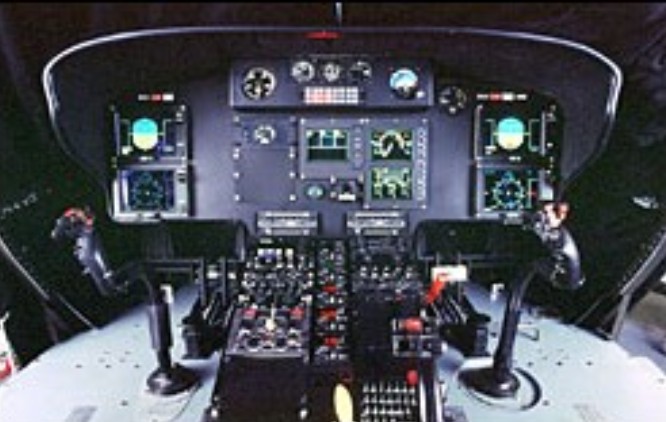
The first customer, German Border Guard (Bundesgrenzschutz; BGS), ordered 13 for delivery between 16 March 1999 and 2000 and further two in February 2002 for delivery in 2003. German Interior Ministry ordered two for Baden-Wurttemberg regional government in February 2000 for delivery in March 2001; Hong Kong Government Flying Service ordered five of which last delivered 17 December 2002; firm orders stood at 33 by June 2000, of which eight were placed in 1999. Orders in 2000 totalled seven, six of which were placed by Shell Nigeria, whose first aircraft was delivered on 25 September 2001. Swedish Helicopter Service ordered three in June 2001 for delivery between October and December 2002. By October 2001, 44 had been ordered of which 18 were in service. First Nigerian example handed over 26 September 2001. Sales in 2001 totalled 13, including three for COHC (China), two for SFC (Vietnam) and three for SHS (Sweden). Further 13 purchased by BGS in February 2002.

Versions:
EC 155B: Baseline version; replaced in 2002; MTOW 4,800kg and Arriel 2C1 engines.
EC 155B1: Upgraded version from 2002; as described. Features include new engine cowlings, new hydraulic cooling system, chip detectors, cargo fire protection, jettisonable cockpit doors; fixed cockpit footsteps and Thales AHV 16 radar altimeter display. Available with standard Corporate, Offshore and Parapublic equipment packages.
EC 155B HTT: Helicoptere Tous Temps (all-weather helicopter). Technology demonstrator (F-WQEZ), first flown 15 October 2002, for evaluation of helicopter navigation, ground collision avoidance and autopilot systems.
Eurocopter EC-155
Main rotor diameter: 12.6m
Fenestron diameter: 1.10m
Length with rotors turning: 14.30m
Fuselage length: 12.71m
Height to top of rotor head: 3.64m
Overall height (tip of fin): 4.35m
Max take-off weight: 4850kg
Empty weight: 2615kg
External payload: 1600kg
Never-exceed speed: 324km/h
Max cruising speed: 267km/h
Econ cruising speed at FL60: 270km/h
Service ceiling, IGE: 4570m
Hovering ceiling, IGE: 2290m
Hovering ceiling, OGE: 2365m
Range with standard fuel: 785km
Endurance with standard tanks: 4h
Eurocopter EC-135

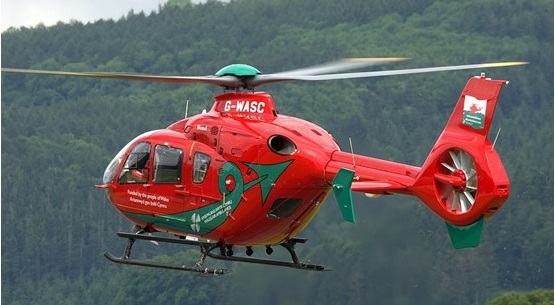
The EC-135 light twin was intended as a replacement for Eurocopter’s successful Bo.105. The combination of the Bo.108 and the fenestron (shrouded tail rotor) led to the definitive EC-135 which had its first flight on 15 February 1994 at Ottobrun, Munich.
Built using composite materials, the EC-135 is a modern technology helicopter incorporating the latest in modular cockpit design and Anti-Resonance Isolation Systems etc. The tail-rotor has been replaced with a 10-blade advanced Fenestron and the helicopter incorporates the latest bearingless main rotor system. It can be powered with either Pratt & Whitney 206B, or Turbomeca Arrius 1B1 powerplants managed through a FADEC control system. With an all-up-weight of 2485kg, the EC-135 has a larger cabin area than the Bo.108 and has been designed to accommodate seven adults or five in luxury club seats. Intended to replace the successful Bo.105 series, the EC-135 has been designed for reduced operator costs and to provide ease of maintenance.

PROGRAMME: First flight on 15 October 1988 as a technology prototype, D-HBOX, previously known as BO 108, powered by two Rolls-Royce 250-C20R turboshafts with conventional tail rotor. A new all-composites bearingless tail rotor was tested during 1990. Eurocopter announced in January 1991 that BO 108 was to succeed BO 105. The first flight of the second prototype (D-HBEC) powered by two Turbomeca TM 319-1B Arrius was on 5 June 1991, and production main and tail rotors were flight tested during 1992 in preparation for certification programme. The design was revised late 1992 to increase maximum seating to seven; advanced Fenestron adopted.
Two preproduction prototypes D-HECX and D-HECY made first flights respectively on 15 February and 16 April 1994 powered by Turbomeca Arrius 2B and P&WC PW206B intended as production alternatives. The third preproduction prototype (D-HECZ) made its first flight on 28 November 1994, powered by Arrius 2B, and subsequently made the type’s US debut at HeliExpo ’95 in Las Vegas in January 1995. Total flight time of first three preproduction EC 135s was nearly 1,600 hours by the end of 1996, by which time all three preproduction prototypes had been retired. VFR certification to JAR 27 was achieved on 16 June 1996 and to FAR Pt 27 with Category A provisions and for both engine options, on 31 July 1996. IFR certification was awarded jointly by DGAC (France) and LBA (Germany) on 9 December 1998, while that for CAA was attained late 2000. LBA (JAA) single pilot TFR certification was achieved on 2 December 1999, and certified in 17 countries by June 2000. The first two production aircraft were delivered to Deutsche Rettungsflugwacht on 31 July 1996.
More than 300 were on order by 92 customers in 25 countries by January 2003. The 100th was delivered (to Bavarian Police) on 16 June 1999, and 250th to Spanish operator CoyotAir on 25 October 2002, some two-thirds with Turbomeca engines. Thirty were ordered in 1999, 40 in 2000 and 38 in 2001. Deliveries totalled 37 in 1999 and 31 in 2000.

The development programme was funded by Eurocopter Deutschland and Eurocopter Canada, suppliers, and German Ministries of Economics and Research and Technology. Flyaway cost was US$2.39 million (1996). Designed to FAR Pt 27 including Category A and European JAR 27, of pod-and-boom configuration, with Fenestron. Forward flight stability is by two horizontal and four vertical (fin, underfin and two endplates) surfaces. Equipped with a four-blade FVW bearingless main rotor, single-piece rotor head/mast, rotor rpm are variable. Composites blades are mounted on controlled flexibility composites arms giving flap, lag and pitch-change freedom. Control demands are transmitted from rods to root of blade by rigid CFRP pitch cuffs. The main rotor blades have DM-H3 and -4 aerofoils with non-linear twist and tapered transonic tips, and the main rotor axis is tilted forward 5 deg. The Fenestron has 10 asymmetrically spaced blades.
Airframe drag 30% lower than BO 105 by clean and compact external shape; cabin height retained by shallow two-stage transmission; vibration reduced by ARIS mounting between transmission and fuselage; all dynamically loaded components to have 3,500 hours MTBR or be maintained on-condition.
The second BO 108 prototype had EFIS-based IFR system; fuselage stretched 15cm and interior cabin width extended by 10cm; main rotor diameter extended to 10.20m; for EC 135, tail rotor replaced in 1992 by New Generation Fenestron with 11 fixed flow-straightening vanes in fan efflux designed to avoid momentum losses and improve fan figure of merit; vanes are swept relative to radius and fan has different number of blades to avoid shocks and reduce noise; fan blade tip speed is only 185m/s; maximum T-O weight increased to 2,720kg.
Conventional hydraulic fully powered controls with integrated electrical SAS servos; objective is single-pilot IFR with cost-effective stability augmentation. Electric cyclic trim system.
The airframe mainly Kevlar/CFRP sandwich composites, except aluminium alloy sidewalls, pod lower module and cabin floor, tailboom and around cargo area; some titanium in engine bay; composites tailplane. Landing gear is skid type; ground handling wheels can be fitted.
Power is a choice of turboshaft engines. Turbomeca-engined aircraft have two Arrius 2B2s, each giving 452kW at T-O, 426kW maximum continuous, 528kW OEI continuous, 580kW for 2 minutes with OEI and 609kW for 30 seconds. Alternative power plant is two Pratt & Whitney Canada PW206B2s, each giving 463kW at T-O, 419kW maximum continuous, 528kW OEI continuous, 580kW for 2 minutes with OEI and 609kW for 30 seconds. Both types of engine have FADEC. Transmission rating 616kW maximum T-O, 567êW maximum continuous, 353kW OEI continuous, 513kW for 2 minutes with OEI and 526kW for 30 seconds.
Fuel capacity of first 249 aircraft 673 litres of which 663 litres are usable. Capacity 700 litres from No. 250. Additional long-range tank optional, usable capacity 198.5 litres. Optional self-sealing fuel tanks. Oil capacity 8 litres.
Accommodation is for seven persons, including one or two pilots, in standard version, or six persons in VIP version; optional max capacity of eight. Four-point harnesses for front seats; three-point harnesses for remaining seats. Forward-hinged doors for two front occupants; sliding doors for five persons in cabin. Rear of pod has clamshell doors for bulky items/cargo; flights permissible with clamshell doors removed; optional window in each rear door. Unobstructed cabin interior. EMS variant can accommodate one pilot with two stretcher cases and two seated medical staff/ attendants; alternative layouts for one, one, three, or two, one, three, or two, two, two.
A redundant 28V DC electrical supply systems to JAR/FAR 27 standards; two 160A 28V starter/generators and 24V 17Ah Ni/Cd batteries in Arrius 2B variant, two 200A 28V starter/generators and 24V 25Ah Ni/Cd batteries in PW206B variant. Fully redundant dual hydraulic systems. NATO standard external power connector.
Instrumentation includes Liquid crystal dual-screen (Thales SMD45) vehicle and engine management displays with AN equipment.
Versions:
EC 135P1: Pratt & Whitney engine version (PW206B). First two (D-HQQQ and D-HYYY; c/ns 0005 and 0006) delivered on 31 July 1996 to Deutsche Rettungsflugwacht.
EC 135P2: Introduced August 2001. FW206B2 engine with improved contingency ratings.
EC 135T1: Turbomeca engine version. First (0010/ N4037A) delivered to USA in November 1996. Early helicopters had 435kW Arrius 2B engines, later replaced by 500kW Arrius 2B1. Uprated Arrius 2B1A engine certified April 2001.
EC 135T2: Deliveries from September 2002. Arrius 2B2 engines.
EC 135 ACT/FHS: Active control technology and flying helicopter simulator; German fly-by-light trials programme; first flight of modified production EC 135 (D-HECV) from Eurocopter’s Ottobrunn facility 28 January 2002.
EC 135 APH: Advanced Police Helicopter. Unified mission fit offered by McAlpine Helicopters of UK, 1997; allows simple outfitting with sensors and equipment, according to tasking, using underfuselage pod; typical equipment, including loudspeakers, searchlights, microwave downlink and multisensor turret, can be fitted externally; TV and video equipment earned internally. Pod reduces maximum speed by 9km/h.
Engines: 2 x Turbomeca Arrius 2B
Instant pwr: 360 340 kW.
Engines: 2 x P&WC PW206B.
Instant pwr: 340 kW.
Main rotor diameter: 10.2m
Overall length, rotor turning: 12.16m
Fuselage length: 10.20m
Height overall: 3.51m
Height to top of rotor head: 3.35m
Max take-off weight: 2835kg
Max take-off weight with external load: 2900kg
Empty weight: 1490kg
Max cruising speed: 256km/h
Econ cruising speed: 239km/h
Service ceiling: 3050m
Hovering ceiling, OGE: 2195m
Range: 620km
EC-135P1
Engine: 2 x P&WC PW206B, 465 kW.
Rotor dia: 10.2 m.
MTOW: 2720 kg.
Useful load: 1240 kg.
Max cruise: 139-145 kts.
Max speed: 150 kts.
Max range: 800 km.
Seats: 7.
EC-135P2
Engine: 2 x P&WC PW206B.

Eurocopter
Eurocopter GIE was formed in Paris in 1984 as a company jointly owned by Aerospatiale and MBB to persue the development of three versions of the basic combat helicopter, the PAH, HAP and HAC.

