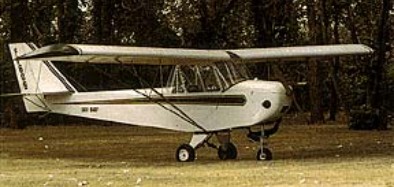
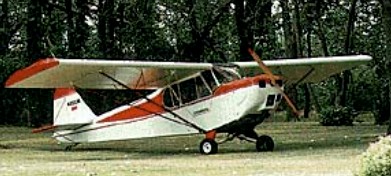
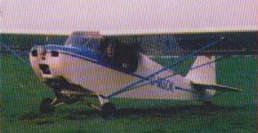
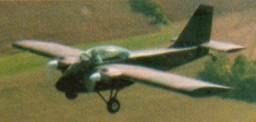
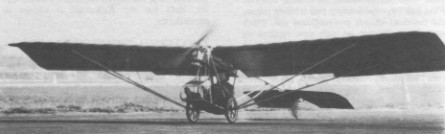
A replica of the popular Cessna 150 and 152, the FP-606 first flew in 1986, and by 2004, 25 were sold. Winner of the EAA Best New Design Award for light planes in 1988, the FP-606 is a familiar form and geodetic construction giving the aircraft a solid feel. A 2SI 460-35 engine powers the light plane version, with a 447 or 503 forming a formidable power plant for the experimental model. The fully enclosed cockpit features a door you can take off. Available as either a trigear or taildragger, the FP-606 requires 15 minutes field assembly time. A five-USgallon fuel tank is standard on light-plane models, with a 7 1/2 gallon tank available for the experimentals. Brakes and electric starter are optional on both.
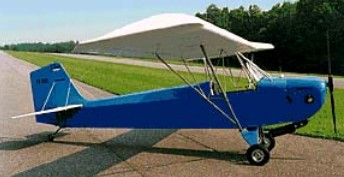
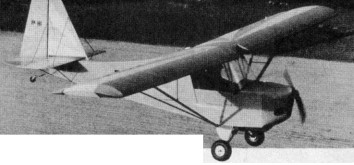
First flown in 1984, this light plane combines a high wing and an open cockpit, loosely based on the Pietenpol Air Camper. The pylon-mounted high wing leaves the cockpit essentially unenclosed, offering the pilot spectacular visibility and the freedom of an open cockpit design. Powered by a 40 horsepower Rotax, the FP-505 has shock-absorbing gear and geodetic construction. By 2004 50 had been sold.
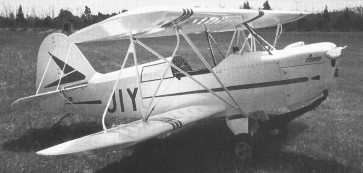
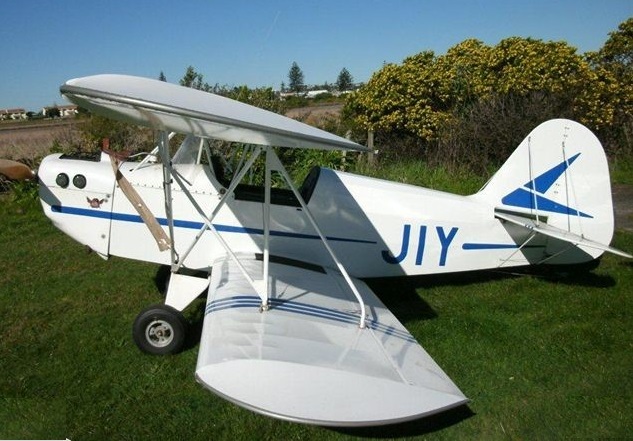
First flown in 1984, the FP-404 is a throw-back to seat-of-the-pants flying, complete with minimal instruments and bare-necessity controls. A single seat biplane amateur-built biplane, the 404 is a version of Fisher Classic, featuring short wings, full-span ailerons and a semisymmetrical airfoil. Geodetic wood construction and additional bracing contribute to structural strength, enough to withstand higher Gs than most lightplanes. For experimental models, a 50 horsepower Rotax engine is more than enough power for 800 feet-per-minute climbs. The plane is as responsive as you are aggressive. By by 2004 350 had been sold.
The Super Koala 2 seat development of the Koala adds another seat for side-by-side. The cockpit has dual controls and the wings detach for storage. Options are a 52 or 64 horsepower Rotax engine for cruise speeds of 65-85 mph, allowing hands-off flying. First flown in 1983, by 2004 100 had been sold.
Super Koala Engine; Rotax 503, 52 hp Wingspan; 31′ Wing Area; 140 sq. ft. Height; 5’7″ Length; 18’1″ Fuel Capacity; 8 USgal. Fuel Consumption @ 75%; 3 USgal/hr. Design Loads; +4.6 -2.3g Drive Type; Geared Gross Weight; 740 lbs. Empty Weight; 350-375 lbs. Construction Time; 500 hrs. Field Assembly Time; 20 min. Velocity-Never Exceed; 95 mph Cruise Speed Solo; 75-80 mph Stall Speed (w/flaps) Solo; 28 mph Climb Rate Solo; 1000 fpm Glide Ratio Solo; 9:1 Takeoff Run Solo; 150′ Landing Roll Solo; 200′ Cruise Speed Gross; 70-75 mph Stall Speed (w/flaps) Gross; 30 mph Climb Rate Gross; 700 fpm Glide Ratio Gross; 9:1 Takeoff Run Gross; 200′ Landing Roll Gross; 250′
Super Koala Engine; Rotax 582LC, 64 hp Wingspan; 31′ Wing Area; 140 sq. ft. Height; 5’7″ Length; 18’1″ Fuel Capacity; 8 USgal. Fuel Consumption @ 75%; 4 USgal/hr. Design Loads; +4 -2.2g Drive Type; Geared Gross Weight; 830 lbs. Empty Weight; 375-400 lbs. Construction Time; 500 hrs. Field Assembly Time; 20 min. Velocity-Never Exceed; 95 mph Cruise Speed Solo; 75-80 mph Stall Speed (w/flaps) Solo; 29 mph Climb Rate Solo; 1400 fpm Glide Ratio Solo; 9:1 Takeoff Run Solo; 125′ Landing Roll Solo; 200′ Cruise Speed Gross; 70-75 mph Stall Speed (w/flaps) Gross; 32 mph Climb Rate Gross; 1100 fpm Glide Ratio Gross; 9:1 Takeoff Run Gross; 150′ Landing Roll Gross; 250′
Super Koala Stall: 45 kt / 52 mph / 83 kmh Cruise: 60 kt / 69 mph / 111 kmh VNE: 95 kt / 109 mph / 176 kmh Empty Weight: 201 kg / 443 lbs MTOW Weight: 376 kg / 829 lbs Climb Ratio: 1000 ft/min / 5 m/s Glide Ratio: 9:1 Take-off distance (50ft obstacle): 430 ft / 130 m Landing distance (50ft obstacle): 560 ft / 172 m 2009 Price: US$14,300
First flown in 1982, 200 were sold by 2004. A low wing, single seat ultralight designed to be as portable as possible, the 303’s wings are easily folded back to rest on the cantilevered horizontal stabilizer. Field assembly time is less than 10 minutes. Take-off roll is 100 feet, with a climb rate of 800 feet per minute. In the 303, visibility is always good. The cockpit is situated slightly forward of the wing’s leading edge, giving a clear view of what’s above, around and below. The FP-303 has a centre mounted joy stick, rudder pedals, and tailwheel steerable through rudder pedals. In 1997 the plans cost US$195.
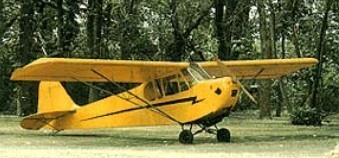
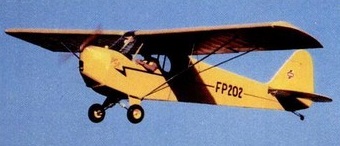
First flown in 1981, for those who like to work with wood, Fisher Flying Products of Ohio market the FP202 Koala kitset Cub replica, a design which utilises the geodetic construction method. Centre mounted joy stick, rudder pedals, tailwheel steerable through rudder pedals. Detachable wings. An aluminum strut braced main spar carrythrough, a ground adjustable horizontal stabilizer, 14-inch pneumatic tires with rubber shock cord, and removable cockpit panels for summer flight.
In 1984 the Fisher Koala kit was priced at $4750 with a 40 hp engine.
By 2004, 325 had been sold.
FP-202 Engine; 2 Cycle, 1 Cyl, 28 HP Prop Diameter/Pitch; 60″/28″ Reduction Ratio; 2.58-to-1 Wingspan; 29’10” Length; 17’9″ Height; 5’5″ Wing Area; 120 sq. ft. Fuel Capacity; 5 gal./2 gph Gross Weight; 500 lbs. Empty Weight; 250 lbs. Useful Load; 250 lbs. Wing Loading; 4.17 psf Power Loading; 13 lb/hp Design Load Factors; +4 -2.5g Construction Time; 500 hrs. Field Assembly Time; 15 min. Velocity-Never Exceed; 75 mph Top Level Speed; 60 mph Cruise Speed; 55mph @ 65% power Stall Speed; 26 mph Sea Level Climb Rate; 900 fpm @ 40 mph Takeoff Run; 95′ Landing Roll; 125′ Range at Cruise; 135 mi L/D (Glide Ratio); 9-to-1 @ 40 mph
FP-202 Koala Engine: Rotax 277, 28 hp. Static thrust: 200 lbs. Speed max: 62 mph. Cruise: 57 mph. Height: 5.8 ft. Length: 17.9 ft. Wing span: 29.9 ft. Wing area: 120 sq.ft. Wing loading: 4.16 lbs/sq.ft Power loading: 17.85 lbs/hp Fuel cap: 5 USG. Weight empty: 245 lbs. Gross: 500 lbs. Vne: 75 mph Range: 180 sm. Stall: 26 mph. ROC: 750 fpm. Take-off dist: 150 ft. Landing dist: 150 ft. Design limits: +4, -2.5g. Glide ratio: 9-1. Service ceiling: 13,000 ft. Seats: 1. Landing gear: tail wheel.
Engine: Rotax 277, 25 hp Wing span: 9.10 m Wing area: 10.5 sq.m MAUW: 226 kg Empty weight: 110 kg Fuel capacity: 19 lt Max speed: 97 kph Cruise speed: 75 kph Minimum speed: 40 kph Climb rate: 3.5 m/s Certification: Vz Seats: 1 Fuel consumption: 7 lt/hr Plan price (1998): US$250 Kit price (1998): US$5922
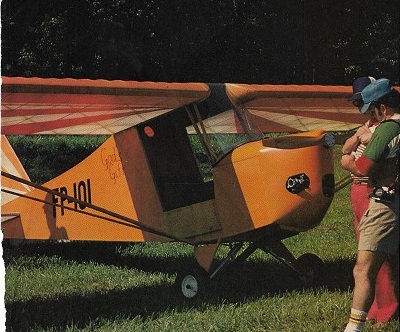
Single seat single engined high wing mono¬plane with conventional three axis control. Wing has unswept leading and trailing edges, and constant chord; conventional tail. Pitch control by elevator on tail; yaw control by fin mounted rudder; roll control by half span ailerons; control inputs through stick for pitch/roll and pedals for yaw. Wing braced from below by struts; wing profile; double surface. Undercarriage has three wheels in tail dragger formation; steel spring suspension on tailwheel and bungee suspen¬sion on main wheels. Push right go right nosewheel steering connected to yaw control. Wood/fabric fuselage; enclosure. Engine mounted below wing driving tractor propeller. All wood geodetic construction with aluminium tube struts and landing gear, steel tubing engine mount and glass fibre cowling. Covered with aircraft heat shrink cloth. Shown publicly for the first time at Oshkosh in 1982, the FP 101 is radically different from the other Mike Fisher products. Mike Fisher offered four permutations of the FP 101: two engines (Zenoah G25B with 22 hp or Kawasaki TA440A with 40 hp) and two wing spans (35ft, 10.67m or 29ft, 8.84 m).
Unlike the Barnstormer and the Boomer¬ang from the same company, this machine is not available as plans, but only as a kit, which can be purchased in three ways. First, the FP 101 can come as four part kits: wings, fuselage and hardware at $750 each and either a Zenoah power pack for $1398 or a Kawasaki power pack for $1850. Alternatively the airframe kits can be together for $2150 (short span) or $2350 (long span), with power packs as before. Finally the kit can be purchased complete with Zenoah for $3350 (short span) or $3550 (long span), equivalent figures for the Kawasaki variant being $3798 and $3998 in 1982.
Engine: Zenoah G25B, 22 hp at 6500 rpm. Propeller diameter and pitch 50 x 24 inch, 1.27 x 0.60 m. V belt reduction, ratio 2.0/1. Power unit area 0.16 hp/sq.ft, 1.7 hp/sq.m. Fuel capacity 5.0 US gal, 4.2 Imp gal, 18.9 litre. Length overall 16.5ft, 5.03m. Wing span 34.8 ft, 10.62 m. Chord at root 4.0 ft, 1.22 m. Sweepback 0 degs. Total wing area 140 sq.ft, 13.0 sq.m. Wing aspect ratio 8.7/1. Main wheels diameter overall 14 inch, 35 cm. Empty weight 210 lb, 95 kg. Max take off weight 500 lb, 227kg. Payload 290 lb, 132kg. Max wing loading 3.57 lb/sq.ft, 17.4 kg/sq.m. Max power loading 22.7 lb/hp, 10.3 kg/hp. Max level speed 55 mph, 88 kph. Never exceed speed 70 mph, 113 kph. Max cruising speed 55 mph, 88 kph. Economic cruising speed 40 mph, 64 kph. Stalling speed 15 mph, 24 kph. Max climb rate at sea level 450 ft/min, 2.3 m/s. Take off distance 100 ft, 30 m. Landing dis¬tance 150 ft, 45m.
Engine: Kawa¬saki TA440A, 40 hp at 6000 rpm. Propeller diameter and pitch 54 x 27 inch, 1.37 x 0.69 m. V belt reduction, ratio 2.4/1. Max static thrust 230 lb, (104) kg. Power unit area 0.29 hp/sq.ft, 3.1 hp/sq.m. Fuel capacity 5.0 US gal, 4.2 Imp gal, 18.9 litre. Length overall 16.5ft, 5.03m. Wing span 34.8 ft, 10.62 m. Chord at root 4.0 ft, 1.22 m. Sweepback 0 deg. Total wing area 140 sq.ft, 13.0 sq.m. Wing aspect ratio 8.7/1. Main wheels diameter overall 14 inch, 35 cm. Empty weight 250 lb, 113 kg. Max take off weight 500 lb, 227kg. Payload 250 lb, 113kg. Max wing loading 3.57 lb/sq.ft, 17.4 kg/sq.m. Max power loading 12.5 lb/ hp, 5.7 kg/hp. Max level speed 55 mph, 88 kph. Never exceed speed 70 mph, 113 kph. Max cruising speed 55 mph, 88 kph. Economic cruising speed 45 mph, 72 kph. Stalling speed 22 mph, 35 kph. Max climb rate at sea level 850 ft/min, 4.3 m/s. Best glide ratio with power off 10/1. Take off distance 75 ft, 23 m. Range at aver¬age cruising speed 125 mile, 200 km.
Wingspan; 29ft, 8.84 m Length 13 ft 10 in Empty weight 250 lbs. Gross weight 500 lbs Cruise speed 55 mph. Stall speeds 24 mph. Takeoff/landing roll 100ft. Climb rate 850 fpm. Fuel capacity 5 USG.
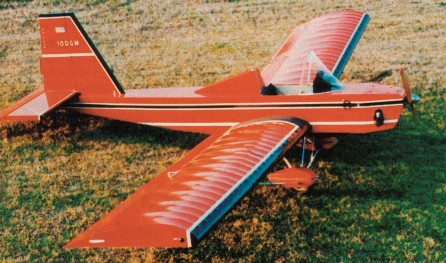
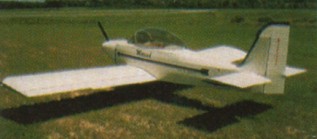
Single seat single engined high wing mono¬plane with conventional three axis control, first flown in 1982. Wing has unswept leading and trailing edges, and constant chord; cruciform tail. Pitch control by elevator on tail; yaw control by fin mounted rudder. Control inputs through stick for pitch/roll and pedals for yaw. Wing braced from below by struts; wing profile; double surface. Undercarriage has tall dragger formation and rigid suspension with 20-inch main wheels. Aluminium tube framework, without pod. Engine mounted below wing driving tractor propeller. Frame: 6061T6 and 2024T3 aluminium. Wing: 2.7 oz Stits Polyfiber. Like the Barnstormer, the Boomerang monoplane is also intended for home builders, to whom Fisher Flying sell through intermediary Wicks Aircraft in plan form for $65 or as a complete kit for $3720. The standard aircraft is fitted with a twin cylinder 340 cc Kawasaki engine of 30 hp with 2.0 reduction which is less frequently used than the TA440 436 cc Kawasaki giving 38.5 hp, which is available as an option. A peculiarity of the Boomerang is that it is available with two different wings an option is to have an enlarged wing of 32ft (9.75m) span. Wing area is increased in proportion, which allows the aircraft to be used as a two seater, though it is then included in the experimental aircraft category and no longer qualifies as an ultralight in the USA. Like Mike Fisher’s biplane, the Boomerang was also sold in the form of sub assembly kits: wing for $1175; fuselage for $585; covering for $425 and motor for $1450, in 1982.
Engine: Kawasaki 340 cc, 30 hp. Propeller diameter and pitch 54 x 22 inch, 1.37 x 0.56 m. Reduction ratio 2.0/1. Power per unit area 0.19 hp/sq.ft, 2.1 hp/sq.m. Fuel capacity 2.5 US gal, 2.1 Imp gal, 9.5 litre Optional fuel capacity 5.0 US gal, 4.2 Imp gal, 18.9 litre. Wing span 28.0 ft, 8.53 m. Mean chord 5.6 ft, 1.70 m. Total wing area 156 sq.ft, 14.5 sq.m. Wing aspect ratio 5.0/1. Main wheels diameter overall 20 inch, 50 cm. Empty weight 190 lb, 86 kg.