Made in 1977, the Vector was specifically intended for the pilot who has ridge soaring experience and offer the potential for cross country work. Flexi-Form consider that the glider is both lighter and faster to fly compared with its competitors. The sail is tightly stretched across the entire span and is cambered to provide an airfoil section.
Vector
By co-operation with Main Welding Co. Ltd. the Vector was available in kit form. The Vector price (B and C) in kit form was £430.00, or ready to fly at £500.00 (including VAT and bag).
Vector B Pilot weight: less than 12.5 st.
Vector C Sail area 180 sq ft Span 36.5 ft Keel 7 ft 6 in Nose angle 114 deg Aspect ratio 7.4., Pilot weight: greater than 12.5 st.
The Sea-Lander came out in 1981 and rather than follow the Comet clone route Flexiform chose to produce a cross-boomless machine with a distinctive bird-tail shape. It was claimed to be 14 lb lighter than a Typhoon, more stable at speed than a Demon and quicker to rig than Lightning. Flexiform also claimed that the sink rate and handling outclass all competitors.
All material is aircraft released hardware from the USA.
Both the Sealander and Hi-Lander were designed to accept the Hiway and Skyhook trike units without any modification.
Sealander 170 Span: 34 ft Wing area: 170 sq.ft Nose angle: 148.5 deg Weight: 60 lb Pilot weight: 140-175 lb Speed range: 15-42 mph
Sealander 190 Span: 35 ft Wing area: 190 sq.ft Nose angle: 148.5 sq.ft Weight: 63 lb Pilot weight: 160-200 lb Speed range: 15-42 mph
The Hi-Lander came out in 1980 as an advanced intermediate hang glider. Basically a copy of the La Mouete Atlas, the Hi Lander uses preformed battens and has approximately 30 % double surface. Unlike the Atlas the Hilander has plug-in cross boom ends rather than a sliding centre box system. Performance is very similar to that of the Atlas although it does not have quite such impressive sink rate.
Both the Sealander and Hi-Lander were designed to accept the Hiway and Skyhook trike units without any modification.
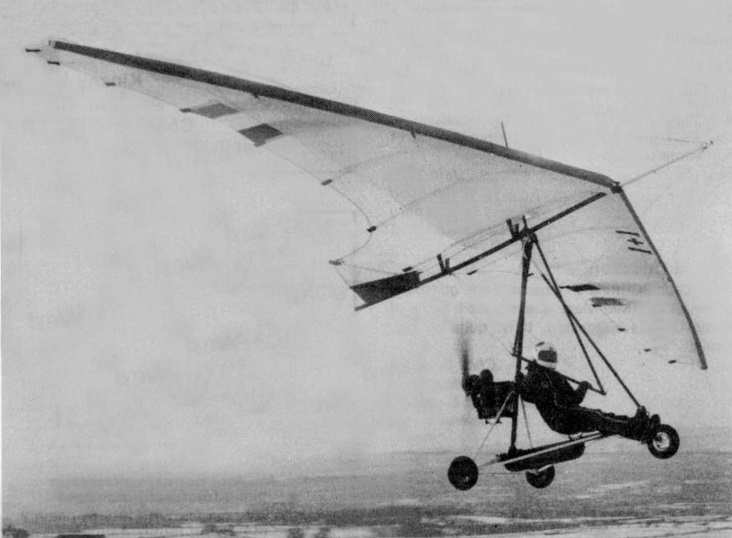
Flexiform Sky Sails Hilander/Sky-Trike
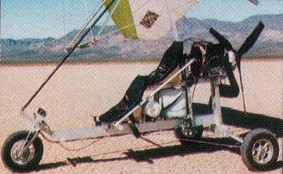
160cc Valmet engined Hiway Skytrike with Flexiform Hilander wing (1981)
Berlin, right after the re-unification, was the assigned German capital with an area of roughly 5 million people. Agricultural flying had been very popular in the GDR so there were a lot of adandoned airfields at that time.
Starting the organisation and finding the right spot to start was a challenging task. Even better, finding the right aircraft for training, getting all the licences and building the network of flight instructors, clients and maintenance facilities.
The property question was still a major obstacle as a lot of land had to be reassigned to old and new owners. Infrastructure of old adminstration had to be carried over to the new administration, validation of old licences, ald maintenance standards and while facing all that trouble, we opended our new company and found a spot to start Fläming Air.
Fläming, the name for an area south of Berlin, is flat land and called “Fläming” for about 900 years after some early settlements of the Flame tribes. In the early 90s, Fläming had their first airfield and fuel station. 40,000 flights from that field showed the importance of Fläming Air for the south Berlin flying community. By 1995 they had the first hard runway which was extended to 850 m in 1998. Another grass runway for gliders and tail dragger was added in 1998 as well as illumination for night VFR. 20-30 students filed their PPL at the facilities every year.
The repair and maintenance facility is certified to JAR 145 and a little later the JAR 21G Production certification for Rotax conversions of Cessna C150 was achieved. 1999 saw the first licence production of an ultralight aircraft made from GFR/CFR. In 2003 Fläming launched their own microlight/ultralight/experimental – the Smaragd, which had it’s maiden flight on March 22nd, 2003 and was licensed on December 29th, 2003.
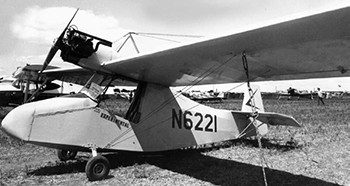
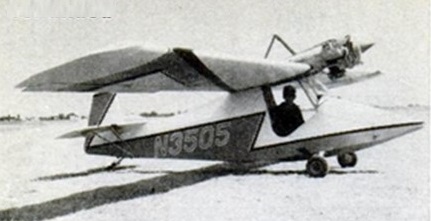
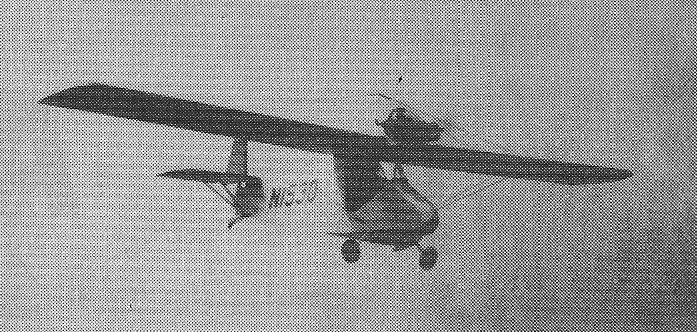
An ultra-light sporting single-seat high-wing monoplane designed by K. Flaglor of Asheville, North Carolina. The Scooter was originally powered by a Cushman golf cart engine, which was ultimately replaced by a 1,500-cc VW engine rated at 40 hp. At the 1967 EAA meet this high-wing, enclosed-cabin taildragger received both the “Outstanding Ultralight” and “Outstanding Volkswagen Powered” awards. Construction is of wood with a plywood covering, except for the aft section of the fuselage which is fabric covered. The VW engine is mounted over the cabin and turns a two-blade propeller. The Sky Scooter features all wood construction, generous wing area for STOL like performance. Easy to build and maintain.
The Scooter was later marketed by Rotor Wings & Flying Machines.
The plans for the Ace Aircraft Ace Scooter development of the Flaglor Scooter consisted of one sheet 17in x 22in, nine sheets 22in x 34in, and an illustrated construction manual containing 14 photographs used to show key assemblies and construction details. The Airfoil is drawn full size as are most of the fittings.
The Scooter is constructed primarily of marine spruce and plywood. Aircraft quality materials maybe used and are recommended for the spars. All fittings are designed for simple fabrication and are made of 4130 steel as is the motor mount tubing. The metal fairing and wing leading edge can be made of “hardware store variety” aluminium which was the case on the prototype.
The fuselage is composed of spruce longerons with plywood gussets aft and plywood sides in the cockpit area.
Ace Aircraft Ace Scooter
The landing gear is made of steel. All wing ribs are contour sawed 1/4in marine plywood, the main spars spruce as are the false and aileron spars. The wing uses a wood cross hatching in the form of an X between the ribs and spars, resulting in no need for drag or anti-drag wires or fittings.
Plywood wing tips and wood trailing edges complete the structure. Only the wing leading edge is aluminium.
Engine: VW, 25 hp. HP range: 25-40. Height: 7 ft. Length: 15 ft. Wing span: 28 ft. Wing area: 115 sq.ft. Fuel cap: 5 USG. Weight empty: 390 lbs. Gross: 625 lbs. Speed max: 95 mph. Cruise: 65 mph. Range: 180 sm. Stall: 34 mph. ROC: 325 fpm. Take-off dist: 250 ft. Landing dist: 350 ft. Seats: 1. Landing gear: tail wheel.
Engine 40-hp 1500cc Volkswagen. Gross Wt. 650 lb. Empty Wt. 390 lb. Fuel capaci¬ty 5 USG. Wingspan 28 ft Length 15 ft 8 in Wing area: 115 sq.ft. Top speed 90 mph. Cruise speed 80 mph. Stall speed 34 mph. Climb rate 600 fpm. Takeoff run 250 ft. Landing roll 250 ft. Range 175 nm Seats: 1
Engine: VW 1600 60hp Span: 27’10” Length: 15’6″ Wing Area: 115 sq. ft. Empty Weight: 390 lbs Useful Load: 235 lbs Stall: 40 mph Landing Speed: 60 mph Cruise: 100 mph Rate of Climb: 1000 fpm Take Off Distance: 350 ft Seats: 1
Ace Aircraft Ace Scooter Engine: VW 1500 Span: 28 ft 0 in Wing area: 115 sq.ft Length: 15 ft 8 in Height: 7 ft 0 in MTOW: 625 lb Empty weight: 390 lb Fuel: 7 USG Top speed: 88 mph Cruise speed: 75 mph Stall: 34 mph SL climb: 600 fpm Ceiling: 12,000 ft Range: 175 mi Take-off roll: 250 ft Landing roll: 350 ft