1995-7: 7431 Canterbury Rd. Felton, DE 19943, USA.
LSA builder
1995-7: 7431 Canterbury Rd. Felton, DE 19943, USA.
LSA builder
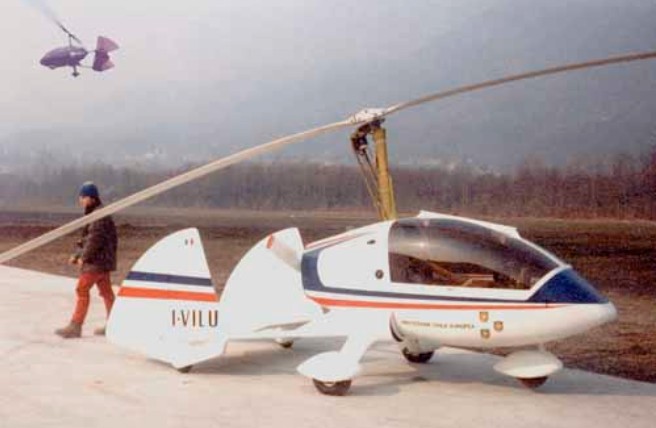
In 1980 Vittorio Magni of Italy had designed a new, two-seat autogyro with a 150 hp Lycoming engine. The machine got the project name MT-7 (Magni-Tervamaki). Vittorio later redesignated the machine as VPM S-2.
The calculations and general design blueprints were delivered to Vittorio, who was responsible for all the detail design. He also built the machine together with his son. The machine was completed in 1985, and it also flew well.
Some years later the machine was lost in an accident in France. The control rods had been bent in road transport by a truck.
Magni continued the development of autogyros and has designed a series of gyros which all seem to have the rotor head and blade design of JT-5 and MT-7.

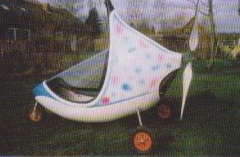
The Silent Racer was originally marketed as a single seater with retractable undercarriage and folding prop. The later Silent Racer Chronos 12 two seater had a fixed undercarriage and prop, but retained the integral fairing.
Silent Racer Chronos 12
Empty weight: 185 kg
Wing span: 9.87 m
Wing area: 12.9 sq.m
Fuel capacity: 65 lt
Certification: Vz
Engine: Hirth 2704, 50 hp
MAUW: 450 kg
Seats: 2
Max speed: 140 kph
Cruise speed: 100 kph
Minimum speed: 65 kph
Climb rate: 2.5 m/s
Fuel consumption: 10 lt/hr
Price (1998): 19 900 DM
1998:
Klingenbrookerweg 6c
D-23815 Westerrade
Germany
Trike builder
Founded 1948 as Helio Aircraft Corporation to develop the two-seat Koppen-Bollinger lightplane. Four-seat STOL derivative Helio Courier entered production 1954. Superseded by the H-391B, H-395 and H-395A Super Couriers introduced from 1958. Helio H-250 and H-295 six-seat utility aircraft flew in 1964 and 1965 respectively, and were produced for both civil and military use; Super Couriers in USAF service designated U-10. The H-550A Stallion with turboprop engine followed. Helio was acquired by General Aircraft Corporation in 1969 and renamed Helio Aircraft Company, but the assets later acquired by Helio Courier Ltd. (which produced H-295 Super and HT- 295 Trigear Couriers), Helio Precision Products and, in 1976, Helio Aircraft Ltd. In 1984 company bought by Aerospace Technology Industries and in 1989 by Aircraft Acquisition Corporation; the latter re-formed company as Helio Aircraft Corporation to produce Couriers and turboprop H- 550A Stallion, plus develop new piston-engined Courier 700 and turboprop-engined Super Courier, which did not take place.
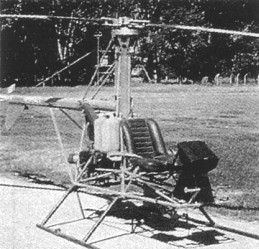
Circa 1990.
Engine: Rotax, 97hp
Height: 7 ft
Length: 12.5 ft
Empty weight: 310 lb
Gross weight: 725 lb
Payload Total: 415 lb
Main rotor diam: 19 ft
Tail rotor dia: 3.5 ft
Max speed: 85 mph
Cruise: 63 mph
Ceiling: 12,500 ft
Seats: 1
Canada
Based in Canada for project management, but with French connections in helicopter development; first flew in France in 1976 and 1984 two prototypes of a four-seat helicopter with rotor driven by cold-air tip jets. Program halted.
The Heldeberg Marathon, also called the Blue Heron Marathon, was an American powered parachute, that was designed and produced by Heldeberg Designs of Altamont, New York.
The Marathon was designed to comply with the US FAR 103 Ultralight Vehicles two-seat trainer rules and was marketed as a light-sport aircraft. The aircraft takes its name from its design goal of an aircraft with long range and endurance and features a range of 115 mi (185 km). It features a parachute-style high-wing, two-seats-in-tandem accommodation, tricycle landing gear and originally a single 50 hp (37 kW) Rotax 503 engine in pusher configuration. The 64 hp (48 kW) Rotax 582 was the standard engine used on later models.
The aircraft is built from a combination of bolted dural aluminium and stainless steel tubing. It features a double ring propeller guard that has been roll-over tested. The 10 U.S. gallons (38 L; 8.3 imp gal) fuel tank is made from aluminium. In flight steering is accomplished via foot pedals, or optionally a control stick, that actuate the canopy brakes, creating roll and yaw. On the ground the aircraft has lever-controlled nosewheel steering. The main landing gear incorporates gas strut suspension. The aircraft is factory supplied in the form of an assembly kit that requires 30–50 hours to complete.
Originally marketed by the factory under their own name, the aircraft was later marketed under the brand name Blue Heron, although the manufacturer remained the same. The selling price was US$21,995 in 2012, though production is now completed.
Blue Heron Marathon
Powerplant: 1 × Rotax 582, 64 hp (48 kW)
Length: 9 ft 8 in (2.95 m)
Wingspan: 39 ft 6 in (12.04 m)
Height: 6 ft 6 in (1.98 m)
Wing area: 500 sq ft (46 m2)
Empty weight: 308 lb (140 kg)
Gross weight: 850 lb (386 kg)
Fuel capacity: 10 U.S. gallons (38 L; 8.3 imp gal)
Cruise speed: 32 mph (51 km/h; 28 kn)
Range: 115 mi (100 nmi; 185 km)
Rate of climb: 900 ft/min (4.6 m/s)
Wing loading: 1.7 lb/sq ft (8.3 kg/sq.m)
Crew: one
Capacity: one passenger
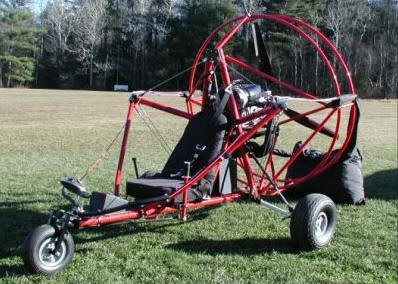
The Heldeberg Spirit 103, also called the Blue Heron Spirit 103, is an American powered parachute, designed and produced by Heldeberg Designs of Altamont, New York.
The Spirit 103 was designed to comply with the US FAR 103 Ultralight Vehicles rules, including the category’s maximum empty weight of 254 lb (115 kg). The aircraft has a standard empty weight of 205 lb (93 kg). It features a parachute-style high-wing, single-place accommodation, tricycle landing gear and originally a single 45 hp (34 kW) 2si 460 engine in pusher configuration. The 40 hp (30 kW) Rotax 447 and 50 hp (37 kW) Rotax 503 engines are used on current models.
Early models used a large sized 500 sq ft (46 m2) parachute, whereas current models use a smaller and faster 400 sq ft (37 sq.m) wing.
The aircraft is built from a combination of bolted 6061 T-6 aluminium and stainless steel tubing. It features a double ring propeller guard that has been roll-over tested. The 5 U.S. gallons (19 L; 4.2 imp gal) fuel tank is made from aluminium. In flight steering is accomplished via foot pedals, or optionally a control stick, that actuate the canopy brakes, creating roll and yaw. On the ground the aircraft has lever-controlled nosewheel steering. The main landing gear incorporates gas strut suspension. The aircraft was factory supplied in the form of an assembly kit that requires 30–50 hours to complete for US$12795 in 2012.
Originally marketed by the factory under their own name, the aircraft was later marketed under the brand name Blue Heron, although the manufacturer remained the same.
Blue Heron Spirit 103
Engine: 1 × Rotax 503, 50 hp (37 kW)
Wingspan: 39 ft 6 in (12.04 m)
Wing area: 400 sq ft (37 sq.m)
Length: 8 ft 6 in (2.59 m)
Height: 6 ft 0 in (1.83 m)
Empty weight: 235 lb (107 kg)
Gross weight: 580 lb (263 kg)
Fuel capacity: 5 U.S. gallons (19 L; 4.2 imp gal)
Wing loading: 1.45 lb/sq ft (7.1 kg/sq.m)
Power Loading: 11.3 lbs. per hp
Cruise speed: 32 mph (51 km/h; 28 kn)
Rate of climb: 450 ft/min
Take Off Distance: 150 ft
Landing Distance: 150 ft
Seats: one
Founded in 1996, Heldeberg Designs was an American aircraft manufacturer, headquartered in Altamont, New York. The company specialized in powered parachutes.
Heldenberg Designs, 260 Benninger Rd. Delanson NY 12053
Originally marketing under its own name, the company marketed its aircraft under the brand name Blue Heron Powered Parachutes.

The company ceased manufacturing the Blue Heron line of powered parachutes in 2010. By early 2013 the company website stated: “After over 17 years of serving the aviation community, Heldeberg Designs LLC is wrapping up it’s operations and will no longer be manufacturing Blue Heron Powered Parachutes nor parts.”

