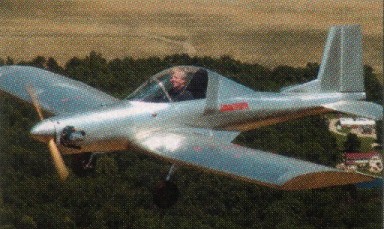
The UltraCruiser is an LSA legal all metal ultralight with economical, reliable, four stroke power and cruise of 60 mph. Canopy and heater for year round flying, and the canopy can be removed quickly. Detachable wings for easy storage. Full size parts shown on the plans. A wide 6.5 ft. landing gear track is standard for improved ground handling.
Ultra Cruiser Cruise: 85 mph Stall: 28 mph VNE: 83 kt / 95 mph / 153 kmh Range: 290 sm Rate of climb: 1000 fpm / 5 m/s Engine: ½ VW, 37 hp HP range: 28-45 Fuel capacity: 5 USG Empty Weight: 115 kg / 254 lbs MTOW Weight: 227 kg / 500 lbs Length: 16 ft Wing span: 25 ft Wing area: 112 sq.ft Cockpit width: 24 in Takeoff dist: 150 ft Landing dist: 250 ft Take-off distance (50ft obstacle): 300 ft / 91 m Landing distance (50ft obstacle): 250 ft / 76 m Seats: 1 Landing gear: tailwheel
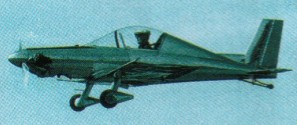
Ultra Cruiser Plus Cruise: 100 mph Stall: 36 mph Range: 350 sm Rate of climb: 900 fpm Takeoff dist: 250 ft Landing dist: 500 ft Engine: VW 1835cc, 60 hp HP range: 50-80 Fuel capacity: 10 USG Empty weight: 420 lb Gross weight: 750 lb Length: 17 ft Wing span: 25 ft Wing area: 112 sq.ft Seats: 1 Cockpit width: 26 in Landing gear: nose or tail
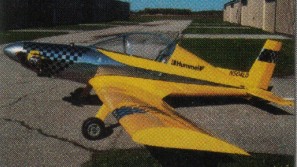
Hummel Bird began as a modified Watson Windwagon, but the designer/builder, Morry Hummel, of Bryan, Ohio, highly modified it and called it Hummel Bird, using the Revmaster R-800 rather than the half-VW. The LSA airframe has been modified and strengthened, tail area increased, and a locking tailwheel added for better ground control. A high L/D Schreder #3 airfoil and flaps also were used.
Excellent single place aircraft. Features all aluminum construction. Fast and inexpensive to build, many were flying.
Engine: Revmaster R-800. Gross weight 520 lbs. Empty weight 275 lbs. Wingspan 18 ft Length 13 ft 4 in Vmax 115 mph. Cruise speed 105 mph. Stall 45 mph. Climb rate 700 fpm. Takeoff run 350 ft Range 420 sm.
Engine: half VW, 37 hp HP range: 30-40. Span: 18 ft Length: 13 ft 4 in Height: 4 ft. Wing area: 63 sq.ft. Gross: 550 lbs. Empty Weight: 270 lb Useful Load: 250 lb Fuel cap: 7 USG. Speed max: 135 mph. Cruise: 105 mph Stall: 45 mph Rate Of Climb: 800 fpm Range: 250 sm. Service ceiling: 13,000 ft. Take-off dist: 300 ft. Landing dist: 600 ft. Landing gear: nose or tail wheel. Cockpit width; 22 in Seats: 1
1995: 509E. Butler, Bryan, OH 43506-0880, USA. 2008: Hummel Aviation 16288 County Rd D Bryan, OH 43506, USA
Offers plans to complete the single-seat Bird low-wing monoplane, as modified Watson Windwagon, first flown 1981. Also offers plans for CA-2 single-seat microlight.
Originally a Hughes-based design, the YAH-64 faced off against a Bell YAH-63 system in the United States Army’s search for an advanced attack helicopter. The system was to field the latest in technology, maneuverability and battlefield survivability that was consistent with low-level, low-speed warfare. The end result saw the YAH-64 coming out ahead, and plans were underway to further develop the system as the principle attack helicopter of the US Army. Initial units of the now-designated AH-64A “Apache” became operational as frontline systems in 1986.
The base AH-64 was designed with crew survivability in mind featuring anti-missile systems, specialized cockpit crew protection in the form of Kevlar armor and bulletproof glass and a specially designed superstructure. The short wingtip mounts offered up four original hardpoints to which the Apache system could field the powerful and accurate Hughes AGM-114 anti-tank missile. A total of sixteen of these could be carried on the underwing hardpoints. To take on softer targets, the conventional Hydra 70 general purpose rocket pod in various munition amounts and warhead types could be fielded alongside the Hellfire. The later addition of wingtip mounts allowed the system to field AIM-9 Sidewinder or AIM-92 Stinger air-to-air missiles. The system could also support the Sidearm anti-radiation anti-radar missile air-to-surface missile. The primary standard armament of the Apache consisted of the advanced chin-mounted Hughes M230 30mm chain gun with 1,200 rounds of ammunition setup that responded to the movements of the gunners head-mounted helmet system through the IHADSS helmet sight system. Traversing is limited to 11 degrees up, 60 degrees down and 100 degrees to either side. The Apache is crewed by two personnel seated in tandem with the gunner in front and the pilot seated in back.
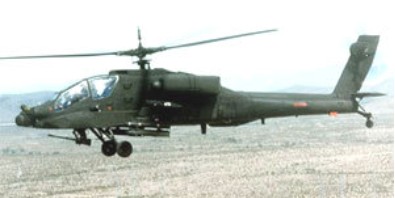
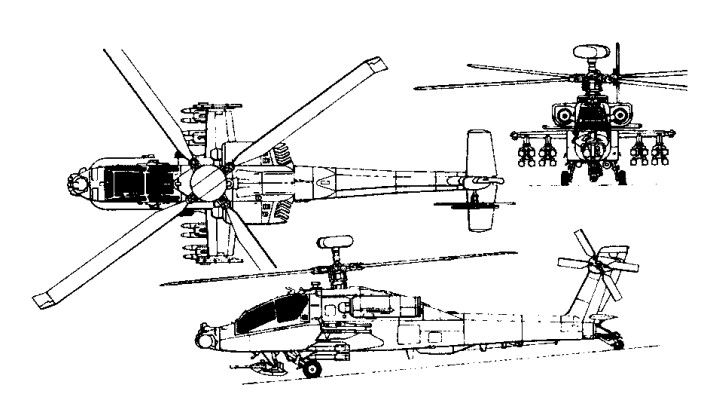
Design of the Apache was conventional with the cockpit in a stepped arrangement forward, the engines mounted high and to either side of the center of the fuselage and wing stubs just underneath the powerplants. The cockpit is designed flat glazed windows, crash supportive armored seating and reinforced landing gear struts. Engines (AH-64D) were by General Electric and featured the T700-GE-701C series turboshafts developing 1,890 shaft horsepower while driving a four blade main rotor and a four blade tail rotor. The tail rotor in and “x” type arrangement sat on the port side of the vertical tail fin. Landing gear were static with two main systems and a tail wheel. Wire cutters to improve survivability at low level were added to the top rear of the canopy, to each landing gear strut and one just forward of the chin turret base underfuselage. A chaff/flare dispenser kit was added to the aft portside of the tail assembly.
Hughes Helicopters flew the pro¬totype YAH 64 (73 22248) anti tank helicopter on 30 September 1975. The first of two for evalua¬tion against the Bell YAH 63 (the first, 73 22246, was flown on the fol¬lowing day); these were selected as finalists from design submissions for the US Army’s AAH (advanced attack helicopter) requirement. Hughes Helicopters No 5 prototype of the AH¬64 was fitted with 1,693 shp T700 GF-701 engines, in place of the 1,560 shp T700 GE 700s fitted previously in the prototypes. Hughes is proposing use of the 701 engine for pro¬duction AH 64s to improve performance in high temperatures and give better recovery in In December 1976 Hughes won a US Army competition for an Advanced Attack Helicopter. The AH 64, as it is designated, under development with Army testing was powered by two 1,536 shp General Electric T700 GE 700 turboshaft engines.
The two cockpits were separated by a two inch thick glass blast fragmentation shield and had their own air-conditioning system.
The Hughes Model 77, allocated the Army designation YAH 64A, was to prove the winner of the competition when flown and evaluated against the YAH 63 submission from Bell Helicopters. This two-seat attack helicopter is powered by 1,696 shp (1 265 kW) T700GE-701 turboshafts. Armament includes a 30-mm Chain Gun and up to 16 Hellfire ASMs. Stinger AAMs will give it an air-to-air capability. More than 550 McDonnell Douglas (originally Hughes) AH-64A Apaches had been delivered to the US Army by 1990.
After spending some time deployed at home, the AH-64A set off for West Germany in the first overseas deployment of the type. First combat deployment was a short time later in 1989’s Operation Just Cause concerning Panama and was made by the 82nd Airborne. 1991 saw the AH-64A model series deliver the opening salvos of action in Operation Desert Storm and later taking part in the much publicized “100-hour” ground war following in which some 500 enemy tanks were reportedly destroyed. Soon to follow were limited deployments in the Bosnia / Kosovo affair and finally in Operation Iraqi Freedom.
Based on lessons learned in the Gulf War of 1991, the AH-64A model was followed by the proposed upgraded AH-64B series. This model sported a Global Positioning System (GPS), improved communications and navigation and an all new main rotor blade. Most of the A models were upgraded to this standard despite funding being lost on the proposal in 1992. The AH-64C appeared (sometimes referred to as AH-64B+) and featured much of the upgrades in common with the succeeding “Longbow” version to follow, sans the mast-mounted radar system and more powerful engines. An AH-64D model also appeared but was very similar to the AH-64C series with the exception of having a removable radar.
AH-64D LongBow
The definitive Apache became the AH-64D “Apache Longbow” model. This model was distinguished by the noticeable mast-mounted AN/APG-78 Longbow radome system above the main rotor. The Longbow radar is a millimeter wave radar produced by Northrop Grumman and can guide the potent Hellfires through radar seeking frequencies for an even more improved kill ratio. Of the initial 800 or so AH-64A’s produced for the US Army, no fewer than 500 were updated to the Longbow standard. As it is mounted high on the design, the Apache Longbow need only “peer” above the treeline to ascertain enemy positions and potential targets. Target sharing was also a part of the models new suite and allowed for multiple Apaches to “talk” to one another despite one of the other not having a target locked on in its tracking system.
The Apache Longbow featured an uprated General Electric powerplant in the form of the T700-GE-701C series. Most all vital components were also updated to increase the potency of the machine while at the same time improve the crews survivability in the event of being fired upon, taking a direct hit or having to make a crash landing. The Apache Longbow remains in frontline active service and is seeing further enhancements and improvements made through additional Block updates which include new rotors, more digital automation integration with UAV battlefield elements.
The improvement programme of the AH-64 “Apache” based on Westinghouse mast-mounted Longbow millimetre-wave radar and Lockheed Martin Hellfire with RF seeker, included more powerful GE T700-GE-701C engines, larger generators for 70 kVA peak loads, Plessey AN/ASN-157 Doppler navigation, MIL-STD-1553B databus allied to dual 1750A processors, and a vapour cycle cooling system for avionics. Early user tests were completed in April 1990.
The full-scale development programme, lasting 4 years 3 months, wasauthorised by Defense Acquisition Board August 1990, but airframe work extended in December 1990 to 5 years 10 months to coincide with missile development, supporting modifications being incorporated progressively. The first flight of the AH-64A (82-23356) with dummy Longbow radome was on 11 March 1991. The first (89-0192) of six AH-64D prototypes was flown on 15 April 1992, the second (89-0228) flew on 13 November 1992, fitted with radar in mid-1993 and flown 20 August 1993. No 3 (85-25410) flown 30 June 1993; No 4 (90-0423) on 4 October 1993; No 5 (formerly AH-64C No 1) 19 January 1994 (first Apache with new Hamilton Standard lightweight flight management computer); No 6 flown 4 March 1994; last two mentioned converted from 85-25408 and 85-25477 and lack radar. First preproduction AH-64D flown 29 September 1995. Six AH-64Ds to fly 3,300 hour test programme; first remanufactured production aircraft flown 17 March 1997 and delivered to US Army 31 March 1997. IOC scheduled for June 1998. Initial AH-64D battalion (1-227 AvRgt) to be based at Fort Hood, Texas; second (3-101 AvRgt) at Fort Campbell, Kentucky.
A five year US$1.9 billion agreement for remanufacture was signed 16 August 1996. The contract covers 232 AH-64Ds over a five year period, with the entire US Army fleet of 758 AH-64As to be upgraded in remanufacture programme lasting 10 years, although only the initial 232 to carry Longbow radar. Production rate to rise from one per month in 1997 to five per month in 1999. Contract also included 227 Longbow radars (since increased to 500), 13,311 Hellfire missiles and 3,296 launchers.
Agreement reached with US Army for a US$2.3 billion contract to remanufacture a further 269 AH-64As to the AH-64D Apache Longbow configuration from FY2001, to bring total to 501 and programme to 2006. First flight of Apache with initial enhancements incorporating COTS technologies for reduced costs, and first of second 269 unit batch, made on 13 July 2001.
First flight of AH-64D with four new colour flat-panel MultiPurpose Displays (MPDs) 12 September 1997. Starting with the 27th production aircraft all Apache Longbows, including those ordered by the United Kingdom and the Netherlands, will be equipped with the Honeywell (AlliedSignal) Guidance and Control Systems MPDs.
Capability exists to convert any AH-64D to Apache Longbow configuration in 4 to 8 hours; this potential was demonstrated in June 1994 when army personnel removed Longbow radar, associated equipment and T700-GE-701C engines from AH-64D prototype and installed them on second (non-radar) aircraft, which was then test flown for 30 minutes. AH-64D to equip 26 battalions; company strength to be three with radar plus five without; three companies per battalion. Longbow can track flying targets and see through rain, fog and smoke that defeat FLIR and TV; RF Hellfire can operate at shorter ranges; it can lock on before launch or launch on co-ordinates and lock on in flight; Longbow scans through 360° for aerial targets or scans over 270° in 90° sectors for ground targets; mast-mounted rotating antenna weighs 113kg. Production of RF Hellfire by Longbow LLC, a joint venture between Lockheed Martin and Northrop Grumman. Initial limited-rate production contract awarded in December 1995 for 352 missiles, of which first delivered to US Army Missile Command in November 1996.
Further 1,056 missiles and 203 launchers subject of US$233.7 million LRIP contract awarded in 1996. Further modifications include ‘manprint’ cockpit with large colour flat-panel MultiPurpose Displays (MPDs) replacing standard monochrome MultiFunction Displays (MFDs), air-to-air missiles, digital autostabiliser, integrated GPS/Doppler/INS/air data/laser/radar altimeter navigation system, digital communications, faster target hand-off system, and enhanced fault detection with data transfer and recording. AH-64D No 1 made first Hellfire launch on 21 May 1993; first RF Hellfire launch 4 June 1994; first demonstration of digital air-to-ground data communications with Symetrics Industries improved data modem, 8 December 1993.
Training of US Army instructors began summer 1994, in anticipation of Force Development Test and Experimentation (FDT&E) trial, using three prototypes, starting October 1994; followed by Initial Operational Test and Evaluation (IOT&E) January to March 1995. Successful completion of FDT&E and IOT&E precursor to start of modification programme in 1996; long-lead contract awarded to McDonnell Douglas December 1994 covering start-up funds for initial batch of remanufactured Apaches.
Test successes of 1994 include June trial in which Apache Longbow tracked moving ground target with radar and scored direct hit with RF Hellfire; communication of digital data with Joint-STARS and UH-60 Black Hawk via improved data modem in September; demonstration of new tri-service embedded GPS/INS in October; and RF Hellfire ripple-launch capability in November, when single Apache scored hits on three targets at close, medium and long range with three missiles; time of engagement, from detection to target impacts, less than 30 seconds.
Initial Operational Test and Evaluation exercises at Fort Hunter, California, in 1995 pitted six AH-64Ds against eight AH-64As. Test results indicated 400 per cent more lethality (hitting more targets) and 720 per cent higher survivability than the AH-64A; demonstrated ability to use Target Acquisition Designation Sight (TADS) or fire-control radar as targeting sight; detected, classified, displayed, prioritised more than 1,000 targets and initiated precision attack in less than 30 seconds; met or exceeded Army’s situational awareness requirements (classified); available 91 per cent of time. Hit moving and stationary targets on smoky battlefield from 7.25 km (4.5 miles) away during test at China Lake, California.
AH-64D deliveries to US Army began 31 March 1997.
Initial AH-64D battalion (1-227 AvRgt) at Fort Hood, Texas fully equipped by end July 1998 and attained combat ready status on 19 November 1998, after eight month training programme at company and battalion level which included four live fire exercises and more than 2,500 flight hours. Second unit is 2-101 AvRgt at Fort Campbell, Kentucky; third will be 1-2 AvRgt in South Korea.
First flight with Rolls-Royce Turbomeca RTM 322 turboshaft engines 29 May 1998.
The British firm of Westland license-produced their own version of the AH-64D Apache Longbow, maintaining most of the major characteristics of the American type with addition of more powerful Rolls-Royce Turbomeca RTM322 engines of 2,210 shaft horsepower.
The first flight of the first production WAH 64D Apache Longbow multi mission combat helicopter for the United Kingdom, ZJ 166/N9219G, took place at the Boeing Company’s Mesa, Arizona, rotorcraft facility on September 25, 1998. The 30min flight included hover tests, forward flight to 60kts (111 km/h) and rearward and lateral flight to 45kts (83km/h). Three days later and two days ahead of schedule, the helicopter was formally rolled out at Mesa and delivered to prime contractor GKN Westland Helicopters Ltd. The first WAH-64 Apache Longbow for the British Army, ZJ168, re-flew from Yeovil on August 26, 1999. The first of eight WAH-64s being built by Boeing at its Mesa, Arizona, facility, it was delivered to RNAS Yeovilton on board HeavyLift Cargo Airlines Short Belfast G-BEPS on May 27 for reassembly and test flying.
GKH Westland Helicopters has delivered the first WAH-64 Apache attack helicopter to the British Army. Eight more are scheduled to be handed over before the planned in-service date at year-end 2000. The aircraft, a derivative of the U.S. Army’s AH-64D Apache Longbow, is one of eight built by Boeing at Mesa, Ariz., and shipped to Yeovil, England, for final assembly and test by Westland. The U.K. manufacturer will produce the remaining 59 aircraft in the $3.2-billion program. The army was to receive all 67 WAH-64s by 2003.
Israel represents another active user of the Apache type and has operated the helicopter in countless sorties against Hezbollah positions including direct missile strikes on top operatives. Israel has fielded the Apache against Hezbollah positions in Lebanon and more recently in the 2006 summer war – also against Lebanon. Other operators include The Netherlands, Singapore, Greece, Saudi Arabia and the United Arab Emirates. Planned usage of the weapon system is expected by Pakistan, Taiwan and perhaps South Korea and India in the near future.
Hughes AH-64A Apache Engine: 2 x General electric T700-700 turboshaft, 1536 shp Rotor diameter: 48 ft / 14.63 m Fuselage length: 49 ft 1.5 in / 14.63 m MTOW: 17,650 lb / 8006 kg Max speed: 192 mph / 1804 kph Armament: 1 x 30 mm cannon (1200 rds) Pylons: 4
AH-64A Apache Engine: 2 x GE T700-701. Instant pwr: 1265 kW. Rotor dia: 14.6 m. Length: 17.8 m. No blades: 4. Empty wt: 4880 kg. MTOW: 9525 kg. Payload: 2948 kg. Max speed: 158 kts. ROC: 760 m/min. Ceiling: 8400 m. Fuel cap: 1419 lt. Max range: 1287 km. HIGE: 15,000 ft. HOGE: 11,500 ft. Crew: 2.
AH-64D Longbow Apache Engine: 2 x General Electric T700-GE-701C continuous rated turboshafts, 1,890shp / 1417kW Instant pwr: 1409 kW. Main and tail rotor: four blade Main rotor diameter: 14.6m Length: 49.11ft (14.97m) Length with rotors turning: 17.3m Width: 17.16ft (5.23m) Height: 16.24ft (4.95m) Empty Weight: 11,799lbs (5,352kg) Maximum Take-Off Weight: 22,282lbs (10,107kg) Payload: 2948 kg. Max combat load: 771kg Cruise: 141 kts. Best economy: 117 kt / 900 lb/hr HIGE: 17,210 ft. HOGE: 13,530 ft. Maximum Speed: 162mph (261kmh; 141kts) Max diving speed: 309km/h Range with internal fuel reserve: 611km Maximum Range: 1,181miles (1,900km) Service Ceiling: 9,478ft (2,889m) Crew: 2. Vert.ROC: 1475 fpm. MaxROC: 2415 fpm. Armament: 1 x 30mm chain gun, 16 Hellfire anti-tank missiles or 76 x 70mm rockets Hardpoints: 6 (including wingtip mounts)
Both the Hughes 500 and the Bell Jet Ranger, rivals in the light turbine helicopter market, were commercial outgrowths of the U.S. Army light observation helicopter competition between 1961 and 1965. Hughes won, and their vehicle became the OH 6A, a machine greatly respected for its agility and survivability in combat. Unencumbered by the production of LOHs, Bell put their design into commercial production, beating Hughes to the civilian marketplace by several years. Then the Texas firm outbid Hughes in a follow on military production procurement and eventually sold more LOHs to the Army than had the original winner of the competition.
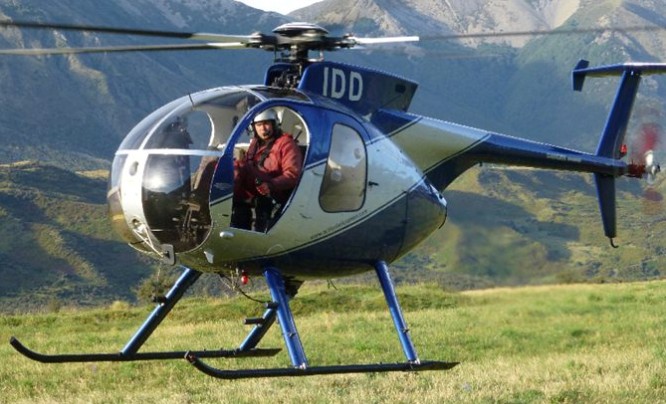
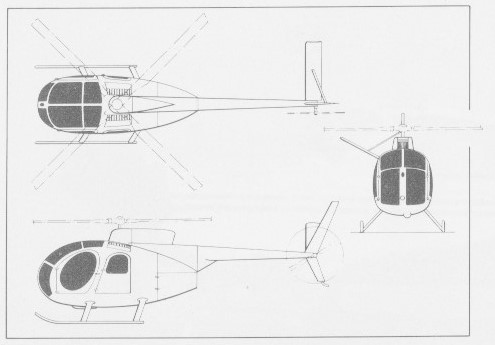
First flown in February 1963, the Hughes Model 369 prototype won the US Army’s Light Observation Helicopter contest against Bell and Hiller helicopters, and was ordered into large-scale production. The OH-6A Cayuse (the initial production model) entered service in September 1966. Production was curtailed at 1,434 units out of a planned 4,000, however, when costs rose and production rate fell. The Cayuse proved well suited to the Vietnam War, where it flew armed missions with a multi-barrel machine gun or 40-mm grenade launcher. Some surviving helicopters have been upgraded to OH-6D standard with more advanced electronics and heavier armament. Owing to military orders, it didn’t become available to commercial operators until 1967. It was offered in three versions, the 369HM military export model, 369HE commercial executive model ad 369HS standard model, the difference between the three being in the interior equipment fit. The 369HE was dropped in 1970 after only 25 had been built. The first civilian 500s, powered by the 317 shp Allison 250 C18A derated to 278 shp for five minutes operation and 243 shp for continuous use, were delivered in late 1966, but only a few were available.
The Model 369 was marketed as the 500 Series, with the 369HS as the Series 500C, and 369D as Series 500D. In 1972, the 400 shp C20 version of the engine was installed in the 500C to provide better density–altitude performance, but the C’s 2,550 pound gross weight and 126 knot cruising speed remained identical to the 500’s since their rotor systems, transmissions and derated horsepower were the same.
Hughes 500C
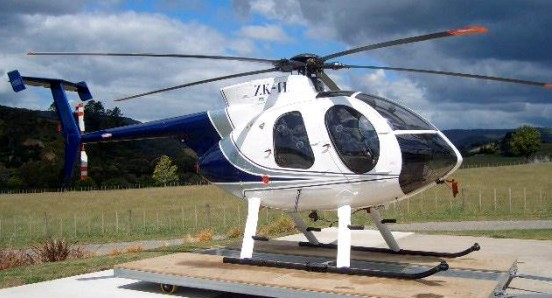
In 1975, Hughes started on a 500D model that would be produced with a five blade rotor system, the 420 shp Allison 250 C20B turbine, a new transmission capable of absorbing 375 shp for takeoff 350 for continuous use and a horizontal T tailplane for improved longitudinal stability. To provide adequate anti torque control for the more powerful engine and rotor system, the tall boom would be strengthened and extended two inches, and the tail rotor diameter would be increased four inches. The underbelly of the distinctive egg shaped 500 fuselage also would be strengthened, as would the gear struts, to accept higher gross weights; and the plexiglass canopy supports would be beefed up to withstand the greater air loads imposed by the aircraft’s higher airspeeds. The five blade rotor system would enable the 500D to lift a one ton sling load and have a 3,000 pound gross weight with internally carried items. Because its lifting capacity would be distributed over five blades, the D would be quieter than its four blade predecessor when both models were operating at identical weights; each blade of the D model could be at a lower collective pitch angle, where the aerodynamic noise produced would be less, yet the total lift generated by the set of five blades would be equivalent to the performance of the four blade system. Weight saved by using elastomeric lead lag dampers in place of the heavier friction dampers employed on the earlier 500 models would offset the weight of the fifth blade, even though each blade would have double the number of structural ribs near the rotor tips to compensate for the helicopter’s higher lifting capability.
Hughes 500 D
When the 500D finally was granted a type certificate in 1976, its test program had been as extensive and time consuming as the licensing of an original design. The 500D is an original design in ways that are significant to the operator: there’s a 28 percent in¬crease in useful internal load and a 12 per¬cent increase in maximum cruising speed over the 500C, which had been the fastest light helicopter. Projected maintenance costs have been reduced by extension of replacement and overhaul times for many costly components. Hughes anticipates that the main gearbox TBO (now 1,800 hours) will be raised to 5,000 hours; the C model gearbox’s TBO is 1,200 hours. After more flight time has been put on customer ships, Hughes expects the engine TBO to reach 3,000 hours, and the minimum time to replacement for any component will be 5,000 hours. With a maximum speed of 152 knots at reduced weights and a comfortable 140 knot cruise, the Hughes 500D has fixed wing cross country performance.
Breda Nardi Costruzioni Aeronautiche SpA was established on February 15, 1971 by Nardi SA per Costruzioni Aeronautiche, and Breda, a member company of the EFIM state-owned financial group, each with a 50 percent holding. Initiated manufacture of helicopters under a license granted by Hughes Helicopters, and is building the Hughes 300C, 500C, 500D, and 500M under the respective designations of Breda Nardi NH-300C, NH- 500C, NH-500D, and NH-500M-D (TOW). The last is a multirole military helicopter armed with TOW missiles.
The model 500E is essentially a 500D with a more streamlined nose, thereby giving the front seat passengers extra leg room, and larger tail fins. These should not be confused with the earlier 500E which was simply a 500 with an executive interior. Only a few were built.
MD.500E
Model 500/530 Defender – A series of Defender military helicopters is based on the Model 500/530 civilian range. Avail¬able were the 500MD Scout Defender, which is the basic military variant armed with gun and rocket pods; the 500MD/TOW Defender with four TOW anti-tank missiles and standard stabilised sight or optional mast-mounted sight; the 500MD/ASW Defender with nose mounted search radar, towed MAD, and torpedo armament; and the 500MD Defender II multimission version, with optional mast-mounted sight, TOW and Stinger missiles, Flir, an infrared supression system, and upgraded avionics. The 500MG and 530MG Defenders, the latter with an uprated 317kW Allison 250-C30 engine, are multirole helicopters intended primarily for anti-armour and attack missions. The 530MG features an advanced cockpit and control system. Operational equipment is similar to that of the 500MD Defender, but in addition a Racal RAMS 3000 integrated control and display system, operating with a MIL 1553B digital databus, is used for adverse weather or nap-of-the-earth flying. A Nightfox version is also available for enhanced night operations, using Flir and night vision goggles. The last 369E built under the Hughes name was cn 0179, all later being McDonnell Douglas Helicopters. The 369FF is basically a 369F with an up-graded drive system.
February 19, 1999: Boeing sold MD commercial line to RDM The dutch company bought the ex-McDonnell Douglas models MD 500E and MD 530F single-engine helicopters with conventional tail rotors, the MD 520N and MD 600N single-engine NOTAR helicopters and the MD Explorer series of twin-engine, eight-place helicopters.
The 500C production stopped around the mid-1970s and by 2020 spares were becoming a concern and overhaul parts for gearboxes were getting harder to source as were main rotor drive shafts and anything with no commonality with the D and E models. There were options for PMA 500C booms and stabilisers.
H.369HM/HE/HS Engine: Allison, 317 shp derated to 278 shp.
500C Engine Allison 250 C20, 400 shp. Takeoff power 278 shp. Max continuous power 243 shp. Shortest service life, limited component: tailboom 2,030 hrs. Disc loading 4.68 lbs/sq ft. Power loading 9.2 lbs./hp. Max. sling load 1,600 lbs. Seating 5/7. Gross weight 2,550 lbs. External load gross 3,000 lb. Empty weight 1,240 lbs. Useful load 1,310 lbs. Fuel capacity 64 USG/412 lbs. Overall length, including rotor disc 30.3 ft. Height 8.5 ft. Max. cruise speed, sea level 125 knots. Max. cruise speed. 4,000 ft: 126 knots. Max. range, sea level 300 nm. Max. range, 4,000 ft 328 nm. Max. rate of climb 1,700 fpm. Service ceiling 14,500 ft. HIGE 12,900 ft. HOGE 6,700 ft. Vne SL: 130kt, 6000ft: 142 kt. Max side-wind hover 20 kt.
500D Engine: Allison 250-C20B, 420 shp. TBO: 1,500 hrs hot section, 3000 hrs. Main rotor: five blade, fully articulating, 26.4 ft. Seats: 5. Length: 30.5 ft. Height: 8.9 ft. Max ramp weight: 3000 lbs. Max takeoff weight: 3000 lbs. Standard empty weight: 1620 lbs. Max useful load: 1380 lbs. Max landing weight: 3000 lbs. Max sling load: 2000 lbs. Disc loading: 5.5 lbs/sq.ft. Power loading: 7.1 lbs/hp. Usable fuel capacity 64 USG/432 lbs. Max rate of climb: 1900 fpm. Service ceiling: 15,000 ft. Hover in ground effect: 8500 ft. Hover out of ground effect: 7500 ft. Max speed: 143 kts. Maximum cruise 139 kts. Economy cruise 130 kts. Duration at max cruise 1.8 hrs. Normal cruise @ 3000 ft: 143 kts. Fuel flow @ normal cruise: 189 pph. Endurance @ normal cruise: 2 hr. Minimum time component tail rotor hub. Minimum replacement time 2,440 hrs.
500M D Engine: Allison 250 C18A turboshaft, 317 shp TO, 243 shp Max continuous Rotor diameter: 26 ft 4 in / 8.03 m Fuselage length: 23 ft 0 in / 7.01 m Empty weight: 1088 lb / 493 kg Max normal TOW: 2550 lb / 1157 kg Max overload TOW: 3000 lb / 1360 kg Max range cruise SL: 117 kt / 135 mph / 217 kph ROC SL: 700 fpm / 518 m/min Service ceiling: 14,400 ft / 4390 m Range at 4000ft/1220m: 327 nm / 377 mi / 606 km Seats: 5 Cabin length: 8 ft 0 in / 2.44 m Cabin width: 4 ft 6 in / 1.37 m Cabin height: 4 ft 3.5 in / 1.31 m
OH-6A Cayuse Engine: one 317-shp (236-kW) Allison T63-A-5A turboshaft derated to 215 shp (160 kW). Maximum speed 130 kts / 150 mph (241 kp h) at sea level Cruising speed : 117 kts / 216 km/h Initial climb rate 1,840 ft (561 m) per minute Service ceiling 15,800 ft (4,815 m Range 413 miles (665 km). Empty weight: 1,156 lb (524 kg) Maximum take¬off weight: 2,700 lb (1,225 kg). Main rotor diameter 26 ft 4 in (8.03 m) Length overall, rotors turning 30 ft 9.5 in (9.39 m) Fuselage length: 22.999 ft / 7.01 m Height 8 ft 1.5 in (2.48 m) Main rotor disc area 544.63 sq ft (50.60 sq.m). Payload: four passengers or 431kg freight.
Hughes Aircraft Co was founded in 1935 by businessman/film magnate Howard Hughes to produce the Hughes H-1 racing aeroplane, in which Hughes established a world landplane speed record of 352.46mph (567.23kmh). The Hughes XF-11 experimental twin-engined, twin-boom photo-reconnaissance aircraft, which had contrarotating propellers, crashed on its maiden flight, seriously injuring Hughes. He then sponsored the massive Hughes H-4 Hercules. Made entirely of wood, this eight-engined flying-boat had the greatest wingspan (320 ft; 97.54 m) of any aircraft built to date. It made its one and only flight on November 2,1947 with Howard Hughes at the controls.
Between 1949-1952 the Hughes Aircraft Company built and tested the XH-1 heavylift helicopter, designed as a “flying crane” for the USAF.
Hughes owned Kellett designs.
Known formerly as the Hughes Tool Company, became a Division of the Summa Corporation in the early 1970s. Hughes first two-seat light helicopter, the Model 269, first flew in 1955. It continued in production, though muchmodified, as the Hughes 300. Production of the 0H-6A Cayuse turbine helicopter for the U.S. Army and other military forces led to the commercial Model 500 one/sevenseat light helicopter, with military variants in the Defender series. Hughes won the U.S. Army’s competition for an Advanced Attack Helicopter (AAH) with its Model 77, a twin-turbine design which first flew in September 1975, and which received the Army designation YAH-64 Apache. Also developed the unique NOTAR (no tail rotor) anti-torque system, initially tested on a converted 0H-6A in December 1981. Company taken over by McDonnell Douglas January 1984. Hughes Helicopters became McDonnell Douglas Helicopters in January 1986 then later to Lynn Tilton’s Patriarch Partners in 2005.
HPH Ltd, Caslavska 126, P.O.Box 112, CZ-284 01 Kutn & Hor, Czech Republic. HPH Ltd. took over the original molds and drawings for glider Glasflugel 304 from Mr. George Brauchle in 1998.
The HP-22 is- a high-performance, 15-meter class, side-by-side, two-place, self-launching, amphibious sailplane. It is designed for simple, rapid assembly by the homebuilder, licensed in the Amateur-built Experimental Category.
The basic layout so closely resembled an amphibian that making it watercapable added little extra weight or performance penalty. Every effort was made to produce a ship that could be built by the average amateur without any prefabricated parts, jigs or molds, the company says. Emergency wheels-up landings may be made on the keel skid.
The following design features and kit simplify construction of the HP-22 and reduce building time to approximately 400 man-hours: main wing spar caps cut from 1-inch thick aluminium plates; rectangular wing with all ribs the same size, fuselage panels and bulkheads that are glued together, which simplifies riveting and reduces caulking and leak and corrosion problems; epoxy bonding for rapid assembly of fuselage, wings and tall., automatic extension and retraction of engine, eliminating any need for manual or electric motor actuation; retractable wing floats and wheels to reduce drag and permit operations on water and snow: a complete kilit of materials with all complicated welding, machining, forming, panels and bulkheads, cable swaging, heat treating, etc. accomplished.
1984 Estimated prices: Tail Kit $350, Wing Kit $3,300, Engine Kit $3,000, Trailer Kit $2,500, Fuselage Kit $3,600, Complete Kit without Engine $7,000, Complete Kit with Engine $10,000, ‘ Drawings and Instructions Only $150:
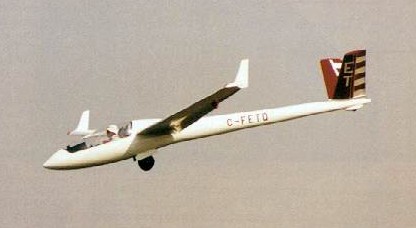
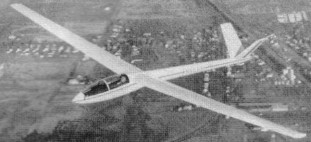
Designer Richard E. Shreder’s HP (for high-performance) 18 is a 15-meter Standard Class sailplane racer, which made its first flight in 1975; it is designed for sale in kit form for homebuilt construction and assembly, and about 170 had been built or were under construction by early 1979.
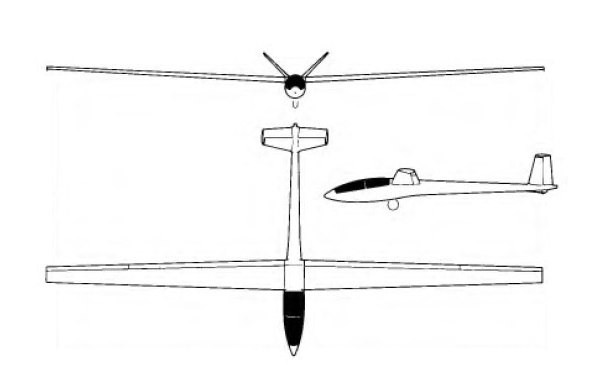
It is constructed with machined aluminium spars for the cantilever shoulder wing and precut hard foam wing ribs spaced at 10cm intervals; the HP-18A differs in having carbon-fibre spars but has similar wing rib construction. The HP-18 uses the Wortmann 67-150 airfoil. Camber-changing flaps and ailerons occupy the entire trailing edge deflecting 90 degrees, and up to 200lb of water ballast can be carried inside the wing box spar.
The design also incorporates certain improvements over the Standard Class RS-15 to which it is generally similar, such as new wing tips, a removable tailwheel, better gap seals and improved streamlining.
The HP-18 has a slightly longer fuselage than the RS-15 , with a circular instead of oval section, and this is supplied as a pre-formed Kevlar pod, aluminium rear fuselage and the V-tail; the pilot sits under a two-piece flush canopy. The control stick is side-mounted with attached brake handle and trim tab although modifications using a conventional stick have been made. A retractable Tost monowheel with a mechanically-expanding brake is supplemented by a steerable tailwheel.
One HP-18, C-GOIY, has been modified by its Canadian builders Don Band and Peter Masak to have winglets of glassfibre and balsa and Wortmann FX-60-126 section at the wing tips.
HP-18A
One belongs to the National Soaring Museum.
HP-18A Span: 15m / 49 ft 2.5 in Length: 7.16 m / 23 ft 6 in Height: 1.22 m / 4 ft 0 in Wing area: 10.66 sq.m / 114.7 sq ft Aspect ratio: 21.4 Airfoil: Wortmann FX 67-150 Empty Weight: 213kg / 470lb Gross Weight: 440kg / 970lb Wing Load: 41.9kg/sq.m / 8.58lb/sq.ft Water Ballast: 90kg / 200lb Max speed (smooth air): 150 mph / 130 kt / 241 km/h Top speed (rough air): 120 mph / 104 kt / 193 km/h Max aero-tow speed: 120 mph Stall clean: 40 mph Stall flaps: 35 mph Min sinking speed: 0.55 m/s / 1.8 fps / 1.07 kt at 45 mph / 39 kt / 73 km/h Min. sink, 656 lb: 1.8 fps @ 50 mph Best glide ratio: 40:1 Seats: 1