1998: Feldstrase 3 A, D-85640 Putzbrunn Bei Munchen, GERMANY
Hang glider builder
1998: Feldstrase 3 A, D-85640 Putzbrunn Bei Munchen, GERMANY
Hang glider builder
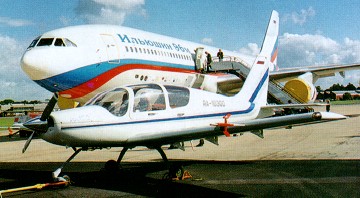
The IL-103 4/5-seat trainer / tourer in lightplane was first flown May 1994 and manufactured by MAPO “MiG”.
Engine: Continental IO-360ES, 210 hp.
Seats: 4/5.
Cruise: 121 kt.
Range: 1240 km.
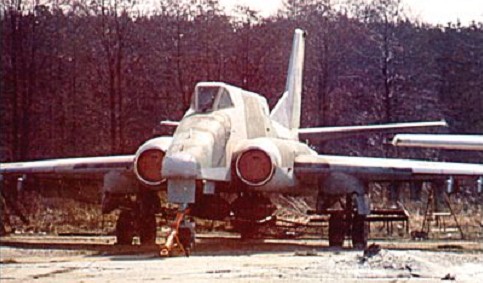
The prototype flew on September 25, 1982. Development canceled.
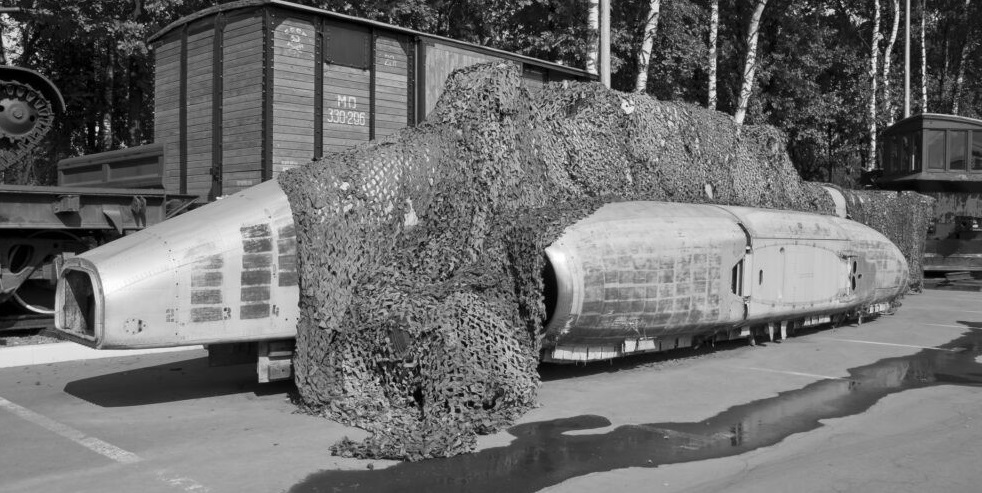
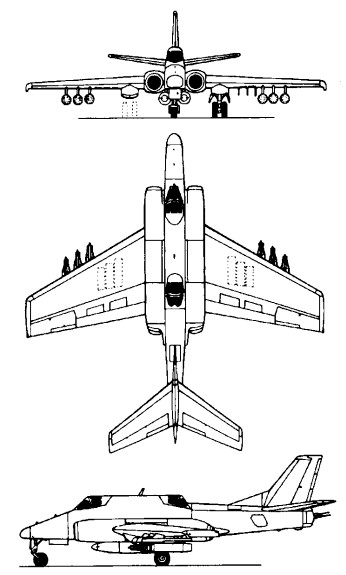
IL-102
Engine: 2 x Izotov I-88 (RD-33), 5380kg
Max take-off weight: 22000 kg / 48502 lb
Wingspan: 16.98 m / 55 ft 9 in
Length: 17.75 m / 58 ft 3 in
Height: 5.08 m / 16 ft 8 in
Max. Speed: 950 km/h / 590 mph
Cruise speed: 850 km/h / 528 mph
Ceiling: 10000 m / 32800 ft
Range w/max.fuel: 3000 km / 1864 miles
Range w/max.payload: 600 km / 373 miles
Armament: 1 x 30mm cannon, 1 x 23mm cannon, 7200kg weapons
Crew: 2

The Ilyushin IL-96 features supercritical wings fitted with winglets, a glass cockpit, and a fly-by-wire control system. It was first flown in December 1988 and certificated in 1992. The IL-96-300 aircraft equipped with modern Russian made avionics which includes six multifunctional color-LCD displays, electro remote management system, inertial navigation system, collision air avoidance system (including mode “S”) and satellite navigation equipment, VHF communication with grid of 8,33/25 kHz frequencies, and equipment permitting executes flights in RVSM conditions. It allows operating the airplane with two crew members. The avionics correspond to modern requirements on international routes in Europe and North America (RNP-1) and allows to navigate and land under ICAO CAT IIIA conditions. The Il-96 came in three main variants: the IL-96-300, IL-96M/T and IL-96-400.
The IL-96M is basically an IL96-300 with a 30 ft fuselage plug and PW engines.
The first PW2337-powered Il-96T RA-96101 was rolled out on 26 April 1997 and first flew on 16 May 1997. Airborne for 21 minutes before returning to Voronezh and on the following dat was flown to Zhukovsky to continue flight testing.

The Il-96T freighter first flew in mid-1993 and the initial production unit rolled out in May 1997, fitted with Pratt & Whitney engines and Rockwell-Collins avionics. This aircraft was used for FAA certification, granted on 2 June 1999. The –96T is a freight version, with a similar –96M passenger version.

The IL-96-400M project was launched in 2017. One of the differences between the deeply modernised version and its predecessor is the longer fuselage, which is increased by 9.35 meters.

In the final assembly workshop of the Voronezh aircraft plant VASO, which is part of the Rostec aviation complex, the assembly of the wide-body, long-range airliner Il-96-400M continued. This wide-body aircraft was a new modification of the IL-96-300.
The IL-96-400M will be equipped with a modern flight-navigation complex and domestic radio communications that meet the requirements of the international aviation authorities for navigation, surveillance and communication systems. Modular integrated avionics for the new airliner is produced by the Rostec Concern Radio-Electronic Technologies.
The aircraft can be presented to the customer in various configurations. In one-class performance, it will accommodate 402 passengers, two-class – 350, and three-class – 305.
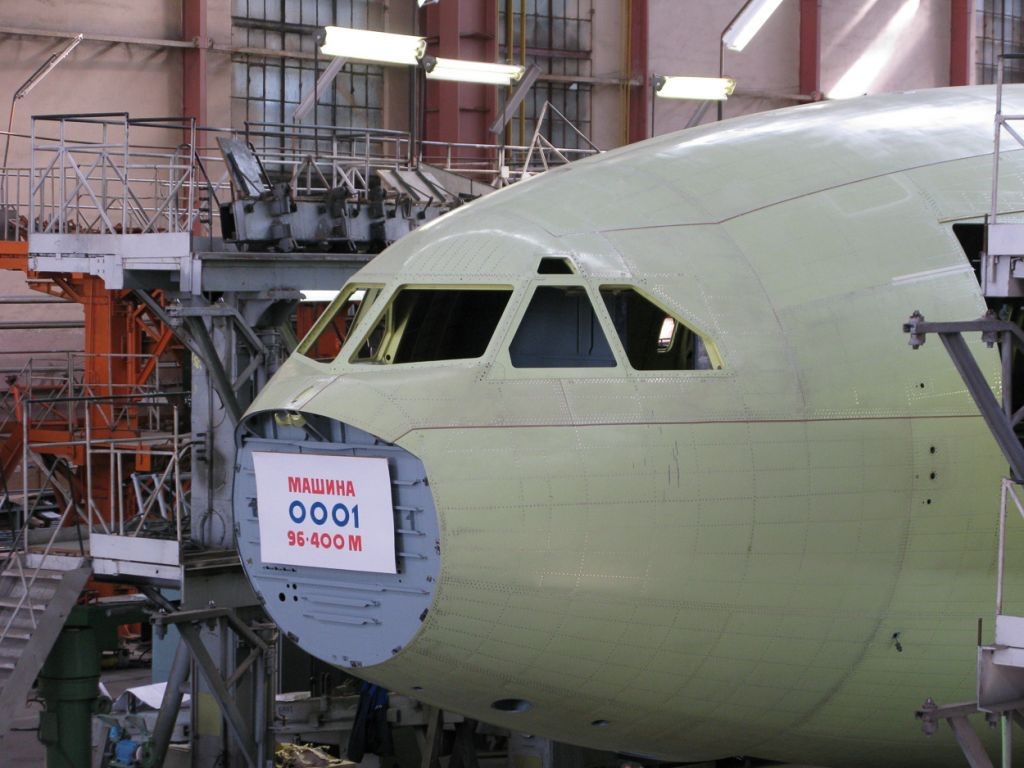
Another important difference between the IL-96-400M will be a more powerful PS-90A1 power-plant compared to the base PS-90A installed on the IL-96-300. This engine has increased maximum thrust, it is equipped with a low-emission combustion chamber and new 2nd generation sound-absorbing structures. The engine is produced at the ODK-Perm Motors plant.
The completion of the assembly of the first prototype IL-96-400M and the transfer of the aircraft for testing were planned at the end of 2021. The plane is completely assembled from Russian components.
IL-96M
Engines: 4 x Pratt & Whitney PW2337 turbofan.
Max take-off weight: 270000 kg / 595251 lb
Wingspan: 64.7 m / 212 ft 3 in
Length: 60.11 m / 197 ft 3 in
Height: 17.5 m
Max range: 11480 km / 7134 miles
Range: (30t load) 6200nm.
Il-96T
Engines: 4 x Pratt & Whitney PW2337 turbofan.
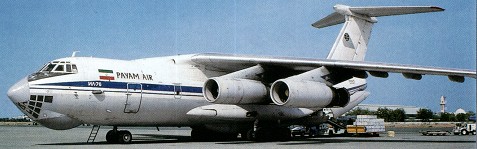
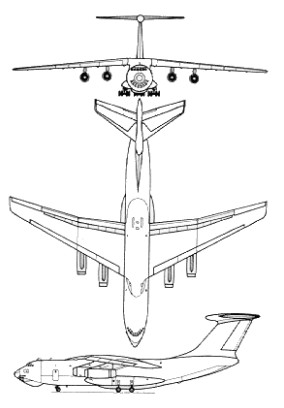
The llyushin Il‑76 was designed as a heavy transport for operations onto short unprepared strips in the Russian “outback” and entered Aeroflot service as the production IL‑76T in 1978.
Originally designed to carry 40 tonnes of freight in excess of 3500 nm using relatively short, unprepared runways, the Il-76 first flew on 25 March 1971, NATO code name ‘Candid’. Test flying continued until 1975 when the type was put into production at the Tashkent factory. During the same year the II-76 established 25 international records for speed and altitude with payload.
The design was prepared to meet a basic need in the Soviet Union for a really capable freighter which, while carrying large indivisible loads, with a high cruising speed and intercontinental range, could operate from relatively poor airstrips. The result is a very useful aircraft which, though initially being used by Aeroflot in 1975 and 1976-80 plans for opening up Siberia the far north and far east of the Soviet Union is a strategic and tactical transport for military use.
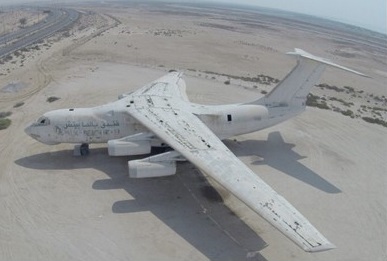
The production II-76T ‘Candid A’, with greater cargo capacity and higher gross weights, went into service with Aeroflot on domestic routes early in 1978, and the Moscow-Japan international route in April the same year.
It has fitted reversers, a high lift wing for good STOL performance and a high-flotation landing gear with 20 wheels. The big fuselage is fully pressurised and incorporates a powerful auxiliary power unit and freight handling systems.
The four-turbofan Il-76M/MD Candid long-range transport continues to replace Soviet Military Transport Aviation (VTA) An-12 Cubs at a rate of about 30 a year, and now accounts for around half the VTA fleet, with some 310 in service according to US estimates. Deliveries to India, which has ordered 20 to replace An-12s, began in February 1985. In Indian service the Il-76 is named Gajaraj.
About 100 have been exported to civil users including Libyan Arab Airlines, Syrianair and, more recently, Cubana, while military customers include the Czech, Polish, Algerian, and Iraqi.
The Il-76TD Candid A entered service in late 1982.
The exact time of the start of work on the Il-76PP is not known, but general information points to the mid-1980s. The Il-76PP was only produced in a single example in Russia and remained in the experimental development phase without moving to serial production.
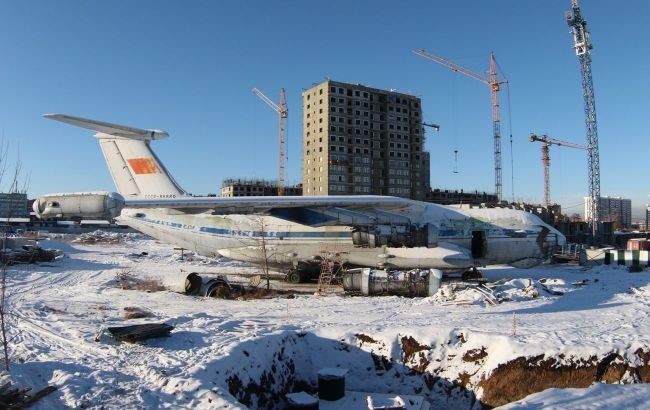
It is known that the Il-76PP was converted from a serial Il-76MD transport aircraft, with work carried out at the Beriev Design Bureau in Taganrog. This factory specializes in radar surveillance aircraft, such as the A-50.
The Il-76PP was reportedly intended primarily to jam Western air defense systems, including Patriot systems.
The most notable feature of the Il-76PP was the Landysh electronic warfare (EW) system, also used on Su-24MP aircraft. Defence Express suggests that the Landysh could have been the reason why this project was not realized.
To solve this problem, the aircraft designers installed two additional generators based on the AI-24VT aircraft engine. Each of them was to power four alternators on board the IL-76PP. However, this was not enough to reliably power the electronic warfare equipment.
Another problem was that during the work and tests, the designers of the IL-76PP failed to achieve electromagnetic compatibility between the aircraft’s onboard equipment and the Landysh complex, whose containers were installed on the wingtips.
In other words, the IL-76PP turned out to be a monstrous and non-functional development that was unable to fulfill its main task. Because of this, in 1993 the aircraft was put into storage at the aforementioned training airfield in Irkutsk and remained there until 2024, when space was needed for new construction.
The military transport version, intended for the deployment of paratroops and troops, together with strategic heavy freighting, differs primarily by having military, rather than civil, avionics and equipment. The Soviet air force, with about 450 ‘Candids’ in service, also use the aircraft for firefighting (the II-76DMP), able to carry over 40 tons of water or retardant; as an engine testbed (the II-76LL); airborne early warning (as the A-50 ‘Mainstay’ in the USSR, and the ‘Adnan’ in Iraq) and for Antarctic support flights and cosmonaut training providing simulated weightlessness. Il-76TD (the civil variant is designated ‘T’, whilst the extended range model is assigned the suffix ‘M was one of two aircraft transferred to Aeroflot’s CUMVS, or International Air Services, after serving in Polar regions.
Ilyushin IL-76 PS-90A-76 in detail Gallery
By early 1991 total production had reached about 680 aircraft. Over 700 had been built by early 1992 at the Chakalov Aircraft Production Plant near Tashkent. Over 100 have been exported and about 150 were in Aeroflot service by 1992.
From the moment it was put into service Il-76 has been the main heavy military and transport aircraft of the Russian air forces. More than 950 civilian, military and special modifications variants have been built. In a single-deck modification (with central seats) it can transport 145 military men and 126 paratroopers. In a double-deck version – up to 225 men.
According to the terms of the State contract 39 military and transport aircrafts Il-76MD-90A were to be built for the needs of the Ministry of Defense of the Russian Federation. Maximum load has been increased to 52 tons (compared to 48 tons of Il-76MD). Maximum takeoff weight has risen to 210 tons (190).

A three-point hose-and-drogue tanker variant of the Il-76, the Il-78 Nato code name Midas, has been under development for some years, and is thought to have been deployed operationally early in 1987.
The first Mainstay airborne early warning and control system (Awacs) derivative of the Candid is now operational, according to US claims. Four Mainstays were built for test and evaluation, and production is expected to reach five a year to replace the Tu-126 Moss.
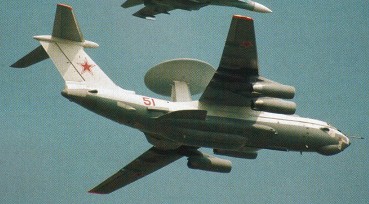
Succeeding the Tu-126 Moss with Voska PVO, Mainstay, derived from Il-76 Candid and referred to as A-50 ‘Mainstay’, is an AWAC aircraft possessing true overland lookdown capability. Powered by four 26,455 1 (12 000 kgp) Soloviev D¬3OKPs, it features a new IFF system and, apparently, a comprehensive ECM complement. About a half-dozen have attained Voyska PVO service mid-1987. A triple vertical tail arrangement of the prototype was not standardised for series production versions.
In 1978 the first flight took place of the Beriev A-50 Mainstay airborne early warning and control aircraft, in Russian operational service since 1984.
The A-50 is the ‘Adnan’ in Iraqi service.
A laser-gun test-bed aircraft based on the llyushin II-76 was produced by Beriev and has been flown since 1980s as the A-60.
A communications relay variant flew as the IL-82.
Il-76
Engines: 4 x 26,455 lb (12,000 kg / 117.7kN) thrust Soloviev D-30KP two-shaft turbofans.
Wingspan 165 ft 8 in (50.5 m)
Length 152 ft 10½ in (46.59 m)
Height 48 ft 5 in (14.76 m).
Empty weight, about 159,000 lb (72.000 kg)
Maximum loaded weight 346,125 lb (157,000 kg).
Maximum speed, about 560 mph (900 kph)
Maximum cruising speed 528 mph (850 km/h)
Normal long-range cruising height 42,650 ft (13,000 m)
Range with maximum payload: 88,185 lb (40.000 kg) 3,100 miles (5000 km).
Range w/max.fuel: 5000 km / 3107 miles
Armament: normally none / 2 x 23mm machine-guns
Crew: 4
Il-76M Candid B
Engine: 4 x Soloviev D-30KP turbofan.
Installed thrust: 470.8 kN.
Span: 50.5 m.
Length: 46.6 m.
Wing area: 300 sq.m.
Empty wt: 61,000 kg.
MTOW: 170,000 kg.
Payload: 40,000 kg.
Cruise speed: 100 kph.
Ceiling: 15,500 m.
T/O run: 850 m.
Ldg run: 460 m.
Fuel internal: 82,000 lt.
Range: 5000 km.
Capacity: 90 pax.
Air refuel: No.
Il-76MD
Maximum takeoff weight: 190 ton
Maximum load: 48 ton
Il-76MD-90A
Maximum takeoff weight: 210 ton
Fuel capacity: 109500 litres
The total of tanks of the aircraft is.
Service life: 30 years / 10000 landings / 30 000 Flight hours
Il-76TD
Engines: 4 x 26,455 lb (12,000 kg) thrust Soloviev D-30KP two-shaft turbofans.
MTOW: 190,000 kg.
Wing area: 300 sq.m.
Sweepback: 25 deg
Max payload: 50,000 kg (110,230 lb).
Range: (50t payload) 4500 km
Range: (20t payload), 8000 km.
Cruise alt: 9000-12000m.
Cruise speed: 750-800 kph.
Hold cap: 3.4×3.4×24.5m.
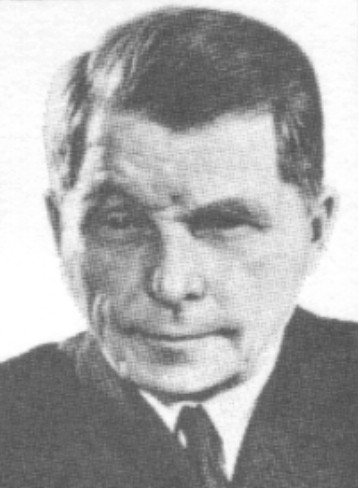
Sergei Ilyushin, was a mechanic in the Russian air force in WW1. During the early 1920s Sergei Vladimirovich llyushin (died 1977) was a student at the Zhukovskii Military Air Academy, and began glider design. Graduating from the Air Academy, Ilyushin went to TsAGI, where he was influenced by Tupolev.
From 1935 one of the most successful Soviet aircraft designers, beginning with IL-4 (DB-3) bomber developed from TsKB-26 design, of which nearly 7,000 built. Founded own OKB just before Second World War, though 1933 generally attributed as starting point for llyushin designs. Most famous wartime aircraft was IL-2 Shturmovik armoured ground-attack aircraft, a vital weapon in the defeat of the German invasion of Russia, and of which more than 36,000 were built.
Post-Second World War developed IL-12 and IL-14 transports which established Aeroflot’s civil airline network. IL- 28 bomber of 1948 (in class of British Canberra) was first Soviet jet bomber, remaining in large scale use for many years. IL-18 civil transport, which entered service with Aeroflot in 1959, was nation’s first turboprop airliner. IL- 38 anti-submarine/maritime patrol aircraft developed from IL-18 and first flown 1961. IL-20 reconnaissance, electronic intelligence, and communications relay aircraft also developed from IL-18, with IL-24 civil variant. IL-62, 114/186- seat turbofan-powered transport, which inaugurated Aeroflot’s Moscow-New York service in July 1968, was Soviet Union’s first long-range jet airliner.
IL-76T four-turbofan medium/long-range freight transport first flew 1971 and over 900 built, with in-flight refueling tanker derivative first flown 1983 as IL-78, and communications relay variant as IL-82. IL-86 wide-body transport first flew December 22,1976; 103 built before production ended. Strategic-command-post version became IL-80 Maxdome. Follow-on IL-96 wide-body airliner first flew December 1988 and remains in production. II- 98 proposed as twin-engined derivative of IL-96. IL-106 heavy military transport and IL-112 shorthaul regional airliner projected. IL-114 twin-turboprop transport first flew March 1990 and ordered with production and marketing by Uzbekistan-Russian consortium. Special electronic versions of IL-114 developed for “Open Skies” missions and Russian Federal Border Guard patrol. IL-103 4/5-seat lightplane first flown May 1994 and manufactured by MAPO “MiG”.
Current name in 1998 llyushin Aviation Complex, or Aviatsionnyi Kompleks imeni S.V. llyushina.
Germany
Offers the Eurofox two-seat, STOL, very light, braced high-wing cabin monoplane (certificated 1996), which is available in assembled or kit forms. Variant of the Czech Aerotechnik Aeropro/Evektor Fox.
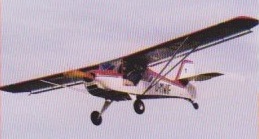
Inspired by the Kitfox and Avid Flyer, the Eurofox also uses a welded steel spaceframe fuselage, tubular spars and plywood ribs, all covered in Dacron.
Engine: Rotax 912, 80 hp
Wing span: 9.2 m
Wing area: 11.5 sq.m
MAUW: 450 kg
Empty weight: 250 kg
Fuel capacity: 58 lt
Max speed: 180 kph
Cruise speed: 150 kph
Minimum speed: 60 kph
Climb rate: 5 m/s
Fuel consumption: 10 lt/hr
Certification: VZ
Seats: 2
Price (1998): 63 240 DM
1998:
Mennwanger Straβe 3
D 88682 Salem
Germany
LSA builder
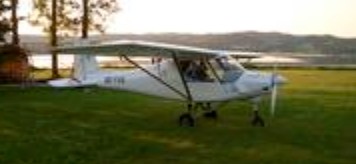
The tube and fabric C42 features an unstressed outer skin.
Known as Aerosport Ltd Ikarus C42 in the US, the Ikarus C42 is a popular school plane. More than 650 airplanes have been delivered worldwide.
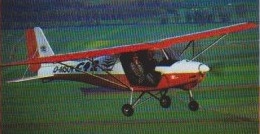
A newer model is the Ikarus C42B (C-42B). C42B 2009 Price: 40000 EURO
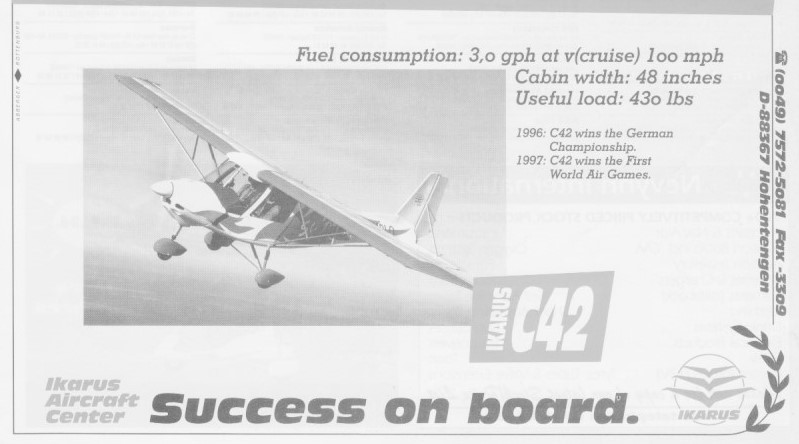
C-42
Engine: Rotax 912, 80 hp
Wing span: 9.9 m
Wing area: 13.2 sq.m
MAUW: 450 kg
Empty weight: 230 kg
Fuel capacity: 50 lt
Max speed: 175 kph
Cruise speed: 150 kph
Minimum speed: 65 kph
Climb rate: 5 m/s
Seats: 2
Fuel consumption: 11 lt/hr
C-42B
Stall: 35 kt / 40 mph / 65 kmh
Cruise: 86 kt / 99 mph / 160 kmh
VNE: 103 kt / 118 mph / 190 kmh
Empty Weight: 259 kg / 572 lbs
MTOW Weight: 450 kg / 992 lbs
Climb Ratio: 1000 ft/min / 5 m/s
Glide Ratio: 1:11 @ 70kn
Take-off distance (50ft obstacle): 1050 ft / 320 m
Landing distance (50ft obstacle): 770 ft / 234 m
C42FB

