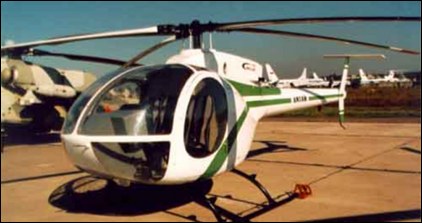
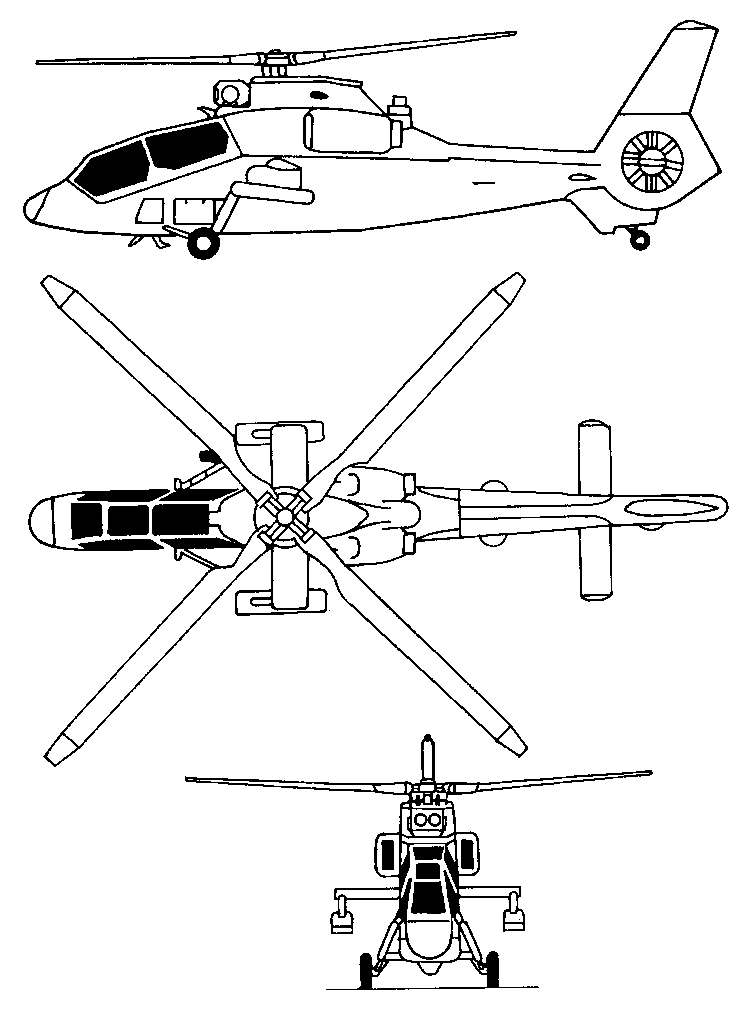
Work beginning in 1996, the project was revealed at the Moscow Air Show, on 19 August 1997, with display of a mockup. A second engineering mockup was built in 1998. Kazan decided in mid-2001 to begin building a prototype to fly in 2003.
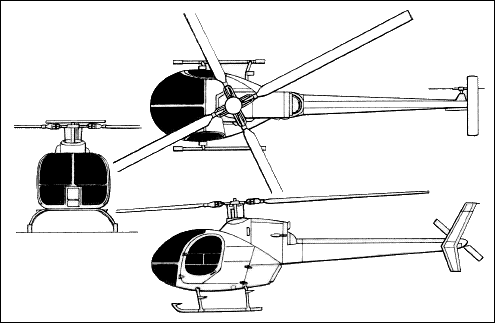
Intended for light transport, patrol, medical evacuation and training, certification was to be to FAR Pt 27. A conventional pod and boom configuration with T tail, semi-articulated three-blade main rotor, tapered blades on production version. The max (emergency) rotation speed is 2,586 rpm. A rotor brake is standard but no provision for folding. A Krasnyy Oktyabr VR-10 main gearbox, rated for 216kW, receives an engine input of 6,000 rpm. A XP-10 gearbox is fitted for the two-blade tail rotor. Extensive use of composites is made throughout, including main rotor blades. The landing gear is a conventional, non-retractable skids on arched support tubes, with spring shock absorbtion. Power is by one 201kW VAZ-4265 rotary engine mounted above the cabin and behind the gearbox and operating on 92/93 grade petrol. Rpm control is manual. Fuel capacity is 300 litres. A refuelling point is on the left side. Oil capacity 20 litres.
The pilot and two passengers, all side by side, in individual seats, have a forward-hinged door each side. Twin clamshell doors are at the rear of the pod, below the tailboom, provideding access to the flat freight floor. One casualty stretcher can be loaded through rear doors when a passenger seat is removed. Alternative access via door on starboard side. Optional, rear-facing seat in luggage bay. Optional heating and air conditioning. The electrical system with accumulator and M-16 generator has a max rating of 16kW. Anti-icing is fitted for the main rotor blades.
Engine: 1 x 201kW VAZ-4265 rotary Max take-off weight: 1050kg Payload: 300kg Empty weight: 2402kg Max speed: 190km/h Cruising speed: 155km/h Hovering ceiling, OGE: 1300m Service ceiling: 4700m Range with 300kg payload: 100km Range with 190kg payload: 600km Max endurance: 6h Crew: 1 Passengers: 2
Russia Founded 1939, and since 1951 has manufactured Mil helicopters. The Kazan Aviation Institute at Kazan on the River Volga, nearly 500 miles east of Moscow, has designed and produced some of Russia’s most notable sailplanes, especially the very advanced KAI-19 high performance all-metal single-seater which, in two-seater form, broke the world’s 300km closed circuit speed record on 1 August 1964, and the KAI-17 training glider. Own designs are Ansat twin-turboshaft light multipurpose helicopter (first flown 1998) for up to 10 persons, and Aktay three-seat piston helicopter (to fly about year 2000).
The Kawasaki 440, also called the T/A 440, is a Japanese twin-cylinder, in-line, two-stroke engine that was designed for snowmobiles and produced by Kawasaki Heavy Industries until the early 1980s.
The engine was widely adapted for other purposes, including ultralight aircraft and Formula 500 automobile racing. Kawasaki did not condone or support the use of the engine in aircraft and it was largely supplanted in this role by the similar purpose-designed Rotax 377 aircraft engine.
The engine has two cylinders in an in-line configuration. The single ignition system uses a coil and points. Fuel is metered by a Mikuni 34 mm slide-type carburetor. Starting is by a recoil starter system with electric start as an option.
In its aircraft applications the 440 uses an aftermarket reduction drive system to reduce the maximum 5000 rpm to a speed more manageable for propeller use.
Specifications Type: twin-cylinder, two-stroke engine Displacement: 436 cc (26.61 cu inches) Dry weight: 49 lb (22 kg) Valvetrain: piston ported Fuel system: Mikuni 34 mm slide-type carburetor Oil system: premixed oil and fuel Cooling system: air cooled Reduction gear: aftermarket reduction drive for aircraft use Power output: 38 hp (28 kW) at 5000 rpm
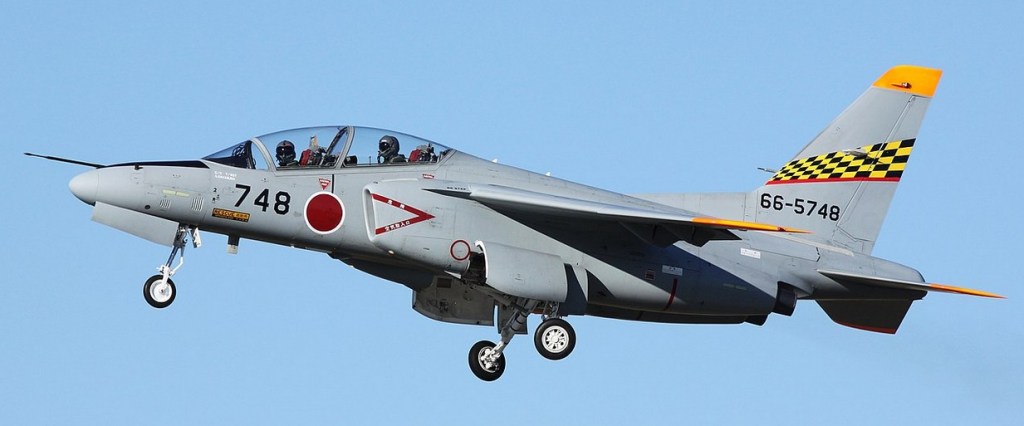
Based on Kawasaki’s KA-850 project, the T-4 was selected as the JASDF’s new advanced trainer in 1981 to replace the T-33 and Mitsubishi T-1. Kawasaki is the prime contractor, with Fuji and Mitsubishi each taking a 30 per cent share of the pro¬gramme. The aircraft is a mid-wing, twin-turbofan design which uses two indigenous IHI XF3-30 engines and is equipped with Stencel ejection seats, a headup display, an air data computer, and five hardpoints for auxiliary fuel and light weapons. Future developments may include a dedicated ground¬attack version. Construction of 32 T.4 advanced trainers has been authorised to 1987, against an even¬tual JASDF requirement for more than 200 aircraft, and production of the first batch of 12 was under way, with initial deliveries due in 1988. Four XT-4 prototypes, the first of which flew on July 29, 1985, were engaged in an intensive test programme which was to be completed by March 1988.
The defence Agency awarded the T-4 a type certificate in July 1988.
XT-4 Engine: 2 x IHI XF3-30 turbofan. Installed thrust: 32.6 kN. Span: 10 m. Length: 13 m. Wing area: 21.6 sq.m Empty wt: 3700 kg. MTOW: 7500 kg. Max speed: M0.9. Initial ROC: 3000 m / min. Ceiling: 15,240 m. T/O run: 549 m. Ldg run: 670 m. Fuel internal: 2271 lt. Range: 1300 km. Hardpoints: 5.
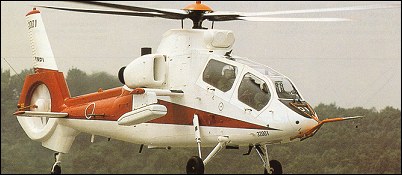
Developed to replace OH-6Ds of JGSDF, the Japan Defence Agency (IDA) awarded Y2.7 billion (US$22.5 million) in FY92 to cover the basic design phase of the helicopter then provisionally designated OH-X. Requests for proposals were issued by JDA’s Technical Research & Development Institute (TRDI) 17 April 1992 and Kawasaki was selected as the prime contractor (60% of programme) on 18 September 1992, with Fuji and Mitsubishi (20% each) as partners. The Observation Helicopter Engineering Team (OHCET) was formed by these three companies, beginning with a preliminary design phase 1 October 1992. A mockup was made public on 2 September 1994 under the Japanese name Kogata Kansoku (new small observation [helicopter]). The programme included six prototypes (four flying, two for ground test), and the first aircraft (32001) rolled out at Gifu on 15 March 1996 and made first flight 6 August 1996, followed by second prototype on 12 November. The OH-1 designation was assigned late 1996. The first two XOH-ls were handed over to JDA on 26 May and 6 June 1997. The third flown on 9 January 1997, at which time the earlier aircraft had accumulated some 30 and 20 hours, respectively. The third was handed over on 24 June 1997. The fourth was flown on 12 February 1997 and handed over 29 August 1997. The prototypes were renumbered by 1999 from 32001-04 to 32601-04. The Japan Defence Agency’s Technical Research and Development Institute was looking to develop an attack version of the Kawasaki OH 1 armed reconnaissance helicopter which in 1998 was at the flying prototype stage. Consideration was being given to replacing the OH 1’s single Mitsubishi XTS1 10 engine with two LHTEC T800 or MTU/Turbomeca&Rolls-Royce MTR 390 turboshafts for the AH 2, together with a new gearbox and rotor system, plus a new integrated sensor targeting and weapon system. The first three production OH-1s were funded FY97 and ordered in 1998. The first prototype was flown with more fuel-efficient TS1-10QT (replacing XTS1-10) engines, on 30 March 1998. By early 1999, four prototypes had flown 450 hours and were due to complete further 450 hours by end of 1999, including operational evaluation at Akeno JGSDF base. The first production OH-1 (32605) flown July 1999 and handed over to JGSDF at Gifu 24 January 2000. Name ‘Ninja’ reportedly given in 2002, but not officially confirmed.
The OH-1 features Kawasaki hingeless, bearingless and 20mm ballistic-tolerant four-blade elastomeric main rotor and transmission system; Fenestron-type tail rotor with eight unevenly angled ‘scissor’ blades (35 and 55 degrees); stub-wings for stores carriage. Active vibration damping system. Flying controls are integrated AFCS and stability control augmentation system (SCAS). The rotor blades and hub are manufactured from GFRP composites; centre-fuselage and engines by Mitsubishi, tail unit/canopy/stub-wings/cowling by Fuji, rest by Kawasaki. Some 37% of airframe (by weight) in GFRP/CFRP. The landing gear is a non-retractable tailwheel type, with provision for wheel/skis on the main units. Power is from twin 662kW FADEC-equipped Mitsubishi TS1-10QT turboshafts (XTS1-10 originally in prototypes), and the transmission has a 30-rninute run-dry capability. Stub-wings can each carry a 235 litre auxiliary fuel tank. The crew of two are on tandem armoured seats (pilot in front) with flat-plate cockpit transparencies, upward-opening on the starboard side for crew access. Armament is four Toshiba Type 91 (modified) lightweight short-range, IR-guided AAMs on pylons under stub-wings for self-defence.
Funding for development, prototypes and flight testing Y2.5 billion in FY92, Y10.2 billion in FY93, Y50.1 billion in bY94 and Y23.3 billion in FY95. Unit costs of first four production lots Y1.924 billion (FY97), Y2.018 billion (FY9S), Y2.229 billion (FY99) and Y2.075 billion (FY00).
The Hiko Jikkentai (Flight Test Squadron) was formed at Akeno with first four production aircraft on 27 March 2001; other deliveries by late 2002 included small numbers to Kasumigaura Bunko, Utsunomiya Bunko and Kyoiku Shien Hikotai (at Akeno), all of which are departments of the Army’s Koku Gako (Aviation School). A total of 20, including prototypes, were ordered by FY02, and at least 12 delivered by late 2002.
OH-1 Engines: 2 x Mitsubishi TS1-10 Main rotor diameter: 11.6m Fuselage length: 12.0m Height to top of rotor head: 3.4m Height over tailfin: 3.8m Empty weight: 2450kg Normal take-off weight: 3550kg Max take-off weight: 4000kg Max level speed: 277km/h Combat radius: 200km Range: 550km
Kawasaki aircraft was formed in 1918 as subsidiary of the heavy-industrial complex Kawasaki Jukogyo to build aircraft and aero engines. Based at Kobe, in the early 1930s built Salmson biplanes and engines as well as own designs. Kawasaki had a Dornier license for all-metal construction, and in December 1924 the first Kawasaki-Dornier Wal flying-boat made a notable flight with a German pilot. Thereafter made aircraft mainly for the Japanese Army. A designer of Kawasaki landplanes was German Dr. Richard Vogt, with the company from 1923 unitl 1933. Vogt designs were Type 88 reconnaissance biplane (1927), Type 92 single-seat biplane fighter (1930), and Ki-3 single-engined biplane bomber. Japanese designed were Ki-10 single-seat fighter biplane (1935), Ki-32 single-engined monoplane bomber (1937), Ki-45 fast and widely used twin-engined fighter (1939), Ki-48 twin-engined light bomber (1939), Ki-61 single-seat fighter (liquid-cooled engine and showing German influence (1941), Ki-100 radial-engined development (1944), and Ki-102 twin-engined fighter (1944). After the war, in March 1954, a new company of the same name was founded by the merger of Kabushiki Kaisha Kawasaki Gifu Seisakusho and Kawasaki Kikai Kogyo Kabushiki Kaisha. The Kawasaki KAL-1 (July 1953) was the first postwar all-metal aircraft of Japanese design. Early production covered 210 Lockheed T-33 jet trainers, 48 Lockheed P-2H Neptunes and 239 Bell Model 47 helicopters, all built under license from the USA. Also made major components for the NAMC YS-11 turboprop transport. 1962: 38 Akashi-machi, Ikuta-ku, Kobe
The company reorganized in April 1969 as Kawasaki Jukogyo Kabushiki Kaisha. In November 1970 flew the C-1 twin turbofan military transport, production aircraft later going to the JASDF. Went on to complete 82 P-2Js (derived from Neptune), 211 KH-4 helicopters (derived from the Model 47), 160 KV107 helicopters (derived from the Boeing Vertol 107 Model II), and many Hughes/McDonnell Douglas Model 500D and OH-6DA helicopters (production continued through 1998). Produced the Lockheed Martin P-3C Orion for the JMSDF; 101st and final aircraft delivered in 1997, when four EP-3/UP-3D electronic intelligence/training variants remained to be delivered up to the year 2000. Kawasaki produced 16 CH-47J examples of Boeing Chinook for the JASDF and compled delivery of 52 CH-47JAs to the JGSDF. It was s prime contractor on the OH-1 Kogata Kansoku armed scout, observation and attack helicopter (first flown August 1996), and had almost completed manufacture of some 200 T-4 intermediate jet trainers and liaison aircraft for the JASDF by 1998. Also constructs components and assemblies for the F-15J and various Airbus and Boeing airliners. Kawasaki teamed with Eurocopter on the BK117 helicopter, and has engine and space programs.
Kawasaki Heavy Industries, Limited is an international corporation and has headquarters in both Chūō-ku, Kobe and Minato, Tokyo. As of 31 March 2013 Kawasaki had 34,010 employees, total assets of ¥ 1.3 trillion at March 31, 2012, and a nett income ¥ 23.3 billion at March 31, 2012.
In 1994 the development of the all-metal UL aircraft KP-2U SOVA was started. Three prototypes were built: two for the test flights and one for the strength tests. The first test flight of the SOVA was done in May 1996. In September 1997 the aircraft obtained the type certificate by the UL-2 regulations from the Air Amateur Association of the Czech republic. In June 1977, KAPPA77 a.s. was founded and the KP-2U entered serial production. After the KAPPA 77 a.s. was declared bankruptcy on 16 February 2005, the company Jihlavan airplanes, s.r.o. was founded on 2 March 2005 with the main objective – to proceed in the production of the ultralight aircraft KP 2U SOVA. On 1 April 2005, the Jihlavan airplanes, s.r.o. became the holder of the manufacture rights, intellectual properties, etc. of the KP-2U. Over 160 airplanes of the Kappa KP-2U versions were built. After Jihlavan took over the production of the aircraft it was renamed as the Rapid KP-2U.
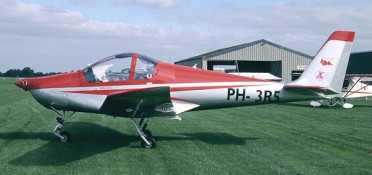
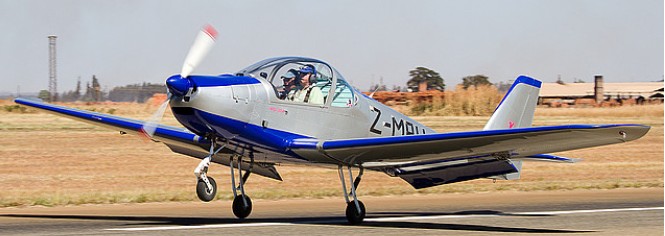
The Kappa KP-2UR Sova is a side-by-side two-seat low-wing ultralight aeroplane, featuring variable-pitch three blade composite prop, retractable trailing link tricycle undercarriage and fowler flaps. The all-metal aircraft is delivered in airworthy condition, with electro-retractable landing gear with hydraulic brakes, mechanically controlled Fowler flaps, removable wings with winglets, dual control and an elevator with electro-controlled trim tab. Both fabric-covered seats are adjustable, with four-point safety belts. 2009 Price: 49000 EURO
KP 2U
The KP 2V SOVA structure is entirely riveted dural tube. The side by side two seater is equipped with retractable undercarriage and Fowler flaps with a GAW 1 profile.
Kappa Ltd was established in 1991 in the Czech Republic. Produces the KP-2U Sova two-seat low-wing lightplane, first flown May 1996. 1998: Brtnica 21 CZ-586001 Jihlava Czech Republic