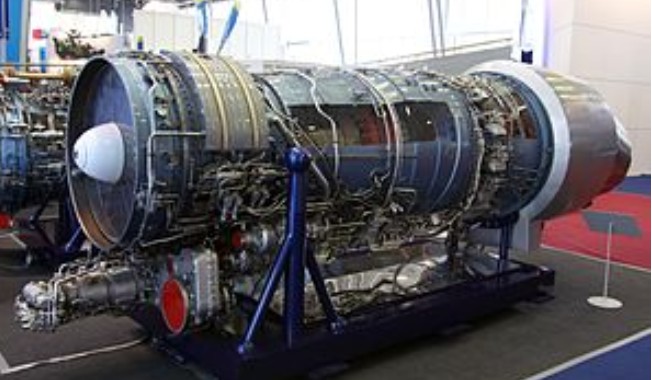
The Saturn AL-31 is a family of military twin spool turbofan turbofan engines. It was developed by Lyulka, later NPO Saturn, of the Soviet Union, originally for the Sukhoi Su-27 air superiority fighter. It produces a total thrust of 123 kN (27,600 lb) with afterburning in the AL-31F, 137 kN (30,800 lb) in the AL-31FM (AL-35F) and 142 kN (32,000 lb) in the AL-37FU variants. It powered all Su-27 derivatives and the Chengdu J-10 multirole jet fighter which was developed in China.
The AL-31FP and AL-37FU variants have thrust vectoring. The former is used in the Su-30MKI export version of the Su-30 for India & Sukhoi Su-30MKM for Malaysia . The AL-37FU can deflect its nozzle to a maximum of ±15° at a rate of 30°/sec. The vectoring nozzle is utilized primarily in the pitch plane. The Al-31FP is built in India by HAL at the Koraput facility under a deep technology transfer agreement.
It has a reputation for having a tremendous tolerance to severely disturbed air flow. In the twin-engined Su-27, the engines are interchangeable between left and right. The Mean Time Between Overhaul (MTBO) for the AL-31F is given at 1000 hours with a full-life span of 3000 hours. Some reports suggested that Russia was offering AL-31F to Iran to re-engine its F-14 Tomcat air fleet in the late 1990s.
According to Saturns Victor Mihailovic Chepkin, chief designer of the 117 and 117S engines, the Chinese WS-10 was developed with the aid of the AL-31s maintenance technical documentation. China can domestically produce most AL-31 parts for its own jet engine programs, but must import turbine blades from Russia.
The 117S (AL-41F1A) is an upgrade of the AL-31F based on the AL-41F intended to power the Su-35BM, producing 142 kN (32,000 lb) of thrust in afterburner and 86.3 kN (19,400 lb) dry. It features a fan 3% larger in diameter (932 millimetres (36.7 in) versus 905 millimetres (35.6 in)), advanced high- and low-pressure turbines, an all-new digital control system, and provisions for thrust-vectoring nozzles similar to the AL-31FP. This engine will have an assigned life of 4,000 hours and an MTBO of 1,000 hours. The first flight of this engine was completed in an Su-35BM on 20 February 2008. On 9 August 2010, Ufa-based company UMPO started supplying 117S engines (AL-41F1S) intended for Su-35S fighters.
The 117 (AL-41F1) is a 5th generation engine custom built for Russia’s fifth-generation stealth fighter jet PAK-FA according to Sukhoi General Director Mikhail Pogosyan. Mikhail Pogosyan has clarified that claims that fifth-generation fighter allegedly has an old engine are wrong. Though most parameters of the new 5th Gen Engine are classified General Director Mikhail Pogosyan provided some information on the new engine, The engine thrust was enlarged by 2.5 tonnes when compared with the AL-31 engine, while the engine weight was cut by 150 kilograms. That allowed the new jet to supercruise i.e. move at a supersonic cruise speed without the use of after burner.
The Saturn Research and Production center made digitally controlled system (FADEC) of Project 117 Engine.The new engine produces 33,000 lbs (147 kN) of thrust in afterburner has a Dry weight of 1420 kilogram and T:W ratio of 10.5:1.
Mikhail Pogosyan further mentioned that this engine (117) meets the client’s (Russian AirForce) requirements. This is not an intermediate product made particularly for test flights. The engine was to be installed in production PAK-FA fighter which will be supplied to the Russian Air Force and prospective foreign clients.
Bench testing of a radically new engine (the second stage) for the Russian fifth generation fighter aircraft PAK FA will start in 2014, said the general designer-director of the Scientific and Technical Center “Saturn”, Eugeny Marchuk “The engine will be ready in two years, and will begin bench testing then”, said Marchuk at the 11th International Conference” Aviation and Space – 2012 “, which opened at the Moscow Aviation Institute. According to him, the new “engine 117” will belong to the “5 +” generation and its characteristics will be superior to the existing foreign counterparts engine for fifth generation aircraft. “This is – a fundamentally new engine, The motor unit weight is 30% less (than the 117C – approx.), Life-cycle costs will by 30% less, and it should be cheaper, “- said Marchuk.
Variants:
Al-31F The basic engine developed to power the Su-27 fighter Builder: Salyut, UMPO Year: 1981 Thrust: 123 kN (27,700 lbf) Thrust vectoring: No Aircraft: Su-27, Shenyang J-11, Sukhoi Su-30MKK, Sukhoi Su-30(Salyut)
Al-31FP Improved variant for the Indian Su-30MKI with thrust vectoring Builder: Salyut, HAL Year: 2000 Thrust: 123 kN (27,700 lbf) Thrust vectoring: Yes Aircraft: Su-30 MKI, Sukhoi Su-30MKM
Al-31FN Improved variant for the Chengdu J-10 Builder: Salyut Year: 2002 Thrust: 125 kN (28,100 lbf) Thrust vectoring: No Aircraft: Chengdu J-10
Al-31FM1 Improved version for the Russian Air Force Builder: Salyut Year: 2007 Thrust: 132 kN (29,700 lbf) Thrust vectoring: Yes Aircraft: Su-27SM, Su-30, Su-34
Al-31FM2 Improved version for the Russian Air Force Builder: Salyut Year: 2012 Thrust: 145 kN (32,600 lbf) Thrust vectoring: Yes Aircraft: Su-27SM, Su-30, Su-34
Al-37FU Advanced derivative for the Su-37 Builder: UMPO Thrust: 145 kN (32,600 lbf) Thrust vectoring: Yes Aircraft: Su-37
Al-41F-1 (117) Advanced derivative for the Sukhoi PAK FA Builder: UMPO Year: 2010 Thrust: 147 kN (33,000 lbf) Thrust vectoring: Yes Aircraft: PAK FA prototype
Born March 23, 1908, Kiev Oblast, Ukraine, Arkhip Mikhailovich Lyul’ka, was a Soviet scientist and designer of jet engines of Ukrainian origin, head of the OKB Lyulka, member of the USSR Academy of Sciences.
The Lyul’ka design bureau had its roots in the Kharkov Aviation Institute where Arkhip Mikhailovich Lyulka was working with a team designing the ATsN (Agregat Tsentralnovo Nadduva – Centralised supercharger) installation on the Petlyakov Pe-8 bomber. Lyul’ka was responsible for designing the first Soviet gas turbine engines. Preferring to steer away from copying captured German equipment, it succeeded in producing home grown engines.
Lyul’ka was a USSR aero-engine design bureau and manufacturer(OKB-165 started in 1946) from 1938 to the 1990s, when manufacturing and design elements were integrated as NPO Saturn based at Rybinsk.
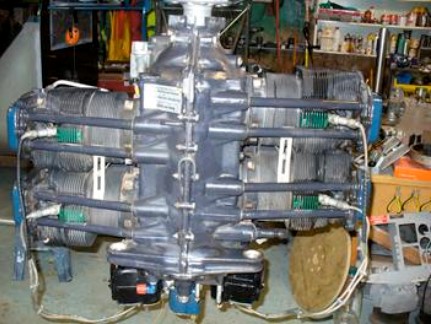
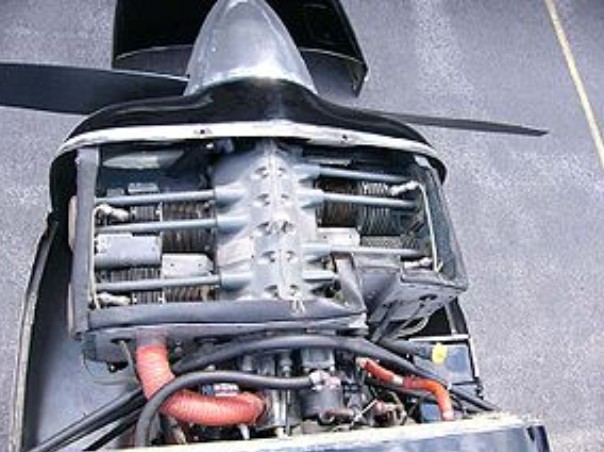
The Lycoming IO-720 engine is a large displacement, horizontally opposed, eight-cylinder aircraft engine featuring four cylinders per side, first run in 1961, manufactured by Lycoming Engines.
There is no carburetted version of the engine, which would have been designated O-720 and therefore the base model is the IO-720. The IO-720 and the Jabiru 5100 were the only flat-eight configuration aircraft engines in production in 2012.
The engine has a fuel injection system which schedules fuel flow proportionally to the airflow, with fuel vaporization occurring at the intake ports. The engine has a displacement of 722 cubic inches (11.8 litres) and produces 400 hp (298 kW). The cylinders have air-cooled heads cast from aluminum alloy with a fully machined combustion chamber.
The first IO-720 was type certified on 25 October 1961 to the CAR 13 standard as amended to 15 June 1956 including 13-1, 13-2, 13-3, 13-4.
In 2009 a new IO-720-A1B cost US$113,621, with a rebuilt engine retailing for US$75,435 and a factory overhaul priced at US$66,289.
Variants: IO-720-A1A Eight-cylinder, horizontally opposed, air-cooled direct drive, fuel injection, internal oil jet piston cooling, 722 cubic inches (11.8 litres), 400 hp (298 kW), certified 25 October 1961
IO-720-A1B fuel-injected, 722 cubic inches (11.8 litres), 400 hp (298 kW), same as -A1A except equipped with Bendix S8LN-1208 and S8LN-1209 magnetos, certified 22 February 1971
IO-720-A1BD fuel-injected, 722 cubic inches (11.8 litres), 400 hp (298 kW), same as -A1B except has a dual magneto, certified 30 December 1976
IO-720-B1A fuel-injected, 722 cubic inches (11.8 litres), 400 hp (298 kW), same as -A1A except for top exhaust cylinders and offset exhaust valve shroud tubes, certified 4 November 1965
IO-720-B1B fuel-injected, 722 cubic inches (11.8 litres), 400 hp (298 kW), same as -B1A except equipped with Bendix S8LN-1208 and S8LN-1209 magnetos and Bendix RSA-10ED1 fuel injection, certified 22 February 1971
IO-720-B1BD fuel-injected, 722 cubic inches (11.8 litres), 400 hp (298 kW), same as -B1B except has a dual magneto, certified 30 December 1976
IO-720-C1B fuel-injected, 722 cubic inches (11.8 litres), 400 hp (298 kW), same as -A1B except that it has up-exhaust cylinder heads, certified 22 December 1971
IO-720-C1BD fuel-injected, 722 cubic inches (11.8 litres), 400 hp (298 kW), same as -C1B except has a dual magneto, certified 28 January 1977
IO-720-D1B fuel-injected, 722 cubic inches (11.8 litres), 400 hp (298 kW), same as -A1B except has a rear type air inlet housing instead of a front inlet, certified 29 October 1973
IO-720-D1BD fuel-injected, 722 cubic inches (11.8 litres), 400 hp (298 kW), same as -D1B except has a dual magneto, certified 28 January 1977
IO-720-D1C fuel-injected, 722 cubic inches (11.8 litres), 400 hp (298 kW), same as -D1B except equipped with an angled fuel injector adapter, certified 15 April 1982
IO-720-D1CD fuel-injected, 722 cubic inches (11.8 litres), 400 hp (298 kW), same as -D1C except has a dual magneto, certified 10 June 1977
The original YF102 was developed at the Lycoming Turbine Engine Division in Stratford, Connecticut by adding a fan to the Lycoming T55 engine, which was used as the gas generator. The YF102-LD-100 was tested on an AJ Savage in the early 1970s. Six engines were built for the Northrop YA-9 prototype ground-attack aircraft. These engines were later reused in the C-8A Quiet Short-Haul Research Aircraft (QSRA).
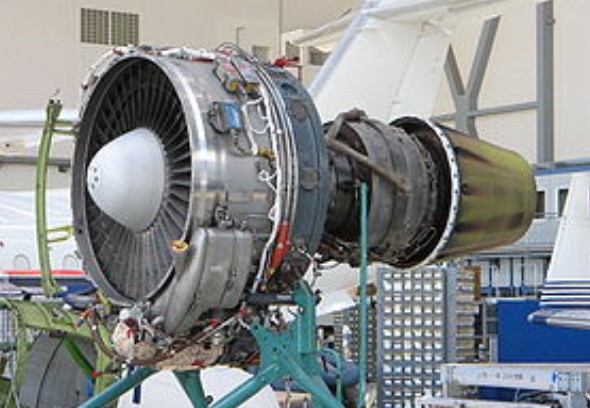
The ALF 502 geared turbofan was certified in 1980, and used on the British Aerospace 146 and Bombardier Challenger 600
The improved, higher-thrust LF 507 was used on the Avro RJ update of the BAe 146.
Applications:
YF102 Northrop YA-9 C-8A Quiet Short-Haul Research Aircraft (QSRA)
ALF 502 Bombardier Challenger 600 British Aerospace 146
LF 507 Avro RJ
Specifications:
ALF502-R5 Type: High bypass geared turbofan Length: 63.6 in (162 cm) Diameter: Fan: 40.25 in (102 cm) Dry weight: 1336 lb (606 kg) Compressor: Single stage fan, single stage axial low pressure compressor, 7 stage axial and single stage centrifugal high pressure compressor Combustors: Annular Turbine: Two stage high pressure turbine, two stage low pressure turbine Maximum thrust: 6,970 lbf (31 kN) Bypass ratio: 5.7:1 Specific fuel consumption: 0.406 lb/lbf-h (41.4 kg/kN-hr) Thrust-to-weight ratio: 5.1:1
The Lycoming IO-580 engine is a horizontally opposed, six-cylinder aircraft engine featuring three cylinders per side, manufactured by Lycoming Engines.
There is no carburetted version of the engine, which would have been designated O-580 and therefore the base model is the IO-580.
This engine family competes with the Continental IO-550 series which are also six-cylinder engines with similar power output and weight.
First run in 1996, the IO-580 family of engines covers a range from 300 to 315 hp (224 to 235 kW). The engine has a fuel injection system which meters fuel in proportion to the induction airflow through air-bled nozzles at the individual cylinder intake ports. The engine has a displacement of 583 cubic inches (9.56 litres) and produces a maximum of 315 hp (235 kW) in its B1A version. The cylinders have air-cooled heads cast from aluminum-alloy with a fully machined combustion chamber.
The first IO-580 was type certified on 12 August 1997 on the regulatory basis of FAR 33 effective February 1, 1965 as amended to 33-1 through 33-18. The engine is certified for use in either tractor or pusher configuration installations.
Variants: IO-580-A1A Six-cylinder, horizontally opposed, air-cooled direct drive, 583 cubic inches (9.56 litres), 300 hp (224 kW) at 2500 rpm, dry weight 444 lb (201 kg), PAC-RSA-10ED1 fuel-injection system, certified 12 August 1997
IO-580-B1A Six-cylinder, horizontally opposed, air-cooled direct drive, 583 cubic inches (9.56 litres), 315 hp (235 kW) at 2700 rpm, dry weight 434 lb (197 kg), PAC-RSA-10ED1 fuel-injection system, certified 23 March 2001
AEIO-580-B1A Six-cylinder, horizontally opposed, air-cooled direct drive, 583 cubic inches (9.56 litres), 315 hp (235 kW) at 2500 rpm, dry weight 446 lb (202 kg), certified 13 August 2007. This model has an aerobatic fuel and oil system. It may be equipped with either the PAC-RSA-10ED1 fuel-injection system or a Lycoming FM-250 system.
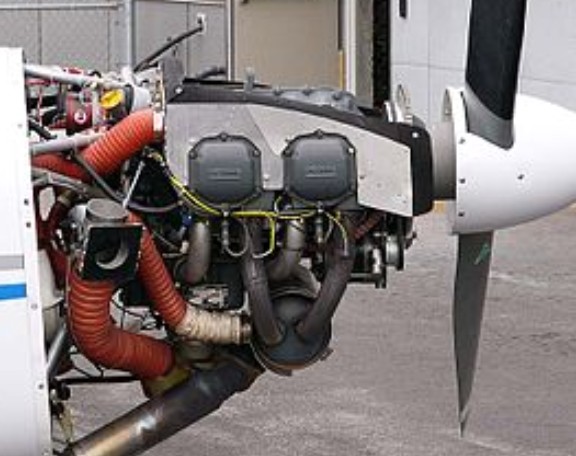
The Lycoming O-320 is a large family of 92 different normally aspirated, air-cooled, four-cylinder, direct-drive engines commonly used on light aircraft such as the Cessna 172 and Piper Cherokee. Different variants are rated for 150 or 160 horsepower (112 or 119 kilowatts). As implied by the engine’s name, its cylinders are arranged in horizontally opposed configuration and a displacement of 320 cubic inches (5.24 L).
The O-320 family of engines includes the carbureted O-320, the fuel-injected IO-320, the inverted mount, fuel-injected AIO-320 and the aerobatic, fuel-injected AEIO-320 series. The LIO-320 is a series of two models identical to the same model IO-320, but with the crankshaft rotating in the opposite direction for use on twin-engined aircraft to eliminate the critical engine.
First run in 1953, the first O-320 (with no suffix) was FAA certified on 28 July 1953 to CAR 13 effective 5 March 1952; this same engine was later re-designated, without change, as the O-320-A1A. The first IO-320 was certified on 10 April 1961, with the AIO-320 following on 23 June 1969 and the first aerobatic AEIO-320 on 12 April 1974. The LIO-320s were both certified on 28 August 1969.
The O-320 family of engines externally resembles the Lycoming O-235 and O-290 family from which they were derived. The O-320 shares the same 3.875 in (98 mm) stroke as the smaller engines, but produces more power with the bore increased to 5.125 in (130 mm). The design uses hydraulic tappets and incorporates the provisions for a hydraulically controlled propeller installation as well. The controllable pitch propeller models use a different crankshaft from those intended for fixed pitch propellers.
The O-320 uses a conventional wet sump system for lubrication. The main bearings, connecting rods, camshaft bearings, tappets and pushrods are all pressure lubricated, while the piston pins, cylinder walls and gears are all lubricated by spray. The oil system is pressurized by an accessory-drive mounted oil pump. A remotely mounted oil cooler is used, connected to the engine by flexible hoses.
The -A, -C and -E variants of carbureted O-320, but none of the high compression or fuel-injected versions, have available STCs that allow the use of automotive fuel as a replacement for more expensive avgas.
Lycoming O-320-D2A
The factory retail price of the O-320 varies by model. In 2010 the retail price of an O-320-B1A purchased outright was USD$47,076.
Variants: O-320 series
O-320 (No suffix) later redesignated O-320-A1A 150 hp (112 kW) at 2700 rpm, Minimum fuel grade 80/87 avgas, compression ratio 7.00:1. Provisions for a controllable pitch propeller and 25-degree spark advance.
O-320-A1B 150 hp (112 kW) at 2700 rpm, Minimum fuel grade 80/87 avgas, compression ratio 7.00:1. Same as A1A but with straight riser in oil sump and -32 carburetor.
O-320-A2A 150 hp (112 kW) at 2700 rpm, Minimum fuel grade 80/87 avgas, compression ratio 7.00:1. Same as A1A but with fixed pitch propeller.
O-320-A2B 150 hp (112 kW) at 2700 rpm, Minimum fuel grade 80/87 avgas, compression ratio 7.00:1. Same as A2A but with straight riser in oil sump and -32 carburetor.
O-320-A2C 150 hp (112 kW) at 2700 rpm, Minimum fuel grade 80/87 avgas, compression ratio 7.00:1. Same as A2B but with retard breaker magnetos.
O-320-A2D 150 hp (112 kW) at 2700 rpm, Minimum fuel grade 80/87 avgas, compression ratio 7.00:1. Same as E3D but with conical mounts.
O-320-A3A 150 hp (112 kW) at 2700 rpm, Minimum fuel grade 80/87 avgas, compression ratio 7.00:1. Same as A1A but with 7/16″ prop bolts.
O-320-A3B 150 hp (112 kW) at 2700 rpm, Minimum fuel grade 80/87 avgas, compression ratio 7.00:1. Same as A3A but with straight riser in oil sump and -32 carburetor.
O-320-A3C 150 hp (112 kW) at 2700 rpm, Minimum fuel grade 80/87 avgas, compression ratio 7.00:1. Same as A3B but with retard breaker magnetos.
O-320-B1A 160 hp (119 kW) at 2700 rpm, Minimum fuel grade 100/130 or 91/96 avgas, compression ratio 8.50:1. Same as A1A but with high compression pistons.
O-320-B1B 160 hp (119 kW) at 2700 rpm, Minimum fuel grade 100/130 or 91/96 avgas, compression ratio 8.50:1. Same as B1A but with straight riser in oil sump and -32 carburetor.
O-320-B2A 160 hp (119 kW) at 2700 rpm, Minimum fuel grade 100/130 or 91/96 avgas, compression ratio 8.50:1. Same as B1A but with fixed pitch propeller provisions.
O-320-B2B 160 hp (119 kW) at 2700 rpm, Minimum fuel grade 100/130 or 91/96 avgas, compression ratio 8.50:1. Same as B2A but with straight riser in oil sump and -32 carburetor.
O-320-B2C 160 hp (119 kW) at 2700 rpm, Minimum fuel grade 100/130 or 91/96 avgas, compression ratio 8.50:1. Same as B2B but with retard breaker magnetos.
O-320-B2D 160 hp (119 kW) at 2700 rpm, Minimum fuel grade 91/96 avgas, compression ratio 8.50:1. Same as D1D but with conical engine mounts and no propeller governor.
O-320-B2E 160 hp (119 kW) at 2700 rpm, Minimum fuel grade 91/96 avgas, compression ratio 8.50:1. Same as B2B except the carburetor is in the same location as the O-320-D models.
O-320-B3A 160 hp (119 kW) at 2700 rpm, Minimum fuel grade 100/130 or 91/96 avgas, compression ratio 8.50:1. Same as B1A but with 7/16 inch propeller bolts.
O-320-B3B 160 hp (119 kW) at 2700 rpm, Minimum fuel grade 100/130 or 91/96 avgas, compression ratio 8.50:1. Same as B1A but with 7/16 inch propellor bolts, a straight riser in oil sump, and -32 carburetor.
O-320-B3C 160 hp (119 kW) at 2700 rpm, Minimum fuel grade 100/130 or 91/96 avgas, compression ratio 8.50:1. Same as B3B but with retard breaker magnetos.
O-320-C1A 150 hp (112 kW) at 2700 rpm, Minimum fuel grade 80/87 avgas, compression ratio 7.00:1. Low compression version converted through field conversion of B1A.
O-320-C1B 150 hp (112 kW) at 2700 rpm, Minimum fuel grade 80/87 avgas, compression ratio 7.00:1. Low compression version converted through field conversion of B1B.
O-320-C2A 150 hp (112 kW) at 2700 rpm, Minimum fuel grade 80/87 avgas, compression ratio 7.00:1. Low compression version converted through field conversion of B2A.
O-320-C2B 150 hp (112 kW) at 2700 rpm, Minimum fuel grade 80/87 avgas, compression ratio 7.00:1. Low compression version converted through field conversion of B2B.
O-320-C2C 150 hp (112 kW) at 2700 rpm, Minimum fuel grade 80/87 avgas, compression ratio 7.00:1. Low compression version converted through field conversion of B2C.
O-320-C3A 150 hp (112 kW) at 2700 rpm, Minimum fuel grade 80/87 avgas, compression ratio 7.00:1. Low compression version converted through field conversion of B3A.
O-320-C3B 150 hp (112 kW) at 2700 rpm, Minimum fuel grade 80/87 avgas, compression ratio 7.00:1. Low compression version converted through field conversion of B3B.
O-320-C3C 150 hp (112 kW) at 2700 rpm, Minimum fuel grade 80/87 avgas, compression ratio 7.00:1. Low compression version converted through field conversion of B3C.
O-320-D1A 160 hp (119 kW) at 2700 rpm, Minimum fuel grade 100/130 or 91/96 avgas, compression ratio 8.50:1. Same as B3B but with Type 1 dynafocal mounts.
O-320-D1B 160 hp (119 kW) at 2700 rpm, Minimum fuel grade 100/130 or 91/96 avgas, compression ratio 8.50:1. Same as D1A but with retard breaker magnetos.
O-320-D1C 160 hp (119 kW) at 2700 rpm, Minimum fuel grade 100/130 or 91/96 avgas, compression ratio 8.50:1. Same as D2C but with provisions for a controllable propeller,
O-320-D1D 160 hp (119 kW) at 2700 rpm, Minimum fuel grade 91/96 avgas, compression ratio 8.50:1. Same as the D1A but with Slick instead of Bendix magnetos and a horizontal carburetor and induction housing. This model was used in the Gulfstream American GA-7 Cougar twin.
O-320-D1F 160 hp (119 kW) at 2700 rpm, Minimum fuel grade 80/87 avgas, compression ratio 7.00:1. Same as E1F except with high compression pistons.
O-320-D2A 160 hp (119 kW) at 2700 rpm, Minimum fuel grade 100/130 or 91/96 avgas, compression ratio 8.50:1. Same as D1A but with fixed pitch propeller provisions and 3/8 inch attaching bolts. Used in the Symphony SA-160.
O-320-D2B 160 hp (119 kW) at 2700 rpm, Minimum fuel grade 100/130 or 91/96 avgas, compression ratio 8.50:1. Same as D2A but retard breaker magnetos.
O-320-D2C 160 hp (119 kW) at 2700 rpm, Minimum fuel grade 100/130 or 91/96 avgas, compression ratio 8.50:1. Same as D2A except -1200 series magnetos.
O-320-D2F 160 hp (119 kW) at 2700 rpm, Minimum fuel grade 80/87 avgas, compression ratio 7.00:1. Same as E2F except with high compression pistons.
O-320-D2G 160 hp (119 kW) at 2700 rpm, Minimum fuel grade 91/96 avgas, compression ratio 8.50:1. Same as the D2A except with Slick instead of Bendix magnetos and 7/16 inch instead of 3/8 inch propeller flange bolts.
O-320-D2H 160 hp (119 kW) at 2700 rpm, Minimum fuel grade 91/96 avgas, compression ratio 8.50:1. Same as the D2G except with a O-320-B sump and intake pipes and with provisions for AC type fuel pump.
O-320-D2J 160 hp (119 kW) at 2700 rpm, Minimum fuel grade 91/96 avgas, compression ratio 8.50:1.Similar to the D2G but with two Slick impulse coupling magnetos and the propeller governor pad, fuel pump and governor pads on the accessory housing all not machined. Used in the Cessna 172P.
O-320-D3G 160 hp (119 kW) at 2700 rpm, Minimum fuel grade 91/96 avgas, compression ratio 8.50:1. Same as the D2G but with 3/8 inch propeller attaching bolts.
O-320-E1A 150 hp (112 kW) at 2700 rpm, Minimum fuel grade 80/87 avgas, compression ratio 7.00:1. Same as A3B but with Type 1 dynafocal mounts.
O-320-E1B 150 hp (112 kW) at 2700 rpm, Minimum fuel grade 80/87 avgas, compression ratio 7.00:1. Same as E1A but with retard breaker magnetos.
O-320-E1C 150 hp (112 kW) at 2700 rpm, Minimum fuel grade 80/87 avgas, compression ratio 7.00:1. Same as E1B.
O-320-E1F 150 hp (112 kW) at 2700 rpm, Minimum fuel grade 80/87 avgas, compression ratio 7.00:1. Same as E1C but with propeller governor drive on the left front of the crankcase.
O-320-E1J 150 hp (112 kW) at 2700 rpm, Minimum fuel grade 80/87 avgas, compression ratio 7.00:1. Same as the E1F but with Slick magnetos.
O-320-E2A 150 hp (112 kW) at 2700 rpm, or 140 hp (104 kW) at 2450 rpm Minimum fuel grade 80/87 avgas, compression ratio 7.00:1. Same as E1A but with fixed pitch propeller, 3/8 inch attaching bolts and an alternate power rating of 140 hp (104 kW).
O-320-E2B 150 hp (112 kW) at 2700 rpm, Minimum fuel grade 80/87 avgas, compression ratio 7.00:1. Same as E2A but with retard breaker magnetos.
O-320-E2C 150 hp (112 kW) at 2700 rpm, or 140 hp (104 kW) at 2450 rpm Minimum fuel grade 80/87 avgas, compression ratio 7.00:1. Same as E2A but -1200 series mags and an alternate power rating of 140 hp (104 kW).
O-320-E2D 150 hp (112 kW) at 2700 rpm, Minimum fuel grade 80/87 avgas, compression ratio 7.00:1. Similar to E2A but with Slick magnetos and 0-235 front. Used in the Cessna 172 I to M models.
O-320-E2F 150 hp (112 kW) at 2700 rpm, Minimum fuel grade 80/87 avgas, compression ratio 7.00:1. Same as E1F but with fixed pitch prop provisions.
O-320-E2G 150 hp (112 kW) at 2700 rpm, Minimum fuel grade 80/87 avgas, compression ratio 7.00:1. Same as E2D but with 0-320-A sump and intake pipes.
O-320-E2H 150 hp (112 kW) at 2700 rpm, Minimum fuel grade 80/87 avgas, compression ratio 7.00:1. Same as E2D but with S4LN-20 and -21 magnetos.
O-320-E3D 150 hp (112 kW) at 2700 rpm, Minimum fuel grade 80/87 avgas, compression ratio 7.00:1. Same as E2D but with 3/8 inch propeller flange bolts.
O-320-E3H 150 hp (112 kW) at 2700 rpm, Minimum fuel grade 80/87 avgas, compression ratio 7.00:1. Same as E3D but with S4LN-20 and -21 magnetos.
O-320-H1AD 160 hp (119 kW) at 2700 rpm, Minimum fuel grade 100LL avgas, compression ratio 9.00:1. Integral accessory section crankcase, front-mounted fuel pump external mounted oil pump and D4RN-2O21 impulse coupling dual magneto.
O-320-H1BD 160 hp (119 kW) at 2700 rpm, Minimum fuel grade 100LL avgas, compression ratio 9.00:1. Same as H1AD but with a D4RN-2200 retard breaker dual magneto.
O-320-H2AD 160 hp (119 kW) at 2700 rpm, Minimum fuel grade 100LL avgas, compression ratio 9.00:1. Same as H1AD but with provisions for a fixed pitch propeller. This was the troublesome engine that was installed on the Cessna 172N.
O-320-H2BD 160 hp (119 kW) at 2700 rpm, Minimum fuel grade 100LL avgas, compression ratio 9.00:1. Same as the H2AD but with a D4RN-2200 retard breaker dual magneto.
O-320-H3AD 160 hp (119 kW) at 2700 rpm, Minimum fuel grade 100LL avgas, compression ratio 9.00:1. Same as the H2AD but with 3/8 inch propeller flange bolts, in place of instead of 7/16 inch.
O-320-H3BD 160 hp (119 kW) at 2700 rpm, Minimum fuel grade 100LL avgas, compression ratio 9.00:1. Same as H3AD but with a D4RN-2200 retard breaker dual magneto.
IO-320 series
IO-320-A1A 150 hp (112 kW) at 2700 rpm, Minimum fuel grade 80/87 avgas, compression ratio 7.00:1. Base model with a Bendix RSA -5AD1 fuel injection system.
IO-320-A2A 150 hp (112 kW) at 2700 rpm, Minimum fuel grade 80/87 avgas, compression ratio 7.00:1. Same as A1A but with provisions for fixed pitch propeller.
IO-320-B1A 160 hp (119 kW) at 2700 rpm, Minimum fuel grade 91/96 or 100LL avgas, compression ratio 8.50:1. Same as the A1A but with the fuel injector offset toward the engine’s fore and aft centerline.
IO-320-B1B 160 hp (119 kW) at 2700 rpm, Minimum fuel grade 91/96 or 100LL avgas, compression ratio 8.50:1. Same as the A1A but with an AN fuel pump drive.
IO-320-B1C 160 hp (119 kW) at 2700 rpm, Minimum fuel grade 91/96 or 100LL avgas, compression ratio 8.50:1. Same as the B1A but with an adapter for mounting the fuel injector straight to the rear.
IO-320-B1D 160 hp (119 kW) at 2700 rpm, Minimum fuel grade 91/96 or 100LL avgas, compression ratio 8.50:1. Same as the B1C but with S-1200 series high altitude magnetos.
IO-320-B1E 160 hp (119 kW) at 2700 rpm, Minimum fuel grade 91/96 or 100LL avgas, compression ratio 8.50:1. Same as the D1C except with a horizontal fuel injector.
IO-320-B2A 160 hp (119 kW) at 2700 rpm, Minimum fuel grade 91/96 or 100LL avgas, compression ratio 8.50:1. Same as the BIA but with provision for a fixed pitch propeller.
IO-320-C1A 160 hp (119 kW) at 2700 rpm, Minimum fuel grade 91/96 or 100LL avgas, compression ratio 8.50:1. Same as the B1B except it has features making it suitable for adding a turbo-supercharger via a Supplemental Type Certificate This engine has internal piston cooling oil nozzles.
IO-320-C1B 160 hp (119 kW) at 2700 rpm, Minimum fuel grade 91/96 or 100LL avgas, compression ratio 8.50:1. Same as the C1A but with a horizontal rear-mounted fuel injector.
IO-320-D1A 160 hp (119 kW) at 2700 rpm, Minimum fuel grade 91/96 or 100LL avgas, compression ratio 8.50:1. Same as the B1D but with Type 1 dynafocal mounts, S4LN-1227 and S4LN-1209 magnetos and the fuel injector mounted vertically under the oil sump.
IO-320-D1B 160 hp (119 kW) at 2700 rpm, Minimum fuel grade 91/96 or 100LL avgas, compression ratio 8.50:1. Same as the D1A but with the propeller governor drive on the left front of crankcase instead of on the accessory housing.
IO-320-D1C 160 hp (119 kW) at 2700 rpm, Minimum fuel grade 91/96 or 100LL avgas, compression ratio 8.50:1. Same as the D1B but with Slick Magnetos.
IO-320-E1A 150 hp (112 kW) at 2700 rpm, Minimum fuel grade 80/87 avgas, compression ratio 7.00:1. Same as E2A but with provision for a controllable pitch propeller.
IO-320-E1B 150 hp (112 kW) at 2700 rpm, Minimum fuel grade 80/87 avgas, compression ratio 7.00:1. Same as E1A but with Slick 4050 and 4051 magnetos.
IO-320-E2A 150 hp (112 kW) at 2700 rpm, Minimum fuel grade 80/87 avgas, compression ratio 7.00:1. Same as A2A but with Scintilla S4LN-20 and S4LN-21 magnetos, straight conical mounts, and the fuel injector mounted under the oil sump.
IO-320-E2B 150 hp (112 kW) at 2700 rpm, Minimum fuel grade 80/87 avgas, compression ratio 7.00:1. Same as E2A but with Slick 4050 and 4051 magnetos.
IO-320-F1A 160 hp (119 kW) at 2700 rpm, Minimum fuel grade 91/96 or 100LL avgas, compression ratio 8.50:1. Same as the C1A except with a Type 1 (30 deg) dynafocal mount attachment instead of Type 2 (18 deg) mount attachment.
LIO-320 series
LIO-320-B1A 160 hp (119 kW) at 2700 rpm, Minimum fuel grade 91/96 or 100LL avgas, compression ratio 8.50:1. Same as B1A except with counter-clockwise engine rotation and reverse rotation of accessories. It uses a modified starter ring gear, crankshaft, cam shaft, accessory housing and oil pump body. This engine is usually paired with an IO-320-B1A on a twin-engined aircraft.
LIO-320-C1A 160 hp (119 kW) at 2700 rpm, Minimum fuel grade 91/96 or 100LL avgas, compression ratio 8.50:1. Same as C1A except with the same changes as the LIO-320-B1A. It has provisions for adding a turbo-supercharger. This engine is usually paired with an IO-320-C1A on a twin-engined aircraft.
AIO-320 series
AIO-320-A1A 160 hp (119 kW) at 2700 rpm, Minimum fuel grade 91/96 or 100LL avgas, compression ratio 8.50:1. Same as the IO-320-B1D but this model permits installation and operation of the engine in the inverted position. The differences include a front-mounted propeller governor, two dry oil sumps, dual external oil scavenge pumps, an oil tank, three options for the position of the fuel injector and a Type 1 dynafocal mount.
AIO-320-A1B 160 hp (119 kW) at 2700 rpm, Minimum fuel grade 91/96 or 100LL avgas, compression ratio 8.50:1. Same as the A1A but with one impulse coupling magneto.
AIO-320-A2A 160 hp (119 kW) at 2700 rpm, Minimum fuel grade 91/96 or 100LL avgas, compression ratio 8.50:1. Same as the A1A but with provision for a fixed pitch propeller.
AIO-320-A2B 160 hp (119 kW) at 2700 rpm, Minimum fuel grade 91/96 or 100LL avgas, compression ratio 8.50:1. Same as the A1A but has one impulse coupling magneto and a fixed pitch propeller.
AIO-320-B1B 160 hp (119 kW) at 2700 rpm, Minimum fuel grade 91/96 or 100LL avgas, compression ratio 8.50:1. Same as the A1B but with a front-mounted fuel injector
AIO-320-C1B 160 hp (119 kW) at 2700 rpm, Minimum fuel grade 91/96 or 100LL avgas, compression ratio 8.50:1. Same as the B1B but with the fuel injector vertically mounted on bottom of the oil sump in the front position.
AEIO-320 series
AEIO-320-D1B 160 hp (119 kW) at 2700 rpm, Minimum fuel grade 91/96 or 100LL avgas, compression ratio 8.50:1. Same as the IO-320-D1B but with an inverted oil system kit to allow aerobatic flight.
AEIO-320-D2B 160 hp (119 kW) at 2700 rpm, Minimum fuel grade 91/96 or 100LL avgas, compression ratio 8.50:1. Same as the AEIO-320-D1A but without provisions for a propeller governor.
AEIO-320-E1A 150 hp (112 kW) at 2700 rpm, Minimum fuel grade 80/87 avgas, compression ratio 7.00:1. Same as the IO-320-E1A but with an inverted oil system kit to allow aerobatic flight.
AEIO-320-E1B 150 hp (112 kW) at 2700 rpm, Minimum fuel grade 80/87 avgas, compression ratio 7.00:1. Same as the IO-320-E1B but with an inverted oil system kit to allow aerobatic flight.
AEIO-320-E2A 150 hp (112 kW) at 2700 rpm, Minimum fuel grade 80/87 avgas, compression ratio 7.00:1. Same as the IO-320-E2A but with an inverted oil system kit to allow aerobatic flight.
AEIO-320-E2B 150 hp (112 kW) at 2700 rpm, Minimum fuel grade 80/87 avgas, compression ratio 7.00:1. Same as the IO-320-E2B but with an inverted oil system kit to allow aerobatic flight.
Major Applications: Aviat Husky A-1B-160 Aero Commander 100 Alpha 160A American Champion Citabria Beechcraft Musketeer Bellanca Decathlon Canadian Home Rotors Safari Cessna 172 Grumman American AA-5 Gulfstream American GA-7 Cougar Hatz CB-1 Hollmann HA-2M MBB Bo 209 Mooney M20 Partenavia P66B Oscar 150 Piper Aztec Piper Apache Piper Twin Comanche Piper Cherokee Piper Tripacer PZL-110 Koliber Robin DR400 Robinson R22 Rutan Long-EZ SGP M-222 Flamingo Socata TB9 Tampico Symphony SA-160 Tapanee Levitation 2 Thorp T-18 Piper PA-18-150 Super Cub Van’s Aircraft RV-3 Van’s Aircraft RV-4 Van’s Aircraft RV-6 Van’s Aircraft RV-8 Van’s Aircraft RV-9 Varga Kachina Velocity V-Twin Vulcanair P-68C Wassmer WA 52 Wickham B Wittman Tailwind
Specifications: O-320-A1A Type: Four-cylinder air-cooled horizontally opposed engine Bore: 5.125 in (130.18 mm) Stroke: 3.875 in (98.43 mm) Displacement: 319.8 cu in (5.24 l) Dry weight: 244 lb (111 kg) ComponentsValvetrain: Two overhead valves per cylinder Fuel system: Updraft carburetor Fuel type: minimum grade of 80/87 avgas Oil system: Wet sump Cooling system: Air-cooled PerformancePower output: 150 hp (112 kW) Compression ratio: 7:1 Power-to-weight ratio: 1.63 lb/hp (0.99 kW/kg)
The Lycoming O-235 is a family of four-cylinder, air-cooled, horizontally opposed piston aircraft engines that produce 100 to 135 hp (75 to 101 kW), derived from the earlier O-233 engine.
The engines are all carburetor-equipped, feature dual magneto ignition and have a displacement of 233 cubic inches (3.82 L). The first O-235 model was certified on 11 February 1942.
The O-235 was developed into the lighter-weight Lycoming IO-233 engine for light sport aircraft.
Variants: O-235-C1 Power 115 hp (86 kW) at 2800 rpm, dry weight 246 lb (112 kg) Provision for dual pump drives, tractor and pusher installation.
O-235-C1A Power 100 hp (75 kW) at 2450 rpm, dry weight 236 lb (107 kg) Similar to O-235-C1 except ignition timing, lower rpm and power. Optional 2 position or automatic propeller governor drive.
O-235-C1B Power 115 hp (86 kW) at 2800 rpm, dry weight 245 lb (111 kg) Similar to O-235-C1 except with retarded breaker magnetos.
O-235-C1C Power 108 hp (81 kW) at 2600 rpm, dry weight 243 lb (110 kg) Similar to O-235-C1 except with Slick magnetos.
O-235-C2A Power 115 hp (86 kW) at 2800 rpm, dry weight 246 lb (112 kg) Similar to O-235-C1 except with a type 1 propeller flange.
O-235-C2B Power 115 hp (86 kW) at 2800 rpm, dry weight 247 lb (112 kg) Similar to O-235-C2A but with two S-1200 series magnetos.
O-235-C2C Power 108 hp (81 kW) at 2600 rpm, alternate rated maximum continuous power rating of 100 hp at 2400 rpm, dry weight 244 lb (111 kg) Similar to O-235-C2B except with Slick magnetos and shielded ignition harness.
O-235-E1 Power 115 hp (86 kW) at 2800 rpm, dry weight 250 lb (113 kg) Similar to O-235-C1 except crankcase and crankshaft supply pressurized oil to a constant speed propeller. Accessory case changed to accommodate a standard propeller governor drive.
O-235-E1B Power 115 hp (86 kW) at 2800 rpm, dry weight 249 lb (113 kg) Similar to O-235-E1 except for S4LN-200 series retarded breaker magnetos.
O-235-E2A Power 115 hp (86 kW) at 2800 rpm, dry weight 250 lb (113 kg) Similar to O-235-E1 except Type 1 propeller flange.
O-235-E2B Power 115 hp (86 kW) at 2800 rpm, dry weight 251 lb (114 kg) Similar to O-235-E2A except incorporates S-1200 series magnetos.
O-235-F1 Power 125 hp (93 kW) at 2800 rpm, dry weight 250 lb (113 kg) Similar to O-235-C1 except compression ratio, fuel grade and rating.
O-235-F1B Power 125 hp (93 kW) at 2800 rpm, dry weight 249 lb (113 kg) Similar to O-235-F1 except retarded breaker magnetos.
O-235-F2A Power 125 hp (93 kW) at 2800 rpm, dry weight 250 lb (113 kg) Similar to O-235-F1 except a Type 1 propeller flange.
O-235-F2B Power 125 hp (93 kW) at 2800 rpm, dry weight 251 lb (114 kg) Similar to O-235-F2A but with S-1200 series magnetos.
O-235-G1 Power 125 hp (93 kW) at 2800 rpm, dry weight 253 lb (115 kg) Similar to O-235-F1 except provisions for using constant speed propeller.
O-235-G1B Power 125 hp (93 kW) at 2800 rpm, dry weight 252 lb (114 kg) Similar to O-235-G1 except has retarded breaker magnetos.
O-235-G2A Power 125 hp (93 kW) at 2800 rpm, dry weight 253 lb (115 kg) Similar to O-235-G1 except a Type 1 propeller flange.
O-235-G2B Power 125 hp (93 kW) at 2800 rpm, dry weight 254 lb (115 kg) Similar to O-235-G2A except S-1200 series magnetos.
O-235-H2C Power 108 hp (81 kW) at 2600 rpm, alternate rated maximum continuous power rating of 100 hp at 2400 rpm, dry weight 243 lb (110 kg) Similar to O-235-C2C except Type 1 dynafocal mounting.
O-235-J2A Power 125 hp (93 kW) at 2800 rpm, dry weight 252 lb (114 kg) Similar to O-235-J2B except magnetos.
O-235-J2B Power 125 hp (93 kW) at 2800 rpm, dry weight 253 lb (115 kg) Similar to O-235-F2B except Type 1 dynafocal mounting.
O-235-K2A Power 118 hp (88 kW) at 2800 rpm, dry weight 252 lb (114 kg) Similar to O-235-F2A except ignition timing, lower power and reduced compression ratio.
O-235-K2B Power 118 hp (88 kW) at 2800 rpm, dry weight 253 lb (115 kg) Similar to O-235-F2B except ignition timing, lower power and reduced compression ratio.
O-235-K2C Power 115 hp (86 kW) at 2700 rpm, dry weight 248 lb (112 kg) Similar to O-235-K2A except Slick magnetos.
O-235-L2A Power 118 hp (88 kW) at 2800 rpm, alternate ratings of 115 hp (86 kW) at 2700 rpm, 112 hp (84 kW) at 2600 rpm, 110 hp (82 kW) at 2550 rpm and 105 hp (78 kW) at 2400 rpm, dry weight 252 lb (114 kg) Similar to O-235-J2A except ignition timing, lower power and reduced compression ratio.
O-235-L2C Power 115 hp (86 kW) at 2700 rpm, alternate ratings of 115 hp (86 kW) at 2700 rpm, 112 hp (84 kW) at 2600 rpm, 110 hp (82 kW) at 2550 rpm and 105 hp (78 kW) at 2400 rpm, dry weight 249 lb (113 kg) Similar to O-235-L2A except Slick magnetos and lower maximum continuous rating.
O-235-M1 Power 118 hp (88 kW) at 2800 rpm, alternate ratings of 115 hp (86 kW) at 2700 rpm, 112 hp (84 kW) at 2600 rpm, 110 hp (82 kW) at 2550 rpm and 105 hp (78 kW) at 2400 rpm, dry weight 255 lb (116 kg) Similar to -L2A except provision for controllable propeller and has AS-127 Type 2 propeller flange.
O-235-M2C Power 118 hp (88 kW) at 2800 rpm, alternate ratings of 115 hp (86 kW) at 2700 rpm, 112 hp (84 kW) at 2600 rpm, 110 hp (82 kW) at 2550 rpm and 105 hp (78 kW) at 2400 rpm, dry weight 252 lb (114 kg) Similar to O-235-M1 except Slick 4200 series magnetos and Type 1 propeller flange.
O-235-M3C Power 118 hp (88 kW) at 2800 rpm, alternate ratings of 115 hp (86 kW) at 2700 rpm, 112 hp (84 kW) at 2600 rpm, 110 hp (82 kW) at 2550 rpm and 105 hp (78 kW) at 2400 rpm, dry weight 252 lb (114 kg) Similar to O-235-M1 except Slick 4200 series magnetos.
O-235-N2A Power 116 hp (87 kW) at 2800 rpm, alternate ratings of 113 hp (84 kW) at 2700 rpm, 110 hp (82 kW) at 2600 rpm, 108 hp (81 kW) at 2550 rpm and 103 hp (77 kW) at 2400 rpm, dry weight 252 lb (114 kg) Similar to O-235-L2A except reduced compression ratio and reduced power ratings.
O-235-N2C Power 116 hp (87 kW) at 2800 rpm, alternate ratings of 113 hp (84 kW) at 2700 rpm, 110 hp (82 kW) at 2600 rpm, 108 hp (81 kW) at 2550 rpm and 103 hp (77 kW) at 2400 rpm, dry weight 249 lb (113 kg) Similar to O-235-L2C except reduced compression ratio and reduced power ratings.
O-235-P1 Power 116 hp (87 kW) at 2800 rpm, alternate ratings of 113 hp (84 kW) at 2700 rpm, 110 hp (82 kW) at 2600 rpm, 108 hp (81 kW) at 2550 rpm and 103 hp (77 kW) at 2400 rpm, dry weight 255 lb (116 kg) Similar to O-235-M1 except reduced compression ratio and reduced power ratings.
O-235-P2A Power 116 hp (87 kW) at 2800 rpm, alternate ratings of 113 hp (84 kW) at 2700 rpm, 110 hp (82 kW) at 2600 rpm, 108 hp (81 kW) at 2550 rpm and 103 hp (77 kW) at 2400 rpm, dry weight 255 lb (116 kg) Similar to O-235-P1 except a Type 1 propeller flange.
O-235-P2C Power 116 hp (87 kW) at 2800 rpm, alternate ratings of 113 hp (84 kW) at 2700 rpm, 110 hp (82 kW) at 2600 rpm, 108 hp (81 kW) at 2550 rpm and 103 hp (77 kW) at 2400 rpm, dry weight 252 lb (114 kg) Similar to O-235-M2 except reduced compression ratio and reduced power ratings.
O-235-P3C Power 116 hp (87 kW) at 2800 rpm, alternate ratings of 113 hp (84 kW) at 2700 rpm, 110 hp (82 kW) at 2600 rpm, 108 hp (81 kW) at 2550 rpm and 103 hp (77 kW) at 2400 rpm, dry weight 252 lb (114 kg) Similar to O-235-M3C except reduced compression ratio and reduced power ratings.
Applications: Aero Boero AB-115 AMD Alarus Beechcraft Model 77 Skipper Bushcaddy R-120 CEA DR-221 Cessna 152 Criquet Storch Falconar F11 Sporty Fisher Celebrity Grumman American AA-1 Lucas L-6A Lucas L7 Murphy Elite Murphy Rebel Nexaer LS1 Peña Joker Piper PA-16 Clipper Piper PA-22-108 Colt Piper PA-29 Papoose Piper PA-38 Tomahawk Preceptor STOL King Smith Miniplane Van’s Aircraft RV-9