Ward TLAR

The TLAR was a locally designed and built ultralight, conforming to NZ CAR Part 103. Of conventional controls, the TLAR first flew on 22 May 1997. First registered, ZK-TLR, to RJ Ward, Christchurch, New Zealand, on 4 June 1997.

In 2009 the registration was cancelled as the TLAR had been dismantled.

Engine: Rotax 377
MAUW: 260 kg
Stall: 30 kt
Cruise: 50 kt
Vne: 75 kt
ROC: 750 fpm

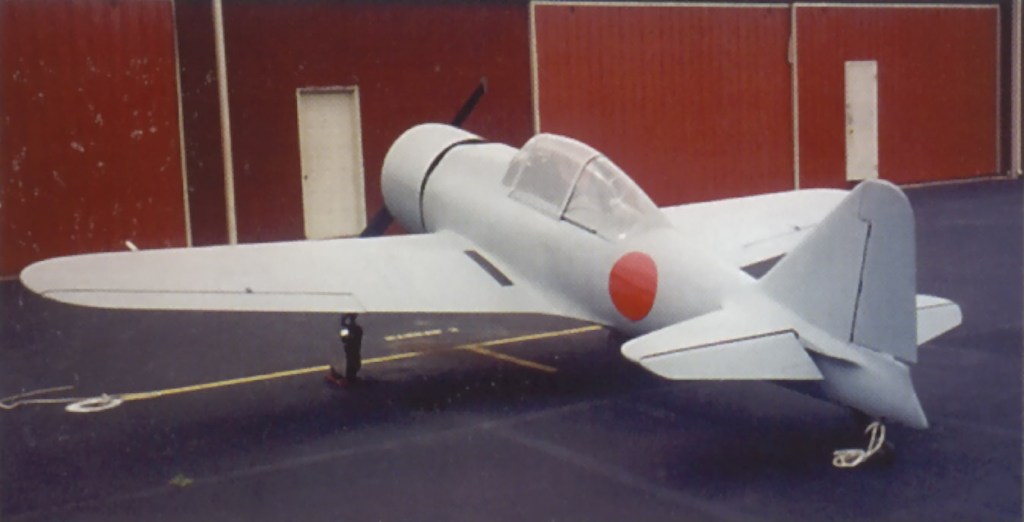
WAR Zero

The scale Zero is built around a plywood box core and covered with styrofoam and fiberglass. Plans have been produced for this and two other ½-scale World War II replicas by War Aircraft Replicas. All use the same common wooden fuselage box and wing spar construction in order to duplicate the various fighter aircraft. Polyurethane foam is shaped and covered with high-strength fiberglass cloth and laminating epoxy resin to form a rigid, yet light structure. Landing gears are of air/oil oleo type, with either electrical or manual retract and have a built-in emergency release. Engines vary from 65 hp to 125 hp, which accounts for variations in perform¬ance. Authentic three and four bladed props are available.
Features fully retractable landing gear, sliding canopy, and detachable wings.

Engine: Continental O-200-A, 100hp
Wing span: 21’0″
Length: 16’6″
Wing twist 2 degree
Seats: 1
Undercarriage: retractable
Plans 2005: US$295

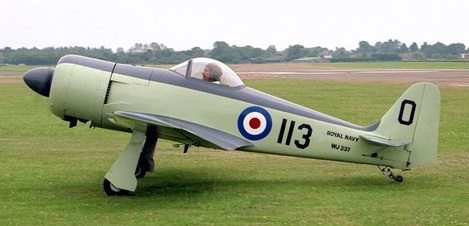
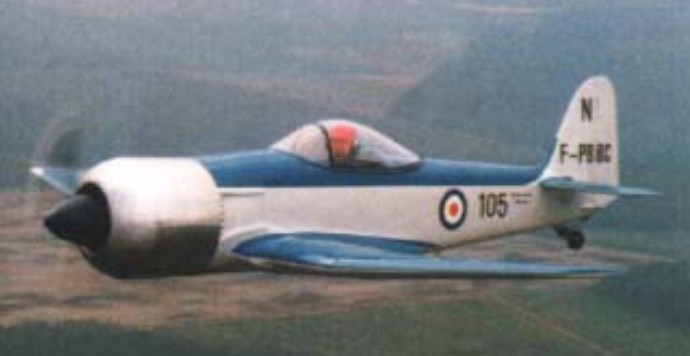
WAR Hawker Sea Fury

The scale Hawker Sea Fury is built around a plywood box core and covered with styrofoam and fiberglass. Plans have been produced for this and two other ½-scale World War II replicas by War Aircraft Replicas. All use the same common wooden fuselage box and wing spar construction in order to duplicate the various fighter aircraft. Polyurethane foam is shaped and covered with high-strength fiberglass cloth and laminating epoxy resin to form a rigid, yet light structure. Landing gears are of air/oil oleo type, with either electrical or manual retract and have a built-in emergency release. Engines vary from 65 hp to 125 hp, which accounts for variations in perform¬ance. Authentic three and four bladed props are available.
Features fully retractable landing gear, sliding canopy, and detachable wings.

Wing twist 2 degree

The first, G-BLTG, flew on 24 February 1986.

Engine: Continental O-200, Lycoming 0-290-D, HCI 7 cylinder Radial
Prop: 60″dia 3 or 4 blade ground adjustable
Wingspan: 20’0″
Length: 16’0″
Footprint: 7’0″
Empty Weight: 600-620 lbs
Max Gross Weight: 900-920 lbs
Fuel capaci¬ty 15 USG
Wing Loading: 12lbs/sq ft
Cruise condition: 135 MPH @3.2 GPH
Wide Open speed: 165 MPH
Stall Speed: 55 MPH
Approach & Pattern Speed: 70-75 MPH
Take off Run: 800-1000 ft
Landing roll 1200 ft
Rate of Climb: 700 ft/min.
Endurance: 3-4 Hrs: 400 miles
Structural capability: Aerobatic (+/- 6 g’s)

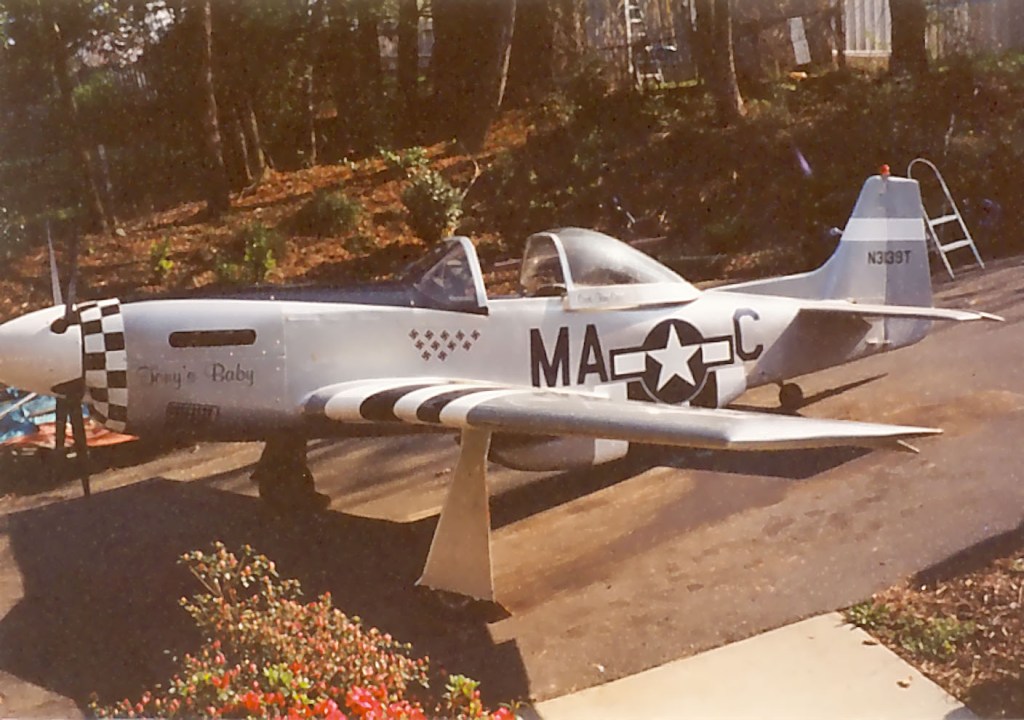
WAR P-51 Mustang

Features fully retractable landing gear, sliding canopy, and detachable wings.
The company fell into financial difficulties in the late 1980s following the death of its president, Peter Nieber, in the prototype P-51.

Plans 2005: US$275

Engine: Continental O-200, Lycoming 0-290-D, HCI 7 cylinder Radial
Prop: 60″dia 3 or 4 blade ground adjustable
Wingspan: 20’0″
Length: 16’0″
Footprint: 7’0″
Empty Weight: 600-620 lbs
Max Gross Weight: 900-920 lbs
Wing Loading: 12lbs/sq ft
Cruise condition: 135 MPH @3.2 GPH
Max level speed: 165 MPH
Stall Speed: 55 MPH
Approach & Pattern Speed: 70-75 MPH
Take off Run: 800-1000 ft
Rate of Climb: 700 ft/min.
Endurance: 3-4 Hrs: 400 miles
Structural Capability Aerobatic (+/- 6 g’s)

Engine: Honda, 100-120hp
Wing span: 20’0″
Length: 17’0″
Undercarriage: retractable

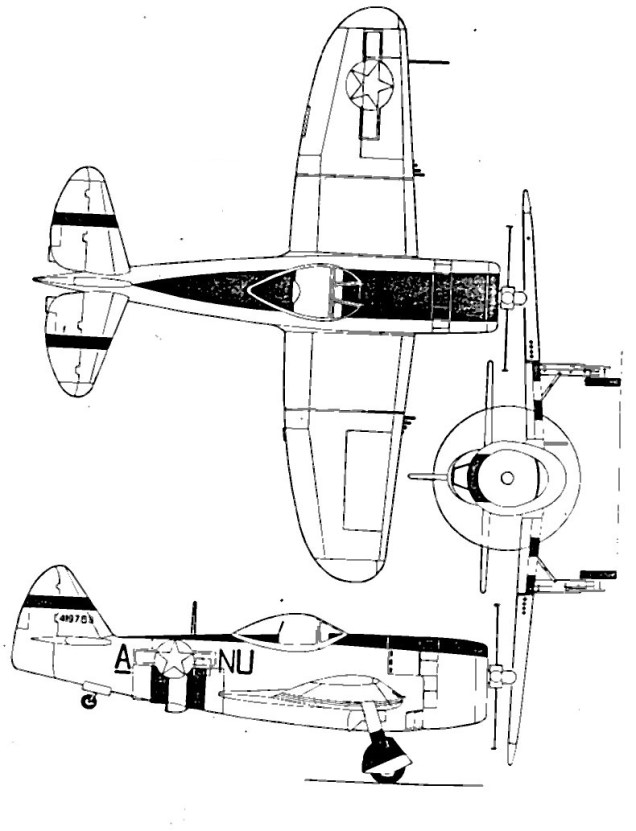
WAR P-47 Thunderbolt

The scale P-47 is built around a plywood box core and covered with styrofoam and fiberglass. Plans have been produced for this and two other ½-scale World War II replicas by War Aircraft Replicas. All use the same common wooden fuselage box and wing spar construction in order to duplicate the various fighter aircraft. Polyurethane foam is shaped and covered with high-strength fiberglass cloth and laminating epoxy resin to form a rigid, yet light structure. Landing gears are of air/oil oleo type, with either electrical or manual retract and have a built-in emergency release. Engines vary from 65 hp to 125 hp, which accounts for variations in perform¬ance. Authentic three and four bladed props are available.
Features fully retractable landing gear, sliding canopy, and detachable wings.

Wing twist 2 degree

Wing section root: 23015 54 in
Wing section mid: 23014 50 in
Wing section tip: 23012 30 in

Engine: Continental 0-200, Lycoming 0-290-D, HCI 7 cylinder Radial
Prop: 60″dia 3 or 4 blade ground adjustable
Wingspan: 20’0″
Length: 16’0″
Footprint: 7’0″
Empty Weight: 600-620 lbs
Max Gross Weight: 900-920 lbs
Fuel capaci¬ty 15 USG
Wing Loading: 12lbs/sq ft
Cruise condition: 135 MPH @3.2 GPH
Wide Open speed: 165 MPH
Stall Speed: 55 MPH
Approach & Pattern Speed: 70-75 MPH
Take off Run: 800-1000 ft
Landing roll 1200 ft
Rate of Climb: 700 ft/min.
Endurance: 3-4 Hrs: 400 miles
Structural capability: Aerobatic (+/- 6 g’s)

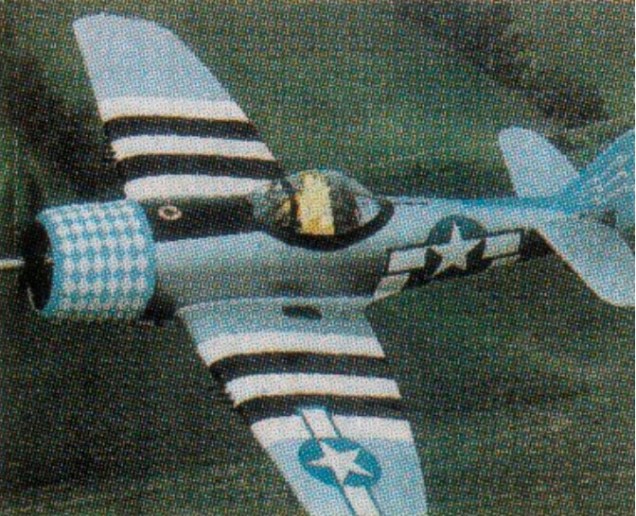
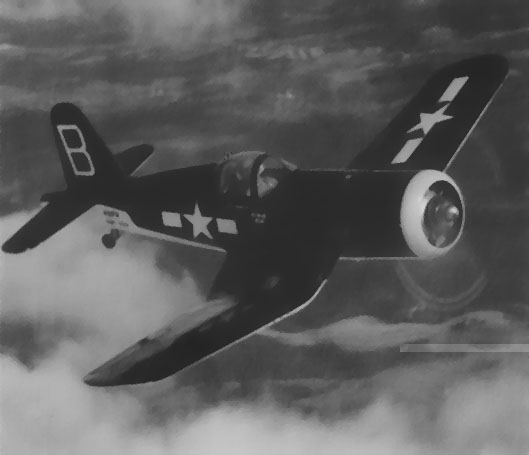
WAR F4U Corsair

The half-scale Corsair is built around a plywood box core and covered with styrofoam and fiberglass. Plans have been produced for this and two other ½-scale World War II replicas by War Aircraft Replicas. All use the same common wooden fuselage box and wing spar construction in order to duplicate the various fighter aircraft. Polyurethane foam is shaped and covered with high-strength fiberglass cloth and laminating epoxy resin to form a rigid, yet light structure. Landing gears are of air/oil oleo type, with either electrical or manual retract and have a built-in emergency release. Engines vary from 65 hp to 125 hp, which accounts for variations in performance. Authentic three and four bladed props are available.
Features fully retractable landing gear, sliding canopy, and detachable wings.

Wing twist 2 degree

Engine: Continental O-200, Lycoming 0-290-D, HCI 7 cylinder Radial
Prop: 60″dia 3 or 4 blade ground adjustable
Wingspan: 20’0″
Wing area: 70 sq.ft
Length: 16 ft
Tread: 7 ft
Empty Weight: 600-620 lbs
Max Gross Weight: 900-920 lbs
Fuel capaci¬ty 15 USG
Wing Loading: 12lbs/sq ft
Cruise: 135 MPH @3.2 GPH
Max level speed: 165 MPH
Stall Speed: 55 MPH
Approach & Pattern Speed: 70-75 MPH
Take off Run: 800-1000 ft
Rate of Climb: 700 ft/min.
Endurance: 3-4 Hrs: 400 miles
Structural capability Aerobatic ( +/- 6 g’s)
Landing roll 1200 ft
Seats: 1
Cockpit width: 24 in
LSA: yes

Engine: Continental O-200, 100 hp
Wing span: 6.1 m
MAUW: 544 kg
Empty weight: 417 kg
Fuel capacity: 53 lt
Max speed: 273 kph
Cruise speed: 217 kph
Minimum speed: 88 kph
Climb rate: 7 m/s
Seats: 1
Plan price (1998): $245

N246S
Wing span: 20’0″
Length: 16’0″
Useful load: 279 lb
Max speed: 170 mph
Cruise speed: 140 mph
Stall: 90 mph
Range: 400 mi
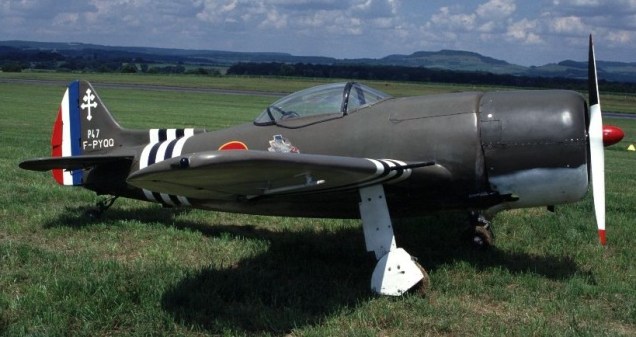
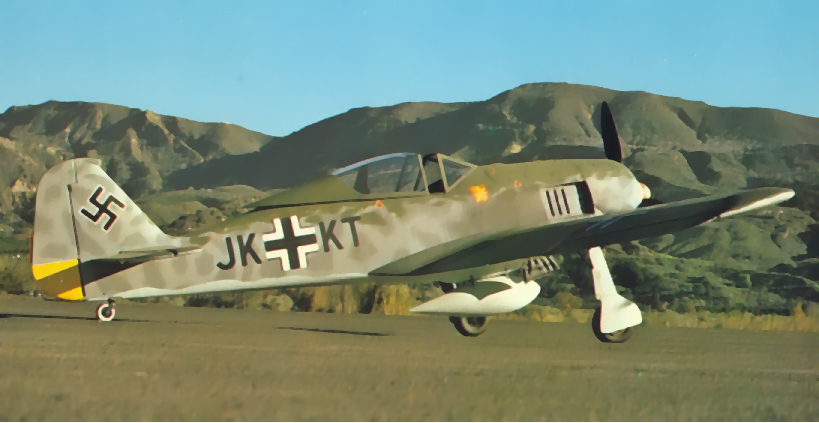
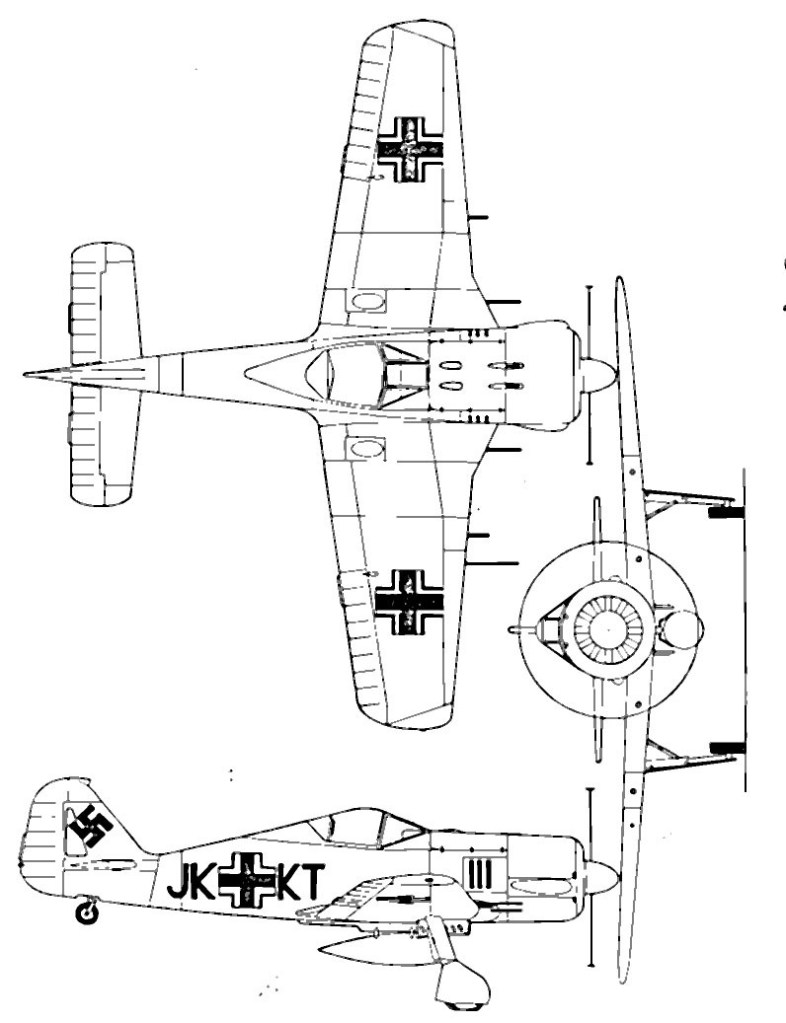
WAR Focke-Wulf 190

Construction is by War Aircraft Replicas, whose aim is to build scaled down versions of fighters for use as sport aircraft, instead of aerobatic sport aircraft which look like fighters.
WAR Aircraft Replicas is a company formed to market kits and plans for 1/2-scale World War II aircraft replicas. The Focke-Wulf 190 was singled out to be the first prototype, and development started in 1973. The first flight was made on 21 August 1974 with a 70hp VW engine. Other versions to be certified are the F4U Corsair and the P-47 Thunderbolt. All use the same common wooden fuselage box and wing spar construction. In order to duplicate the various fighter aircraft, polyurethane foam is shaped and covered with high-strength laminating fabric and epoxy resin to form a rigid, yet lightweight structure. Landing gear are electrically-retractable tailwheel type with an emergency system. Power is supplied by a 0-200 Continental turning a three-blade, fixed-pitch prop.
Plans 2005: US$245
Features fully retractable landing gear, sliding canopy, and detachable wings.

WAR Focke-Wulf 190 Article

Gallery

Engine: Continental O-200, Lycoming 0-290-D, HCI 7 cylinder Radial
Prop: 60″dia 3 or 4 blade ground adjustable
Wingspan: 20’0″
Wing area: 70 sq.ft
Wing section root: 23015 54 in
Wing section mid: 23014 46 in
Wing section tip: 23012 31 in
2 degree twist
Length: 16’7″
Tread: 6 ft 8 in
Empty Weight: 600-620 lbs
Max Gross Weight: 900-920 lbs
Fuel capacity 15 USG
Wing Loading: 12lbs/sq ft
Cruise: 135 MPH @3.2 GPH
Vne: 195 mph
Max level speed: 165 MPH
Stall Speed: 55 MPH
Approach & Pattern Speed: 70-75 MPH
Take off Run: 800-1000 ft
Rate of Climb: 700 ft/min.
Endurance: 3-4 Hrs: 400 miles
Structural capability Aerobatic (+/- 6 g’s)
Landing roll 1200 ft
Seats: 1
LSA: yes

War Aircraft Replicas (WAR)

The principle of the half-scale design was generated WAR Aircraft Replicas, Santa Paula, California, in 1973. The concept involves the use of a common-design wood fuselage box and spar structure. The desired contours to duplicate a particular aircraft are obtained by carving polyurethane foam that is covered with fabric and epoxy resin to form a structure stressed for + or -6g. By changing fuselage contours, using different engine cowlings and wingtips, and by shape changes to tail surfaces, a number of different aircraft could be copied.
The company fell into financial difficulties in the late 1980s following the death of its president, Peter Nieber, in the prototype P-51.
In 1996 the concept was revived by Carl E. Boenig of Tampa, Florida, when he formed WAR Aircraft Replicas of Florida to market some of the original plans.

1998-2008: War Aircraft Replicas
P.O.Box 79007
Tampa, FL 33619