The 1988 AT-T Tactical Trainer N253LC was based on Stoddart-Hamilton Glasair III. A two-place monoplane, only one was built, first flying on 24 July 1988, with retractable undercarriage.
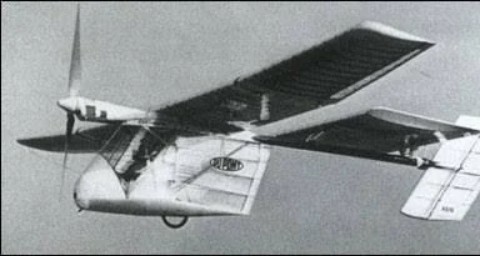
The Solar Challenger was a solar-powered aircraft designed by Paul MacCready’s AeroVironment. The aircraft was designed as an improvement on the Gossamer Penguin, which in turn was a solar-powered variant of the human-powered Gossamer Albatross. It was powered entirely by the photovoltaic cells on its wing and stabilizer, without even reserve batteries, and was the first such craft capable of long-distance flight. In 1981, it successfully completed a 163-mile (262 km) demonstration flight from France to England. The Solar Challenger was designed by a team led by Paul MacCready as a more airworthy improvement on the Gossamer Penguin, directly incorporating lessons learned from flight testing the earlier aircraft. As with the Gossamer Penguin, construction was sponsored by DuPont in exchange for publicity for the company’s patented materials incorporated in the design. AstroFlight, Inc. supplied the motors and solar panels, designed by Robert Boucher. The plane’s wings carried 16,128 solar cells yielding a maximum solar power of 3,800 watts. It was flight tested in Western USA in winter 1980–1981.
First flown on 6 November 1980, at Shafter, California, the Solar Changer then made several training flights including one of 90 minutes on 14 November 1980 reaching 1600 ft / 488 m. For these initial flights an electric battery was carried providing for an output of 3 hp for less than 30 minutes, the remainder of the flight using soaring techniques. Subsequently 15,000 solar cells were fixed to the wing and tailplane with the capability of producing similar power, and further flights were made in December 1980 including one of nearly 2 hrs and another to 3500 ft / 1067 m.
All flights to February 1981 were made by Janice Brown.
On July 7, 1981, the aircraft flew 163 miles from Pontoise – Cormeilles Aerodrome, north of Paris, France to Manston Royal Air Force Base in Manston, United Kingdom, staying aloft 5 hours and 23 minutes, with pilot Stephen Ptacek at the controls. Currently the plane is owned by the Smithsonian Institution’s Air and Space Museum.
The Solar Challenger was designed to be sturdier, more powerful, and more maneuverable than the Gossamer Penguin so as to be able to withstand sustained high-altitude flight and normal turbulence. It was over three times as heavy (without pilot) as the Gossamer Penguin and had a shorter wingspan, but was proportionately more powerful, with electricity supplied by 16,128 solar cells powering two three-horsepower motors. The solar panels were directly affixed to the wing and large horizontal stabilizer, both of which had to be flat on top to accommodate them. The two motors, each 3 inches wide and 17 inches long and incorporating samarium-cobalt permanent magnets, operated in tandem on a common shaft to drive a single, controllable-pitch propeller. The design incorporated advanced synthetic materials with very high strength to weight ratios, including Kevlar, Nomex, Delrin, Teflon, and Mylar, all supplied by the aircraft’s sponsor, Dupont.
Powerplant: 1 × solar-powered electric motor, 2.75 hp (2 kW) Wingspan: 47 ft 0 in (14.3 m) Length: 29 ft 0 in (8.8 m) Empty weight: 205 lb (90 kg) Gross weight: 350 lb (159 kg) Maximum speed: 40 mph (64 km/h, 35 kn) Service ceiling: 14,300 ft (4,360 m) demonstrated g limits: +6, -3 Rate of climb: 150 ft/min (0.765 m/s) Seats: 1
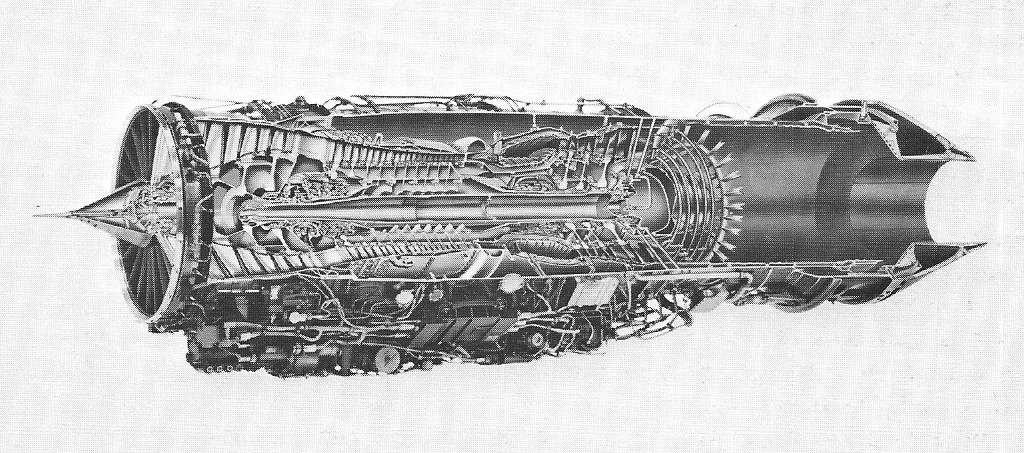
Development of the PW1120 to Israeli Air Force (IDF/AF) specifications began in June 1980. It retained the F100 digital electronic control system, along with the F100 main module transmission fuel pump forward channels, with only minor modifications. Unique PW1120 components include a wide-chord low-pressure (LP) compressor, a single-stage uncooled low-pressure (LP) turbine with a simplified single-flow booster, and a lightweight convergent/divergent nozzle. Full-scale testing began in June 1982, and the PW1120’s flight permit testing began in August 1984. The PW1120 had a 70% similarity to the F100, so the IDF/AF would not need a dedicated facility for spare parts. It was to be built under license by Bet-Shemesh Engines Limited in Israel.
IAI installed a PW1120 on the starboard bed of an F-4E-32-MC of the IDF/AF (Number 334/66-0327) to explore the airframe/engine combination for an upgrade program for the F-4E known as the Kurnass 2000 (“Heavy Hammer”) or to serve as an engine testbed for the Super Phantom and Lavi. The engine was more powerful and more fuel-efficient than the General Electric J79-GE-17 turbojet normally fitted to the F-4E.
Structural changes included modified air intake ducts, new powerplant ports, new or modified powerplant bay doors, integrated drive generators, and a new fuselage-mounted gearbox with an autothrottle system. It also included a modified bleed management and air conditioning ducting system, modified fuel and hydraulic systems, and a powerplant control/airframe interface. It first flew on 30 July 1986.
Two PW1120 power plants were installed in the same F-4E and first flew on 24 April 1987. This proved very successful, allowing the Kurnass 2000 to exceed Mach 1 without afterburners and have a combat thrust-to-weight ratio of 1.04. This improved the sustained turn ratio by 15 percent, the climb rate by 36 percent, mid-level acceleration by 27 percent, and the low-level speed from 1,046 km/h to 1,120 km/h (654 to 700 mph) with 18 bombs (or 565 kn to 605 kn). It was demonstrated at the 1987 Paris Air Show.
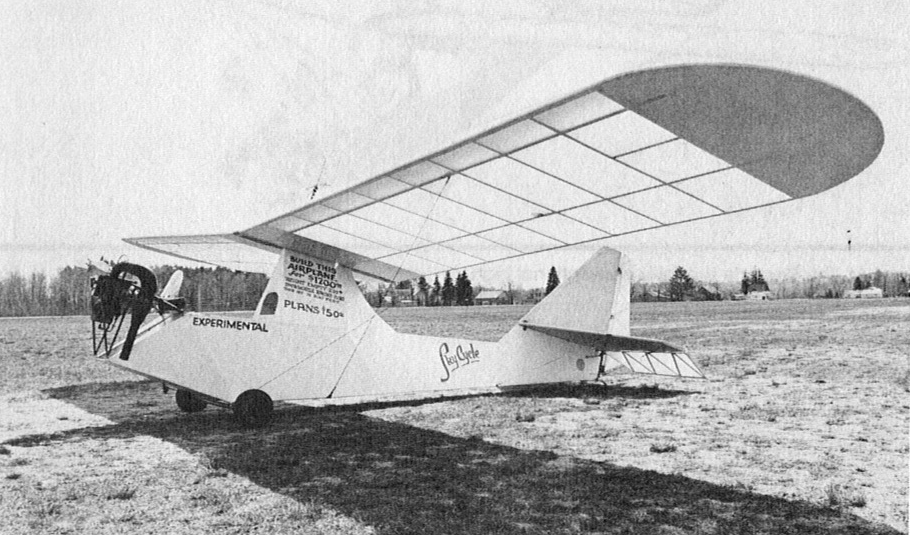
The Dart Skycycle is an American single-seat, high wing, strut-braced, single-engine, conventional landing gear ultralight aircraft that was designed by Robert Dart and produced by Dart Aircraft of Mayville, New York for amateur construction.
Introduced in 1985, the Skycycle is a single-seater designed as an FAR 103 Ultralight Vehicles-compliant aircraft with an empty weight within that category’s 254 lb (115 kg) empty weight limit.
The aircraft has a 4130 steel tube frame fuselage and a wing constructed from spruce, all covered in doped fabric. The landing gear is bungee-suspended. The Skycycle can be built with an open cockpit or fully enclosed, allowing flying in cooler weather. The Skycycle was available as plans only or with some prefabricated components, such as the welded fuselage or assembled wings already completed. The standard engine specified was the 28 hp (21 kW) Rotax 277.
Reviewer Andre Cliche wrote: “The Skycycle is an ultralight-legal aircraft that resembles the average taildraggers of the 40s and 50s. It looks like a ‘real airplane’ and should satisfy the more conservative pilots who hesitate to fly ‘colourful lawn chairs’ as basic ultralights are sometimes called. It is a good all-around ultralight that is easy to fly and cheap to operate.”
Powerplant: 1 × Rotax 277 , 28 hp (21 kW) Propeller: 2-bladed wooden Wingspan: 30 ft 0 in (9.14 m) Wing area: 145 sq ft (13.5 m2) Length: 20 ft 0 in (6.10 m) Empty weight: 253 lb (115 kg) Gross weight: 543 lb (246 kg) Fuel capacity: 5 US gallons (19 litres) Cruise speed: 55 mph (89 km/h, 48 kn) Stall speed: 27 mph (43 km/h, 23 kn) Wing loading: 3.8 lb/sq ft (19 kg/m2) Crew: one
 All Aero