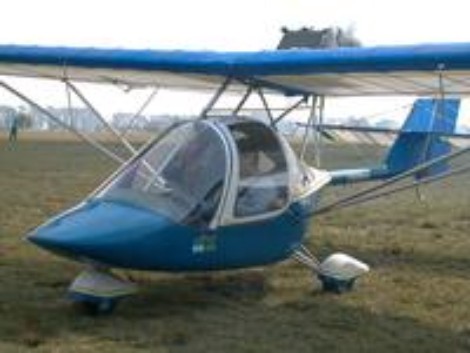
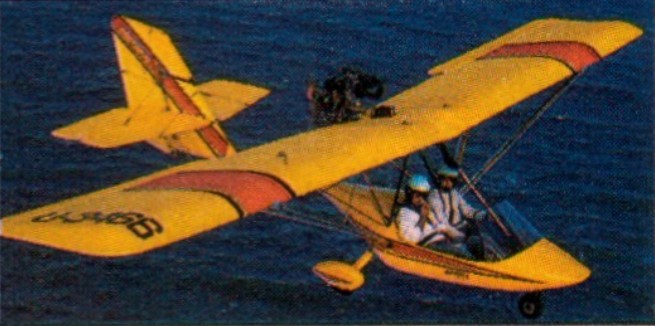
1998: Hanger SE 38 Gloucestshire Airport GL51 6SR Staverton UK
1998
The company was founded by Diamond Aircraft Industries and partners. The products are reciprocating engines and Wankel engines. The Wankel aero-engines are developed from the MidWest AE series engines developed at Staverton by MidWest, a UK firm that was bought by Diamond.
It was in 2017 that China-based Wanfeng Aviation Industry acquired full ownership of the Austria-based Diamond Aircraft Group. Wanfeng’s acquisition also included Diamond’s sister company and diesel aerospace engine maker Austro Engine.
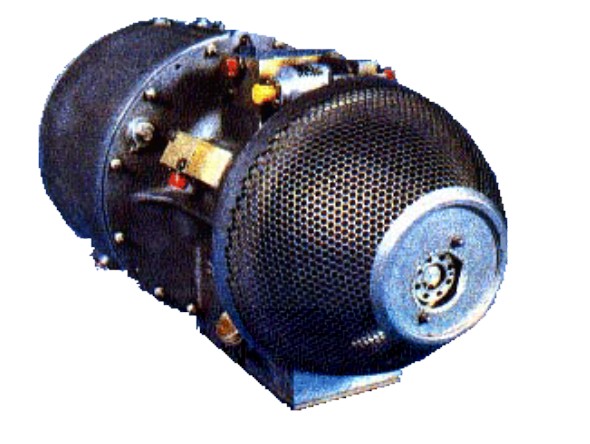
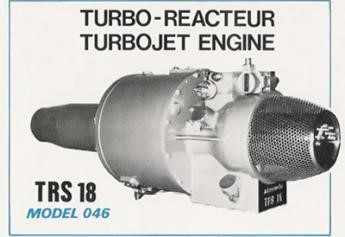
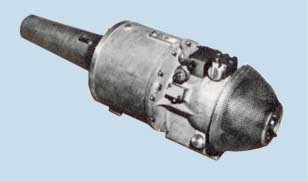
The Microturbo TRS 18 is a small, low thrust turbojet designed and built in France in the 1970s. It was installed on both manned and unmanned aircraft.
The TRS 18 was originally designed for self-launching motor gliders but was adapted to power conventional ultralight aircraft and unmanned vehicles (RPV). It was originally designed and developed by Sermel, a competitor company to Microturbo which the latter took over in 1971. It is a simple, low thrust, reverse flow single shaft engine with a centrifugal compressor and axial turbine. It is built in three modules: an intake section containing starter and lubrication systems; a centre section with compressor and turbine on ball bearings; and an aft section with the folded combustion chambers and tail-pipe.
Early microjets developed 200 lbs thrust, while the newer TRS 18-1 engine develops 325 lbs thrust with nearly identical in dimension & weight.
It gained its US Federal Aviation Administration type certificate E13CE on 25 May 1976.
TRS 18-046
Variants:
TRS 18-046 Production version, primarily intended for manned applications with full self start provision, oil lubrication and temperature and pressure transducers.
TRS 18-056 Cut down gas generator or core engine version, fuel lubricated and only 62% the weight of the 18-046 version but the same thrust; intended for RPVs.
TRS 18-075 Intended respectively for the Flight Refuelling ASAT target drone. Includes an engine driven alternator and fuel and oil lubrication pumps. Dry weight as 18-046. Take-off thrust increased to 1.15 kN (260 lb st) and maximum continuous thrust to 1.10 kN (247 lb st).
TRS 18-076 Intended for the Meteor-Mirach 100. Includes an engine driven alternator and fuel and oil lubrication pumps. Dry weight as 18-046. Take-off thrust increased to 1.15 kN (260 lb st) and maximum continuous thrust to 1.10 kN (247 lb st).
Microturbo TRS 18-1 Thrust: 325 lbs Max Running Altitude: 30,000 ft. Weight : 84.88 lbs. Length : 27 in. Diameter: 13 in. Fuel Types: Jet A, JP4-JP5 Oil Types: MIL-L-23699 Fuel Consumption (Max Power): 283 lbs./hr.
TRS 18-046 Type: Single shaft centrifugal turbojet. Length: 650 mm (25.59 in) Diameter: 325 mm (12.80 in) wide × 350 mm (13.78 in) high. Dry weight: 37 kg (81.6 lb) dry, basic, no jet pipe. Compressor: Centifugal; one piece with diffuser and straightener vanes. Combustors: Folded, with ten spill type burners. Turbine: Axial. Fuel type: Electric pump. Oil system: Submerged pump in tank on front underside; filter and pressure transducer on upper side. Closed circuit with high pressure supply to rotor and gearbox bearings. Maximum thrust: Take-off 1.10 kN (247 lb st). Maximum continuous 1.00 kN (225 lb st). Specific fuel consumption: 35 mg/N/s (1.24 lb/h/lb st). Maximum altitude: 9000 m
Turbomeca was founded August 29, 1938 by Joseph Szydlowski and André Planiol following their patent of a supercharger in 1937. Hispano-Suiza ordered a demonstrator to equip its 12 Y engine, used among others on the MS 405 C1.
Turbomeca changed rapidly from an artisanal production to an industrial one benefiting from the politics of re-armament. This is shown by the production figures of the following three years: 18 compressor in 1938, 300 in 1939 and 1200 in 1940. Although the factory at Mézières-sur-Seine was only really operational in June 1940, the government advised the move to the south of France due to the German advance. During the same month, Turbomeca had relocated in newly requisitioned workshop in Saint-Pé-de-Bigorre near the Hispano-Suiza engine factory in Tarbes. The buildings were found to be too small and in 1941 a place is bought in Bordes near Pau. Between the autumn of 1941 and June 1942 Turbomeca moved. In November 1942, Szydlowski fled to Switzerland. Between October 1942 and 1944, the production stale and the workforce went from about 300 to about 50.
From 1950, Turbomeca produced the tiny centrifugal flow Palas turbojet, producing 1.6 kN (353 lbf). The Palas was also produced by Blackburn and General Aircraft in the UK and Continental in the USA. From 1957, it manufactured the Bastan turboprop for the Aérospatiale N 262 airliner. Blackburn had a licence for producing other Turbomeca designs.
Rolls-Royce Turbomeca Limited was established in 1968 to develop the Adour jet engine for the Anglo-French SEPECAT Jaguar. The company went on to develop the RTM322 turboshaft, which powers Westland WAH-64, and some models of the AgustaWestland EH101 and NHI NH90.
In 2001 Turbomeca and Rolls-Royce won a $1 billion USD contract to equip 399 German, French and Dutch NH90 helicopters with their RTM322 engines.
SNECMA Group acquired the company in September 2001.
Headquarters: Bordes, France Revenue (2006): € 870 million Employees (2006): 5,178
As of 2012, Turbomeca turbines power civil, parapublic and defence helicopters for all the leading helicopter manufacturers (mainly Eurocopter, but also AgustaWestland, Sikorsky, NHI, Kamov, HAL).
Engines of Microturbo:
Palas SG 18 TRS 18 TRS 25 TRI 40 TRI 60 TRI 80 J403 Cougar Eclair Eclair II Lynx
Burt Rutan design VariViggen started when he was a student at Cal Poly (California Polytechnic State University) in the early 1960s. He started building the prototype in his garage in 1968. After four years of work, the aircraft made its first flight 27 February 1972.
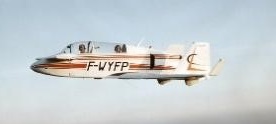
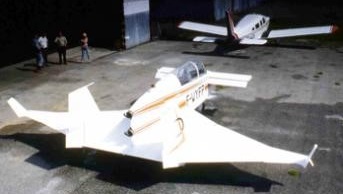
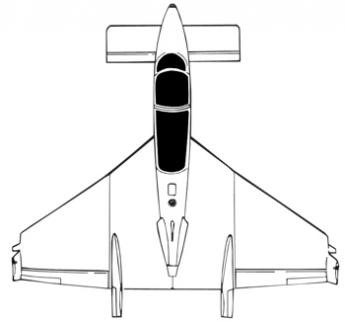
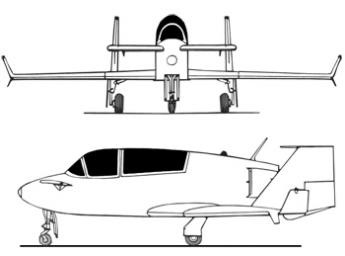
Leo Chagnes built the MicroStar based on plans of the VariViggen over four years.
The wing is styrofoam foam with epoxy coating and the fuselage is spruce and birch plywood. It is powered with 2 TRS18 Microturbo turbojet engines. Microturbo was responsible for the engine, with the completion of the frame, the calculation of the implementation and the centering of the two engines. This installation required a modification of the rear. The increase in surface area required a 20 cm increase.
The air inlets are fiberglass, and the cowling is made of sheet aluminium. The electronics are located just outside the engines, and is accessed by doors. The power units are separated from the airframe by three fire partitions.
The wheels are derived from a Cesna150 and the assembly is retractable via an electric servo coupled with a manual override. The luggage compartment behind the rear seat has been replaced by a 200 lt kerosene fuel tank, additional to two 35 lt tanks housed in the wings.
After more than 4 hours running and jumps, Leo Chagnes made the first flight on July 20, 1979.
Burt Rutan flew with Jacques Costes aboard MicroStar on December 19, 1981.
Speed max: 400 km / h Speed cruise: 320 km / h ROC: 6 m / s Stall: 85 km / h TO dist (15 m): 320 m Ceiling: 8000 m Empty weight: 545 kg Max weight: 889 kg Fuel capacity: 271 lt