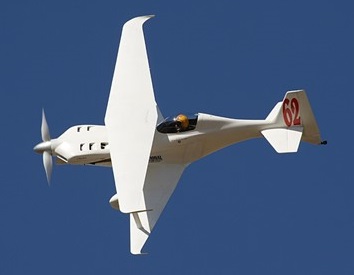
John T Monnett founded his company to sell plans and some compo¬nents for his Formula V Racer, the Sonerai, which was awarded the prize at the 1971 EAA convention at Oshkosh for the best single seat, Volkswagen engined aircraft.
1980: Monnett Experimental Aircraft, 955 Grace, Elgin, Il 60120, USA. 1982-3: Monnet Experimental Aircraft Inc, 895 W 20th Avenue, PO Box 2984, Oshkosh, Wiscon¬sin 54903, USA.
The Moller 200X, the invention of Paul Moller, a former professor of aerodynamics and engineering, is built of graphite, carries computers, and eight lightweight Wankel engines. The proof of concept 200X is a flat, round 10 foot wide saucer, which can hover out of ground effect.
First flown in February 1989, the machine, which flew more than 150 times, is to make way for the production version, the Merlin.
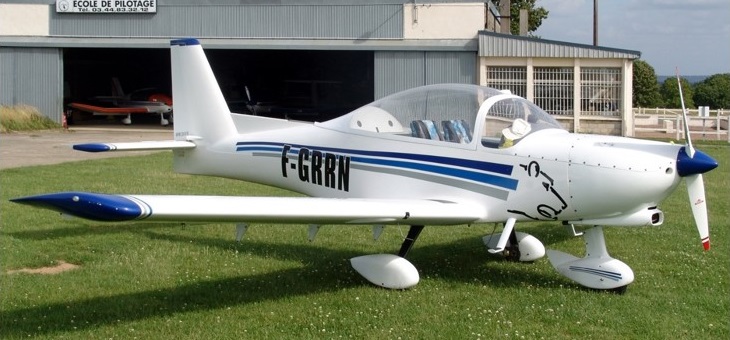
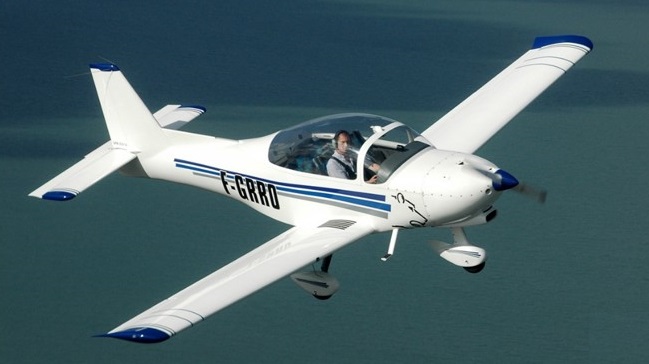
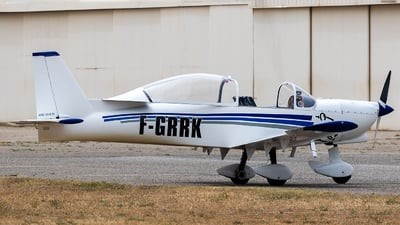
The APM 30 Lion was designed by Philippe Moniot and is the three-seater version of the APM 20 Lionceau. It is made entirely of GRP and is the first aircraft made of GRP and the only three-seat aircraft that has been approved in the VLA class. A Rotax 912s is installed as the engine, which together with the MT-Prop-Twin-Propeller enables a cruising speed of 110 kn (204 km / h). It is also approved for NVFR.
The cockpit has flight instruments in the classic “six-pack arrangement”. A glass cockpit is optionally available.
The APM 30 Lion, certified in 2007, is an extension of the Lionceau certification using the same airframe and the same wing, changing engine and introducing a third place.
APM 30 Lion
Following feedback from pilots, the manufacturer carried out a series of tests required by EASA, which made it possible to increase the maximum take-off weight from 736 to 750 kg. Furthermore, the flight controls were modified, which led to better handling of the aircraft.
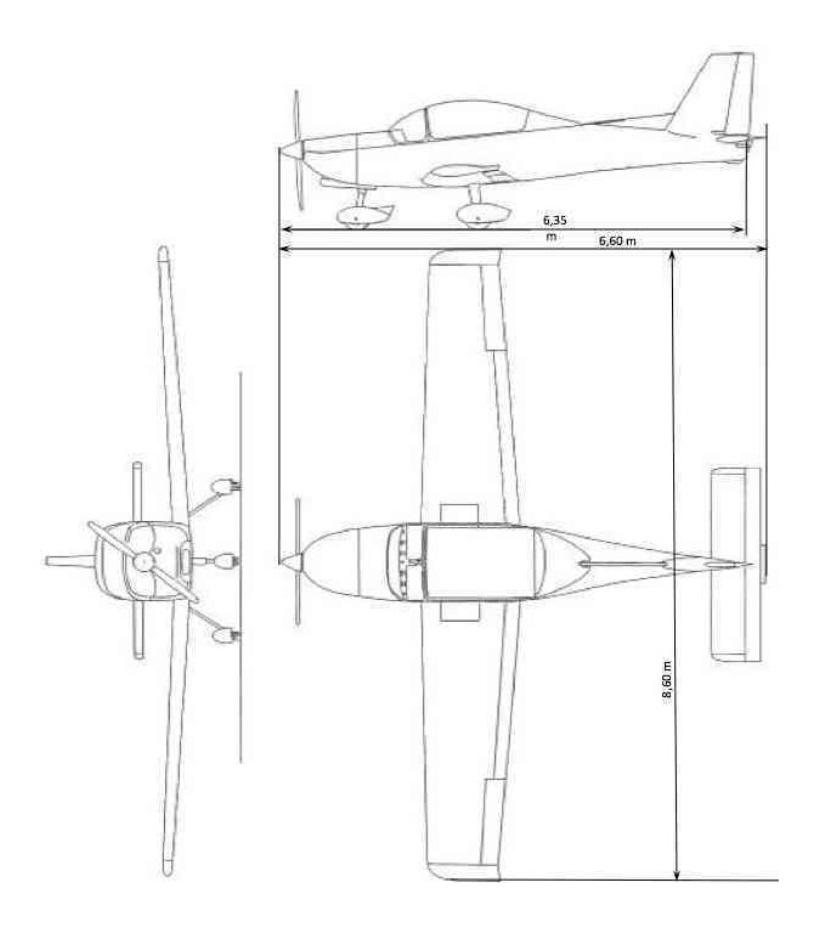
APM 30 Lion Engine: Rotax 912s Propeller: MT Prop Twin Wingspan: 8.6 m Wing area: 9.5 m² Length: 6.6 m Height: 2.4 m Empty weight: 430 kg Max take off weight: 750 kg Fuel capacity: 70 l Top speed: 143 kn (265 km / h) Cruising speed: 110 kn (204 km / h) max. rate of climb: 800 ft / min Service ceiling: 14,000 ft (4,267 m) Range: 430 NM (796 km) Crew: 1 Passengers: 2
The APM 20 Lionceau began as the Moniot APM-20 in 1992, by Les Industries de Composites d’Auvergne Reunites (ICAR).
Designed by Philippe Moniot at Rex Composites and certified in 1999 EASA CS-VLA, the APM 20 Lionceau is a very light (400 kg empty, 634 kg loaded) and economical 73.5 kW (98.6 hp) Rotax 912 ULS powered aircraft is primarily intended to be used to learn to fly, but also to travel with a relatively high cruise speed (113 knots).
Manufactured by the French manufacturer Issoire Aviation, it is entirely built from composite materials, especially carbon fibers. Design (as Moniot APM-20) was started 1992 by Les Industries de Composites d’Auvergne Reunites (ICAR).
Issoire APM 20 Lionceau
The design features a low wing, NACA 63618 aerofoil, thickness/chord ratio 18 per cent, dihedral 3o, incidence 2o, twist 1o. The structure is Carbon fibre/epoxy. Flying controls are conventional and manual. Spring elevator tab for pitch trim. Electrically operated slotted flaps to about two-thirds span. A refuelling point is on the port side of fuselage.
The landing gear is fixed tricycle type with spats; oleo-sprung steerable nose leg, composites main legs. Mainwheels and nosewheel diameter 330 mm; maximum pressure 2.35 bar (34 lb/sq in).
Two, side by side seats are under rearward-sliding tinted canopy. Dual controls standard. Baggage compartment at rear of seats. Fixed step forward of wing leading-edge on each side.
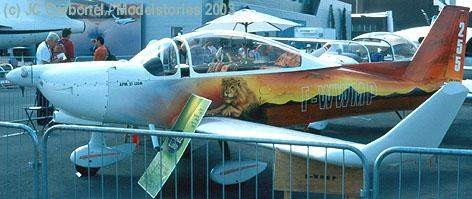
The prototype (F-WWMP) exhibited at Paris Air Show 1995 before first flight on 21 November 1995; third (second flying) aircraft (F-WWXX) exhibited statically at Paris Air Show, June 1997, fitted with JPX flat-four engine, which is not offered on production aircraft.
No.4 (also registered F-WWXX) was exhibited at Paris in June 1999 and No.5 (F-GRRE) in 2001.
They were certified to JAR-VLA on 17 May 1999 and to JAR-21 in 2000. The first all-carbon fibre, single-engine aircraft to gain JAR-VLA certification.
Development cost around FFr10 million. Unit cost FFr620,000, minimally equipped or FFr700,000 with standard equipment (2001). Operating cost FFr350 per hour (1998).
First flying in December 1995, the Issoire Aviation APM 20 Lionceau is entirely built from composite materials, especially carbon fibers. Production is carried out by Issoire Aviation.
The APM-22 Liondo was the prototype APM-21 F-WWMP equipped with large winglets and exhibited at Paris, 15-22 June 2003, as representative of this UAV proposal, with 24-hour endurance and 556 kg (1,225 lb) MTOW.
APM-22 Liondo
A three-seat version, the APM 30 Lion, was presented at the 2005 Paris Air Show.
Issoire APM-20 lionceau Engine: Rotax 912A, 59.6 kW (80 hp) Propeller: Evra AL1 two-blade, fixed-pitch wooden Wingspan: 8.66 m (28 ft 5 in) Wing area: 9.5 m2 (102 sq ft) Aspect ratio: 7.9 Airfoil: NACA 63-418 Length: 6.6 m (21 ft 8 in) Height: 2.4 m (7 ft 10 in) Empty weight: 380 kg (838 lb) Max takeoff weight: 620 kg (1,367 lb) Fuel capacity: 68 litres (18.0 US gallons; 15.0 Imp gallons) Usable fuel: 65 litres (17.2 US gallons; 14.3 Imp gallons) Cruise speed: 230 km/h (140 mph, 120 kn) Stall speed: 80 km/h (50 mph, 43 kn) Never exceed speed: 250 km/h (160 mph, 130 kn) Endurance: 4–5 hours Rate of climb: 3.4 m/s (670 ft/min) Seats: 2
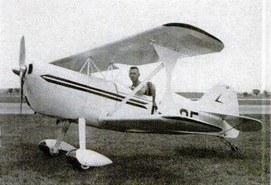
The first Mong Sport was built as a personal aircraft by the designer Ralph Mong, Jr, first flown on May 1, 1953 and plans for homebuilding were provided afterward, due to demand.
Mong Sport
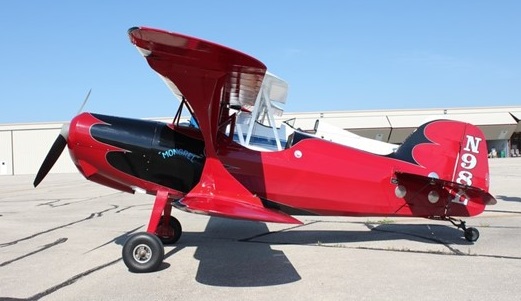
The original Mong MS1 Sport biplane was built around a Continental A65 65 hp (48 kW) engine. The biplane has an A frame shaped centre wing support. The biplane did not require expensive, drag producing support wires, using steel tubing instead. All Mong models use lift struts connected to the outer sections of the wings instead of flying and landing wires. Some builders installed the centre pylon support as an alteration to the design. But this alteration is not supported, recommended or condoned by Mong Aircraft. The fuselage is steel tube with aircraft fabric covering.
Costing approximately $1750 to build in 1971, original plans were still available for $100.00, plus shipping, out of the USA. Over 400 sets of plans for the aircraft had been sold.
Ed Fisher of Raceair Designs purchased the design rights in 1993 and designed a new set of wings that have 12 square feet more wing area, aimed at lower stall speeds. A new MS-3 airframe puts the control column under the longerons, which lowers the seat about 2″.
By 2019 Michael Stewart was owner of Mong Aircraft.
A Mong is a loop/roll/spin positive maneuver sport Biplane. For a sportplane Mong, recommended is the O-200 Continental for power.
In the mid-1960s, a biplane class was added to the Reno Air Races. The Mong Sport met the basic qualifications, and has been extensively modified over the years by builders to be used as a biplane racer. In 1965, Bill Boland won with his “Boland Mong” at 148 mph and again in 1967 and 1970 with speeds of 151 mph and 177 mph respectively. The Mongster won the 1968 Biplane class of the Reno National Championship. Long Gone Mong won in 1987 and 1989.
A highly modified Mong Phantom of Andrew Buehler and Tom Aberle with carbon fibre wings won in 2005 piloted by Andrew Buehler with 230,8 mph ( a 10 mph lead to the second place), and in 2006 with a speed of 251.958 mph, and has since raised the record to 284.454mph.
The Mong is the basis of the Micro Mong that Ed Fisher designed.
Mong MS1 Sport Engine: 1 × Continental A65, 65 hp (48 kW) Length: 14 ft 1 in (4.29 m) Wingspan: 16 ft 10 in (5.13 m) Height: 5 ft 6 in (1.68 m) Wing area: 80 sq ft (7.4 m2) Empty weight: 550 lb (249 kg) Gross weight: 970 lb (440 kg) Fuel capacity: 16 US gallons (61 litres) Maximum speed: 100 kn; 185 km/h (115 mph) Cruise speed: 96 kn; 177 km/h (110 mph) Stall speed: 43 kn; 80 km/h (50 mph) Service ceiling: 13,000 ft (4,000 m) Rate of climb: 1,000 ft/min (5.1 m/s) Crew: 1
The first light aircraft to fly was six-seat Molniya-1 general-purpose transport with twin booms and pusher engine (first flown December 1992); Allison turboprop powered version proposed as Molniya-3.
MK Helicopter produced the Mk.II two-seat helicopter in ultralight form, first flown 1996, and offered it ready assembled. Ultralight since withdrawn, giving way to new and improved certificated version.
Produced the Mk.II two-seat helicopter in ultralight form, first flown 1996 and offered ready assembled. Ultralight since withdrawn, giving way to new and improved certificated version.
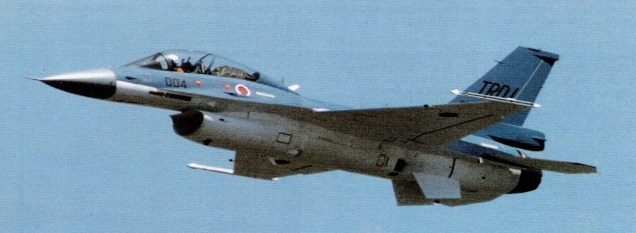
The Japanese-developed F-2 fighter support aircraft, intended to replace F-1 and based on F-16 but incorporating new technologies was developed jointly with Lockheed. The fighter uses an all-composite wing. The Japanese Defense Agency approved a 55 aircraft purchase for 2000-1.
Early in October 1987, Japan announced that the FS-X would be a derivative of an existing US aircraft, the choice of the basic airframe being either the F-16 of the F-15. The F-16 derivative was selected by the Japanese Self-Defense Agency with formal endorsement of the Japanese National Security Council in October 1987.
The first prototype flew on 7 October 1995, and the first squadron to be equipped with the F-2 was formed in 2000.