Under the designation Westland 30 (initially WG 30 Super Lynx), the company developed an enlarged, twin-engined transport version of the Lynx, beginning in 1976, when Westland was studying the possibility of a replacement for the Wessex and Whirlwind which were then in service with various civil and military operators.
After considering a civil version of the Lynx, the British company favoured a larger machine using many of the components of the military helicopter. Accordingly, the Westland 30 has the transmission, rotor blade structure, some systems and many instruments and accessories of the Lynx, but the fuselage is entirely new and is bigger, even if it resembles the Lynx aerodynamically. It is made wholly of aluminum with a traditional type of structure and skin, while composite materials are used in the tail boom. The landing gear is fixed and the main units are housed in two fairings at the sides of the aft fuselage. The fuel system comprises two 630 liter tanks in the fuselage. The hydraulic system is similar to that of the Lynx as is the instrument panel with a few additions. The larger rotor should have a much longer service life than that of the Lynx on account of its slower rotational speed. Care has been taken to reduce vibrations in the fuselage.
The Westland 30 was originally intended for military use in the tactical transport and air ambulance roles, but the design has proved equally suitable for the civil market. In this role, the helicopter is approved for instrument flight, has optional airstair or sliding doors, and can take up to 22 passengers in the high density version in a comfortable, soundproofed cabin. Behind the cabin, which can be furnished to customers’ requirements to carry VIPs, executives or freight, there is an ample baggage compartment reached from the rear of the fuselage. The capabilities of the Westland 30 for offshore work are particularly interesting: with a 250km radius of action and 227kg fuel, the initial W30-100 variant can carry nine passengers on the outward journey and 13 on the homeward one. This type has been ordered by British Airways. In the military version, the same aircraft can carry 14 equipped troops or 17 without equipment, or six stretchers plus medical attendants.
The prototype of the Westland 30 (G-BGHF) made its first flight on 10 April 1979 in time for a successful appearance at the Paris Air Show that year. Production and delivery of W30-100 aircraft began in 1981. This version was superseded by the W30-160 with uprated Gem 60 engines. CAA and FA A type certification of the basic production version, the Series 100, powered by a pair of 846kW Rolls-Royce Gem Mk 41-1 turboshafts, was granted in 1982. In January 1984 the Series 100-60 appeared, powered by two 940kW Gem 60-3 engines. Westland was test-flying the W30-200 prototype, powered by 1277kW / 1700shp General Electric CT-7-2B engines. This version first flew in 1983. The Series 300 of 1986 offered a General Electric CT7 or Rolls-Royce Turbomeca RTM 322 powerplant, and also had an increased maximum take-off weight, composite BERP rotor blades, considerably reduced noise and vibration levels and an optional EFIS cockpit.
Two military tactical transport versions were also developed, the TT30 and the TT300, but these met with even less success than the civilian versions.
The TT300, which first flew in February 1986, is powered by twin 1,277kW General Electric CT7 turboshafts, and has a maximum all-up weight of 7,257kg.
British Airways ordered two helicopters, for delivery in 1982, and obtained a third the following year. Sixteen further aircraft were spread among several operators in the United States, such as PanAm/Omniflight (for services between John F. Kennedy, Newark and downtown New York) and Airspur. These aircraft were largely Series 100s and 100-60s, operated on lease. By early 1984 only 19 orders had been received. In 1986 the Westland 30 received its last, and largest, order for 21 Series 100-60s from the Helicopter Corporation of India, financed largely by UK government assistance. Production ended in January 1988 with the completion of the 38th airframe. The Helicopter Corporation of India became Pawan Hans and its 19 surviving Westland 30-160s are stored at Delhi and Bombay, the company having failed to sell them on several recent occasions.
Petters Ltd, an engineering company founded 1910, undertook government aircraft construction in 1915 as Westland Aircraft Works at Westland Farm, Yeovil, Somerset. Produced Short 184, Short 166, Sopwith 1 1/2-Strutter, Airco D.H.4, and D.H.9 biplanes; adapted the last for Liberty engine as D.H.9A. Also built Vickers Vimy. First of its own designs were the single-seat N.1b scout and Wagtail and the two-seat Weasel, but the war’s end prevented production. First civil aircraft, the four-seat cabin Limousine, was followed by a naval D.H.9A development, the Walrus, and the 1923 Dreadnought, a very advanced but unsuccessful monoplane based on Woyevodsky’s flying-wing theory. The Woodpigeon and Widgeon I and II that followed were Westland’s only attempt to enter light-aircraft market. Apart from Westland IV / Wessex three-engined airliners of 1929-1931, the rest of the designs from Yeovil were military fighters or general-purpose aircraft. Wapiti, built from 1927, was basically a modernization of the D.H.9A and was followed in 1931 by an improved version, the Wallace. The Westland P.V.3 private prototype for the Wallace was used on the Houston Everest expedition of 1933. From the P.V.7 monoplane, the last general-purpose type, the army cooperation Lysander was developed, the best-known company design of Second World War. Company became Westland Aircraft Ltd. in July 1935. Westland fighters included the twin-engined Whirlwind, which saw limited squadron service in Second World War, followed by the high-altitude Welkin, which did not enter service. Following the war, four naval strike squadrons were equipped with the turboprop Wyvern, the last fixedwing aircraft built by the company. In the 1930s Westland had built two autogiros for Juan de la Cierva, and in 1946, with declining sales of fixedwing aircraft, decided to concentrate on rotary-wing designs. Negotiated with Sikorsky a license to build a modified version of the four-seat Sikorsky S-51. Re-engined and altered in detail, it was produced as the Dragonfly in 1948. Followed by the S-55 Whirlwind and in 1959 Westland’s first turbine-powered helicopter, the Gnome engined Whirlwind. In the reorganization of Britain’s aircraft industry Westland acquired the helicopter interest of Bristol Aircraft (1960), Fairey Aviation (1960), and Saunders- Roe (1959). From this came production contracts for the army Belvedere and Scout and Royal Navy Wasp, while the Sikorsky designs, enhanced increasingly by Westland improvements, resulted in the S-58 Wessex. Beginning in 1966 the company was known as Westland Helicopters Ltd.
Activities included production of the Sea King, developed from the Sikorsky S-61 to Royal Navy requirements; Commando army version of Sea King; and Gazelle and Lynx, which formed part of the Anglo-French helicopter cooperation program with Aerospatiale. Gazelle production started in 1971 and Lynx in 1975 (naval, military, and civil versions constructed). Following the construction of 40 Aerospatiale/Westland Pumas for the RAF, the company continued to produce Puma component for French assembly lines.
By 1995, Agusta and Westland had a joint venture in EH Industries, producing the EH.101.
Early 2001 Finnmeccana of Italy and GKN of the UK completed merging their Agusta and Westland helicpoter divisions as AgustaWestland.
Westland Helicopters Ltd became GKN Westland Ltd and operated three divisions as: GKN Westland Aerospace Ltd. with activities including manufacture of structures (airframe or nacelles) for Lynx and EH 101 helicopters, and many airliners including Airbus A330/A340, Boeing 737/747/767/MD-11/C-17, Saab 2000, Fairchild Dornier 328, Bombardier Dash 8 and Global Express, Lockheed Martin C-130J, and IPTN N250, plus helicopter and engine transmissions; GKN Westland Helicopters Ltd., manufacturing Boeing Apache Longbow as WAH-64 for British Army, EH 101 (company has 50% holding with Agusta of Italy), and operates GKN Westland Heliport; and GKN Westland Technologies Ltd. Lynx general-purpose army and naval twin-turboshaft helicopter first flown March 1971 as joint program with Aerospatiale of France, and continues in production (some 400 built). Sea King first flown May 1969 as medium multirole type, derived from Sikorsky S-61, and 326 delivered up to end of production in late 1990s (including Commando tactical assault derivative).
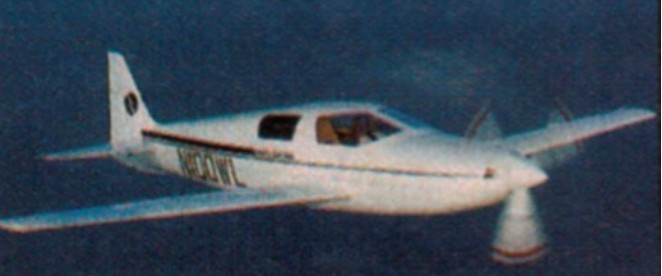
In 1984 Western Aircraft Company was manufacturing the newly designed West Air 214. The craft follows the successful flight testing and evaluation of the proof of concept aircraft, the West Air 204 N258, first flown in November 1982. The West Air 214’s changes include a bubble windshield, swept vertical stabilizer, additional wing area and a redesigned fuselage. The 214 will have a tri-cycle retractable gear. The West Air will still retain its all composite construction of epoxy, graphite and tri-directional glass and four place seating.



 All Aero