Wittman

Sylvester Joseph “Steve” Wittman was born April 5, 1904, at Byron, Wisconsin, and attended Fond du Lac High School.

Wittman gained his pilot’s certificate in 1924 (signed by Orville Wright) in a Standard J-1 and built his first aircraft, the Harley powered “Hardly Abelson” later that same year.

From 1925 to 1927, he had his own flying service, giving joyrides and during this time also became a demonstration and test pilot for the The Pheasant Aircraft Company and Dayton Aircraft Company, flying the Pheasant H-10 in multiple events. He also began his air-racing career, designing, building, and piloting his own aircraft, including Chief Oshkosh in 1931 and Bonzo in 1934. Wittman’s first race in his first aircraft design was in “Bonzo” in the 1935 Thompson Trophy race, where he placed second.

In 1937, piloting his second homebuilt, “Chief Oshkosh”, Wittman placed second in the Greve Trophy Race. Wittman flew “Bonzo” in the Thompson Trophy race, and he led for the first 18 laps of the 20 lap race, at an average speed of over 275 mph (442.57 km/h). Suddenly his engine began to run rough, and Wittman was forced to throttle back to remain in the race, finishing in 5th place. In 1938, he was awarded the Louis Blériot medal by the Fédération Aéronautique Internationale (FAI).

Possibly the Tailwind W-8 had its real beginnings in 1937 as the “Buttercup,” a ship that featured many innovations pioneered by Wittman on his racing aircraft, such as spring steel gear and welded steel frame. A high wing design built to outperform the Cubs, Chiefs, T-Crafts, and Luscombes of the day. The Tailwind bore a striking resemblance to the ’37 Buttercup except for Buttercup’s obvious outward differing features, like the two lift struts and wire braced tail feathers. But the W-5 and W-8 are sister ships, or at the very least, cousins. (At last report, the W-5 is still airworthy.) Another cousin is the Wittman Big-X, the four-place, Franklin-powered machine based on the Buttercup design. The Big-X flew for the first time in 1945 and was another Wittman winner. The Big-X and the Tailwind have all the same things going for them: speed, efficiency and ease of handling. It has recently been restored and is going strong.

Steve’s spring steel landing gear used on the pre-World War II “Bonzo” racer was the last word in simplicity and low drag, ail the while remaining strong and flexible. The Wittman landing gear appeared on all postwar Cessnas another plus for Yankee engineering.

Wittman’s “Buster” racer of the late ’40s was typical of the small postwar racers that were hitting 240 mph with little 85-hp engines. Steve reasoned that you could scale up a racer by widening the cockpit, move the wing topside and only lose about 75 mph in the process. The result was a simple, flat-sided cabin ship whose fuselage resembled an airfoil; it had small, wellbalanced control surfaces, and the only thing sticking out in the wind was the paint job. Steve liked his two-placer that could hit 150 mph cruise so much that he brought out the Tailwind in the early ’50s – not as a projected prototype for-selling plans, but as a peron’al airplane to carry two people comfortably with a Continental C-85 up front. It worked.

During World War II, his Wittman Flying Service was part of the Civilian Pilot Training Program, training pilots for the Army Air Corps.

After the war, Wittman finished eighth in the 1946 Thompson Trophy race with a clipped wing Bell P-63 Kingcobra fighter. In 1947, Bill Brennand won the inaugural Goodyear class race at the National Air Races piloting Wittman’s ‘Buster’. ‘Buster’ was a rebuild of the pre-war “Chief Oshkosh”, went on to win many more Goodyear/Continental Trophy races, and was retired after the 1954 Danville, New York air races. It is now on display at the National Air and Space Museum in Washington, D.C.

Wittman built an entirely new ‘Bonzo’ for the 1948 National Air Races, and flying it himself, finished third. Wittman raced ‘Bonzo’ through the 1950s and 1960s, including the first few Reno National Championship air races, before retiring from Formula One competition in 1973. ‘Bonzo’ is now displayed next to Wittman’s prewar ‘Bonzo’ in the EAA AirVenture Museum along with several other Wittman airplanes.

Wittman was manager of the Oshkosh, Wisconsin airport from 1931 to 1969 – which is now named after him (Wittman Regional Airport). Wittman became involved in the newly formed Experimental Aircraft Association in 1953 and was instrumental in bringing the EAA’s annual fly-in to the Oshkosh Airport in 1970.

He designed and built the Wittman V-Witt to compete in the new Formula V Air Racing class. He competed in races with that aircraft until 1979. Winners of the Formula V National Championship are presented with the Steve Wittman Trophy.

Wittman remained active in aviation his entire life. For Wittman’s 90th birthday a celebration, Wittman demonstrated aerobatic maneuvers in his V-Witt and Oldsmobile powered Tailwind. He also used “Buttercup” to give Young Eagles flights. Letters of appreciation were given by President Bill Clinton and Wisconsin Governor Tommy Thompson.

Steve married Dorthy Rady in 1941. He taught her to fly and she accompanied him to most of his races. Dorthy died in 1991 and Wittman married Paula Muir in 1992. On April 27, 1995, Wittman and Muir took off for a routine cross-country flight from their winter home in Ocala, Florida to their summer home in Oshkosh, Wisconsin. The Wittman “O&O” N41SW (41 for 1941, year of his first marriage, plus SW, his initials) crashed five miles south of Stevenson Alabama, killing both Steve and Paula. The cause was improper installation of the wing fabric, causing it to debond, resulting in aileron/wing flutter.

In 2014, Wittman was inducted into the National Aviation Hall of Fame.

Wittman Designed Aircraft:
Wittman Hardley Ableson
Wittman Chief Oshkosh
Wittman D-12 Bonzo
Wittman DFA Little Bonzo
Wittman Buttercup
Wittman Big X
Wittman Tailwind
Wittman V-Witt
Wittman O & O Special
Winton Sportsman

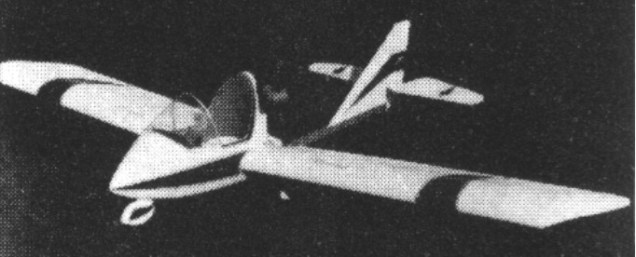
The Sportsman is the latest release from Col Winton on the Gold Coast who has been designing and building ultralights over the last nine years. The mid wing pusher comes either in kit form with or without the engine or complete and ready to fly. The sleek fibreglass body can be removed for maintenance or for those who like that airy feel, and the cantilevered mid wing unbolts for trailering a channel section aluminium boom supports the tail “feathers”. This aircraft can use a Rotax engine in lieu of the VW unit.

Gallery

Engine: VW 1400cc
Prop: 137cm x 71 cm pitch
Wing span: 7.6 m, 10.7 sq m
Length: 4.6m
Weight: 150 kg
Cruise speed: 70 kts
Stall: 30 kt

Winton Jackaroo

Since designing the Grasshopper, Col has produced the Jackeroo. The aircraft uses composite construction wings and a fuselage based on a 6 x 4 inch (152 x 102 mm) tube of rectangular section. The Mk2 version of the Jackeroo uses a deep section wing, with depth 20% of chord, which Col chose to lower the landing and take off speeds. However, to his surprise, it also improved the Jackeroo’s cruising speed.
Assembly time for the Mk2 Jackeroo from a trailer is 10min, and the aircraft weighs some 250lb (113kg) empty.

Winton Grasshopper

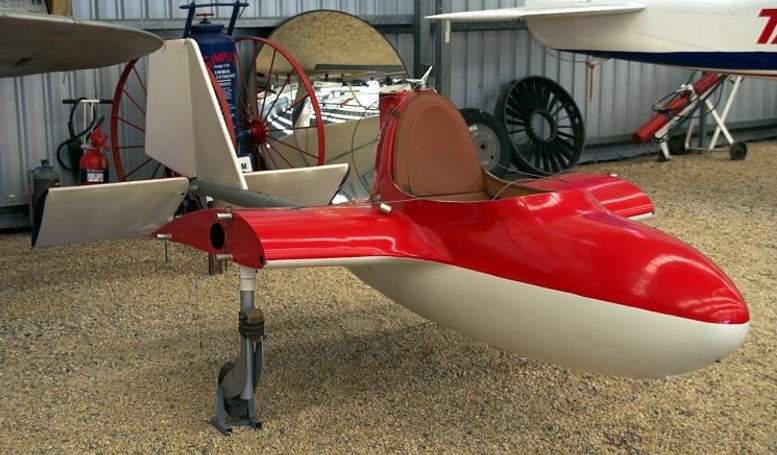
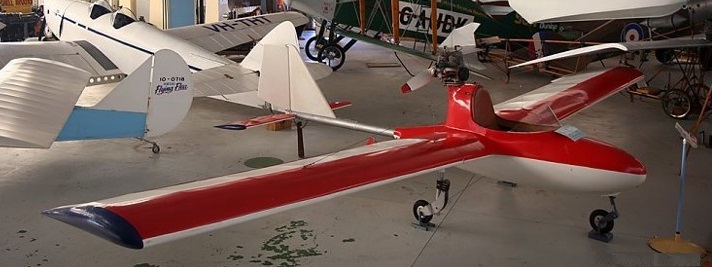
Single seat single engined mid wing mono¬plane with conventional three axis control. Wing has swept back leading and trailing edges, and tapering chord; cruciform tail. Pitch control by fully flying tail; yaw control by fin mounted rudder; control inputs through stick for pitch/roll and pedals for yaw. Wing braced from above by cables; wing profile Karman; 100% double¬ surface. Undercarriage has three wheels in tricycle formation. Push right go right nosewheel steering connected to yaw control. Aluminium tube/glass¬fibre fuselage, partially enclosed. Engine mounted above wing driving pusher propeller.

Col Winton’s Grasshopper won an award for the best foreign ultralight at the 1981 Oshkosh being a sophisti¬cated design, even by 1983 standards. Using Karman aerodynamics for both fuselage and wings, this machine was original¬ly powered by a 432 cc two stroke developing 23 hp. However, following its win at Oshkosh, Pterodactyl Ltd agreed to market the aircraft in the US, using a 30hp Cuyuna, while Col himself had plans to re engine the machine with a 440 cc Robin.

In concept the Grasshopper is a mixture of composite and tube and Dacron construc¬tion. The fuselage is principally made from glass fibre, while the wings are tube and Dacron with glass fibre leading edges and tips. Wings can be removed for transport and storage. The undercarriage has suspension on all three wheels and sometimes wheel spats are fitted.

Tolhurst purchased the moulds and rights from Colin Winton and produced an updated model at Camden, Sydney, Australia.

In 1978 the aircraft was purchased by Mr Juan Humberto Burnett of Perth and used for recreational flying mainly in the Rockingham area from 1978 to 1979. During this time, Burnett made a forced landing on a dry saltlake at Rockingham, due to a blocked fuel line.

Burnett moved to Mt Newman in 1979, and made several long distance flights from that town. One such flight was to Lake Disappointment and return (during which extra fuel was carried), and another flight was made to Port Hedland. The machine crashed on two occasions whilst based at Mt Newman. Once at Newman itself, and once at Marble Bar. In both incidents, damage to the machine was minimal and Burnett was unhurt.

In May 1981 Burnett returned to Perth, and did not get the opportunity to fly the Grasshopper again. The slightly damaged machine was donated to the RAAF Assn. Aviation Museum, where a rebuild was undertaken to bring the machine up to display condition.

On 25 April 2008 it was purchased from the Aviation Heritage Museum, Bull Creek by Greg Ackman who loaned the aircraft to the Queensland Aviation Museum. On 17 July 2008 it arrived at QAM, Caloundra by road. The aircraft was later donated to QAM.

Have acquired and earlier model grasshopper and am seeking to identify what model and year it was constructed, i also wish to get my hands on a construction manual as i want to restore this aircraft back to its original flying state,
Will White
ima224ru12@yahoo.com.au

Engine: Robin EC44PM
Prop: VAC 36 x 50
Wingspan: 27 ft 11.5 in / 8.52 m
Length: 16 ft 4.75 in / 5.0 m
Empty wt: 122 kg
AUW: 249 kg
Cruise: 60 kts
Max level speed: 75 mph, 120 kph
Initial Climb: 192m/min / 630ft/min
Service Ceiling: 3 962m / 13 000ft
Range: 483km / 300mile

Winton Aircraft

1983: Winton Aircraft, D4/1, Campbell Parade, Manly Vale, Sydney, NSW 2093, Australia.
1985: Winton Aircraft, 23 Foxwell Rd, Coomera, Qld 4210, Australia.

I use to work for winton aircraft back in 1977 with col and Micky building grasshoppers and crickets at the north st Mary’s factory would like to catch up with col and Micky one of these days
Terry Cameron.
Sept 2014

Wings of Freedom Flitplane

A very low cost, tube and fabric ultralight which was available as plans, kit, or ready to fly. The plans did cost US$100, and ready to fly US$10,500.

Doug Widmar / Dwidmar@comcast.net
Jan 2014
I have one and wonder how many are out there and flying. So Far I’ve just got all three wheels off the ground high speed taxi. Ran out of summer 2013. Looking forward to 2014 actually flying it.

Top speed: 63 mph
Cruise: 45 mph
Stall: 27 mph
Range: 120 sm
Rate of climb: 400 fpm
Takeoff dist: 300 ft
Landing dist: 300 ft
Service ceiling: 8000 ft
Engine: 2si (LAPS), 32 hp
HP range: 25-40
Fuel capacity: 5 USG
Empty weight: 245 lb
Gross weight: 500 lb
Height: 5 ft
Length: 15.8 ft
Wing span: 27 ft
Wing area: 145 sq.ft
Seats: 1
Landing gear: tailwheel

Windward Performance

Windward Performance is an aircraft design house and manufacturer located in Bend, Oregon. The company is owned and led by Greg Cole. Windward Performance has helped numerous companies with technical expertise and in house they designed and developed the SparrowHawk ultralight sailplane and the DuckHawk high strength, high performance 15m sailplane.

The company also designed and built the Perlan II stratospheric glider which now holds the sailplane world altitude record at 52,172 ft.