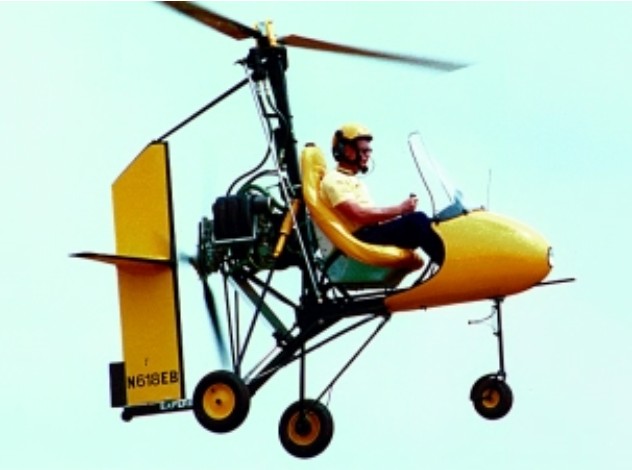
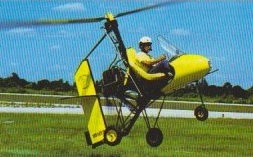
High-profile open-frame design built of 2 x 2 aluminum tubing bolted together and welded. Utilizes tall tail, full suspension landing gear with 9″ travel, large propeller. Also available: parts, components, pre-welded airframe kit.70-min video $27.95 Assembly manual now available.
Plans were available for the single-seater Dominator models in 2001: $175. Plans: US$175 in 2009.
Depending on model and engine size, Dominators are available fully assembled: $12,000 to $29,000 in 2001.
The craft also holds the official world altitude record in its class, at 24,463 ft.
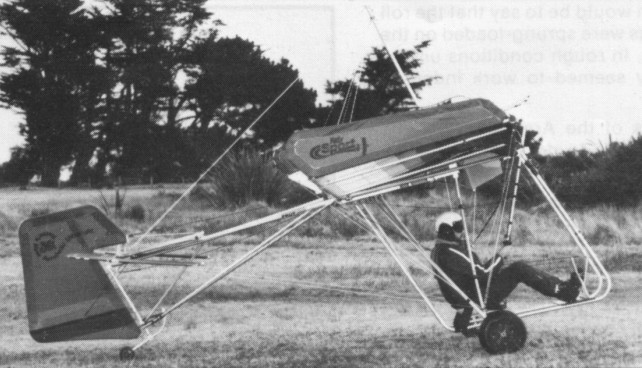
The Rotec Rally line has grown out of the solid aeronautical engineering and helicopter-rated experience of William Adaska. The pilot sits inside a roll cage in the manner of a stock car. The control column is pivoted from above so that in the event of a head on collision with the ground it pushes out of the way, instead of into the pilot’s stomach. The 48 hp engine is mount¬ed above and aft of the wing for pilot safety.
The Rotec Rally line-up are all equipped with standard rudder pedals and stick; providing three axis aerodynamics like any normal aeroplane. However, possibly be¬cause of the designer’s helicopter back-ground, the throttle is a twist-grip mounted on the control stick. All tubing is aircraft grade 6061-T6 anodised aluminium and hardware is aircraft quality AN material. Cables are aircraft grade stainless steel 7 x 7 vinyl coated.
Accompanying each aircraft is a 145 page assembly manual and a 95 page pilot’s manual that covers all aspects of microlight flying. Different sized wheels are available. The standard size is the 20” which would give the Rally Sport an even higher ground clearance than the 4” wide 16” ‘Tundra” tyres; fitted to decrease side loads during cross wind landings and take the bumps out of rough ground and river bed landings. The Rally 3 was even higher; 13.5 inches.
The Rally models could be derigged for transport on a trailer and rerigged in about 45 minutes. All slip pins were safety locked with split rings. The trailing tail wheel is bungee. Spoilerons are held down by a bungee cord which makes for a positive feel in flight. The 48 hp engine is fan cooled making for efficient cooling and the “see through” 5 gallon fuel tank provides about 2 and a half hours endurance at normal revs.
The wing is a single surface of 3.8 oz dacron, available in a variety of colours already sewn at the factory.
Special custom sails are available. End plates add to the lifting capacity. Maximum “G” for the Sport is given as plus six and minus three.
Elevators are described as being “Butter¬fly” to provide strong pitch control for rapid aerobatic manoeuvres. The elevator sur¬faces surrounding the sides and trailing edge of the stabiliser are aerodynamically balanced to allow minimal force on the con¬trol stick at all speeds. Each Rally can have its controls set to suit the pilot. There is an optional adjustable seat which allows the pilot or the passenger to slide into the most comfort¬able position. The joystick is adjusted by the simple method of tightening or loosening the control cables.
The Rally 1 is a high-wing monoplane with con¬ventional tail unit much like the Rally 2B. Rather than stick and pedal controls, the weight shift is used for roll and pitch control, with the pilot in a sling seat. POWERPLANT: Zenoah in pusher position above the wing, and a 2.4:1 reduction unit. Otherwise similar to Rally 2B. LANDING GEAR: Similar to Rally 2B. Top mounted joy stick, rudder pedals, castering tailwheel. First built; 1976.
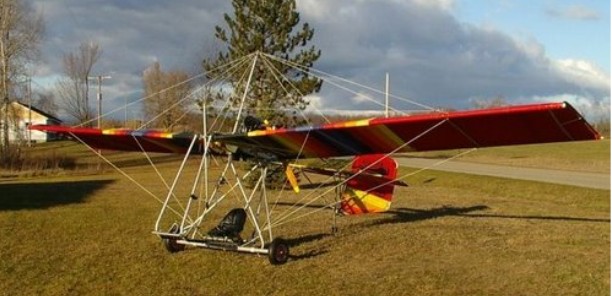
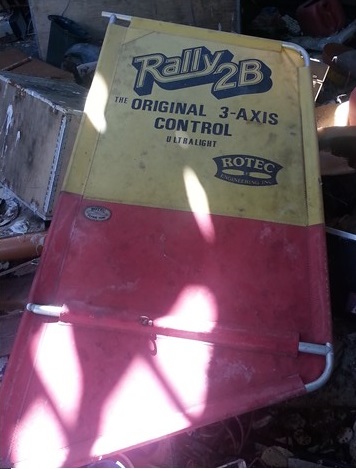
The Rally 2B is a high-wing monoplane with con¬ventional tail assembly consisting of horizontal and vertical stabilizers. The elevators are separate and the rudder is all ¬flying. Roll is controlled by ailerons and can be operated separately from the foot-controlled rudder by means of an inverted control stick. Construction makes use of aluminum tubing and steel aircraft cable. The wings and tail surfaces are covered with Dacron with clear windows at both wing roots. The engine is mounted in a pusher position above the wing. A 2.4:1 reduction unit turns a two-blade wooden propeller made by Rotec. Fuel is carried in an ABS plastic tank hung under the wing root area. LANDING GEAR: Conventional taildragger gear are shock mounted with bungee wrap. The tailwheel is castering, and the main wheels measure 20 inches in diameter. There are no brakes. The Rally 2B was first built in 1976 and by June 1981 500 had been delivered.
The United States Marine Corp have bought the Rally 2B, as have the Department of the Interior Geological Sur¬vey Team.
The 1981 standard version of the Rally 2B used ailerons attached to the trailing edge of the outer sections of the wing. This method was dropped in favour of spoilerons carried on the upper surface of the wing and mounted at 1/3 chord back from the leading edge. The Rally 2B is sold as a kit for $4800 in March 1983, options including an instrument panel, transport covers for $350, floats $950, skis $280, windshield $72 and transparent panels for the first third of the span of each wing $150. The Rally 2B is sold ready built for an extra $680.
The Rally 2B Twin is similar to the Rally 2B. POWER-PLANT: Zenoah-Twin mounted in a pusher position above the wing. A 2.4:1 reduction unit turns a two-blade wooden pro¬peller made by Rotec. Otherwise similar to the Rally 2B. LANDING GEAR: Similar to the Rally 2B. The aircraft is also available in 2B+ form, with a different wing design incorporating extra ribs and more camber and billow, a combination which Rotec says gives better pitch stability.
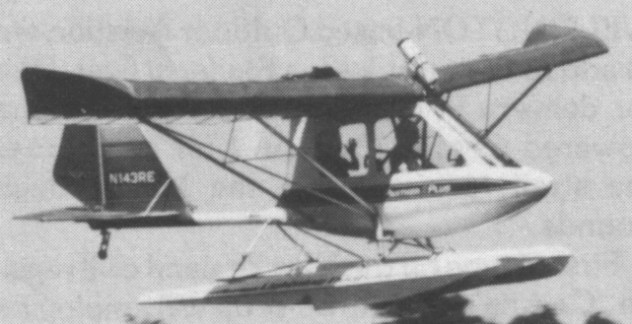
The 2B is a three axis design and initially used the same engine as the Rally 2, but various other units were substituted, including a Solo with 2.7/1 reduction drive, developing 20hp at 5200rpm, (the 2B1 version) and a twin cylinder 292cc 30hp Chaparral unit (the 2B2 version, sold in the US with floats, under the name Rally Marine). Some aircraft were also made with the 28 hp Kohler engine.
In 1983, customers had the choice of 40 hp Kawasaki, 35 hp Cuyuna or 32 hp Rotax engines.
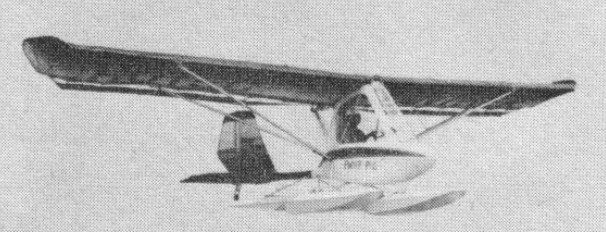
The Rally Marine is similar to Rally 2B. POWERPLANT: Zenoah-Twin mounted in pusher position above the wing. Similar to the Rally 2B Twin. LANDING GEAR: Standard gear are replaced by two 9-foot foam pontoons.
The Rally Sport has roll control by three quarter span spoilerons; suspension on all wheels. Announced on 1 March 1983, this single seater from Bill Adaska is, according to the company, ‘an optimised airplane rather than an innovative airplane’. In fact, apart from an obvious family resemblance, the Rally Sport does not have a great deal in common with the earlier Rallys. Certainly its performance characteristics are very different, particularly its maximum roll rate, which is quoted as 150 deg/s.
The Rally Sport is offered, after a year of test flights by its manufacturer, as an acrobatic ultralight. The wing design is considerably changed from the 2B, with smaller span and area and saumons at the tips, while a dramatic roll rate comes from three quarter span spoilers, compared with one third span for the 2B. The tail uses aerodynamically balanced elevators which surround the edges of the horizontal stabiliser giving the effect of servo tabs. Power comes from the Rotax 503, used in the same form as on the Rotec two seater, the Rally 3B. The machine was sold as a kit for $5600 or ready to fly for an extra $680 in 1982. There is an option of transport covers for $325. Shorter wing and airframe beefing gives Rally Sport a load factor of + 6, -3 G’s for aerobatics. With a top mounted joy stick, rudder pedals, castering tailwheel, the Rally Sport was first built in 1976.
Developed for the Rotec Rally is a spray system carrying 24 gallons and with spray booms attached to the wings to provide a 45 foot spray pattern. With an application of three gallons per minute while flying at 30 mph, the Rally should cover 2.7 acres a minute.
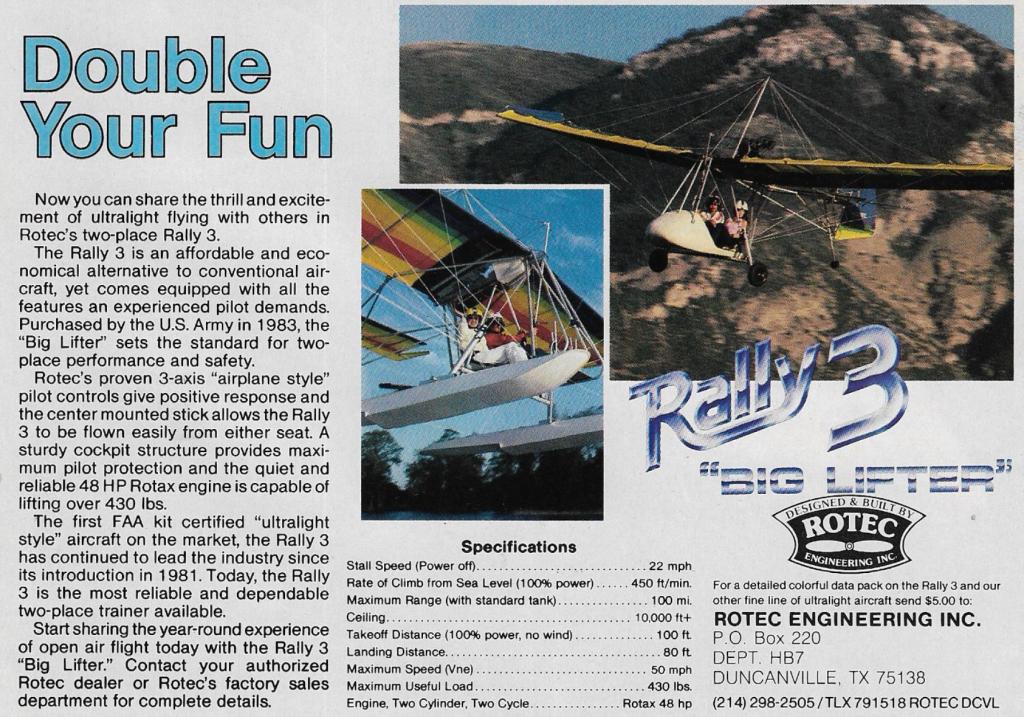
The Rally 3 is a side by side two seater version of the Rally 2B, with conventional 3 axis controls. Roll control by spoilerons. Nylon rope suspension on all wheels. This two seat version of the Rally is sometimes known as the Big Lifter and received FAA experimental certification on 18 November 1981, after more than 12 months’ trials by Rotec, first sales being the following January.
Rally 3
It differs from the single seat 2B mainly in having an enlarged framework, with a third cranked tube running longitudinally, and an enlarged span, though the chord remains the same. As on the Rally Sport, the horizontal stabiliser uses aerodynamically balanced ‘ser¬vo tabs’. Originally powered by the Cuyuna 430R, the aircraft now comes with a Rotax 503 for which 48 hp is quoted.
At the end of 1982 Rotec announced what it calls the ‘jump option’ under which the aircraft was converted to carry a parachutist. This is done by removing the second set of pedals and adding a sliding seat and trapeze bar, while for jumpers who prefer to start their descent from a standing position, a platform can be fitted.
The two main wheels of the Rally 3 can be replaced by mahogany skis with a glass fibre surface as a $320 option, while saumons as on the Rally Sport can also be added as an extra. Further options include transport covers for $450, floats for $1250 and a windshield for $116 (in 1982).
Although offered in January 1983 for $5000, the normal price of a Rally 3 in standard form is $6000 as a kit; it is not available ready built in the US because it is classified as an experimental aircraft under US legislation. The United States Army has purchased 300 of the Rally 3 with a 500 lb payload which would typically consist of two persons and some weapons and features a minimum cruise speed of 45 mph with a range of 200 nm on 16 gallons of fuel. The Army required the aircraft to have a 10,000 foot ceiling, rough field landing capability and to be capable of assembly out in the field by two persons in 30 minutes.
July 1984
Elsewhere it can be bought ready built for an extra $960, while in France, where it is imported to special order only and known as the Rally 4B2S, it is fitted with a Hirth 276R engine developing 36hp at 6250 rpm.
Feb 2014 wraupert@namibnet.com Can someone please help me with a pdf-copy of an assembly manual for the Rotec Rally 2b, mine got lost and i would like to put my Rally together and fly it again. Thanx alot in advance! regards, Werner
Rally 1 Engine displacement 240cc Rated HP, 20 hp Static thrust, 170 lbs Wingspan, 31 ft Wing area, 155 sq.ft Aspect ratio, 6.4:1 Overall length, 14.5 ft Empty weight, 125 lb Usable payload (include fuel), 232 lb Wing loading, 2.3 lbs/sq.ft L/D power-off glide ratio, 7.5:1 Cruise speed (85% power), 34 mph Stall speed, 16 mph Approach speed, 25 mph Flair speed, 20 mph Liftoff speed, 18-20 mph Takeoff roll distance, 90 ft Rate of climb, 400 fpm Fuel capacity, 2 USgal Range at cruise, 60 mi Seats: 1
Rally 2B Engine Zenoah, displacement, 240cc, 20 hp Static thrust, 170 lb Wingspan, 31 ft Wing area, 155 sq.ft Aspect ratio, 6.4:1 Overall length, 15.7 ft Empty weight, 135 lb Usable payload (include fuel), 232 lbs Wing loading, 2.4 lbs/sq.ft L/D power-off glide ratio, 7:1 Cruise speed (85% power), 32 mph Stall speed, 16 mph Ap¬proach speed, 25 mph Flair speed, 20 mph Liftoff speed, 18-20 mph Takeoff roll distance, 90 ft Rate of climb, 350 fpm Fuel capacity, 2 Usgal Range at cruise, 60 mi
Engine: Cuyuna 430R, 35 hp at 5500 rpm Propeller diameter and pitch 54 x 32 inch, 1.37 x 0.81 m Toothed ¬belt reduction Power per unit area 0.22hp/sq.ft, 2.4hp/sq.m Fuel capacity 3.5 US gal, 2.9 Imp gal, 13.2 litre Length overall 16.8 ft, 5. 13 m Height overall 10.3ft, 3.15m Wing span 31.0ft, 9.44m Constant chord 5.0 ft, 1.52 m Total wing area 155sq.ft, 14.4sq.m Rudder area 12.3sq.ft. 1.14 sq.m Total elevator area 7.6 sq.ft, 0.70 sq.m Wing aspect ratio 6.2/1 Main wheels diameter overall 20 inch, 51 cm Empty weight 218 lb, 99kg Max take off weight 466 lb, 211kg Payload 248 lb, 112kg Max wing loading 3.00 lb/sq.ft, 14.7 kg/sq.m Max power loading 13.3 lb/hp, 6.0kg/hp Load factors +3.0, 1.5 design; +3.8, 2.0 ultimate Max level speed 50 mph, 80 kph Never exceed speed 55 mph, 88 kph Max cruising speed 40 mph, 64 kph Economic cruising speed 35 mph, 56 kph Stalling speed 19 mph, 30 kph Max climb rate at sea level 680 fpm, 3.5 m/s Min sink rate 275 fpm, 1.4 m/s Best glide ratio with power off 7/1 Take off distance 75 ft, 23 m Land¬ing distance 50 ft, 15 m Service ceiling 10,000ft, 3050 m Range at average cruising speed 78 mile, 125 km
Engine: Rotax 377, 38 hp at 6600 rpm Propeller diameter and pitch 54 x 34 inch, 1.37 x 0.86 m Toothed ¬belt reduction, ratio 2.2/1 Max static thrust 280 lb, 127 kg Power per unit area 0.25hp/sq.ft, 2.6hp/sq.m Fuel capacity 5.0 US gal, 4.2 Imp gal, 18.9 litre Length overall 16.8 ft, 5. 13 m Height overall 10.3ft, 3.15m Wing span 31.0ft, 9.44m Constant chord 5.0 ft, 1.52 m Total wing area 155sq.ft, 14.4sq.m Rudder area 12.3sq.ft. 1.14 sq.m Total elevator area 7.6 sq.ft, 0.70 sq.m Wing aspect ratio 6.2/1 Main wheels diameter overall 20 inch, 51 cm Empty weight 218 lb, 99kg Max take off weight 466 lb, 211kg Payload 248 lb, 112kg Max wing loading 3.00 lb/sq.ft, 14.7 kg/sq.m Max power loading 12.3 lb/hp, 5.6kg/hp Load factors +3.0, 1.5 design; +3.8, 2.0 ultimate Max level speed 50 mph, 80 kph Never exceed speed 55 mph, 88 kph Max cruising speed 45 mph, 72 kph Stalling speed 19 mph, 30 kph Max climb rate at sea level 700 fpm, 3.6 m/s Best glide ratio with power off 7/1
Rally 2B Twin Engine Zenoah twin displacement, 300cc, 30 hp Static thrust, 255 lb Wingspan, 31 ft Wing area, 155 sq.ft Aspect ratio, 6.4:1 Overall length, 15.7 ft Empty weight, 170 lb Usable payload (include fuel), 270 lb Wing loading; 2.8 Ibs/sq.ft L/D power-off glide ratio, 6.5:1 Cruise speed (85% power), 44 mph Stall speed, 18 mph Approach speed, 25 mph Flair speed, 20 mph Liftoff speed, 18-20 mph Takeoff roll distance, 70 ft Rate of climb, 800 fpm Fuel capacity, 4 USG Range at cruise, 110 mi
Rally 3 Engine: Rotax 503, 48 hp at 6250 rpm Propeller diameter and pitch 60 x 28 inch, 1.52 x 0.71 m Toothed belt reduction, ratio 2.3/1 Max static thrust 338 lb, 153 kg Power per unit area 0.25 hp/sq.ft, 2.7 hp/sq.m Length overall 17.3 ft, 5.28 m Height overall 10.7ft, 3.25m Wing span 38.0ft, 11.58m Constant chord 5.0 ft, 1.52 m Total wing area 190sq.ft, 12.7 sq.m Wing aspect ratio 7.6/1 Main wheels diameter overall 16 inch, 41 cm Empty weight 265 lb, 120kg Max take off weight 695 lb, 315kg Payload 430 lb, 195kg Max wing loading 3.66 lb/sq.ft, 17.8 kg/sq.m Max power loading 14.5 lb/hp, 6.6 kg/hp Max level speed 45 mph, 72 kph Max cruising speed 40 mph, 64kph Stalling speed 20mph, 32kph Max climb rate at sea level 450 ft/min, 2.3 m/s Best glide ratio with power off 7/1 Take off distance 100ft, 30m Landing dis¬tance 80ft, 25m Service ceiling 10,000ft, 3050m Range at average cruising speed 100 mile, 161 km
Rally 3 Big Lifter Engine – 2 cyl two stroke: 48 hp Wing Span: 38 ft Wing Area: 190 sq ft Length: 17′ 4″ Height: 10′ 8″ Cruise Speed: 40 mph Max Speed (Vne): 50 mph Max Range Standard: 100 miles Stall Speed (100% Power): 20 mph Stall Speed – Power Off: 22 mph Take-off Distance: 100 ft Landing Distance: 80 feet Rate of Climb s/l: 450 fpm Ceiling: 10,000 ft Glide Ratio: 7.1 Wing Loading: 3.2 lb/sq ft Empty Wt: 285lb Max Payload: 430lb
Rally Marine Engine displacement, 300cc, 30 hp Static thrust, 255 lb Wingspan, 31 ft Wing area, 155 sq.ft Aspect ratio, 6.4:1 Overall length, 16 ft Empty weight, 220 lb Usable payload (include fuel), 250 lb Wing loading, 3 lbs/sq.ft L/D power-off glide ratio, 6.5:1 Cruise speed (85% power), 40 mph Stall speed, 18 mph Approach speed, 25 mph Flair speed, 20 mph Liftoff speed, 18-20 mph Takeoff roll distance, 90 ft Rate of climb, 650 fpm Fuel capacity, 4 USG Range at cruise, 100 mi
Rally Sport Engine: Rotax 503, 48 hp at 6250 rpm Propeller diameter and pitch 60 x 28 inch, 1.52 x 0.71 m Toothed belt reduction, ratio 2.3/1 Max static thrust 338 lb, 153 kg Power per unit area 0.36 hp/sq.ft, 3.8 hp/sq.m Fuel capacity 3.5 US gal, 2.9 Imp gal, 13.2 litre Length overall 16.6 ft, 5.05 m Height overall 10.4ft, 3.15m Wing span 27.0ft, 8.23m Constant chord 5.0 ft, 1.52 m Total wing area 135 sq.ft, 12.5 sq.m Wing aspect ratio 5.4/1 Empty weight 248 lb, 112kg Max take off weight 468 lb, 212kg Payload 220 lb, 100kg Max wing loading 3.461b/sq.ft, 16.9kg/m Max power loading 9.8 lb/hp, 4.4kg/hp Load factors; +6.0, 3.0 ultimate Max level speed 60 mph, 97 kph Never exceed speed 60 mph, 97kph Max cruising speed 50mph, 80kph Stalling speed 20 mph, 32 kph Max climb rate at sea level 1000 ft/min, 5.1 m/s Best glide ratio with power off 6.8/1 Take off distance 70ft, 21m Landing dis¬tance 75ft, 23m Service ceiling 10,000ft, 3050m Range at average cruising speed 83 mile, 134km Roll rate: 150 deg/sec
Rally Super Sport Cruise Speed: 50 mph Max Speed (Vne): 60 mph Max Range Standard: 83 miles Stall Speed (100% Power): 20 mph Stall Speed – Power Off: 23 mph Take-off Distance: 70 ft Landing Distance: 75 ft Rate Of Climb s/l: 1000 fpm Ceiling: 10,000 ft Max G-Load: + 6, -3g Max Roll Rate: 150 deg/sec Glide Ratio: 6.81 Wing Loading: 3.3 lb/sq ft Power Loading: 9.31 lb/hp Wing Span: 27 ft Wing Area: 135 sq ft Length: 16′ 7” Height: 10′ 4″ Engine – 2 cyl two stroke, 48 hp Empty Wt: 248lb Max Payload: 220lb
A fully enclosed, strut braced double surface wing, spatted undercarriage ultralight. Centre mounted joy stick, rudder pedals, tailwheel steerable through rudder pedals.
Rotec Panther 2 Plus includes a float option, brakes, cabin heat, executive interior (includes carpet), ballistic parachute (mounted on wing above cabin) and Loran C navigational equipment.
Panther Engine: Rotax 277 (268 cc) 28 hp Wing span: 34 ft Wing area: 148 sq.ft Height: 6 ft 3 in Length: 16 ft 10 in Empty wt: 250 lb Fuel cap; 3.5 USG Construction: Aluminium, Dacron Max wt: 475 lb Stall: 22 mph Max speed: 60 mph Vne: 62 mph Climb rate: 400 fpm @ 35 mph Design limit: +4, -2g Glide ratio: 6.8-1 Wing loading: 3.21 lbs/sq.ft Power loading: 16.96 lbs/hp
Having been an aero¬nautical engineer at Bell and after working also for the helicopter division of the French Aerospatiale company, William Adaska de¬signed the first Rally series microlight in 1977, using a McCulloch engine and hybrid con¬trols. It was followed in 1979 by the Rally 2.
The Rally 2B was followed in 1981 by the Rally 3, the first FAA kit certified 2-place “ultralight style” airplane. The annual pro¬duction rate in 1982 was 3000.
In January 1983, Rotec introduced the aerobatic Rally Sport. The Rotec Rally Sport which they claimed was the first production aerobatic ultralight on the market.
1983-4: Rotec Engineering Inc, PO Box 220, Duncan¬ville, Texas 75116, USA.
Rotec was a leading producer of ultralight aircraft with the introduction of the ultralight Rally 2B.
Adaska, ex-Bell and ex-Aerospatiale employee who had specialised until then in helicopters, went on to sell over 2000 Rallys.
Bill Adaska owner of Rotec used the sales pitch that if an individual bought 5 aircraft, selling 4 to friends they would get their aircraft for nothing.
I had the opportunity to train on the Rally 3 Big Lifter, and the Rally 2 B. Before I could fly them I had to do modifications to the aircraft to make it safe to fly. The clutch had a tendency to fail, leaving you without power to the prop. The motorcycle style throttle was located on the stick, with the ignition switch right above it, and when wearing gloves and turning the throttle you would inadvertently turn the switch off.
The manufacturer also purchased large quantities of no longer in production snowmobile engines and installed them on his craft. While this kept the cost down, parts for these engines were almost impossible to find.
The Rotec was really just a cheap copy of the Quicksilver MX. For example the rudder, elevator, and spoileron cables were just rope. To attach these to the control systems Adaska used plastic hooks, and you literally tied a knot in the rope to attach the hook! Plastic fittings were used on the elevator, rudder, and spoilerons. These would crack and break when exposed to UV and cold.
With all this said the craft did fly, was quite forgiving, and easy to repair, and with some changes is a safe, fun, affordable flying machine.
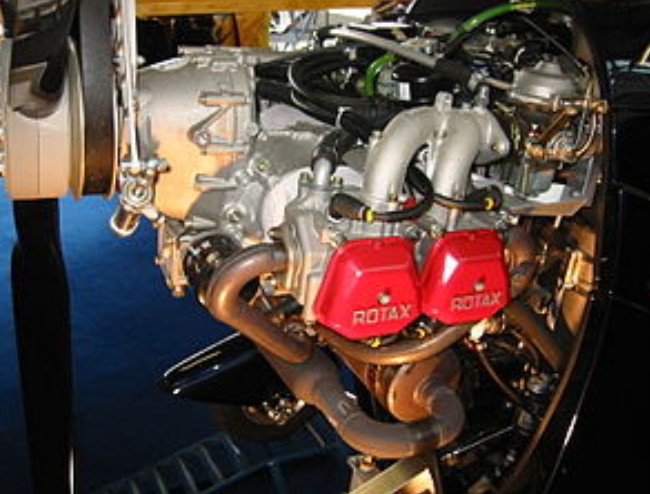
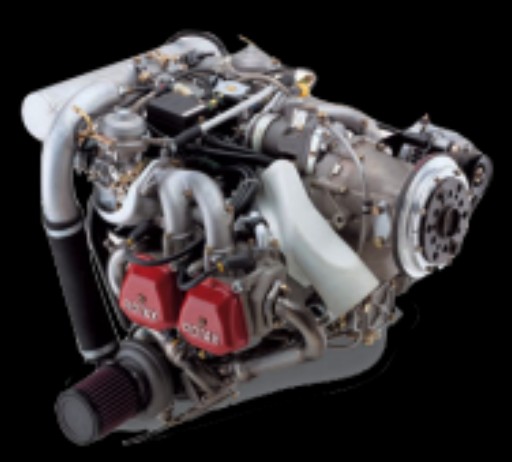
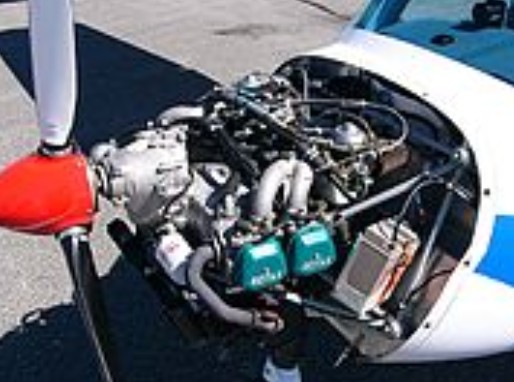
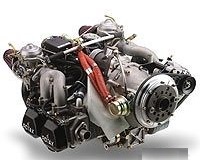
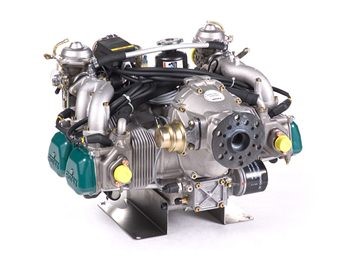
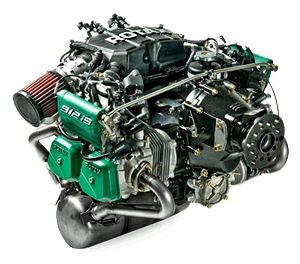
The Rotax 914 is an Austrian turbo-charged, four-cylinder, horizontally opposed aircraft engine with air-cooled cylinders and water-cooled cylinder heads. Designed and built by Rotax the engine commonly powers certified light aircraft, homebuilt aircraft, autogyros and military UAVs such as the MQ-1 Predator.
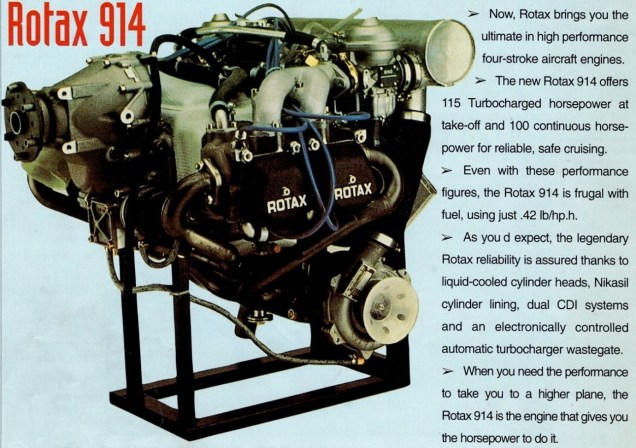
The Rotax 914 is an 80 HP engine block that Rotax has added a Garrett Turbo to and boosted it to 115 HP for 5 minutes then full time 100 HP. It has been a very popular engine for many years and is used by the US military in the Predator Drones. The 914 does provide continuous sea level performance of 100 HP to over 12,000 feet.
The Rotax 914F is certified to FAR-33 and JAR-E. For takeoff 115 hp at 2385 prop rpm is available for a 5 minute maximum, and 100 hp at 2260 prop rpm continuous.
Rotax 914F
Applications: Aero Adventure Pegasus Aerospool WT9 Dynamic Air Copter A3C Alisport Yuma Alpi Pioneer 300 Australian Aircraft Kits Hornet STOL AutoGyro MT-03 AutoGyro Calidus AutoGyro Cavalon B&F Fk14 Polaris Bauer BAD-12 Gyrotrainer Bushcaddy R-80 Bushcaddy R-120 The Butterfly Super Sky Cycle Celier Kiss Celier Xenon 2 Chayair Sycamore Criquet Storch Denel Dynamics Bateleur Diamond HK36 Super Dimona Dorna Parandeh Abi Dova DV-1 Skylark Dyn’Aéro MCR4S Dynali H2S ELA 07 Eurodisplay SR-01 Magic Europa XS FD-Composites ArrowCopter Flying Legend Hawker Hurricane Replica General Aviation Design Bureau T-32 Maverick Heli-Sport CH-7 Kompress helicopter IAI Heron Idea Hydropteron Just Superstol Magni M-14 Scout Magni M-24 Orion M&D Flugzeugbau Samburo MQ-1 Predator NAL Hansa Norman Aviation Nordic VI Norman Aviation Nordic 8 Mini Explorer Pagotto Brakogyro Phenix Aviation Phenix RMT Bateleur Roko Aero NG4 Rotor Flight Dynamics Dominator RotorSport UK Calidus RotorSport UK MT-03 Softeks V-24 Lastochka SlipStream Genesis Stemme S10 motor glider Titan T-51 Mustang Ultravia Pelican Wild DoubleEnder Wüst Seahawk
Specifications: 914 Type: four-cylinder, four-stroke liquid- / air-cooled engine with opposed cylinders Bore: 79.5 mm (3.13 in) Stroke: 61 mm (2.4 in) Displacement: 1,211.2 cc (73.91 cu in) Length: 561 mm (22.1 in) Width: 576 mm (22.7 in) Dry weight: 78 kg (170 lb) with electric starter, carburetors, fuel pump, air filters and oil system Valvetrain: OHV, hydraulic lifters, pushrods, rocker arms Fuel system: Dual CD carburetors, mechanical diaphragm pump Fuel type: Unleaded: 87 octane AKI (Canada/USA) / 90 octane RON (European) or higher Oil system: Dry sump with trochoid pump, camshaft driven Cooling system: Liquid-cooled cylinder heads, air-cooled cylinders Reduction gear: Integrated reduction gear 1:2.273; 1:2.43 optional Electronic dual ignition Power output: Maximum 84 kW (115 hp) at 5,800 rpm, with 5 minute time limit; 73 kW (100 hp) continuous
914 UL DCDI Cycle: turbo 4 stroke No cylinders: 4 Bore: 79.5 mm Stroke: 61 mm Compression: 8.75 Displacement: 1211 cc Cooling: air-liquid Ignition: Electronic Ducati Reduction: mechanical 2.27:1 torque limited Weight: 67.5 kg Max pwr: 115 hp at 5800 rpm Max torque: 123 at 4800 rpm Fuel consumption: 250 G/hp/hr Price 1998: 112 131,47 Fttc
Rotax 912 Engine 80 HP (912) or 100 HP (912 UL) 4 Stroke, 4 Cylinder, horizontally opposed Water Cooled heads, air cooled barrels Dual brakeless, capacitor discharge ignition Twin Carburettors Prop drive via reduction gear Arguably the best engine available for Micro light aircraft today. Powerful and reliable, although expensive.
The Rotax 912 S is a 100 Horsepower engine. The 912 RST model uses the same 80 HP Rotax engine used in the 914. This engine has been fitted with a Mitsubishi Turbo that gives full time turbo boost. At full power this engine develops 122 Horsepower and is excellent for heavier loads or high altitudes.
912 UL 2V DCDI Cycle: 4 No cylinders: 4 Bore: 79.5 mm Stroke: 61 mm Compression: 9 Displacement: 1211 cc Cooling: liquid-air Ignition: Electronic Ducati Reduction: mechanical 2.27:1 torque limited Weight: 64.5 kg Max pwr: 80 hp at 5500 rpm Max torque: 103 at 4800 rpm Fuel consumption: 240 G/hp/hr Price 1998: 69 919,28 Fttc