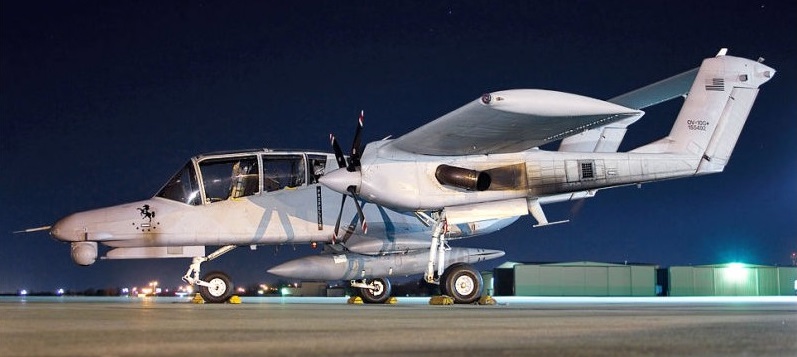
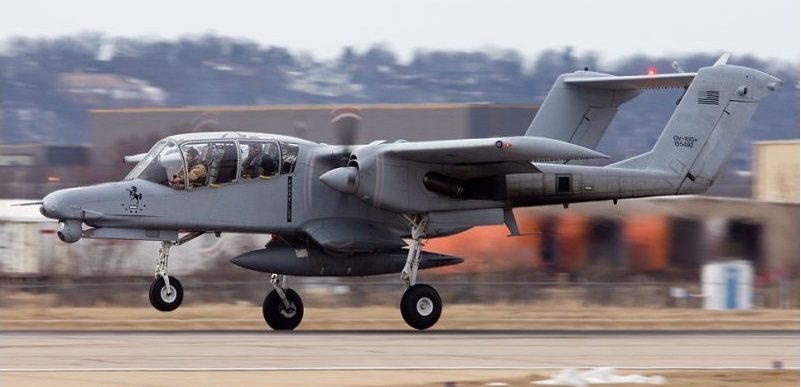
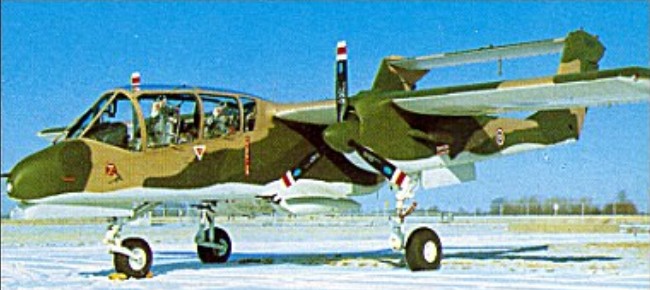
To meet a US Navy requirement for a light armed recon¬naissance aircraft, North American Rockwell produced their NA-300 design submission for the OV 10A Bronco. A contract for seven YOV-10A prototypes was placed in 1964, the first of them flying on 16 July 1965.
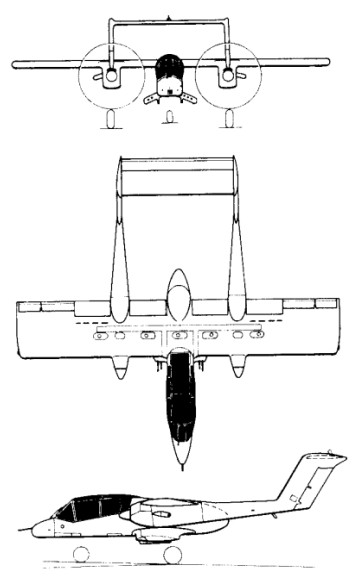
With a two-seat fuselage nacelle mounting a high-set monoplane wing, the aircraft had twin tailbooms extending aft from the nacelles of the two turboprop engines, each with a fin and rudder, and interconnected by a tailplane/elevator assembly. The main units of the tricycle landing gear retracted into the engine nacelles.
Six of the prototypes were powered by 447kW Garrett T76-G-6/8 engines, but had one Pratt & Whitney YT74-CP-8/10 turboprops for comparative evaluation.
The OV-10A Bronco production version had a 3.05m increase in wing span and more powerful T76-G-10/12 engines, the first flown on 6 August 1967, and 114 were built for the US Marine Corps.
These were followed by 157 similar OV-10As for the US Air Force, these entering operational service in Vietnam in 1968. Under the US ‘Pave Nail’ programme, 15 were provided with special equipment for the location and illumination of targets by night. Other versions have included six OV-10B aircraft supplied to Germany as target tugs, followed by 18 turbojet-boosted OV-10B(Z) aircraft for the same role. Versions similar to the OV-10A have been supplied to Indonesia (16), Thailand (40) and Venezuela (16), under the respective designations OV-10F, OV-10C and OV-10E, and six US OV-10As have been transferred to the Royal Moroccan air force.
Two OV-10As were modified under a US Navy contract of 1970 to YOV-10D NOGS (Night Observation/Gunship System) aircraft to provide the US Marines with advanced night operational capability. Since evaluation of these aircraft, 17 US Marine Corps OV-10As have been converted to OV-10D NOS (Night Observation Surveillance) configuration, now equipped with a FLIR (forward-looking infra-red) turret in the nose linked to an underfuselage 20mm cannon turret, and a laser target illuminator.
Production of the Bronco for the USMC, USAF, and four export customers was completed in 1980.
Able to carry a maximum weapon load of 3,600 lb (1,633 kg), the Bronco has proved valuable for Forward Air Control (FAC) operations in South East Asia.
Of the seven prototype North American Rockwell OV 10 Broncos built, No.3 on the line was heavily modified and was the only short-wing example of the aircraft ever built. YOV 10A 152881 (N718NA) has a wingspan of only 32ft (9.75m), whereas standard production aircraft had 40ft (12m) of wing. From 1966 to 1972 the aircraft was used as a demonstration airframe and was used to take Admirals, Generals and Congressmen for flights to extol the virtues of the twin engined observation and forward air controller design. The Bronco was also assigned to train new pilots on the gunnery ranges, using its machine guns and rockets. During the spring of 1972 it was assigned to NASA under the Department of the Army, for STOL flight testing. This was carried out at the Ames Flight Test Center in California, with the aircraft being allocated a civilian registration.
During its time at Ames, the Bronco was heavily modified, the aircraft’s Garrett T 76 turboprops were removed and replaced by Lycoming T 54s. Three blade 7ft (2.1m) Hamilton Standard propellers were replaced with 10ft (3m) four bladed Curtiss Electric composite propellers, and the engines were interconnected by a single solid shaft in the leading edge of the wing. With this system in operation, the aircraft flew at 47 knots and NASA was working toward getting the minimum speed down to 30 knots. The Bronco became unstable, and the programme was stopped. The aircraft was with NASA until it was sold to the Detroit Institute of Aeronautics in 1979.
OV-10A Engines: 2 x Garrett AiResearch T76-G-416/417, 715 shp Wing span: 40 ft 0 in (12.19 m) Wing area: 290.951 sqft / 27.03 sq.m Length: 41 ft 7 in (12.67 m) Height: 15 ft 2 in (4.62 m) Max TO wt: 14,446 lb (6563 kg) Weight empty: 6892.8 lb / 3126.0 kg Max level speed: 281 mph (452 kph) Cruising speed: 168 kts / 312 km/h Service ceiling : 27001 ft / 8230 m Maximum range: 1199 nm / 2220 km Range (max. weight): 410 nm / 760 km Crew: 2 Armament: 4x MG 7,62mm M60C/500rds., 1633kg ext. 5pts.
OV-10B Engines: 2 x Garrett T76-G-418
OV-10D Engines: 2 x Garrett T76-G-420/421 turbo-prop, 776kW / 1040 shp Max take-off weight: 6552 kg / 14445 lb Empty weight: 3127 kg / 6894 lb Wingspan: 12.19 m / 39 ft 12 in Length: 13.41 m / 43 ft 12 in Height: 4.62 m / 15 ft 2 in Wing area: 27.03 sq.m / 290.95 sq ft Ceiling: 9145 m / 30000 ft Range w/max.payload: 740 km / 460 miles Bombload: 2000kg Crew: 2
The project was initially a cooperative one with Grumman American, GA supplying wings and empennage, for the most part off the shelf Cheetah parts, and retaining an option to market the airplane in the U.S. RFB has been responsible for design, development and certification. The second prototype embodied improvements in duct and fan technology and a somewhat larger airframe; it was the prototype that will be used for certification in Germany, from which, under reciprocal agreements between the two countries, FAA certification will more or less routinely follow. Grumman declined the marketing option in January 1977, but there is a continuing agreement between the two firms to explore the possibilities of ducted fans.
Luigi Colani ended up designing the entire forward fuselage and cabin a fiberglass and plexiglass shell grafted onto a simple keel upon which the entire airplane is built. The pilot and single passenger recline in an elegantly streamlined shell at the front of the airplane. Behind them is a smallish luggage space precisely like that in a small sports car, right down to the transmission tunnel hump provided by the keel structure. A well padded firewall separates the cabin from the engine compartment, the tubular spar of the GA wing. Wings and gear are from a Grumman Cheetah. Reconfigured from a low wing to a mid body location.
The engine is a two rotor NSU Wankel of 150 horsepower. It is water cooled and uses a double automotive ignition system of the battery/generator/coil/distributor type. The Wankel comfortably delivers its peak power at about 6,000 rpm, and the ducted fan allows it to turn at that speed regardless of the forward speed of the airplane.
Rather than take advantage of the ability of the fan to operate efficiently at high speed to eliminate the need for reduction gearing; RFB found that the noise produced by the small, multi-blade, fast-turning fan was so unbearable that they had to turn to a larger three blade version geared down to turn at about half the speed of the engine.
The fan itself is simply a fixed pitch propeller with broad, stubby blades of rather complicated shape. The optimum design has not yet been found, but it is thought that replacing the blades with a scimitar shaped type will further reduce noise at no cost in thrust. The circular duct enclosing the propeller counteracts the natural inefficiency of a stubby blade, which, like a stubby wing, tends to produce a lot of drag along with its lift.
The engine is cooled by radiators behind and below the cabin, with almost invisible flush air inlets be-neath the aft fuselage, exhaling into the fan duct. Cabin heat (not satisfactory on the prototype) is provided, as in most cars, by pumping some of the engine cooling water through a heat exchanger in the cabin air inlet.
The composite-construction Fantrainer first flew in October 1973 powered by two Wankel rotary engines.
Subsequent aircraft have used a single Allison 250 turboshaft to drive a Dowty Rotol five-blade constant-speed ducted fan. Its 150hp, water cooled Wankel engine drives a 43 inch, three blade, shrouded fan, which is located directly behind the two seat cabin. The tail cone is not a cone; instead, it consists of intersecting vertical and horizontal beams whose caps pass around the fan, and at whose intersection is a slender, tapering tube the “cone”. The empennage is a “T” arrangement with a swept vertical.
The RFB AWI 2 Fantrainer first prototype (98+30) was flown for the first time on 27 October 1977. Two prototypes of this tandem two seat trainer had been ordered by the Federal German defence ministry for evaluation as a potential replacement for the Piaggio P.149D primary trainers in Luftwaffe service.
The RFB Fantrainer, flown in AWI 2 and ATI 2 prototype forms, was in production in 1984 as the Fantrainer 400 and Fantrainer 600 with 420 shp (313 kW) and 650 shp (485 kW) Allison turboshafts for the Royal Thai air force. All but six of the 31 Fantrainer 400s and 16 6Ws were assembled in Thailand.
The Royal Thai Air Force is to receive 31 Fantrainer 400s and 16 more-powerful Fantrainer 600s. All but four are to be assembled in Thailand from kits supplied by RFB but using Thai designed and built metal wings in place of the original GRP units. The Thai aircraft will have four underwing weapons pylons. The first two German-built aircraft were delivered in October 1984, but the license-assembly programme has suffered a number of delays, particularly associated with production of the metal wings. To expedite deliveries, a number of Thai-assembled aircraft have been completed using German-supplied GRP wings. Thai aircraft also have a revised cockpit, Alkan stores management, and Stencel Ranger rocket assisted escape systems.
Two production models were offered, the Fantrainer 400 with the Allison 250-C20B 420 shp engine, and the Fantrainer 600 with a 650 shp Allison 250-C30 power plant.
Lufthansa also selected the type for its pilot training school.
Projected Fantrainer 800 did not enter production; neither did the proposed Tiro-Trainer with a turbofan engine.
Fantrainer 400 Engine: 1 x Allison 250 turboshaft, 420 shp
Fantrainer 600 Engine: 1 x Allison 250-C30 turboshaft, 600 shp Span: 9.7 m Length: 9.5 m Height: 3.2 m Wing area: 150.696 sq.ft / 14 sq.m Empty wt: 2557.8 lb / 1160 kg MTOW: 2300 kg Warload: 800 kg Max speed: 430 kph Landing speed: 61 kts / 113 km/h Cruising speed: 200 kts / 370 km/h Initial ROC: 960 m / min / 2952.76 ft/min / 15.0 m/s Service Ceiling: 25000 ft / 7620 m T/O run: 200 m Ldg run: 270 m Fuel internal: 475 lt Range: 1390 km Endurance: 4.8 hr Crew: 2
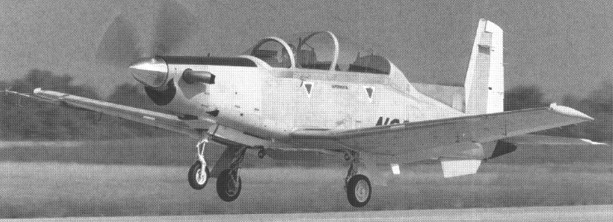
Raytheon Aircraft won a USAF and USN Joint Primary Aircraft Training System competition with the Beech Mk.II trainer, derived from the Pilatus PC-9.
Raytheon’s contract with the U.S. joint armed services to provide up to 700 T-6ATexan II JPATS trainers through the year 2014 continued to pay dividends for the Wichita based airframer. The Air Force and Navy exercised an option for 22 additional Texan IIs, an order valued at almost $65 million.
The first production T-6A Texan II flew on 15 July 1998.
Apart from the JPATS program, Raytheon has orders for 138 T 6As, including a 45 airplane deal with the Greek Air Force.
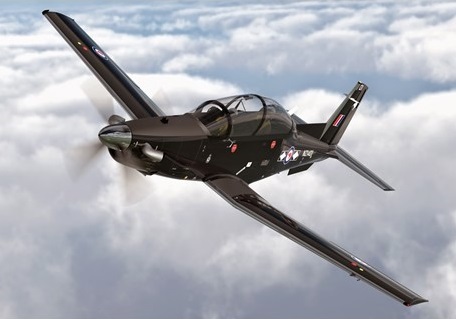
The first production Beechcraft AT-6 light attack aircraft made a ceremonial first flight on 20 August 2013 at Wichita, Kansas. The single-engined 1,600shp (1,190kW) Pratt & Whitney PT6 turboprop aeroplane took to the air at about 10:30 local time with test pilot Lionel Alford at the controls.
The aircraft was loaded with a pair of 66 gal (250 litres) drop tanks, two inert GBU-58 laser-guided bombs and two LAU-131 seven-shot rocket launchers. The AT-6 was also carrying a L-3 Wescam Mx-15Di electro-optical infrared camera. Although a production aircraft, it is a company-owned asset. Beechcraft has not secured an order for the type. When asked why the company would fly the first flight with such a heavy load, Derek Hess, the company’s senior vice-president for business development, says: “Because it’s so easy.”
The aircraft had demonstrated air-to-air gunnery with .50 caliber machine guns and the potential exists to employ Raytheon AIM-9 Sidewinders to counter certain aerial threats.
T-6C Texan II
The AT-6TH Wolverine attack variant is derived from the T-6C Texan trainer and is designed to carry out close air support and surveillance missions. The AT-6 has an L3 Wescam MX-15D multi-sensor package that includes colour and IR cameras, laser designator, laser illuminator, and laser rangefinder.
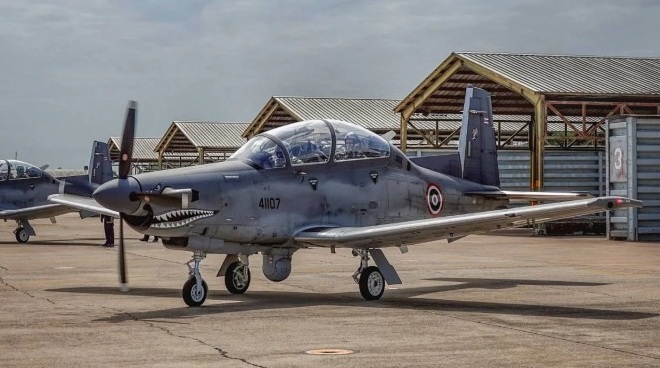
Royal Thai Air Force AT-6TH Wolverine
The Royal Thai Air Force (RTAF) received eight AT-6TH Wolverine light attack aircraft in 2025 acquired from the United States as part of its ongoing fleet modernization program.
Assigned to Squadron 411, part of Wing 41 based in Chiang Mai, the AT-6TH Wolverine, manufactured by U.S. company Textron Aviation, is designed for close air support, armed surveillance, and tactical training missions.
T-6A Texan II Engine: Pratt & Whitney Canada PT6A-68, 1100 hp Length: 33.268 ft / 10.14 m Height: 10.696 ft / 3.26 m Wingspan: 33.301 ft / 10.15 m Wing area: 175.346 sq.ft / 16.29 sq.m Max take off weight: 6299.7 lb / 2857.0 kg Weight empty: 4601.8 lb / 2087.0 kg Max. speed: 310 kt / 575 km/h Cruising speed: 230 kt / 426 km/h Initial climb rate: 3996.06 ft/min / 20.30 m/s Service ceiling: 35007 ft / 10670 m Wing loading: 35.88 lb/sq.ft / 175.0 kg/sq.m Range: 850 nm / 1574 km Endurance: 3 h Crew: 2
The company was officially launched in May 2001, and by that summer employed a staff of 14. On October 16, 2002, the 27,000 square foot new Quest facility was officially dedicated and the team moved the production work to its current home at the Sandpoint (ID) Municipal Airport. Work began on the prototype aircraft.
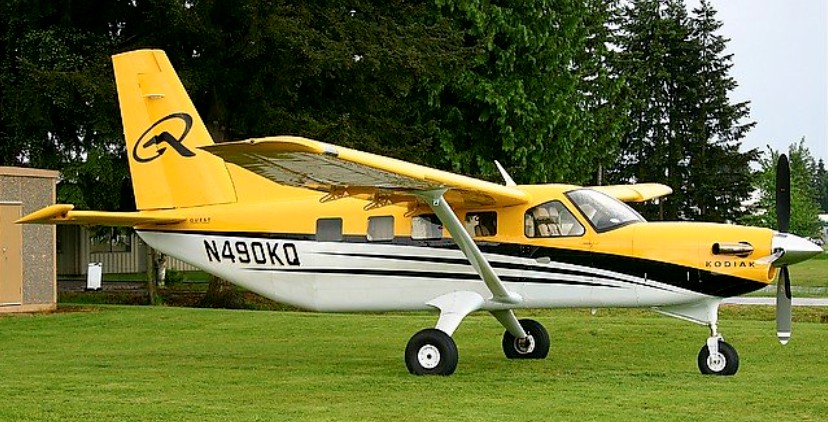
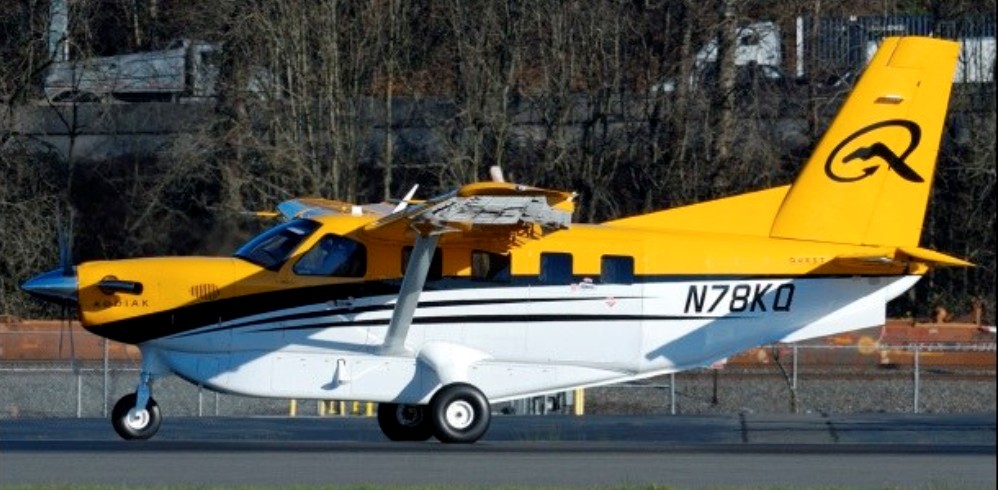
In 2004, two years later to the day, the first flight of the Kodiak (N490KQ) took place. Within three months, the Kodiak had completed its 50th flight. In March 2007 s/n 001, the first fully conforming production aircraft, made its initial flight and joined the Kodiak prototype in the flight test program.
The Kodiak received FAA Type Certification on May 30 2007, and began customer deliveries in December of that year.
The 10 place Kodiak turboprop can take off in under 1,000 feet at full gross weight and climb at over 1,300 feet per minute. The landing gear and 19 inch propeller clearance allow the Kodiak to handle unimproved airstrips. The discontinuous leading edge technology brings control at slow speeds. At touchdown, the Kodiak only needs 705 feet to bring the full gross weight of 7,305 pounds to a stop–even on rough, bumpy strips.
Powered is by a Pratt and Whitney PT6-34 of 750shp with a 4,000TBO.
A wide range of options are available such as the external cargo compartment, TKS ice protection, Stormscope, Weather Radar, TCAS, and a jump package.
Kodiak is certified under Part 23 of the Federal Aviation Regulations in the Normal Category for day, night, VFR, and IFR flight operations, and certified for flight into known icing when equipped with the optional TKS Ice Protection System.
Kodiaks are in service with charter operators, corporate operators, personal owners, skydiving operations, governments, and humanitarian organizations.
Daher took over Quest Aircraft and the Kodiak in 2019.
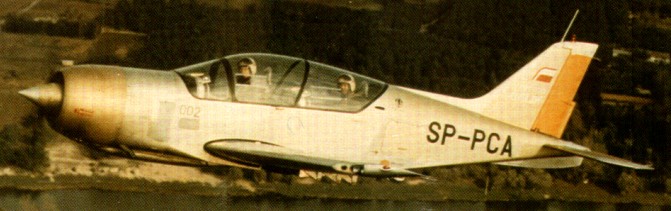
Design of the P.Z.L. 130 Orlik (Spotted Eaglet) piston-engined two-seat primary and basic trainer began in 1981 as a successor to the TS-8 Bies. Construction of four airframes, one for static test plus three flying prototypes, began in 1982
The first aircraft flew on 12 October 1983, followed quickly by the second. However, the third aircraft did not fly until January 1985, and the two pre-production machines which followed did not take to the air until February 1988, owing to serious delays in deliveries of the 246kW Vedeneyev M14Pm nine-cylinder Russian powerplant.
By that time P.Z.L. was seriously looking for another engine, and one contender was the company-produced but less powerful Kalisz K8-AA, which took the underpowered second pre-production aircraft into the air in March 1988. Although testing continued over the next two years, and included an evaluation by the Polish air force, the piston-engined Orlik was abandoned in 1990.
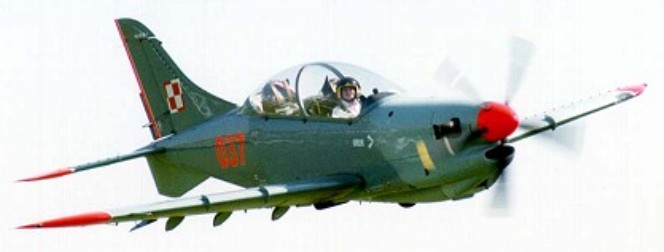
The original piston-engined PZL-130 Orlik was powered by a 268kW Vedeneyev radial engine driving a three-blade fixed-pitch propeller. The Orlik is of all-metal construction with a low-set cantilever wing and pneumatically operated retractable tricycle landing gear, and is of typical trainer configuration with the pupil and instructor seated in vertically staggered tandem seats under a side-hinged single-piece canopy. For the primary and basic stages of the flight training program, the Poles considered a piston engine adequate, and with this unit driving a constant-speed propeller the Orlik is suitable for all stages of the program between preselection and acrobatics. The provision of two underwing hardpoints also allows the type to be used in the weapon training, counter-insurgency, and reconnaissance roles.
Modular cockpit instrumentation allows rapid conversion between roles. Two underwing stores pylons are provided on the piston-powered version. Other uses envisaged include reconnaissance, light ground-attack, and target towing. Its maximum level speed is 197kt, with a cruise speed of 174kt. Range with maximum fuel is 765 n.m. and ceiling is over 17,000ft.
The three pre-production aircraft built all had different powerplants and ratings. These were the 560kW Motorlet M601D (P.Z.L. 130TM), the 410kW PT6A-25A (P.Z.L. 130T), and the 708kW PT6A-62 (P.Z.L. 130TP), and all flew in 1989/90.
In 1985, while waiting for supplies of M14Pm powerplants, PZL re-engined the third prototype with a Pratt & Whitney Canada PT6A-25A turboprop. The prototype PZL-130T Turbo-Orlik, developed in collaboration with AirTech of Canada, flew for the first time on 13 July 1986. Aimed primarily at export customers, the Turbo-Orlik has four underwing hardpoints, and was to be marketed by AirTech.
The -130T was provisionally certificated in January 1987, but the prototype PZL-130T crashed that month in Colombia during a demonstration to the Air Force, killing AirTech’s president.
In 1991, following the powerplant tests, the Polish air force placed an order for 48 P.Z.L. 130TBs powered by the Czech M601E engine and the first production Turbo-Orlik was delivered at the end of 1992.
Export sales were being sought for the PT6A-62-engined P.Z.L. 130TC, the PT6A-25C-equipped P.Z.L. 130TD, and the PT6A-25A-engined P.Z.L. 130TE ‘economy’ version, with a limited equipmentfit and minus ejection seats.
PZL-130 Orlik Engine: one 330-hp (245-kW) Vcdencycv M-l4Pm radial Maximum speed 211 mph (340 km/h) at optimum altitude Initial climb rate 1,378 ft (420 m) per minute Service ceiling 13,945 ft (4,250 m) Range 880 miles (1,416 km) Empty weight, 2,529 lb (1,147 kg) Maximum take-off 3,527 lb (1,600 kg) Wing span 26 ft 3 in (8.00 m) Lngth 27 ft 8.75 in (8.45 m) Heght 11 ft 7 in (3.53 m) Wing area 132.19 sq ft (12.28 sq.m)
PZL-130TB Turbo-Orlik Engine: 1 x Motorlet M601E turbo-prop, 560kW Max take-off weight: 2000 kg / 4409 lb Loaded weight: 1600 kg / 3527 lb Wingspan: 9.0 m / 30 ft 6 in Length: 9.0 m / 30 ft 6 in Height: 3.5 m / 12 ft 6 in Wing area: 13.0 sq.m / 139.93 sq ft Max. speed: 501 km/h / 311 mph Range w/max.fuel: 970 km / 603 miles Crew: 2
PZL 130 TM Turbo Orlik Engine: M 601 E, 483 shp Length: 28.543 ft / 8.7 m Height: 11.483 ft / 3.5 m Wingspan: 26.247 ft / 8.0 m Wing area: 132.397 sq.ft / 12.3 sq.m Max take off weight: 4359.3 lb / 1977.0 kg Weight empty: 2976.8 lb / 1350.0 kg Max. weight carried: 1382.5 lb / 627.0 kg Max. speed: 274 kt / 507 km/h Landing speed: 80 kt / 149 km/h Cruising speed: 237 kt / 438 km/h Initial climb rate: 3188.98 ft/min / 16.20 m/s Service ceiling: 32808 ft / 10000 m Wing loading: 33.01 lb/sq.ft / 161.0 kg/sq.m Range: 540 nm / 1000 km Crew: 2 Hard points: 6 External load: 720kg
The first prototype of the Potez 840 executive transport made its initial flight on 29 April 1961. An all-metal low-wing cantilever monoplane, it was powered by four 328kW Turbomeca Astazou II turboprops, had fully retractable tricycle landing gear, and carried a crew of three with cabin accommodation for up to 18 passengers. A second prototype, F-WJSU, was flown in June 1962, had Astazou XII engines of 447kW each.
F-WJSU was ferried to the USA as N840HP for use by the Ameriican distributors Turbo-Flight. In 1964 N840HP returned to Frane and became F-BMCY.
After a sales tour in North America by the P-840.02, plans were made for a production batch of 25 Potez 840s, but in fact only two more prototypes were built, one of these being reserved for static testing. Two Potez 841 aircraft followed, powered by 417kW Pratt & Whitney Aircraft of Canada PT6A-6 turboprops. Finally, the modified Potez 842 appeared in 1965, a second aircraft, also powerd by Astazou XIIs following two years later.
These eight light transports were the last aircraft of the Potez marque to be built; one is now exhibited at the Musee de I’Air, Paris, and a second has been restored and is flown under the auspices of the French Association Aeromedicale.
Engines: 4 x Turbomeca Astazou turboprop Max take-off weight: 7800 kg / 17196 lb Wingspan: 19.33 m / 63 ft 5 in Max. speed: 540 km/h / 336 mph Pax cap: 16
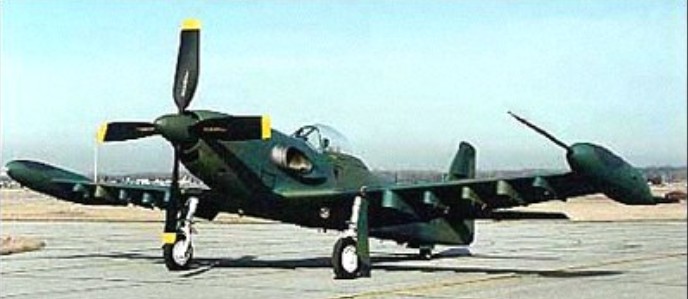
Piper Aircraft has received a USAF contract, expected to total about $12 million, to design, develop and test two new prototypes of the Enforcer as a lightweight close support air¬craft. The Enforcer, powered by a 2,445 ehp Lycoming T55 L 9 turboprop, was developed in 1971 as part of the activities of Cavalier Aircraft Corporation, which had produced a batch of updated North American F 51 Mustangs for export and evolved the Turbo Mustang III with a Dart engine. Piper acquired rights in the Enforcer in 1970 after Cavalier had developed the prototype, and for another 8 years Piper lobbied Congress to force the USAF to officially re-evaluate the Enforcer.
The two new prototypes were conversions of existing F 51 airframes, and modified by Piper at its Lakeland, Florida, plant. As well as the T55 installation, they feature wing tip tanks to increase total fuel capacity to 424 US gal (1605 1t), six wing strong points to carry two podded General Electric GAU 8 30 mm four-¬barrel cannon, 2.75 in (7 cm) unguided rockets or bombs, and aerodynamic improvements that include changes in the aileron control system and a 19 in (48 cm) extension of the rear fuselage, with enlarged tailplane and elevators. With a gross weight of 14,000 lb (6 350 kg), the Enforcer was expected to have a max speed of 350 kts (648 km/h). The USAF five month evaluation is expected to be conducted in the late summer of 1983 and completed by February 1984, embracing 98 flights.
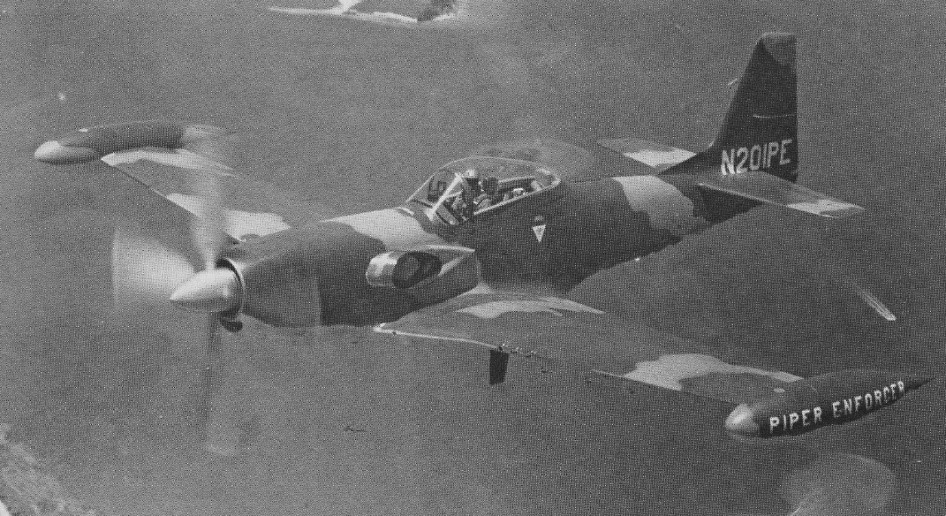
In 1971 Piper built two Enforcers by heavily modifying two existing P-51 Mustang aircraft and fitting them with Lycoming T55-L9A turboprop engines (along with numerous other significant modifications). One airframe was single seat (called the PE-1 and FAA registered N201PE) and the other was a dual-control aircraft (called the PE-2, registered N202PE). Prior to the PAVE COIN evaluation, N202PE was lost in a crash off the Florida Coast.
The Piper PA 48 Enforcer flew for the first time on April 9 1971 from the company’s Lakeland, Florida, facility. The Enforcer that flew is powered by a 2,445 shp Avco Lycoming T55 L 9 turboprop, turning a Skyraider propeller cut down by Piper from 14 feet to 11 feet, 6 inches in diameter. The fuselage has been stretched by 19 inches between the cockpit and fin; the fin area has been increased by nine percent, mostly in chord but slightly in height; the rudder is now equipped with a yaw stability augmentation system; and the tailplane/elevator area has been enlarged by 36 percent. Tip tanks provide 1,900 pounds of fuel capacity, in addition to some wing bending relief and end plate effect.
To ease stick loads at high speed and low level, the Enforcer’s ailerons are equipped with a boost system from a Lockheed T 33. The landing gear embodies Grumman G 1 wheels, T 39 Sabreliner brakes and Mustang type tires, and the tailwheel retracts. With six underwing pylons, the Enforcer’s main armament will be a pair of pod mounted 30mm General Electric four barrel rotary cannons capable of firing at a rate of 2,400 rounds per minute (40 rounds per second). Other weaponry could include miniguns, rockets and cluster bombs.
On the Enforcer’s first flight, the entire mission was flown in the takeoff and landing configuration to examine its stability, controllability and handling. Tests on the second flight included gear retraction, a climb to 20,000 feet and acceleration to 300 knots.
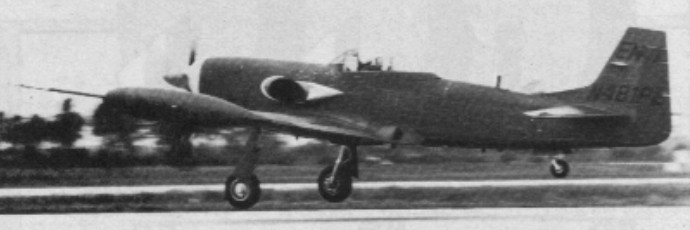
Eventually in the 1979 defense bill $11.9 million was allocated for Piper to build two new prototypes and for the USAF to perform another flight evaluation. Since the Enforcer was never in the Air Force inventory, it was not given an official military designation and did not receive an Air Force serial number. Instead, it carries the Piper designation PA-48 and Federal Aviation Administration (FAA) registration numbers N481PE and N482PE.
By the time the PA-48s were completed, they shared less than ten percent of their structure with the P-51. The two PA-48s were tested during 1983 and 1984 at Eglin AFB, Florida, and Edwards AFB, California. As in the PAVE COIN tests of 1971, the PA-48s were found to perform well in their intended role, but the USAF again decided not to purchase any.
Of the prototype aircraft produced, three of the four still exist. The original PE-1 is disassembled and in storage. One of the PA-48s, N482PE, awaits restoration at Edwards Air Force Base. N481PE has been fully restored and resides in the ‘Prototype Hangar’ at the National Museum of the United States Air Force at Wright-Patterson Air Force Base near Dayton, Ohio.
Engine: 1 x Lycoming T55-L-9 turboprop, 1831kW Max take-off weight: 6350 kg / 13999 lb Wingspan: 12.60 m / 41 ft 4 in Length: 10.40 m / 34 ft 1 in Height: 4.00 m / 13 ft 1 in Wing area: 37.9 sq.m / 407.95 sq ft Max. speed: 650 km/h / 404 mph Ceiling: 11465 m / 37600 ft Range: 1480 km / 920 miles
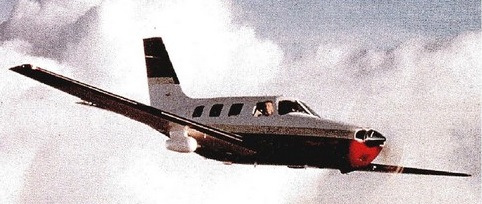
Initially flown for the first time on 30 November 1979, designated PA-46-300T, as an unpressurised development aircraft, the first real prototype flew on 21 August 1982. This was a pressurised, all-metal aircraft seating six, with retractable undercarriage.
Piper announced in late 1982 the intention to introduce in late 1983 a new aircraft which it claimed to be the world’s first cabin-class pressurised aircraft with a single piston engine.
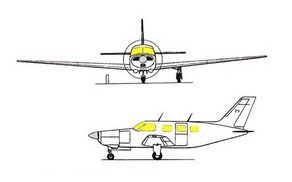
Designated Piper PA-46-310P Malibu, the aircraft is of cantilever low-wing monoplane configuration with retractable tricycle landing gear and powered by a Teledyne Continental TSIO-520-BE turbocharged engine, the pressurised cabin providing seating a pilot and five passengers.
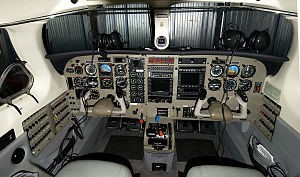
PA-46-350P Cockpit
The initial PA-46-310P Malibu production version received FAA certification on 27 September 1983 and deliveries into service began during November 1983. Fitted with a high aspect ratio wing, IFR avionics was standard and an airstair style door at the rear of the aircraft. Production was discontinued during 1988 after 344 had been built.
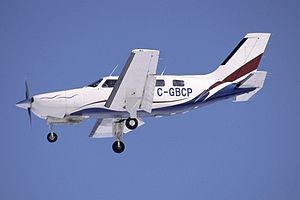
PA-46-310P Malibu
Certification (FAA A25SO) of the original PA-46-310P was achieved in September 1983 and deliveries commenced the following November and 402 were produced. Certification covered 46-8408001 to 46-8608067, and 4608007 to 4608007
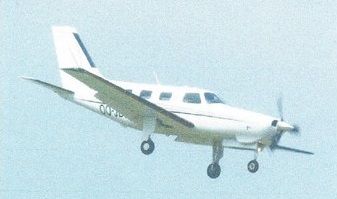
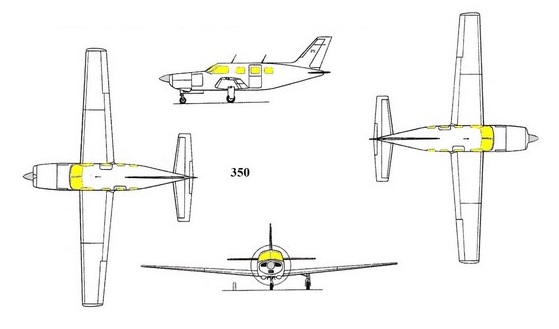
The turbocharged PA-46-350P Malibu Mirage was introduced in October 1988 replacing the -310, with deliveries beginning two months later at $679,900 as standard. This differed in having a 350 hp (261 kW) Textron Lycoming TIO-540-AE2A engine in place of the earlier 310 hp (231 kW) Teledyne Continental TSIO-520-BE. FAA certification was received on 30 August 1988.
PA-46 Malibu Mirage
Fitted with a new wing, revised interior and electrical system, and standard Bendix / King avionics packages, around 250 were produced. Other features include a redesigned flight deck, two-piece glareshield and a 40-lb (18-kg) increase in useful load.
By spring 1991 Piper had orders for over 100 of the PA-46-350P Malibu Mirage but, after several aircraft broke up in adverse weather conditions, the FAA revoked its IMC certification and began a Special Certification Review. Piper worked hard to clear the design’s reputation and by February 1992 the Malibu was returned to full operations.
The first Meridian, a non conforming example, flew summer 1988/89. On 21 June 2001 the first Malibu Meridian was certified by the UK CAA.
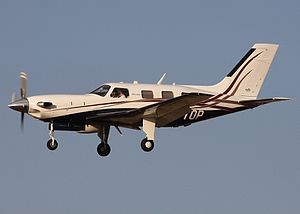
PA-46-500TP Malibu Meridian
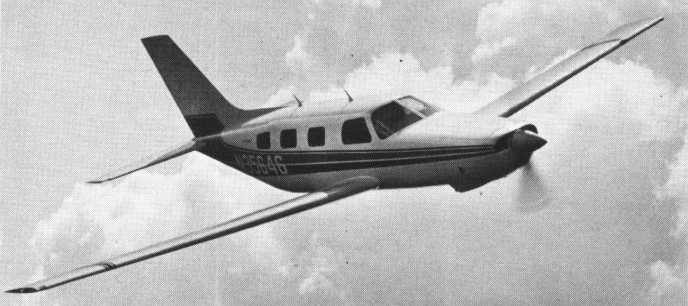
Plans to build a turbine powered Malibu was announced during 1987 and a prototype, N35646, was built which first flew on 26 September 1988. The prototype was powered by a 400 shp Pratt & Whitney Canada PT6A-11 turboprop and a revised type, the TP-600, was manufactured with a 600 shp PT6A-11 engine. New Piper were also producing the type, from 1994, with improvements to the autopilot, braking system and air-conditioning.
Rocket Engineering of Spokane, Washington produced turboprop conversions of Piper Malibu. Certificated during August 1998, around 90 320 and 350 types were converted to JetPROP models with Pratt & Whitney PT6A-34/35 engines. During 2003 the JetPROP DL conversions with Pratt & Whitney PT6A-21 engines were started, and by 2003 233 aircraft had been converted.
PA-46 Matrix
The PA-46R-350T is an unpressurised version of the Mirage, announced during October 2007 with deliveries Avidyne TAS610 dual antenna traffic advisory system and speed brakes. During 2010 a Garmin G1000 avionics system was available. Piper Aircraft received FAA certification of the G1000 NXi next generation integrated flight deck on both the M500 single engine turboprop and M350 pressurized, single-engine piston. Piper was set to offer it as a retrofit option (via STC) for fielded G1000 equipped Matrix, Mirage (M350), and Meridian (M500) aircraft.
PA-46-310 Max speed: 270 mph Cruise speed: 226 mph Max Cruise speed: 249 mph Stall: 67 mph ROC: 1143 ft/min Service ceiling: 25,000 ft Takeoff run: 1440 ft Takeoff to 50 ft: 2025 ft Ldg from 50 ft: 1520 ft Ldg run: 640 ft Range norm: 1531 mi Range max: 1790 mi Wing span: 43 ft 0 in Fuel capacity: 101.6 imp.gal / 122 USG Length: 28 ft 4.75 in Empty weight: 2275 lb Weight equipped: 2350 lb Loaded weight: 3850 lb Payload: 100 lb
PA-46-310P Malibu Engine: Teledyne Continental TSIO-520-BE, 310 hp Prop: Hartzell, 2 blade CS 6 ft 8 in Cabin length: 12 ft 4 in Cabin width: 49.5 in Cabin height: 47 in Rear pax door: 46 x 24 in Baggage door left side nose: 23 x 19 in Nose compartment capacity: 13 cu.ft / 100 lb unpressurised Rear baggage compartment: 20 cu.ft / 100 lb pressured
PA-46-350 Max speed: 273 mph Cruise long range: 193 mph Cruise Econ: 229 mph Cruise speed norm: 247 mph Cruise speed max: 259 mph Stall: 69 mph ROC: 1220 ft/min Service ceiling: 25,000 ft Takeoff run: 1530 ft Takeoff to 50 ft: 2375 ft Ldg from 50 ft: 1960 ft Ldg run: 1010 ft Range norm: 1172 mi Range econ: 1248 mi Range max: 1450 mi Wing span: 43 ft 0 in Fuel capacity: 101.6 imp.gal / 122 USG Length: 28 ft 11 in Empty weight: 3080 lb Weight equipped: 3121 lb Loaded weight: 4340 lb Payload: 100 lb
Piper 1998 PA-46-350P Malibu Mirage Engine make/model:Lyc. TIO-540AE2A, 350 hp TBO: 2000 hr Propeller: Const. spd. Landing gear: Tri/Retr. Gross weight: 4300 lb Empty weight, std: 3048 lb Useful load, std: 1252 lb Fuel: 120 USG Wingspan: 43 ft Overall length: 28 ft. 7 in Height: 11 ft. 6 in Wing area: 175 sq. ft Seating capacity: 5 Cabin width: 50 in Cabin height: 47 in Baggage capacity: 200 lb Cruise speed 75% power: 225 kt Cruise speed 65% power: 215 kt Max range (w/ res) 75% power: 990 nm Max range (w/ res) 65% power: 1056 nm Fuel consumption 75% power: 20 USgph Fuel consumption 65% power: 18 USgph Stall speed (gear, flaps down): 60 kt Best rate of climb: 1218 fpm Service ceiling: 25,000 ft Takeoff ground roll: 1530 ft Landing ground roll: 1018 ft
2001 New Piper Malibu Mirage Engine: Lycoming TIO-540-AE2A, 350 hp / 261kW @SL to 17,000 ft TBO: 2000 hr Fuel type: 100 Propeller: Hartzell CS Landing gear: Tri/Retr. Gross weight: 4340 lb Max landing weight: 4100 lb Empty weight, std: 3157 lb Useful load, std: 1183 lb Payload, full std. fuel: 463 lb Usable fuel, std: 120 USG Oil capacity: 12 qt Wingspan: 43 ft Overall length: 28 ft. 8 in Height: 11 ft. 6 in Wing area: 175 sq. ft Wing loading: 23.6 lbs./sq. ft Power loading: 12.3 lbs./hp Wheel base: 8 ft Wheel track: 12 ft. 3 in. Wheel size: 6.00 x 6 Seating capacity: 6 Cabin doors: 1 Cabin width: 50 in Cabin height: 47 in Baggage capacity: 200 lb Cruise speed @ 25,000 ft 75% power: 213 kt Cruise speed @ 25,000 ft 65% power: 203 kt Max range (w/ res) 75% power: 1065 nm Stall speed (gear, flaps down): 58 kt Best rate of climb (SL): 1218 fpm Service ceiling: 25,000 ft Takeoff ground roll: 1090 ft Takeoff over 50-ft. obstacle: 2090 ft Landing ground roll: 1020 ft Landing over 50-ft. obstacle: 1960 ft
2005 New Piper Mirage Base price: $970,000 Engine: Lycoming TIO-540-AE2A, 350 hp to 17,000 TBO: 2000 hr Fuel type: 100/100LL Propeller: Hartzell three blade 80 in Landing gear: Tri./Retr. Max ramp weight: 4340 lb Gross weight: 4340 lb Landing weight: 4100 lb Empty weight, std: 3100 lb Useful load, std: 1240 lb Payload, full std. fuel: 520 lb Usable fuel, std: 120 USG Oil capacity: 12 qt Wingspan: 43 ft Overall length: 28 ft. 6 in Height: 11 ft. 5 in Wing area: 175 sq. ft Wing loading: 24.8 lbs./sq. ft Power loading: 12.4 lbs./hp Wheel size: 6.00 x 6 Seating capacity: 6 Cabin doors: 1 Cabin width: 49 in Cabin height: 47 in Cruise speed 75% power: 213 kt Cruise speed 65% power: 199 kt Cruise speed 55% power: 166 kt Fuel consumption 75% power: 20.0 USgph Fuel consumption 65% power: 18.0 USgph Fuel consumption 55% power: 15.0 USgph Range, 55% power: 1055 nm Best rate of climb (SL): 1225 fpm Max operating altitude: 25,000 ft Vso: 58 kt Takeoff ground roll: 1090 ft Takeoff over 50-ft. obstacle: 2090 ft Landing ground roll: 1020 ft Landing over 50-ft. obstacle: 1960 ft
2006 Piper Mirage PA46 Engine: Lycoming TIO-540-AE2A, 350 ho @SL to 18,000 ft TBO: 2000 hr Fuel type: 100/100LL Propeller: Hartzell three-blade CS Landing gear: Tri./Retr. Max ramp weight: 4358 lb Gross weight: 4340 lb Landing weight: 4123 lb Empty weight, std: 3121 lb Useful load, std: 1237 lb Payload, full std. fuel: 517 lb Useful fuel: 120 USG Oil capacity: 12 qt Wingspan: 43 ft Overall length: 28 ft. 10 in Height: 11 ft. 4 in Wing area: 175 sq. ft Wing loading: 24.8 lbs./sq. ft Power loading: 12.4 lbs./hp Wheel size: 6.00 x 6 Seating capacity: 6 Cabin doors: 1 Cabin width: 50 im Cabin height: 45 in Cruise speed 75% power: 213 kt Fuel consumption 75% power: 20 USgph Fuel consumption 65% power: 18 USgph Vso: 58 kt Max operating altitude: 25,000 ft Best rate of climb (SL): 1220 fpm Takeoff ground roll: 1090 ft Takeoff over 50-ft. obstacle: 2090 ft Landing ground roll: 1065 ft Landing over 50-ft. obstacle: 1965 ft
PA-46R-350T Engine: TIO-540-AE2A, 350 hp Wingspan: 43 ft 0 in Length: 28 ft 11 in Height: 11 ft 4 in Empty weight: 2937 lb Loaded weight: 4340 lb Payload: 1421 lb Fuel capacity: 120 USG Service ceiling: 25,000 ft Takeoff to 50 ft: 2090 ft Landing from 50 ft: 1968 lb
2008 Piper Malibu PA46-350 Matrix Base price: $757,000 Engine: Lycoming O-TIO-540-AE2A. 350 hp TBO: 2000 hr Fuel type: 100/100LL Propeller: 3-blade Hartzell Landing gear: Tri./Retr. Max ramp weight: 4358 lb Gross weight: 4340 lb Landing weight: 4123 lb Empty weight, std: 2937 lb Useful load, std: 1421 lb Usable fuel:120 USG /720 lb Payload, full std. fuel: 701 lb Wingspan: 43 ft Overall length: 28 ft. 11 in Height: 11 ft. 4 in Wing area: 175 sq. ft Wing loading: 24.8 lbs./sq. ft Power loading: 12.4 lbs./hp Seating capacity: 6 Cabin doors: 1 Cabin width: 49.5 in Cabin height: 47 in Cruise speed 75% power @ 25,000 ft: 215 kt Cruise speed 75% power @ 10,000 ft: 190 kt Fuel consumption 75% power: 20 USgph Fuel consumption 65% power: 18 USgph Fuel consumption 55% power: 15 USgph Vso: 58 kt Best rate of climb (SL): 1150 fpm Service ceiling: 25,000 ft Takeoff ground roll: 1087 ft Takeoff over 50 ft. obstacle: 2090 ft Landing ground roll: 1020 ft Landing over 50 ft. obstacle: 1968 ft
PA-46 Malibu Meridian Engine: Pratt & Whitney PT6A-42A, 1090 shp Wingspan: 43 ft Wing Area: 183 sq. ft Max Ramp Weight: 5134 lb Useful Load: 1698 lb / 679 kg Fuel Capacity, Useable: 170 USG Cruise: 262 kt. Endurance: 4.8 hr. Vso: 69 kt Rate Of Climb: 1556 fpm Max Certified Altitude: 30,000 ft Max Cruise Speed: 260 kt Takeoff Distance: 1650 ft Takeoff Over 50 Ft. Obstacle: 2438 ft Landing Distance: 1020 ft Landing Over 50 Ft. Obstacle: 2110 ft
2005 New Piper PA46-500T Meridian Engine: Pratt & Whitney PT6A-42A, 500 shp @ FL200 TBO: 3500 hr Fuel type: Jet A Propeller: Hartzell CS Landing gear: Tri./Retr. Max ramp weight: 5134 lb Max takeoff weight: 5092 lb Empty weight, std: 3404 lb Useful fuel: 170 USG Payload, full std. fuel: 591 lb Wingspan: 43 ft Overall length: 29.6 ft Height: 11.3 ft Wing area: 183 sq. ft Wing loading: 10.8 lbs./sq. ft Power loading: 27.3 lbs./hp Wheel size: 6.00 x 6 Seating capacity: 6 Cabin doors: 1 Cabin width: 49 in Cabin height: 47 in Max cruise speed: 260 kt Fuel consumption: 37 USgph Range: 1000+ nm Best rate of climb (SL): 1556 fpm Max operating altitude: 30,000 ft Vso: 61 kt Takeoff ground roll: 1650 ft Takeoff over 50-ft. obstacle: 2438 ft Landing ground roll: 1020 ft Landing over 50-ft. obstacle: 2110 ft
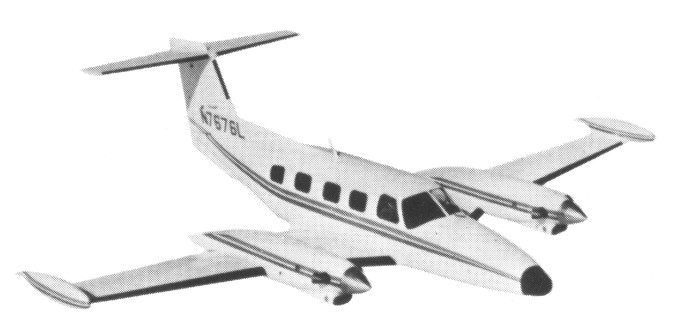
The PA42-1000 Cheyenne IV was announced in 1983 as basically a Cheyenne III with more powerful engines. In September 1983 it was renamed Cheyenne C400LS. The PA-42-1000 Cheyenne 400LS received its type certificate FAA A23SO July 13, 1984. Forty-three were built.
Keeping company with all the new commuter aircraft, the Cheyenne 400 was slightly over-weight, necessitating a 100 lb increase to take-off and landing weights – now 12,050 and 11,100 lbs respectively. In spite of the increased weight Piper engineers have lowered the full flap stall speed from 92 knots to 84 knots I.A.S. and increased the single engine rate of climb from 980 to 997 feet/minute. Piper hoped to improve the accelerate-stop and accelerate-go figures, which were 3275 feet (998 metres) and 3485 feet (1062 metres) respectively.
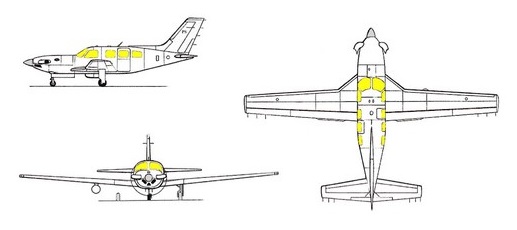
On 30 June 1980 Piper began production deliveries of a new version, intended as a 6/11-seat corporate or commuter transport, this Cheyenne III differs considerably from its predecessors, having a wing of increased span, lengthened fuselage, a T-tail, and more powerful Pratt & Whitney Aircraft of Canada PT6A turboprop engines installed in lengthened nacelles.
The Cheyenne III in production was complemented by the Cheyenne IIIA which differs primarily by having 634kW PT6A-61 turboprop engines flat-rated at 537kW and offering performance improvements. 149 were built.
In addition to the Cheyenne III, Piper was involved in the certification programme of a new Cheyenne IV during 1983, with two 1,227kW Garrett TPE331-14A/14B counter-rotating turboprop engines, each of them flat-rated at 746kW. Deliveries of the Cheyenne IV began in the early summer of 1984. It was one of the fastest propeller light twins, at over 644km/h.
The Cheyenne was one of the very few Piper products to remain in volume production after the company’s financial reorganisation in 1991/92. Versions on offer included the Cheyenne IIIA of which 59 had been delivered by early 1993. Nine Cheyenne IIIs delivered to the US Drug Enforcement Administration, fitted with AN/APG-66 radar and a ventral FLIR, were used for day and night time surveillance missions. They are known as Customs High Endurance Tracker (CHET) aircraft. Cheyenne IIIs are joined at the Lock Haven production line by the PA-42-1000 Cheyenne 400. Originally the Cheyenne IV, it later became the Cheyenne 400LS. Deliveries total 43.
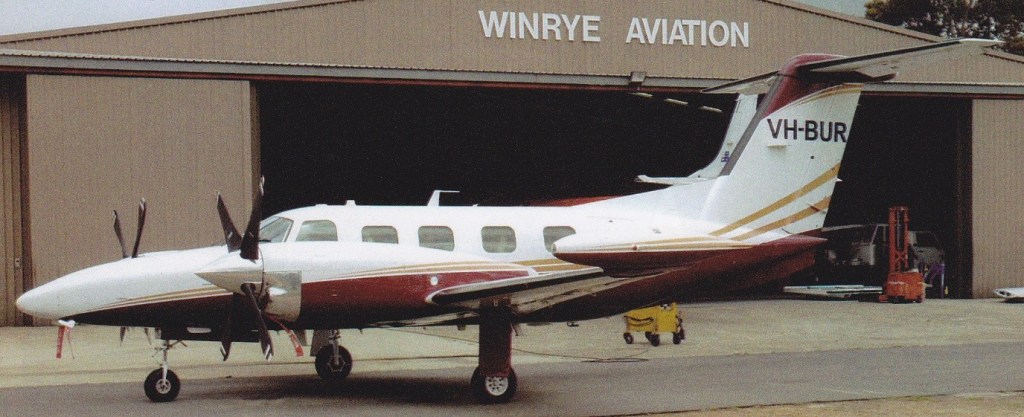
PA-42-1000 Cheyenne 400LS VH-BUR
PA-42-720 Cheyenne III First built: 1980 Engines: 2 x P&W PT6A-41, 720 shp / 537kW Props: Hartzell 3-blade, 95-in Seats: 9/11 Length: 13.23 m / 43 ft 5 in Height: 14.8 ft Wingspan: 47.7 ft Wing area: 293 sq.ft / 27.22 sq.m Wing aspect ratio: 7.8 Maximum ramp weight: 11,285 lb Maximum takeoff weight: 11,200 lb / 5080 kg Standard empty weight: 6389 lb / 2898 kg Maximum useful load: 4896 lb Zero-fuel weight: 9758 lb Maximum landing weight: 10,330 lb Wing loading: 38.2 lbs/sq.ft Power loading: 7.8 lbs/hp Maximum usable fuel: 3819 lb Best rate of climb: 2236 ft Certificated ceiling: 33,000 ft Max pressurisation differential: 6.3 psi 8000 ft cabin alt @: 28,500 ft Maximum single-engine rate of climb: 531 fpm @ 115 kt Single-engine climb gradient: 277 ft/nm Single-engine ceiling: 14,550 ft Maximum speed: 290 kt Normal cruise @ 28,000ft: 275 kt Fuel flow @ normal cruise: 516 pph Endurance at normal cruise: 6.4 hr Stalling speed clean: 99 kt Stalling speed gear/flaps down: 84 kt Turbulent-air penetration speed: 174 kt
PA-42-1000 Cheyenne IV Engines: 2 x Garrett TPE331-14, 1000shp Prop: Dowty-Rotol, 4 blade, 106 inch dia Length: 43.4 ft Height: 16.4 ft Wingspan: 47.7 ft Wing Area: 293 sq.ft Wing Aspect Ratio: 7.82 Standard Empty Weight: 7,546 lb Max Ramp Weight: 12,135 lb MTOW: 11,950 lb/12,050 lb MLW: 11,100 lb Max Zero fuel wt: 9600 lb Std useful load: 4985 lb Wing Loading: 41.1 lbs/sq.ft Power Loading: 6 lbs/hp Max Usable Fuel: 3,819 lb Max cruise 25,000ft: 351 kt (404 mph) Max cruise 30,000ft: 349 kt (402 mph) Max cruise 35,000ft: 341 kt (392 mph) Max cruise 41,000ft: 302 kt (348 mph) Max range @ 39,000 ft with 45 min res) 8 pax: 1400nm Max range @ 39,000 ft with 45 min res) 2 pax: 2240 nm ROC: 3242 fpm SE ROC: 980 fpm SE Best-rate of-climb Airspeed: 125 kt SE Climb Gradient: 479 ft/nm SE Ceiling: 27,000 ft TO dist 50 ft: 1930 ft Ldg dist 50 ft: 2780 ft Acc-stop dist: 2840 ft Seats: 7/9 Ceiling (Certificated): 41,000 ft Max Pressurization Differential: 7.5 psi 8,000 Foot Cabin Altitude At: 35,000 ft SE Rate Of Climb: 997 fpm Normal Cruise At 35,000 Feet: 334 kt Fuel Flow At Normal Cruise: 600 pph Endurance At Normal Cruise: 4.1 hr Stalling Speed, Clean: 93 kt Stalling Speed, Flaps/Gear Down: 84 kt Turbulent air Penetration Speed: 195 kt





 All Aero