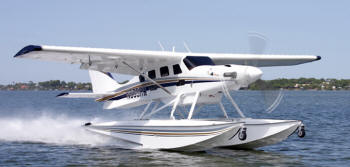
Tapered wings for faster cruise are included as a standard feature on the Comp Air 8. The CA8 is intended as a high performance, fast-flying load-carrying utility airplane and, like all of Comp Air’s unique airplanes, optional floats are available for the Comp Air 8 Turbine. The Comp Air 8 has 100% mass-balanced controls for high cruise speeds, has as standard specially reinforced (carbon fiber) over-size tail surfaces for stability and control, includes an aerodynamically efficient and optically corrected windshield, and includes flush-mounted landing gear and flush-fit thermopane doors. Total fuel capacity is determined by the builder, who has the option of installing fuel tanks capable of carrying up to 180 US gallons. Owners have a useable range of 500 to 700 miles (with reserves), while carrying up to 6 adults at speeds over 200 mph. Optional 5200 lb or 5600 lb gross weight reinforcements are available. Tapered wings for faster cruise are included as a standard feature on the Comp Air 8.
Engine: Walter M 601D Turboprop, 657 eshp Propeller: AVIA 3-blade, constant speed, feathering, with reverse Wing Span: 33 ft Length: 31 ft 6 in Wing area: 237 sq.ft Height: 9 ft Fuel Capacity: 150 USG Fuel Burn cruise: 35-37 gph Jet A Gross Weight: 4800 lb Gross option: 5200-5600 lbs. Empty Weight: 2800-3100 lbs. Useful Load: 2000 to 2500 lb Seats: 6+2 Never Exceed (VNE): 229 mph IAS Cruise altitude: 17,000 to 21,000 ft Cruise speed at alt: 225 to 250 mph TAS Range (with res): 500-700 miles Takeoff Roll: 400-600 ft Climb Rate: 1500-3000 fpm Vso: 45-55 mph IAS Cabin Width: 46 in (47.5-52in optional)
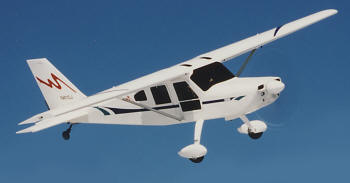
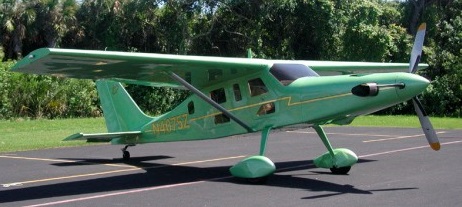
The Comp 7SLX refined version of the Comp Air 6 sports a wider cabin (46½”), 100% mass balanced controls, larger tail surfaces, aerodynamically efficient “raked” windshield, flush-fit doors for quieter cabin and drag reduction, and flush-mounted landing gear. Recommended engines range from 250 to 385 hp. The airframe can be built to accommodate engines as large as 650 hp (i.e. Walter turbo-prop), with Vne as high as 257 mph indicated, and useful load up to 1670 lbs.
CA-7 Engine: Walter 601D, 657 ESHP Prop: Avia 3 blade constant speed Wing span: 35 ft Wing area: 178 sq.ft Length: 29 ft 6 in Height: 8 ft Cabin width: 46 in (47.5in opt) Fuel cap: 150 USG Empty Wt: 2100-2550 lb Gross Wt: 3770-4600 lb Useful load: 1400-1670 lb Seats: 6 Vne: 257 mph IAS Cruise 18000ft: 225-250 mph TAS Cruise 21,000ft: 250-275 mph TAS Vso: 55-65 mph Climb rate: 2000-4000 fpm Takeoff roll: 300-400 ft
CA-7SLX Engine: Walter 601D, 660 ESHP Wing span: 33 ft Length: 29 ft 6 in Wing area: 178 sq.ft Gross Wt: 4200 lb Empty Wt: 2400 lb Climb rate: 2000-3000 fpm Cruise 18000ft: 225-250 mph TAS Useful load: 2000-2050 lb Fuel cap: 220 USG Vso: 54 mph Climb rate: 3000 fpm Takeoff roll: 350 ft Landing roll: 800 ft Range: 1040sm Cabin width: 47in Seats: 7 Landing gear: nose or tail Kit price 2009: US$78,645
Derived from the earlier Valmet L.70, through an intermediate design known as the L.80TP, the Valmet L.90TP completed its maiden flight in June 1986. The Redigo differed from the L.70 primarily in having an Allison 250-B17D turboprop power plant, a new, increased-span wing, and a retractable undercarriage. The wing is NACA 63-218(mod B3) at the root and NACA 63-412(mod B3) at the tip. The L.90TP is designed to take student pilots through the first 100 hours of training, for graduation directly on to a suitable advanced trainer. Six underwing hardpoints can carry a total of 800kg of stores. In 1996 Aermacchi took over L-90TP RediGO from Valmet of Finland and redesignated it the M-290TP RediGO.
Valmet L 90 TP Redigo Engine: 1 x Allison 250 turboprop B17F, 309 shp. Length: 25.919 ft / 7.9 m Height: 9.514 ft / 2.9 m Wingspan: 33.793 ft / 10.3 m Wing area: 159.307 sq.ft. / 14.75 sq.m Max take off weight: 2976.8 lb / 1350.0 kg Weight empty: 1962.5 lb / 890.0 kg Max. weight carried: 1014.3 lb / 460.0 kg Max. speed: 181 kt / 335 km/h Landing speed: 50 kt / 93 km/h Cruising speed: 165 kt / 305 km/h Initial climb rate: 1929.13 ft/min / 9.8 m/s Service ceiling: 25000 ft / 7620 m Wing load: 18.66 lb/sq.ft / 91.0 kg/sq.m Range: 810 nm / 1500 km T/O run (to 15m): 310 m. Fuel internal: 360 lt. Ldg run (from 15m): 360 m. Endurance: 5+ hr. Crew: 2 Armament: ext. 800kg 4 pods
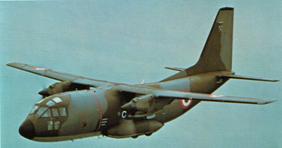
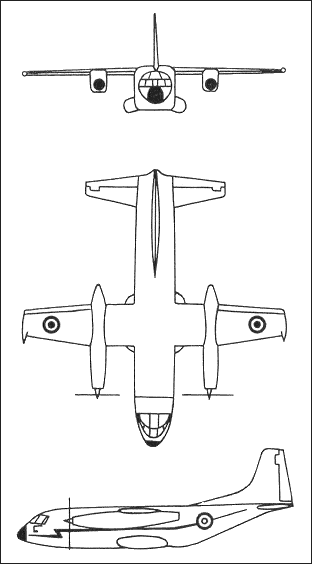
The project began with Fiat’s submission in the NATO NBMR 4 design competition for a tactical V/STOL (vertical/short takeoff and landing) transport with jet lift engines. One of more than 12 entries, it was the only project to be pursued to the hardware stage, though the V/STOL feature was abandoned. Originally the powerplants were all Rolls Royce, the main engines being two Dart turboprops. Four lift jets were to be installed in the rear of each turboprop nacelle. The design changed, lift jets were removed, and new models appeared for including ASW (antisubmarine warfare), military and civil cargo transport, which had outer wings of greater span. In 1966 the design changed to two General Electric T64 main engines and later the 3400 shp T64 P4D single shaft engine with Hamilton propeller, and put into licence production by the Fiat engine company. The original contract was awarded by the Italian air force in 1963 to what was then Societa per Aviazioni Fiat. Initially two prototype G222s were built, the first flying at Turin on July 18, 1970. A production programme was agreed in which Fiat make fuselages at Pomiglio d’Arco, Naples. Wing centre sections are made by Piaggio and outer panels by Aermacchi; tails by SIAI Marchetti; landing gear by CIRSEA; and various other airframe sections by SACA. The Italian air force ordered 44 G222 transports, and Aeritalia marketed the aircraft, achieving limited success with orders for three from Argentina and one from Dubai. A prototype ECM version, the 222VS, equipped with extensive electronic installations and with accommodation for 10 systems operators, was also produced in 1978. The G.222 entered service in 1976 as a tactical airlifter, certified for operation with a crew of two and can take-off and land on grass strips. Its volumetric capacity allows loads of up to 20,000 lbs, 53 fully equipped soldiers, parachute 42 paratroopers, or to air drop heavy loads up to 11,000 lbs. The plane has a hold accessed by a rear ramp/door for the straight-in loading of bulky items. Production was completed in 1989 with the 90th plane. The type’s major operator was the Italian air force, though smaller quantities were exported to several countries, of which the single largest operator is Libya with a special version produced to avoid export restrictions on American engines and equipment. Principal versions: G222 (basic tactical transport), G222RM (navaid calibration model), G222SAA (firefighting model), G222T (version for Libya with European avionics and engines for improved hot-and-high performance), G222V5 (electronic warfare model). The transport version had some export success, customers including Argentina (3), Dubai (1), Libya (20), Nigeria (4), Somalia (4), the USA (10) and Venezuela (8). Some G.222s were converted to the radio/radar calibration role and for fire-fighting duties.
G.222 Engine: 2 x 3,400-shp (2,535-kW) Fiat-built General Electric T64-GE-P4D turboprops. Installed pwr: 5070 kW. Span: 28.7 m. Length: 22.7 m. Height: 32 ft 2 in (9.80 m). Wing area: 82 sq.m/ 882.67 sq ft. Empty wt: 14,590 kg. MTOW: 28,000 kg. Payload: 9000 kg. Cruise speed: 440 kph. Initial ROC: 520 m / min. Max speed: 336 mph /540 kph / 292kt @ 15,010 ft (4,575 m) Service Ceiling: 25,000ft / 7,620m T/O run: 660 m. Ldg run: 545 m. Fuel internal: 12,000 lt. Range/payload: 1371 km with 9000 kg Range/payload: 851 miles (1,370km) with maximum payload. Capacity: 53 pax. Crew: 3.
G222T Engines: 2 x 4,860-shp/3,624-kW Rolls-Royce Tyne Mk 801 turboprops
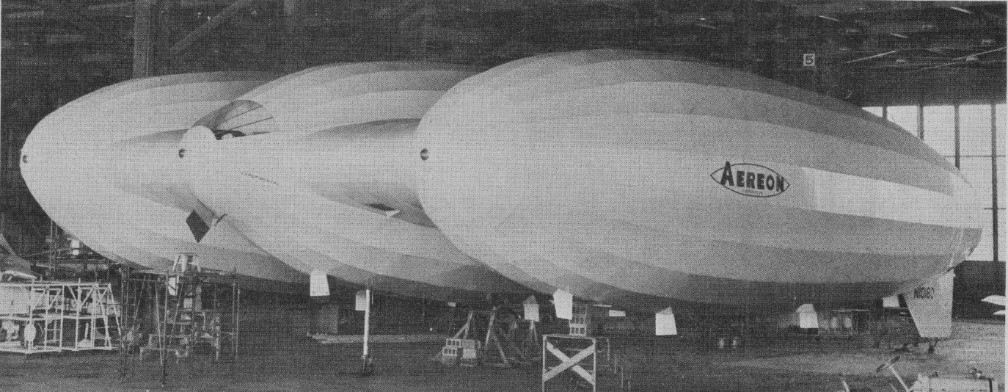
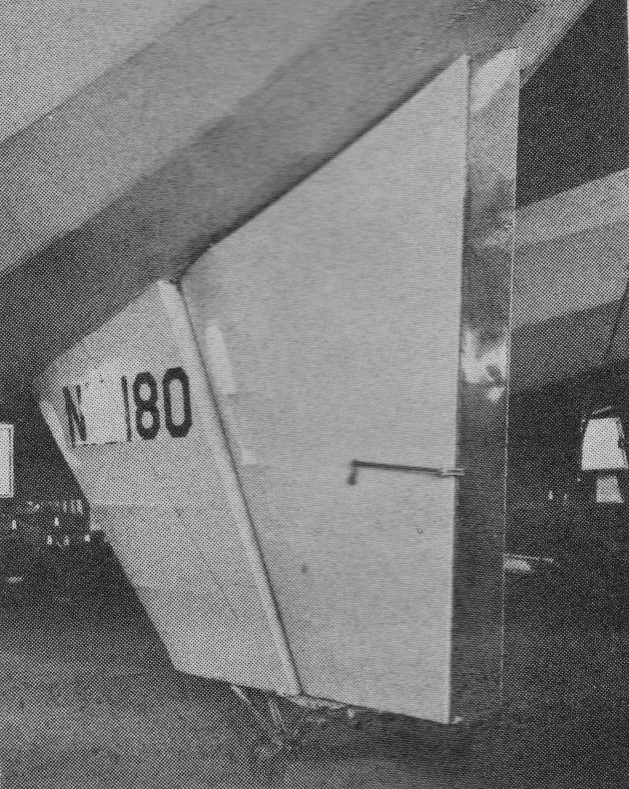
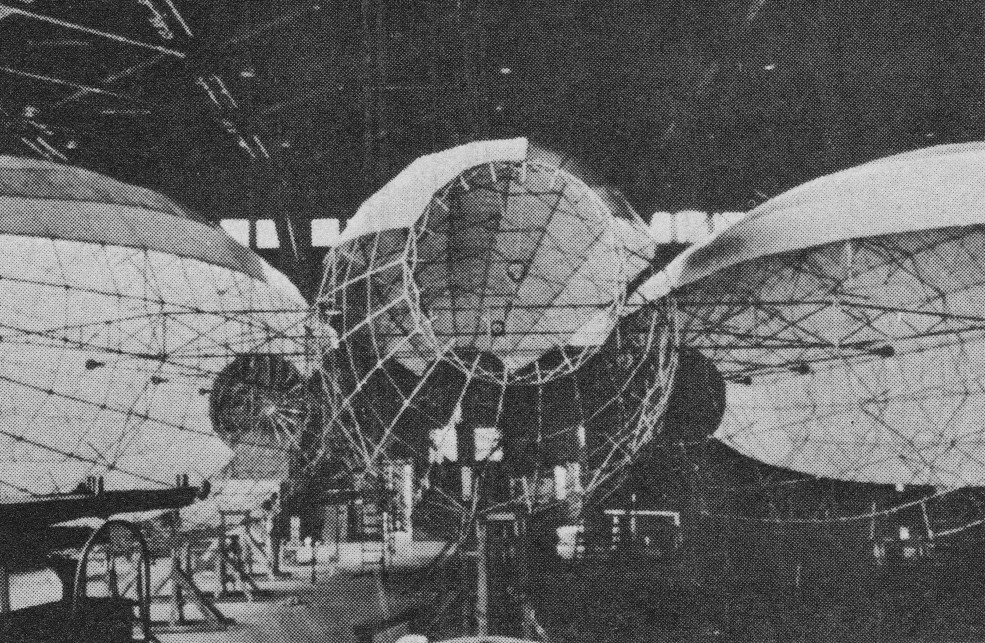
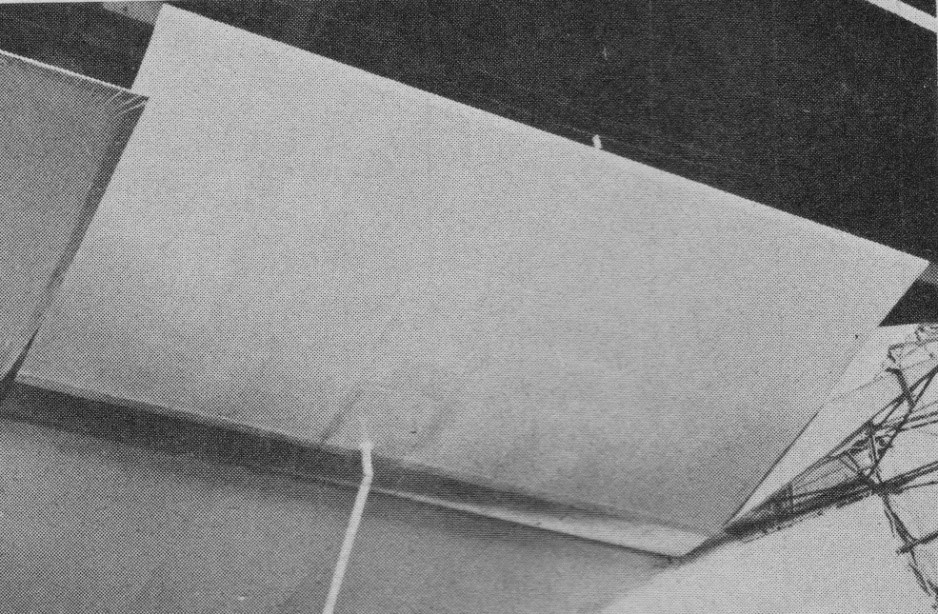
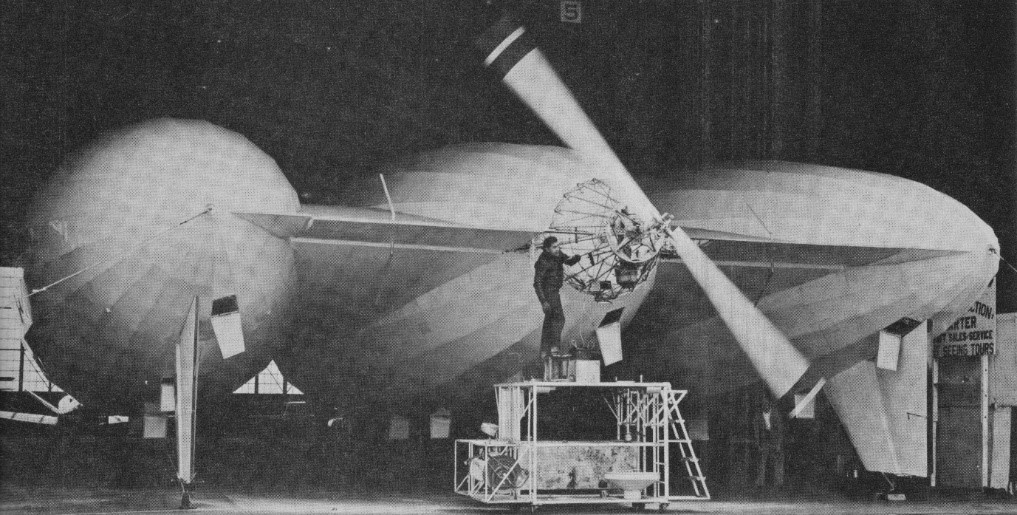
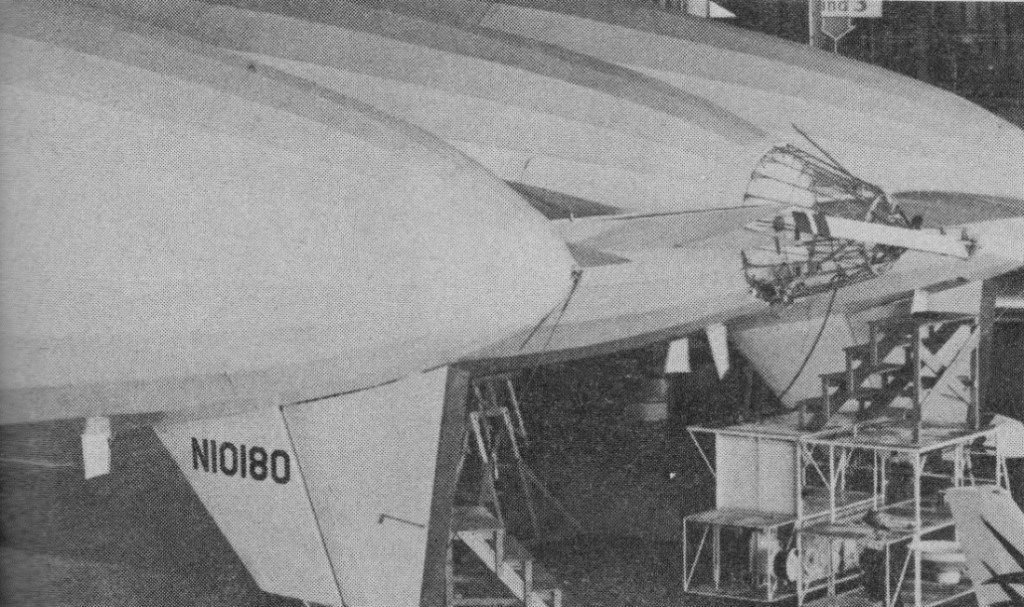
Built by Aereon Corp of Trenton, NJ, in 1964, the rigid lighter-than-air Aereon III is a flying test bed for bigger ships. It is the smallest that could be constructed to provide accurate flight data.
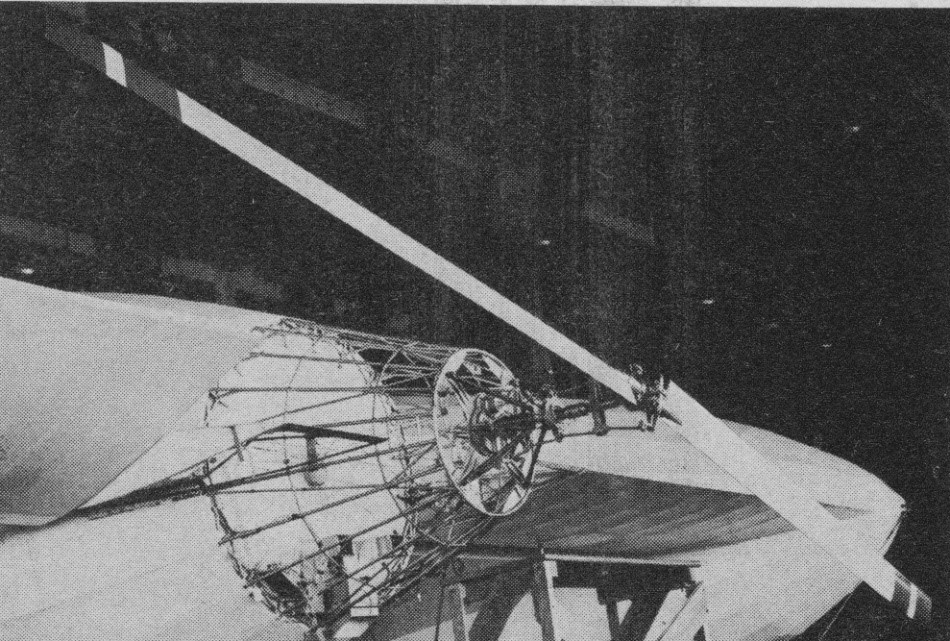
The Solar 70 hp Titan turboshaft engine drives a 8.1 ft diameter, 8 in chord Helicom rotor-prop. The syructure is welded aluminium alloys with an outer covering of Tedlar plastic 1/1000 inch thick. Airspace on 1 inch separates that from nylon covered inner wall. Eighteen Mylar cells hold 30,000 cu.ft of helium.
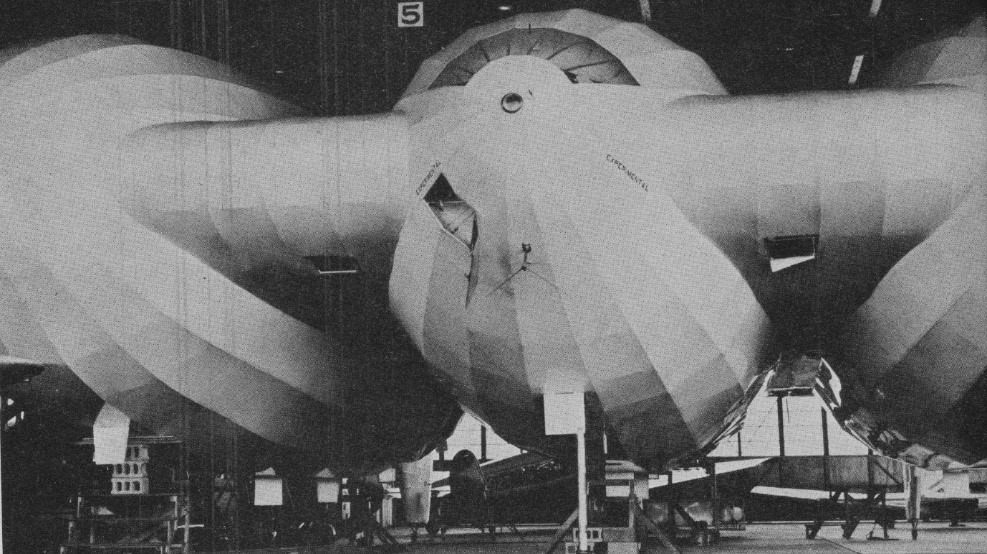
The cockpit, crew of two, is in the upper section of the centre hull nose. Vertical stabilisers and rudders mount steerable tailwheels acting as vertical struts and providing 35 ft tread for maximum ground stability.
The hulls are 20-sided, 18 ft diameter, joined by beams and aerodynamic fillets. Rotor-prop provides variable and reverse movement and thrust through cyclic/collective pitch.
Engine: Solar 70 hp Titan Length: 85 ft Width: 56 ft Empty weight: 2800 lb Gross weight: 3100 lb Top speed: 65 mph Ceiling: 8500 ft Crew: 2
Eight-seat piston-engined Explorer 350 and ten-seat turboprop-powered Explorer 500 light aircraft, for delivery from the year 2001 (first flown January 1998).
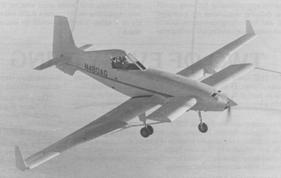
The ATAC Predator, billed as lifting a gallon of payload for each unit of horsepower, made its first flight from Mojave, California, in mid September 1985. Designed by Burt Rutan, the Predator has a 58.8 ft wingspan, an 80 cubic foot hopper, and an expected payload of 3200 plus pounds. The aircraft, built by the Advanced Technology Aircraft Company, has a composite structure.
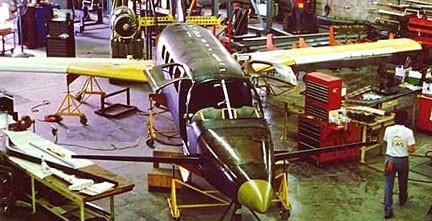
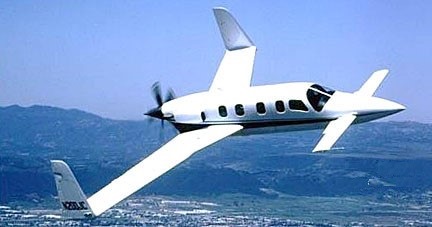
The design of the AASI Jetcruzer 450 began in March 1983 and the construction of a prototype featuring composites-built unpressurised fuselage, rear-mounted metal wings with winglets, metal canards, and rearmounted turboprop engine with pusher propeller, commenced in 1988. It first flew on 11 January 1989. A pre-production prototype flew three months later, followed by first to production standard September 1992. The Jetcruzer 450 received US certification (TC A49NM) in June 1994. AASI decided to concentrate on the Jetcruzer 500 and Jetcruzer 450 was not put into production.
The 6 seat Jetcruzer 500 was a version differing by having smaller windows, a six foot increase in fuselage length, and a PT6A-66A engine of 850shp. A prototype Jetcruzer 500 was first flown on 22 August 1997 and to be pressurised in production form.
Other versions designed included the Jetcruzer 650, 10-13 seat turboprop, and twin turbofan Stratocruzer 1250-ER but a financial partner was sought before development could continue.
The assets of US company Jetcruzer were auctioned recently (2002), with the top bid for the prototype aircraft, molds, drawings and a type certificate being a mere US$125,000. While the reserve was US$500.000, the offer may well be accepted. Jetcruzer spent nearly US$100 million in engineering, development and certification of its rear-engine turboprop.
Jetcruzer 500 Engine: Pratt & Whitney Canada PT6A-66 turboprop, 850 shp. Prop: 7’0″ 5-blade pusher Wingspan: 42 ft 2 in / 12.85m Length: 28 ft 2 in / 8.59m Height: 10 ft 5 in / 8.59m Foreplane span: 18 ft 9 in / 5.71m Wing area: 193.2 sq.ft / 17.94 sq.m Foreplane area: 39.9 sq.ft / 3.71 sq.m Empty weight: 2950 lb / 1338 kg MTOW: 5500 lb / 2495 kg Max Op Speed: 345 mph @ 22,000 ft Max Cruise: 345 mph @ 22,000ft Service ceiling: 30,000 ft TO dist to 50ft: 1530ft / 530m Ldg dist from 50ft: 1430 ft / 436 m Max range: 1818 sm / 2926 km Seats: 6
Jetcruzer 500P Engine: Pratt & Whitney Canada PT6A 66A, 1550 shp Length: 30.184 ft / 9.2 m Height: 6.988 ft / 2.13 m Wingspan: 42.192 ft / 12.86 m Wing area: 191.599 sq.ft / 17.8 sq.m MTOW: 5501.5 lb / 2495.0 kg Weight empty: 3080.4 lb / 1397.0 kg Max. speed: 320 kts / 593 km/h Initial ROC: 3503.94 ft/min / 17.8 m/s Service ceiling: 30000 ft / 9144 m Wing load: 28.7 lb/sq.ft / 140.0 kg/sq.m Range: 1627 nm / 3013 km Crew: 1 Payload: 5 pax (max 1100kg)

 All Aero