Antonov An-38

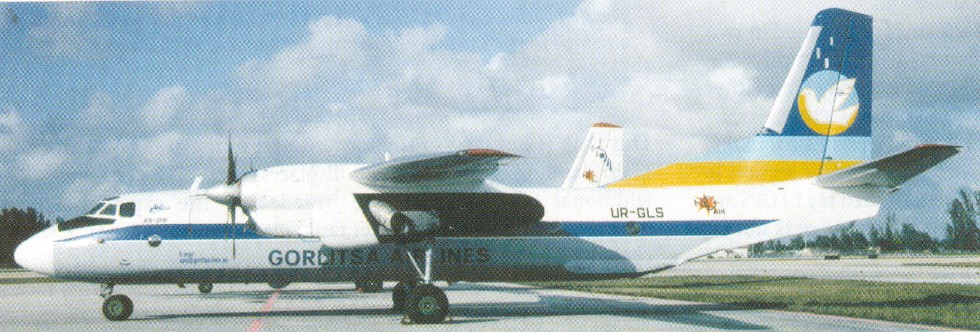
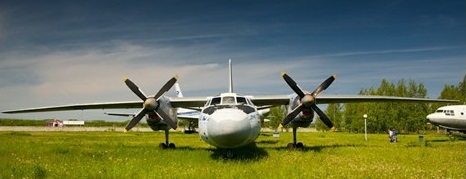
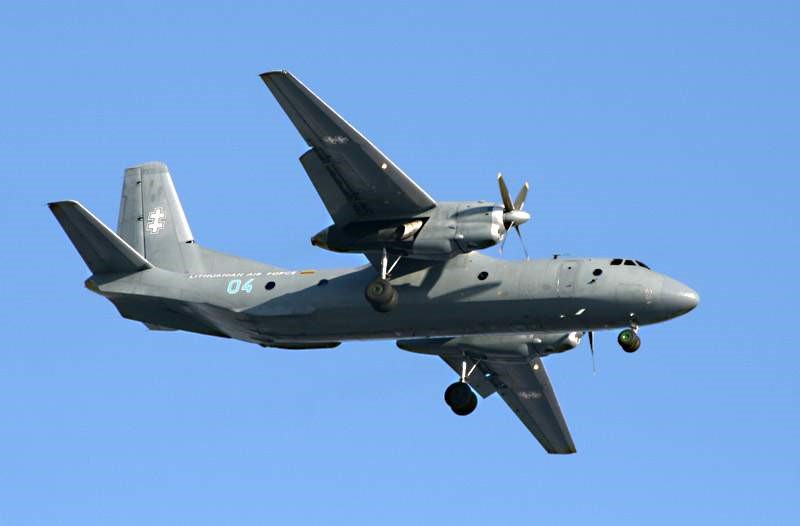
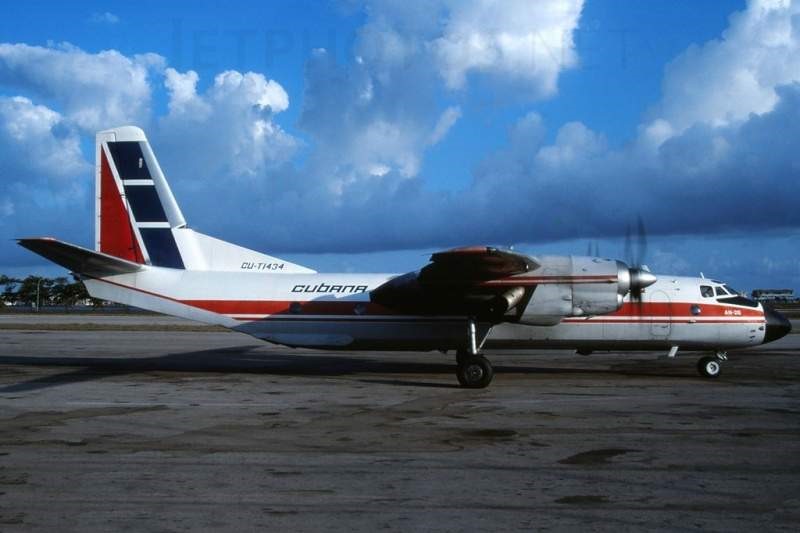
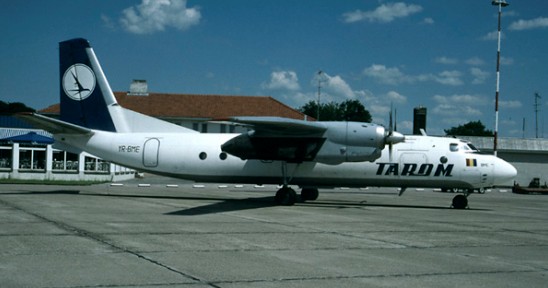
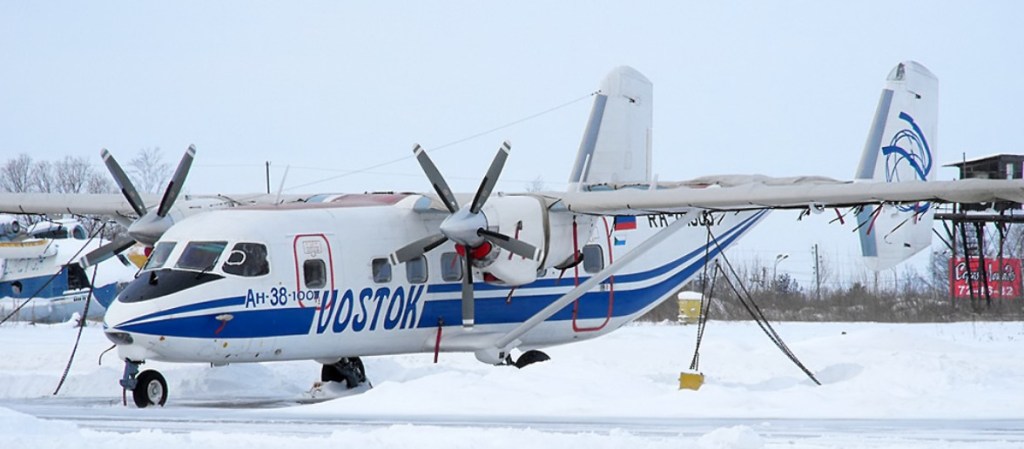
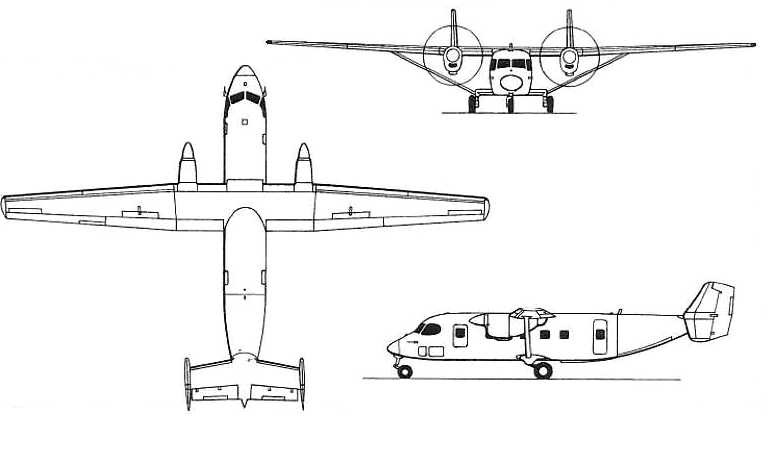
The Antonov An-38 is a stretched and upgraded version of Antonov’s earlier An-28. It is a twin-engined turboprop transport aircraft, designed by the Antonov Design Bureau in Kyiv, Ukraine. Production is in Novosibirsk, Russia, but some crucial parts are also made in Ukraine and Belarus. It first flew in 1994, and received international flight certification in April 2000. A total of 11 were built and 2 remain in airline service as of August 2019.

Antonov An-38 Article

Impetus for a stretch of the Antonov An-28 design began with a 1989 sales tour in India, where it became clear that a significant market existed for an aircraft similar to the An-28, but with seating in the 25–30 seat range. The design was approved a year later, and was displayed at the 1991 Paris Air Show as a model.

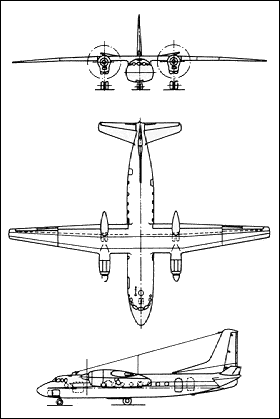
The An-38 is of a similar design to the older An-28, featuring the same wings and tail; but it has a longer fuselage and includes several enhancements, such as higher fuel efficiency, increased comfort (cabin and cockpit), and decreased internal noise, coupled with better sound insulation. Other improvements include an increase in passengers to 27, thanks to an increase in maximum payload to 2,500 kg (5,500 lbs), as well as a maximum speed of 405 km/h (250 mph). Its design also enables it to operate in adverse conditions—it is equipped with weather radar, sophisticated navigational systems, and low pressure tires that allow it to operate from primitive, unpaved and icy airfields. Furthermore, the aircraft is more resistant to stalling at high angles of attack and is stable and maneuverable with ice on the wing and tail assembly.

As of August 2019, 2 Antonov An-38 aircraft remain in airline service with ALROSA. Recent reviews suggest only one remains in service in 2021.

An-38-100
Powerplant: 2 × Honeywell TPE331-14GR-801E turboprop, 1,118 kW (1,499 hp) each
Propellers: 5-bladed Hartzell Propeller HC-B5MA, 2.85 m (9 ft 4 in) diameter constant-speed fully-feathering reversible-pitch propellers
(or 2x 1,029 kW (1,380 shp) Omsk MKB Mars TVD-20 turboprop engines driving AV-36 propellers)
Wingspan: 22.06 m (72 ft 5 in)
Length: 15.67 m (51 ft 5 in)
Height: 4.6 m (15 ft 1 in)
Airfoil: TsAGI R-II-14 (14%)
Empty weight: 5,300 kg (11,684 lb)
Max takeoff weight: 8,800 kg (19,401 lb)
Fuel capacity: 2,210 kg (4,872 lb)
Maximum speed: 405 km/h (252 mph, 219 kn)
Cruise speed: 380 km/h (240 mph, 210 kn) at 4,200 m (13,800 ft)
Range: 1,650 km (1,030 mi, 890 nmi) with 9 passengers + 45 minutes reserve
1,450 km (900 mi; 780 nmi) with 17 passengers + 45 minutes reserve
600 km (370 mi; 320 nmi) with 27 passengers + 45 minutes reserve
Take-off run: 350 m (1,150 ft)
Landing run: 270 m (890 ft)
Balanced field length: 900 m (3,000 ft)
Crew: 2
Capacity: 26-27 passengers / 2,500 kg (5,512 lb) max payload
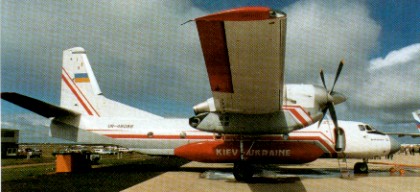
Antonov An-32

AN-32 Firebomber

The An-24 was developed into the An-26 (freighter), the An-30 (survey/photo) and the An-32 (hot and high version). A short/medium-range twin-turboprop transport first flown July 1976, the An-32 has almost twice the installed power of the An-24.

Antonov An-32 Article

Delivery of 95 An-32s to India, where it is known as the Sutlej, began in July 1984, to replace C-47 Dakotas and C-119 Packets. Peru became the third customer for the An-32, placing an order for 22 to replace its fleet of An-26s. Deliveries began with the first five aircraft in May 1987.

An-32

Gallery

Engine: 2 x Ivchenko AI-20DM turboprop.
Installed pwr: 7720 kW.
Span: 29.2 m.
Length: 23.7 m.
Wing area: 75 sq.m.
MTOW: 27,000 kg.
Payload: 6700 kg.
Cruise speed: 530 kph.
Ceiling: 9000 m.
T/O run: 760 m.
Ldg run: 470 m.
Fuel internal: 5500 lt.
Range/payload: 800 km with 6700 kg.
Capacity: 39 pax.

Engine: 2 x Iwtshenko AI-20M, 4133 shp
Length: 78.084 ft / 23.8 m
Height: 28.15 ft / 8.58 m
Wingspan: 95.801 ft / 29.2 m
Wing area: 807.3 sqft / 75.0 sq.m
Max take off weight: 57330.0 lb / 26000.0 kg
Cruising speed: 275 kts / 510 km/h
Service ceiling: 31168 ft / 9500 m
Wing load: 71.14 lb/sq.ft / 347.00 kg/sq.m
Range: 1188 nm / 2200 km
Range (max. weight): 432 nm / 800 km
Crew: 5
Payload: 39 Pax

Antonov An-30

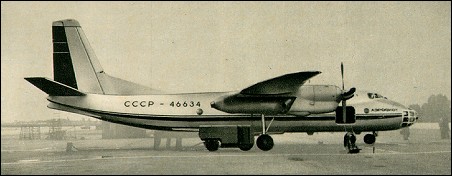
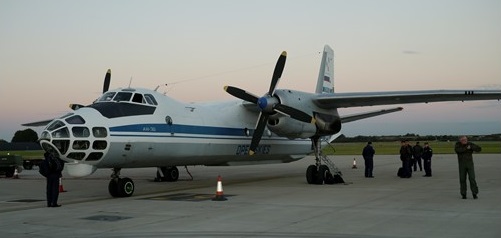
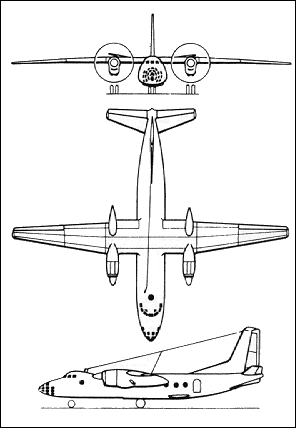
The Antonov An-24 was developed into the An-26 (freighter), the An-30 (survey/photo) and the An-32 (hot and high version). First flown 1974 with distinctive glazing around the nose, the An-30 Clank was built specifically for aerial survey work. The An-30 is essentially an Ant-24RT or an An-26 with mission related equipment fitted.

Aside from the dozen or so in service with Aeroflot, examples of the An-30 have been bought by Balkan Bulgarian Airlines, CAAC of China and the Romanian Air Force.

Engine: 2 x turbo prop AI-24VT, 2075 kW and turbo-jet RU-19A, 7.8kN
Take-Off Weight: 23000 kg / 50707 lb
Empty Weight: 15950 kg / 35164 lb
Wingspan: 29.2 m / 95 ft 10 in
Length: 24.3 m / 79 ft 9 in
Height: 8.3 m / 27 ft 3 in
Wing Area: 75.0 sq.m / 807.29 sq ft
Max. Speed: 540 km/h / 336 mph
Cruise Speed: 430 km/h / 267 mph
Range: 2600 km / 1616 miles
Crew: 6-7

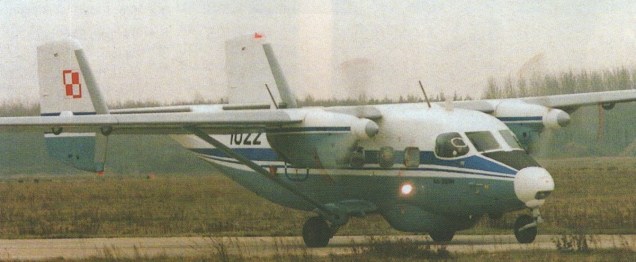
Antonov An-28 / PZL M-28 Bryza / Skytruck

Bryza 1R

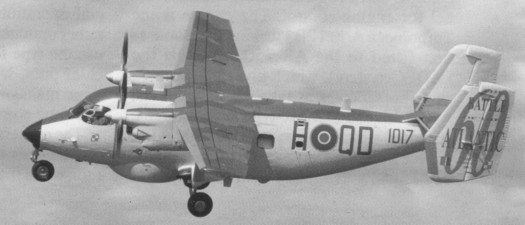
With the NATO reporting name Cash, the An-28 Was designed for STOL performance with up to 19 passengers. A development of the piston-engined An-14, the first prototype flew in September 1969 and had a retractable landing gear and Isotov TVD-850 engines. Production An-28 have a non-retractable tricycle type landing gear and two 723kW Glushenkov TVD-10B turboprops.
Operational in 1969, the An-28 went into production in Poland (still in production in 1999) by WSK “PZL-Mielec” as the M-28 Bryza / Skytruck.

An-28RM

Engine: 2 x turbo prop TVD-10B, 705kW
Wingspan: 22.1 m / 72 ft 6 in
Length: 13.0 m / 42 ft 8 in
Height: 4.5 m / 14 ft 9 in
Take-off weight: 5100 kg / 11244 lb
Empty weight: 3000 kg / 6614 lb
Max. speed: 350 km/h / 217 mph
Cruise speed: 300 km/h / 186 mph
Ceiling: 6000 m / 19700 ft
Range w/max.fuel: 1300 km / 808 miles
Range w/max.payload: 1000 km / 621 miles
Crew: 1-2
Passengers: 15-26

Antonov An-26

NATO code name ‘Curl’, the Antonov An-26 is a twin-engine transport aircraft first flown in May 1969 and exhibited at the 1969 Paris Air Show. A militarised development of the An-24 airliner, the pressurised An-26 flew first in 1968 and differs from the An-24 in featuring a rear loading ramp, more powerful lvchenko turbine-engines and an auxiliary turbojet in the right engine nacelle.
An improved An-26B version was announced in 1981 with an improved freight handling system.

An-26B

Approximately 1,410 An-26s and An-26Bs were built by GAZ 473 at Kiev, 1968-85, before being superseded in production by An-32. Production of the An-26 Curl twin-turboprop transport and its hot-and-high derivative, the An-32 Cline, continued in 1987. They were widely exported, serving in more than 20 countries. It was developed into the An-26 (freighter), the An-30 (survey/photo) and the An-32 (hot and high version).
A derivative Y7H-500 was built by Xian Aircraft Company, in China.

The Antonov An-26 arrived in Cuba in late 1978 and early 1979. The fleet consisted of two squadrons numbered from FAR 12-20 to FAR 12-39. In the first half of the 80s, more aircraft of this type were incorporated, reaching more than 30, of which 4 became Aerocaribbean.

The remaining AN-26s begin to change their military paint scheme, known as “chipojos” to the Cubana de Aviación paint scheme but without belonging to the airline. In 1994 with the emergence of Aerogaviota, most of these aircraft were painted with the new scheme. At present (2014) only around 5 Antonov An-26 aircraft remain active.

Antonov An-26 of Cubana de Aviación

Gallery

Variants:
An-26: standard version of tactical transport.
An-26B: Equipped with two Ivchenko Al-24VT turboprops, of greater power.
An-26BRL: Research version for frozen areas.
An-26L: Track calibration version.
An-26M: Air ambulance.
An-26P: Fire control plane.
An-26RTR: Electronic warfare and signals intelligence version.
An-26ST: Special missions version manufactured for the Air Force of the German Democratic Republic.
An-26Z-1: Signal intelligence aircraft (SIGINT).
Y-7H: Chinese version of military transport (No license).
Y-7-500: Chinese civil cargo version (Unlicensed).

Engine: 2 x turbo prop AI-24T, 2075kW and 1 x turbo-jet RU-19-300, 8.8kW
Wingspan: 29.2 m / 95 ft 10 in
Length: 23.8 m / 78 ft 1 in
Height: 8.6 m / 28 ft 3 in
Wing area: 75.0 sq.m / 807.29 sq ft
Take-off weight: 24000 kg / 52911 lb
Max payload: 5.500kg / 40 passengers.
Max. speed: 540 km/h / 336 mph
Cruise speed: 430 km/h / 267 mph
Ceiling: 7500 m / 24600 ft
Range w/max.fuel: 2550 km / 1585 miles
Range w/max.payload: 980 km / 609 miles
Crew: 5
Passengers: 38-40
Hold cap: 1765 cu.ft.

Engines: 2 × Progress AI-24VT turboprop, 2,103 kW / 2,820 hp
Wingspan: 29.20 m
Wing area: 74.98 m²
Length: 23.80 m
Height: 8.58 m
Empty weight: 15,020 kg
Maximum takeoff weight: 24,000 kg
Load: 5,500 kg
Cruise speed: 440 km / h (237 knots, 273 mph)
Range: 2,550 km; 1,100 km at full load
Service ceiling: 7,500 m (24,600 ft)
Rate of climb: 8 m / s (1,575 ft / min)
Crew: 5 (2 pilots, 1 radio operator, 1 flight engineer, 1 navigator)
Capacity: 40 passengers

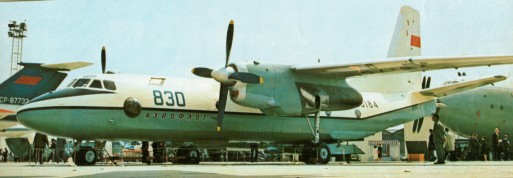
Antonov An-24

Development of this twin-turboprop transport was started in 1957, to replace piston-engined Li-2 and Il-14’s types on Aeroflot’s internal feederline routes. The An-24 was intended originally to carry 32 to 40 passengers, but when the first of two prototypes flew on 20 October 1959, it had been developed into a 44-seater. It was followed by a second prototype and five preproduction An-24. On the prototype, the engine nacelles extended only a little past the wing trailing-edges: production An-24 have lengthened nacelles with conical rear fairings. A ventral tail fin was also added on production models of the passenger-carrying version, which are supplemented by the An-24T and An-26 specialised freight-carrying versions of the same basic design.
Flight testing was completed in September 1962 and the An-24 entered service on Aeroflot’s routes from Moscow to Voronezh and Saratov in September 1963.

Antonov An-24 Article

Normal accommodation is for two pilots, a navigator, a steward and up to 44 passengers in four-abreast seats, mounted in pairs. The front cabin is movable to make possible alternative mixed passenger-freight payloads, all passenger seats can be removed. The cabin is 48 ft 1.5 in long, 9 ft 5 in wide and 6 ft 5 in high, with a volume of 2750 cu.ft and floor area of 439 sq.ft. In the standard version, there is a luggage compartment forward of the passenger cabin on the port side, with a freight hold on the starboard side. Entry to the cabin is via a door at the rear, on the port side, with built-in airstairs.

The An-24 is designed to operate from airfields of limited size, with paved or natural runways and can be fitted with rocket-assisted take-off units to permit operation with a full load of cargo at ambient temperatures above 30°C. Two were taken to the Antarctic in late 1969, to replace piston-engined Il-14 used previously for flights between Antarctic stations.

Deliveries of the An-24V started in 1962. The An-24RV features a small turbojet in the right engine nacelle to boost takeoff performance and up to 5 crew and 50 passengers.

Production ended in 1979 with over 1460 An-24 variants were built in Kiev, Irkutsk and Ulan Ude in the former USSR/Ukraine. An An-24 variant entered production in China as the Xian Y-7.

It was widely exported, serving in more than 20 countries. It was developed into the An-26 (freighter), the An-30 (survey/photo) and the An-32 (hot and high version).

The An-24RT variant became the basis for a developmentally improved design in the An-26 “Curl”.

Gallery

An-24T
Length: 77.20ft (23.53m)
Wingspan: 95.80ft (29.20m)
Height: 27.30ft (8.32m)
Maximum Speed: 280mph (450kmh; 243kts)
Maximum Range: 398miles (640km)
Service Ceiling: 27,559ft (8,400m)
Accommodation: 2 + 44
Engines: 2 x ZMBD Progress (Ivchenko) AI-24A turboprop engines generating 2,250eshp each.

Engine: 2 x turbo prop AI-24, 1875 kW
Wingspan: 29.2 m / 95 ft 10 in
Length: 23.5 m / 77 ft 1 in
Height: 8.3 m / 27 ft 3 in
Wing area: 72.5 sq.m / 780.38 sq ft
Take-off weight: 21000 kg / 46297 lb
Empty weight: 14248 kg / 31412 lb
Cruise speed: 500 km/h / 311 mph
Ceiling: 8400 m / 27550 ft
Range w/max.fuel: 2280 km / 1417 miles
Range w/max.payload: 750 km / 466 miles
Crew: 2
Passengers: 44-50

Antonov An-22

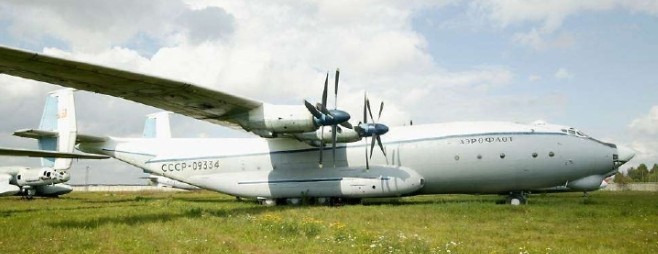
Carrying the NATO reporting name Cock, the An-22 is a very large, long-range heavy transport. The An-22 was the world’s largest aircraft when first flown on 27 February 1965, powered by four Kuznetsov turboprop engines, each driving two contrarotating coaxial propellers.

Antonov An-22 Article

A very heavy freighter for the Soviet Air Force and Aeroflot, it was given a rear loading ramp to provide access to the 26.4m cargo hold, and can carry a payload of up to 176,350 lb (80 000 kg), including Ganef and Scud-A missiles on their tracked launchers.

Entering Soviet service in 1967 all 65 production aircraft were built at the Chakalov factory in Tashkent for the VTA/Soviet Air Force Transport Service, but were available to Aeroflot for charter and so all were painted in Aeroflot colours.

In October 1967 an An-22 established 14 payload-to-height records. With a payload of 100,000kg of metal blocks it reached a height of 7,848m, thereby qualifying also for the intermediate records from 35,000kg. Max payload lifted to a height of 2,000m was 104,444.6 kg. A take-off run of just over one kilometre was reported; the flight duration was 78 minutes.

In 1972 a further series of ten records for speed with payload were set up by Marina Popovich, wife of the Soviet cosmonaut Pavel Popovich. The aircraft averaged a speed of 593.318km/h around a 2,000km closed circuit with a 50,000kg payload, qualifying also for the intermediate records from 30,000kg. In addition the aircraft averaged a speed of 608.449km/h in a flight two days later around a 1,000km circuit with the same payload. The An-22 also holds three further records for speed with payload over a 5,000km circuit, established in 1974 and 1975.

Deliveries to both the Soviet Air Force and Aeroflot were completed during 1974.

Gallery

Antonov An 22 A Antei
Engines: 4 x Samara / Kusnetsov NK-12MA, 14602 shp
Prop diameter: 6.2 m
Length: 188.025 ft / 57.31 m
Height: 41.142 ft / 12.54 m
Wingspan: 211.286 ft / 64.4 m
Aspect ratio: 12.02
Wing area: 3713.58 sqft / 345.0 sqm
Max take off weight : 496125.0 lb / 225000.0 kg
Weight empty : 261793.0 lb / 118727.0 kg
Max. payload weight : 132300.0 lb / 60000.0 kg
Max. speed : 324 kts / 600 km/h
Landing speed : 130 kts / 240 km/h
Cruising speed : 313 kts / 580 km/h
Take off distance : 4790 ft / 1460 m
Landing distance : 3412 ft / 1040 m
Wing load : 133.66 lb/sq.ft / 652.00 kg/sq.m
Maximum range : 5940 nm / 11000 km
Range (max. weight) : 2700 nm / 5000 km
Crew : 5
Payload : Cabin for 29 Pax, freight hold volume 640cu.m

Antonov An-22M Antei (Cock)
Engines: 4 x KKBM Kuznetsov NK-12MA turboprop, 14602 shp
Prop diameter: 6.2 m
Length: 190.03ft (57.92m)
Wingspan: 211.29ft (64.40m)
Aspect ratio : 12.02
Wing area : 3713.58 sqft / 345.0 sqm
Height: 41.11ft (12.53m)
Maximum Speed: 460mph (740kmh; 400kts)
Landing speed : 130 kts / 240 km/h
Cruising speed : 313 kts / 580 km/h
Maximum range : 5940 nm / 11000 km
Range (max. weight) : 2700 nm / 5000 km
Service Ceiling: 24,606ft (7,500m)
Crew : 5
Weight empty : 261793.0 lb / 118727.0 kg
Maximum Take-Off Weight: 551,156lbs (250,000kg)
Max. payload weight : 132300.0 lb / 60000.0 kg
Payload : Cabin for 29 Pax, freight hold volume 640cu.m
Take off distance : 4790 ft / 1460 m
Landing distance : 3412 ft / 1040 m

Antonov An-12 Cub / Harbin Y-8

The An-12 (NATO reporting name ‘Cub’) is a military development of the An-10 airliner. The An-12 prototype (7900101) built at Irkutsk, flew first on 16 December 1957 powered by four Kuznetsov NK-4 turboprops of 4,000 horsepower and differs from the An-10 in featuring a more upswept rear fuselage and rear loading ramp, entering service in 1959.

Antonov An-12 Article

Fully pressurised, the An-12 has high performance yet can operate from unpaved surfaces. At least one was fitted with large skis with shallow V planing surfaces equipped with heating (to prevent sticking to ice or snow) and brakes. Nearly all have the tail turret, and under the transparent nose is a weather and mapping radar.
The rear ramp door is made in left and right halves which can be folded upwards inside the fuselage, either for loading heavy freight with the aid of a built-in gantry or for the dispatch of 100 paratroops in less than one minute.
The An 12 BP became the standard Soviet Air Force cargo and paratroop transport since 1960, also being exported for both military and commercial use to the air forces of India, Egypt, Indonesia, Poland, Iraq, Algeria and Bangladesh and to 70 other freight operators.
Powered by four 4,000 ehp (2 985 kW) Al-20K turboprops, standard transport variants of the An-12 have been adapted for EW and ELINT duty with SovAir and SovNavAir. Variants include Cub-A and Cub-B for ELINT role and Cub-C and Cub-P with varying antenna and radomes, to perform passive and active ECM duty.
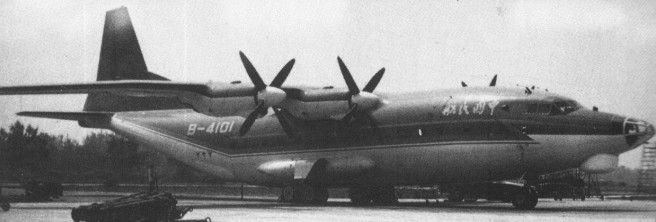
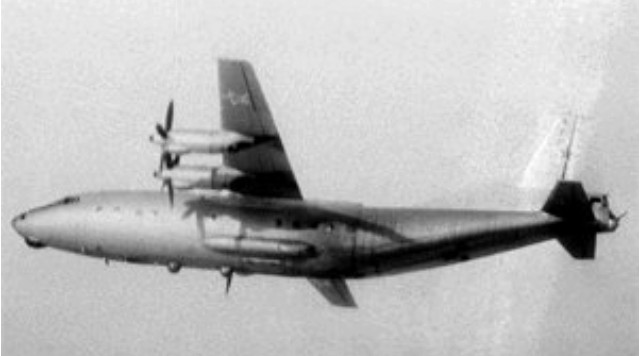
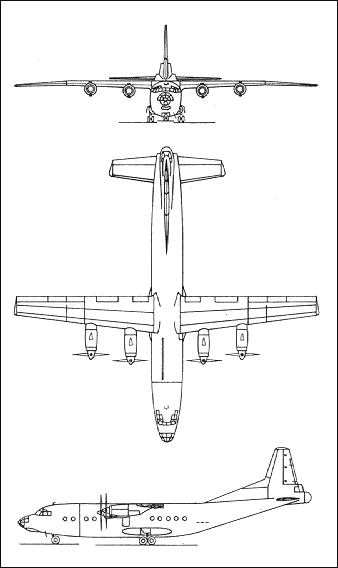
With a max payload of 20,500 kg or up to 4 crew and 90 troops, series production of the An-12 in a number of variants continued until 1973. Around 1,400 were built with AI-20K engines and the type was also produced by Shaanxi Aircraft Company (or Harbin), China as the Yunshuji-8 (Y-8) redesigned transport version and derivatives.
Harbin Y-8

The first Shaanxi Y8, assembled from Russian components, flew in December 1974, the first Chinese-manufactured example following a year later.

About 200 remained in service in civil marks in 1992, including some working as aerial laboratories, with industry and with the WA (Air Force Transport Service) in Aeroflot colours, plus at least 25 An-12BK/PP/PPS “Cub-A/B/C/D” electronic warfare conversions in air forces and Naval Aviation. The An 12 was gradually superseded by the Il 76 with the Soviet forces from 1974.

Gallery

Engines: 4 x Ivchenko Al-20K turboprop, 4,000 ehp (2 985 kW).
Wing span 124 ft 8 in (38 m)
Length 121 ft 4½ in (37 m)
Height 32 ft 3 in (9.83 m)
Empty weight: 61.730 lb (28.000 kg)
Loaded weight: 121.475 lb (55.100 kg)
Payload: 44,090 lb (20,000 kg) of freight or 100 troops.
Maximum speed: 482 mph (777 km/h)
Maximum cruise: 416 mph (670 km/h)
Maxi¬mum rate of climb: 1970 ft (600 m)/min
Service ceiling: 33,500 ft (10200 m)
Range with full payload: 2,236 miles (3600 km).
Armament: powered tail turret with two 23 mm NR-23 cannon.

Engine: 4 x turbo-prop AI-20, 3125 kW
Take-off weight: 54000-61000 kg / 119050 – 134483 lb
Empty weight: 30500 kg / 67241 lb
Wingspan: 38.0 m / 124 ft 8 in
Length: 37.0 m / 121 ft 5 in
Height: 9.8 m / 32 ft 2 in
Wing area: 121.7 sq.m / 1309.97 sq ft
Max. speed: 640 km/h / 398 mph
Cruise speed: 600 km/h / 373 mph
Ceiling: 10000 m / 32800 ft
Range: 5500 km / 3418 miles
Crew: 6
Passengers: 130
Armament: 2 x 23mm machine-guns

An-12BK (Cub)
Engines: 4 x ZMDB Progress (Ivchenko) AI-20M turboprop, 4,252eshp
Length: 108.60ft (33.1m)
Wingspan: 124.67ft (38.00m)
Height: 34.55ft (10.53m)
Maximum Take-Off Weight: 134,482lbs (61,000kg)
Maximum Speed: 300mph (482kmh; 260kts)
Maximum Range: 2,237miles (3,600km)
Service Ceiling: 34,449ft (10,500m)
Armament: Some with tail-mounted 2 x 23mm cannons
Crew: 4 or 5

An-12BP
Powerplants: – Four 2985kW (4000ehp) Ivchenko Al-20K turboprops
Wing span 38.00m (124ft 8in)
Length 33.10m (108ft 7in)
Height 10.53m (34ft 7in)
Wing area 121.7sq.m (131.0sq ft).
Empty weight 28,000kg (61,728lb)
MTOW 61,000kg (134,480lb).
Max Landing Weight: 58,000kg 127,870lb
Max Zero Fuel Weight: 48,000kg 105,790lb
Structural Payload: 44,090kg 20,000lb
Fuel Capacity: 21,000kg 46,295lb
Max speed 777km/h (420kt)
Max cruising speed 670km/h (360kt)
Max initial rate of climb 1970ft/min
Service ceiling 33,465ft
Takeoff run MTOW 700m (2296ft)
Range max fuel 5700km (3075nm)
Range max payload 3600km (1940nm).
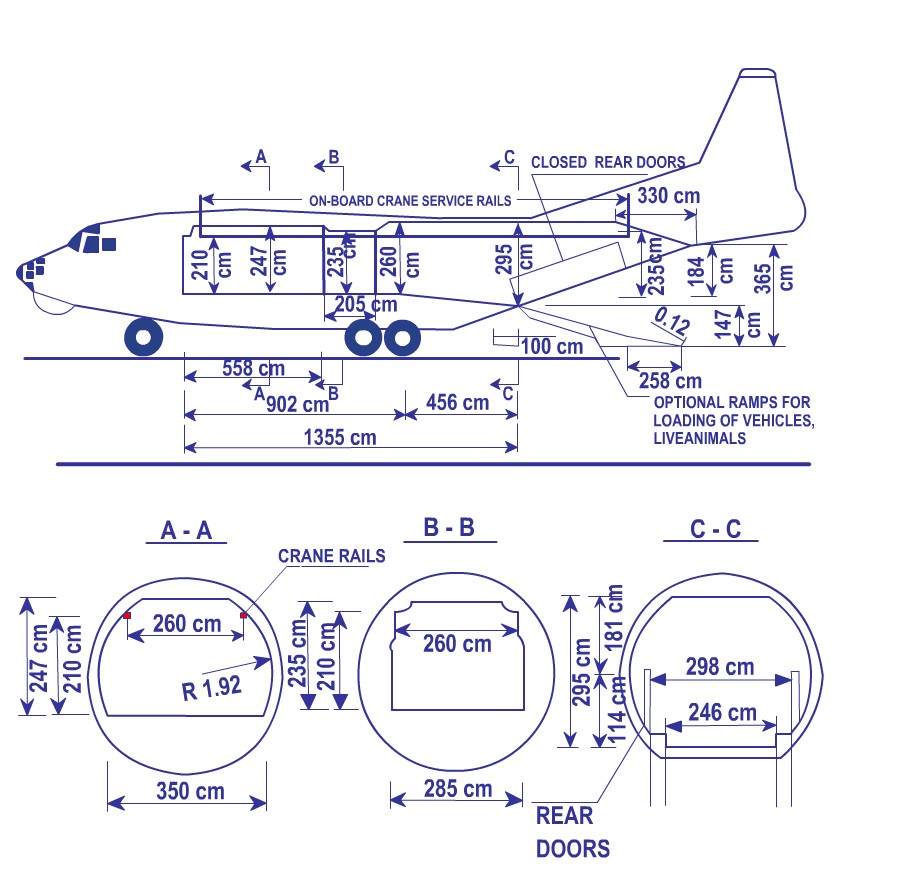
Accommodation: Flightcrew of two pilots, flight engineer, navigator (in glazed nose) and radio operator, plus loadmasters.
Main Deck Useable Volume: 97m3 285ft3 4in3
Cargo Area Width: 3.5m 11ft 5in
Cargo Area Height: 2.6m 8ft 6in
Main Cargo Door Width: 2.95m 9ft 8in
Main Cargo Door Height: 2.6m 8ft 6in

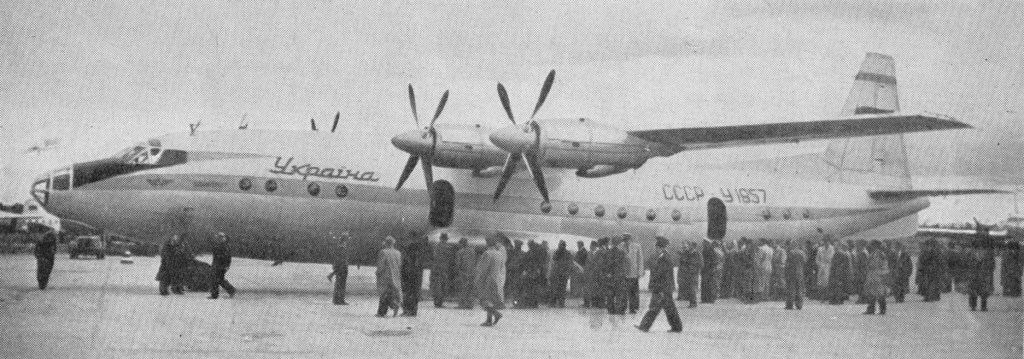
Antonov An-10 Ukrania

Design of the An-10 airliner began in November 1955 and the prototype (named Ukraina) first flew on 4 July 1957,
The An-10 was the initial version with accommodation for 84 passengers and a room at the rear. It entered service in July 1959 on routes from Simferopol to Moscow and Kiev. The An-10A developed version had a 2m longer fuselage and accommodated 100 to 130 passengers. It entered service in February 1960. An-10A also operated on skis in the far north of the Soviet Union.
No An-10/10A were exported and Aeroflot withdrew the airliners in 1973 after a series of crashes. 104 were built.

Both versions had the NATO reporting name Cat.
From this was derived the An 12 military and civil freighter, with redesigned rear fuselage incorporating a cargo loading and air drop ramp. The An 10, accommodating from 84 to 130 passengers, was designed as a bulk passenger carrier for remote and under developed regions of Russia.

Gallery

Engine: 4 x turbo prop AI-20K, 2940 kW
Take-off weight: 55000 kg / 121255 lb
Empty weight: 30500 kg / 67241 lb
Wingspan: 38.0 m / 124 ft 8 in
Length: 37.0 m / 121 ft 5 in
Height: 9.8 m / 32 ft 2 in
Wing area: 120.0 sq.m / 1291.67 sq ft
Max. speed: 725 km/h / 451 mph
Cruise speed: 660 km/h / 410 mph
Ceiling: 10000 m / 32800 ft
Range w/max.fuel: 4000 km / 2486 miles
Range w/max.payload: 1200 km / 746 miles
Crew: 5
Passengers: 100-132

Antonov An-8

The An-8 military and civil transport aircraft was designed for the Soviet Air Force and Aeroflot. Both aircraft carried the NATO reporting name Camp. First flown in February 1955, the prototype military An-8 was exhibited at Tushino in 1956, powered by two 3,800kW Kuznetsov turboprop engines and with a cannon in a tail turret. 151 were built in several versions.

Antonov An-8 Article

Engine: 2 x turbo-prop Kuznetsov AI-20D, 3810 kW
Take-off weight: 43400 kg / 95681 lb
Empty weight: 24400 kg / 53793 lb
Wingspan: 37.0 m / 121 ft 5 in
Length: 30.7 m / 100 ft 9 in
Wing area: 117.2 sq.m / 1261.53 sq ft
Max. speed: 520 km/h / 323 mph
Cruise speed: 450 km/h / 280 mph
Ceiling: 9600 m / 31500 ft
Range w/max.fuel: 3900 km / 2423 miles
Range w/max.payload: 1000 km / 621 miles
Armament: 2 x 23mm machine-guns
Crew: 6
Passengers: 70