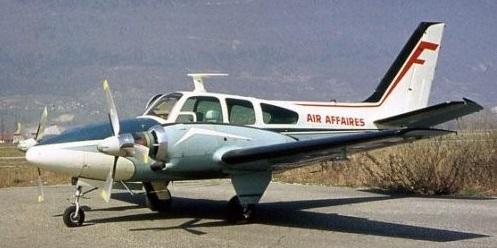
In 1962, the SFERMA (French Society for Maintenance and Repair of Aeronautical Equipment) modified a Model 95 Travel Air by fitting it with the swept tail units of the Model 55 “Baron” and by replacing the piston engines with two Astazou IIA turboprop of 440hp.
Seventeen Model 55 “Baron” cells are also re-engineered, including three for Beechcraft, and an eighteenth is not completed.
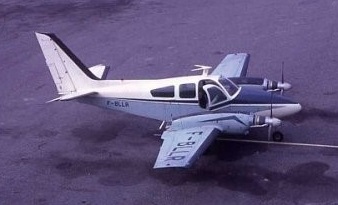
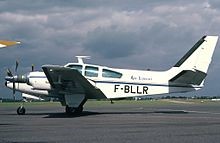
Beech-Sferma PD-146 60A Marquis F-BLLR
The PD-146 “Marquis” n°2 (F-BJSI) is re-engined with Astazou X 600hp turbines and established several world speed records in its category (C-1-d, Group 2):
On February 21, 1964, 1,000km at 502.12km / h (piloted by Maurice Oppeneau and Jacques Boisbeau).
On June 19, 1964, 2,000km at 446.92km / h (piloted by Maurice Oppeneau and Jacques Boisbeau).
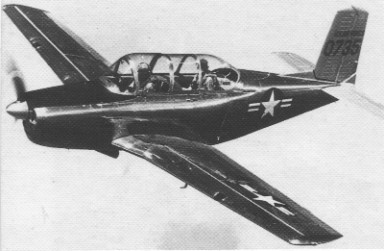
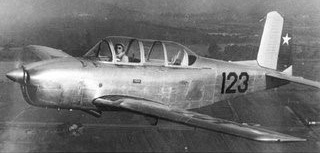
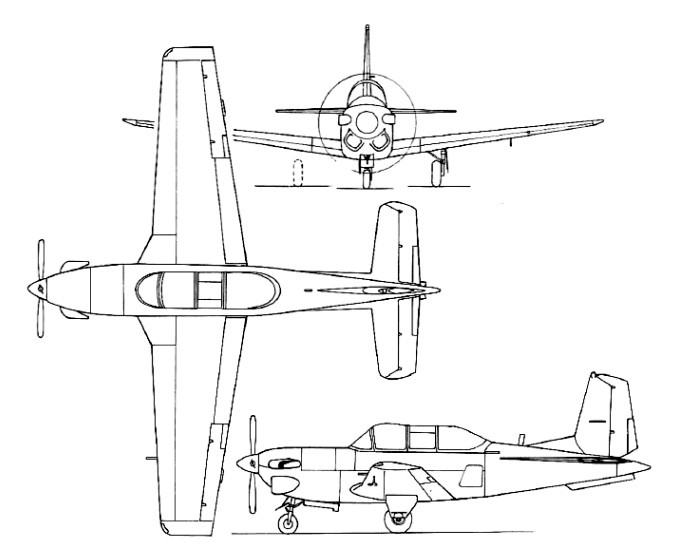
In 1948 Beech built as a private venture a two-seat trainer developed from the V-tail civil Bonanza. Having tandem seating for pupil and instructor and a conventional tail unit, the aircraft was designated Beech Model 45 Mentor, and flew for the first time on 2 December 1948.
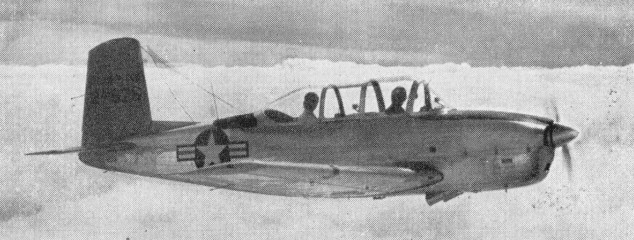
USAF evaluated three examples of the Beech Model 45, two powered by the 153kW Continental E-185-8 engine and one by the 168kW Continental E-225-8; all three were designated YT-34 by the USAF. These three aircraft made their first flights in May, June and July 1950, and were tested extensively during a competition period, being flown not only by evaluation pilots, but also in the primary training role with pupils and instructors. On 4 March 1953, the USAF selected the Model 45 as its new primary trainer, under the designation T-34A Mentor, and ultimately 450 were built for that service, 350 by Beech and 100 by the Canadian Car & Foundry Company in Montreal, Canada. An initial order from the USAF for 34 aircraft was followed by one for 25 from the RCAF and yet another from the USAF for 66. RCAF plans were changed after only one training course and in 1955, 23 of its Mentors were donated to the Turkish Air Force. The last complete airframe to be built by Car Car was the T 34A Mentor.
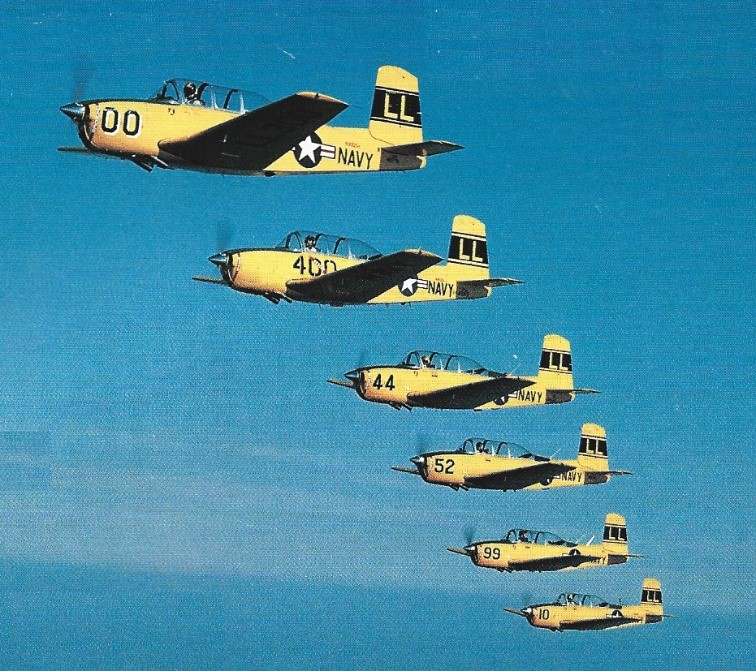
US Navy evaluation of the Model 45 began soon after the USAF had placed its initial contract with Beech, and on 17 June 1954 the Navy ordered 290 under the designation T-34B. A total of 423 were acquired eventually. In July 1951 one of the original prototypes was modified to mount two 7.62mm machine-guns in the wings, with provision additionally for underwing racks capable of accepting six rockets or two 68kg bombs; this was evaluated by the USAF as a potential light close-support aircraft, but no orders materialised.
The US Navy decided in 1973 to investigate the possibility of retaining the Mentor in service, with its piston engine replaced by turbine powerplant. To evaluate this proposal, the USN instructed Beech to convert two T-34Bs to turbine power, under the designation YT-34C.
The powerplant chosen by Beech for the conversion was a Pratt & Whitney Aircraft of Canada PT6A-25. In this particular application it is provided with a torque limiter that restricts power output to some 56 per cent of maximum, ensuring constant performance over a wide range of altitude/temperature conditions, and also offering long engine life. The first YT-34C was flown on 21 September 1973, and following satisfactory evaluation of the two aircraft, Beech received contracts valued at approximately $72 million for the construction of 184 new aircraft. In addition to the installation of the new engine, the production aircraft were also given structural strengthening to ensure an airframe fatigue life of some 16,000 hours. The first T-34C Turbo-Mentor entered service with the USN’s Naval Air Training Command in November 1977, and student training with the type began during the following January. Since then production has reached 353, with six being transferred to the US Army. The landing gear was designed to survive the hard simulated carrier landings practiced by student pilots and angle of attack indicators, a necessity for carrier approaches, are standard on the T-34C. Even though the Beeches are not operated on carriers, new Navy pilots become aware of the importance of angle of attack right from the beginning. Power off stall speed with gear and flaps down is 56 knots; the stall warning is a rudder shaker felt as a shudder in the pedals when approaching the stall. On 24 June 1976, the US Navy replaced both its North American T 28 Trojan and Beech T 34B Mentor trainers by the improved Beech T 34C turboprop¬-powered version of the Mentor.
In 1981 the US Navy ordered an additional batch of 41 T-34C Turbo Mentors with FY81 funds. Previously a total of 155 T-34Cs had been delivered to the USN, and 81 had been exported to seven nations. Beech developed a T-34C-1 version for armaments system training, equipped with four underwing hardpoints with a total weapons capacity of 544kg. Examples of this version have been supplied to the navies of Argentina, Ecuador, Peru and Uruguay, and to the air forces of Ecuador, Indonesia and Morocco. An export civil version, known as the Turbine Mentor 34C, has also been delivered for use in Algeria’s national pilot training school. In Japan, the Fuji company built 176 T-34s for their own and the Philippine military forces. The Canadian Car and Foundry produced 125 Mentors, and an additional 75 were assembled in Argentina.
T-34 Engine 225-hp Continental. Gross Wt. 2950 lbs. Empty Wt. 2156 lbs. Fuel capacity 50 USG. Top speed 189 mph. Cruise 173 mph. Stall 53 mph. Initial climb rate 1120 fpm. Range 975 sm. Ceiling 20,000 ft. Takeoff distance (50ft) 1200 ft. Landing distance (50ft) 960 ft. Seats 2.
T-34A Engine: Continental O 470 13, 225 hp. Max speed, 189 mph (304 kph) Cruise, 173 mph (227 kph) Initial climb, 1,230 fpm (6.24 m/sec) Service ceiling, 20,000 ft (6096 m) Range, 737 mls (1186 km) Empty weight: 2,156 lb (978 kg) Loaded weight: 2,950 lb (1338 kg) Span, 32 ft 10 in (10 m) Length, 25 ft 11 in (7.9 m) Wing area, 177.6 sq.ft (16.49 sq.m)
T-34B Engine 225-hp Continental O-470-13 Wingspan: 32 ft 10 in Wing area: 177.6 sq.ft Length: 25 ft 10 in Height: 9 ft 7 in Empty weight: 2055 lb Loaded weight: 2750 lb Fuel capacity 50 USG. Max speed: 188 mph Cruise: 167 mph Vne: 280 mph IAS Stall 53 mph. ROC: 1210 fpm Service ceiling: 21.200 ft Max range: 975 mi Takeoff distance (50ft) 1200 ft. Landing distance (50ft) 960 ft. Seats 2.
T-34C Turbo Mentor Engine: Pratt & Whitney PT6A 25, 400 shp. Prop: 3 blade, constant speed, reversible. Length: 28 ft 8 in. Height: 9 ft 11 in. Wingspan: 33 ft 5 in. Wing area: 179 sq.ft. Max ramp weight: 4,325 lbs. Max takeoff weight: 4,300 lbs. Standard empty weight: 3,003 lbs. Max useful load: 1,297 lbs. Max landing weight: 4,300 lbs. Wing loading: 23.9 lb/sq.ft. Power loading: 10.8 lb/hp. Max usable fuel: 130 USG/845 lbs. Max rate of climb, sea level: 1,440 fpm. Max rate of climb, 8,000 ft: 1,350 fpm. Max operating attitude: 20,000 ft. Max speed (17,500 ft): 214 kts. Cruise, max power at 17,500 ft: 214 kts. Cruise, max range at 20,000 ft: 186 kts. Fuel flow at max cruise: 39 USGph. Endurance at max cruise, no res: 3.3 hrs. Stalling speed, clean: 74 kts. Stalling speed, flaps down: 56 kts. Range: 683 nm / 1265 km Turbulent air penetration speed: 195 kts. Crew: 2
T-34C-1 Engine: 1 x P&WAC PT6A, 300 kW. Span: 10.2 m. Length: 8.7 m. Wing area: 16.7 sq.m Empty wt: 1360 kg. MTOW: 1950 kg. Warload: 620 kg. Max speed: 425 kph. Initial ROC: 660 m / min. Ceiling: 9150+ m. T/O run (to 15m): 595 m. Ldg run (from 15m): 470 m. Fuel internal: 490 lt. Range: 1390 km. Combat radius: 555 km.
Allison AT-34 Mentor Average conversion price: US$430,000 Engine: Allison 250B17F, 450 hp TBO: 3500 hr Fuel type: Jet A, Jet A1, JP 5, JP 8, limited AvGas Propeller make/type: 90-inch CS three-blade full-feather reversing Landing Gear type: Tri./Retr. Gross weight: 3400 lb Max landing weight: 3400 lb Empty weight, std: 2020 lb Useful load, std: 1380 lb Fuel capacity, std: 114 USgal Wingspan: 32 ft. 10 in. Overall length: 27 ft. 8 in. Height: 10 ft Wing area: 177.6 sq. ft Wing loading: 16.8 lbs./sq. ft Power loading: 7.6 lbs./hp Wheel track: 9 ft. 7 in. Wheel size: 6.00 x 6 in main; 5.00 x 5 in nose Seating capacity: 2 Cabin doors: 2 Cabin width: 25 in Cabin height: 42 in Baggage capacity: 220lb Cruise speed @12,000 ft.: 200 kt Cruise speed @17,500 ft.: 212 kt Cruise speed @23,000 ft.: 195 kt Fuel consumption @12,000 ft.: 28 USgph Fuel consumption @17,500 ft.: 25 USgph Fuel consumption @23,000 ft.: 21 USgph Stall speed (gear, flaps up) (kts.): 60 Stall speed (gear, flaps down): 55 kt Best rate of climb (sea level): 2500 fpm Service ceiling: 25,000 ft Takeoff ground roll: 600 ft Landing ground roll: 600 ft Landing over 50 ft. obstacle: 670 ft
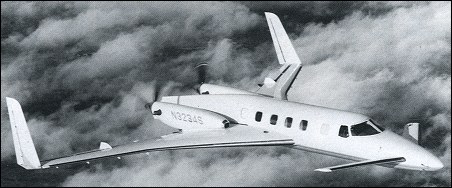
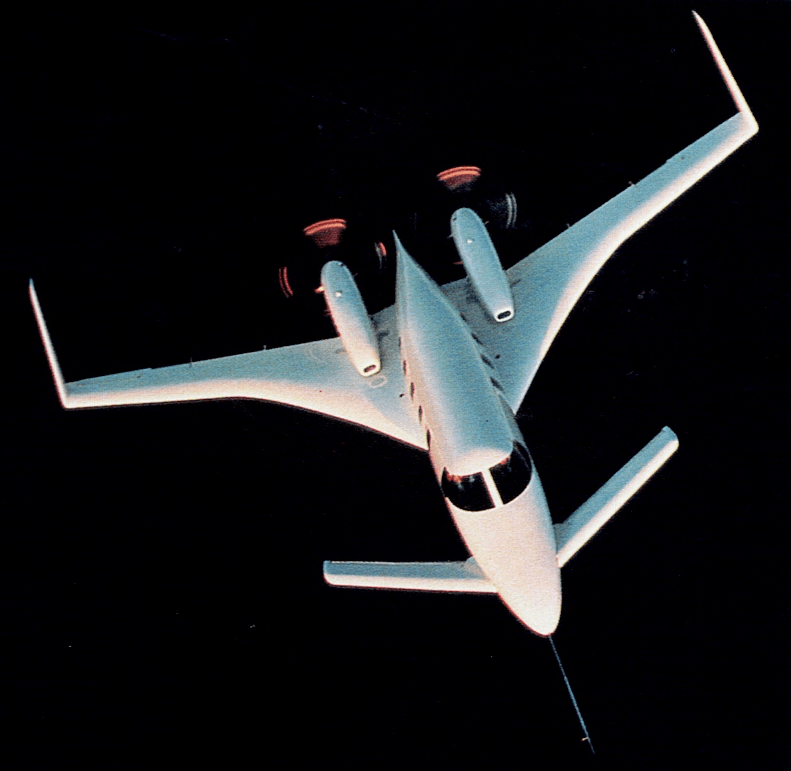
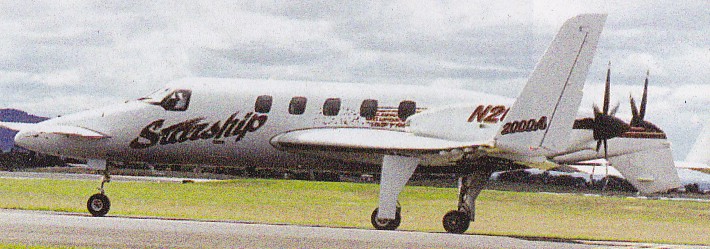
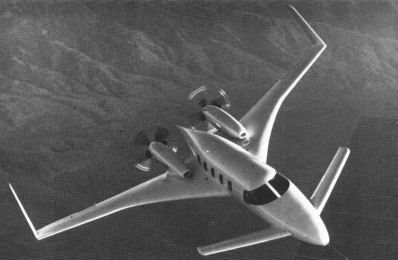
Success in testing the SCAT 1 led to the construction of the Model 2000 Starship 1. The Starship design has compound taper main wings, which mount the two pusher engines. Large endplate fins, known as tipsails, provide longitudinal stability, augmented by two small fins on the wing trailing edge. Additional keel area is provided by a ventral fin under the extreme rear of the slender fuselage. The large canard foreplanes of variable-geometry, sweeping forward by 4 degrees for low-speed flight and 30 degrees back in the cruise.
The Starship is built entirely of composites such as carbon graphite, Kevlar and E-glass, which make for an exceptionally strong and light aircraft that isn’t subject to the same inherent long-term weaknesses found in aluminum airframes. The composite makeup of the airframe doesn’t transmit noise or vibration from its twin 1,200 shp Pratt & Whitney engines, thus keeping interior cabin sound levels extremely low. Because of its canard configuration, the design is virtually impossible to stall. Virtually the entire structure is made of Nomex honeycomb and graphite/epoxy composites, with titanium used in high-stress areas.
The prototype composite construction Starship rolled out at Wichita to begin its certification in 1985. The first of three flying pre-production Starship 1s flew on 15 February 1986. Another three airframes were produced for static, damage tolerance and pressure testing. Basic FAA certification followed on 14 June 1988, and the first production machine flew on 25 April 1989. This has been used for customer demonstration flights, resulting in 40 orders by June of that year.
The tandem wing, twin pusher corporate aircraft is capable of a maximum cruise of 352 knots and a 41,000 foot ceiling. The Starship is the first all-composite, pressurised aircraft to receive FAA type certification. Starship is constructed of layers of graphite fibre surrounding a core of honeycombed nomex, bonded with adhesive resin. The unique Starship entered production in 1988 following first flight of a full-scale prototype on 15 February 1986. Seating eight passengers in a pressurised cabin, the aircraft is powered by two 1,200 shp (895 kW) P & W Canada PT6A-67A turboprops in “pusher” configuration giving a max cruising speed of 335 kts (621 km/h). Composites form a major portion of the Starship’s construction and among its aerodynamic features are variable-geometry foreplanes and large wingtip stabilisers called “tipsails”. Production ceased approximately 10 years after its introduction.
Beech 2000 Starship 1 Engines: 2 x Pratt & Whitney Canada PT6A-67A turboprops, 1,200 shp / 895kW Max take off weight : 14001.8 lb / 6350.0 kg Weight empty : 8917.0 lb / 4044.0 kg Max. weight carried : 5084.7 lb / 2306.0 kg Fuel capacity: 534 US gal Wingspan: 16.6 m / 54 ft 6 in Length: 14.05 m / 46 ft 1 in Height: 3.96 m / 12 ft 12 in Wing area: 26.09 sq.m / 280.83 sq ft Wing load : 49.82 lb/sq.ft / 243.0 kg/sq.m Max. speed : 352 kt / 652 km/h Landing speed : 84 kt / 156 km/h Cruise speed: 621 km/h / 386 mph Initial climb rate : 3346.46 ft/min / 17.0 m/s Service ceiling: 12495 m / 41000 ft Range: 3132 km / 1946 miles Payload : 8-11pax Takeoff distance, 50 ft.: 4,093 ft Landing distance, 50 ft.: 2,630 ft.
To provide a new generation of corporate transports, Beech looked to Burt Rutan’s Scaled Composites Inc. to design and produce the SCAT 1, an 85% scale technology demonstrator of a canard-configured aircraft. Success in testing led to the construction of the Model 2000 Starship 1.
In 1975 a decision was made to develop what was to be the model 1900. This was to be a pressurised, high density 19-seater aircraft based on the model 200 Super King Air. Using the model 200 cockpit, tail section, a longer fuselage and a new continuous spar wing was developed. A slightly unusual feature of these aircraft was the “taillets” attached beneath the horizontal tailplane for improved directional stability and an auxiliary horizontal tail (stabilon) on each side of the rear fuselage to extend the aft centre of gravity limits. The first of the three 1900C development aircraft flew (under SFAR part 41C) on 13 September 1982 powered with the PT-6A-65 which was up rated to the 1000-shp -65A on production aircraft. Its type certificate was achieved on 22 November 1983. Production deliveries, fitted with 52-inch by 52-inch cargo doors, began in February 1984 but were phased out in October 1991 when the SFAR part 41 C regulation expired. Some 72 “C” models had been built, followed by around 175 1900C-1 versions with their “wet wings”.
Announced by Raytheon at the US Airlines Association meeting in March 1989 was the Model 1900D, Beech’s answer to the 19-passenger, stand-up, pressurised aircraft for the commuter and regional airline operators. Power chosen was the 1600-shp PT6A-67D flat rated at 1279 shp. Wingspan and area were increased with winglets added. The fuselage was some 28.5% larger, which gives the aircraft the “high forehead” look and “stand-up head room” (of 5 ft 11 in) in the cabin. The aircraft introduced the twin ventral strakes designed to improve the directional stability and turbulence penetration. The wet wing is design fabricated and assembled as a one-piece unit. It is able to hold 2,517 litres in two integral fuel tanks in each wing (the main tanks hold 1621 lbs and the smaller auxiliary tank 621 lbs). The primary controls are mechanically linked and the landing gear is hydraulically actuated with dual main wheels and a single nose wheel. The prototype 1900D (N5584D), a converted 1900C, first flew on 1 March 1990 with FAA certification being achieved in March 1991. Production switched to the 1900D in 1991 and first deliveries began in November 1991.
1900C Engines: 2 x Pratt & Whitney Canada PT6A-65B turboprop.
1900D Engines: 2 x Pratt & Whitney Canada PT6A-67D turboprop, 1279-shp. Props: Hartzell four-blade composite. Wingspan: 57 ft 10 in (17.65rn). Wing area: 303 sq.ft (28.l5sq.m). Length: 57 ft 10 in (17.63m). Height: 14 ft 10 in. (4.54m). Empty weight: 10,400 lb (4,717 kg). MTOW: 16,950 lb (7,688 kg). Wing loading: 54.7 lb/sq.ft (267 kg/sq.m). Power loading: 6.62 lb/hp (3 kg/hp). Max cruise speed 334 mph (537 kph) at 13,000 ft (3,960m). Rate of climb: 2,625 ft/min (800m/min) at sea level. Service ceiling: 25,000 ft (7,620m). SE service ceiling (MTOW): 17,500-ft. Range high cruise power 45 min res: 794 miles (1,278km) at 25,000 ft (7,620m). Pax cap: 19.
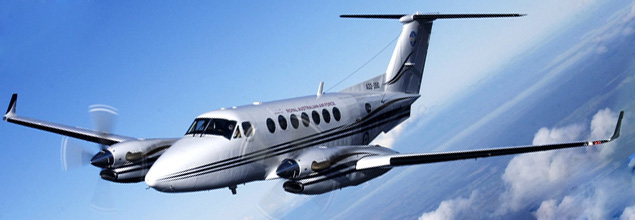
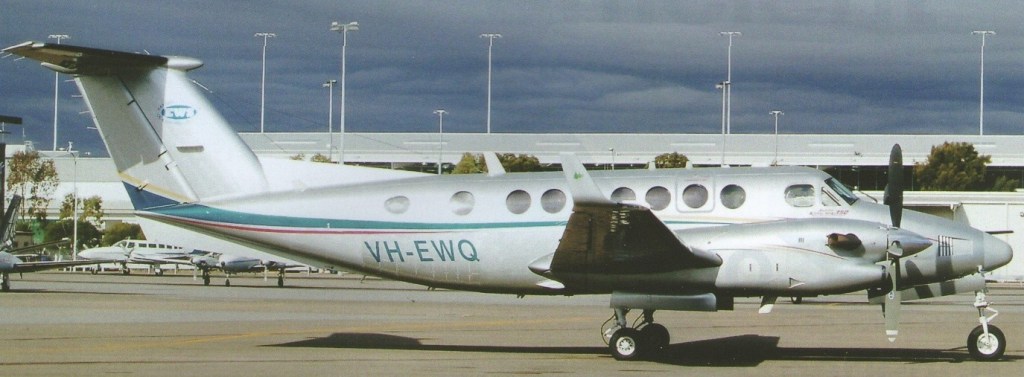
Based on the King Air 300, the Super King Air 350 incorporates a wing of increased span with winglets, and interior changes that increase max seating to 11 plus two crew. The fuselage has been lengthened although the engines remain two 1,050 shp (783 kW) P & W Canada PT6A-60A turboprops. Certificated in 1990, the first King Air 350 was delivered on 6 March 1990.
King Air 350 VH-EWQ
In 2004—the King Air’s 40th anniversary— Raytheon added two 16-cubic-foot wing lockers in the aft portion of the engine nacelles to increase loading flexibilities.
Raytheon Super King Air 350 Engines: Two Pratt and Whitney PT6A-60A turboprops (1050 / 783 kW horsepower each) Propellers: 4-blade Crew: Two pilots, or pilot and navigator/observer, or various crews in training roles Length: 46.654 ft / 14.22m Height: 14.337 ft / 4.40m Wingspan: 57.907 ft / 17.65m Wing area : 310.003 sq.ft / 28.8 sq.m Wing load : 48.38 lb/sq.ft / 236.0 kg/sq.m Max cert TO wt: 6804 kg / 15,100 lb. Max cert ldg wt: 6804 kg. Empty weight: 9,326 lb Payload: 1600kg Fuel capacity: 539 USgals Max. speed : 315 kts / 583 kph Top cruise: 359 kts Initial climb rate: 2,731 fpm Range: 3400km Ceiling: 35,000 feet Takeoff distance: 3,300 ft Landing distance: 2,692 ft Accommodation: Up to six passengers
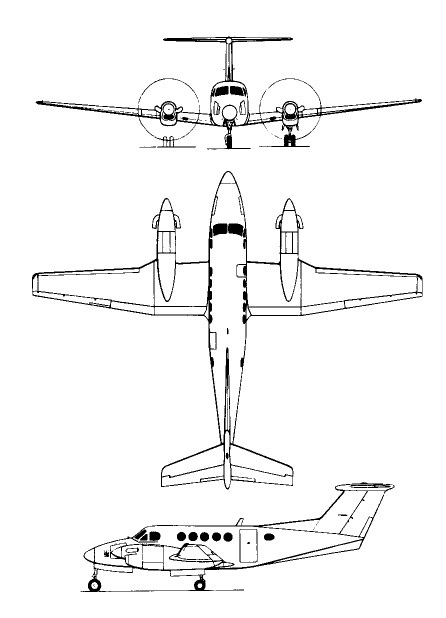
A development of the King Air 90/100, the prototype King Air 200 flew on 27 October 1972. With bigger engines, a bigger wing, more fuel capacity and more useful load, the B200 came along in 1980 with even more efficient Pratt & Whitney PT6A42 engines and another increase in load.
The T-tail Super King Air, with its two 850-shp Pratt & Whitney engines, can be operated from smaller airports; takeoff and landing over a 50-foot obstacle can be accomplished in 2579 and 2845 respectively, without prop reversing.
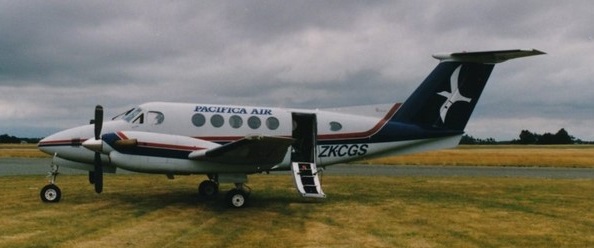
Beechcraft 200 Super Kingair ZK-CGS
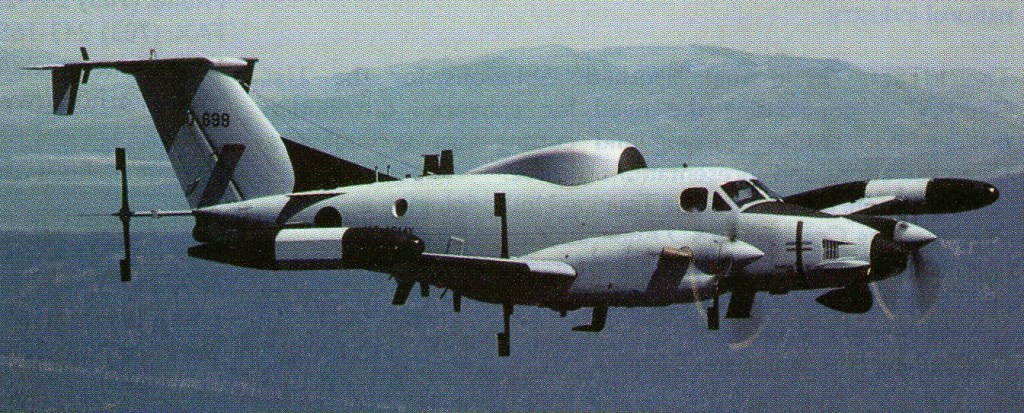
First deliveries of Super King Airs were made in early 1974, and the better capability of this aircraft resulted in the company receiving contracts for the supply and support of 34 examples modified for service with the US Army. These are powered by 559kW PT6A-38 turboprop engines, and were allocated the designation C-12A subsequent military orders for the C-12A have to date included 27 and 30 for the US Army and USAF respectively. Other service variants are the UC-12B (66 ordered) for the US Navy/Marine Corps, powered by 634kW PT6A-41 turboprops; the C-12C (14) for the US Army with PT6A-41 engines; the generally similar C-12D (27) for the US Army, but with an added cargo door; and the special-mission RU-21J (three) bristling externally with antennae and equipped for the requirements of the US Army’s ‘Cefly Lancer’ programme. More recent variants are the RC-12D ‘Guardrail V electronic reconnaissance platform, C-12E upgraded transport for the USAF, C-12F transport for USAF and UC-12F for the Navy, RC-12H reconnaissance variant and UC-12M utility transport.
The USAF purchased 40 twin-turboprop Super King Air I 200Cs as C-l2Fs to meet part of its Operational Support Aircraft requirement following an initial period of lease. The cargo door developed for the US Army’s C-12D has been available as an option for civil production since 1979, and in April 1981 Beech introduced a new version, identified as the Super King Air B200. It differs by having PT6A-42 turboprop engines which offer improved cruising performance. A little known but important part of Beech’s product line is the company’s special mission range of aircraft standard models factory modified and certified for aerial survey, photography, specialized training and other unusual purposes. One aircraft developed is a Super King Air with tip tanks, several of which are being built for the French Institut Geographique National for long range photo flights. The tip tanks add about an hour to the KA’s endurance. Other military versions of the King Air series I include the C/UC/RC-12, RU-12, and T-44 for the US forces, together with maritime surveillance variants produced for export customers, for which search radar, low-light TV, Flir, and acoustic processing equipment are optional.
Beechcraft RC-12 Guardrail
In 1995, Raytheon rolled out its 1,500th King Air 200, complete with an EFIS avionics panel.
Variants
Super King Air Model 200T: designation of two specially-equipped aircraft for the French Institut Geographique National for high-altitude photographic and weather observation duties;
Super King Air Maritime Patrol 200T: maritime patrol/multi-mission aircraft, with new outboard wing panels to provide for installation of wingtip fuel tanks, strengthened landing gear, hatch for dropping survival equipment, bubble observation window in aft cabin, and search radar with a 360° scan underfuselage radome; orders include 13 for Japan Maritime Safety Agency, and one for Uruguayan navy;
Super King Air B200C: version of civil B200 with a cargo door as standard;
Super King Air B200CT: version of civil B200 with a cargo door and removable wingtip fuel tank provisions as standard;
Super King Air B200T: version of the civil B200 with removable wingtip fuel tank provisions as standard;
Super King Air 300: improved version with PT6A-60A turboprops each rated at 783kW and corresponding increase in take-off weight. The 300LW is a lightened version optimised for European operations;
1300 Commuter: King Air B200 version for commuter airlines. Accommodates up to 13 passengers with an optional belly luggage pack.
BE-200 Super King Air First built: 1974. Engines: 2 x P&W PT6A-42, 850 shp. Props: Hartzell 3-blade, 98.5-in. Seats: 8/15. Length: 43.8 ft. Height: 15 ft. Wingspan: 54.5 ft. Wing area: 303 sq.ft. Wing aspect ratio: 9.8. Maximum ramp weight: 12,590 lbs. Maximum takeoff weight: 12,500 lbs. Standard empty weight: 7538 lbs. Maximum useful load: 5052 lbs. Maximum landing weight: 12,500 lbs. Wing loading: 41.3 lbs/sq.ft. Power loading: 7.4 lbs/hp. Maximum usable fuel: 3645 lbs. Best rate of climb: 2450 fpm. Service ceiling: 35,000 ft. Max pressurisation differential: 6.5 psi. 8000 ft cabin alt @: 29,742 ft. Maximum single-engine rate of climb: 740 fpm @ 122 kts. Single-engine climb gradient: 364 ft/nm. Single-engine ceiling: 21,735 ft. Maximum speed: 294 kts. Normal cruise @ 27,000 ft: 279 kts. Fuel flow @ normal cruise: 563 pph. Endurance at normal cruise: 5.9 hrs: Stalling speed clean: 99 kts. Stalling speed gear/flaps down: 75 kts. Turbulent-air penetration speed: 170 kts.
A200 Engines two 850-shp Pratt & Whitney reverse flow, free turbines. Seats 6-13. Gross Wt. 12,500 lbs. Emp¬ty Wt. 7437 lbs. Fuel capacity 544 USG. Top speed 333 mph. Cruise 322 mph. Stall 86 mph. Initial climb rate 2450 fpm. Ceiling 31,000+ ft. Range 2022 sm. Takeoff distance (50’) 2579 ft. Landing distance (50’) 2074 ft. Seats: 6-13
Super King Air B200 Engines: 2 x Pratt & Whitney Aircraft Canada PT6A-42 turboprops, 850 shp / 634kW Max Take-off weight: 5670 kg / 12500 lb Empty weight: 8,283 lb Fuel capacity: 544 US gal Std useful load: 5,052 lbs. Wingspan: 16.61 m / 54 ft 6 in Length: 13.34 m / 43 ft 9 in Height: 4.57 m / 14 ft 12 in Wing area: 28.15 sq.m / 303.00 sq ft Max. speed: 545 km/h / 339 mph / 294 kt Cruise speed: 523 km/h / 325 mph Ceiling: 10670 m / 35000 ft Range: 3756 km / 2334 miles Initial climb rate: 2,460 fpm Takeoff distance: 2,579 ft Landing distance: 2,845 ft. Seats: 8
C-12 Huron Engines: 2 x Pratt & Whitney PT6A-21, 550 SHP Maximum Range: 215miles (346km) Rate-of-Climb: 2,010ft/min (613m/min) Service Ceiling: 35,105ft (10,700m; 6.6miles) Accommodation: 1 + 5
C-12D Engine: 2 x P&WAC PT6A. Installed pwr: 1270 kW. Span: 16.6 m. Length: 13.4 m. Wing area: 27.9 sq.m Empty wt: 3655 kg. MTOW: 5670 kg. Payload: 2040 kg. Cruise speed: 510 kph. Initial ROC: 730 m / min. Ceiling: 9450 m. T/O run (to 15m): 1005 m. Ldg run (from 15m): 790 m. Fuel internal: 1160 lt. Range: 3300 km. Capacity: 14 pax.
U-21J US Army version of the Super King Air 200 for battlefield reconnaissance and EW missions
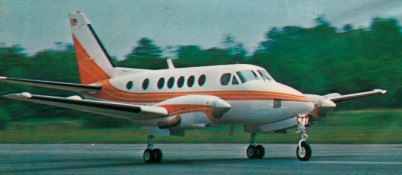
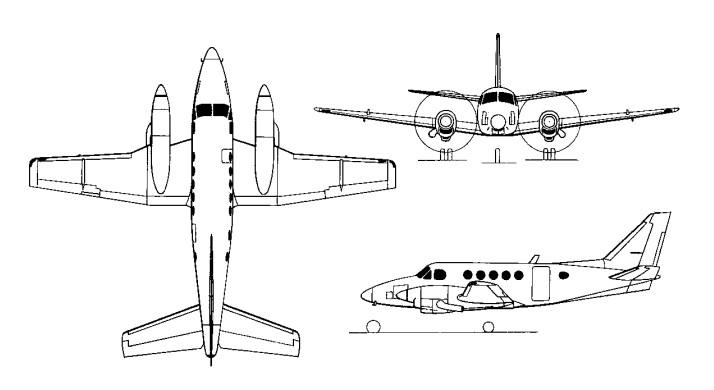
The 100 series was introduced in 1969 when initial deliveries were made in August 1969, and employed the 680-shp Pratt & Whitney turboprop. All have full-feathering, reversible propellers. It differed from the earlier King Airs in reduced wing span, a lengthened fuselage to provide accommodation for a maximum of 15 persons, increased elevator and rudder areas, twin-wheel main landing gear, and more powerful engines. The new wing was generally similar to that developed for the Model 99 Airliner. Their pressurized, three-compartment interior can be maintained at sea level atmosphere pressure to flight levels as high as 10,500 feet.
In October 1971 Beech began deliveries of the improved King Air A100, this variant incorporating detail improvements, and the first five were supplied to the US Army under the designation U-21F, 70-15908/15912. Examples have been procured by the Spanish air force, and a Universal Aircraft Com/Nav Evaluation (UNACE) configured version, for the rapid inspection and calibration of air navigation systems, has been supplied to countries that include Algeria, Belgium, Canada, Indonesia, Malaysia, Mexico, and the USA. Beech also produces specially modified camera-equipped versions of the King Air for aerial survey, and examples are in service in this role in Canada, Chile, France, Jamaica, Saudi Arabia, Thailand, and the USA.
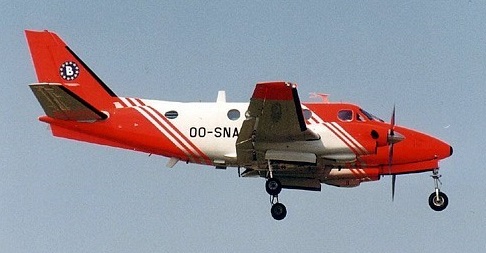
Beechcraft A.100 King Air OO-SNA (c/n B-217)
The higher capacity versions are the A100 and B100, with the latter being the first King Air to be outfitted with Garrett turboprops. In parallel with A100 production since late 1975, Beech has produced a complementary King Air B100 offering higher performance. It differs by the installation of 533kW Garrett TPE331-6-252B turboprop engines, and of equipment directly associated with the engine installation. Beech has mated two Garrett AiResearch TPE 331 6 252B 840 shp derated to 715 shp turboprop engines to the A100 airframe. Beech made the move to assure that they would have two sources of engines considering the interruption in deliveries that was caused when United Aircraft of Canada, Ltd. (now known as Pratt & Whitney of Canada) struck for 19 months in 1974 and 1975. The derated TPE 331 turboprop engines affect the pilot’s procedures and the aircraft’s performance more than the handling qualities. The B100’s powerplant thrust line was raised somewhat, to counter the longitudinally destabilizing influence of five percent more horsepower. Because the derated Garrett powerplants are ca-pable of producing 840 shp, their performance in the B100 on hot days and at altitude surpasses that of the MA 28s used on the A100. Thus, the B100 is 16 knots faster than the A100 at 10,000 feet and 27 knots faster at FL 200 (262 knots compared with 235 knots at maximum cruise power). Range for both 100s at maximum cruise power with maximum payload on board and 45 minutes’ reserve is slightly more than 1,200 nm. Production of the King Air 100 ended in 1983.
A100 Engines: 2 x Pratt & Whitney PT6A-28 free turbine, 680 shp / 507kW. Wingspan: 14.0 m / 45 ft 11 in Length: 12.17 m / 39 ft 11 in Height: 4.7 m / 15 ft 5 in Gross Wt. 11,568 lbs. Empty wt: 6754 lb. Equipped useful load: 4564 lb. Payload max fuel: 1415 lb. Wing loading: 40.8 lb/sq.ft. Pwr loading: 8.46 lb/hp. Fuel capacity 470 USG/3149 lb. Ceiling 24,850 ft. Range max fuel/cruise: 933nm/3.7hr. Range max fuel /range: 1319nm/6.3hr. Max cruise: 248 kt. Max range cruise: 211 kt. Vmc: 85 kt. Stall: 75-89 kt. 1.3 Vso: 98 kt. Takeoff distance (50’) 2681 ft. Landing distance (50’) 2109 ft. ROC: 1963 fpm. SE ROC: 452 fpm @ 119 kt. SE ceiling: 9,300 ft. Certified Service Ceiling: 24,850 ft. Seats: 8 to 15. Pressurisation: 4.6 psi. 8000ft cabin alt: 21,000ft.
BE-B100 King Air First built: 1976. Engines: 2 x Garrett TPE 331-6-252B, 715 shp. Props: Hartzell 4-blade, 90-in. Seats: 8/15. Length: 39.9 ft. Height: 15.4 ft. Wingspan: 45.9 ft. Wing area: 280 sq.ft. Wing aspect ratio: 7.5. Maximum ramp weight: 11,875 lbs. Maximum takeoff weight: 11,800 lbs. Standard empty weight: 7082 lbs. Maximum useful load: 4793 lbs. Zero-fuel weight: 9600 lbs. Maximum landing weight: 11,210 lbs. Wing loading: 42.2 lbs/sq.ft. Power loading: 8.3 lbs/hp. Maximum usable fuel: 3149 lbs. Best rate of climb: 2139. Service ceiling: 28,138 ft. Max pressurisation differential: 4.6 psi. 8000 ft cabin alt @: 21,200 ft. Maximum single-engine rate of climb: 501 fpm @ 129 kts. Single-engine climb gradient: 233 ft/nm. Single-engine ceiling: 12,120 ft. Maximum speed: 265 kts. Normal cruise @ 21,000ft: 262 kts. Fuel flow @ normal cruise: 540 pph. Endurance at normal cruise: 5.3 hrs: Stalling speed clean: 93 kts. Stalling speed gear/flaps down: 83 kts. Turbulent-air penetration speed: 170 kts.
 All Aero