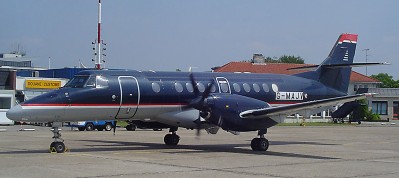
Development work on the Jetstream 41 was announced in mid-1989. A stretched development of the Jetstream 31/32 regional aircraft family by BAE Systems, the J41’s structural changes included an increase of 4.88m in length of the semi-monocoque aluminium alloy fuselage. The fuselage stretch is througha 2.51-m forward plug and a 2.36-m stretch behind the wing. The increase in length allows for 29 passenger seats, compared with the 19 typically fitted to the J31. The wingspan has been increased to 18.29 m, the ailerons and flaps have been reworked, and the entire wing has been mounted lower on the fuselage to remove the spar from the interior cabin floor. This led to a redesign of the engine mounts to increase ground clearance for the McCauley propellers, and the distance between the fuselage and the engines has also been increased. As a result, the cabin is quieter than the J31. The fuel system consists of two integral wing tanks and has the capacity for 5,818 lb (2,639 kg) of Jet Al. Both the main undercarriage and the nose gear are forward retracting and are fitted with twin wheels. Anti-skid three-rotor steel brakes are also installed.
The J41 is designed to operate to and from runways as short as 1219m. The aircraft can operate from a runway at 5,000 ft elevation at temperatures of ISA +20 with a full load for at least a one-hour sector with IFR reserves. Four “glass” screens of the Honeywell EDZ-805 EFIS (electronic flight instrument system) grace the cockpit and the flight deck instrumentation also includes a Honeywell SPZ-4500 fully digital automatic flight control system with an AH-600 attitude and heading reference system (AHRS), an AZ-810 air data computer and a Honeywell Primus II digital radio communications system with dual transponders. The J41 first flew on 25 September 1991 and 104 J41 aircraft were built before production was terminated in May 1997. Over 90 Jetstream 41s world¬wide remained operational in 2003.
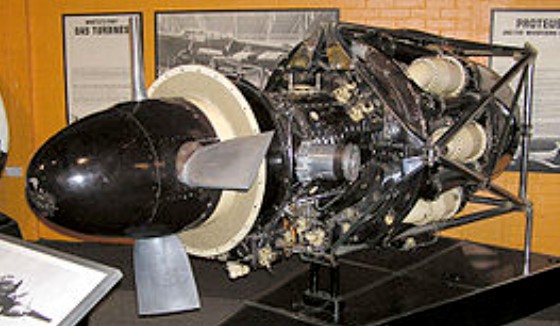
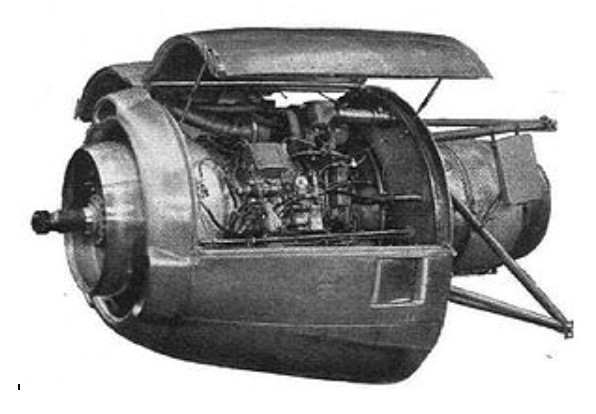
The Theseus was the Bristol Aeroplane Company’s first attempt at a gas-turbine engine design, a turboprop that delivered just over 2,000 hp (1,500 kW). A novel feature was the use of a heat exchanger to transfer waste heat from the exhaust to the compressor exit. First run on 18 July 1945, the engine was soon superseded by the Proteus design with more power, and the only extended use of the engine was in two Handley Page Hermes 5 development aircraft.
Following 156 hours of ground runs and the receipt of a test certificate from the Ministry of Supply on 28 January 1947, two Theseus engines were fitted in the outer positions of a four-engined Avro Lincoln for air tests. After ground and taxying test the Lincoln first flew on 17 February 1947.
Applications Avro Theseus Lincoln Handley Page Hermes 5
Variants:
Theseus Series TH.11 Variant without heat exchanger
Theseus Series TH.21 Variant with heat exchanger
Specifications:
Theseus Th.21 Type: Mixed compressor turboprop with heat exchanger Length: 106 in (2,692.4 mm) Diameter: 49 in (1,244.6 mm) Dry weight: 2,310 lb (1,047.8 kg) Compressor: 8-stage axial + 1-stage centrifugal compressors feeding the combustion chambers through a heat exchanger Combustors: 8 x stainless steel can combustion chambers Turbine: 2-stage axial + 1-stage axial free turbine driving the propeller Fuel type: Kerosene (R.D.E. / F / KER) Oil system: pressure feed to bearings, dry sump, 40 S.U. secs (13 cs) (Intavia 620) grade oil Maximum power output: 2,800 hp (2,087.96 kW) equivalent at 8,200 rpm at sea level (2,200 hp (1,640.54 kW) + 825 lbf (3.67 kN) residual thrust) Overall pressure ratio: 3:1 Fuel consumption: 272 imp gal (1,236.5 l) /hr Specific fuel consumption: 0.5 lb/equiv. hp/hr ( kg/equiv. kW/hr) Maximum flight rating: 1,500 hp (1,118.55 kW) equivalent at 8,200 rpm at 20,000 ft (6,096 m)
The Bristol Orion aero engine was a two-shaft turboprop intended for use in later marks of the Bristol Britannia and Canadair CL-44. Although the engine was built and underwent a development program, the BE.25 Orion project was cancelled in 1958 by the British Ministry of Supply. At that time, interest in turboprop powered aircraft was beginning to wane, because of the successful introduction of the Boeing 707 and Douglas DC-8 jetliners into airline service.
A single stage HP turbine drove a five stage all-axial HP compressor, whilst a three stage LP turbine drove both the seven stage LP compressor and the propeller, via a reduction gearbox. Thus the Orion used a shared load LP turbine (like the Rolls-Royce Tyne), whereas its predecessor, the Bristol Proteus, had a free-power turbine. The combustor used separate flame cans.
One novel feature of the Orion was a derate from a thermodynamic rating of 9,000 shp at sea level, to enable a constant 5,150 ehp power level to be maintained all the way up to 15,000 ft altitude. The Orion project was cancelled in January 1958, at a reported total cost of £ 4.75 million.
Applications: Bristol Britannia
Specifications:
Orion Type: Twin-spool turboprop Length: 112.3 in (2,852 mm) Diameter: 41 in (1,041 mm) Dry weight: 3,150 lb (1,429 kg) Compressor: 7 stage low pressure, 5 stage high pressure Combustors: Annular combustor with 10 flame tubes Turbine: Single stage high pressure, 3 stage low pressure Fuel type: Kerosene Maximum power output: 5,150 eshp (3,840 kW) (maximum takeoff) Overall pressure ratio: 10:1 Specific fuel consumption: 0.64 lb/eshp/hr Thrust-to-weight ratio: 1.63 eshp/lb (2.68 kW/kg)
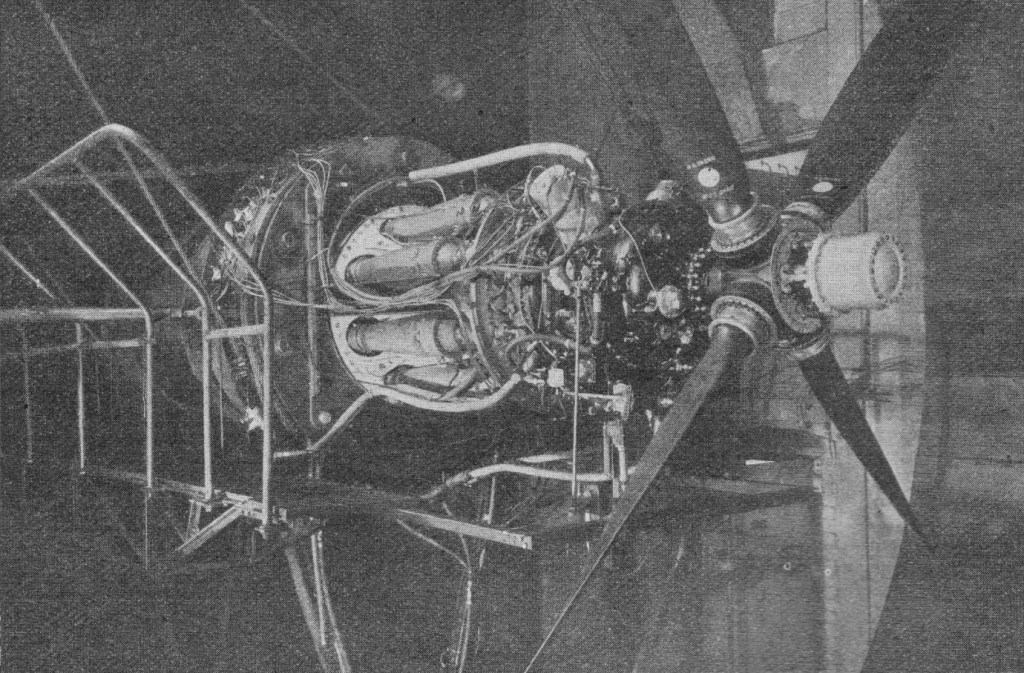
Design work on the Proteus started in September 1944, during the course of development the gas generator section was built as a small turbojet which became known as the Bristol Phoebus. This engine was test flown in May 1946 fitted to the bomb bay of an Avro Lincoln, performance was poor due to airflow problems. The centrifugal compressor was redesigned but similar problems were encountered when the Proteus started ground testing on 25 January 1947.
The original Proteus Mk.600 delivered 3,780 hp (2,820 kW), and was going to be used on the early versions of the Britannia and the Saunders-Roe Princess flying-boat. The versions on the Princess were mounted in a large frame driving a single propeller through a gearbox, and were known as the Coupled Proteus. The Coupled Proteus was also intended to be used on the Mk.II versions of the Bristol Brabazon, but this project was cancelled. Only three Princesses were built, only one of which flew, and by the time the Britannia was ready for testing the manufacturer had decided to equip it with the later Mk.700 Proteus instead.
1949 – 3200 shp Proteus in a Filton test hanger
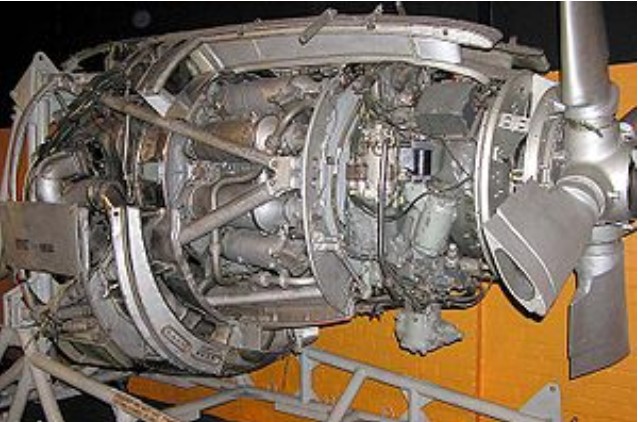
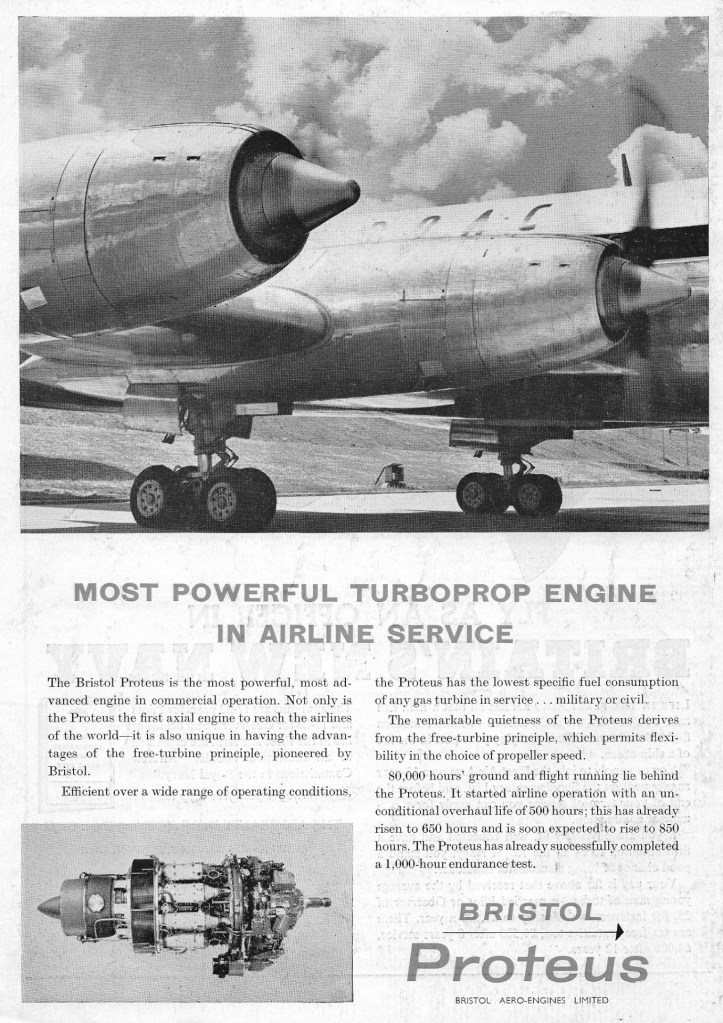
The Proteus was a two spool, reverse-flow gas turbine, similar to the original Whittle engine designs with an extra turbine stage. Because the turbine stages of the inner spool drove no compressor stages, but only the propeller, this engine is sometimes classified as a free turbine.
May 1957
During development, there were severe problems with compressor blades, turbine blades and bearings failing at even low power output levels. This led to the famous quote of Proteus Chief Engineer Frank Owner to Chief Engineer of the Engine Division Stanley Hooker: “You know, Stanley, when we designed the Proteus I decided we should make the engine with the lowest fuel consumption in the world, regardless of its weight and bulk. So far, we have achieved the weight and bulk!”
At this point the Proteus proved to have troubling icing problems, causing the engine and aircraft projects to be delayed while solutions were found. The Mk.705 of 3,900 hp (2,900 kW) was the first version to see widespread production on the Bristol Britannia 100 and some 300 series. The Mk.755 of 4,120 hp (3,070 kW) was used on the 200 series (not built) and other 300’s, and the Mk.765 of 4,445 hp (3,315 kW) was used on the RAF’s Series 250 aircraft.
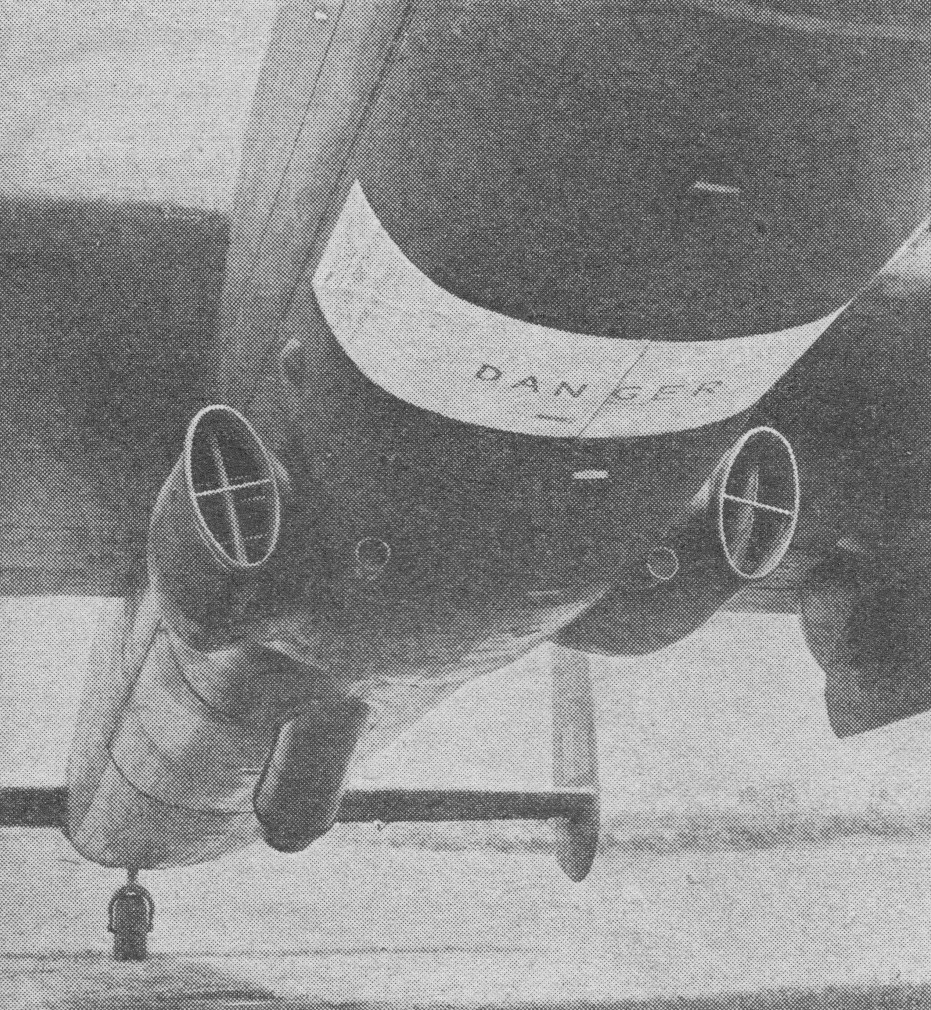
Part of the Bristol Proteus flight development was a Lincoln with a Phœbus jet engine in the bomb bay. The Phœbus is a pure jet version of the Proteus and air was drawn in through elephant ears.
Lincoln Phœbus mounting
Variants: As with most gas turbine engines of the 1940s, 50s, and 60s the Ministry of Supply allocated the Proteus a designation which was apparently little used. Officially the Proteus was named Bristol BPr.n Proteus
Proteus series 1 (BPr.1)Prototype and early production engines used for development and testing.
Proteus series 2 Initial production versions, renamed as Proteus 600 series engines.
Proteus series 3 The fully developed initial version, re-named as the Proteus 700 series.
Proteus 600 Initial production engines re-named from Proteus series 2.
Proteus 610 The engines used in the Coupled-Proteus installations for the Saunders-Roe Princess airliner.
Proteus 625
Proteus 700
Proteus 705
Proteus 710 The engines slated for use in the Coupled-Proteus installations of the Bristol Brabazon I Mk.II.
Proteus 750
Proteus 755
Proteus 756
Proteus 757
Proteus 758
Proteus 760
Proteus 761
Proteus 762
Proteus 765
Proteus Mk.255 Military engines similar to the Proteus 765, to power the Bristol 253 Britannia C.Mk.1.
Coupled-Proteus 610 Twin Proteus 600 series engines driving contra-rotating propellers through a combining gearbox, developed specifically for the Saunders-Roe SR.45 Princess. Coupled-Proteus 710 Twin Proteus 710 engines driving contra-rotating propellers for the Bristol Brabazon I Mk.II.
Bluebird Proteus A specially modified Proteus 705 with drive shafts at front and rear of the engine to drive front and rear differential gearboxes on Donald Campbell’s Bluebird-Proteus CN7.
Applications: Bristol Britannia Bristol Type 167 Brabazon I Mk.II Saunders-Roe Princess
Specifications:
Proteus Mk.705 Type: Turboprop Length: 113 in (2,870 mm) Diameter: 39.5 in (1,003 mm) Dry weight: 2,850 lb (1293 kg) Compressor: Two-spool 12-stage axial, followed by a single centrifugal stage Combustors: Reverse-flow Turbine: Two-stage power (free turbine), two-stage driving compressor Fuel type: Aviation kerosene Maximum power output: 3,320 shp (2,475 kW) + 1,200 lb (5.33 kN) residual thrust giving 3,780 eshp Overall pressure ratio: 7.2:1 Fuel consumption: 273 Imp gal (1,241 L) /hour Specific fuel consumption: 0.495 lb/h/eshp Power-to-weight ratio: 1.32 eshp/lb
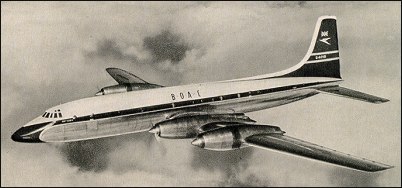
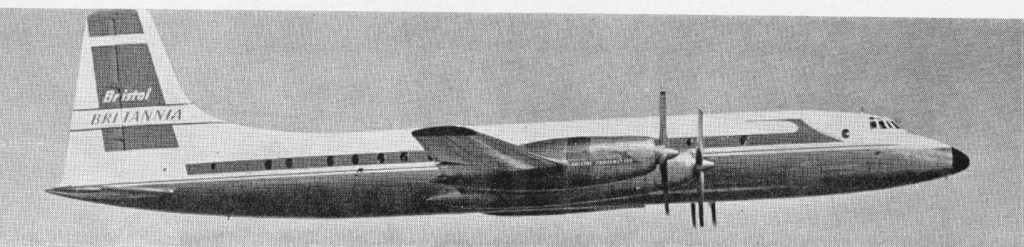
The Type 175 began as a Medium Range Empire (MRE) design to meet BOAC requirements set down in MoS Specifica¬tion 2/47. Designed to carry 32-36 passengers and be powered by four Bristol Centaurus 662 sleeve-valve engines, the aircraft’s size was soon increased and consideration given to the installation of Bristol Proteus turbines or Napier Nomad compound engines. After some delay, in June 1948 the Ministry of Supply ordered three Centaurus-powered prototypes but stipulated that the second and third should be capable of conversion to Proteus-engined aircraft. When the first prototype emerged in 1952 it was a much bigger aeroplane with accommodation for more than 80 passengers and powered by Proteus 625 engines. Prototypes were ordered in February 1948 and the first of these was airborne at Filton on 16 August 1952, powered by Bristol’s new Proteus turboprop.
The second prototype was lost after only 51hr flying and a major engine fault delayed entry into service with BOAC until February 1957. On 1 February 1957 BOAC began operating Britannia 102 with 2,906kW Proteus 705 and up to 90 seats on its London-Johannesburg services.
A number of versions were developed from the Series 100 aircraft and on 19 December 1957, BOAC began the first turbine-powered North Atlantic service when it put Britannia 312 on the London-New York route. These were 3.12m longer, had accommodation for up to 139 passengers, were powered by 3,070kW Proteus 755 and had a 13,608kg increase in max weight. On the day that BOAC introduced Britannias on the North Atlantic, El Al flew a Britannia 10,328km non-stop from New York to Tel Aviv.
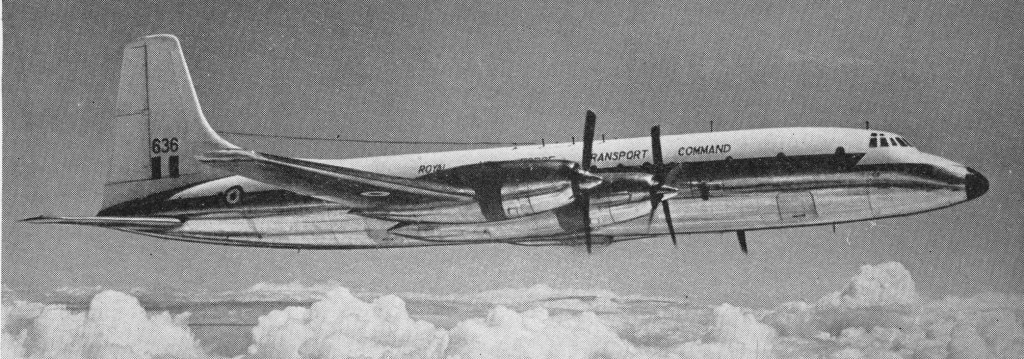
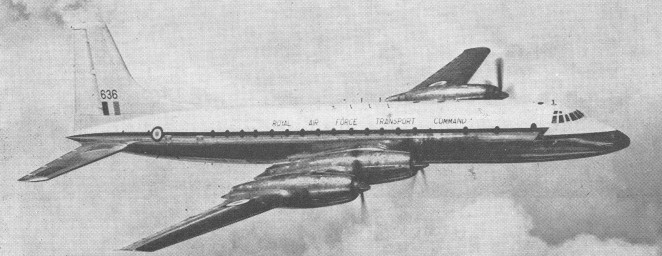
The Bristol Britannia entered RAF Transport Command service with No.99 Squadron, at Lyneham, Wiltshire, in mid-1959. As Britannia C.1, twenty Britannia 250 were operated with strengthened floor and large freight loading doors. Three Britannia C.2s were purchased by the Ministry of Supply for use on trooping flights.
The Britannia 310 was ordered by BOAC, El Al, Hunting Clan, Canadian Pacific Airlines and Cubana.
Britannia 310
Only 85 Britannias were built at Filton and by Shorts at Belfast.
Canadair developed the Britannia design into the military CL-28 Argus and CL-44 Yukon and the CL-44 series of passenger and cargo aircraft.
100 Series 90 passenger airliner All built at Filton Engines: four Bristol Proteus 705, 4,400 h.p. Length: 114 feet Height: 36 feet 8 inches Wing Span: 142 feet 3 inches Weight (empty): 88,000lbs Weight (all-up): 155,000lbs Range: 3,450 miles
101 – Two prototypes, initially powered by Proteus 625, later 705 102 – 25 ordered by BOAC. The last ten were cancelled in favour of the 300 series.
200 Series All-cargo stretched version of the 100 series, with an extra 10 ft in length. Five options from BOAC, but cancelled in favour of the 310. None built.
250 Series As 200 series, but mixed passenger and freight Length: 124 feet 3 inches Height: 37 feet 6 inches Wing Span: 142 feet 3 inches Weight (empty): 90,500lbs (90,600lbs for 253) Weight (all-up): 185,000lbs Range: 2,268 miles
252 – Three ordered by Royal Air Force and given the designation C Mark 2. All built at Belfast. 253 – 22 ordered by Royal Air Force, with designation C Mark 1. All but the last five were built at Belfast, the remainder were built at Filton
300 Series As 200 series, by passenger only. Capable of carrying up to 139 passengers. Engines: 4 x 4,400 h.p. Bristol Siddeley Proteus 705 turboprop Length: 124 feet 3 inches (37.89 m.) Height: 37 feet 6 inches Wing Span: 142 feet 3 inches (43.38 m) Weight (empty): 92,500lbs Weight (all-up): 185,000lbs Econ cruise: 355 m.p.h. (570 kph) Range: 3,496 miles Range 4,268 miles (6,869 km.) with max. payload of 28,000 lb (12,700 kg) Crew: 9 Pax cap: 133
301 – one prototype, built at Filton 302 – Ten ordered by BOAC. Order cancelled in favour of 305 Series, later 310 series. Two were completed, but not delivered. Both were built at Belfast.
305 Series As 300, but with increased fuel capacity Length: 124 feet 3 inches Height: 37 feet 6 inches Wing Span: 142 feet 3 inches Weight (empty): 90,000lbs Weight (all-up): 185,000lbs Range: 4,268 miles
306 – 1 built, leased to El Al. built at Belfast 307 – 2 ordered by Air Charter. One was a conversion of the sole 306, the other was built at Belfast. 307F – 1960’s conversion of 307 to freighter (both Series 307 aircraft converted) 308 – 2 ordered by Transcontinental, built at Belfast. 308F – 1960’s conversion of 308 to freighter (both Series 308 aircraft were converted) 309 – 1 ordered by Ghana Airways, built at Belfast.
310 Series Initially known as 300LR. As 305 series, but with strengthened fuselage skin and undercarriage. Engines: 4 x Bristol Proteus, 4120 shp Length: 124 feet 3 inches (37.89 m) Height: 37 feet 6 inches Wing Span: 142 feet 3 inches (43.38 m) Weight (empty): 82,500lbs Weight (all-up): 185,000lbs Range: 4,268 miles Max level speed: 385 mph (616 kph)
311 – one prototype, built at Filton. 312 – 19 ordered by BOAC, all built at Filton. Engine : 4 x Proteus 755, 4064 shp Length: 124.245 ft / 37.87 m Height: 37.5 ft / 11.43 m Wingspan : 142.224 ft / 43.35 m Max take off weight : 185030.4 lb / 83914.0 kg Max. speed : 345 kts / 639 km/h Service ceiling : 26247 ft / 8000 m Range : 5004 nm / 9268 km Crew : 5 + 133 PAX
312F – 1960’s conversion of 312 to freighter (five converted) 313 – Four ordered by El Al, all built at Filton. 314 – Six ordered by Canadian Pacific, all bar one built at Belfast. 317 – Two ordered by Hunting-Clan Air Transport, all built at Filton. 318 – Four ordered by Cubana, all built at Filton. 320 Series – as Series 310, with a few modifications, giving increased maximum range. Length: 124 feet 3 inches Height: 37 feet 6 inches Wing Span: 142 feet 3 inches Weight (empty): 86,400lbs Weight (all-up): 185,000lbs Range: 4,268 miles
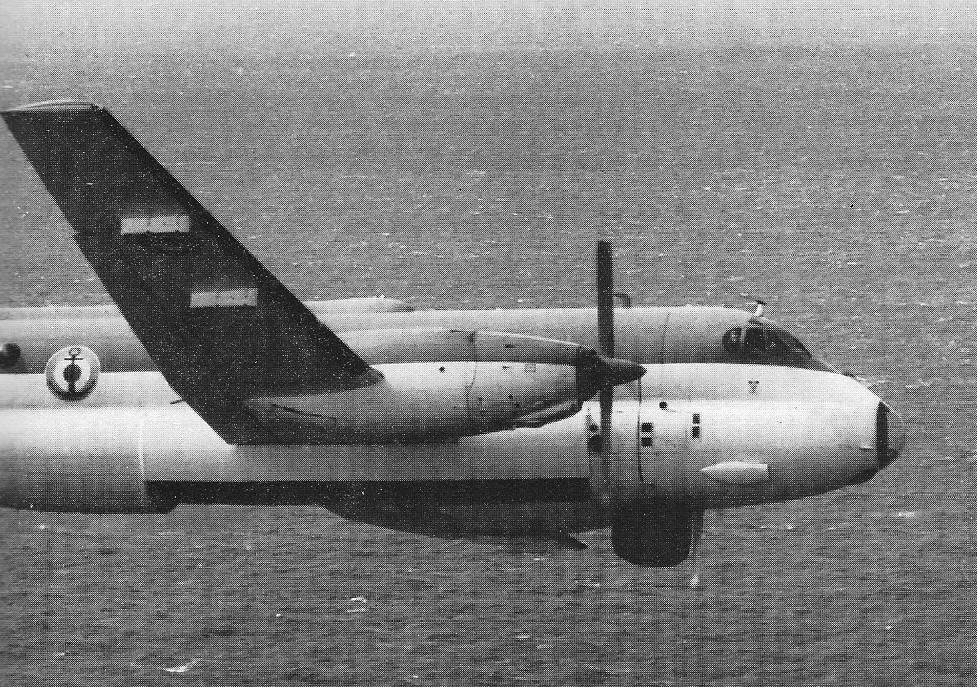
When the specification was outlined in January 1958, designs were submitted to NATO and by the end of 1958, the Breguet Br 1150 had been selected as the best of the projects. The choice was endorsed by all 15 nations in NATO, including the USA, Canada and the UK. A joint develop¬ment contract was drawn up in February 1959, which provided for work on the Br 1150 to be financed by Belgium, France, Germany, the Netherlands and the USA, although only France and Germany were at that time indicating an interest in acquiring the new MR type in operational quantities. Belgian and Dutch interest was maintained as a means of obtaining a share in the production programme for indigenous companies, while US financing was part of that nation’s general support for NATO. To handle the joint design and production of the Br 1150, for which the name Atlantic had been adopted, Societe d’Etude et de Construction de Breguet Atlantic was set up as the industrial executive agency, the original constituent companies of which were Breguet, Sud Aviation, ABAP (the Belgian grouping of SABCA and the then Fairey company), Fokker and Seeflug (the German grouping of Dornier and Siebel). Engines, propellers and the radar ECM system were to be government funded equipment (GFE) but were also made the subject, so far as possible, of European joint production programmes. The Rolls Royce Tyne RTy 20 Mk 21 was selected to power the Atlantic, production being under licence in France by SNECMA (with a 44 per cent share) and contributions by MTU in Germany (28 per cent), Rolls Royce (20 per cent) and FN in Belgium (8 per cent). The Hawker Siddeley Dynamics (de Havilland) propeller was put into production by Ratier. CSF was chosen to produce the radar in France and other major suppliers were Hispano Suiza for the undercarriage, Crouzet for navigation equipment and Bendix, Sperry and Canadian Marconi for avionics items.
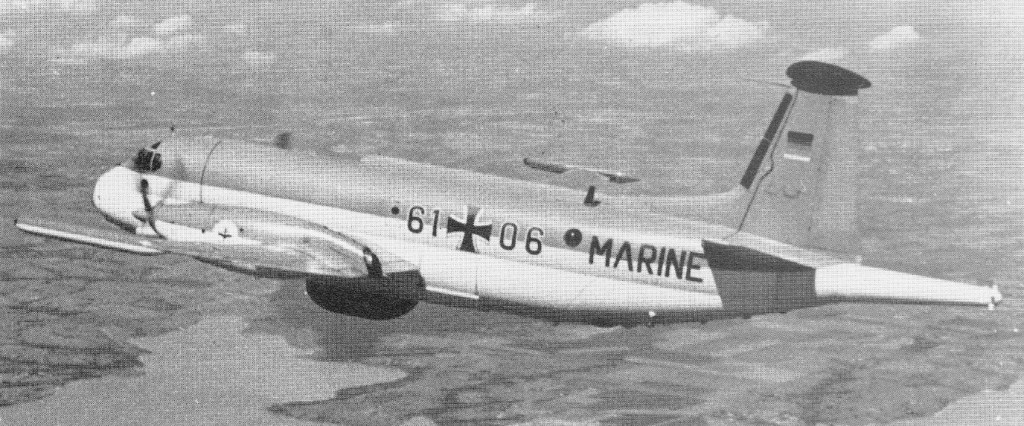
To launch the programme two prototypes were ordered in July 1959, and the basic industrial programme for the prototype and production stages was agreed in December. The first prototype, powered by RTy 20 engines supplied completely by Rolls Royce, flew at Toulouse on 21 October 1961. It was followed by the second (Atlantic 02), which flew on 25 February 1962, but was lost in an accident two months later, on 19 April. Meanwhile, two pre-¬production examples had been ordered in February 1961; the first of these (Atlantic 03) flew on 25 February 1963 and featured the lengthened fuselage that had been adopted for the production model, 3 ft 3 in (1 m) longer than the prototypes. Other features of the production standard Atlantic, for which orders were placed in June 1963, were incorporated in the second pre production Atlantic, 04, which flew on 10 September 1964 and subsequently being referred to as the first production model. This same aircraft was eventually to be used, in 1979, as an aerodynamic test vehicle for the Atlantic NG (in which guise it was known as the ANG 001). The initial phase of flight test and development was completed on 31 October 1965, with some 2,000 hrs of flying, and on 10 December that year the first production Atlantic for the French Aeronavale and the Federal German Marineflieger were handed over in a formal ceremony at Nimes Garons. By the end of the year, five aircraft were off the line and production was at a rate of two a month. Production was shared between France (60.5 per cent by value of the airframe), Germany (17 per cent), the Netherlands (15 per cent) and Belgium (7.5 per cent). In practice, the work was divided between Sud Aviation (outer wings), Breguet (front and centre fuselage plus final assembly at Toulouse (Colomiers), Dornier (rear fuselage and lower lobe of centre fuselage), SIAT (tail unit), SABCA (power plant cowlings), Fairey (centre section flaps) and Fokker (centre section structure and nacelles).
Between 1965 and 1968, Aeronavale received 40 Atlantic Is and Marineflieger, 20. In France, these aircraft were issued progressively to four Flottilles, Nos 21F and 22F based at Nimes Garons and operating in the Mediterranean area, and Nos 23F and 24F based at Lann Bihoue and operating over the Atlantic. The front line strength of each of these Flottilles is seven aircraft. Late in 1975, the Aeronavale released three of its Atlantics for sale to Pakistan and these are now based at Karachi for operation by the naval aviation element of the Pakistan armed forces.
In the Marineflieger, the Atlantic replaced the Fairey Gannets operated in the ASW role by Marineflieger-geschwader (MFG) 3 “Graf Zeppelin” at Nordholz. Of the 20 aircraft acquired, five were converted by LTV for special electronic intelligence (ELINT) duties over the Baltic (one of these having subsequently been lost). Early replacement of the 15 Atlantic Is in the ASW role having been ruled out on financial grounds, the Marineflieger embarked in 1978 on a programme to update the avionics and sonar equipment in the existing fleet, all of which will have been cycled through the so¬called KWS modernisation programme by Dornier GmbH at Friedrichshafen by 1983. Dutch interest in the Atlantic crystallised towards the end of 1960, just as production of the initial run of 60 was completed; purchase of nine was linked to the formation of a new squadron to help replace the aircraft carrier Karel Doorman, and as the need was urgent Avonavale released four of its Atlantic Is for early use by the MLD pending deliveries from the re opened production line. With the Dutch designation SP 13A (the MLD, unlike its land based counterpart the KLu, assigns its own designations to its current aircraft), the Atlantics were issued to VSQ 321 (No 321 Squadron) based at Valkenburg, and were supplemented by the five new production aircraft by January 1972. Meanwhile, Italy’s Marinavia (or A viazione per la Marina Militare) had also decided to adopt the Atlantic 1 and had ordered 18. This brought Aeritalia into the SECBAT partnership, with responsibility for producing (on the finat batch of aircraft) the moving control surfaces, rear fuselage lower lobe, parts of the front fuselage and the engine nacelles. The final batch of aircraft included not only the 18 for Italy but the four replacement Mk Is for Aeronavale to make good those transferred to MLD. Delivered between June 1972 and July 1974, the Italian aircraft entered service with two Stormi Anti¬Somergibile, the 30o Stormo (86o Gruppo) at Cagliari Elmas and the 41o Stormo (88 o Gruppo) at Catania Fortanarossa, each with nine aircraft. Marinavia provides half the crews for these two squadrons, but since 1978, control of land based ASW aircraft has been assigned to the AMI (Italian Air Force) rather than the Navy. On July 19 1974 the Toulouse-Colomiers plant of Dassault/Breguet Aviation delivered the 18th Breguet 1150 Atlantic maritime patrol aircraft to the Italian Government. This delivery ended the first production phase involving 87 Atlantics. The 87 Atlantics delivered are absolutely identical. Delivery schedule was as follows: 40 for the French Navy, 20 for the German Navy, nine for the Dutch Navy and 18 for the Italian armed forces. Improved versions of the basic Atlantic 1 were under study as early as 1972, with the primary objective of expanding the aggressive roles of the aircraft to include anti shipping strike as well as the primary anti submarine mission, and of improving its performance. The French government decided, on 23 February 1978, that the programme should go ahead, and two prototypes of the ANG were duly ordered from Dassault Breguet on 21 December 1978 (these to be conversions of Atlantic I airframes). Destined to become the first prototype (ANG 01), the Atlantic 1 No 42 arrived at Toulouse on 17 July 1979, and made its maiden flight after conversion on 8 May 1981; the second prototype (ANG 02) was a conversion of Atlantic 1 No 69. Breguet, in the original Br 1150 design, a mid wing layout that provided good flotation characteristics in case of ditching, with a two lobe or “double bubble” fuselage permitting pressurisation of most of the upper lobe and an unobstructed cabin of constant width over a length of nearly 50 ft (15 m), with a weapons bay in the unpressurised lower lobe some 27 ft in length. The mid wing position also allowed the weapons bay doors to open by sliding up the sides of the fuselage, thus avoiding obstruction of the panoramic search field of the radar, with its antenna in a retractable radome ahead of the bay, and keeping drag to a minimum with the doors open; loading of weapons also was facilitated by this weapon door arrangement. The Atlantic’s wing was designed with a relatively high aspect ratio of about 11:1, producing a good economy in cruising flight and excellent manoeuvrability at low altitude. The wing was a three spar structure with powered ailerons, slotted flaps, air brakes above and below each half wing and three spoiler segments ahead of the flaps each side. The tail unit included conventional powered control surfaces and a fixed tailplane, with ECM sensors in a fairing atop the fin. The undercarriage had twin wheels on each leg, with the nosewheel retracting to the rear and the main wheels retracting forwards. An APU was located in the forward starboard side of the lower fuselage to provide compressed air for engine starting and ground air conditioning, plus emergency electrical services. Breguet chose turboprop power, electing to use a pair of Rolls Royce Tyne RTy 20s. Structurally, extensive use was made of bonded light alloy/ honeycomb sandwich material for the wing and fuselage panels. In particular, such sandwich construction, in moulded form, was adopted for the wing torsion boxes (containing the integral fuel tanks), the pressurised upper fuselage lobe, tail unit torsion boxes and doors to the weapons bay and landing gear.
Five West German Atlantic converted by ‘Peace Peak’ E-Systems for electronic reconnaissance
Systems in the Atlantic 1 have been almost totally replaced in the ANG included sonobuoy systems and a CSF magnetometer for submarine detection and tracking. Typically, the two forward racks carried four L4 or eight Mk 44 torpedoes, the centre rack could receive a nuclear depth charge and 10 active sonar buoys would be mounted in the third rack. Four wing strong points usually carried four AS 12 missiles and internal storage was provided for flares, marker buoys, smoke bombs, submarine detection charges and 72 active sonar buoys. A retro launcher in the rear fuselage allowed sonobuoys to be dropped at nil forward speed. In developing the ANG, the objective has been to produce an airframe with a 12,000 hr life with increased operational serviceability. In pursuit of these targets, the structural design of the ANG has been improved in several respects for easier and more economical maintenance and longer fatigue life. The improve¬ments include a refined bonding technique, extended anti-corrosion protection, better jointing between skins and the use of lighter structural materials in some areas, such as the landing gear, without loss of strength. No changes have been made in the power plant, fuel systems, basic flying controls or hydraulic and electric systems. The ANG has Tyne 21 engines that are functionally interchangeable with the Atlantic Mk 1 powerplants, three integral fuel tanks in each wing with two engine driven pumps and two separate fuel systems with crossfeed options. The weapon bay in the ANG is physically the same size as that in the Atlantic 1, and the same range of stores can be mounted on the three transverse carriers: each carrier or bridge can accommodate four Mk 46 torpedoes, four ASW depth charges or bombs of up to 275 lb (125 kg) weight, three 550 1b (250 kg) mines or four ASR packs not all these items can be carried on all three bridges at the same time, but with the rear bridge empty any combination is possible on the forward and centre bridges, ie, up to eight torpedoes, depth charges or bombs. The new feature for the ANG is the provision to carry Aerospatiale AM 39 Exocet ASMs either two on special bridges, or one AM 39 in combination with three torpedoes, this latter representing a likely standard load. Supplementing the internal stores are four wing hardpoints, now of increased capacity 1,650 lb (750 kg) outboard and 2,205 lb (1000 kg) inboard each able to carry an air to-surface missile such as the AS 12 carried by the Atlantic 1. Initial deliveries began in October 1988 to meet a requirement for 42 aircraft to equip four Aeronavale squadrons.
Breguet Br 1150 Atlantique Engine: 2 x Rolls-Royce Tyne R.Ty 20 Mk 21, 6022 shp Wingspan: 119 ft 1 in / 36.3 m Wing area: 1292 sq.ft Length: 104.167 ft / 31.75 m Height: 37.172 ft / 11.33 m Max take off weight: 95917.5 lb / 43500.0 kg Max. speed: 355 kts / 658 km/h Service ceiling: 32808 ft / 10000 m Range: 4860 nm / 9000 km Max endurance: 18 hr at 195 mph / 1000 ft Crew: 12
Dassault Breguet Atlantic NG Power Plant: Two Rolls Royce/SNECMA Tyne 21 turboprops each rated at 5,665 shp at 15,250 rpm for take off (5 min limit) and 5,190 shp at 14,500 rpm for unrestricted continuous operation. Propellers: Ratier built BAe Dynamics four blade variable pitch of 16 ft (4,88 m) diameter. Fuel capacity, 5,086 Imp gal (23120 1t). Max permissible speed, 355 kts (658 km/h) or Mach = 0.70 Max speed, 320 kts (593 km/h) at sea level Cruising speed, 300 kts (556 km/h) or Mach = 0.50 at 25,000 ft (7 620 m) Typical patrol speed 170 kts (315 km/h) Take off run, 5,420 ft (1650 m) ISA at sea level max weight Initial rate of climb, 2,000 ft/min (10,1 m/sec) Ceiling 30,000 ft (9 100 m) Max endurance, 18 hrs. Empty equipped weight, 55,115 lb (25 000 kg) Max fuel load, 40,785 lb (18 500 kg) Military load (ASW), 6,615 lb (3 000 kg) Normal take off weight, 97,885 lb (44 400 kg) Max overload weight, 101,850 lb (46200 kg) Max zero fuel weight, 71,650 lb (32 500 kg). Wing span, 122 ft 7 in (37,36 m) Length, 107 ft 0.25 in (32,62 m) Height, 37 ft 11 in (11,31 m) Undercarriage track, 29 ft 6 in 4 (9,00 m) Wing area, 1,295.3 sq ft (120,34 sq.m) Aspect ratio, 10.94:1. Internal weapons bay, length 29 ft 6 in (9,99 m), width, 6 ft 1012 in (2,1 m), height, 3 ft 314 in (1,0 m), Armament: up to eight Mk 46 homing torpedoes, two AM 39 Exocet ASMs, 12 depth charges, nine 550 1b (250 kg) mines, etc; four wing strong points have combined capacity of 7,715 lb (3 500 kg); rear fuselage bay contains up to 78 sonobuoys. Normal flight crew: 12, two pilots, flight engineer, forward observer, radio navigator, ESM/ ECM/MAD operator, radar operator, tactical co ordinator, two acoustic operators and two aft observers.
ATL.2 Atlantique Engine: 2 x R-R Tyne RT.20 Mk.21 turboprop, 6,100 shp (4549 kW). Installed thrust: 8450 kW. Prop: 16 ft 0 in (4.88 m) dia 4 blade. Wing span: 119 ft 1 in (36.30 m). Length: 104 ft 2 in (31.75 m). Wing area: 1,295 sq ft (120.34 sq.m). Empty wt: 27,500 kg. MTOW: 95,900 lb (43,500 kg). Warload: 3000 kg. Max speed: 645 kph. Initial ROC: 885 m/min. Ceiling: 9100+ m. T/O run (to 15m): 1840 m. Ldg run (from 15m): 1500 m. Fuel internal: 23,120 lt. Range: 1850 km. Endurance: 5 hr on station. Air refuel: No. Cruising speed: 345 mph (556 km/h). Max range: 5,590 miles (9,000 km). Crew: 12.
Initially a Breguet design known as the Br.960 “Vultur” and designed as a conventional strike aircraft, the Br.960 grew into the Br.965 as French Navy requirements changed. The resulting Br.965 later became the definitive anti-submarine warfare system designated as the Br.1050 Alize (Tradewind).
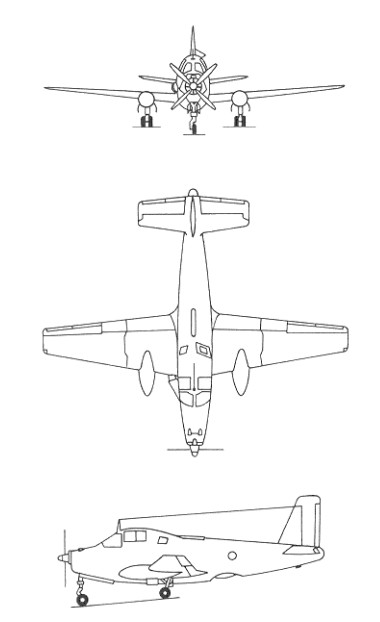
Breguet received a development contract in 1954 for a three seat ASW version. Power was provided by a 2,100 eshp Rolls Royce Dart turboprop, and the first Dart powered prototype flew on 6 October 1956 followed by five pre-production aircraft.
The Br.1050 is a most distinct-looking aircraft, particularly in the design of the nose assembly. A crew of three monitors the various systems aboard the craft and the wings are designed to be carrier-friendly and fold for storage.
Fuel is in four tanks in the inner wings and one fuselage tank, with a total capacity of 462 Imp.Gal. There was provision for a 105 Imp.Gal auxiliary tank.
The Alize carried three depth charges or a torpedo in the internal weapon bay, sonobuoys in the wheel housings, and more depth charges, rockets, or two AS.12 air to-surface missiles on under-fuselage/wing stations. The racks under the inner wings hold two depth charges of up to 385 lb each.
Orders for 75 production Alizes were placed by the French Navy and the first was officially delivered on 20 May 1959. Sixty-five were in service by May 1961. Two French Navy squadrons operated Alizes on board the carriers Foch and Clemenceau.
A further contract for Alizes was received subsequently from the Indian Navy and 12 were delivered, plus two ex-French aircraft.
Breguet Br 1050 Alizé Engine: Rolls Royce Dart R Da 21, 2100 shp, 1450kW Length: 45.505 ft / 13.87 m Height: 14.993 ft / 4.57 m Wingspan: 51 ft 2 in / 15.6 m Wing area: 36.0 sq.m / 387.50 sq ft Max take off weight: 18081.0 lb / 8200.0 kg Empty weight: 5700 kg / 12566 lb Max. speed: 243 kts / 450 km/h Cruise speed: 370 km/h / 230 mph Service ceiling: 20505 ft / 6250 m Range: 1550 nm / 2870 km Maximum Range: 1,785miles (2,872km) Crew: 3 Armament: 1 x Tordedo or 3 x Depth Charges (held in an internal bay) 2 x Depth Charges (externally held) 6 x RP or 2 x air-to-surface missiles (underwing) Hardpoints: 8
Br 1050-ASM Engine: Rolls-Royce Dart R.Da.7 Wingspan: 51 ft 2 in Wing area: 387.5 sq.ft Length: 40 ft 4.25 in Loaded weight: 18.078 lb Max speed: 276 mph Endurance: 4 hr
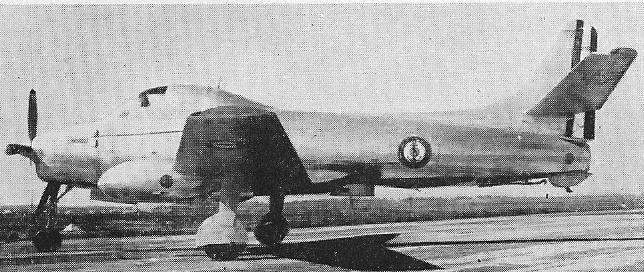
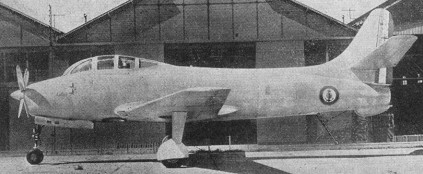
Initially a Breguet design known as the Br.960 “Vultur” and designed as a conventional strike aircraft, the Br.960 grew into the Br.965 as French Navy requirements changed. The resulting Br.965 aerodynamic test vehicle later became the definitive anti-submarine warfare system designated as the Br.1050.
The Br.965 was actually the second prototype Type 960 Vultur with the 1320 hp Armstrong Siddeley Mamba A.S.Ma.3 turboprop retained but the 5000 lb thrust Hispano-Suiza Nene 104 deleted, provision made for a third crew member, and radar equipment mounted on the wing.
The 965 first flew on 26 March 1955 and a pre-production batch of five generally similar Type 1050-ASM were ordered.
The Breguet 690 Vultur design of 1948 was a mixed-powerplant design incorporating an Armstrong Siddeley Mamba turboprop in the nose and a Hispano-Suiza Nene turbojet in the rear fuselage. The jet provided additional thrust for combat performance and take-off. Experience with the Vultur, first flown on 3 August 1951, led the French navy to abandon the idea of such a powerplant for a strike aircraft. Instead, Breguet was contracted to develop a three-seat carrier-based anti-submarine aircraft from the Vultur.
Engines: 1 x Armstrong Siddeley Mamba turboprop & 1 x Hispano Nene turbojet.
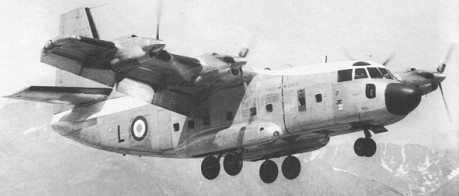
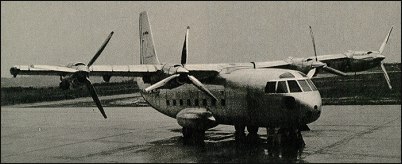
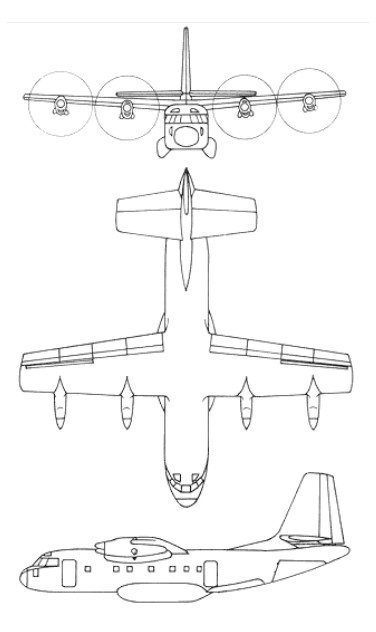
A Breguet designed four-engined STOL transport that would be suitable for civil or military use the Bre.941 relied upon the deflected-slipstream technique to generate additional lift. The four engines were mounted in nacelles at the wing leading edges so that slipstream from the propellers was distributed over the entire span of the wing.
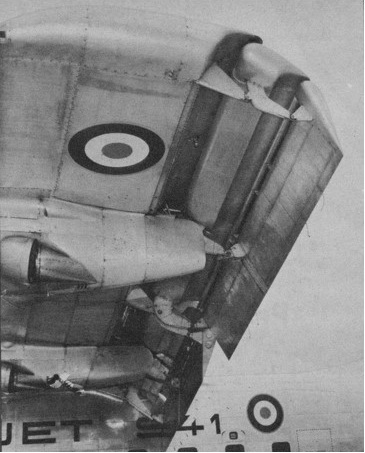
Only 17% prop thrust is lost should one of the four 1250 shp Turbomeca Turmo IIID shaft turbines fail during takeoff since all props remain operative. Four 13 ft 8.5in diameter Ratier-Figeac hydraulically operated variable pitch fully reversible propellers provide airflow across the full 76 ft 1 in wing span. High-lift for slow speed is obtained by deflecting the slipstream with full span double-slotted flaps that work through 100 degrees, plus four hinged spoilers on each wing. Ailerons which extend across 42% of wing also droop for STOL operation.
Full-span double-slotted trailing edge flaps were provided, these also being within the slipstream when deployed to maximise their effect, and with no wing trailing edge available for ailerons to be installed for roll control, four hinged spoilers were provided on the upper surface of each wing.
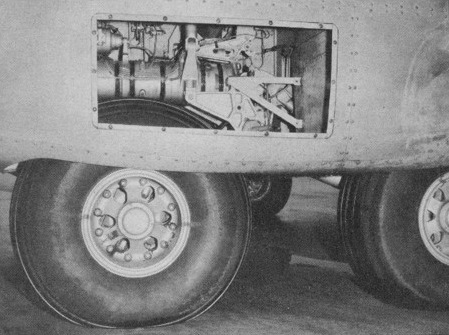
Once power settings of the four engines are made by individual controls, uniform rpm is maintained by the co-pilot’s single long-arm throttle at the right of the console. In the pilot’s position duplicate master throttle is to the left of seat. Downward visibility windows are on each side of cockpit at end of instrument panel. Main landing gear which retracts into fairings on each side of fuselage is the Messier “Jockey” trailing arm design where two wheels of each unit are hydraulically interconnected. This provides wheel movement in both fore-and-aft and vertical directions for rough terrain operations.
The French air ministry ordered a prototype on 22 February 1960. It was of cantilever high-wing configuration, with an upswept rear fuselage to incorporate a rear loading ramp. Undercarriage was retractable tricycle landing gear that incorporated twin nosewheels, with tandem-wheel main units that retracted into fairings on each side of the fuselage. Powerplant was four 895kW Turbomeca Turmo HID turboprops, and the prototype was flown for the first time on 1 June 1961. Subsequent testing of the prototype resulted in Breguet receiving a contract from the French government for the supply of four production transports under the designation Breguet 941S. Production aircraft were fitted with more powerful Turbomeca Turmo engines, a longer nose to permit the installation of a large radome, and modification of the rear cargo door to allow for the airdrop of heavy loads.
Operated by a crew of two, these aircraft could carry up to 57 civil passengers, or 40 fully-equipped troops, or 24 stretchers. The first of the production Br.941S aircraft made its initial flight on 19 April 1967, and testing proved that with an all-up weight of 22000kg, which was in excess of an assault mission take-off weight, the Br.941S could become airborne in only 185m.
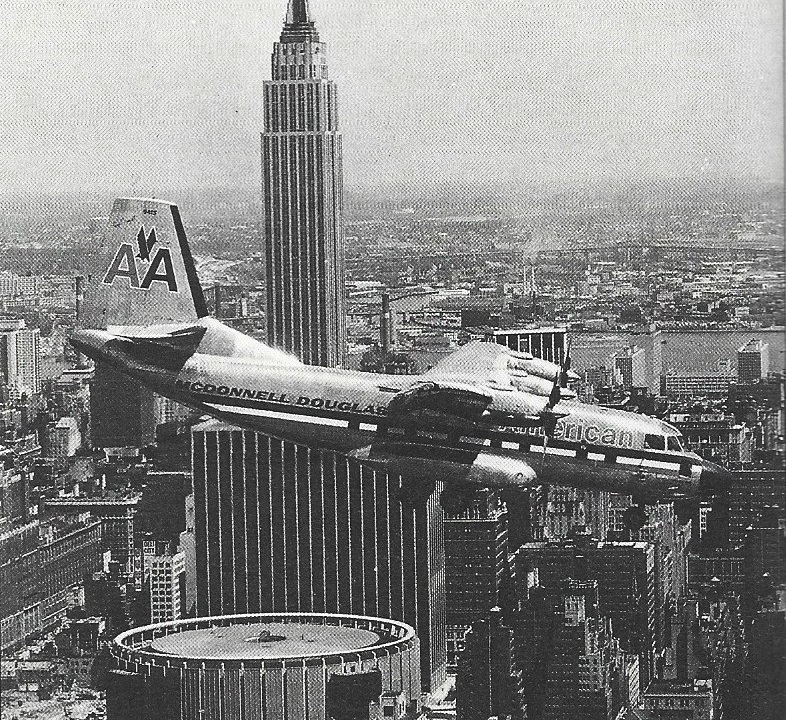
All four of the production aircraft entered service with the Armee de I’Air, but no additional examples were built. There had been hopes that, with assistance from the McDonnell Aircraft Corporation, orders might be generated in the USA, but despite a demonstration tour in America, no production orders were received.
As there was a possibility the 941 may be made under licence in the US, during the 1969 demonstration tour it was designated McDonnell 188.
Engines: 4 x Turbomeca Turmo III D-3 turbo-prop, 1105kW Wingspan: 23.4 m / 76 ft 9 in Length: 23.8 m / 72 ft 11.5 in Height: 9.4 m / 30 ft 7 in Wing area: 83.4 sq.m / 897.71 sq ft Take-off weight: 26500 kg / 58423 lb Empty weight: 13120 kg / 28925 lb Max payload: 15,000 lb Max. speed: 520 km/h / 323 mph Max speed at 10,000ft: 280 mph Cruise speed: 480 km/h / 298 mph Stall: 56 mph Ceiling: 8500 m / 27900 ft Range w/max.fuel: 3100 km / 1926 miles Range w/max.payload: 800 km / 497 miles Landing dist: 360 ft Crew: 2 Passengers: 55-60





 All Aero