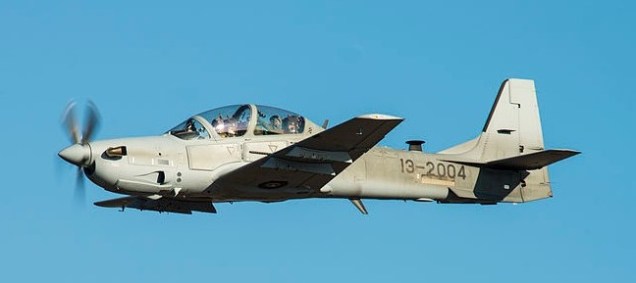
EMBRAER EMB-314 A-29 Super Tucano

During the mid-1980s, Embraer was working on the Short Tucano alongside a new version designed EMB-312G1, carrying the same Garrett engine. The EMB-312G1 prototype flew for the first time in July 1986. However, the project was dropped because the Brazilian Air Force was not interested in it. Nonetheless, the lessons from recent combat use of the aircraft in Peru and Venezuela led Embraer to keep up the studies. Besides a trainer, it researched a helicopter attack version designated “helicopter killer” or EMB-312H. The study was stimulated by the unsuccessful bid for the US military Joint Primary Aircraft Training System program. A proof-of-concept prototype flew for the first time in September 1991. The aircraft features a 1.37-m (4.49-ft) fuselage extension with the addition of sections before and after of the cockpit to restore its center of gravity and stability, a strengthened airframe, cockpit pressurization, and stretched nose to house the more powerful PT6A-67R (1,424 shp) engine. Two new prototypes with the PT6A-68A (1,250 shp) engine were built in 1993. The second prototype flew for the first time in May 1993 and the third prototype flew in October 1993.
The request for a light attack aircraft was part of the Brazilian government’s Amazon Surveillance System project. This aircraft would fly with the R-99A and R-99B aircraft then in service and be used to intercept illegal aircraft flights and patrol Brazil’s borders. The ALX project was then created by the Brazilian Air Force, which was also in need of a military trainer to replace the Embraer EMB 326GB Xavante. The new aircraft was to be suited to the Amazon region (high temperature, moisture, and precipitation; low threat). The ALX was then specified as a turboprop engine aircraft with a long range and autonomy, able to operate night and day, in any meteorological conditions, and able to land on short airfields lacking infrastructure.

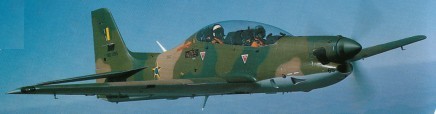
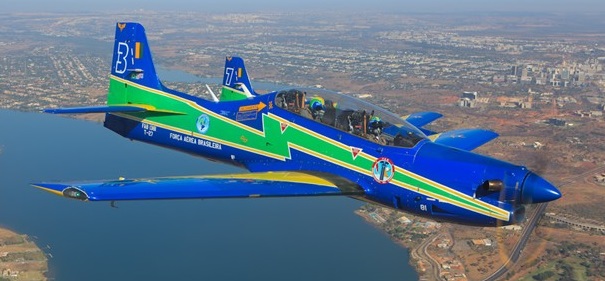
The Embraer EMB 314 Super Tucano, also named ALX or A-29, turboprop light attack aircraft is designed to operate in high temperature and humidity conditions in extremely rugged terrain, the Super Tucano is highly maneuverable, has a low heat signature, and incorporates fourth-generation avionics and weapons systems to deliver precision-guided munitions.
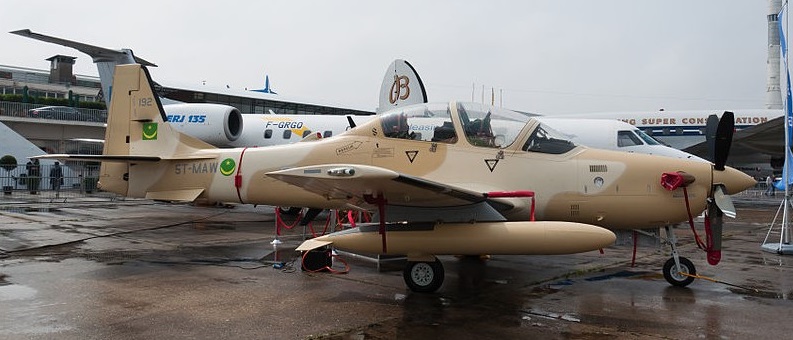
Mauritania AF A-29B 5T-MAW

In August 1995, the Brazilian Ministry of Aeronautics awarded Embraer a $50 million contract for ALX development. Two EMB-312Hs were updated to serve as ALX prototypes. These made their initial flights in their new configuration in 1996 and 1997, respectively. The initial flight of a production-configured ALX, further modified from one of the prototypes, occurred on 2 June 1999 (PT-ZTW).

The second prototype was brought up to two-seater configuration and performed its first flight on 22 October 1999. The changes had been so considerable that the type was given a new designation, the EMB-314 Super Tucano. The total cost of the aircraft development was quoted to be between US$200 million and US$300 million.
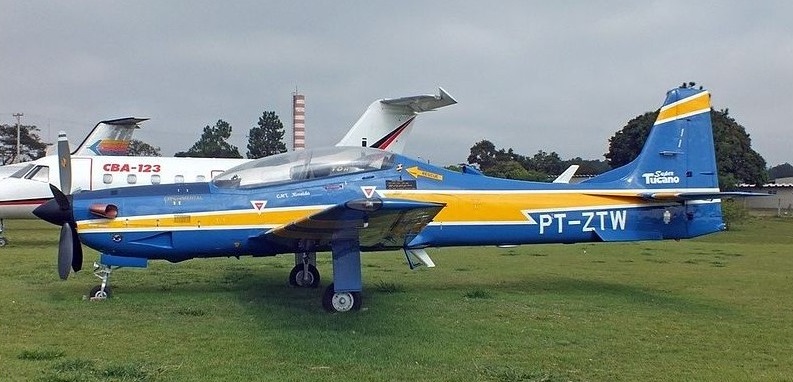
EMB-312H Prototype PT-ZTW first flew on 9 September 1991, and currently is on display at the Memorial Aeroespacial Brasileiro in São José dos Campos.

EMB-312H Prototype PT-ZTW first flew on 9 September 1991, and currently is on display at the Memorial Aeroespacial Brasileiro in São José dos Campos.

Variants:

A-29A
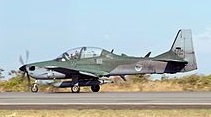
A-29A

Single-seater for attack and armed reconnaissance (on interdiction tasks), attack and cover (on close air support tasks), able to intercept and destroy low-performance aircraft, incorporates an additional fuel tank (+ 400 liters)

A-29B
Twin-seater for the same tasks as the single-seat version, also used in training and advanced aerial control (on monitoring tasks)

Operators:
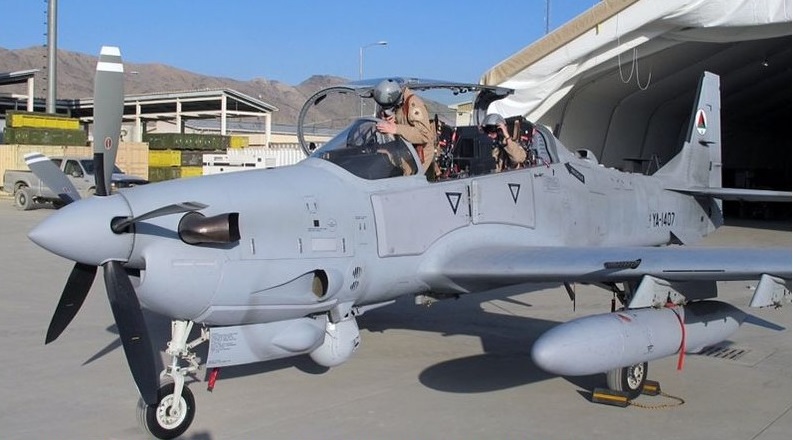
Afghan Air Force Embraer A-29 Super Tucano

Afghan Air Force – 20 aircraft ordered. The first aircraft were delivered in 2016 and the last were to be in service by late 2018. The first A-29 Super Tucano of the Pentagon’s Light Air Support (LAS) program, destined for the Afghan Air Force, delivered to the US Air Force in Jacksonville, Florida, by the Sierra Nevada Corporation and Embraer in September 2014. The first eight Afghan airmen are trained in the US to form a new Afghan fighter squadron. The first four aircraft arrived in-country at Hamid Karzai International Airport in Kabul on the 15 January 2016. Four more were delivered in July 2016, and an additional four arrived in March 2017, bringing the total of delivered Super Tucanos to 12.

National Air Force of Angola – six aircraft ordered. Deliveries were scheduled to begin in early 2012; but the first three delivered on 31 January 2013.

Brazilian Air Force – 99 aircraft (33 A-29A & 66 A-29B). At least 4 aircraft lost.
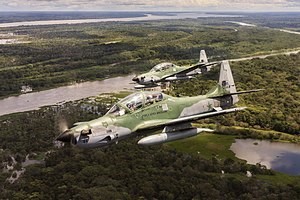
Air Force of Burkina Faso – 3 aircraft delivered in September 2011 of version A-29B.

Chilean Air Force – 12 aircraft.

Colombian Air Force – 25 aircraft, introduced between 2006 and 2008.
At least one aircraft crashed, claimed shot down by FARC.

Dominican Air Force – 8 aircraft

Ecuadorian Air Force – 18 aircraft, all delivered by 2011.

Ghana Air Force – 5 aircraft ordered in 2015.

Honduran Air Force – 2 aircraft ordered in 2014.

Indonesian Air Force – 16 aircraft ordered & delivered, one lost in a crash February 2016. The first four aircraft of the first batch of eight were delivered as of August 2012, the delivery of the second batch of four aircraft was delayed till September 2014. A total of 16 were ordered in 2011 with deliveries taking place in 2012, 2014, 2015 and 2016.

Lebanese Air Force – 2 A-29s delivered in October 2017, 4 more to be delivered in 2018.

Mali Air Force – 6 A-29 on order.

Mauritanian Air Force – 4 aircraft ordered, received two aircraft as of December 2012, two more aircraft on order.

Nigerian Air Force – 12 aircraft on order

Senegalese Air Force – 3 aircraft on order.

EP Aviation – part of Academi (formerly Blackwater) – at least one twin-seater variant for pilot training (delivered in February 2008).

United States Navy leased an aircraft for testing, as part of the Imminent Fury program.

The first A-29 Super Tucano of the Pentagon’s Light Air Support (LAS) program, destined for the Afghan Air Force, has been delivered to the US Air Force in Jacksonville, Florida by the Sierra Nevada Corporation and Embraer in September 2014. The LAS contract was developed by the Pentagon to supply Afghanistan’s military with 20 planes, which should ensure air superiority in the country after the majority of US forces leave. Because the contract is a foreign military sale, Nevada-based SNC and Brazil-based Embraer deliver the planes to the Air Force, which then passes them on to the Afghan military. The first of 20 A-29 Super Tucano aircraft arrived at Moody Air Force Base on September 26, 2014 in preparation for the Afghanistan pilot and maintenance training mission.

EMB 314 Super Tucano
Engine: 1 × Pratt & Whitney Canada PT6A-68C turboprop, 1,196 kW (1,600 shp)
Propeller: Hartzell 5-blade constant speed, fully feathering, reversible-pitch propeller
Wingspan: 11.14 m (36 ft 6.5 in)
Wing area: 19.4 sq.m (208.8 sq ft)
Length: 11.38 m (37 ft 4 in)
Height: 3.97 m (13 ft 0.25 in)
Empty weight: 3,200 kg (7,055 lb)
Max. takeoff weight: 5,400 kg (11,905 lb)
Payload: 1,500 kg (3,307 lb)
Maximum speed: 590 km/h (319 knots, 367 mph)
Cruise speed: 520 km/h (281 knots, 323 mph)
Stall speed: 148 km/h (80 knots, 92 mph)
Service ceiling: 10,668 m (35,000 ft)
Rate of climb: 16.4 m/s (3,242 ft/min)
Range: 720 nmi (827 mi, 1,330 km)
Combat radius: 550 km (300 nmi, 342 mi) (hi-lo-hi profile, 1,500 kg (3,300 lb) of external stores)
Ferry range: 1,541 nmi (1,774 mi, 2,855 km)
Endurance: 8hrs 24mins
g-limit: +7/-3.5 g)
Crew: Pilot plus one navigator/student
Armament: 2× 12.7 mm (0.50 in) 1,100 rounds per minute FN Herstal M3P machine guns, one in each wing.
Hardpoints: 5 (two under each wing and one under fuselage centreline) with a capacity of 1,550 kg (3,300 lb)
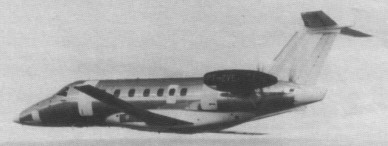
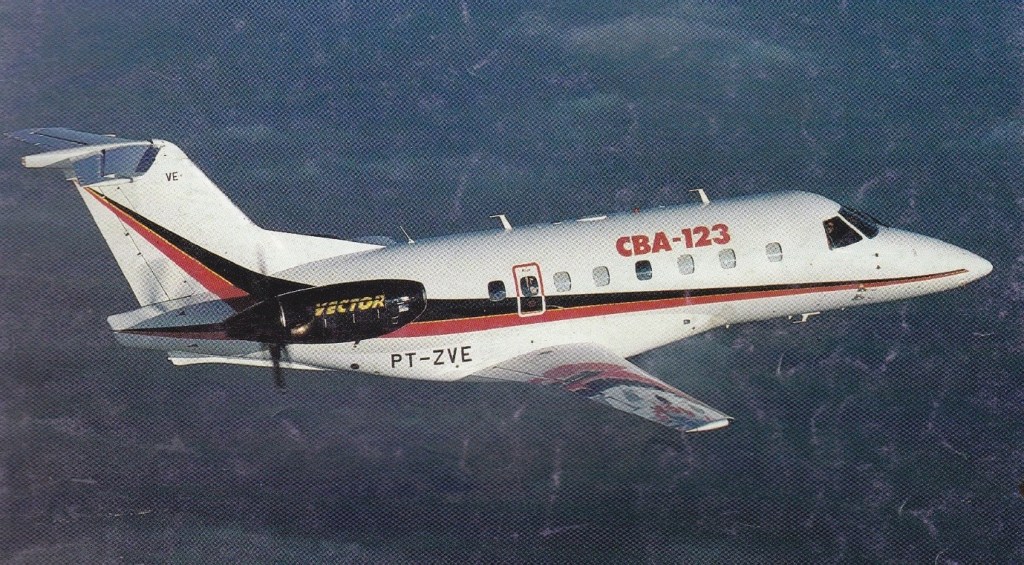
EMBRAER CBA-123 Vector

The 19-seat CBA-123 (Co-operation Brazil Argentina) Vector is the outcome of the 1986 collaboration agreement between Embraer and FMA. Support for the programme has been pledged by the Brazilian and Argentine governments, and paid options have been taken on 150 aircraft. The Vector carries two 2,081 shp (1 552 kW) Garrett TPF351-20 turboprops. Two flying prototypes will be built in Brazil and a third in Argentina, for certification in 1991.

EMBRAER CBA-123 Vector Article

The first prototype of the CB 123 made its first flight on 18 July 1990 from Embraer’s airfield in Sao Paulo, Brasil. The aircraft, prototype 801, registered PT ZVE, flew for one hour 20 minutes with a three-man crew in a flight devoted to evaluation of performance, handling and systems operation. Flaps and landing gears were cycled and the aircraft was assessed as to longitudinal stability. The un-painted prototype took off at a weight of 18,500 lb / 8300 kg and reached maximum and minimum speeds of 180 kt / 334 kph and 105 kt / 195 kph. The maximum altitude reached was 20,000 ft / 696 m.

The prototype weighed 18,300 lb on take off and attained maximum and minimum speeds during the flight of 180 knots IAS and 105 knots IAS respectively. Maximum altitude reached was 20,000 ft.

Engines: 2 x Garrett TPF351-20 turboprops, 2,081 shp (1 552 kW)

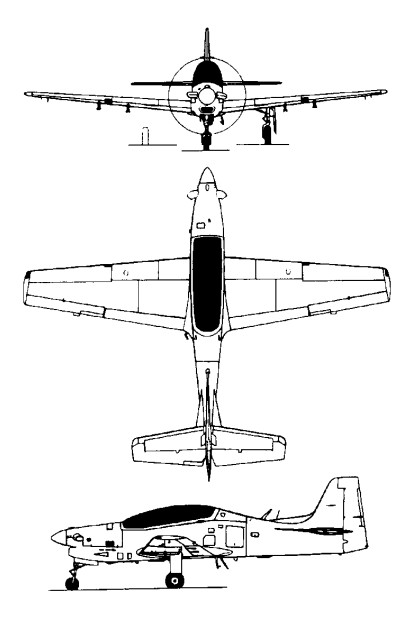
EMBRAER EMB-312 Tucano / EMB 314 Super Tucano / Shorts Tucano

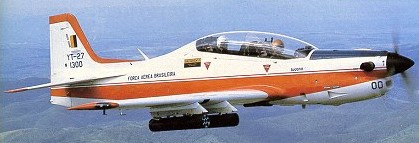
Work on the development of a new basic trainer for the Brazilian air force began in January 1978, the product of a design team led by Ing. Joseph Kovacs. A contract for two prototypes and two static test airframes was awarded to the company by the Brazilian Ministry of Aeronautics on 6 December 1978. Given the company designation EMBRAER EMB-312 and known to the Brazilian air force as the T-27, the type was named Tucano (Toucan) on 23 October 1981.

EMBRAER EMB-312 Tucano Article

A conventional-looking cantilever low-wing monoplane of light alloy construction, the EMB-312 has retractable tricycle landing gear, enclosed cabin accommodation for two in tandem seated on Martin-Baker ejection seats, and power provided by a Pratt & Whitney Aircraft of Canada PT6A turboprop engine.
The prototype flew for the first time on 16 August 1980 followed by a second on 10 December. A third, built to full production standards, flew in August 1982.

The third prototype incorporated the various modifications to be standardised on the production model. These included provision of an enlarged dorsal fin (retrofitted to the prototypes) to improve stability; reinforced wing hardpoints permitting the external load to be increased from 1323 lb / 600 kg to 2205 lb / 1000 kg; improved cabin ventilation control and air conditioning; better cabin sealing and lighting; redesigned aft fuselage inspection windows; a new modular circuit breaker panel an d engine relight facilities.

By July 1982 testing with external ordnance the Tucano proved capable of 4.4g with four 551 lb / 250 kg bombs (its maximum external load) and of up to 6.0g with 408 lb / 185 kg on each store station. Specifications revealed some weight increases, basic empty weight rising to 3946 lb / 1790 kg, max clean take-off weight to 5622 lb / 2550 kg and max loaded weight to 7044 lb / 3195 kg. These gave some minor performance reductions, maximum level speed to 284 mph / 458 kph at 13,500 ft / 4115 m and maximum initial climb as 1900 fpm / 9.65 m/sec.

Initial deliveries to the Brazilian air force were made in September 1983.

Embraer T-27 Tucano

Ordered by the FAB to replace the Cessna T-37, the type has since found world acceptance and by the middle of 1991 over 350 had been delivered out of 376 firmly ordered, with a further 86 on option. Tucano customers are the Brazilian air force (128), Honduras (12), Egypt (54), Iraq (80), Venezuela (31), Peru (20), Argentina (30), Paraguay (6) and Iran (15).

Argentina received its first five aircraft, from an order for 30, on May 21, 1987. Peru took delivery of its first EMB.312 in April 1987, and in the same month Venezuela received its 30th and last Tucano. The Brazilian Air Force’s 118th aircraft was deliv¬ered in May 1986, and by June 1987 281 had been delivered to eight customers.
Egypt is licence-building the Tucano, both for its own use and for Iraq. Embraer supplied ten complete aircraft at the end of 1984, and by April 1987 had delivered the 100th CKD kit to the Arab Organisation for Industrialisation’s Kader Factory. The combined Egyptian/Iraqi order was for 120 Tucanos, plus options.

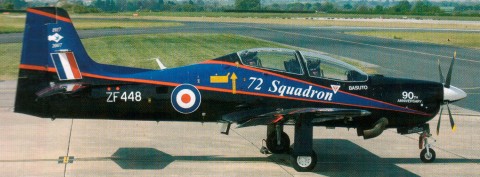
An uprated version was ordered by the UK government in March 1985 to replace Jet Provosts in the Royai Air Force and 130 were in production as the Shorts Tucano T.Mk 1, with 15 more on option. The extensively developed version features a strengthened airframe and significantly enhanced performance powewed by an 820kW Garrett TPE331-12B engine, and has itself attracted orders from Kenya (12) and Kuwait (16). The first Garrett powered aircraft flew in Brazil on February 14, 1986. The first Shorts-built Tucano flew in December 1986, deliveries to the RAF began in June 1987, and about 60 had been built and delivered by mid-1991. Although superficially similar to the original Brazilian-designed aircraft the Shorts Tucano is considerably different to meet the Service’s requirements. The original PT6A has been replaced by 1,100 shp (820 kW) Garrett TPE331-12B turboprop, a ventral airbrake added, a new cockpit layout provided and the structure strengthened for a fatigue life of 12,000 hours. Four underwing hardpoints can be fitted for export customers.

Shorts Tucano

The Embraer EMB 314 Super Tucano Brazilian turboprop aircraft designed for light attack & counter insurgency first flew on 2 June 1999.

Replica: Flying Legends Tucano

Gallery

Variants;
Tucano T.Mk 1: basic trainer version developed and built by Short Brothers in Belfast, in collaboration with EMBRAER. One-hundred-and-thirty, each powered by a Garrett TPE331-12B engine driving a Hartzell four-bladed propeller, ordered for RAF.
Tucano T.Mk 51: Twelve Shorts-built armed aircraft ordered by Kenyan air force in 1988 for weapons training. First example flown in October 1989 and delivered in 1990.
Tucano T.Mk 52: Sixteen Shorts-built basic trainers ordered by Kuwait air force in February 1989 for delivery in 1991.

EMB-312
Engine; 1 x Pratt & Whitney Aircraft Canada PT6A-25A, 560 kW
Max take-off weight; 3175 kg / 7000 lb
Empty weight; 1790 kg / 3946 lb
Wingspan; 11.14 m / 36 ft 7 in
Length; 9.86 m / 32 ft 4 in
Height; 3.40 m / 11 ft 2 in
Wing area; 19.40 sq.m / 208.82 sq ft
Max. speed; 242 kt / 448 km/h / 278 mph
Cruise speed; 319 km/h / 198 mph
Landing speed : 67 kt / 124 km/h
Initial ROC: 644 m/min / 2165ft/min / 11.0 m/s
Service Ceiling: 9150 m / 30000 ft
Fuel internal: 695 lt.
Range w/max.fuel; 1844 km / 1146 miles
T/O run: 380 m.
Ldg run: 370 m
Crew; 2
Warload: ext. 1000 kg
Combat radius: 795 km

Shorts Tucano
Engine; 1,100 shp (820 kW) Garrett TPE331-12B turboprop

EMBRAER EMB-121 Xingu

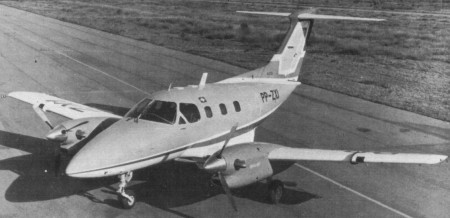
The pressurised EMBRAER EMB-121 Xingu featured a reduced-span version of the EMB-110P wing, a fuselage of circular cross-section similar to that of the Brasilia, and followed the same general configuration with twin turboprop engines and retractable tricycle landing gear, but differed by having a cantilever T-tail.

EMBRAER EMB-121 Xingu Article

The first pressurized twin turboprop general purpose transport to be built in Brazil, it had accommodation for a crew of two and nine passengers.
The prototype Xingu (PP ZXI) flew for the first time on 10 October 1976, followed by the first production aircraft just over six months later.
The Xingu has PT6A 28 engines, six psi pressurisation, an anticipated cruise of 265 knots at 12,000 feet, a five to nine place cabin and max gross of 11,000 pounds.
The original version, designated EMB-121A Xingu I, was powered by two Pratt & Whitney Canada PT6A-28 turboprop engines. From this was developed the EMB-121A1 Xingu II with 559kW PT6A-135 turboprops, these being available also as retrofits for the Xingu I. Thirty-two earlier machines were later reworked to this standard.
A prototype of the EMB-121V Xingu III was flown. It was generally similar to its predecessors except that it had the fuselage lengthened by 0.89m, and was powered by two 634kW PT6A-42 engines. Seating the same number of passengers but in greater comfort, the Xingu III featured an optional ‘club’ layout for seven passengers, with folding tables and a galley.
A total of 111 were built, including six for use by the special transport group of the Brazilian air force under the designation VU-9 as a VIP transport. Other users include the French navy and air force with 41 aircraft as multi-engined trainers and liaison aircraft, and five others serve with the SABENA pilot training school.
Production of the Xingu 121 ended in 1986.

EMB-121A Xingu I
Engines: 2 x Pratt & Whitney Aircraft of Canada PT6A-28 turboprops, 507kW
Max take-off weight; 5670 kg / 12500 lb
Loaded weight; 3620 kg / 7981 lb
Wingspan; 14.45 m / 47 ft 5 in
Length; 12.25 m / 40 ft 2 in
Height; 4.74 m / 15 ft 7 in
Wing area; 27.5 sq.m / 296.01 sq ft
Max. speed; 450 km/h / 280 mph
Cruise speed; 365 km/h / 227 mph
Ceiling; 7925 m / 26000 ft
Range; 2270 km / 1411 miles

EMB-121 Xingu II
Engine: 2 x P&WAC PT6A.
Installed pwr: 1120 kW.
Span: 14.4 m.
Length: 12.2 m.
Wing area: 27.5 sq.m.
Empty wt: 3710 kg.
MTOW: 5670 kg.
Payload: 780 kg.
Cruise speed: 465 kph.
Initial ROC: 550 m / min.
Ceiling: 8540 m.
T/O run: 580 m.
Ldg run: 560 m.
Fuel internal: 1720 lt.
Range/payload: 1630 km with 780 kg.
Capacity: 7 pax.

EMB-121V Xingu III
Engine: 2 x 634kW PT6A-42
Length: 13.09 m.
Span: 14.4 m.
Wing area: 27.5 sq.m.
Capacity: 7 pax.

EMBRAER EMB-120 Brasilia

EMB-120RT

Encouraged by the successful penetration of the commuter airline market by the EMB-110 Bandeirante, EMBRAER initiated design studies for a completely new and pressurised twin-turboprop regional airliner in September 1979.

EMBRAER EMB-120 Brasilia Article

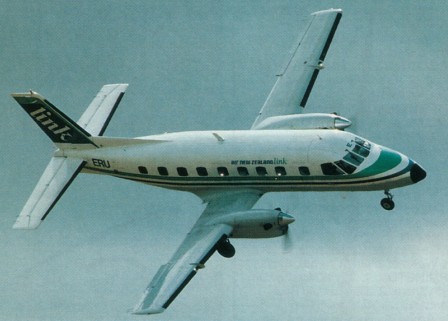
Designated the EMBRAER EMB-120 Brasilia, the prototype flew for the first time on 27 July 1983 and certification was achieved by May 1985. Primary design objective was to carry a full 30-passenger payload for up to three 185km sectors without refuelling. The fuselage has an interior diameter of 2.28m and a cabin height of 1.76m, the aisle being offset by the two-and-one seating arrangement. In cargo configuration the Brasilia has a maximum available cabin volume of 31.1cu.m and is fitted with a cargo door in the starboard side of the rear fuselage.
Powered by advanced-technology Pratt & Whitney Canada PW118 turbo-props driving four-bladed Hamilton Standard 14RF-9 propellers, the engines can be ground-run without turning the propellers to facilitate speedier turn-rounds, thus obviating the need to shut down during loading or unloading. The starboard engine can act as an auxiliary power unit, to provide ground electrical power and cabin air-conditioning, but a conventional APU is optional. Composite materials equivalent to ten per cent of the aircraft’s basic empty weight have been used in the construction of the Brasilia.
Deliveries began in June 1985 and by 1990 more than 500 orders and options had been recorded, for operators in three continents. In addition to airline use, the EMB-120 Brasilia is in service with the Forca Aerea Brasileira as the C-97 and VIP VC-97.
By early 1991 more than 200 had been delivered and the production rate was six per month.
The EMB 120ER model is the basis for Embraer’s regional jets.

Embraer EMB 120 Brasilia
Engines: 2 x Pratt & Whitney Aircraft of Canada PW118 turboprops, 1342kW / 1,800 shp
Props: 4 blade
Length: 65 ft 7 in / 20.0 m
Height: 20 ft 10 in / 6.4 m
Wingspan: 64 ft 11 in / 19.8 m
Wing area: 424.102 sqft / 39.4 sq.m
Max take off weight: 25357.5 lb / 11500.0 kg
Weight empty: 15589.4 lb / 7070.0 kg
Max. weight carried: 9768.2 lb / 4430.0 kg
Max. speed: 328 kts / 608 km/h
Landing speed: 87 kts / 162 km/h
Cruising speed: 260 kts / 482 km/h
Initial climb rate: 2125.98 ft/min / 10.80 m/s
Service ceiling: 29806 ft / 9085 m
Wing loading: 59.86 lb/sq.ft / 292.00 kg/sq.m
Range: 945 nm / 1750 km / 1087 miles
Crew: 2
Payload: 30pax

EMB-120RT

EMBRAER EMB-110 Bandeirante / EMBRAER YC-95 / EMBRAER EMB-111

EMB-110P2

In 1965 a government initiative to develop a light twin turbo-prop for the Brazilian Air Force led to the formation of Embraer four years later. Though initially this design requirement was for a military transport of only 7-9 seats, it was quickly realised that a substantial civil market also existed.
Designed under the guidance of French designer Max Holste, the first of three prototypes, designated YC-95, flew for the first time on 26 October 1968. Though initially still only a 7-9 seater, the final design had the development potential to be stretched to meet the larger 15-seat and upward commuter market.
The first EMB.110 flew on August 9, 1972, and deliveries to the Brazilian Air Force began in February 1972.

EMBRAER EMB-110 Bandeirante Article

In early 1973 the first three production EMB-110 Bandeirantres were formally delivered to the Brazilian Air Force.
At about this stage an airworthiness certificate was also granted for the 15-seat civil version, the EMB-110C and later that year a further three were delivered to the private domestic airline Trans Brazil. Powered by twin 680 shp Pratt and Whitney PT-6A-27 turboprops with reversible pitch and auto feathering capability, these first Bandeirantes had a range of around a thousand miles and speeds up to 220 knots. Seating was for 15 passengers and two crew. However it was not until 1975 that the Bandeirante achieved its first real breakthrough, when the Brazilian Government established a third-level network. Though in part this was to release the major carriers from the necessity to continue servicing uneconomical routes with large aircraft, the other result was to provide a vastly extended market for the Bandeirante. Over the next few years a number of third-level carriers re-equipped with Embraer’s commuter-liner until some 45 Bandeirantes were in service throughout Brazil on the regional network.
Embraer produced the P1 and P2 variants, specifically designed for the export market. Both aircraft engined with the PT6A-34 of 750 shp, and carry up to 21 passengers in three-abreast seating. Each model is identical, except for their door arrangement. The P1 Bandeirante being designed as a quick change airliner with airstairs at the front and big top-hinged cargo door at the rear. The P2 version comes with dual airstairs front and rear, for fast whistlestop turnarounds. Both aircraft are designed for a 30,000 hour life cycle.
France issued airworthiness certfication in late ‘77. U.S. and United Kingdom certification followed in August 1978.
A cantilever low-wing monoplane, primarily of metal construction, the Bandeirante has a conventional fuselage and tail unit, retractable tricycle landing gear and power provided by two Pratt & Whitney Aircraft of Canada PT6A-34 free-turbine turboprops in wing-mounted nacelles. The two Pratt & Whitney PT6A turboprop engines are flat-rated at 750 shp maximum continuous power at 2,200 propeller rpm. The propellers are three-blade Hartzells with automatic synchronization and full beta-control reversing. Seating varies according to role, but the EMB-110P2 has accommodation for a maximum of 21 passengers. There’s a crew/passenger door at the front and passenger/baggage door at the rear, both on the port side.
By the beginning of 1979, 219 Bandeirantes of various models had been sold to some 40 operators around the world. The Bandeirante was available in more than 14 versions, differing in their equipment for specialized missions.
The EMB-110B1 Bandeirante was specially developed for aerophotogrammetric missions. Gyro-stabilised camera platform, electrically-operated ventral sliding camera hatch and dark-room cum toilet, all make for a specialised aircraft which can nevertheless still be easily reconverted back to a basic transporter.
Other specialist use versions include the EMB-110S1 for geophysical survey. Equipped with the more powerful PT6’s from the P1 and P2 aircraft, and with increased fuel capacity, the S1 has up to nine hours endurance.

Military versions of the EMB.110 are the P1K utility transport and the P1K SAR. The P1K SAR is fully equipped for over-water and overland search and rescue missions, as well as for medevac duties. This has accommodation for observers and a variety of rescue equipment, plus space for up to six stretcher patients. Five are operated by the Brazilian air force under the designation SC-95B. Others are the EC-95B calibration and XC-95B rain research versions.

EMB-111

The EMB-111 was developed as a land based maritime reconnaissance aircraft to meet the needs of the Comando Costeiro (Coastal Command) of the FAéB (Brazilian Air Force) and the first example (2262) flew on 15 August 1977.
Based on the EMB 110 Bandeirante, it differed primarily by the in¬troduction of a nose radome for search radar and the addition of wingtip fuel tanks and began to enter service in April 1978. In use with the Brazilian Air Force and the Chilean Navy.
Powered by a pair of 750 shp (560 kW) Pratt & Whitney PT6A-34 turboprops, the EMB¬111 features a nose-mounted ALL AN/APS-128 (SPAR-1) search radar, a wing mounted searchlight, tip tanks, wing-tip fuel tanks and wing hard-points for the carriage of weapons.
Ordered for the Brazilian air force, which designates them P 95, the first entered service in 11 April 1978 with ten hours endurance.
Examples have been supplied also to the Chilean navy and the air force of Gabon.

When production ceased in 1990, 500 Bandeirantes had been ordered and built, variants including the EMB-110, EMB-110/C-95, EMB-110 A/EC 95, EMB-110B/R-95, EMB-110B1, EMB-110C, EMBHOE(J), EMB-110K1/C-95A, EMB-110P, EMB-110P1K and EMB-110S1. The final production versions, progressive developments of earlier aircraft, included the EMB-110P1/C-95B for quick-change passenger/cargo operations; EMB-110P2/C-95C third-level commuter transport; and two versions corresponding to the foregoing for operations at a higher gross weight which have the respective designations EMB-110P1/41 and EMB-110P2/41 A pressurised version designated EMB-110P3, did not proceed.

Gallery

EMB-110
Engines: UACL, 600shp.
TBO: 3500hr.
Max cruise: 228mph.
Econ cruise: 183mph.
Fuel cap: 2920lb.
Service ceiling: 25,500ft.
SE service ceiling: 10,000ft.
ROC: 1700fpm.
SE ROC: 300fpm.
Min field length: 1803ft.
Payload with full fuel: 901lb.
Max range: 1109sm.
High speed range: 1020sm.
Max payload: 1966lb.
Range with max payload: 315sm.
Seats: 8.
Gross wt: 12,410lb.
Equipped empty wt: 9380lb.
Useful load: 3030lb.

EMB-110P2
Engines: 2 x P&W PT6A-34, 750 shp / 559kW
Props: Hartzell 3-blade, 93-in.
Seats: 21.
Length: 49 ft 6 in / 15.08 m
Height: 16 ft 2 in / 4.92 m
Wingspan : 50.262 ft / 15.32 m
Wing area : 312.156 sqft / 29.0 sq.m
Wing aspect ratio: 8.1.
Maximum ramp weight: 13,073 lbs.
Maximum takeoff weight: 13,007 lbs.
Standard empty weight: 7955 lbs.
Maximum useful load: 5118 lbs.
Zero-fuel weight: 12,015 lbs.
Maximum landing weight: 12,566 lbs.
Wing loading: 39.9 lbs/sq.ft.
Power loading: 8.3 lbs/hp.
Maximum usable fuel: 2948 lbs.
Best rate of climb: 1660 fpm.
Service ceiling: 22,500 ft.
Maximum single-engine rate of climb: 428 fpm @ 115 kts.
Single-engine climb gradient: 214 ft/nm.
Single-engine ceiling: 11,000 ft.
Maximum speed: 230 kts.
Normal cruise @ 10,000ft: 225 kts.
Fuel flow @ normal cruise: 638 pph.
Endurance at normal cruise: 4.1 hrs:
Stalling speed clean: 92 kts.
Stalling speed gear/flaps down: 73 kts.
Turbulent-air penetration speed: 169 kts.
Takeoff distance (50 ft.): 2,215 ft
Landing distance (50 ft.): 2,790 ft.
Crew: 2
Passenger capacity: 21

EMB-111
Engines: two 750 shp Pratt & Whitney Aircraft of Canada PT6A 34 turboprop.
Wing span: 52 ft 4.5 in (15.96m).
Length: 48.655 ft / 14.83 m
Height: 15.551 ft / 4.74 m
Wing area: 312.156 sq.ft / 29.0 sq.m
Max take off weight: 15435.0 lb / 7000.0 kg
Cruising speed: 172 kts / 318 km/h
Wing loading: 49.41 lbs/sq.ft / 241.0 kg/sq.m
Range: 1458 nm / 2700 km
Crew: 5

EMB-111

EKW C-36 / EKW C-3602 / EKW C-3603 / EKW C-3604 / EKW C-3605

C-3603

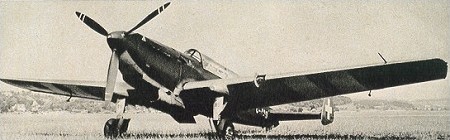
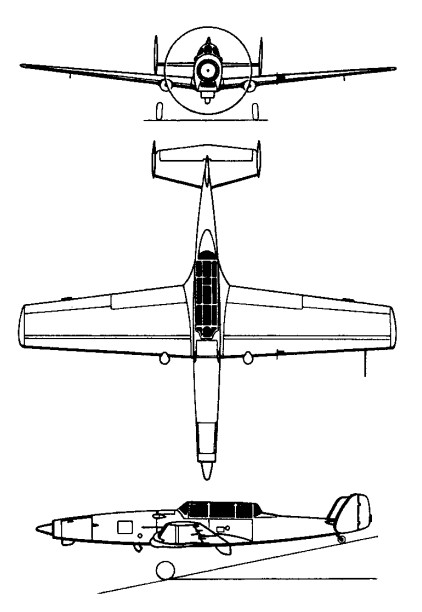
In 1934, the Swiss air arm, or Fliegertruppe, called upon the EKW (Eidgenossische Konstruktions Werkstätte, or Federal Construction Workshop) to design a new airplane that could combine the roles of fighter, reconnaissance and tactical sup¬port aircraft. EKW’s efforts to fulfill such a difficult requirement produced two very different blueprints. The C-35 biplane and the C-36, a mono¬plane with a metal cantilever-wing structure. The Swiss government judged the C-35 a surer prospect and the first of 80 production aircraft entered service at the end of 1937.
When war broke out in Europe in September 1939, the Fliegertruppe stepped up its patrols to guard its borders against both German and Allied intruders. At the same time, the C-36 blueprints were reconsidered.

By this time EKW had become EFW (Eidgenossische Flugzeug Werke), and the team at Emmen flew the first of the new aircraft on 23 February 1939.

EKW C-36 Article

The C 36 had developed into a modified sub type with twin tail fins designated C-3601, powered by the same 860 hp Hispano-Suiza 12Yers engine as the C 35 but now with a variable pitch propeller. On November 30, a second. aircraft, designated C 3602, flew with a 1000 hp Saurer built 12Y 51 engine and more reasonable speed of 510 km/h (317 mph).

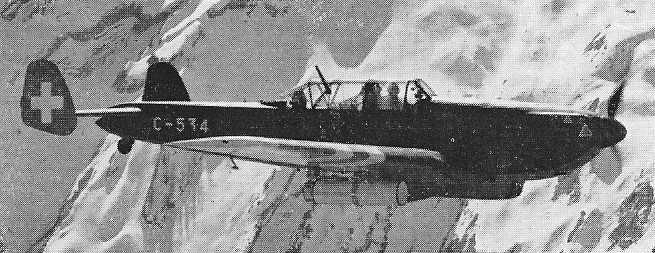
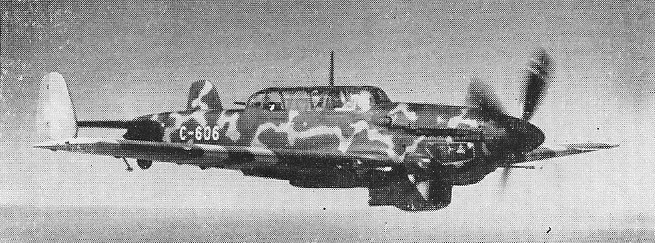
Following flight tests, modifications were made and an initial batch entered production as the C-3603, first flown on November 23, 1941. Ten were built, and after service evaluation a further 142 followed, serving with the Swiss air force between 1942 and 1952 in the combat role.

Ordered into production by three manufacturers—the Eidgenossische Flugzeugwerke (Federal Aircraft Factory, or EFW) at Emmen, Doflug at Alterirhein and Pilatus Allgemeine Gesellschaft at Stans, in 1942, the C-3603, as the principal operational variant was designated, entered service with the Fliegertruppe as a long-range reconnaissance and ground support plane.

Two others, designated C-3603-1 TR, were produced for training and parachute tests. In 1945 a C-3603-1 was converted for target-towing.

Further improvements followed, and in 1946 Farner-Werke at Grenchen converted a C-3603-1 into a more advanced target-tug. A long tube was fitted from the rear cockpit to eject the target sleeve above the taiiplane and between the twin fins, with a cable-cutting device available to the pilot. Twenty C-3603s were converted to this standard.

Unlike its predecessors the C 3603 had retractable landing gear, the legs folding to the rear with the wheels turning 90 degrees to lie inside the wings. Pilot and radio operator/ navigator sat under a ‘greenhouse’ canopy, the latter having a pair of 7.5 mm (0.295 in) machine guns. Two more such guns were fixed in the wings, and a 20 mm (0.79 in) Hispano fired through the propeller hub (engine was the same as the C 3602). Racks under the wings carried up to four 100 kg (220 lb) bombs or ten rocket projectiles (from 1945). By 1944 a total of 160 had been delivered and they remained in operational service until 1953.

The C-3603 was designed under the direction of EKW chief designer, J.Branger, and was just entering production when the Fliegertruppe was faced with a choice regarding engines and fuel. Until 1939, Swiss aircraft had relied on normal, high-octane petroleum fuel, which had to be imported and which might be in short supply due to the exigencies of war. If so, their flights would have to be limited to conserve existing stocks of the fuel. The alternative was to use K fuel, a wartime synthetic fuel produced at the Ems wood-processing plant. In order to maintain the level of crew training, the Swiss military decided to use the K fuel. The C-3603s then had to be modified to use the synthetic substance, and the designers were able to in¬corporate the necessary modifications into the C-3603-1 smoothly enough for production at the EFW plant of that newer variant to proceed in 1942, without a lag in overall production of the C-36 series. The C-3603-1 was powered by a 1,000-hp 12-cylinder Hispano-Suiza HS-51 12Y engine, built under license by SLM Winterthur and Adolph Saurer Allgemeine Gesellschaft in Arbon.

C-3603

Another wartime modification of the C-3603s was a change in the landing gear. After all Swiss tactical airfields were provided with paved runways, the plane’s wheel fairings, which were very unpopular with the maintenance staff, were removed. A floodlight was installed in the front portion of each undercarriage fairing to illuminate the taxiways during night flying operations.

By 1944, 144 C-3603s had been built, and six C-3603-ls would be added between 1947 and 1948. Stored components then were assembled into 11 complete aircraft, given 1,250-hp / 933kW Saurer YS-2 engines and designated C-3604s. On August 21, 1944 the faster C 3604, with three forward firing cannon, made its first flight and was rewarded by an order for 100. The type entering service in 1947-48. Spares produced for the C-3603 and not used enabled a further six C-3603-1 s to be assembled in 1948.

But within a year negotiations had been opened with de Havilland for manufacture of Vampire jets, and only 13 of the C 3604 model were built. All these machines stayed on Flugwaffe strength.

C-3604

In 1945, a C-3603-1 was converted into a Sehlepp, or target tug, and in 1946, the Farner Werke at Grenchen a more advanced version was evolved and fitted to 20 other aircraft within a year. During the early 1950s a requirement for an aircraft to tow illuminated targets at night was met with the conversion of a C-3603-1, and this machine remained in service until replaced by the C-3605 in 1972. By 1953, all 60 surviving aircraft had been converted to that role.

Further conversions of 40 C-3603-1 s to target-tugs began in 1953, while another aircraft was fitted beneath one wing with a winch built by ML Aviation in the UK for high-speed towing, and a ballast tank beneath the other wing. In the same year, 20 more C-3603-1s were converted by the military at Dubendorf for catastrophe relief using underwing supply containers.

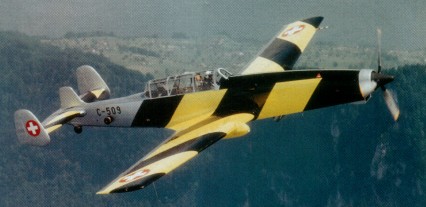
In the mid-1960s, Jean-Pierre Weibel, in charge of the EFW’s Structures Department, proposed that a new engine be adapted to the existing airframes when the Hispano-Suiza engines of the 40 C-3603-1 conversions began to wear out. The choice of a suitable engine was an 1,150-hp Avco Lycoming T53-L-7 turbo¬prop. In September 1967 the idea was approved and work began on the conversion, which was to involve the minimum possible amount of alteration to the airframe. At 555 pounds, the T53-L-7 was less than half the weight of the original piston engine. That made it necessary to add an additional section to the nose to compensate for a serious change in the aircraft’s center of gravity. The 10-foot-9-inch-diameter Escher-Wyss V7 propeller was replaced by a Hamilton Standard 53C51 with a diameter of 9 feet 9.5 inches. New wheels with disc brakes updated the landing gear. The layout and instrumentation of the pilot’s cockpit was modernized, while a hydraulic drive supplemented the mechanical impeller for the SZW-52 winch in the rear cockpit. A third, central, fin was added.

C-3605

The overall result was a fuselage—now 39 feet 5¾ inches long— that seemed to extend as far forward of the wing as behind it. More startling than the airplane’s appearance, however, was its performance when the first prototype (actually, a modification of the 102nd production C-3603), serial No. C-502, began flight testing on August 19, 1968. Its handling qualities were excellent, and pilots also praised its short takeoff and landing capabilities (a takeoff run of 336 feet to reach an altitude of 50 feet, and 564 feet to land from an altitude of 50 feet). An impressive rate of climb (2,407 feet per minute) resulted from its new turboprop engine.

All of those capabilities were especially appreciated for the low-level flying over mountainous terrain that the target tugs would be called upon to perform. Maxi¬mum speed was 268 mph at 10,000 feet, with an economy cruising speed of 217 mph. Empty weight was 5,806 pounds, while the normal loaded weight was 7,275 pounds. By December 1968, when the plane underwent military evaluation, the only further modification deemed necessary was the addition of a small central tail fin to improve stability.

The cost-effectiveness of the program exceeded all expectations, although it was not until 1971 that the Swiss mili¬tary ordered the EFW at Emmen to begin conversion work on the next five exam¬ples of what was by then designated the C-3605. A budget of 30 million Swiss francs was delegated to pay for a total of 23 converted aircraft – an order completed by January 1973. At the same time, the target tugs also underwent a change in color scheme to identify them to the anti¬aircraft crews—from red striping to broad diagonal black and yellow bands over the wings, horizontal stabilizers and forward part of the fuselage.

All 23 C-3605s were still flying late as 1978. The C-3605s began experiencing a disturbing recurrence of forced landings in the mid-1980s, which were generally diagnosed as being due to a loss of torque and overall power. The turboprop engines had worn out before the airframes, and spare parts for them were running low. Rather than re-engining the aging veteran yet again, the Swiss judged it more economical to replace it with a new, purpose-built aircraft, equipped with the latest model turboprop engine and a fixed target-towing installation – the Pilatus PC-9. In April 1987, C-3605s flew their last missions.

Gallery

C-3603
Engine: Saurer/Hispano-Suiza 12Y-51
Take-off weight; 3590 kg / 7915 lb
Empty weight; 2315 kg / 5104 lb
Max load: 3,402 lb
Wingspan; 13.7 m / 44 ft 11 in
Length; 10.2 m / 33 ft 6 in
Height; 4.1 m / 13 ft 5 in
Wing area; 28.7 sq.m / 308.92 sq ft
Max. Speed; 477 km/h / 296 mph
Cruise speed; 430 km/h / 267 mph
Ceiling; 10000 m / 32800 ft
Range w/max.fuel; 680 km / 423 miles
Armament; 1 x 20mm cannon, 4 x 7.5mm machine-guns, 400kg of bombs
Crew; 2

C-3603-1
Engine: Hispano-Suiza HS-51 12Y 12-cylinder, 1,000-hp.
Max speed: 246 mph.
ROC: 34 feet per second.
Ceiling: 28,540 ft.
Endurance: 2 hr.
Range: 422 miles.

C-3604
Engine: Saurer YS-2 / Hispano-Suiza 12Y-52. 1,250-hp.
Wingspan: 45 ft 1 in
Length: 33 ft 7.5 in
Height: 11 ft
Wing area: 307.8 sq.ft
Empty weight: 6260 lb
Loaded weight: 9480 lb
Max speed at 14,764 ft: 348 mph
Max speed SL: 298 mph
Cruise: 226 mph at 15,750 ft
Seats: 2
Armament: 3 x 20mm cann, 4 x 7.5mm mg

C-3605
Engine; 1 x Avco Lycoming T53-L-7, 820kW / 1150-hp
Max take-off weight; 3716 kg / 8192 lb
Empty weight; 2634 kg / 5807 lb
Wingspan; 13.74 m / 45 ft 1 in
Length; 12.03 m / 39 ft 6 in
Height; 4.05 m / 13 ft 3 in
Wing area; 28.7 sq.m / 308.92 sq ft
Max. Speed; 432 km/h / 268 mph at 10,000 ft
Cruise speed; 350 km/h / 217 mph
Ceiling; 10000 m / 32800 ft
ROC: 2,407 fpm
Range w/max fuel; 980 km / 609 miles
TO dist to 50ft: 336 ft.
Ldg dist from 50 ft: 564 ft.
Crew; 2

C-3605 Schlepp

Douglas C-133 Cargomaster

C-133A-5-DL

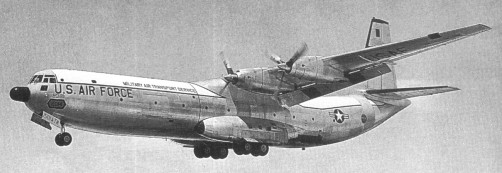
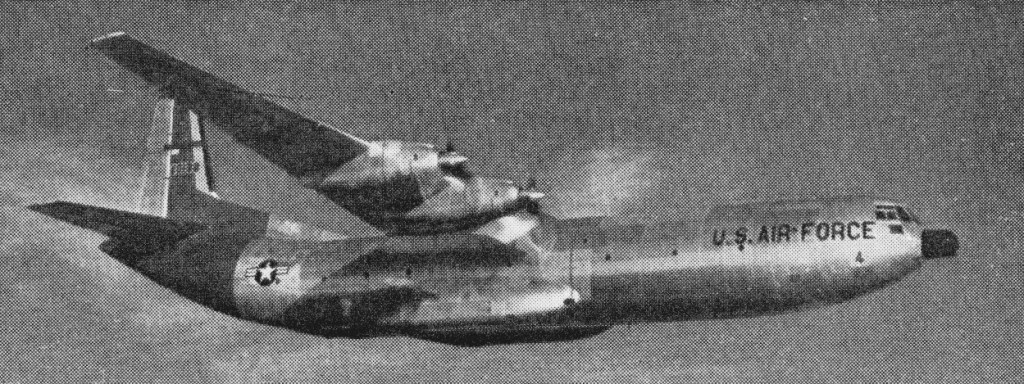
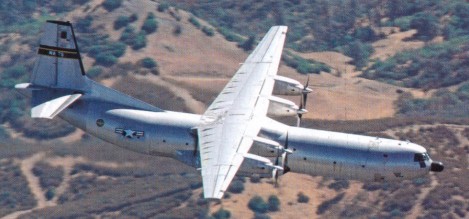
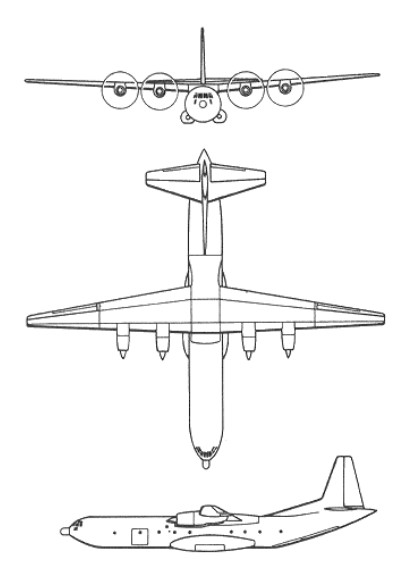
Resulting from studies aimed towards a successor to the Globemaster II, the C-133 Cargomaster was worked up by Douglas’ designers beginning in February 1953, and the first aircraft was rolled out on 27 March 1956.

Douglas C-133 Cargomaster Article

C-133A

A huge airlifter with high-mounted wings powered by four 5,700-shp Pratt & Whitney T34-P-3 turboprop engines, the C-133 had its cargo-loading door in the rear fuselage. It was designed to carry heavier and bigger loads than the Lockheed C-130 Hercules, although its internal capacity did not represent a significant increase over the C-124 Globemaster II. First flown on 23 April 1956 and delivered to MATS on 1 August 1957, 35 C-l33As were followed by 15 C-l33Bs powered by 7,500 hp / 5,589kW T34-P-9W turboprops, the latter with an improved cargo door and increased payload. Some Cargomasters were used to transport the first generation of intercontinental ballistic missiles (ICBMs) and intermediate-range missiles such as Atlas, Thor and Redstone. Production ended in April 1961.

The Cargomaster fleet served for a decade and the aircraft were seen everywhere, including in Vietnam in the early days. They were stressed for a limited airframe life and could not be kept in service longer. In service until 1971.

Gallery

C-133A
Engines: 4 x Pratt & Whitney T34-P-3 (later -7WA), 6500 shp.
Wing span: 179 ft 7.75 in.
Length: 157ft 6.5 in.
Height 48ft 3in.
Wing area: 2,673sqft.
Empty weight: 120,263 lb.
Loaded weight: 275,000lb.
Max speed: 359 mph.
Ser¬vice ceiling: 29,950ft.

C-133B
Engines: 4 x Pratt & Whitney T34-P-9W, 7500 shp / 4410kW
Max take-off weight: 129700-136000 kg / 285941 – 299830 lb
Empty weight: 54600 kg / 120373 lb
Wingspan: 54.8 m / 179 ft 9 in
Length: 48.0 m / 157 ft 6 in
Height: 14.7 m / 48 ft 3 in
Wing area: 248.3 sq.m / 2672.68 sq ft
Max. speed: 558 km/h / 347 mph
Cruise speed: 500 km/h / 311 mph
Ceiling: 6125 m / 20100 ft
Range w/max.fuel: 7000 km / 4350 miles
Range w/max.payload: 3600 km / 2237 miles
Crew: 4
Passengers: 200

Douglas XA2D-1 Skyshark

A2D

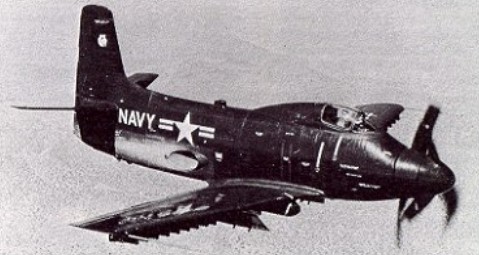
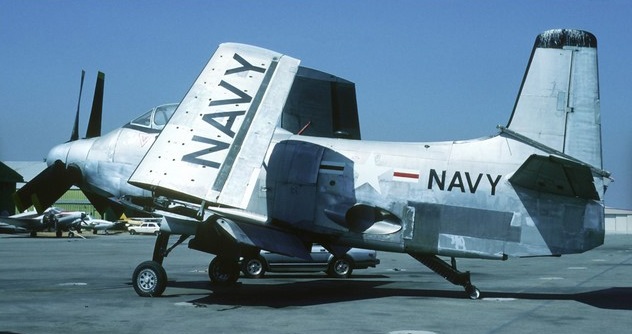
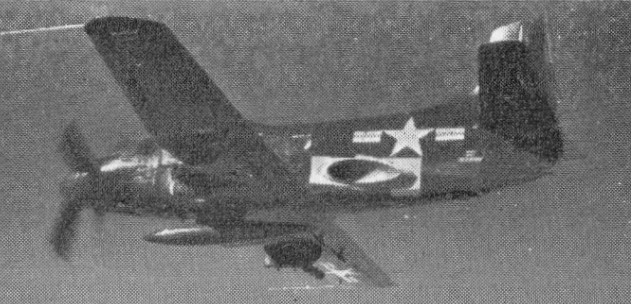
While the Navy was planning its turboprop aircraft to replace the Skyraider, Douglas was developing the XA2D 1 Skyshark powered by a 5,332 shp turboprop and the pilot was equipped with an ejection seat.
The A2D was armed with four 20 mm cannon, was fitted with an ejection seat and grossed 22,000 lb (10 000 kg). The first of two prototypes made its maiden flight on 26 May 1950. It demonstrated a climb rate of 7,200 ft/min (36,6 m/sec) and a level speed of up to 435 kt (806 km/h). In 1955, an A2D carried out a speed run from Indianapolis to Florida, covering 1,086 mls (1738 km) in an elapsed time of 2 hr 33 min, which was quite commendable for a turboprop. However, the engine and gearbox gave endless problems. The propeller control mechanism consisted of 25 unreliable vacuum tubes in a black box about the size of a suitcase and gave constant trouble. Other problems included bearing failures and overheated skin around the exhausts.

One prototype crash landed on 14 December 1950, killing the pilot, while, in June 1953, the second aircraft shed its propellers in flight. Development continued, marred by the loss of gearboxes or props on three of the five Douglas test aircraft. Twelve Skysharks were built, but only eight ever received engines. Meanwhile, jets had overtaken the turboprop and, by 1954 Douglas was testing the XA4D Skyhawk, and the A2D was abandoned.

A2D-1 Skyshark

Engine: 1 x Allison XT-40-A-2 turboprop, 3803kW
Max take-off weight: 10417 kg / 22966 lb
Empty weight: 5871 kg / 12943 lb
Wingspan: 15.24 m / 50 ft 0 in
Length: 12.56 m / 41 ft 2 in
Height: 5.20 m / 17 ft 1 in
Wing area: 37.16 sq.m / 399.99 sq ft
Max. speed: 805 km/h / 500 mph
Cruise speed: 443 km/h / 275 mph
Ceiling: 14660 m / 48100 ft
Range: 1025 km / 637 miles
Armament: 4 x 20mm cannons, 2500kg of bombs
Crew: 1

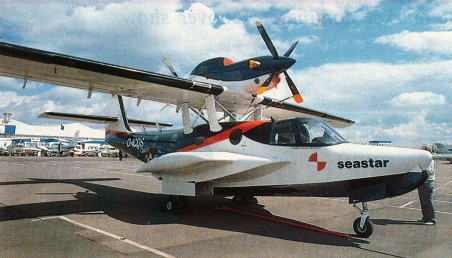
Dornier Composite Sea Star

Preproduction Sea Star CD2

Flying Boat, Germany, 1986.

Dornier Composite Sea Star Article

Dornier succcessfully test flew preproduction Sea Star CD2 with technical modifications in 1988.
Modifications included –
Increase in wing area from 28.5 to 30.5 sq.m.
Replacement of the original P&WC PT6A-112 engines with –13S models of 650 hp at takeoff and 500 hp at cruise. This led to a 400 kg gain in takeoff weight, better climb rate, and up o 11 hrs in single engine (600 hp) mode.
Addition of a small keel on the underside of the hull, resulting in greater stability and reduced takeoff and landing speeds.
Modifications to the upper strut shrouds and air intakes, allowing an increase in empty weight, from 2.6 to 2.8t, and rise in payload capacity, from 1.6 to 1.8 t.

Gallery

Engine : 2 x PT 6 A 112, 368 shp
Length : 41.011 ft / 12.5 m
Height : 15.092 ft / 4.6 m
Wingspan : 52.165 ft / 15.9 m
Wing area : 306.774 sq.ft / 28.5 sq.m
Max take off weight : 9261.0 lb / 4200.0 kg
Weight empty : 5292.0 lb / 2400.0 kg
Max. weight carried : 3969.0 lb / 1800.0 kg
Max. speed : 184 kt / 341 km/h
Landing speed : 62 kt / 115 km/h
Cruising speed : 167 kt / 310 km/h
Initial climb rate : 1574.8 ft/min / 8.0 m/s
Service ceiling : 28002 ft / 8535 m
Wing load : 30.14 lb/sq.ft / 147.0 kg/sq.m
Range : 300 nm / 555 km
Crew : 2
Payload : 12pax