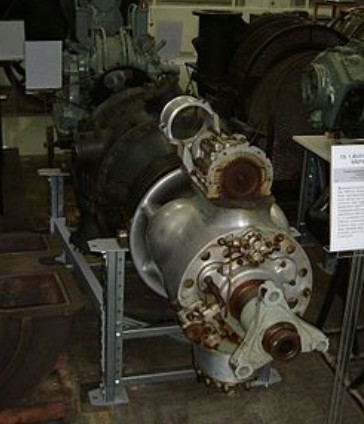
Jendrassik Cs-1

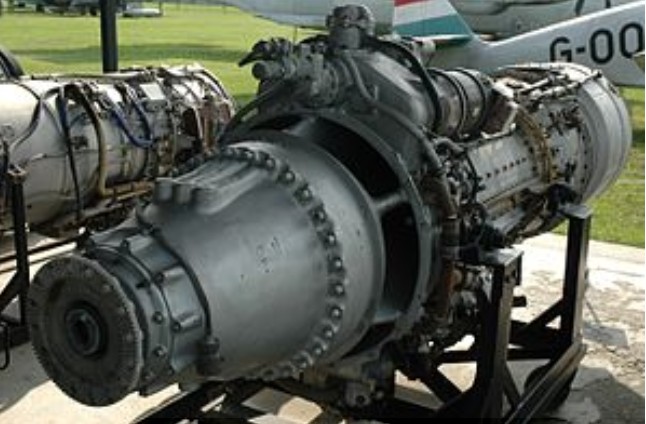
Cs-1

The Jendrassik Cs-1 was the world’s first working turboprop engine. It was designed by Hungarian engineer György Jendrassik in 1937, and was intended to power a Hungarian twin-engine heavy fighter, the RMI-1.

The engine was designed by György Jendrassik in 1937 and built at Ganz Works. It ran for the first time in 1940, but problems with combustion stability limited the power to 400 hp, from the design goal of 1,000 hp. There was nothing inherently wrong with the design, however, and continued work on the flame cans should have allowed it to develop to full power.

All work on the engine was later stopped when the Hungarian Air Force selected the Messerschmitt Me 210 for the heavy fighter role, and the engine factory converted over to the Daimler-Benz DB 605 to power it. The prototype RMI-1 was later fitted with these engines in 1944.

Ivchenko AI-20

Ivchenko AI-20M turboprop

The Ivchenko AI-20 is a Soviet turboprop engine developed in the 1950s. It has been built in large numbers, serving as the powerplant for the Antonov An-12 transport and the Ilyushin Il-18 airliner.

The AI-20 was the first gas turbine engine developed by the design bureau led by Oleksandr Ivchenko based at Zaporozhye, Ukraine, which had previously concentrated on small piston engines such as the Ivchenko AI-14 and AI-26 radials. It was designed as a prospective powerplant for the new large Ilyushin Il-18 airliner and the Antonov An-10, to be powered by four turboprops, in competition with the Kuznetsov NK-4. Both engines were tried out on the pre-production batch of 20 Il-18s, but the Ivchenko engine was chosen for full production, possibly due to a crash caused by an in-flight failure of an NK-4 engine, and possibly due to the desire for the engines of the Ukrainian An-10 to also be built in Ukraine.

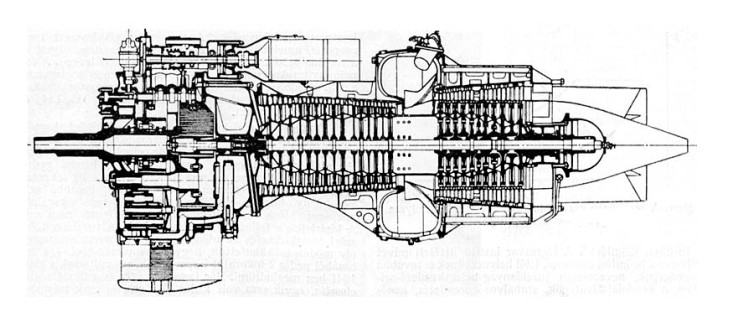
The AI-20 is a single shaft turboprop with a ten-stage axial compressor and a three stage power turbine, and is designed to run at a constant speed. The overhaul life of the engine was initially reported as 600–750 hours in 1964, but was later improved to 6,000–7,000 hours, with a service life of 20,000 hours.

It entered production at Zaporozhye and at Perm, USSR in 1958, also being built under licence in China as the WJ6. About 14,000 AI-20s have been built in total.

Applications:

AI-20
Antonov An-8
Antonov An-10
Antonov An-12
Antonov An-32
Beriev Be-12
Ilyushin Il-18
Ilyushin Il-38

WJ6
Shaanxi Y-8

Specifications:
AI-20M
Type: Single-shaft turboprop
Length: 3,096 mm (121.89 in)
Diameter:
Width: 842 mm (33.15 in)
Height:1,180 mm (46.46 in)
Dry weight: 1,140 kg (2,293 lb)
Compressor: 10 stage axial compressor with 4 bypass valves for starting and transient ratings
Combustors: Annular with 10 burner cones
Turbine: 3 stage axial flow
Oil system: Pressure type feed, fully recirculating
Maximum power output: 3,149 kW (4,250 ehp) (take-off), 1,938 kW (2,600 ehp) (max cruise)
Overall pressure ratio: 7.6:1 (take-off) to 9.2:1 (cruise)
Turbine inlet temperature: 900°C (1,652°F)
Power-to-weight ratio: 2.8 kW/kg (1.9 hp/lb) (take-off power)

IAI IAI-201 Arava / IAI-202 Arava

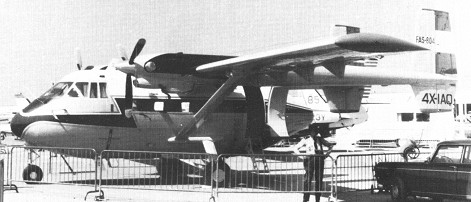
IAI-201 Arava

The Arava first flew on 27 November 1969, and entered production for military and civilian customers in 1972. More than 90 had been delivered by mid-1985.
The standard military version of the twin-turboprop utility transport is the IAI-201. In the transport role up to 24 troops or 16 para¬troops may be carried, and machine-gun packs can be fitted to the fuselage sides. Rocket pods may be fitted on two additional fuselage pylons.
The improved IAI-202 has a lengthened fuse¬lage with accommodation for 30 troops, 20 paratroops, 2,500kg of cargo, or 12 stretcher and five attendants, plus a fully wet wing with winglets for increased range. The winglet modification is available as a retrofit on earlier Aravas.

IAI 202 Arava
Engine: 2 x P&WAC PT6A.
Installed pwr: 1167 kW.
Span: 21.6 m.
Length: 13.5 m.
Wing area: 43.7 sq.m.
Empty wt: 4110 kg.
MTOW: 7710 kg.
Payload: 2500 kg.
Cruise speed: 319 kph.
Initial ROC: 390 m / min.
Ceiling: 7620 m.
T/O run: 400 m.
Ldg run: 250 m.
Fuel internal: 1663 lt.
Range/payload: 630 km with 2500 kg.
Capacity: 30 pax.

Interceptor 400 / Prop-Jets Inc Interceptor 400A

Interceptor Corporation (established November 18,1968) acquired all rights and tooling of the Myers 200C from Aero Commander Inc. A modification of this design, called the Interceptor 400, was tested by the Interceptor Corp.
The prototype Interceptor 400 first flew June 27,1969, a turbine-engined development of the Myers 200C built as the Model 200D, equipped with an AiResearch turboprop powerplant flat-rated at 400 shp. Cruising speeds in excess of 280 mph were reported. The prototype was sold and subsequently repurchased by Interceptor Company, which acquired Type Certificate at end of 1974. The Interceptor 400 was an advanced four-seat cabin monoplane with a pressurized cabin, powered by a 665 shp Garrett-AirResearch turboprop engine.
Prop-Jets Inc was founded to continue development of Interceptor 400 turboprop- powered four-seat light aircraft, as 400A.

Interceptor 400
Engine: Garrett-AirResearch turboprop, 665 shp
Seats: 4
Cruise: 280 mph

Interavia I-5 / I-12 / Technoavia SM-92

I-5 project was developed into the Technoavia SM-92 Finist, which was also being developed by Interavia as the I-12.

Technoavia produces the SM-92 Finist as a six-passenger or seven-paratroop light STOL transport (first flown December 1993. It can be armed.

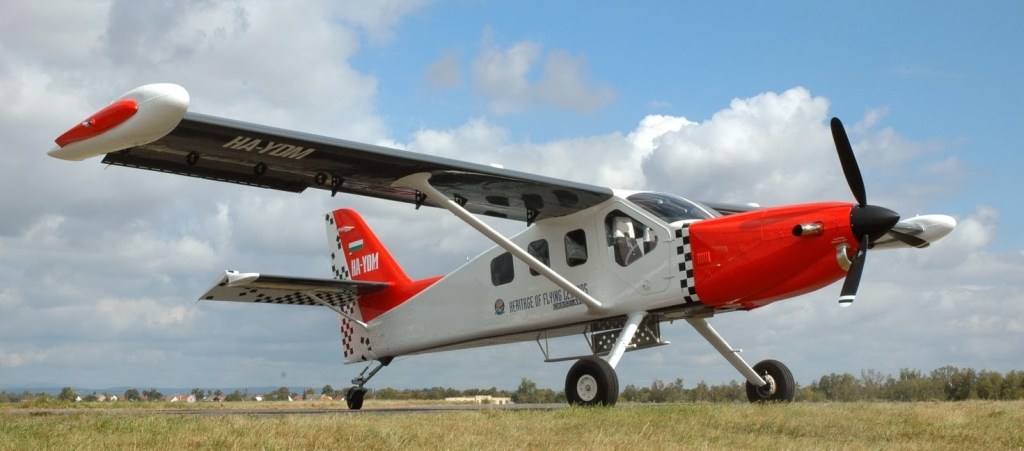
The Technoavia SMG-92 Turbo Finist is a turbine powered tail dragger that will carry 10 skydivers. Advantages are the high wing, large sliding exit door, large outside step and inside and outside handrails.

The Technoavia SMG-92 Turbo Finist is a turbine powered tail dragger that will carry 10 skydivers. Advantages are the high wing, large sliding exit door, large outside step and inside and outside handrails.

Technoavia SMG-92 Turbo Finist

Ilyushin Il-114

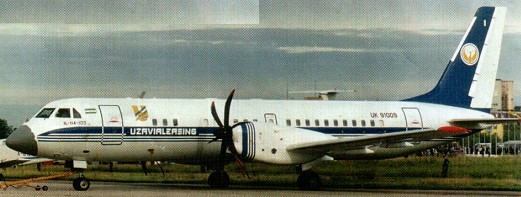
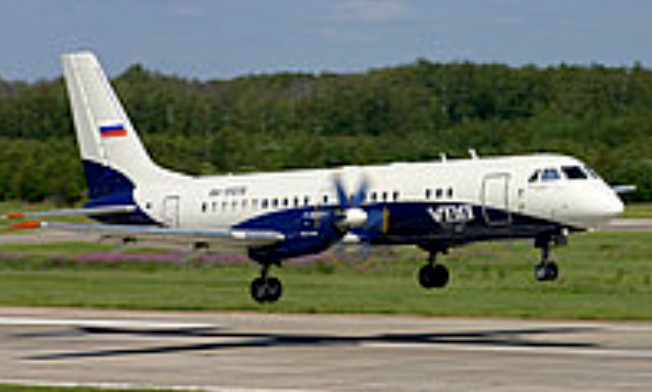
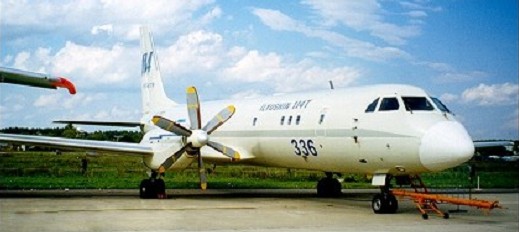
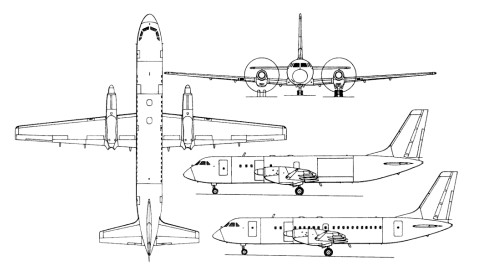
First flying on 29 March 1990, the IL-114 twin-turboprop transport ordered with production and marketing by Uzbekistan-Russian consortium.

Ilyushin Il-114 Article

The IL-114’s two engines are 2,500 shp (1,860 kW) TV7-117 turboprops driving six-bladed propellers. Composites feature strongly in the aircraft’s structure and represent ten per cent of empty weight.

Special electronic versions of IL-114 were developed for “Open Skies” missions and Russian Federal Border Guard patrol.

Il-114-100
Engines: TV7-117 turboprops, 2 x 2,500 shp (1,860 kW).
Pax seats: 64.

Il-114-100

Ilyushin Il-112

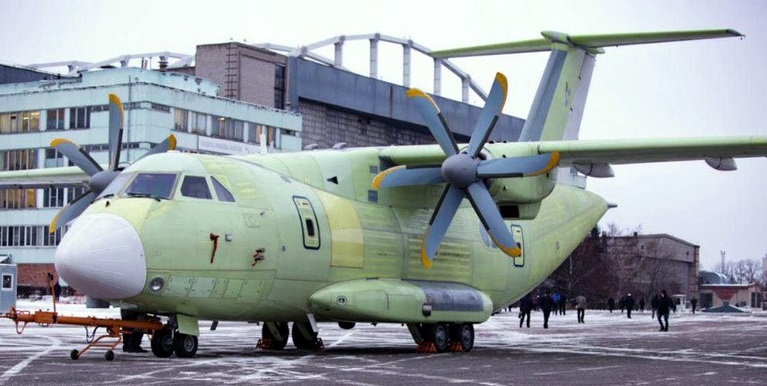
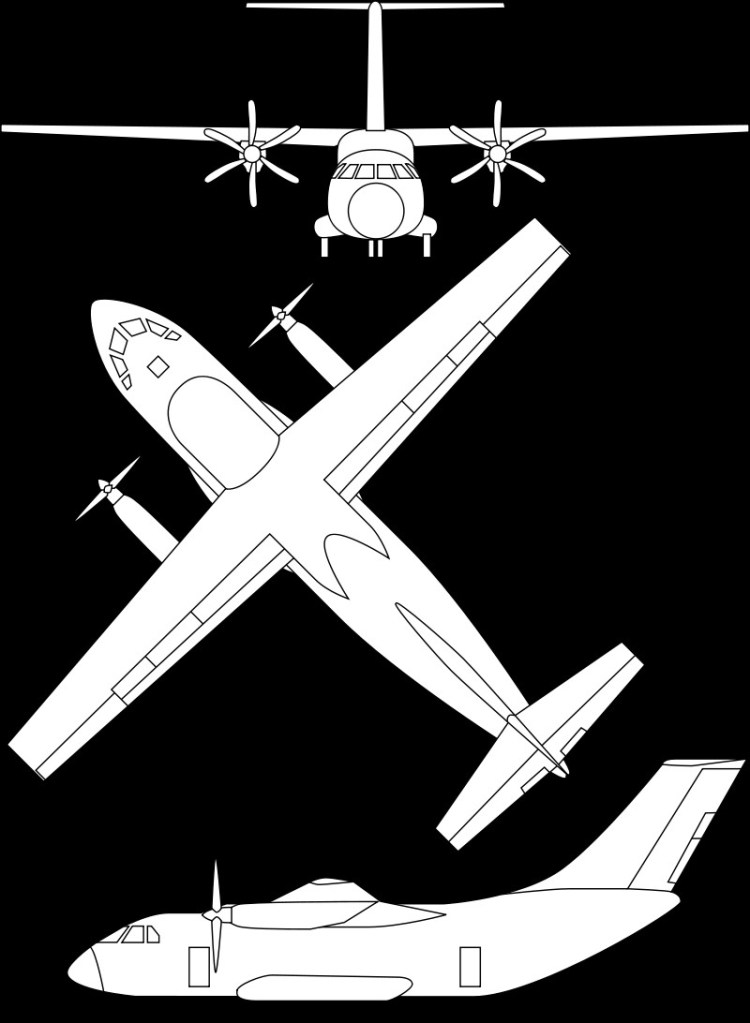
The Ilyushin Il-112 is a high-wing light military transport aircraft developed by Ilyushin Aviation Complex (JSC IL) for air landing and airdrop of military air cargoes, equipment and personnel. The aircraft is being manufactured by Voronezh Aircraft Production Association.

The Il-112 has similar weights and dimensions to the An-26 it is intended to replace but differs by having a notably larger cabin cross-section, allowing it to accommodate 44 armed soldiers instead of 38. Thanks to the engine’s reduced specific fuel consumption, which is down by 38 percent, the Il-112 has twice the ferry range, at 5,200 km (2,808 nm). The crew is reduced from six to two thanks to modern avionics and onboard equipment. All aviation information as well as information on the operation of aircraft systems is displayed on six LCD monitors.

The aircraft was designed to operate in adverse weather conditions and is expected to meet all current ICAO noise and emissions requirements.

In May 2011, the Russian Defense Ministry decided to abandon the military transport version of the Il-112 and purchase seven Antonov An-140T cargo planes.

In January 2013 it was announced that in late December, the Main Commander of the Russian Air Force presented the Minister of Defense Sergei Shoigu the case for a resumption of the Il-112 project. On 24 June 2013 it was reported that the Il-112 is considered as a replacement for the Antonov An-26, and on 26 June, that the Ilyushin Design Bureau sent JSC Klimov a request for the establishment of a new turboprop engine. In August 2013, the general designer of Ilyushin, Viktor Livanov, citing the First Deputy Defense Minister Yuri Borisov, confirmed that work on the aircraft has been resumed.

On 18 January 2018, the first prototype of the IL-112V was shown at the Voronezh Joint Stock Aircraft Manufacturing Company (VASO). It has two improved Klimov TV7-11ST turboprop engines, with 2,610 kW (3,500 hp) each, each powering 6-bladed AV-112 constant-speed reversible pitch propellers. It is fitted with a monolithic, single piece wing. The aircraft is 25.15 m long, with a height of 8.89 m and a wing span of 27.6 m.

The first prototype of the Il-112V was rolled out on 27 November 2018. It is intended for performance and flight handling trials. Taxi trials had begun by the end of December.

Powerplant: 2 × Klimov TV7-117ST turboprop, 2,610 kW (3,500 hp) each
Propellers: 6-bladed constant-speed reversible pitch propellers
Wingspan: 27.6 m (90 ft 7 in)
Wing area: 65 m2 (700 sq ft)
Length: 24.15 m (79 ft 3 in)
Height: 8.89 m (29 ft 2 in)
Empty weight: 10,000 kg (22,046 lb)
Max takeoff weight: 21,000 kg (46,297 lb)
Fuel capacity: 7,200 l (1,600 imp gal; 1,900 US gal)
Capacity: 5,000 kg (11,000 lb)
Crew: 2
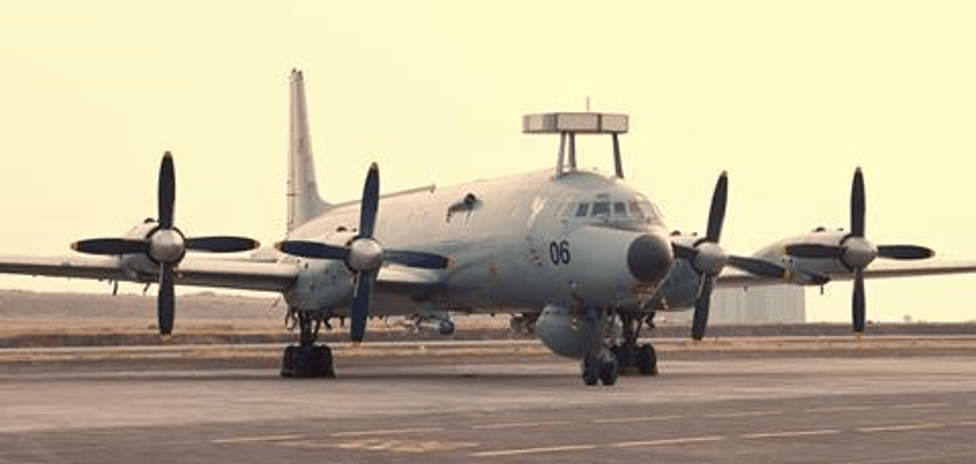
Ilyushin Il-38

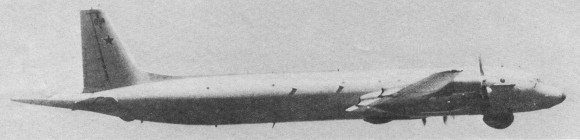
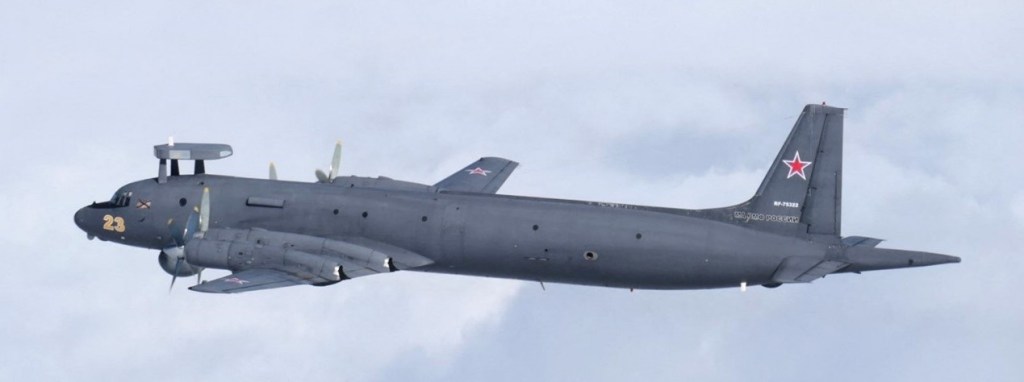
First disclosured in 1974, the Soviet Naval Air Arm (AV-MF) used the Il-18 trans¬port as the basis for the considerably changed Il-38, known to NATO by the code-name of “May’. Com¬pared with the transport it has a wing moved forward and a considerably longer rear fuselage, showing the gross shift in centre of gravity resulting from the changed role. The rear fuselage of the Il-38 contains only sensors, sonobuoy launchers of several kinds and a galley, with the main tactical compartment just behind and above the wing, with a probable tactical crew of eight. Most of the heavy stores and consoles are ahead of the wing, together with the search radar stinger, not a heavy it in the tail.

Il-38

Il-38 has been a standard SovNavAir open-ocean maritime surveillance aircraft since entering service in 1970, with some 60 in inventory mid-1987. NATO code name ‘May’. One of two current service military derivatives of commercial Il-18 (other being Il-20 Coot-A ELINT aircraft ), Il-38 has bays fore and aft of wing for sonobuoys and various attack weapons. Power is provided by four 4,250 ehp AI-20M turboprops. About 60 were believed to be in use by the Soviet naval air force. Three ex-SovNavAir operated by Indian Navy.

Some external modifications included an additional radome under the fuselage were reported by NATO as the May-B.

Gallery

II-38
Type: maritime patrol and anti-submarine.
Engines: 4 x Ivchenko Al-20 single-shaft turbo-props, 5,000 shp approx.
Wing span 122 ft 8½ in (37.4 m)
Length 129 ft 10 in (39.6 m)
Height about 35 ft (10.7 m)
Empty weight approx 90,000 lb (40,820 kg)
Maximum loaded weight, approx 180,000 lb (81.650 kg)
Maximum speed, about 450 mph (724 km/h)
Maximum cruising speed, about 400 mph (644 km/h)
Range with typical mission load, about 4,500 miles (7240 km)
Endurance, about 15 hr.
Armament: internal weapon bay.