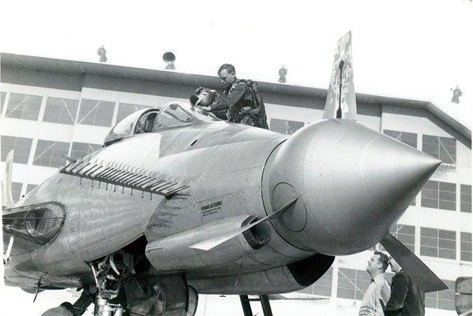
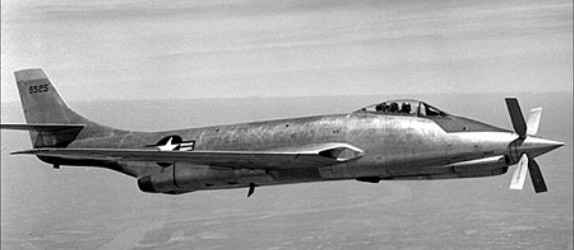
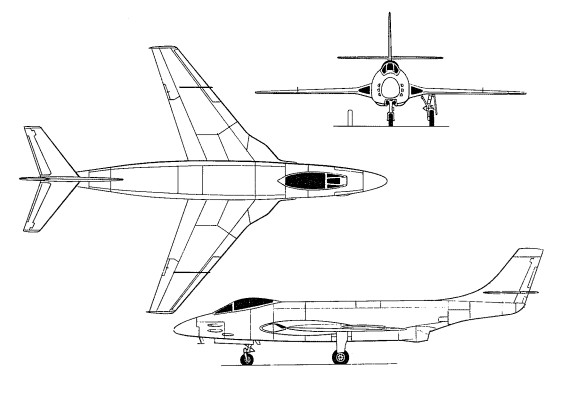
Designed to meet a requirement for a single-seat long-range escort fighter, the XF-88 was recipient of a contract for two prototypes on 14 February 1947. Powered by two 3,000 lb st (1361 kgp) Westinghouse XJ34-WE-13 turbojets, the first XF-88 was flown on 20 October 1948, but proved seriously underpowered. The second XF-88 was therefore fitted with two XJ34-WE-22 engines fitted with short afterburners which boosted thrust to 3,600 lb st (1 633 kgp), a change in designation to XF-88A accompanying this modification.
Performance was still insufficient, but the XF-88 was considered by the USAF to possess development potential and a Letter of Intent was issued covering further evolution of the basic design into what was eventually to become the F-101 Voodoo.
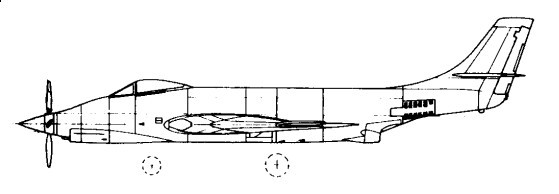
The first prototype was then recast as the XF-88B testbed for the Allison XT38 turboprop, with which it undertook many flights from April 1953 with 27 different propellers featuring varying numbers of blades in diameters between 4 and 10 ft (1.2 and 3.05 m). The XF-88s airframe then went forward to provide the structural and aerodynamic basis for the F-101 interceptor and reconnaissance fighter.
Engines: 2 x Westinghouse J34-WE-13 turbojets, 3000-lb (1361-kg) thrust Max speed, 641 mph (1 032 km/h) at sea level Time to 35,000 ft (10 670 m), 14.5 min Range, 1,737 mls (2 795 km) Empty weight, 12,140 lb (5 507 kg) Normal loaded weight, 18,500 lb (8 391 kg) Span, 39 ft 8 in (12,09 m) Length, 54 ft 1.5 in (16,50 m) Height, 17 ft 3 in (5,26 m) Wing area, 350 sq ft (32,52 sq.m)
In 1959 a Max Holse M.H.152 aerial observation monoplane was modified to take a 4450 hp Turbomeca Astazou turbo-prop. The modification, undertaken by SFERMA, first flew on 23 April 1959 and served as a prototype for the M.H.1521 Broussard.
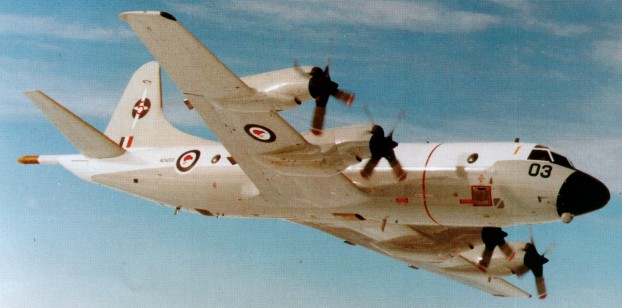
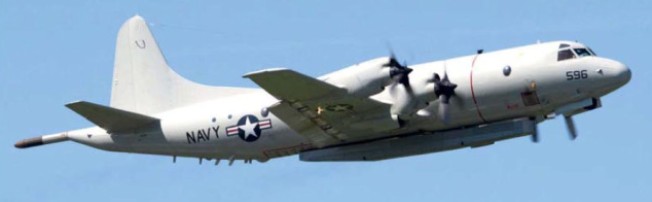
When in August 1957 the US Navy needed an advanced ASW/maritime patrol aircraft, it was suggested that a variant of a type then in production would be most suitable for this requirement. Lockheed proposed a developed version of the L-188 Electra, gaining an initial research and development contract on 8 May 1958.
Lockheed’s Model 186, which retained the wings, tall unit, power plant and other components of the commercial Electra, as well as much of the fuselage structure which was, however, shortened and provided with a 6.9m3 weapons bay, and there are 10 under-wing pylons for a variety of stores. The first Lockheed P 3 Orion, NP 3A BuNo 148276, was converted from the third L.188 Electra airliner by removing 7ft (2.1m) from the fuselage, flying from Burbank in August 1958. The air¬craft saw extensive use as an aero-dynamics test bed. It was eventually transferred to NASA.
Pressurised for the higher altitudes, the aircraft can operate from sea level, (usually 200ft minimum) up to 30,000 ft with a speed range from 140 to 405 knots. The engines are four x 4600 hp Allison turbo props with Hamilton Standard propellers. Maximum all up weight at take off is 14,500 lbs (6577 kg) higher than the original airliner at 127,500 lbs (57,800 kg) including a maximum of 60,000 lbs (34,000 lites) of fuel.
This was followed by the Lockheed YP3V-1 operational prototype, later named Orion, which first flew on 25 November 1959. The first production P3V-1 was flown on 15 April 1961, with initial deliveries being made to US Navy Patrol Squadrons VP-8 and VP-44 on 13 August 1962, by which time the type had been redesignated the P-3.
In August 1963 a US Navy crew flew a P-3A nonstop from California to Japan, 5280 miles, in 14 hr 30 min. After several demonstration flights it returned nonstop in 14 hr 5 min.
One hundred and fifty seven P-3As and 144 P-3Bs followed and production switched to the origi¬nal P-3C in 1968. P-3C is powered by 4,910 ehp (3 661 kW) Allison T56-A-14 turboprops. Progressive development of the P-3C’s systems through Update I and II has led to the production P-3C Update III model. The first P-3C Update III, with IBM Proteus acoustic processors, was delivered in May 1984. Update IV will improve the P-3’s ASW capability by the use of new acoustic processing systems and Litton AN/ALR-77 tactical ESM equipment. The P-3G would also feature Allison 501 turboprops in place of the T56-A-14s of the preceding model.
By 1994, production in Georgia was with wings built by Daewoo Aerospace in Korea and tail surfaces by Jetstream Aviation at Prestwick in Scotland, and remaining in production in the U.S.A. until 1995.
The first Kawasaki-assembled P-3C Orion was accepted by the Maritime Self-Defence Force at Gifu, Japan, on 27 May 1982. Flown for the first time on 17 March 1982, this aircraft was built from knocked-down components, and Kawwasaki was scheduled to deliver four more by March 1983. All were to be assigned to the 4th Air Group at Atsugi AB, near Tokyo.
Following the assembly in Japan of four P-3C aircraft from Lockheed-built components, Kawasaki produced the Lockheed Martin P-3C Orion for the JMSDF; 101st and final aircraft delivered in 1997, when four EP-3/UP-3D electronic intelligence/training variants remained to be delivered up to the year 2000.
Other export P-3s feature various equipment changes: Australian P-3Cs used Marconi Avionics AQS-901 acoustic processing; the 21 Canadian CP-140 / CP-140A Auroras have S-3 Viking avionics; and New Zealand’s P-3Bs are fitted with Boeing’s UDACS display and control consoles. The US Customs Service became the first customer for Lockheed’s P-3 (AEW&C) airborne early warning aircraft in May 1987. These aircraft will have a reduced mission system suitable for their task, while the full AEW&C aircraft would have a General Electric AN/APS-138 radar and APA-171 rotodome above the fuselage, together with a M1L1553A communications and data handling system. During 1984 Lockheed converted an ex-RAAF P-3B to serve as the AEW&C prototype, featuring the dorsal “rotodome”. Designated EP-3Es and converted from P-3As, twelve versions serve with the US Navy to provide electronic surveillance. The EP-3s are equipped with APS-120 radar plus extensive jamming, detection and analysis equipment.
The significantly upgraded Australian Orions, designated AP-3C, were introduced into service in 2002 and are fitted with a variety of sensors, including digital multi-mode radar, electronic support measures, electro-optics detectors (infra-red and visual), magnetic anomaly detectors, identification friend or foe systems, and acoustic detectors.
The major changes since the Orion entered service have been in avionics equipment and capability, and more than 640 have been built to 1989, with the type then continuing in production (at Marietta, Georgia) until 1995/56 for South Korea, who ordered eight P-3C Update Ills in December 1990. Other Orions were in service in Iran, the Netherlands, New Zealand, Norway, Pakistan, Portugal, Spain and NASA and NOAA.
P-3 LSRS
The last of 18 upgraded AP-3C Orions was formally handed over to the RAAF in 2005. The first upgrade was performed by L-3 Communications in the USA and the remainder by L-3 and then Tenix in Australia. The programme was completed four years behind schedule.
L-3 Communications re-delivered the first of six P-3Ks to the RNZAF with sensor, communications and navigation systems upgrades in July 2005.
P3V-1 Orion Engines: 4 x Allison T56-A-10W, 4500 hp Wing span: 99 ft 8 in Length: 116 ft 8 in Height: 33 ft 8 in Wing area: 1300 sq.ft MTOW: 125,500 lb Max speed: 460 mph at 20,000 ft Service ceiling: 27,000 ft Endurnce -2 engines: 8 hr at 220 mph at 1000 ft
P-3B Orion Engines: 4 x Allison, 4910 shp. Wing span: 99 ft 8 in (30.37 m). Length: 116 ft 10 in (35.61 m). Height: 33 ft 8.5 in (10.29 m). Max TO wt: 134,000 lb (60,780 kg). Max level speed: 476 mph ( 765 kph).
P-3C Orion Engine: 2 x Allison T56-A-14 turboprop, 4910 shp / 3661kW. Installed thrust: 14,640 kW. Wingspan: 30.38 m / 99 ft 8 in Length: 35.61 m / 116 ft 10 in Height: 10.27 m / 33 ft 8 in Wing area: 120.77 sq.m / 1299.96 sq ft Empty wt: 27,890 kg / 61492 lb MTOW: 127,500 lb (57834 kg) Heavywt model MTOW: 135,000 lb (61,236 kg). Warload: 9070 kg. Max speed: 476 mph @ 15,000 ft. Cruise: 340 kt. Initial ROC: 880 m / min. Ceiling: 8600 m. T/O run: 1290 m. Ldg run: 845 m. Fuel internal: 34,830 lt. Max range: 4500nm. Endurance: 3 hr on station. Crew: 10 Air refuel: No. Armament: 9000kg
P 3K Engines: 4x Allison T56. Length: 36m. Wingspan: 30m. Height: 10m. Weight: 57,800kgs. Max range: 7100kms (3850 NM). Cruise speed: 260 750 km/hr. Endurance: 15hrs with 2 engines shut down to conserve fuel. Cruise speed: 195 205 km/hr. Equipment: Rescue winch 270kg max load, nightsun search light, nightvision goggles. Armament: 2 x M60D 7.62 machine guns. Crew: 2 pilots, 2 flight engineers, 2 navigators, 1 air electronics officer, 3 air electronics ops, 1 air ordnanceman Seating: up to 20.
Lockheed Martin AP-3C Orion Engine: Four Allison T56-A-14 (4600 shaft horsepower) Length: 35.6m Height: 10.44m Wingspan: 30.8m Maximum weight: 61,200Kg Maximum speed: 750 km/h (405 knots), Cruise speed: 650 km/h (350 kts) at 26,000 feet Loiter speed:370 km/h (200 kts) Endurance: 15 hours Crew: 13, two pilots (captain and co-pilot), two flight engineers, tactical co-ordinator, navigator/communication officer, sensor employment manager, six airborne electronic analysts.
Lockheed P 3 Sentinel Engine: 4 x T 56 A14, 3314 shp Length: 116.798 ft / 35.6 m Height: 33.793 ft / 10.3 m Wingspan: 99.738 ft / 30.4 m Wing area: 1300.291 sq.ft / 120.8 sq.m Max take off weight: 142024.1 lb / 64410.0 kg Weight empty: 61497.5 lb / 27890.0 kg Max. payload weight: 80526.6 lb / 36520.0 kg Max. speed: 410 kt / 760 km/h Landing speed: 112 kt / 208 km/h Cruising speed: 328 kt / 608 km/h Initial climb rate: 1968.5 ft/min / 10.0 m/s Service ceiling: 28297 ft / 8625 m Wing loading: 109.27 lb/sq.ft / 533.0 kg/sq.m Range: 2071 nm / 3835 km Crew: 10
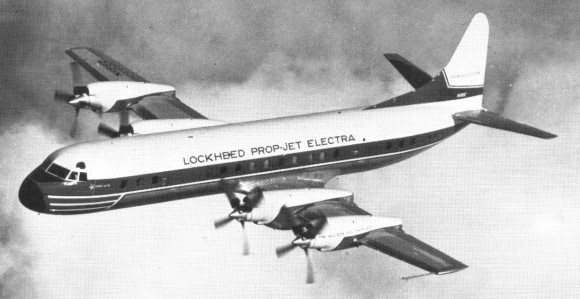
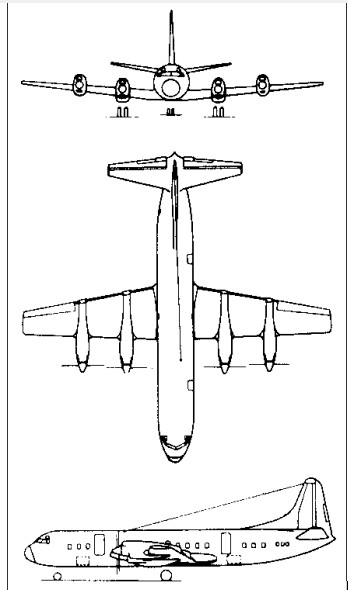
The design of the Lockheed L-188 Electra began in 1954, and in the following year the company received a launching order from American Airlines.
By the first flight, 144 were already on order. The prototype, first flown on 6 December 1957, was a low-wing monoplane of conventional configuration with retractable tricycle landing gear and powered by four Allison 501D-13, 501D-13A or 501D-15 turboprop engines. Standard accommodation was for 66 to 80 passengers, but a high-density arrangement was available optionally to seat 98.
Several crashes occurred in 1959 that caused Lockheed Corp. to make a few improvements including a stronger wing structure and engine nacelles plus thicker wing skins.
Built initially as the L-188A, the Electra became available also as the longer-range L-188C with increased fuel capacity and operating at a higher gross weight. A total of 170 had been built when production ended unexpectedly early as a result of passenger loss of confidence in the type after two had disintegrated in flight, and by the time remedial modifications had been, incorporated customer airlines were interested in turbojet- rather than turboprop-powered aircraft. About half of the total built remained in service in 1992, many of them converted by Lockheed Aircraft Service for convertible passenger/cargo or all-cargo use.
L-188A Electra Engines: 4 x Allison 501D-13, 2796kW / 4600 hp Propellers: Hamilton Standard Max take-off weight: 51256 kg / 113001 lb Empty weight: 26036 kg / 57400 lb Wingspan: 30.18 m / 99 ft 0 in Length: 31.85 m / 104 ft 6 in Height: 10.01 m / 32 ft 10 in Wing area: 120.77 sq.m / 1299.96 sq ft Cruise speed: 652 km/h / 405 mph Ceiling: 8655 m / 28400 ft Range: 3541 km / 2200 miles Crew: 5 Passengers: 44-98
Engines: 4 x 4,050 h.p. Allison 501 D15 turboprop. Length 104.5 ft. (31.81 m.) Wing span 99 ft. (30.18 m.) Weight empty 57,300 lb. (25,990 kg.) MTOW: 113,000 lbs (51,227 kg). Pax cap: 99. Max cruise 405 m.p.h. (650 km.p.h.) Ceiling 28,400 ft. (8,655 m.) Range 2,770 miles (4,458 km.) with 18,000 lb. (8,165 kg.) payload Cabin width: 10 ft 8 in. Takeoff run 4,720 ft Landing roll 4,300 ft
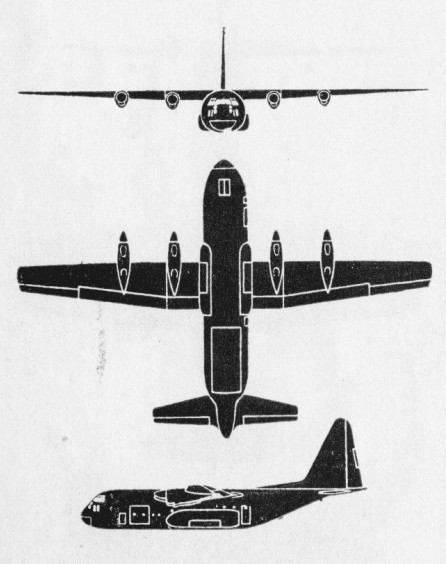
Lockheed’s C 130 Hercules was designed to meet a specification issued by the USAF Tactical Air Command in 1951.
C-130A
The prototype C-130 flew on August 23, 1954. Production models were delivered from 1956 and remained in production in 1999 in latest C-130J form with fully integrated digital avionics, advanced engines and propellers, and other improvements.
Older espionage-variants of the Hercules, the C-130A-II and the C-130B-II, had been noted at Rhein-Main around 1955. The metal-coloured aircraft, which externally were no different from the freighters operating regularly from Rhein-Main, belonged to the 7406th Combat Support Squadron.
C-130A-II at Rhein-Main in 1970
The RC-130 carried out COMmunications INTelligence (COMINT) for the USAF in Europe under the auspices of the National Security Agency. The RC-130s flew not only to West Berlin (Operation Misty Creek), but also on eavesdropping missions along the Iron Curtain and the borders of other countries, including the Middle East.
One of the C-130A-IIs from Rhein-Main lost its bearings in the early hours of 2 September 1958 during a COMINT mission for NSA along the Turkish-Soviet border, and was shot down near the town of Jerevan in Armenia by a group of five MiGs. Of the 17 crew and NSA eavesdropping specialists six lost their lives. What happened to the remaining eleven is still unknown in Washington. The Soviet Union has never admitted that the RC-130, which took off from the Turkish airfield at Incirlik, was shot down. In turn, the US Government has never admitted that the Hercules in Armenia was on a reconnaissance flight. The purpose of the flight was stated to be ‘a study of the propagation of radio waves’. Washington released for publication the radio transmissions, received by an American listening post in Turkey, between the MiG pilots and a Soviet Ground Control Interception station, relaying speech from shortly before to shortly after the attack. There was no admission from the Soviets.
The 1958 Ground Proximity System uses a cargo hook dangling from the open tail door which snares a ground cable, which pulls cargo out. Up to 13,000 lb can be pulled out.
In December 1963 Lockheed was building 15 Hercules a month, with almost 600 delivered already.
In June 1965 it was reported that Malaysia protested to the US that C-130s operated by the Indonesia AF dropped para-troopers on Malaysian soil. The US had sold ten C-130s to Indonesia in 1960 for non-military use, but cut-off supplies of spare parts in 1964 when Indonesia had violated the agreement.
In 1967 Lockheed rebuilt the company’s C-130 demonstrator to the stretched L-100-20 civil freight version. The main change was the addition of a 100in fuselage insert.
USAF 109th AW LC-130H Hercules 83-0491 – Christchurch, NZ, May 2000
It was reported in 1964 that the RCAF had bought 16 C-130E, with deliveries to be spread over a year, at $55 million including spares. The RCAF were then operating four C-130B.
The four-turboprop Hercules tactical transport is available in advanced C-130H and stretched C-130H-30 versions. The latter is 4.5m (l5ft) longer than the C-130H, and has a 16.8m (56ft)-long cargo compartment, which can accommodate seven cargo pallets. The C-130H-30 can carry 128 troops or 92 paratroops, compared with 92 and 64 respectively in the standard C-130H. Similarly, the H-30 can lift 97 stretchers in the medevac role instead of the 74 of the C-130H. The RAF’s ‘stretched’ C.Mk 3 carries up to 128 troops, 92 paratroops, or freight. The C-130J C.4 being longer than the C.5.
Electronic warfare versions of the Hercules include the EC-130H Compass Call of the USAF and the EC-130Q TACAMO of the USN.
On 21 March 1973, Mirage aircraft of the Libyan Air Force attacked an RC-130 from the 7406th CSS at Rhein-Main which was eavesdropping along the coast of Egypt and Libya, The NSA operators on board the Hercules heard via their headsets that the Mirages were ordered to shoot down the four-engined American aircraft. The pilot, who was warned, managed to evade the stream of bullets from the Libyan jet fighters by flying into cloud. According to the Pentagon the attack took place about 80 miles / 130 km from the Libyan coast. As late as 1973 Washington was unable to confirm that the RC-130 was on an electronic reconnaissance flight. It did become known that the Americans were using Hellinik airfield near Athens as the start and finish for their spying flights.
The RAF operated the C 130K Hercules C Mk.1 and Hercules C Mk.1(P) (for probe).
Lockheed Martin delivered fully configured KC-130J tanker aircraft to the United States Marine Corps. Using wing and external tanks, the KC-130J has a 57,500-lb (8,455 US gallon) fuel off-load capability while performing a 500-nm radius mission, compared with 38,000 lbs (5,588 US gallons) for the KC-130Fs. The aircraft is also configured to accept a fuselage tank if desired, adding another 24,392 lbs (3,600 US gallons) of fuel to a mission. The aircraft use the probe-and-drogue configuration.
The ‘air snatch’ HC 130H, was used by the USAFs Aerospace Rescue and Recovary Service. It has scissor like folding probes on the nose designed to make pick ups from the ground or in mid air, by using the probes to engage parachute lines or balloon cables attached to the man or equipment to be recovered. First flown on 8 December 1964.
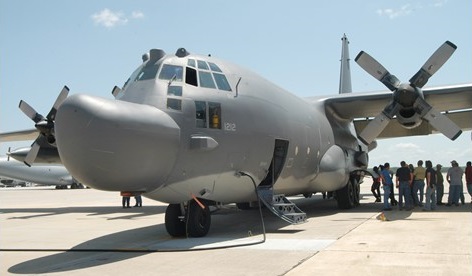
The MC-130E Combat Talon I and MC-130H Combat Talon II provide infiltration, exfiltration, and resupply of special operations forces and equipment in hostile or denied territory. Secondary missions include psychological operations and helicopter and vertical lift air refuelling.
MC-130E/H Combat Talon I/II
Both aircraft feature terrain-following and terrain-avoidance radars capable of operations as low as 250 feet in adverse weather conditions. Structural changes to a basic C-130 include the addition of an in-flight refuelling receptacle and strengthening of the tail to allow high speed/low-signature airdrop. Their navigation suites include dual ring-laser gyros, mission computers, and integrated global positioning system. An extensive electronic warfare suite enables the aircrew to detect and avoid potential threats. If engaged, the system will protect the aircraft from both radar and infrared-guided threats.
Both the MC-130E and MC-130H are equipped with aerial refuelling pods to provide in-flight refuelling of special operations forces and combat search and rescue helicopters and vertical lift assets.
The primary difference between the MC-130E and MC-130H involves the degree of integration of the mission computers and avionics suite. The Combat Talon I was conceived originally and developed during the 1960s, and although extensively upgraded in the 1980-90s it still features analog instrumentation and does not fully integrate the sensors and communications suites. The Combat Talon II, designed in the 1980s, features an integrated glass flight deck which improves crew coordination and reduces the crew complement by two.
The MC-130E Combat Talon first flew in 1966 and saw extensive service in Southeast Asia, including the attempted rescue of Americans held at the Son Tay prisoner-of-war camp in 1970. Also, the MC-130E landed in the Iranian desert in April 1980 in support of Operation Eagle Claw, the attempt to rescue American hostages held by Iran.
The MC-130E saw combat in Grenada in 1983, delivering U.S. Army Rangers to Point Salinas Airfield in the opening moments of Operation Urgent Fury, and subsequently performing psychological operations leaflet drops. In 1989 they led the joint task force for Operation Just Cause in Panama, helping to seize the airfield at Rio Hato.
In 1990, MC-130Es were employed in Operation Desert Storm, where they dropped 11 BLU-82 15,000-pound bombs and more than 23 million leaflets in a highly effective effort to encourage Iraqi soldiers to surrender. They also conducted numerous aerial refuelling of special operations helicopters with combat search and rescue operations.
The MC-130H Combat Talon II first arrived at Hurlburt Field, Fla., June 29, 1992, and after acceptance testing, began official flying operations Oct. 17, 1992. Since then, the MC-130H has played a role in AFSOC operations including the evacuations of non-combatant Americans and other civilians from conflicts in Liberia in 1996. Also, in 1998, a Combat Talon II aircrew was awarded the Mackay Trophy for the involvement in the evacuation of civilians from the Republic of the Congo (1997); and they participated in combat operations in the Balkans during Operation Allied Force.
In 2001, MC-130Hs were employed to seize an airfield in southern Afghanistan delivering U.S. Army Rangers to commence ground operations in Operation Enduring Freedom and later in 2003, the MC-130H was the first US aircraft to land at Bagdad International to initiate missions supporting Operation Iraqi Freedom. Since Oct 2001, both aircraft have been used extensively in Operations Enduring, Operation Enduring Freedom-Philippines, and Iraqi Freedom in a variety of roles.
In 2001 10 MC-130E were operational with the Reserves, and 20 MC-130H with the Active force.
One of the measures considered for a second hostage rescue attempt in Iran was a project to develop a “Super STOL” aircraft, to be flown by Combat Talon crews that would use a soccer stadium near the US Embassy as an improvised landing field. Called Credible Sport, the project acquired three C-130H transports from an airlift unit in late August 1980, one as a test bed and two for the mission, and modified them on an accelerated basis.
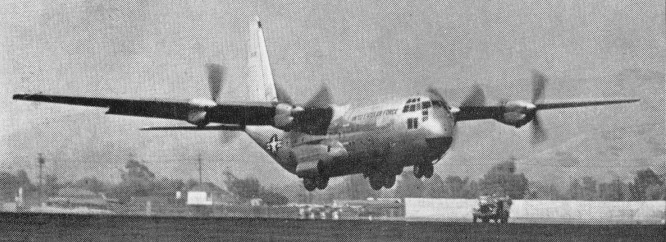
Designated as the XFC-130H, the aircraft were modified by the installation of 30 rockets in five sets: eight firing forward to stop the aircraft, eight downward to brake its descent rate, eight rearward for takeoff assist, four mounted on the wings to stabilize them during takeoff transition, and two at the rear of the tail to prevent it from striking the ground because of over-rotation. Other STOL features included a dorsal and two ventral fins on the rear fuselage, double-slotted flaps and extended ailerons, a new radome, a tailhook for landing aboard an aircraft carrier, and Combat Talon avionics, including a TF/TA radar, a defensive countermeasures suite, and a Doppler radar/GPS tie-in to the aircrafts inertial navigation system.
Of the three aircraft, only one received full modification. The program abruptly ended when it crashed during testing on October 29, 1980, and international events soon after rendered another rescue attempt moot.
The C-130J-30 is a stretched variant and is 15 ft longer and can carry two extra cargo pallets compared to C-130H (30% more). A key to the C-130J-30’s increased performance is a mission computer linked to the four new, electronically controlled (by Lucas Aerospace’s FADEC (full authority digital electronic control) system) Allison AE-2100D3 turboprops. Flat rated to 4,691 shp (down from 6,148 shp), the engines still generate 29 percent more thrust and they are 15 percent more fuel-efficient than the E model’s. An all-composite six-blade Dowty Aerospace R391 propeller is lighter and has fewer moving parts than previous Hercules C-130 propellers. Lockheed-Martin were to develop and produce six WC-130J weather reconnaissance aircraft.
The AC-130 is the gunship variant of the C-130 Hercules. The first flight of the AC-130A was in 1967. The missions of the AC-130 are: close air support, air interdiction and armed reconnaissance, perimeter and point defense, escort, drop and extraction zone support, forward air control, limited command and control (c2), and combat search and rescue (CSAR).
The AC-130A Spectre is similar to the C-130 in terms of external dimensions. It is 97 feet, 9 inches long, 38 feet, 3 inches tall, and has a wingspan of 132 feet, 7 inches. Originally, the AC-130A did not have the capability to refuel in flight. With a full load, these AC-130As had a range of 2450 miles. However, once modified with aerial refueling capabilities, the range was limited only by crew endurance. The AC-130A was sent to Vietnam on September 20, 1967, and flew its first mission one week later. The AC-130A destroyed over 10,000 enemy vehicles during the course of the Vietnam War. The last AC-130A was retired on September 10, 1995.
Between November 1968 and November 1989, only four, and later six, AC130 gunships were operating over the Trail, pending delivery of more advanced ‘Spectres’.
The first AC-130 gunship had arrived in Vietnam for field trials in September 1967, and its success led to the decision to modify more of the type. However, the Air Force could not spare any of its C-130 fleet, they were all needed for airlift duties throughout South-East Asia. Seven early-model C-130s were available though, and the first of these was converted to gunship configuration by June 1968; combat operations began with four aircraft in October 1968.
The AC-130 was armed with four 7.62mm minigun modules and four 20mm gatting cannon. Two of each were mounted forward of the main landing gear on the port (left) side of the aircraft and two each aft of the gear. In addition, a Night Observation Device (NOD) or Starlite Scope was carried – a sophisticated piece of equipment which enables the user to see targets on the ground by utilizing the available star or moonlight. The NOD and a primitive infra-red sensor were fitted to the port side of the aircraft and a bread-board computer was also carried to co-ordinate all the variables involved in a side-firing weapons system. These early AC-130s were operated by the newly formed 16th Special Operations Squadron at Ubon Royal Thai Air Force Base, and the Commander of Spectre Crew Number One was Lieutenant Colonel William Schwehm.
The AC-130H (also Spectre), which initially worked with the AC-130A, replaced it in 1995. The H-model has computers which can tell whether a target is friendly or not, thus, reducing the amount of casualties due to friendly fire. In the Persian Gulf War, one AC-130H was lost, along with all 14 crew.
The AC-130U Spooky is an advanced gunship. It can support special operations forces, in addition to its primary mission (gunship). It has a fire control system, which is capable of attacking two targets at once. With advanced computers, all guns can be slaved to computers if the need should arise.
The first RAAF C-130J-30 Hercules II, A97-464, was officially handed over at RAAF Richmond on 7 September, 1999. The first of 12 to replace the 37 Sqn C-130Es.
During 1964 a C-130E Hercules flew 25 hr 1 min 8 sec without landing as a prelude to FAA certification for civilian cargo use. The red, white, and blue aircraft was built as a cooperative venture by Lockheed and 57 suppliers of engines, parts, and systems for C-130’s. Once airborne it flew the endurance run at 140 kt on two engines.
Hercules commercial transports have an L 100 series designation. Largest of these, the L.100 30 entered service in 1970, can lift a maximum payload of more than 23 tons.
1,814 aircraft of all versions had been deliv¬ered by June 1987. Total Hercules sales had reached 1,845 by June 1987.
In July 1997, the company set-up then included Lockheed Martin Aeronautical Systems tasked with production and support of the C-130.
In 2005 an RAAF C-130J operating in Iraq was fired on by a surface-to-air missile over Baghdad and forced to deploy counter-measures and take evasive action. The Hercules was not damaged.
By 1999 well over 2,200 Hercules, still in production, had been built.
Hawkins & Powers enveloped civil conversions of of C-130 and P2V-7 under TC A19NM, A30NM, and A34NM in the Restricted category as borate bombers for forest fire control.
C 130 Hercules Length : 97.736 ft / 29.79 m Height : 38.255 ft / 11.66 m Wing span : 132.612 ft / 40.42 m Max take off weight : 175032.9 lb / 79380.0 kg Max. speed : 330 kts / 611 kph Service ceiling : 22638 ft / 6900 m Range : 4083 nm / 7562 km Engine : 4 x Allison T56-A7A, 3995 shp Crew : 4+92 Armament : 8862kg Freight
C-130A Engines: 4 x Allison YT56-A-11 turboprop, 3,750 e.h.p. Wingspan: 132 ft 7 in Length: 97 ft 9 in Basic weight: 67,000 lb Loaded weight: approx. 124,200 lb. Max fuel: 40,000 lb Cruise: 320 mph Max. speed: approx. 400 m.p.h. Typical range: 2,900 miles at 350 m.p.h. at altitude, with 40,0001b. payload Armament: None Crew: 5
C-130E Wing span: 132 ft 7 in (40.41 m) Length: 97 ft 9 in (29.78 m) Height: 38 ft 3 in (11.66 m) Engines: 4 x Allison, 4050shp Max TO wt: 175,000 lb (79,380 kg) Max level speed: 384 mph ( 618 kph).
C-130H Hercules Engine: 4 x Allison T56-A-15, 4,190 shp Installed thrust: 13,440 kW Propellers: 4-blade Span: 40.4 m Length: 29.8 m Wing area: 162 sq.m Height: 11.7m Empty wt: 34,686 kg Max AUW: 70,450kg Maximum Alternate AUW: 79,380 kg Payload: 19,365 kg Cruise speed: 595 kph Initial ROC: 415 m / min Ceiling: 10,060 m / 40,000 ft T/O run: 1091 m Ldg run: 518 m Fuel internal: 36,636 lt Range 14,000kg payload: 5,100km Range with 19,765 kg: 3790 km Ferry range: 7400km Capacity: 92 pax or 64 paratroopers Medivac config: 74 stretchers Freight config: 6 cargo pallets Air refuel: Yes Crew: 2 pilots, 1 navigator, 1 flight engineer, 1 loadmaster.
Lockheed Martin C-130J Hercules Engine: 4 x Allison AE2100D3 turboprops, 4,590 shp Propellers: 6-blade variable-pitch Length: 34.37m Height: 10.1m Wingspan: 132.579 ft / 40.4m Wing area: 1745.06 sq.ft / 162.12 sq.m Maximum weight: 79,380kg Maximum payload: 19,500kg Max. speed: 348 kts / 645 kph Normal operations cruise: 625km/h Initial climb rate: 2106.30 ft/min / 10.70 m/s Range 18,155kg payload: 5,100km Ceiling: 35,000 ft Crew: Two pilots, loadmaster Accommodation: 128 troops / 74 paratroops / 74 stretcher, two attendants
C-130J-30 Engines: 4 x Rolls-Royce Allison AE 2100D3, 4591 shp. Props: Dowty R391 6 blade composite. Cruise: 348 kts. Range: 3262 sm (with 40,000 lb payload). Max payload: 41,790 lbs. MTOW: 155,000 lbs. Ceiling: 29,000 ft.
HC 130H Engines: 4 x Allison T56 A 15 turboprop, 4,500 esh. Prop: 13 ft 6 in (4.11 m) dia 4 blade. Wing span: 132 ft 7 in (40.41 m). Length: 98 ft 9 in (30.10 m). Wing area: 1,745 sq ft (162,12 sq.m). Gross weight: 155,000 lb (70,310 kg). Max speed: 384 mph (618 km/h). Typical range: 2,450 miles (3,945 km). Crew: 10.
MC-130E Primary Function: Infiltration, exfiltration, and resupply of special operations forces Engines: Four Allison T56-A-15 turboprop, 4,910 shaft horsepower Wingspan: 132 feet, 7 inches (40.4 meters) Length: 100 feet, 10 inches (30.7 meters) Height: 38 feet, 6 inches (11.7 meters) Speed: 300 mph Load: 53 troops, 26 paratroopers Ceiling: 33,000 feet (10,000 meters) Maximum Takeoff Weight: 155,000 pounds (69,750 kilograms) Range: 2,700 nautical miles (4,344 kilometers) Crew: Two pilots, two navigators and an electronic warfare officer (officers); flight engineer, radio operator and two loadmasters (enlisted) Date Deployed: 1966 Unit Cost: US $75 million
MC-130H Primary Function: Infiltration, exfiltration, and resupply of special operations forces Contractor: Lockheed Engines: Four Allison T56-A-15 turboprop, 4,910 shaft horsepower Wingspan: 132 feet, 7 inches (40.4 meters) Length: 99 feet, 9 inches (30.4 meters) Height: 38 feet, 6 inches (11.7 meters) Speed: 300 mph Load: 77 troops, 52 paratroopers or 57 litter patients Ceiling: 33,000 feet (10,000 meters) Maximum Takeoff Weight:155,000 pounds (69,750 kilograms) Range: 2,700 nautical miles (4,344 kilometers) Crew: Two pilots, a navigator and electronic warfare officer (officers); flight engineer and two loadmasters (enlisted) Date Deployed: June 1991 Unit Cost: US$155 million
L-100-30 Engines: 4 x Allison, 4050shp Wing span: 132 ft 7 in (40.41 m) Length: 112 ft 8.5 in (34.35 m) Height: 38 ft 3 in (11.66 m) Max TO wt: 155,000 lb (70,308 kg) Max level speed: 377 mph ( 607 kph).
Hercules C.Mk.1 Wing span: 132 ft 7 in (40.41m) Max cruise: 386 mph (621 kph).
AC-130H Engines: 4 x Allison T56-A-15 turboprop, 4,910 shp Length: 97 ft, 9 in / 29.8 m Height: 38 ft, 6 in / 11.7 m Wing span: 132 ft 7 in / 40.4 m Max Take-Off Weight 155,000 lb / 69,750 kg Max level speed SL: Mach 0.4 / 300 mph (482 km/h) Service ceiling: 25,000 ft / 7,576 m Armament: two 20mm guns, one 40mm cannon and one 105mm cannon; Crew: Five officers (pilot, co-pilot, navigator, fire control officer, electronic warfare officer) and eight enlisted (flight engineer, TV operator, infrared detection set operator, loadmaster, four aerial gunners)
AC-130U Engines: 4 x Allison T56-A-15 turboprop, 4,910 shp Length: 97 ft, 9 in / 29.8 m Height: 38 ft, 6 in / 11.7 m Wing span: 132 ft 7 in / 40.4 m Max Take-Off Weight 155,000 lb / 69,750 kg Max level speed SL: Mach 0.4 / 300 mph (482 km/h) Service ceiling: 25,000 ft / 7,576 m Armament: one 25mm gun, one 40mm cannon and one 105mm cannon; Crew: Five officers (pilot, co-pilot, navigator, fire control officer, electronic warfare officer) and eight enlisted (flight engineer, TV operator, infrared detection set operator, loadmaster, four aerial gunners)
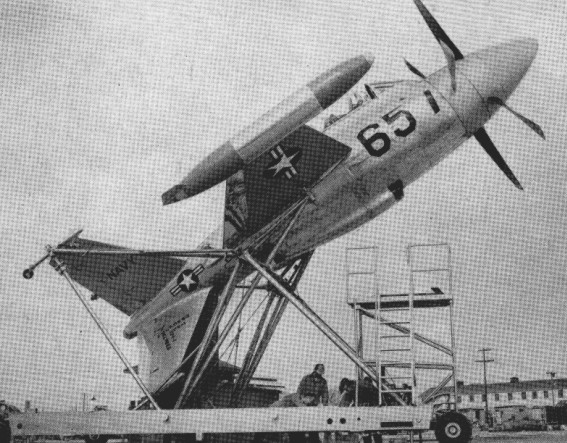
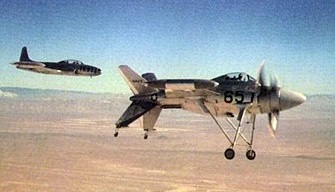
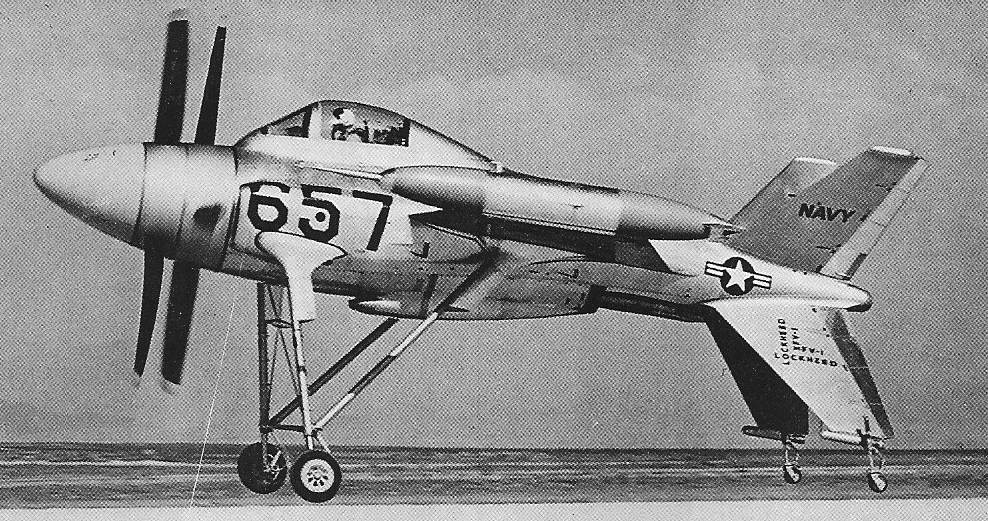
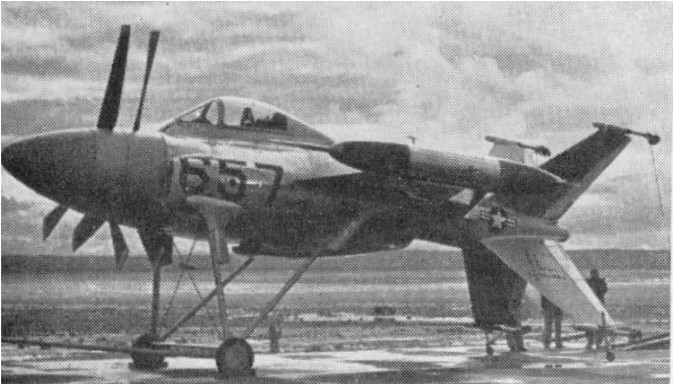
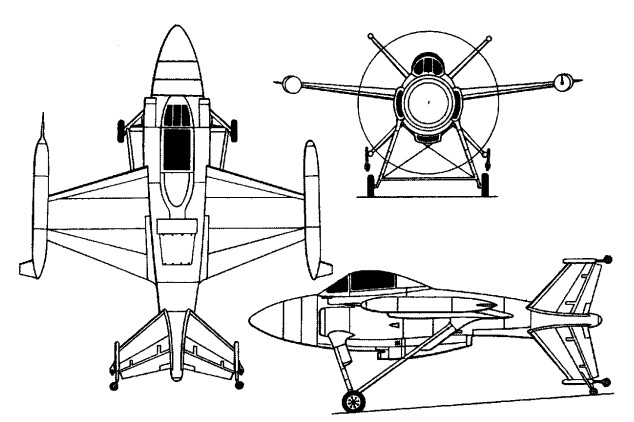
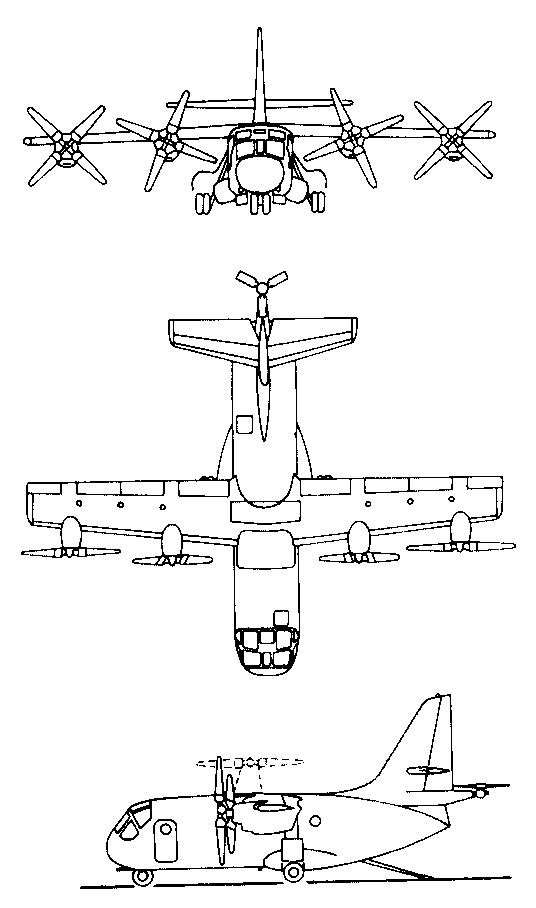
From 1949 the US Navy actively pursued a policy of VTOL research. The results were two prototypes, the Lockheed XFV-1 and the Convair XFY-1 Pogo. Both aircraft were of the ‘tail-sitter’ concept and powered by the 5500-shp (4101-kW) Allison T40-A-6 turboprop driving large contra-rotating propeller units. These provided more thrust than the weight of the aircraft, making possible VTOL operation.
The XVF-1 was the more conventionally configured of the two types, with a mid-set wing of low aspect ratio, but for VTOL capability had a cruciform arrangement of tail surfaces indexed at 45 degrees to the wings. Each fitted with a small castoring wheel on the outboard end of its trailing edge. For flight trials with an engine not cleared for VTOL operation the type was fitted with a lightweight but very stalky fixed landing gear arrangement to permit conventional rolling take-off and landing, and in this guise first flew in June 1954. The aeroplane flew 22 times, in the process recording 32 operations in the vertical mode, when variation of the engine power made possible descending, hovering and ascending flight. No pure VTOL operations were undertaken with the only one of the two XFV-ls that flew.
The performance was similar to the P-80 Shooting Star.
The whole programme was cancelled in June 1955 and construction of the second prototype abandoned.
The Schweizer SGS 2-32 also formed the basis of another quiet observation aircraft, the LTV Electrosystems L450F, which first flew in prototype form in February 1970 and was powered by a Pratt & Whitney PT6A-29 turboprop derated to 680shp.
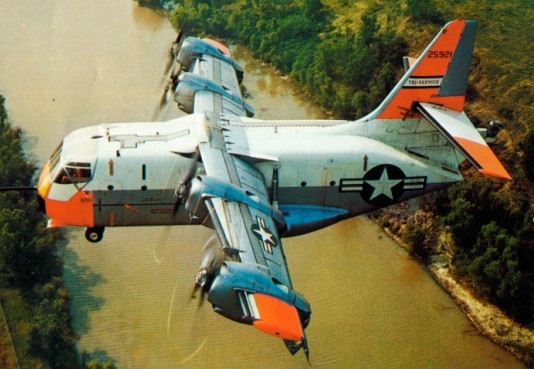
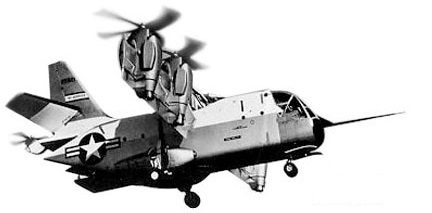
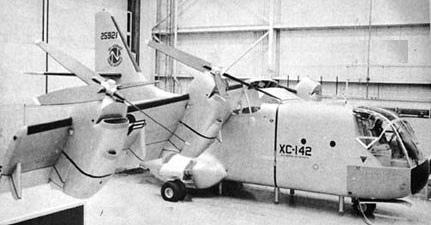
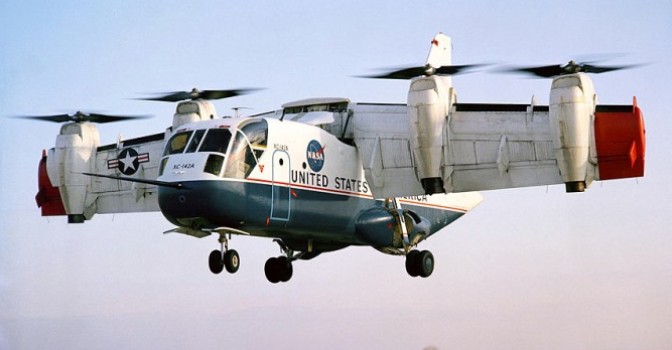
A government advisory group in 1959 recommended that a full-size V/STOL aircraft was required, with specific requirements for the Navy and Army. Previous VTOL programs had been built to illustrate a particular principle, but few of these concepts had any operational military capabilities. With the XC-142, it was decided that this system would be tested in an operational environment. It was decided that the system would fulfill requirements for all three military services. The first tri-service VTOL. In 1961, a Request for Proposal was released, and in September, the proposal from Vought-Hiller-Ryan was announced as the winner. It was also announced that the Air Force would manage the program with the cost of the program to be shared equally by each of the services. Vought Aeronautics Division of Ling-Temco-Vought was the prime contractor, with Hiller and Ryan serving as the major subcontractors. Vought subcontracted the design and fabrication of the empennage, aft section, engine nacelles, and wing to Ryan. The overall transmission system and selected components were subcontracted to Hiller, which was also responsible for the flap and aileron fabrication. The XC-142 grossed out at about 16900kg loaded with an empty weight of about 10780kg. The plane had a fuselage length just exceeding 17.7m, with a maximum height of 7.9m and a sizable wing span of 20.6m. The model carried a single tall vertical tail that provided 12sq.m of area. The wings carried large trailing double-slotted flaps the entire length of each wing and were mounted high on the fuselage. The fuselage was designed to carry significant cargo, with the cargo compartment being 9.15m in length with a 2.1m height and width. That volume equated to about 32 full-loaded troops and gear, or four tons of cargo. In addition to that capability, there was also the ability to carry 370 litres of fuel. There was also a planned capability for auxiliary tanks which would greatly add to the range.
XC-142 62-5921
Power consisted of four 3080hp General Electric T64-GE-1 engines, mounted in nacelles on the wings, which were all cross-linked together. Each drove a four-bladed 4.7m Hamilton-Standard fiberglass propeller, the tips of each practically overlapping each other. Later in the program, Hamilton Standard would provide an improved version of the propeller using the 2FF blade design, which featured a wider planform, rounded tips, and a more pronounced twist than the earlier 2EF blades. The goal of the new design was to improve aerodynamic load distribution and overcoming a static load problem. The four engines also drove a fifth propeller, a three-bladed fiberglass type, in the tail through an interconnected gear and shaft train. Therefore, power was available to turn all five propellers when one, two, or three engines were shut down. The tail propeller rotated in a horizontal plane and was declutched and braked for cruise flight. Through cross-shafting gearboxes, the rotation from each engine was brought together at the top of the fuselage. The power was then sent back to the tail rotor through a tail propeller shaft, into the tail propeller gearbox, and on to the variable pitch tail propeller. The propulsion system of the XC-142 was over powered. The plane could lose an engine on take-off and still clear a 15.25m barrier in 122m carrying a 4500kg payload. Also, with all engines operating, the plane had a rate of climb at sea level of 34.5m/s. On a hot day, even with an engine out, the XC-142 showed a climb rate of 17.8m/s. Roll control was by differential propeller pitch. Pitch control was accomplished by the eight-foot, three-bladed variable pitch tail rotor. Yaw control was provided by ailerons powered by propeller slipstream deflection, actually a second VTOL concept being employed in the XC-142. The craft main lift system in the wing was capable of rotating through 98 degrees instead of the expected straight-vertical position. The wing tilt mechanism consisted of two screw-jack actuators driven by a centrally-located hydraulic motor. The tilt was controlled by a variable rate switch on each collective lever, or by a constant rate switch. This allowed the plane to hover in a stationary mode in a tailwind condition. The trailing edge of the wings carried three-section, double-slotted flaps in three sections, with the center and outboard sections operated also as ailerons. The flaps were programmed automatically with changing wing tilt, although the pilot had an override capability. Leading edge slats were used for stall suppression, and were mounted outboard of each engine nacelle and operated automatically as a function of flap position. The vertical tail was operated as a standard rudder-and-fin set-up, which supported the slab-type unit horizontal tail assembly. A fully-powered irreversible type with artificial feel forces and powered by dual independent hydraulic systems was fitted. Dual cockpit controls, consisting of conventional rudder pedals, control sticks, and collective levers for all take-offs and landings, provided the highest technology of the system. The tail rotor was rigged to fold to the port side to reduce the storage length and protect against damage during a loading operation.
The first XC-142 was rolled out in early 1964 with its first conventional flight being made in September 1964, its first hover three months later, and the first transition from hover to horizontal flight and return on 17 January 1965. The Air Force extensively tested the XC-142’s capabilities with cargo flights, cargo, and paratrooper drops, along with desert, mountain, rescue, and carrier operations.
XC-142 62-5921
In 1966, one of the XC-142s passed operational tests to prove the model in carrier operations. In quick succession, the plane accomplished 44 short take-offs and landings, along with six vertical take-offs and landings from the USS Bennington.
The carrier trails were accomplished using the number five prototype, which was crewed by both USMC, Navy, and Army pilots. The flight regime covered VTOL operations at a variety of speeds, which occurred at wind conditions from 10 to 55km/h. A large variety of wings and flap tilt angles were used during the testing. Also, there were landings accomplished with three and six degree glide slopes. In an amazing demonstration, the plane negotiated a 360-degree turn within the width of the flight deck. That same year, one of the prototypes was also tested in an overwater pickup operation. The plane lifted a man from a life raft to determine its capability for rescue and recovery. A standard Navy horse collar sling was attached to 38m of cable and then lowered through a floor hatch just aft of the cockpit. The tests proved that there were no problems with effects of the propeller downwash or slipstream turbulence.
The program called for the building of five prototypes, 62-5921-5925, but cross-shaft problems, along with some operator errors, resulted in a number of hard landings causing damage to the complete fleet.
The most serious of the mishaps, resulting from a tail rotor driveshaft failure, caused three fatalities. The May 1967 accident took place near the Dallas, Texas, LTV plant and occurred in a heavily-wooded area where fire started after the impact. The flight plan for the ill-fated prototype included a rapid decrease in altitude from 2440m to 915m, effectively simulating a pilot rescue under combat conditions. A nose-over at low altitude followed, from which the crew could not recover. The crash aircraft was XC-142 #1 which had flown 148 times at the time of the crash. The pilots on the fatal flight were Stu Madison, Charlie Jester, and John Omvig.
Other incidents included the following:
Aircraft #2 – On October 19, 1965, this craft experienced a ground loop causing extensive damage to the wing and propeller.
Aircraft #3 – On January 4, 1966, this model made a hard landing in the vertical mode. There was significant damage to the fuselage. The wing of this plane was late mated to the Number #2 for further testing.
Aircraft #4 – On January 27, 1966, an engine turbine failure caused the overriding clutch to engage, causing extensive damage to the wing, outboard aileron, the number two nacelle, aft engine shroud, and fuselage. It was later used by NASA for further research.
Aircraft #5 – ln December of 1966, a ground accident caused major damage to the fuselage, nose, wing, and propellers. The incident was caused by pilot error who failed to activate the hydraulic system, which resulted in no brakes or nose wheel steering.
The final decision on the disposition of the aircraft occurred during the Category II Operational Suitability Program, which was conducted at the Air Force Flight Test Center. The testing consisted of 113 flights, totaling 163.9 hours, which was accomplished between July 1965 and August 1967. Three of the XC-142s also participated in a major operational test demonstration during the program, where the planes participated in demonstrations of VTOL, STOL, and movement of Jeep-mounted 106mm recoilless rifles, unloading of three-quarter ton trucks with towed 105mm Howitzers, dump trucks, and 450-kg A-22 containers. For a typical XC-142 design mission, the plane could operate with a gross weight of 16900kg, including a four-ton payload. At that weight condition, the plane could take off vertically, cruise 370km near 480km/h, hover for ten minutes, and then land. One of the limitations found in the plane, even though the overall test results were very positive, was an instability between wing angles of 35 and 80 degrees which was encountered at extremely low altitudes. There were also high side forces which resulted from yaw and weak propeller blade pitch angle controls. Another XC-142 complaint was the excessive vibration and noise in the cockpit, when coupled with an excessively high pilot workload, and which presented a considerable challenge in the cockpit. The program involved 39 different pilots flying the prototypes for a total of 420 hours.
The greatest national exposure the XC-142 received during its flight test program occurred when the #4 prototype participated in the 1967 Paris Air Show.
The only remaining XC-142, #2 62-5924 / NASA522, was on display at the Air Force Museum at Wright-Patterson Air Force Base near Dayton, Ohio.
XC-142A Crew: 2 Passengers: 24-44 Engines: 4 x General Electric T-64 turboshaft, 2095kW Wingspan: 20.6m Length: 17.8m Height: 8.0m Wing area: 49.7sq.m Empty weight: 10250kg Max speed: 667km/h Ceiling: 7620m Range with max fuel: 756km Range with max payload: 370km
A 1960 STOL light transport and trainer. Two projected M-603 turboprops (1200 to 1400 hp each) or two twinned M-601; 20 to 25 passengers (8 to 10 in VIP configuration). Takeoff run only 15 m.
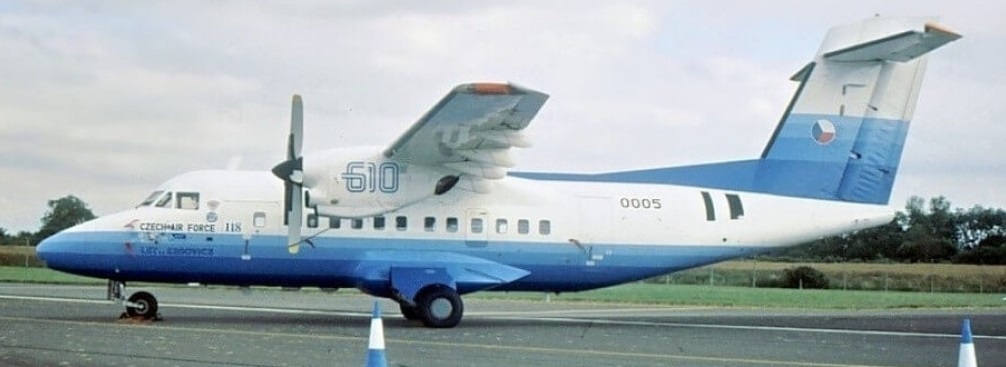
The development of the 40-seater L-610 started in 1985 at Let Kunovice Aircraft Industries in former Czechoslovakia. The Czech plane maker wanted to develop a bigger successor to its popular L-410.
After the collapse of the Soviet Union, Let tried to adapt its new airplane to the global market by westernizing its avionics. Eight prototypes were made and the forty-passenger L 610 regional airliner first flew December 1988 and L 610G version followed in December 1992.
But due to a lack of funding, the program was eventually abandoned in 2006 and Let went on to focus on the L-410 and on gliders.
In 2008, 51% of Let’s shares were acquired by the Ural Mining and Metallurgical Company (UGMK), with the prospect of developing the market of Russian regional aircraft. In 2018, Deputy Minister of Industry and Trade of the Russian Federation Oleg Bocharov announced the decision of acquiring the documentation for the L-610 in order to continue its development.
While the development of the new L-610 is carried out on the basis of the existing scientific and technical work, it should differ from the original prototype. “The maximum take-off mass, cargo capacity, flight range and speed of the aircraft will increase, moreover, even the fuselage of the aircraft will be presented in a more modern design,” claimed the director-general of UZGA Vadim Badeha. The type certificate is expected for 2023, with mass production commencing the same year.
Thirteen years after it was abandoned, Polar Airlines and the Ural Civil Aviation Plant (UZGA) brought back the L-610 to life with an order for 10 of the regional aircraft, to be delivered between 2023 and 2025.
L-610G
With 10 aircraft ordered at the MAKS 2019 air show, the L-610 should replace the An-24 and An-26 within Russian Polar Airlines’ fleet. The partially state-owned regional carrier, subsidiary of Yakutia Airlines, already operates three L-410s.








 All Aero