In mid 1980s, Research Council recommended that National Aerospace Laboratories should study the civil aviation requirements of India and recommended ways and means of establishing a viable civil aviation industry. It further recommended that NAL should carryout a formal techno economical feasibility study of a multi role Light Transport Aircraft (LTA – renamed SARAS in October 1993). The feasibility study (November 1989) showed that there was a significant demand for a 9–14 seat multi-role LTA in the country and estimated a market potential of about 250–350 aircraft in the next 10 years. NAL submitted the feasibility study report to RC in November 1990 and started its search for an industrial partner.
The project began in 1991 as a collaboration with Russia (Myasishchev had a similar project called the Duet), but financial trouble led the Russians to drop out early in the project, in 1997. The project almost came to a halt when it was hit by US-imposed sanctions in 1998, after India’s nuclear tests in Pokhran. It was recommenced in September 1999 upon receiving development approval from the Cabinet Committee on Economic Affairs in June 1999.
The project of ‘Saras’ was sanctioned on 24 September 1999 with initial schedule of its maiden flight by March 2001.
The original design target parameters included a maximum take-off weight of 6,100 kg and a maximum payload of 1,232 kg, a high cruise speed of over 600 km/h, an endurance of six hours, a maximum flight altitude of 12 km (cruise altitude 10.5 km), short take-off and landing distances of about 600 m, a maximum rate of climb of 12 m/s, a low cabin noise of 78 dB, a range of 600 km with 19 passengers, 1,200 km with 14 passengers and 2,000 km with eight passengers, a high ‘specific range’ of 2.5 km/kg and a low cost of operation of Rs. 5/km.
The Saras was designed to fly both day and night from semi-prepared airfields and grass runways. It was designed adhering to the FAR-25/23 standard regulations and can offer air taxi and commuter services.
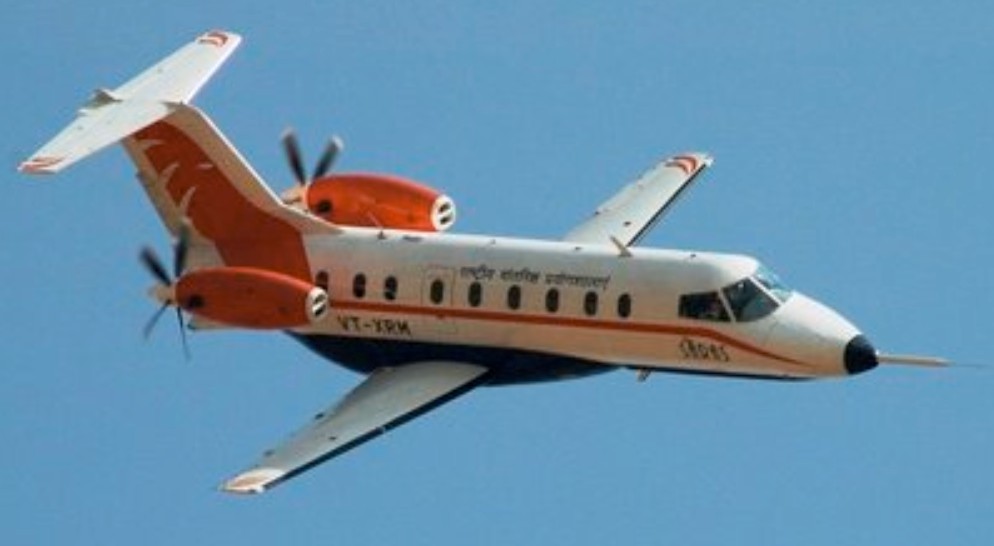
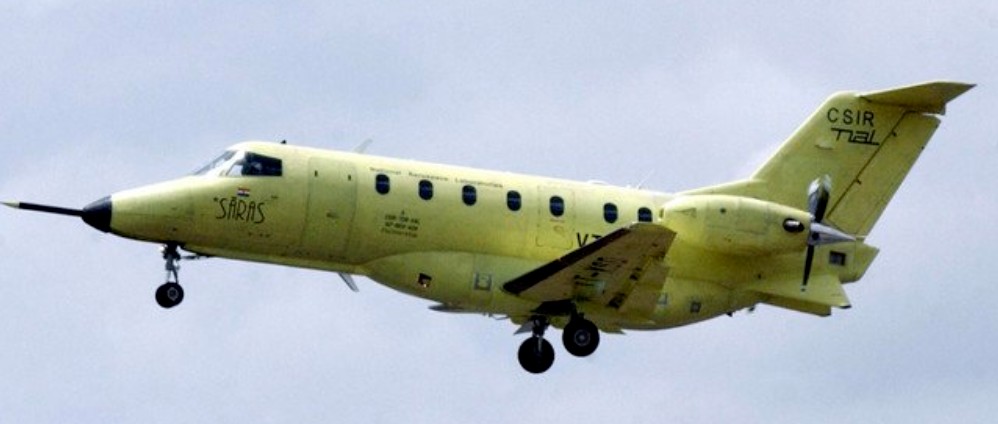
The first Saras (PT1) completed its maiden flight at the HAL airport in Bangalore on 29 May 2004 powered by two 850hp Pratt & Whitney PT6A-66 turboprop.
While the designed empty weight of the aircraft is around 4,125 kg, the first prototype weighed in around 5,118 kg. This was to be addressed by including composite wings and tail by the third prototype. It is being upgraded with 1,200hp Pratt & Whitney PT6A-67A engines to accommodate the overweight, new propellers and modern flight control and electrical systems.
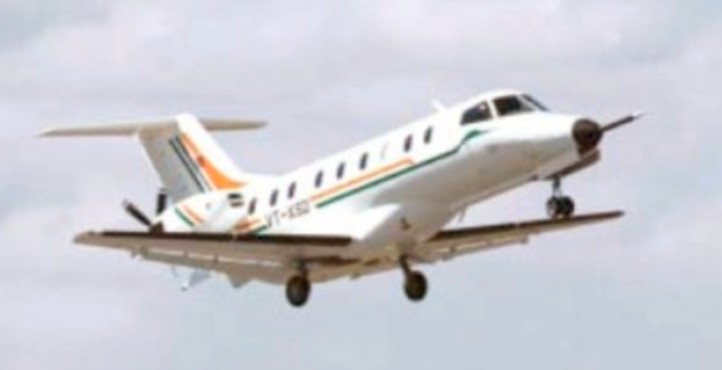
The airframe of Saras-PT2 was built with lighter composites to reduce its overall weight by about 400 kg from its first prototype, which was overweight by about 900 kg. The PT2 was powered by Pratt & Whitney PT6A-67A engine and completed maiden flight on 18 April 2007. A 2.65m diameter Hartzell five-bladed propeller will be fitted to each engine. The propellers can make 1,700rpm in pusher configuration.
The IAF has signed up with National Aerospace Laboratories, Bangalore for the purchase of 15 Saras aircraft.“NAL signed a memorandum of understanding with IAF to sell 15 Saras aircraft. The Kanpur unit of Hindustan Aeronautics Ltd will manufacture these planes,” The 14-seater twin-engine aircraft would be used for coastal surveillance as well as training young cadets on transport flying.
On 6 March 2009, 2 Indian Air Force test pilots, Wing Commander Praveen Kotekoppa and Wing Commander Dipesh Shah along with a Flight Test Engineer Squadron Leader Ilayaraja, were killed when the second prototype Saras aircraft crashed and caught fire in an open field near Bidadi, about 30 km from Bangalore. A court of inquiry found that wrong engine relight drills given to the pilots caused the crash.
Saras Engines: 2 × Pratt & Whitney Canada PT6A turboprop, 2150 shp (1634 kW) Wingspan: 14.70 m (48.23 ft) Length: 15.02 m (49.28 ft) Height: 5.20 m (17.06 ft) Useful load: 1,232 kg (2,710 lb) Max. takeoff weight: 7,100 kg (15,653 lb) Maximum speed: 550 km/h Cruise speed: 450km/h Range: 920 km Ferry range: 1,935km Service ceiling: 7,500 m (24,600 ft) Rate of climb: 10.5m/s Endurance: 4 hours 45 minutes Crew: 3 (Pilot, Co-Pilot, Flight Engineer) Capacity: 14 passengers
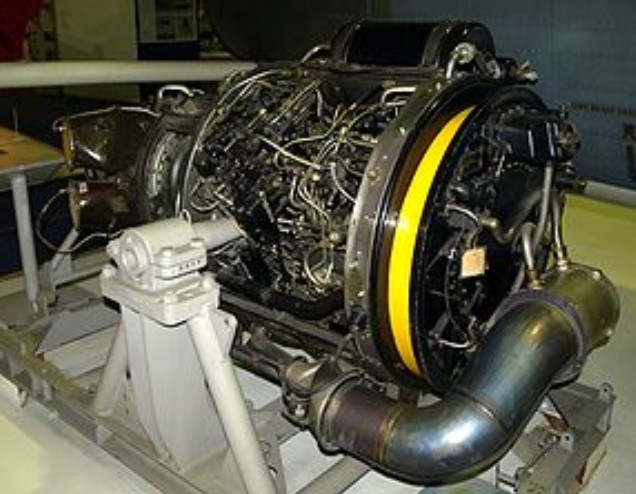
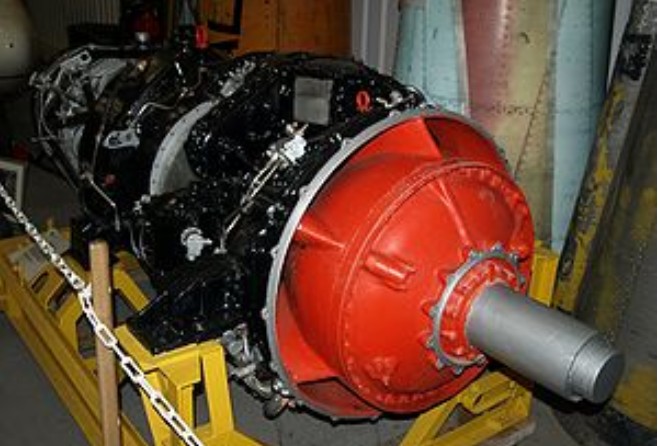
The Napier Gazelle was a turboshaft aero engine manufactured by Napier Aero Engines in the mid-1950s. First run in December 1955, production ceased when the Napier company was taken over by Rolls-Royce in 1962.
Variants: NGa.1 NGa.2 NGa.2(R) NGa.2 series 2 NGa.13(R) NGa.13 series 2 Mk.101 Mk.161 Mk.162 (NGa.13 series 2) Mk.165 Gazelle 501 Gazelle 503 Gazelle 512 Gazelle 514 Gazelle E.219
Applications: Westland Wessex HAS 1 and HAS 3 Bristol Belvedere
Specifications: Gazelle 501 / Mk.101 / NGa.2(R) Type: Turboshaft Length: 70 in (1,778 mm) Diameter: 33.5 in (851 mm) Dry weight: 830 lb (376.5 kg) Compressor: 11-stage axial flow Combustors: 6 flame tubes Turbine: 2-stage gas generator power turbine + 1-stage free power turbine Fuel type: Aviation kerosene, (DERD 2482 / 2485 / 2486 / 2488 / 2494) Oil system: Pressure spray / splash with gear pump and dry sump, oil grade DERD.2487 Maximum power output: 1,650 hp (1,230.4 kW) + 260 lbf (1.16 kN) thrust at 3,000 output shaft rpm, maximum rating for 2.5 minutes Overall pressure ratio: 6.25:1 Specific fuel consumption: 0.688 lb/hp-hr (0.4185 kg/kW-hr) Power-to-weight ratio: 1.458 hp/lb (2.397 kW/kg)
The Napier Eland was a British turboshaft or turboprop gas-turbine aero engine built by Napier & Son in the early 1950s. The Eland was first tested in 1953 in a Vickers Varsity aircraft. Further flight proving was carried out from 1955 using the first production Airspeed Ambassador 2.
The Eland was used to power various aircraft including the Westland Westminster heavy-lift helicopter, the Canadair CL-66; a turbine-powered version of the Convair CV-340 for the Canadian military (later converted to Allison T-56 propjets after a number of engine failures), and the Fairey Rotodyne gyroplane. In the Rotodyne, the Eland powered the tractor propellors for forward flight and a compressor, via a clutch and shaft arrangement, to feed the rotor tip-jets with compressed air for vertical flight.
The Eland was dropped from production when Napiers was acquired by Rolls-Royce Limited in 1961.
Applications: Turboshaft Westland Westminster
Turboprop Airspeed Ambassador Canadair CC-109 Cosmopolitan Canadair CL-66 Convair CV-540 Fairey Rotodyne Vickers Varsity (one aircraft as an engine test bed in 1954)
Specifications: Eland N.El.6 Type: Single-shaft turboprop Length: 120 in (3,048 mm) Diameter: 36 in (914 mm) Dry weight: 1,735 lb (787 kg) Compressor: 10-stage axial flow Combustors: 6 chambers Turbine: 3-stage Fuel type: Jet fuel Maximum power output: 3,500 eshp (2,610 kW) Overall pressure ratio: 7:1 Specific fuel consumption: 0.595 lb/hr/eshp Thrust-to-weight ratio: 2.0 eshp/lb (3.3 kW/kg)
Design work on the YS-11 began in 1957 when the Japanese Ministry of International Trade and Industry (MJTI) urged six of the country’s leading aviation companies to join forces in the development of what was to become Japan’s first postwar airliner. The ensuing joint design bureau became known as TADA (Transport Aircraft Development Association or Yusoki Sekkei Kekyu Kyokai). What finally came off the drawing boards was a conventional design, tailored for the Japanese domestic market. In 1959 TADA was replaced by NAMC (Nihon Aeroplane Manufacturing Company) to provide manufacturing and marketing capability. Among the participating companies, construction responsibilities were divided as follows: Fuji – tail unit; Japan Aircraft – control surfaces; Kawasaki – wings; Shin Meiwa- aft fuselage; Showa Aircraft – composite structures; and Mitsubishi – forward fuselage and final assembly.
Two prototypes were built by NAMC, each powered by two 3,060 h.p. Rolls-Royce Dart RDa.10/1MkP542 engines, plus two further airframes for static testing. Fifty-four YS-11s were to be built between 1963 and 1966, according to plans, for All-Nippon Airways (25), Japan Air Lines (about 10), the Japanese Defence Agency (10), the Maritime Safety Agency (2 for ASR) and the Meteorological Agency (four for weather observation).
The first flight came on August 30, 1962, when the YS-11 first took to the skies. Japan Domestic Airlines placed the type into service on April 1, 1965. A higher gross weight version, the YS-11A, became available in 1967. Not surprisingly, Japanese airlines were the largest customers, although Piedmont Airlines took delivery of 21 aircraft. Other customers included Hawaiian Airlines, Cruzeiro do Sul, VASP, and Olympic Airways. Throughout its production life, the YS-11 was dependent on state subsidies. In 1971 the Japanese government announced that it would no longer provide financial backing and production ended two years later, with a total of 182 aircraft completed. Although from an economic point of view the YS-11 was a Y38 billion disaster for Japanese taxpayers, the airplane itself proved to be a solid and reliable design. Over the years, many YS-11s were passed on to smaller operators all over the world. Among these were a number of US-based com¬panies, such as Mid Pacific Air, Provincetown-Boston Airline, Reeve Aleutian Airways, Simmons Airlines, Pinehurst Airlines, and Airborne Express.
112 of the YS 11 were in service in 1981, the largest operators being TDA with 42 and ANA with 34. The fleet has totalled more than three million hours.
Engines: two 3,060 h.p. Rolls-Royce Dart RDa.10/1MkP542 Span: 105 ft Length: 86 ft 3 in Height: 30 ft Gross weight: 50,265 lb Empty weight (equipped): 31,970 lb Max cruising speed at 20,000ft: 296 mph Econ cruising speed at 20,000ft: 288 mph Max rate of climb at SL: l,520 ft/min Service ceiling: 27,500 ft TO field length (SR422B): 2,900 ft; Landing field length (SK422B): 3,790 ft Range max fuel/ 5,4001b load, res 230-mile & 45min: 1,485 miles Range with max payload, same res: 380 miles
YS-11A-500 Engines: 2 x RR Dart Length: 26.3m (86.3ft) Wing span: 32m (105ft) MTOW: 25,000kg (55,115kg) Max payload: 5,900kg (13,000lb) Economical cruise: 245kt ROC: 800fpm at l40kt Takeoff dist: 1,200m (3,940ft) Landing dist: 1,000m (3,280ft) Range (max fuel): 1,735nm Range (max load): 600nm
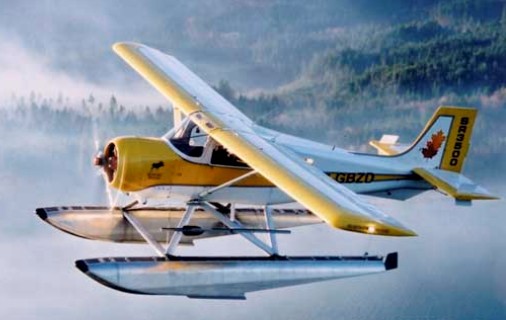
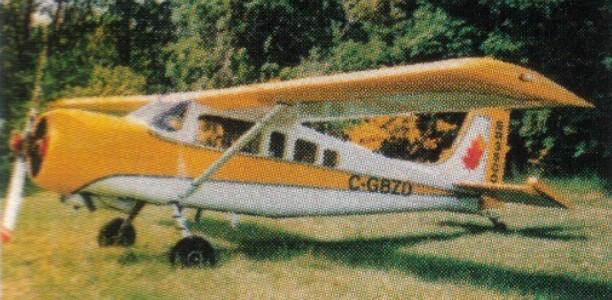
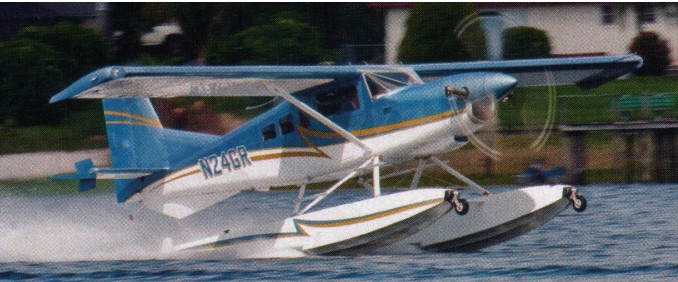
The Murphy SR3500 Moose is a STOL aircraft capable of operating from wheels, floats or skis. Featuring all metal construction, the pre-formed and pre-punched parts suit the first time builder.
The empty weight of the SR 3500 was increased 2% over the SR 2500 Super Rebel to prepare it structurally for more powerful engines, speed increase, and a 17% payload increase. Most of the changes are to the outside of the structure, including doublers added to the wing and horizontal stabiliser roots. A stronger set of rudder and elevator horns and the undercarriage has been strengthened. The structure was stactically loaded to 8400 lb on each wing (5.3G) and the torsional load tests were equivalent to a 220 mph dive with a 4 G pull-up with full aileron deflection.
Turbine Moose
When powered by a 360 hp Russian radial, a gearbox allows the engine to run at 2950 rpm while the propeller turns at 1940 rpm. Typically producing 390 hp, the prop diameter is 98 in.
Murphy Moose Engine: Lycoming O-540, 250 hp Power Loading: 14.0 lb./hp Gross weight: 3500 lb Empty weight: 1650 – 1800 lb G-loading (normal): +5.7 -3.8 Power range: 250 – 360 hp Wing span: 36′ Length: 23′ Fuselage width: 44″ Wing chord: 60″ Tail span: 130″ Tail chord: 33.5″ Airfoil: 4415 (Modified) Flap area: 22.5 sq. ft Flap reflex: 5 Flap droop: 40 Aileron area: 25.5 sq. ft Aileron reflex: 5 Aileron up deflection: 20 Aileron down deflection: 12 Useful Load: 1750-1850 lb Wing Area: 182 sq.ft Wing Loading: 19.2 lb./sqft Rate of Climb: 950 ft/min Take Off Run: 800 ft Landing Roll: 600 ft Stall (no flap) Power off: 64 mph Stall (full flap) Power off: 58 mph Cruise (70% Power): 143 mph Vne: 189 mph Top Speed: 155 mph Fuel Burn: 14.1 USG/hr Fuel Capacity: 60 USG Endurance: 4.3 hr Range: 610 statute miles
Murphy Moose Engine: M-14P, 360 hp TBO: 1500 hr Gross weight: 3500 lb Empty weight: 1650 – 1800 lb G-loading (normal): +5.7 -3.8 Power range: 250 – 360 hp Wing span: 36′ Length: 23′ Fuselage width: 44″ Wing chord: 60″ Tail span: 130″ Tail chord: 33.5″ Airfoil: 4415 (Modified) Flap area: 22.5 sq. ft Flap reflex: 5 Flap droop: 40 Aileron area: 25.5 sq. ft Aileron reflex: 5 Aileron up deflection: 20 Aileron down deflection: 12 Power Loading: 9.7 lb./hp Useful Load: 1800-1600 lb Wing Area: 182 sq.ft Wing Loading: 19.2 lb./sqft Rate of Climb: 1500 ft/min Take Off Run: 600 ft Landing Roll: 600 ft Stall (no flap) Power off: 64 mph Stall (full flap) Power off: 58 mph Cruise (70% Power): 150 mph Vne: 189 mph Top Speed: 175 mph Fuel Burn: 15 USG/hr Fuel Capacity: 80 USG Endurance: 5.3 hr Range: 795 statute miles
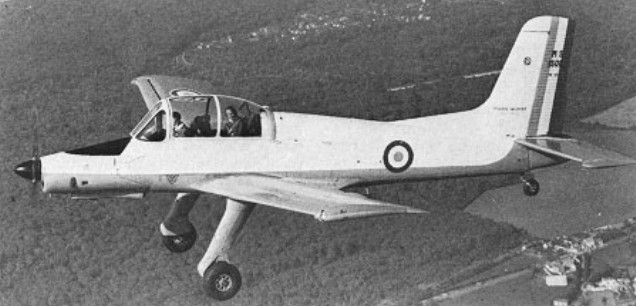
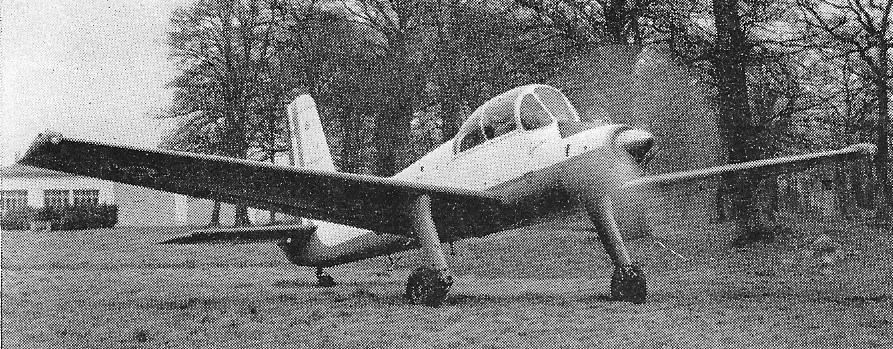
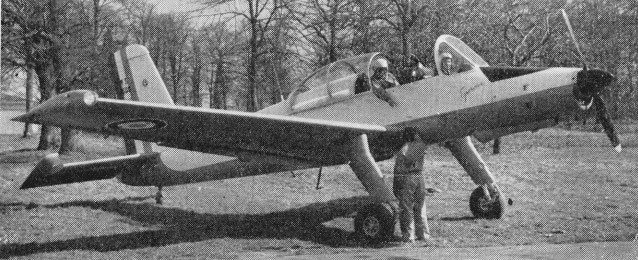
Flown for the first time on 12 May 1958, the prototype Morane-Saulnier M.S.1500.01 Epervier (sparrow-hawk) was a two-seat cantilever low-wing monoplane, with a high glazed canopy for its two-man crew. The Epervier was initially powered with a 400 shp Turbomeca Marcadau turboprop with which it logged 29 hr in 46 flights.
It was subsequently re-powered with an 800 shp / 522kW Turbomeca Bastan IV turboprop which first flew on 7 October 1958. Its fixed conventional landing gear had cantilever main legs.
Bastan power
By the end of February 1959 it had flown a further 37 hr in 58 flights.
The M.S.1500 was intended to meet an official Armee de I’Air requirement for a tactical reconnaissance and counter-insurgency aircraft for service in Algeria against the nationalist forces. A second prototype was built and tested, but no production orders were received.
Engine: 1 x 522kW Turbomeca Bastan IV turboprop Max take-off weight: 2850 kg / 6283 lb Wingspan: 13.06 m / 42 ft 10 in Max. speed: 315 km/h / 196 mph
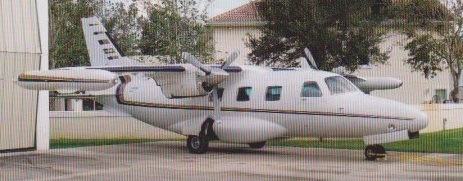
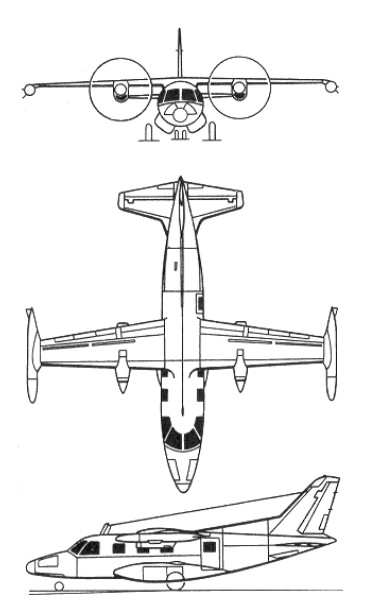
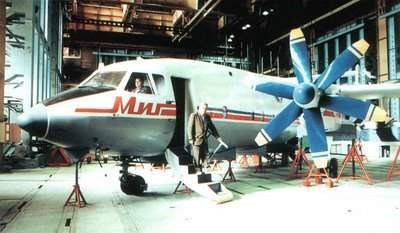
The first light aircraft to fly was six-seat Molniya-1 general-purpose transport with twin booms and pusher engine (first flown December 1992); Allison turboprop powered version proposed as Molniya-3.
In 1959, MHI started on a utility/ executive aircraft aimed at the emerging business aviation market. It was announced in April 1962 that Mitsubishi were to build one flying prototype and a structure test airframe of a shoulder-wing twin-turboprop utility aircraft under the XMU-2 designation. A mock-up had been built and the aircraft is described as being similar in appearance to the Aero Commander, but smaller, with a circular-section fuselage. The engines were to be French or Canadian turboprops of 500 hp each.
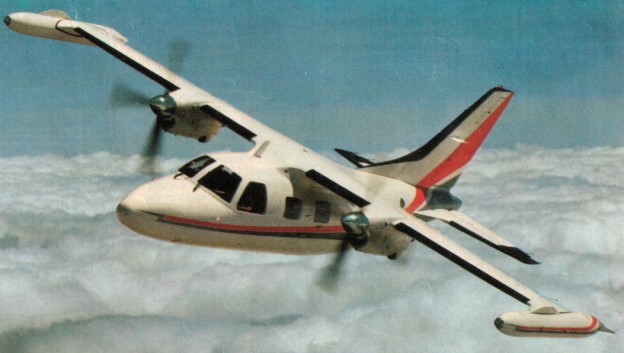
On 14 September 1963 the first of four prototypes was flown, a cantilever high-wing monoplane with a pressurised fuselage, retractable tricycle landing gear and two wing-mounted turboprop engines. The first MU 2 prototype flew pow¬ered by French Turbomeca Astazou en¬gines. The fourth airplane to be tested was fitted with an early version of the Garrett AiResearch TPE 331, and all subsequent MU 2s have been powered by TPE 331 turboprops. By 1965, the short body MU 2B was certified by the FAA for use in the U.S. and sales to American firms began. To achieve roll control when the wing required full span flaps, Mitsubishi developed a small spoiler that resides at about the two thirds chord position and extends along most of the wing’s span.
Since 1965, MHI has improved the MU 2 as the technology of general avia¬tion aircraft advanced, but with the ex¬ception of powerplants and systems, very few changes in the airframe were neces¬sary. As more power was added, a speed increase of 15 percent and a gross weight increase of 30 percent was achieved. The first significant changes to the MU 2 ap¬peared in 1968 when the aircraft was fitted with larger tip tanks and powered by 705 eshp TPE 331s.
Initial production versions were the MU-2A with Turbomeca Astazou turboprops, MU-2B with Garrett TPE331 turboprops and a similar MU-2D, an unpressurised multi-role MU-2C for the Japanese Ground Self-Defence Force, a search-and-rescue MU-2E, and the MU-2F with uprated TPE331 engines.
Models B and D were powered by 605 shp and seated 7-9 passengers. The Model F represented a boost in power to 705 shp.
Certification of the MU-2B-26A is FAA A10SW, and the MU-2B-30 JCAB 25.
The first stretched (by 1.88 m) MU 2 was the G model, which was based on the MU 2F and introduced in 1969. The Model G featured increased seating capacity for up to 11 people, and the powerplant of the MU-2F.
In 1971, the eshp of the AiResearch turbines was increased to 724 for use on the long bodied MU 2J and the short bodied MU 2K, which were introduced in mid 1972. Both utilizing 724-shp turboprops and offering seating arrangements that corresponded to Models F and G, respectively.
Subsequent versions have included the MU-2J with more powerful engines, and MU-2K combining MU-2F fuselage and MU-2J powerplant.
Mitsubishi MU-2J N113SD
The MU 2L and M models (variants of the MU-2J and MU-2K respectively), with their increased gross weights and added soundproofing, were an¬nounced at NBAA in September, 1974. Fitted with full span, high lift flaps and two Garrett AiRe¬search TPE 331 6 251M engines, rated at 776 equivalent shaft horsepower on the L model and at 724 eshp on the M model. Thus, both Mitsubishis have power loadings of 8.1 pounds of aircraft per horsepower for the MU 2L ¬and 7.9 lbs/hp for the MU 2M. The L and M model use AiResearch cabin pressurization systems with Hamil¬ton Standard air conditioning utilizing bleed air from the engines. The MU 2L, nine feet longer inside than the MU-2M, providing ac-commodations for a pilot and from seven to ten passengers. The MU 2L uses 178 square feet of wing area and a NACA 64A415 airfoil to produce a high speed wing that carries a load of 65 pounds per square foot.
The MU-2L and MU-2M were discontinued in 1976 and replaced by the MU-2N and MU-2P with Garrett TPE331-5-252M engines. The 90 inch, three blade propellers that were standard on MU 2Ls and Ms are replaced on the latest models by 98 inch, four¬blade props that turn at 1,591 rpm on take off, only 80 percent of the revolu¬tions previously used. Because of the slower turning propellers, the propeller tip speeds are reduced about 100 feet per second in spite of the increased prop diameter needed to produce the same thrust horsepower available on older MU 2s. The result is a dramatic 25 per¬cent reduction in perceived noise levels within the cabin and no loss in per¬formance.
The new aircraft are designated the MU 2N and the MU 2P (the latter model has the shorter fuselage). In addition to larger, slower turning propellers, both models are equipped with the Woodward fuel control units; a move which will mark a return to the fuel con¬trol units utilized by Mitsubishi in their early MU 2 models. Purchasers of L or M model Mitsubishis have the option to upgrade their new aircraft to the stan-dards of the MU 2N or MU 2P, respective¬ly, should they wish to have the slow turning engines with the Woodward fuel controllers.
The MU 21P 98 inch four blade propellers have been slowed 20 percent, to 1,591 rpm for takeoff and 1,561 during cruise. According to the factory, that reduces the interior noise level by 25 percent. A vertical fin now sprouts from the top of each tip tank, to help improve low-¬speed roll stability, and there’s a new taxi light in the nose of each tank. A new windshield can be seen in the cockpit; the new glass creates less distortion. Spoilers replace the ailerons to good advantage; they remain equally effective at all airspeeds, eliminate adverse aileron yaw and, most significantly, permit space for almost full span double slotted Fowler flaps. When fully ex¬tended, the flaps increase wing area by 24 percent and reduce stalling speed by 24 knots. Taking off at Vmc (93 knots) allows the airplane to clear a 50 foot obstacle in 1,800 feet at gross on a standard day. In fact, the airplane’s single engine rate of climb is 760¬ fpm, at a typical weight of 9,250 pounds. The MU 2P is a short coupled machine, and this shows up during takeoff and landing. Bluntly stated, the MU 2P is lacking in pitch¬ control power, and some piloting effort is re¬quired to compensate for that shortcoming. The problem is apparently limited to the short fuselage version; the longer body MU¬2s, including the new four blade MU 2N, do not display any pitch difficulties. When leav¬ing or entering ground effect during takeoff or landing, the low mounted tailplane is af¬fected more than the high wings because of the particular relationship between them, and this produces a forward pitching force. The MU 2P, with its short fuselage and narrow center of gravity, demonstrates the effects of this nose down load more vividly than do most airplanes.
An ar¬rangement was struck with Mooney Aircraft for assembly and marketing of the MU 2, and that lasted until it was dissolved in 1970 after Mooney had been purchased by Butler Aviation. But as early as 1967, Mitsubishi Aircraft International, Inc. had been formed, and by 1970, MAI was in a position to take over both the assembly of MU 2s in San Angelo and marketing of the product. Mitsubishi Aircraft Interna-tional, Inc., a U.S. corporation based in San Angelo, Texas was responsible for assembling MU 2s and marketing them in the US and throughout the world.
The MU-2S is the Japan Air Self-Defence Force patrol aircraft, which resembles the civilian aircraft but has a shorter fuselage and bulbous radar nose.
The MU-2N and MU-2P evolved into the Solitaire (standard fuselage) and Marquise (stretched fuselage), respectively. Both airplanes have 1,000 ¬horsepower engines, wet wing fuel tanks that hold an additional 40 gallons and are certificated to 31,000 feet. The MU 2 designation will be dropped. The Solitaire succeeded the MU 2P, and the Marquise the larger, slower MU 2N.
The Solitaire is powered by two Garrett TPE331-10-501M turboprops producing 727 shp at maximum continuous power or 689 shp at recommended cruise power of 96% RPM. Each engine turns a Hartzell 98-inch four-blade prop and provides a 475-fpm single-engine rate of climb when loaded to full gross. With a cabin pressurization differential of 6.0 psi, a sea-level cabin can be maintained up to 14,000. The Marquise, which is 6 feet 2 inches longer, is powered by two turboprops, each producing 778- shp for takeoff or maximum continuous operation and 738 shp at recommended cruise power. Single-engine rate-of-climb is 410 fpm at full gross, and cabin pressurization differential is the same as the Solitaire. The long-fuselage Marquise accommodates a crew of two plus seven to nine passengers; and the Solitaire, seating a crew of two plus six or seven passengers.
Sales of the Mitsubishi MU 2 passed the 700 mark in July 1981 when the total reached 702. Since the twin turboprop business transport was introduced in 1966, 518 were sold in the USA, 20 in Canada, 58 in Latin America, 36 in Europe, nine in Africa, eight in Australia, one each in the Middle East and Asia and 51 in Japan. The last 100 aircraft were sold since September 1979.
Napier NZ Jan 84
When production ended at the end of 1983, 831 MU-2s of all versions had been built, including 73 military versions.
MU 2 prototype Engines: 2 x Astazou II turbo-prop, 415kW Wingspan: 10.3 m / 33 ft 10 in Length: 10.1 m / 33 ft 2 in Height: 4.0 m / 13 ft 1 in Wing area: 16.6 sq.m / 178.68 sq ft Max take-off weight: 3600 kg / 7937 lb Empty weight: 2072 kg / 4568 lb Max. speed: 525 km/h / 326 mph Cruise speed: 523 km/h / 325 mph Ceiling: 11000 m / 36100 ft Range w/max.fuel: 2830 km / 1759 miles Crew: 1-2 Passengers: 5-13
MU-2B-26A Engines: 2 x Garrett TPE-331-252M, 605 shp. Seats: 7/9.
MU-2B-60 Marquise Engines: 2 x Garrett TPE-331-10-501M, 715 shp. Props: Hartzell 4-blade, 98-in. Seats: 9/11. Length: 39.4 ft. Height: 13.7 ft. Wingspan: 39.2 ft. Wing area: 178 sq.ft. Wing aspect ratio: 7.7. Maximum ramp weight: 11,625 lbs. Maximum takeoff weight: 11,575 lbs. Standard empty weight: 7650 lbs. Maximum useful load: 3975 lbs. Zero-fuel weight: 9950 lbs. Maximum landing weight: 11,025 lbs. Wing loading: 65 lbs/sq.ft. Power loading: 8.1 lbs/hp. Maximum usable fuel: 2700 lbs. Best rate of climb: 2100 fpm Service ceiling: 29,400 ft. Max pressurisation differential: 6 psi. 8000 ft cabin alt @: 27,300 ft. Maximum single-engine rate of climb: 410 fpm @ 152 kts. Single-engine climb gradient: 158 ft/nm. Single-engine ceiling: 14,800 ft. Maximum speed: 309 kts. Normal cruise @ 20,000ft: 295 kts. Fuel flow @ normal cruise: 592 pph. Endurance at normal cruise: 4.1 hrs: Stalling speed clean: 100 kts. Stalling speed gear/flaps down: 81 kts. Turbulent-air penetration speed: 191 kts. Takeoff distance (50′) 2,170 ft Landing distance (50′) 2,200 ft
MU-2B-400 Solitaire Engines: 2 x Garrett TPE-331-10-501M, 665 shp Props: Hartzell 4-blade, 98-in Seats: 7/9 Length: 33.3 ft Height: 12.9 ft Wingspan: 39.2 ft Wing area: 178 sq.ft Wing aspect ratio: 7.7 Maximum ramp weight: 10,520 lbs Maximum takeoff weight: 10,470 lbs Standard empty weight: 7010 lbs Maximum useful load: 3510 lbs Zero-fuel weight: 9700 lbs Maximum landing weight: 9950 lbs Wing loading: 59 lbs/sq.ft Power loading: 7.8 lbs/hp Maximum usable fuel: 2700 lbs Best rate of climb: 2250 fpm Service ceiling: 31,000 ft Max pressurisation differential: 6 psi. 8000 ft cabin alt @: 27,300 ft Maximum single-engine rate of climb: 475 fpm @ 150 kts Single-engine climb gradient: 190 ft/nm Single-engine ceiling: 16,900 ft Maximum speed: 321 kts Normal cruise @ 25,000ft: 309 kts Fuel flow @ normal cruise: 526 pph Endurance at normal cruise: 4.6 hrs Stalling speed clean: 104 kts Stalling speed gear/flaps down: 78 kts Turbulent-air penetration speed: 182 kts
MU-2J
MU 2L Engines: 2 x AiResearch TPE 331¬6 251M, 776 eshp Max cruise pwr: 767 eshp Prop: Hartzell 90in Constant speed, full feather with reverse pitch Span: 39 ft. 2 in Overall length: 39 ft. 5 in Overall height: 13 ft. 8 in Wing area: 178 sq. ft Cabin length: 19 ft. 8 in Cabin width: 4 ft. 11 in Cabin height: 4 ft. 3.2 in Baggage compartment: 44 cu. Ft Seats: 8 11 Empty weight: 6,380 lbs Standard equipped weight: 7,570 lbs Max takeoff weight: 11,575 lbs Max ramp weight: 11,625 lbs Useful load (with std equip): 4,055 lbs Payload with full fuel: 1,603 lbs Usable fuel capacity: 366 US gal Max cruise: 340 mph Rate of climb at sea (10,350 lbs): 2,630 fpm ROC SE: 675 fpm Service ceiling (10,350 lbs): 29,600 ft Service ceiling (10,350 lbs) SE: 15,450 ft Stall speed: 88-115 mph Max range 30 min res: 1450 miles Takeoff distance over 50 ft. at 11,575 lbs: 2170 ft Ldg dist from 50 ft. at 9,473 lbs: 1880 ft Pressurization: 6.0 psi Cabin alt @ 24,000 ft: 6200 ft
MU 2M Engines: 2 x AiResearch TPE 331¬6 251M, 724 eshp Max cruise pwr: 715 eshp Prop: Hartzell 90in Constant speed, full feather with reverse pitch Span: 39 ft. 2 in Overall length: 33 ft. 3 in Overall height: 12 ft. 11 in Wing area: 178 sq. ft Cabin length: 11 ft Cabin width: 4 ft. 11 in Cabin height: 4 ft. 3.2 in Baggage compartment: 43 cu. Ft Seats: 7 9 Empty weight: 5,920 lbs Standard equipped weight: 6,864 lbs Max takeoff weight: 10,470 lbs Max ramp weight: 10,520 lbs Useful load (with std equip): 3,656 lbs Payload with full fuel: 1,204 lbs Usable fuel capacity: 366 US gal Max cruise: 365 mph Rate of climb at sea (9,250 lbs): 2,840 fpm ROC SE: 760 fpm Service ceiling (9,250 lbs): 32,200 ft Service ceiling (9,250 lbs) SE: 18,000 ft Stall speed: 84-112 mph Max range 30 min res: 1680 miles Takeoff distance over 50 ft. at 10,470 lbs: 1800 ft Ldg dist from 50 ft. at 8338 lbs: 1600 ft Pressurization: 6.0 psi. Cabin alt @ 24,000 ft: 6200 ft Wing loading: 58.8 lb/sq.ft
MU-2N Engines: 2 x Garrett TPE 331-6-251M, 715 hp Seats: 11 Wing loading: 65 lb/sq.ft Pwr loading: 8.1 lb/hp Gross wt: 11,625 lb Empty wt: 7570 lb Equipped useful load: 4040 lb Payload max fuel: 1601 lb Range max fuel/cruise: 772 nm/2.6 hr Range max fuel / range: 1112 nm/ 4.5 hr Service ceiling: 25,000 ft Max cruise: 291 kt Max range cruise: 250 kt Vmc: 99 kt Stall: 79-105 kt 1.3 Vso: 103 kt ROC: 2200 fpm SE ROC: 420 fpm @ 152 kt SE Service ceiling: 12,000 ft Min field length: 2200 ft Cabin press: 6 psi. Fuel cap: 2439 lb
MU 2P Engines: 2 x AiResearch TPE 331 5 252M, 665 shp Props: Hartzell four blade, full feathering, reversible Length: 33 ft 3 in Height: 12 ft 11 in Wingspan: 39 ft. 2 in Wing area: 178 sq. ft Wing loading: 58.8 lb/sq.ft Power loading: 7.9 lb/hp Seats: 7 Empty wt: 7,050 lbs Useful load: 3,420 lb Payload with full fuel: 1,236 lbs MTOW: 10,470 lb Usable fuel cap: 364 USG/2,184 lbs Max landing wt: 9,955 lb Max ROC: 2,450 fpm SE ROC: 475 fpm SE climb gradient (150 kt Vyse): 190 ft/nm Service ceiling: 32,200 ft Certificated ceiling: 28,000 ft SE service ceiling: 16,800 ft Max cruise at 16,000 ft: 306 kts Econ cruise at 24,000 ft: 272 kt Duration at max cruise: 3.9 hrs Duration at econ cruise: 5.9 hrs Stalling speed, clean: 103 kts Stalling speed, full flaps: 78 kts Pressurization differential: 6 psi 10.000 ft. cabin at: 31,200 ft.
The Mikoyan MiG-110 designed by the Russian company Mikoyan-Gurevich is a multipurpose transport aircraft for cargo and passenger transport developed in 1995. It is powered by two turboprop engines.
The aircraft is capable of carrying up to 15 passengers and a cargo of 3500 kg (passenger version – 35 people). In the 1990s Russian Prime Minister Yevgeniy Primakov signed the agreement in Austria on cooperation between the MiG and Austria in the production. It can carry up to 3.5 tons of cargo or 24-48 passengers up to a distance of 1,600 km.
The aircraft would possess STOL and tailgate features. The aircraft components were produced in Russia and final assembly was done in Austria. Austria also invested in the testing and certification of the aircraft.
Engines: 2 x 2,500 HP TV7-117SV or Pratt & Whitney Canada PW127C turboprops, 1,846 kW (2,475 hp) each Wingspan: 25.0 m Length: 18.9m Height: 5.4m Maximum takeoff weight: 18,000 kg Load: 5,500 kg Top speed: 500km/h Range: 3,710 km Crew: 2 Capacity: Passengers: 49





 All Aero