The 1988 AT-T Tactical Trainer N253LC was based on Stoddart-Hamilton Glasair III. A two-place monoplane, only one was built, first flying on 24 July 1988, with retractable undercarriage.
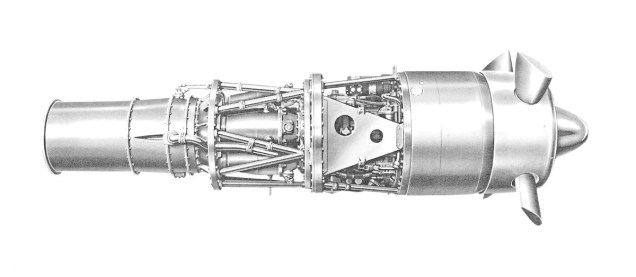
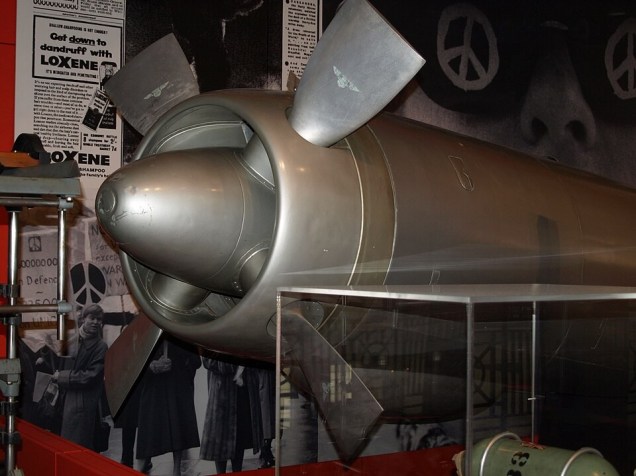
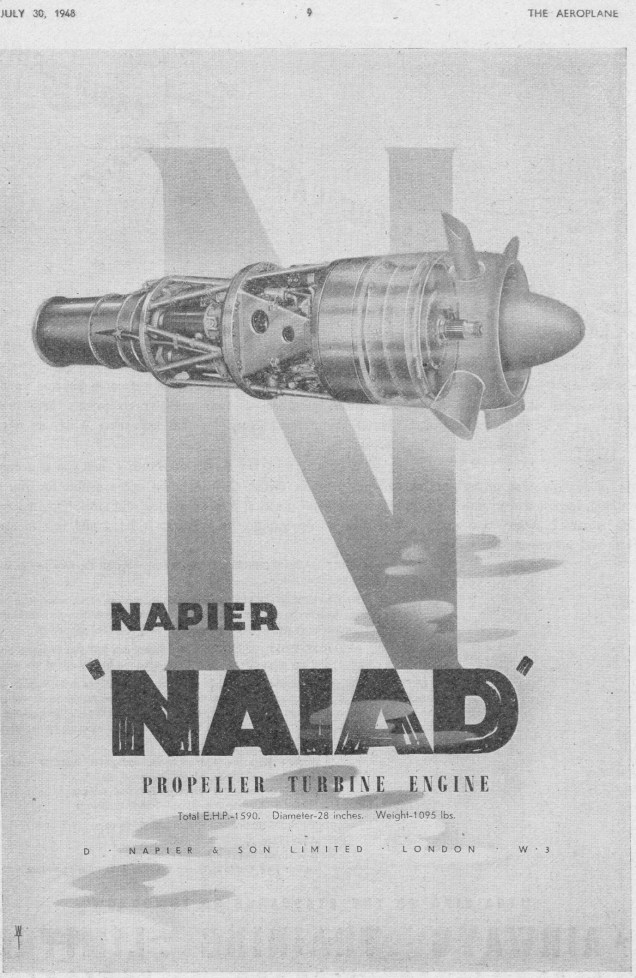
Following on from the light prototype ‘Nymph‘ engine Napier’s first (and late) entry into the aero gas turbine field was in 1947 with their first major type, the E128 ‘Naiad I’ turbo-prop engine.
A contract for a 1,500 shp propeller turbine was given by the Ministry of Air to D Napier & Son in 1945 probably as a replacement for the known future loss of ‘Sabre‘ development work. This became the E128 ‘Naiad’ engine from an October 1945 design. It was built and tested before the Napier Nomad compound aero engine in 1949. Its small axial compressor was based on an existing Nomad type with 12 stages giving 5.5:1 pressure ratio running at 18,250 rpm during take off. At the hot end it had a two-stage turbine providing the power within its slim 28″ maximum diameter. By the end of 1948 it was giving 1,590 ehp in bench tests at Acton and in the Coronation Road Test Tunnels which included 240 lb jet thrust at the take-off rating. The Naiad I gave 1,050 ehp when cruising with turbines at 17,000 rpm.
The Napier Luton Flight Development Establishment installed a Napier Naiad to fly in the nose of an Avro Lincoln which it did on reduced power at the SBAC Farnborough show whilst a mock-up of it in a Vickers airliner nacelle was exhibited on the DNS stand.
A pair of Naiads were coupled together through a double gearbox to reduce drive speed down to a single propellor shaft forming a most compact 3,000 shp engine which was the E128D engine proposed for the Fairey Gannet anti-submarine aircraft. This contract went to Armstrong-Siddley with their ‘Double Mamba’ engine leaving Napier with only castings for airflow tests at Luton.
September 1948
Far more damaging than this was the loss of the turbo-prop engine contract for the Vickers Viscount airliner to the lower powered and 25% heavier Rolls-Royce Dart engine. Vickers did not trust the Naiad’s state-of-the-art axial compressor however their decision provided Rolls with a long term order to power over 400 Viscounts. This blow to Napiers was to have a permanent adverse effect on the Company’s aero gas turbine prospects in the UK.
Type: Turboprop Length: 102 in (2,600 mm) Diameter: 28 in (710 mm) Dry weight: 1,095 lb (497 kg) Compressor: 12-stage axial Combustors: 5 chambers Turbine: 2-stage (18,250 rpm) Maximum power output: 1,500 shp (1,100 kW) plus 241 lbf (1.07 kN) residual thrust Overall pressure ratio: 5.5:1 Air mass flow: 17.2 lb/s (7.8 kg/s) Fuel consumption: 96.2 US gal/h (364 L/h; 101.2 L/ks) Thrust-to-weight ratio: 1.37 shp/lb (2.25 kW/kg)
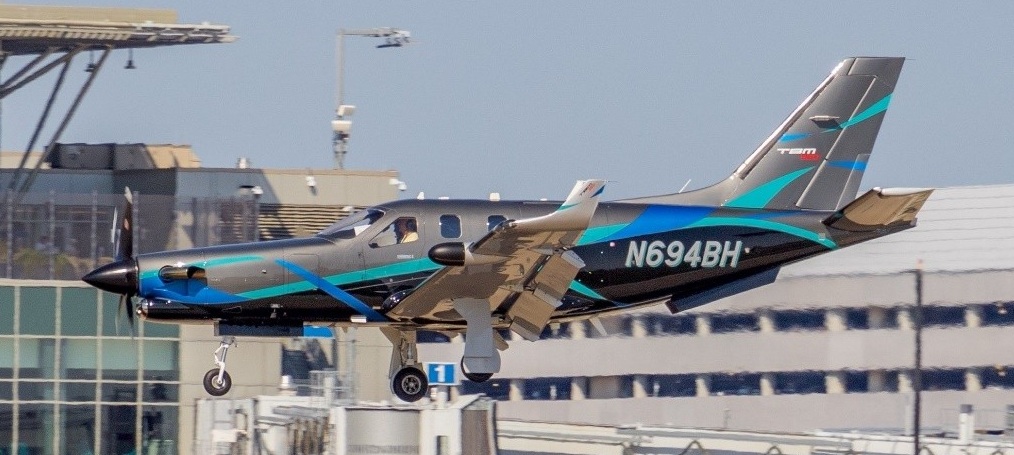
Launched in 2014, the TBM 900 brought 26 refinements aimed at improving both speed and efficiency. According to Daher, key enhancements included a redesigned engine cowling, a new five-blade composite propeller, and aerodynamic tweaks to the fuselage and winglets. These changes resulted in reduced drag and improved climb rates, allowing the TBM 900 to outperform its predecessor while consuming less fuel.
There were also subtle exterior changes introduced to reduce drag. These included a re-contoured tail cone and engine nacelle, and the addition of inner main landing gear doors. Additionally, cabin improvements made the aircraft quieter and more comfortable.
TBM 900
There are five versions of the TBM 900 series aircraft.
Introduced in 2017, the TBM 910 was designed to build upon the aerodynamic and structural improvements of the TBM 900 while focusing primarily on avionics advancements. The TBM 910 featured the Garmin G1000 NXi avionics suite, offering faster processing speeds, improved resolution, and enhanced connectivity options.
TBM 910
The aircraft’s performance remained largely similar to the TBM 900, but the new avionics provided pilots with a more intuitive and user-friendly experience. Features include improved touchscreen controls, ADS-B capabilities, and enhanced synthetic vision.
TBM 910
Introduced in 2019, the TBM 940 introduced an automatic throttle system, which helped pilots manage power settings more efficiently. This variant also featured autoland technology, as well as automatic deicing.
Additional refinements included improved cabin comforts, upgraded climate control, and enhanced noise reduction.
Introduced in 2022, the TBM 960 featured a digital e-throttle and Pratt & Whitney PT6E-66XT engine. The TBM 960 also includes an autoland system.
TBM 960
Additionally, this variant boasts a dual-channel full authority digital engine control (FADEC) feature – Daher calls this EPECS, which stands for Engine and Propeller Electronic Control System. The TBM 960 is the first aircraft in the TBM line to feature this. The TMB 960 also has an MTOW that is 221 lb (100 kg) greater, totaling 7,615 lb (3,454 kg).
TBM 960
The TBM 960 replaced the 940, and was sold alongside the baseline TBM 910 model.
1,155 TBM series aircraft have been produced, as of July 2023. From its inception with the TBM 700 to the TBM 960.
TBM 900 Engine: Pratt & Whitney Canada PT6A-66D Maximum cruise speed: 330 knots (380 mph, 611 km/h) Range: 1,730 nautical miles (1,991 mi, 3,204 km) Maximum takeoff weight (MTOW): 7,394 lbs (3,354 kg) Service ceiling: 31,000 ft (9,449 m) Fuel capacity: 292 US gal (1,105 L) Seating capacity: 6
TBM 910 Engine: Pratt & Whitney Canada PT6A-66D Maximum cruise speed: 330 knots (380 mph, 611 km/h) Range: 1,730 nautical miles (1,991 mi, 3,204 km) Maximum takeoff weight (MTOW): 7,430 lbs (3,370 kg) Service ceiling: 31,000 ft (9,449 m) Fuel capacity: 292 US gal (1,105 L) Seating capacity: 6
TBM 940 Engine: Pratt & Whitney Canada PT6A-66D Maximum cruise speed: 330 knots (380 mph, 611 km/h) Range: 1,730 nautical miles (1,991 mi, 3,204 km) Maximum takeoff weight (MTOW): 7,430 lbs (3,370 kg) Service ceiling: 31,000 ft (9,449 m) Fuel capacity: 292 US gal (1,105 L) Seating capacity: 6
TBM 960 Engine: Pratt & Whitney Canada PT6E-66XT Maximum cruise speed: 330 knots (380 mph, 611 km/h) Range: 1,730 nautical miles (1,991 mi, 3,204 km) Maximum takeoff weight (MTOW): 7,615 lbs (3,454 kg) Service ceiling: 31,000 ft (9,449 m) Fuel capacity: 292 US gal (1,105 L) Seating capacity: 6
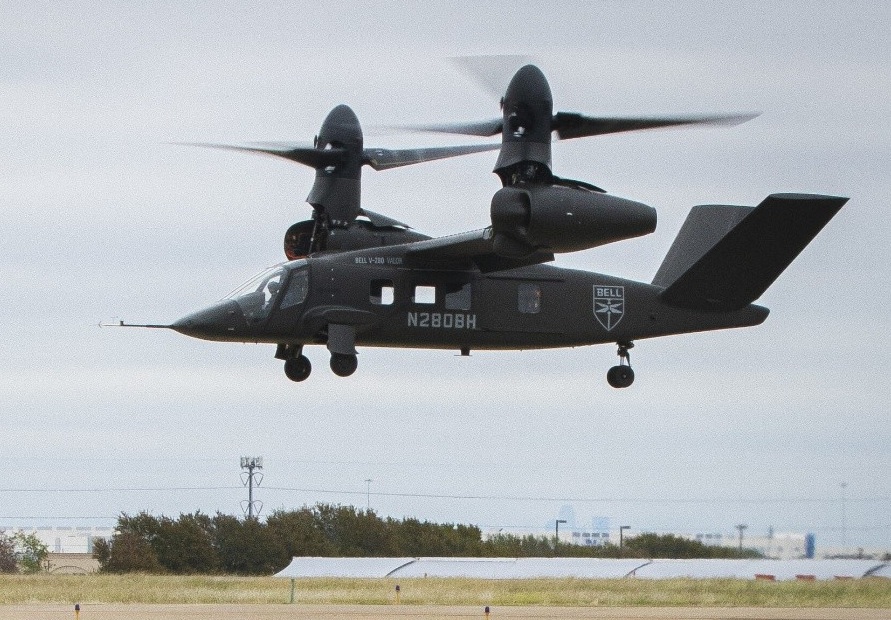
The V-280 Valor first took to the sky in 2017, and logged over 200 hours of flight time before the prototype was grounded in 2021. Bell has claimed that the aircraft is capable of top speeds of up to 280 knots with a range of up to 800 nautical miles, double the top speed and operational range of the Black Hawk. The Valor can also reportedly carry 23% more troops and 25% more cargo than the Black Hawk.
The biggest difference between the Black Hawk and the Valor is, of course, the tiltrotors. While it looks similar to the V-22 Osprey, the Valor works somewhat differently. The engines remain in place in nacelles, streamlined containers, on the wing — it’s the rotors themselves that tilt up and down. They’re also what give the aircraft its high speed, which is more than 100 miles per hour faster than the Black Hawk’s top speed of 222 miles per hour.
With a crew of four, along with up to 14 passengers, the Valor would replace the Black Hawk in its myriad of missions, from carrying supplies to air assault missions to medical evacuation. The more than three years of flight testing, which included Army test pilots, with the Valor prototype demonstrated its flight capabilities, survivability, and sling loading ability, according to Bell.
The Valor has a wider footprint than the Black Hawk, but is 20% shorter, which Bell said gives it greater flexibility in landing.
U.S. Special Operations Command said that the V-280 was changed in development to allow it to carry more weight, with the intention of making it more easily convertible for use by special operations units. The Army’s 160th Special Operations Aviation Regiment currently uses MH-60M variants of Black Hawks, which require extensive modifications to be mission ready.
Bell’s V-280 Valor, was selected in 2022 as the winner of the Army’s Future Long-Range Assault Aircraft competition. The vertical take off and landing craft has two engines and is designed for both assault and transport purposes. The newly designated MV-75 is meant to eventually replace the Army’s H-60 Black Hawk helicopters, including in special operations missions.
The initial contract, for $232 million, is to continue development of the aircraft, but then expands to $1.2 billion and then perhaps as much as $7 billion to begin building the new fleet of Valor aircraft that will begin replacing the Black Hawk in the mid-2030s. The Army operates roughly 2,000 Black Hawk helicopters, which have been in use since the 1970s. The Army previously said it expects to field the MV-75 by 2030. The MV-75 designation is an homage to the year 1775, the birth year of the U.S. Army.
The initial testing by the 101st Airborne Division will be used to shape MV-75 tactics and doctrine.
If the Indian armed forces assess the need for a dedicated manned counter-drone fighter capability, Hindustan Aeronautics Limited’s (HAL) HTT-40 could be cost-effectively upgraded to fulfil the role within a reasonable timeframe.
On March 7, 2023, the Indian Ministry of Defence (MoD) signed a contract with HAL to procure 70 HTT-40 basic trainer aircraft. Earlier, in July 2022, HAL had signed a $100 million contract with U.S. engine-maker Honeywell for 88 engines to power the HTT-40 fleet.
The 70 aircraft on order will be delivered over six years from the date of contract signing.
The HTT-40 is a tandem-seat turboprop trainer that is fully aerobatic and offers excellent low-speed handling characteristics. It features an air-conditioned cockpit, modern avionics, hot refueling capability, running changeover, and zero-zero ejection seats.
The HTT-40 procurement aims to address the Indian Air Force’s (IAF) shortage of basic trainer aircraft and includes associated equipment, training aids, and simulators.
HAL first pitched the HTT-40 as an indigenous trainer for the IAF at Aero India 2013, showcasing a mockup of the aircraft.
However, on May 10, 2012, the Cabinet Committee on Security (CCS) had already approved the procurement of 75 Pilatus PC-7 MkII aircraft for the IAF, Indian Navy, and Coast Guard. The Pilatus had been selected through global bidding to replace the aging HPT-32 fleet.
Ironically, in response to HAL’s display of the HTT-40 mockup at Aero India 2013, then IAF Chief of Air Staff Air Chief Marshal NAK Browne had remarked, “There is no need for [the HTT-40 trainer]. We have the Pilatus PC-7. It’s a proven aircraft. The HAL project is starting from scratch. Our indications are that the cost will be too high. There is no need for all this.”
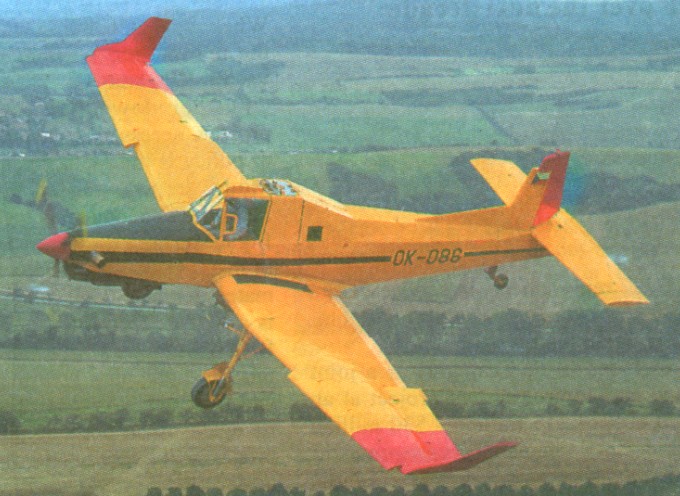
The Zlin Z-137T Agro Turbos are essentially an updated turbine version of the piston engine Z-37 Cmelak, first flown in 1981. Modifications included strengthening the centre section of the wing, alterations to the tail surfaces and the installation of a rudder trim.
The first Z-137T was #029 and registered OK-UJM in July 1989.
The aircraft were built in batches. The first batch totalled six and from 1960 they were built in batches of 20 or 30, with production reaching its height in 1972 when some 65 aircraft were produced. Along with the agricultural aircraft, some two-seat trainers were built, with a second cockpit replacing the hopper. Production ceased in 1977 but in 1981 the production line was reopened at Kunovice, and a further 40 aircraft were built. Production ceased in 1995 with #053, which was sold to Hungary as HA-MFR. The constructor numbers are in batches — 00-01 through 00-06, then 01-01 to 01-20, 02-xx and so on depending on the number in the batch.
A modernized Z-137 Agro Turbo light aircraft equipped with air-to-air missiles was spotted in the Ukrainian sky in August 2025. The Czechoslovakian-made Z-137 civilian turboprop aircraft was converted to perform air defense missions. Its tail section was marked with a typical army aviation insignia of two white transverse stripes.
Two AKU-73 pylons were mounted under the wings of the aircraft, which made it possible to use R-73 short-range air-to-air missiles. The use of R-73 missiles from non-designated aircraft is possible due to its complete autonomy as it does not require complex integration with the radar or central radar of the aircraft. It uses an infrared guidance system to track the target. The missile head itself ‘captures’ a heat-contrasting object. Given the type of weaponry and the aircraft’s ability to reach speeds of 200-250 km/h, the tasks of such a combat unit could include intercepting Russian attack drones and tactical reconnaissance UAVs.
An R-73 missile on the wing pylon of MiG-29 and Z-137 Agro Turbo.
The use of turboprop aircraft for such tasks can significantly increase the capabilities of the Air Force, as well as unload full-fledged fighters for higher priority tasks.
137T Agro Turbo Engine: Motorlet M601Z turboprop (520 hp) Wing span: 44 ft 8.5 in Length: 34 ft 4 in Height: 11 ft 6 in Empty wt: 2756 lb MTOW: 5566 lb
An Antonov An-24 copy. Built in Xian, the Y-7 is an improved version of the Soviet An-24 twin-turboprop transport. The Y-7 received its Chinese certificate of airworthiness in 1980, and has a wider fuselage and larger wing than the An-24, combined with Chinese engines and equipment. Of the first 24 Y-7s built, about ten were delivered for military use.
Wing Ship Technology Corporation prototype is powered by a turboprop and can carry 50 passengers. It has a catamaran-style hull and a reverse delta wing. Its cruising speed, 180kph (110mph), makes it faster than a jetfoil, its principal rival. And the production version will have a range of 1,000km.










 All Aero