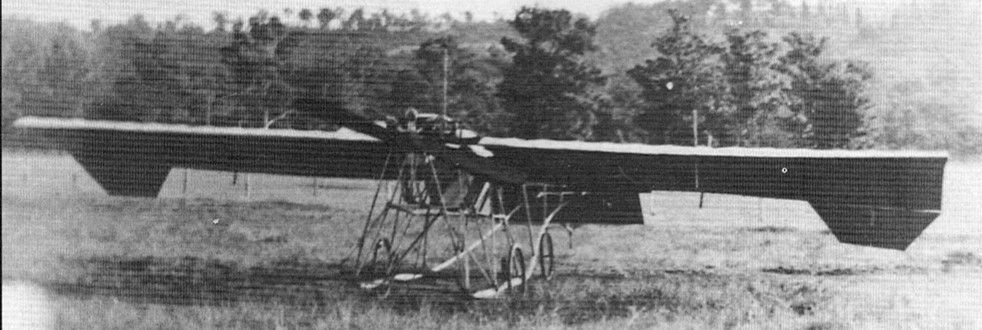
L.V.R. Jones monoplane of 1911 was steam powered and tried at Emu Plains, Australia on 4 June 1911.
L.V.R. Jones monoplane of 1911 was steam powered and tried at Emu Plains, Australia on 4 June 1911.
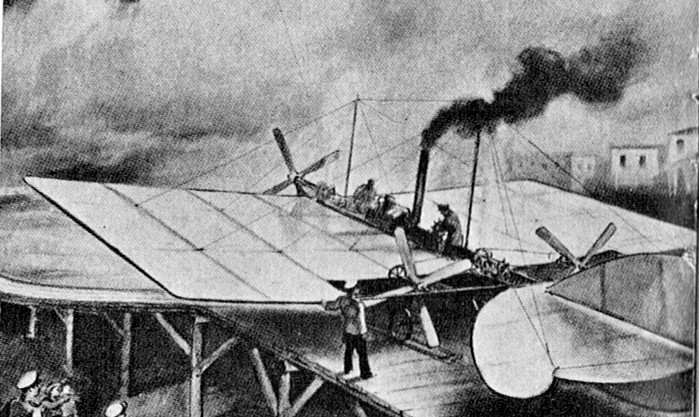
In 1994 A.F. Mozhaiski built a tractor / pusher monoplane near St. Petersburg, Russia.
Powered by an English steam engine and manned by Golubev, it took off down a ski-jump ramp, but could not sustain itself. It was the second machine to leave the ground.

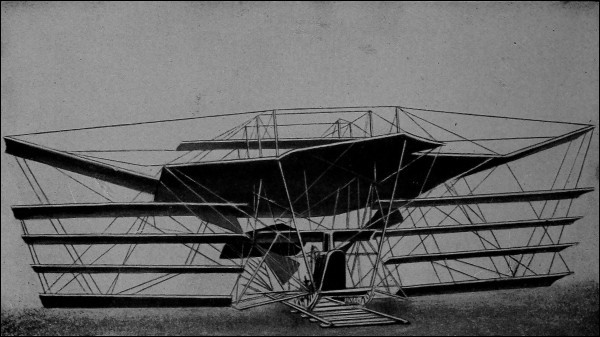
Sir Hiram Maxim’s aircraft of 1894 was powered by two 180 hp steam engines.
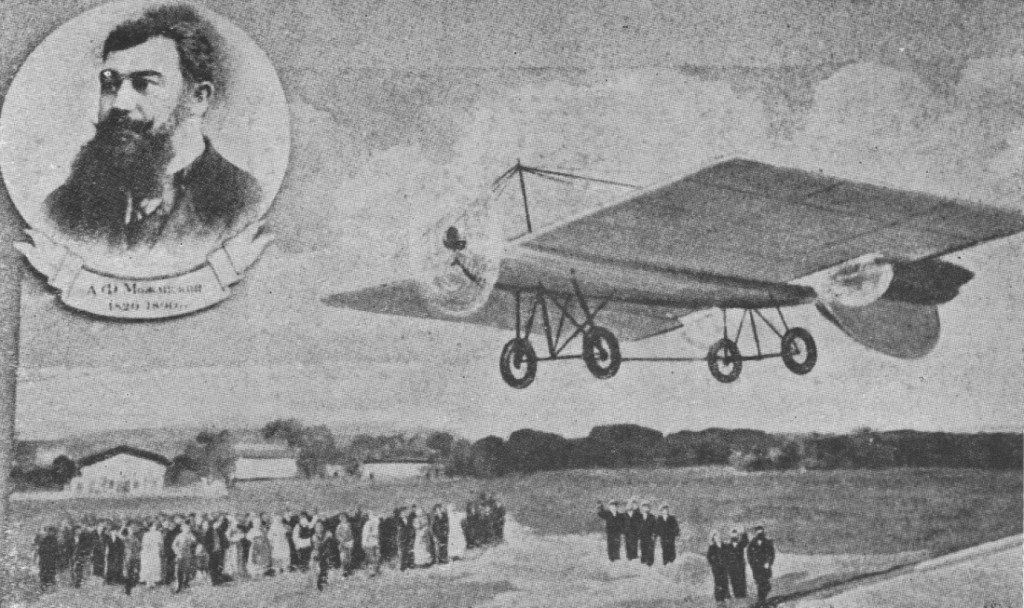
I.N. Golubev’s 1882 hop in the steam powered aeroplane designed by Alexander Mozhaisky used a take-off down a steep slope.
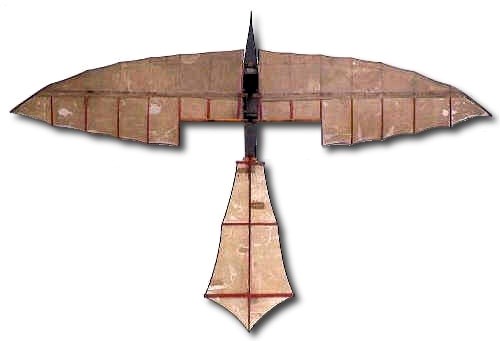
The Stringfellow Flying Machine of 1848 was built by John Stringfellow using a Henson steam engine modified by himself. The model was demonstrated attached to a cable inside a lace production shed at Chard, Somerset, England and at Cremorne Gardens in 1848 flying a distance of 40 m before crashing into a wall. Having a wingspan of 10.5 feet and a wing surface area of 12 square feet, it used a six and three-quarter pound engine. This was the first successful flight by a heavier-than-air machine to fly under its own power.
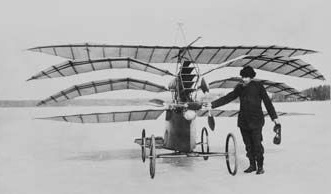
Carl Richard Nyberg (1858-1939) was a Swedish industrialist and the inventor of a successful blowtorch. He began work on this flying test-bed in 1897, with tests and alterations to the design of Flugan (The Fly) going on until around 1910. It had a wingspan of 5 meters, and the surface area of the wings was 13 m². It was powered by a steam engine heated by four of his blowtorches, producing 10 hp at 2000 rpm. The weight of the engine was 18 kg, giving a very good power-to-weight ratio for its time. The total weight of the plane was 80 kg, so the failure to fly was more related to poor propeller and wing technology. The challenge photo was probably taken in 1903 or later, when he started testing on the ice of the Baltic at his home on Lidingö outside Stockholm, rather than tethered around a circular board track in his garden.
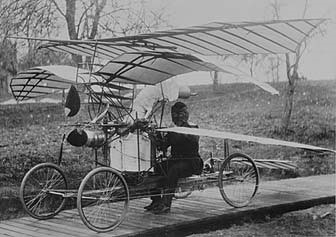

The Moy Aerial Steamer was an experimental 15-foot span tandem-wing monoplane, powered by a 3 hp steam engine driving two, 6-foot diameter pusher- propelling paddle wheels. Built by Englishman Thomas Moy, the unmanned flying machine was tested in the Spring of 1875, tethered to a pole, running on a circular track, at the gardens of the Hotel DeLuxe in south London. Spuriously reported to have left the ground and “flown” at a height of six inches, the Aerial Steamer may sometimes be claimed to be the first unmanned airplane to fly from level ground.
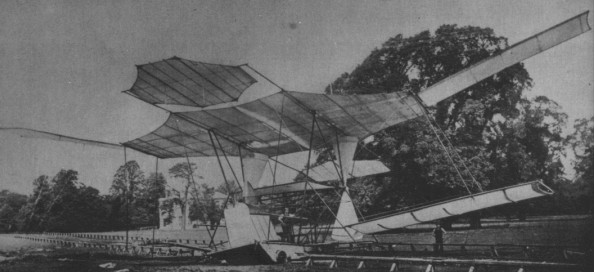
Sir Hiram Stevens Maxim (1840 1916) began building this huge aeroplane in 1891, describing it as ‘a flying machine that would lift itself from the ground’; he did not intend it to fly in the true sense. When tested in 1894, it ran along a railway track until, at a speed slightly above 42 mph (68 km/h), the wheels lifted clear of the track, fouled the guard rails placed to prevent a complete take off, and the machine had to be brought to a halt. Maxim did not pursue its development further.
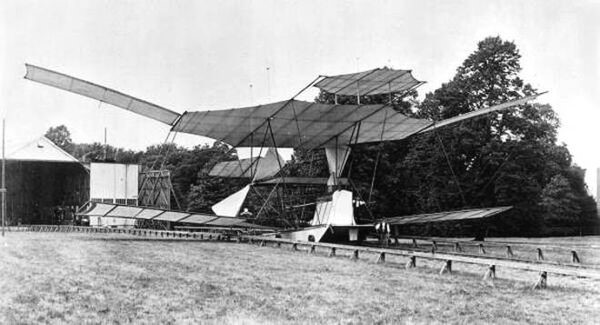
Powered: Two 180 hp Maxim steam engines
Props: 2 x 17 ft 10 in (5.44 m) diameter two blade pusher
Wing span: 104 ft 0 in (31.70 m)
Wing/elevator area (total): 4,000 sq ft (371.6 sq.m)
Length: approx 95 ft 0 in (28.96 m)
Gross weight: 8,000 lb (3,629 kg)
Accommodation: Crew of 4
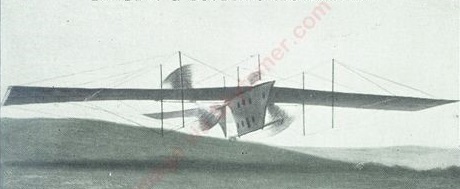
In 1843 William Samuel Henson patented about a proposed “Aerial Steam Carriage”. It seems more like a practical flying machine than anything hitherto suggested. Lacemaking industry engineer Henson, based in Somerset, has had a number of bright aviation ideas. This remarkable flying machine would be a monoplane, with two pusher propellers to be driven by a light steam engine of 25 to 30 hp. Henson actually ordered this engine from colleague John Stringfellow. Even if the Aerial Steam Carriage never flies, its impact has already been tremendous. Pictures of it appeared in magazines and newspapers, and is much talk about.
Also in 1843 William Samuel Henson and John Stringfellow filed articles of incorporation for the world’s first air transport company, the Aerial Transit Company.
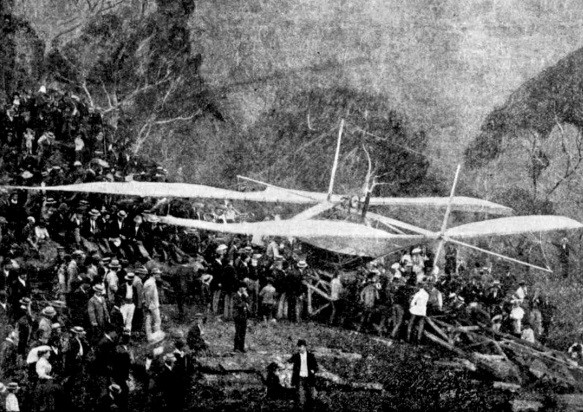
The creation of Australian inventor Newton Roberts Gordon, the “Air Ship” was the subject to a public test at Chowder Bay, Sydney, on December 26, 1894. The machine was a tandem-wing monoplane with steam-powered flappers between the sail-like wings. It slid down its starting ramp and crashed down onto the beach in front of thousands of spectators.
 All Aero