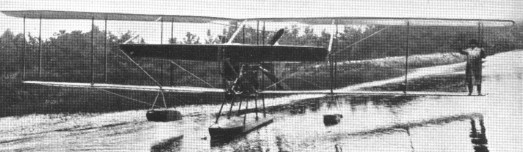
The last aircraft designed by S.F.Cody. While flying it with a wheel undercarriage on 7 August 1913 it crashed, killing Cody and his passenger.
The last aircraft designed by S.F.Cody. While flying it with a wheel undercarriage on 7 August 1913 it crashed, killing Cody and his passenger.
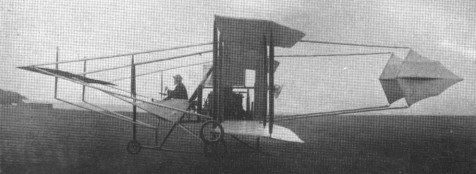
Using personal funds and a borrowed airship shed, Cody built a huge sturdy pusher biplane of 52 foot span, weighing 1,200 pounds. Size and strength were Cody trademarks; he was observed tying knots in bracing wires with his bare hands and was the only one able to spin the biplane’s 50 hp V8 to life. A reporter took one look and dubbed it “the Flying Cathedral.” The nickname stuck.
While he had seen pictures of American and French machines, Cody saw no reason to alter his kite with an engine concept, which, by the way, he carried entirely in his head. There were no blueprints or lists of materials because Cody had never learned to read and write. (He eventually mastered a huge “S.F. Cody” for official paperwork, holding the pen like a trowel.)
The finished product included a shock-mounted landing gear with steerable tailwheel, ground adjustable wing camber and propeller pitch plus ailerons, this being the first aircraft to use separate surfaces for banking. Cody did not invent ailerons, but he was the first to make practical use of them. Oddly enough, he abandoned them later in favor of wing warping.
In the summer of 1908, Cody’s aircraft was towed to Laffan’s Plain, a rough, rolling pasture surrounded by trees. One up¬hill run to test the controls left a 234 foot gap in the tire tracks, a greater distance than the Wright’s first hop, but Cody dismissed it as “just a jump.”
On October 16, with reporters watching, he gave it full throttle, rose quickly to 40 feet and flew 1,390 feet, crashing when he dragged a wingtip in an attempt to avoid some trees. The big man emerged from the pile of bamboo and linen bruised but smiling. The illiterate genius had become the first man to fly an airplane in England.
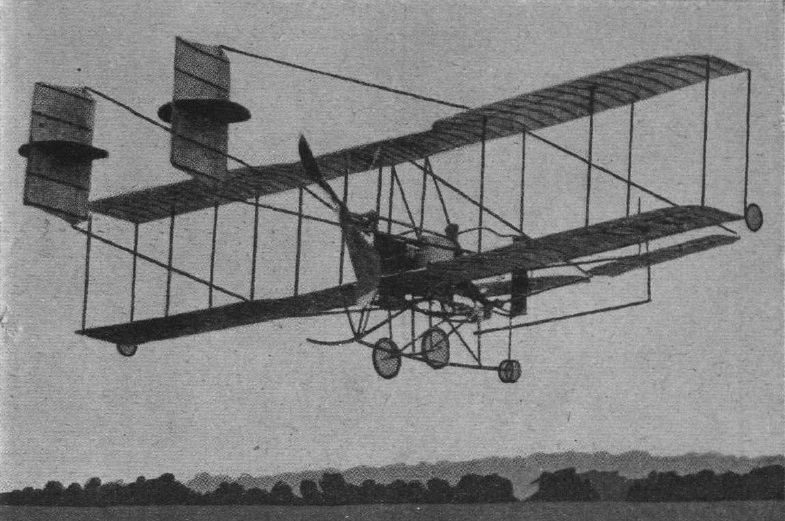
Winner of the 1912 War Office military trials at Salisbury Plain was Cody’s Cathedral, which collected a total of £5,000 prize money, but was clearly of no use to the newly formed Royal Flying Corps and was not put into production.
One example, built in 1912 at Farnbough, was similar in configuration to the 1911 Biplane and was again evaluated for military application. It was evaluated by the Army at Cambridge in September 192 and subsequently purchased. The Army number 304 was allocated.
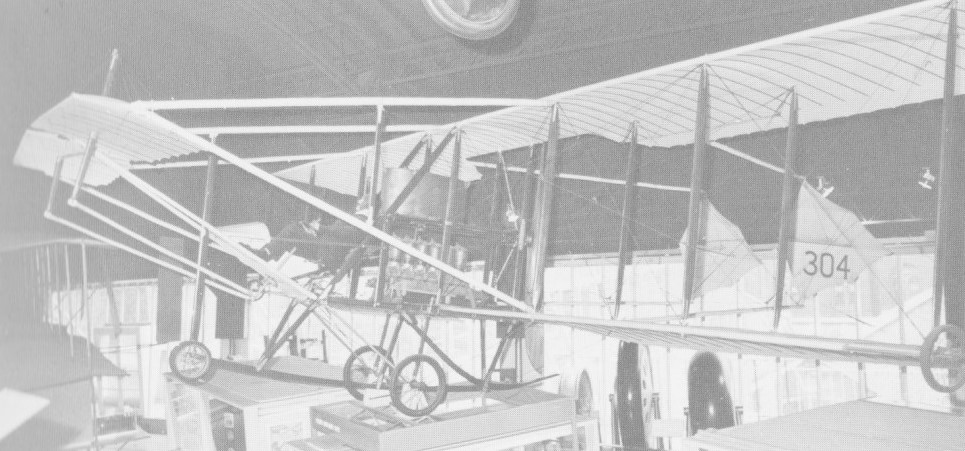
It was little flown and passed to the Science Museum in 1913.
Engine: Austro-Daimler, 120 hp.
Span 43 ft
Length 34 ft. 4 in
Wing chord 5 ft. 6 in
Wing area 430 sq. ft
Weight, empty about 1,900 lb
Weight loaded 2,680 lb
Max. speed 73 mph.
Stalling speed 48.5 mph
Take off run 960 ft
Range 336 miles.
Army 304
Engine: Austro-Daimler, 120 hp.
Span 52 ft
Length 44 ft
Weight loaded 2,900 lb
Max. speed 65 mph.
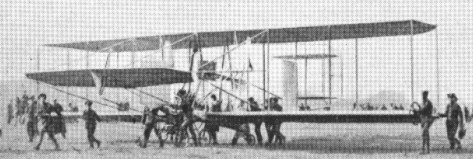
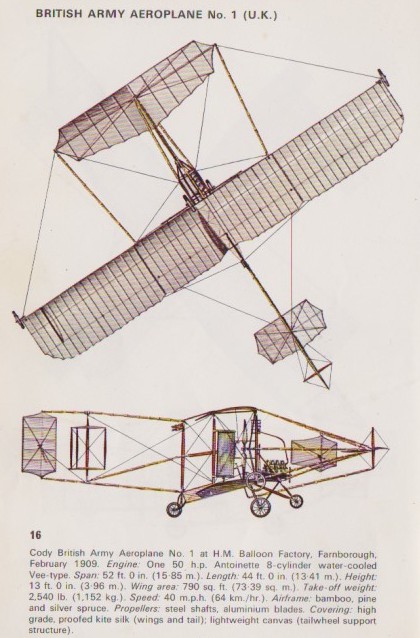
The next step was to build a full size piloted version of the glider. In December 1907, Cody began to build his first biplane at Farnborough, and since Nulli Secundus was rebuilding (to emerge as Nulli Secundus II the following summer) he was allowed to use her 50 h.p. Antoinette engine to power the machine of bamboo and wire. He arranged it to drive two pusher propellers; the result looked something like the Wright biplane.
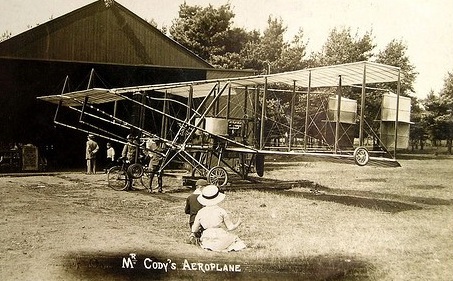
It was in this aircraft that Cody made his first hops in May, 1908, on Laffan’s Plain. On October 5 or 16th 1908 he made the first official flight in a piloted aeroplane in Great Britain a measured distance of 496 yards at a height of 50-60 ft over Laffan’s Plain (it lasted 37 seconds), Farnborough, and this was the first powered aeroplane flight in Britain; but Cody was American at the time, and did not take out naturalisation papers until 1909.
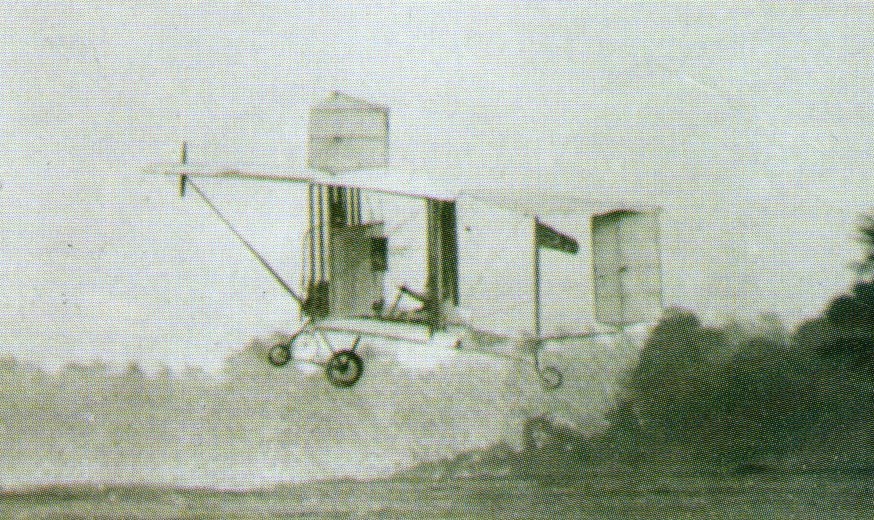
Cody 1 – Initial Prototype; fitted with Antoinette 50 hp. Later, with ailerons
Cody 2 – Revised Cody 1 airframe
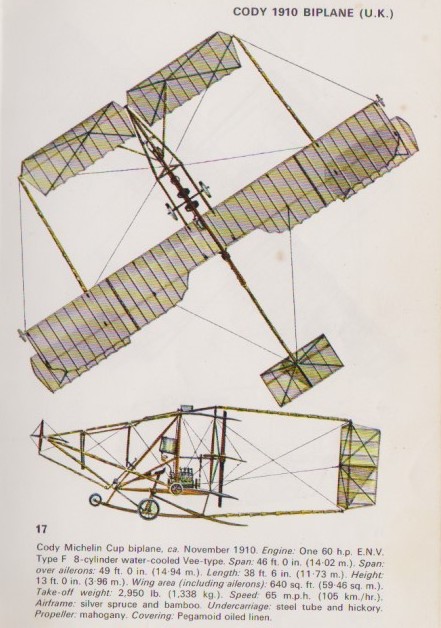
Cody 3 – Cody 2 prototype fitted with ENV Type F engine of 60 horsepower.
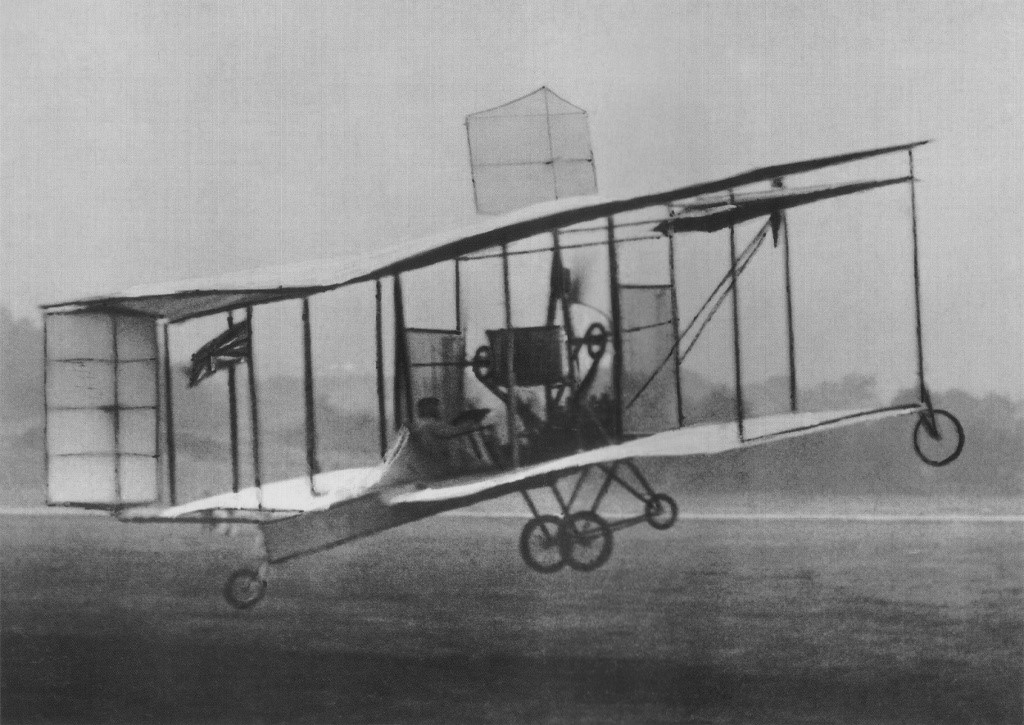
The Cody II was a Michelin Cup machine in which he flew 4 3/4 hours on December 31, 1910 to win the trophy. Clear differences to the earlier machine were the one large propeller installed at the rear in place of the two forward propellers and a 60 hp Green engine fitted in place of the ENV.
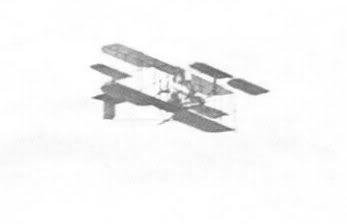
The Michelin Cup machine in which he flew 4 3/4 hours on December 31, 1910 to win the trophy. Clear differences to the earlier machine were the one large propeller installed at the rear in place of the two forward propellers and a 60 hp Green engine fitted in place of the ENV.
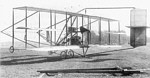
Engine: 1 x Antoinette, 50 hp
Length: 38.48ft (11.73m)
Wingspan: 52.00 ft (15.85m)
Height: 13 ft (3.96m)
Maximum Take-Off Weight: 2,950lbs (1,338kg)
Maximum Speed: 65mph (105kmh; 57kts)
Accommodation: 1
1910 Cody No. II
Span: 46′
Length: 38’6″
In 1933 Cockatoo Dockyard & Engineering designed and built a twin-engined monoplane, the Codock, for Sir Charles Kingsford-Smith, who had made the first Pacific air crossing in 1928. A six-seat monoplane of the cantilever-wing Fokker type, it was powered by two 165 hp Napier Javelin engines.
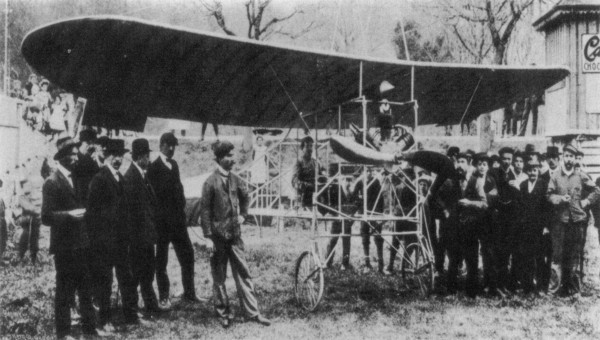
Henri Cobioni quit motorcycle racing in September 1909 and built this little monoplane at his home in Moutier/Münster, Switzerland. He had to collect money for the engine, which was installed in about March 1910. Flight testing took place at the “Allmend” of Thun, where Cobioni could make a few hops, but finally crashed the machine in June 1910. After that he entered the Caproni school and qualified for the Swiss FAI-brevet No.15 in August 1911. The construction of this first monoplane is credited to Eng. Emilio Lazzaroni from Milano, who together with Cobioni patented the machine and founded the company “La Société Jurassiene d’Aviation”, which was quickly dissolved after the Cobioni’s crash.
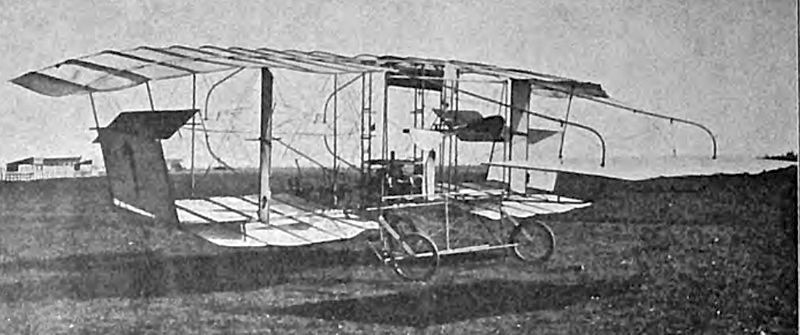
Mario Cobianchi was a Bolognese designer and draftsman, who had Sicilian-born engineer Franz Miller build his 1909 Brescia biplane, powered by a 100 hp Miller engine. It was originally intended to have both a helicopter-like propeller on the top wing and a pusher propeller in the rear.
Even after being modified several times, it never did get off the ground except for a few brief hops. After being strengthened and modified from its original state, it was entered in the Circuito Aereo Internazionale di Brescia, Brescia, Italy, September 8th – 20th 1909, but it still didn’t fly.
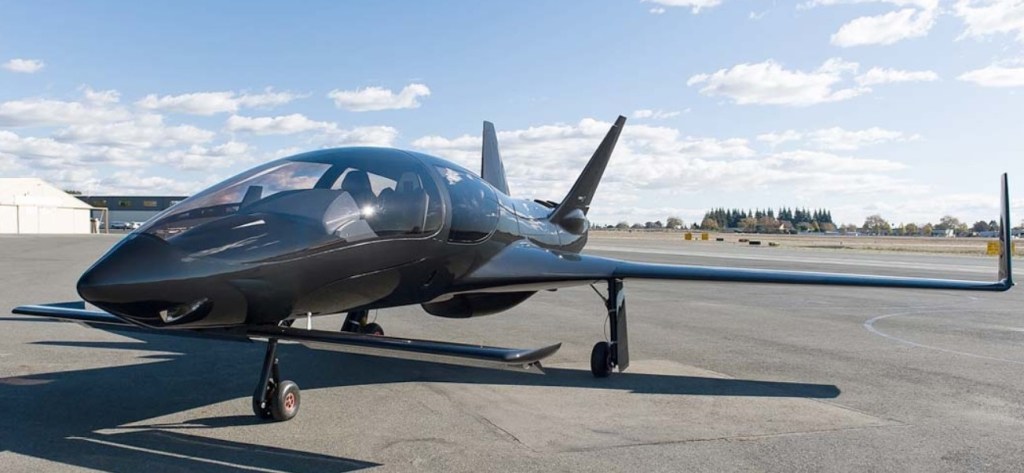
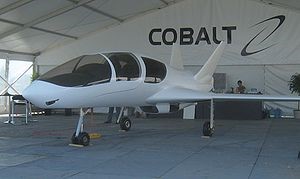
The Cobalt Co50 Valkyrie is a single-engine, four to five-seat homebuilt aircraft, arranged in a canard, pusher configuration.
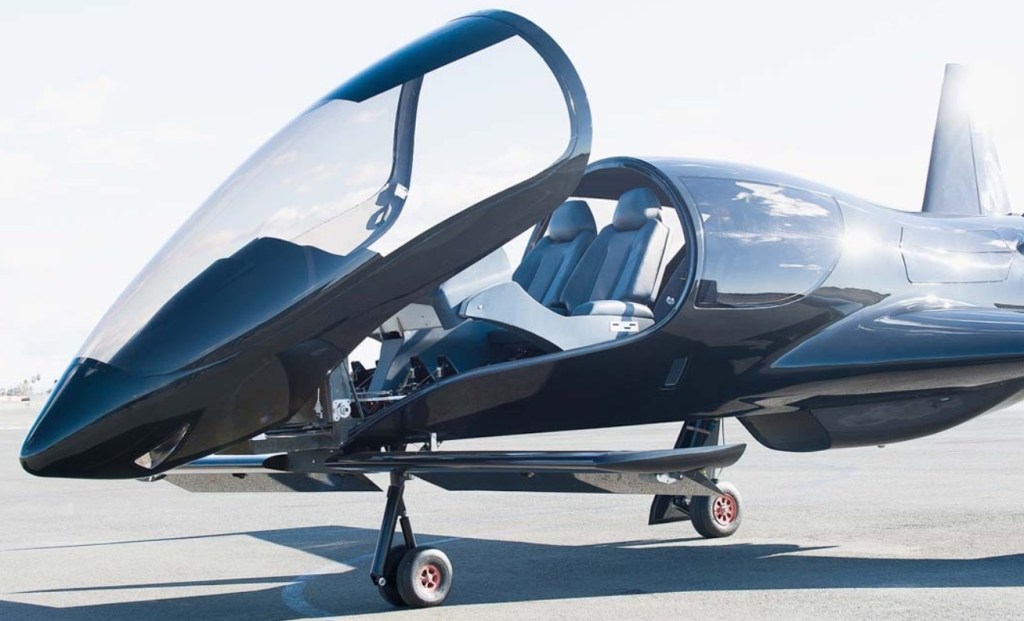
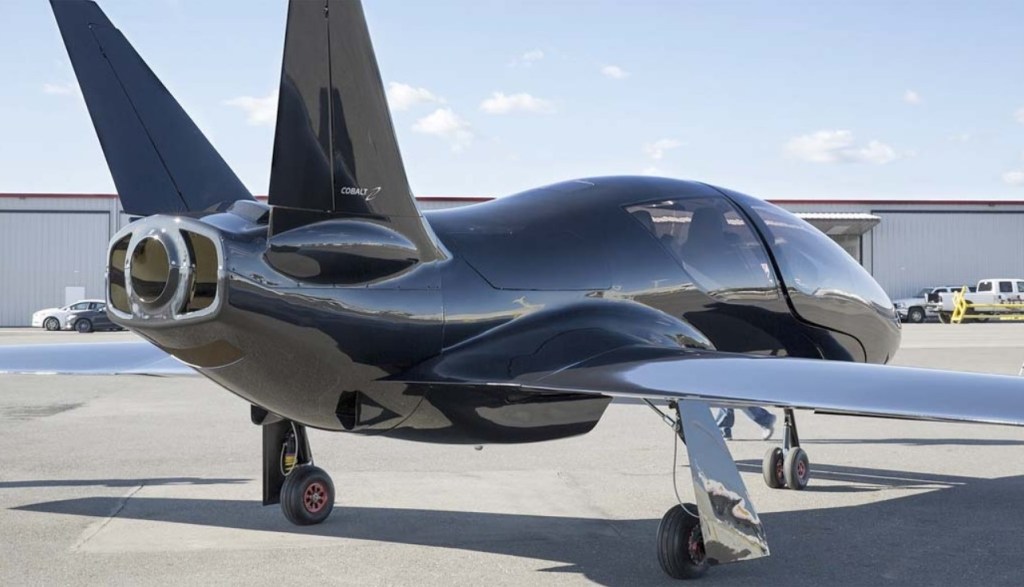
The composite design incorporates retractable landing gear, a pusher engine configuration, a canard, twin vertical stabilizers and automatic airbrakes. A ballistic parachute is provided as an option. Passenger entry is by a large forward fold down door.
The airframe is made of AGATE carbon composites, Carbon-Nomex material is used in the design of rudders and flaps, the design of retractable landing gear is made of aluminum and steel alloys, Hartzell variable pitch propeller blades are aluminum.
First flown in January 2015, the light aircraft was intended for private ownership and was initially being developed by Cobalt Aircraft of San Francisco, California, United States, but the company ceased operations in July 2018 and the design was then being developed by the Centauri Aircraft Company.
The second prototype Co50 was crashed in September 2017 following a loss of aileron effectiveness in flight on a flight test at Castle Airport. The pilot was landing the aircraft using rudder and thrust only when lift was lost at an altitude of about ten feet. The aircraft impacted the ground, the right main landing gear leg separated and the wing was damaged. The pilot was not hurt.
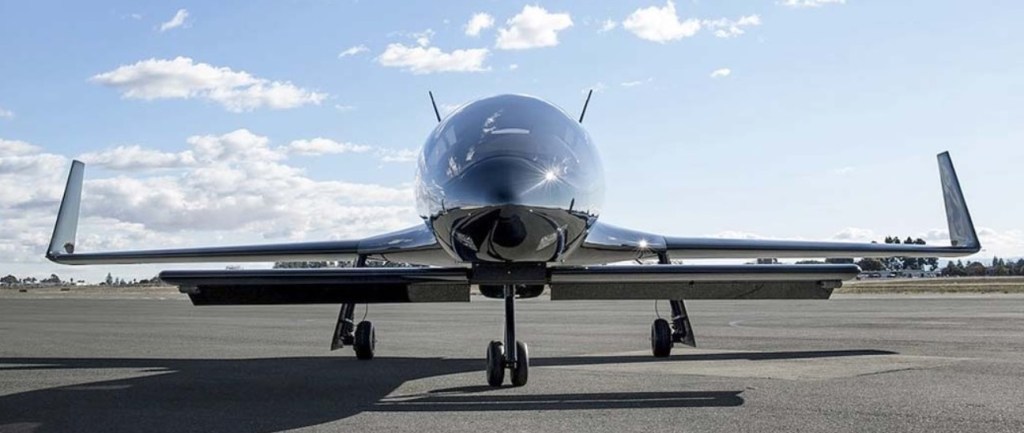
Initially the Co50 was to be sold as a kit for amateur construction, but the manufacturer intended to eventually achieve type certification. Certification was unlikely to occur before 2018, not least due to the electronics Cobalt has chosen being untested for aircraft use.
Reportedly seven were built.
Co50
Engine: 1 × Continental TSIOF-550-D, 350 hp (260 kW)
Wingspan: 30 ft (9.14 m)
Length: 30 ft (9.14 m)
Height: 10 ft (3.05 m)
Max takeoff weight: 3,417 lb (1,550 kg)
Fuel capacity: 109 U.S. gallons (410 L; 91 imp gal)
Cruise speed: 250 kn (290 mph, 460 km/h) maximum cruise at FL250
Range: 1,434 nmi (1,650 mi, 2,656 km) economy cruise at FL220
Service ceiling: 25,000 ft (7,600 m)
Time to altitude: 12 minutes to 10,000 feet
Crew: one
Capacity: three or four passengers
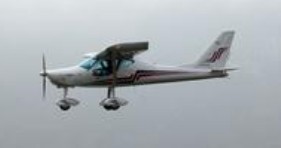
2017 T4 and 2024 T3 aluminium-construction entirely spiked and stuck. Rivets are used only in the no-structural joints.
DF 2000
Stall: 32 kt / 37 mph / 60 kmh
Cruise: 105 kt / 121 mph / 195 kmh
VNE: 130 kt / 149 mph / 240 kmh
Empty Weight: 285 kg / 628 lbs
MTOW Weight: 450 kg / 992 lbs
Glide Ratio: 12
Take-off distance (50ft obstacle): 390 ft / 120 m
With the experience gained from building the SA.II J.R.Coates started building a simplified SA.III (G-BAAH, c/n SA.IIIl, PFA.1590) which was to be more suitable for homebuilding. It was to be available in either all-wood or all-metal versions.

The Coates Swalesong SA.II was designed and built by J.R.Coates. A low-wing monoplane with tricycle undercarriage, two-seater, side-by-side, under a rearward sliding canopy. It was of all-wood construction.

The prototype, G-AYDV, c/n SA.II, PFA.1353, made its first flight from Panshanger, Rush, Green, UK, on 10 September 1973, powered by a converted Lycoming PC-60 GPU.
Wingspan: 26.05 ft
Length: 19.00 ft

