A prototype five-seat high-wing cabin monoplane Conal W-151 Sopocaba was designed and flown in August 1964, but none were produced.
Piston
Comte A.C.12 Moskito
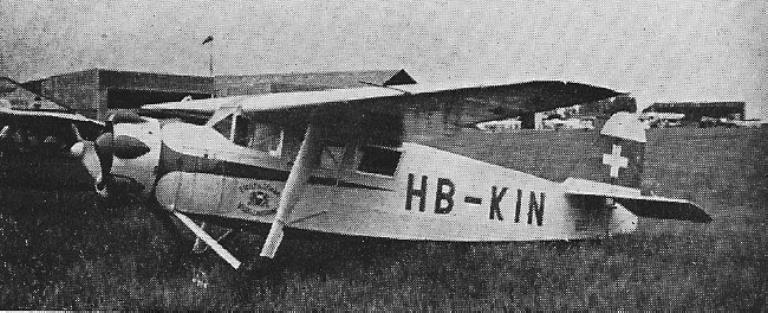
The A.C.12 Moskito cabin monoplane was first produced by Alfred Comte in 1931, and ten were built with the 95 hp Argus As 8, 120 hp de Havilland Gipsy III, or 100 hp Armstrong Siddeley Genet Major.
The Moskito provides accommodation for three. The wings are wooden, fuselage welded steel-tube, and tail assembly with plywood and fabric covering.
Engine: 95 hp Argus As 8
Wing span: 38 ft 2 in
Wing area: 171 sq.ft
Length: 24 ft 7 in
Height: 7 ft 5 in
Empty weight: 1100 lb
Loaded weight: 1980 lb
Max speed: 112 mph
Cruise: 96 mph
Time to 3280 ft: 6 min
Ceiling: 16,400 ft
Comte A.C.8
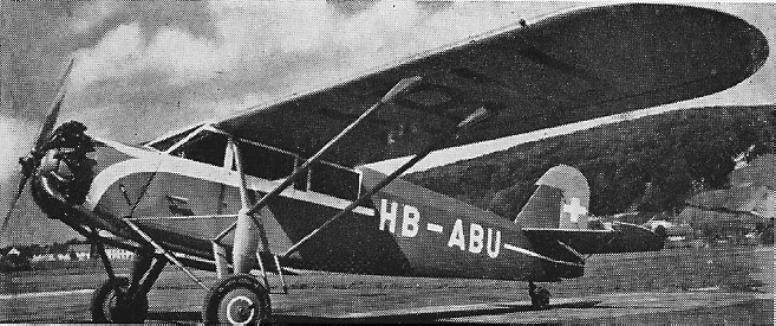
Produced in 1930 by Alfred Comte (Schweizerisch Flugzeugfabrik) of Zurich, the A.C.8 six-seat cabin monoplane is powered by a 300 hp Wright J-6 radial. Only three examples of the A.C.8 were built, of mixed construction, the wing being spruce and plywood and the fuselage a welded steel-tube structure. Dual controls were fitted and the cabin seats the pilot and five passengers.
Engine: 300 hp Wright J-6
Wing span: 47 ft 6 in
Wing area: 301.3 sq.ft
Length: 30 ft 2 in
Height: 9 ft 6 in
Empty weight: 3453 lb
Loaded weight: 3850 lb
Max speed: 133 mph
Cruise: 109 mph
Time to 3280ft: 4.8 min
Service ceiling: 16,400 ft
Range: 560 mi
Comte AC-4 Gentleman
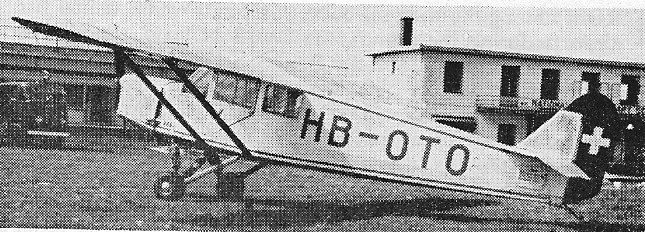
The three-seat AC4 Gentleman, designed by Alfred Comte, was the first aircraft that has been build commercially in Switzerland. The A.C.4 Gentleman is a two-seat cabin monoplane of mixed construction.
The prototype was being flown in 1928, and the AC-4 was in production 1928-1930.
Six of the first version, powered by 90 hp Cirus III engines were produced from 1928.
A second series was produced in 1930 powered by 110 hp Cirrus Hermes or 140 hp Genet Major engines.
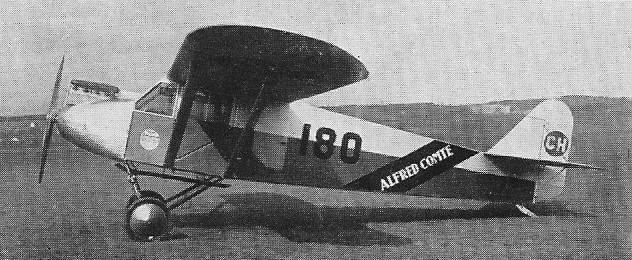
One machine, owned by Swissair, was re-engined with an Armstrong-Siddeley Genet Major radial.
Engine: Cirrus Hermes III A.D.C., 138 hp
Wingspan: 40.354 ft / 12.3 m
Wing area: 215.28 sq.ft / 20.0 sq.m
Length: 26.575 ft / 8.1 m
Height: 9.186 ft / 2.8 m
Max take off weight: 1764.0 lb / 800.0 kg
Weight empty: 1102.5 lb / 500.0 kg
Max. weight carried: 661.5 lb / 300.0 kg
Max. speed: 92 kts / 170 km/h
Initial climb rate: 590.55 ft/min / 3.0 m/s
Service ceiling: 13123 ft / 4000 m
Wing load: 8.20 lb/sq.ft / 40.0 kg/sq.m
Range: 378 nm / 700 km
Endurance: 6 h
Crew: 2+1
Comte AC-3
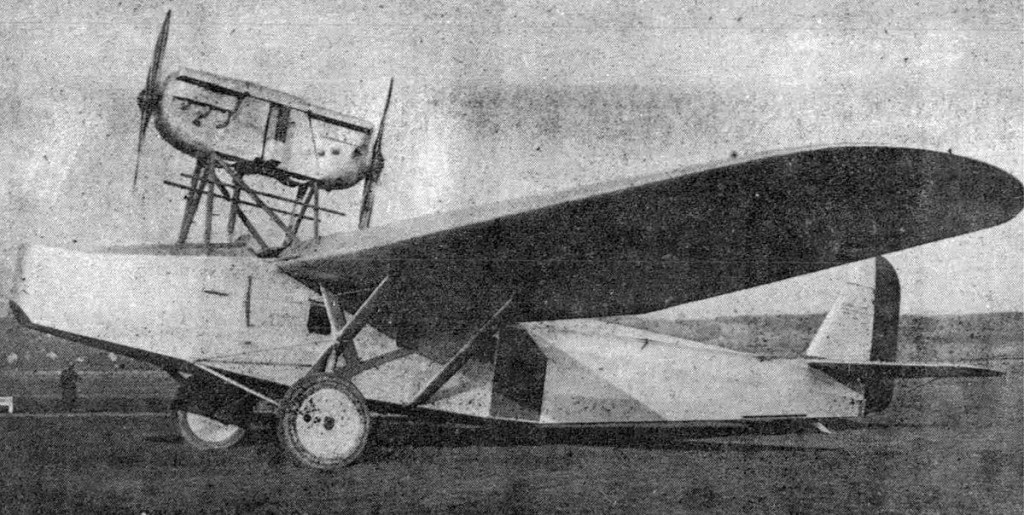
In November 1928, as a response to increasing tensions and clashes between troops in the Gran Chaco border region between Bolivia and Paraguay, Bolivia placed an order with Alfred Comte, the owner of a small Swiss aircraft manufacturer for three long-range bomber-transport aircraft, using funds collected by popular subscription.
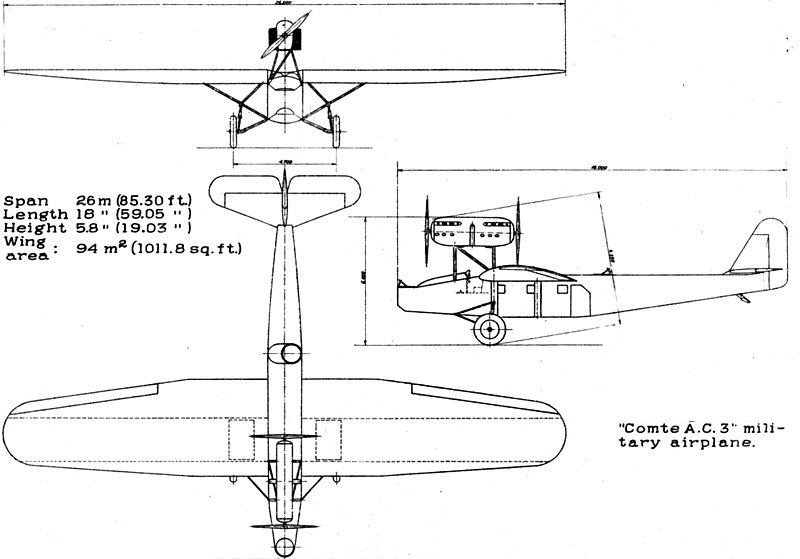
The AC-3 was a high-wing semi-cantilever monoplane of mixed construction. It was fabric covered with a conventional tail unit. It had three open cockpits, one in the nose for a gunner or observer, one forward of the wing for a pilot, and one on the upper rear fuselage for a rear gunner. An unconventional engine layout had two 447 kW (600 hp) Hispano-Suiza inline piston engines in tandem supported on eight struts above the fuselage. The installation had to be high enough to allow clearance for the two (one pusher, one tractor) propellers above the fuselage. A hatch in the port side allowed cargo or troops to be carried in the main cabin.
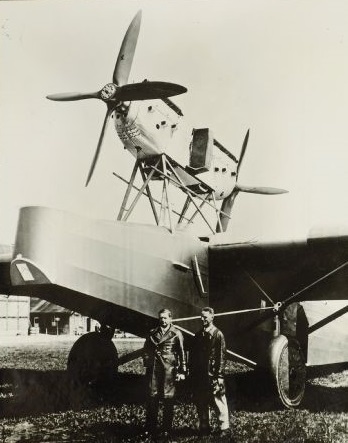
The new aircraft was too large to be built in Comte’s existing factory, (the AC-3 was the largest aircraft ever to be developed and built in Switzerland) and forced Comte to build a new hangar just for the AC-3. It made its maiden flight from Dübendorf airfield on 22 February 1930. The aircraft failed to meet its expected top speed, and as a result it was refitted with four-bladed propellers instead of the original two-bladed items. A collapse in the price of tin resulted in severe financial problems in Bolivia, and the military junta ruling Bolivia cancelled the order for the three Comte bombers, with only the first example being built, which was dismantled in 1935.
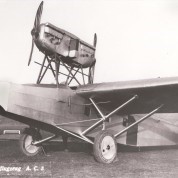
Engines: 2 × Hispano-Suiza, 447 kW (600 hp) each
Wingspan: 26 m (85 ft 3 in)
Wing area: 95 m2 (1,022 ft2)
Length: 18 m (59 ft 0¾ in)
Height: 6 m (19 ft 8¼ in)
Empty weight: 4000 kg (8,818 lb)
Gross weight: 6500 kg (14,330 lb)
Maximum speed: 210 km/h (130 mph)
Range: 1500 km (932 miles)
Service ceiling: 5300 m (17,390 ft)
Crew: 3
Comte AC-1
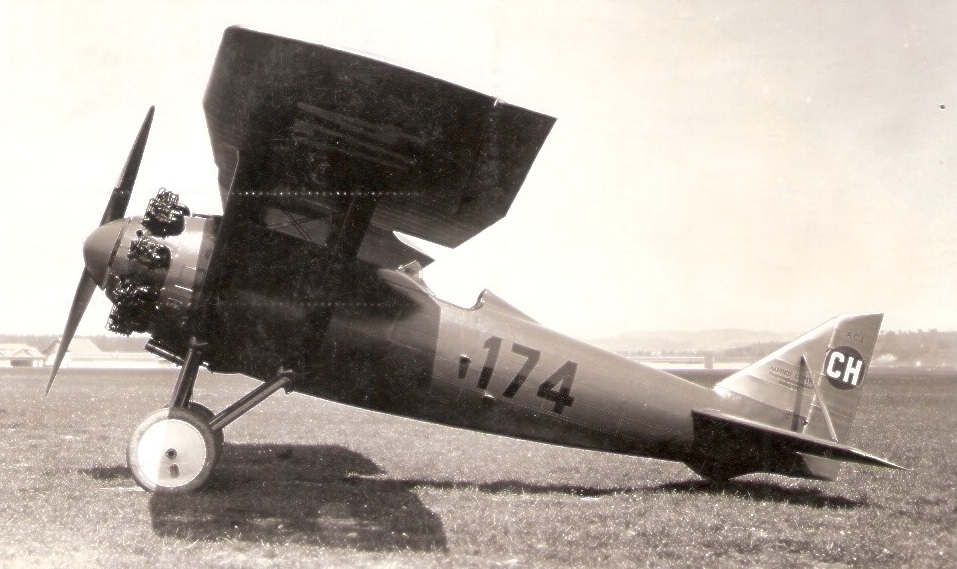
fighter prototype of 1927
Compton Cyclone Gyro
A one-off design. Destroyed after the rudder detached in flight on 5 December 2001.
Competition Aircraft Firebird Flyer
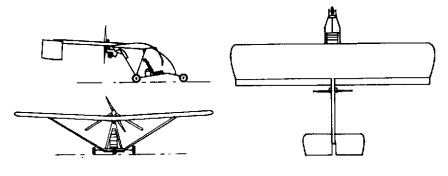
Single seat single engined high wing monoplane with hybrid control. Wing has unswept leading and trailing edges, and constant chord; inverted V tail. Pitch/yaw control by elevon; roll control by full span ailerons; control inputs through stick for pitch/yaw/ roll. Wing braced from below by struts; wing profile; double surface. Undercarriage has three wheels in tricycle formation; suspension on all wheels. Nosewheel steering independent from yaw control. No brakes. Aluminium tube framework, without pod. Engine mounted below wing driving pusher propeller.
In 1983 this machine was still in its prototype stage and therefore its characteristics and performances are not fully known. However, R J Davies has two original ideas in this new design. Firstly, the full span ailerons can be operated together to serve as flaps. Secondly, the motor on the Firebird Flyer (a Spitfire 250FA of 28hp or possibly later a water-cooled 220LC of 35 hp) drives a two bladed pusher propeller, which rotates about the axis of the tubular metal boom which carries the tail.
Comper Streak

The Comper Streak was a single-engined, single-seat racing monoplane built in the UK in the mid-1930s. It was not successful as a racer and only one was produced.

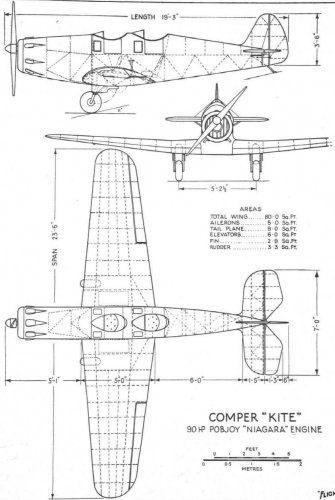
Comper Kite
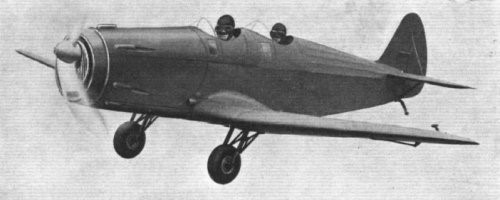
The Comper Kite was a single-engine, two-seat touring monoplane built in the UK, derived from the contemporary Comper Streak racer. Only one was built.