The 1909 Cremp monoplane, the world’s first aircraft equipped with ski gear to operate from snow-covered fields, was designed and built by Yu Cremp in Russia.
Span: 26’3″
Length: 16’5″
Speed: 37 mph
The 1909 Cremp monoplane, the world’s first aircraft equipped with ski gear to operate from snow-covered fields, was designed and built by Yu Cremp in Russia.
Span: 26’3″
Length: 16’5″
Speed: 37 mph

Colin Smith and his Croydon Aircraft Company team put Herbert Pither’s design to a practical test. Colin was able to make working drawings from Otago Witness photographs, supplemented by specifications helpfully cited in newspaper reports.
He is confident the replica is as authentic as it is possible to be, given that there is no way of knowing what adjustments Pither made during testing.
Colin insisted the work be done from Pither’s perspective, protecting against the inevitable influence of hindsight. Helpful suggestions by interested on lookers to improve the design have been firmly resisted, and the only conscious design concessions (like extra strengthening and temporarily fixing the all flying tail plane in position) have been made for safety reasons.
The craft is heavier than Pither’s, 500 lb (230kg) though with the same centre of balance, making it, if anything, less likely to fly at the 250 lb (113kg) power output Pither specified.
February 18, 2005, at Mandeville airfield, Southland saw the first flight of the replica monoplane under the hands of Jerry Chisum. While exact measures of its performance are still being analysed, pilot Jerry Chisum eased it through a series of low runs of about 100m along the airfield. The take off speed measured from a chase car as 70kmph.

Chisum rated the craft as surprisingly airworthy and controllable.
The Pither can be inspected at the Croydon hangar, Mandeville, but Colin has no plans for more flying in the meantime.
‘We’ve proven it can do what Pither claimed, and exploring the extent of its limitations has never been part of the plan, and no more. We’re not intending to do circuits or take it up to 100 feet. If we wanted it to do more, we’d build something that had done more.”
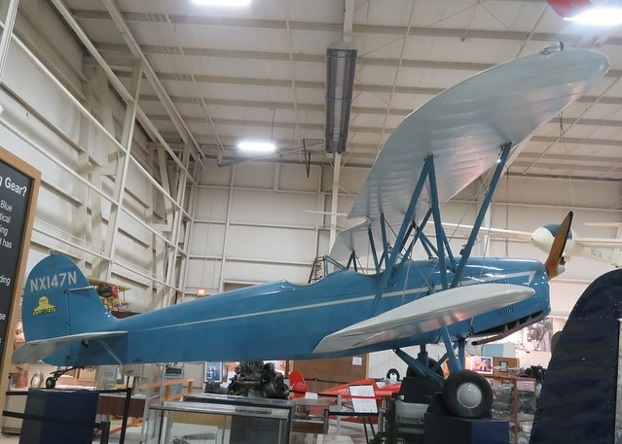
A 1930 two-seat sporting/training biplane.

This gyrocopter is a product from Alf Crowe and Glen Robins. Alf originally started building it as a two-seater. Glen Robins designed the cab, making it a single-seat machine, and made the necessary engine adjustments and added a pre-rotator. So the “GRS” in the designation stands for “Glen Robins Special”. It is powered by a Subaru EA81 engine onto a three-blade warp drive propeller. The rotor blades, built by the late George Clark, are 28 foot and wooden with a 9-inch chord (following the Van Craft pattern). They have a steel insert through them for the length of the blade. They have a lot of inertia and take a while to build up to speed, but the pre-rotator does help. It had its first flight at its home base Taonui in October 2001, with Alf Crowe at the helm.
The registration ZK-RAJ being withdrawn on 30 June 2003.
Engine: Subaru EA81.
Prop: three-blade warp drive.
Blades: 28 ft x 9 in.
“For practical tests on certain theories relative to slow-speed airplanes.” The engines, of which several of the major parts were “common to standard automobile engines,” were built in direct-drive and geared versions. The IVD had an inlet and cowling around the cylinders to aid air cooling. The IVG had in addition a gear-driven four-bladed fan in a circular opening at the revised inlet to this cowling for additional cooling capability. The IVG was apparently the model installed in the Crouch-Bolas Dragonfly.
Dragon Type IVD
1932
65hp
214ci
4-cylinder inline
Air cooled
weight: 195 lb
Direct Drive.
Dragon Type IVG
1932
90hp
214ci
4-cylinder inline
Air cooled
weight: 245 lb
Geared Drive.
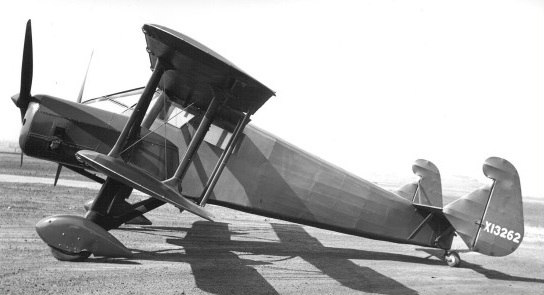
Considered to fill a courier-observation requirement but was rejected by the US Army Materil division.
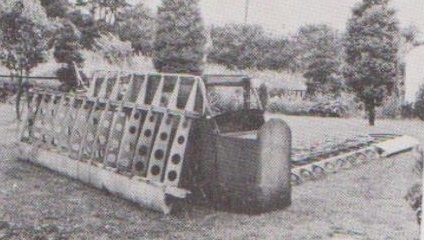
The Crossley Tom Thumb cabin high-wing monoplane was built in Banbury in 1937 but never got further than this.
It became the property of the Midland Aircraft Preservation Society in the early 1960’s. Allocated BAPC.32, it was stored in Coventry.
Pictured on 29 June 1969.
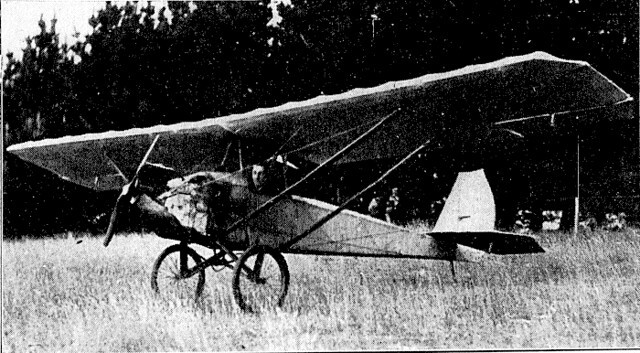
Mr. David Cross, aged 23, in the aeroplane designed and built by himself in which he crashed from a height of 300 ft. near Gore, New Zealand, on Monday. Mr Cross was injured and the machine was wrecked.
The Ladybird first flew on 21 May 33 with ex-Pither 40hp JAP engine. Span 29ft.
He made several flights (Approx 6 ) including one of 14km and he was the first man to be prosecuted in New Zealand for flying without a licence.
On 24 May 1933 the ODT reported, “Some months ago it was hoped to take the machine into the air, but the engine with which it was then equipped – a four-cylinder motor cycle engine – was not sufficiently powerful to lift the plane and the young aviator finally obtained an old engine imported from England by Mr Pither of Invercargill some 22 years ago for aviation purposes.
“This was overhauled and found to be in good order and after some alterations it was installed in the machine.
“Much study and energy had been devoted to the construction of a small monoplane at Chatton, Eastern Southland, when a very proud young man named David Cecil Cross, made his first successful trial flights in the machine.
“In the presence of about 20 onlookers the monoplane was taken out on Sunday morning and the young man took his place at the controls.
“The machine took off beautifully, crossed the Washpool Creek and a row of tall poplar trees, reached an altitude of 200 feet and made a good landing. The return journey was commenced a few minutes later and would have been equally successful had not one of the wheels struck a log of wood which was almost hidden in the ground.
“A wheel was torn off and a certain amount of damage was done to the undercarriage, but the pilot was uninjured. Naturally the young man was very proud of his achievement, although the slight mishap at the end of the trial was a disappointment to him. The monoplane has a wing span of 29 feet and on account of its graceful lines has been called the Ladybird. Despite its age, the engine now installed is in excellent order.”
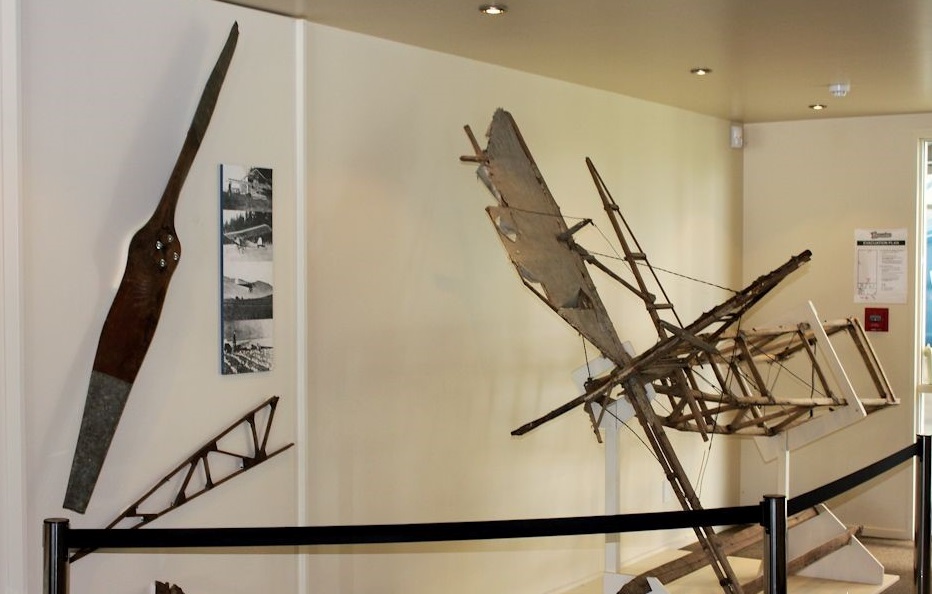
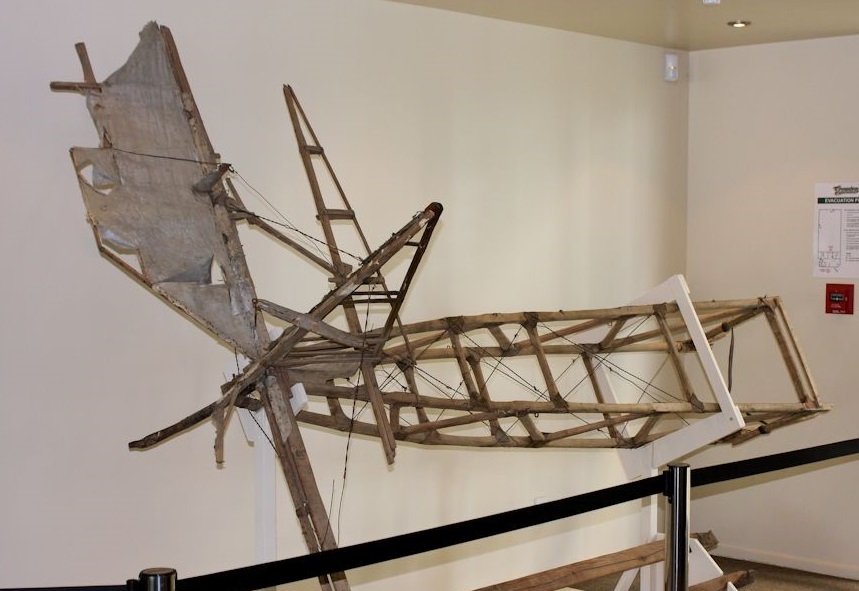
The Ladybird crashed in a turnip paddock at Otamita, Southland on 10 July 1933, and the remains went to the Croydon Aviation Heritage Centre at Mandeville, New Zealand, in 2012.
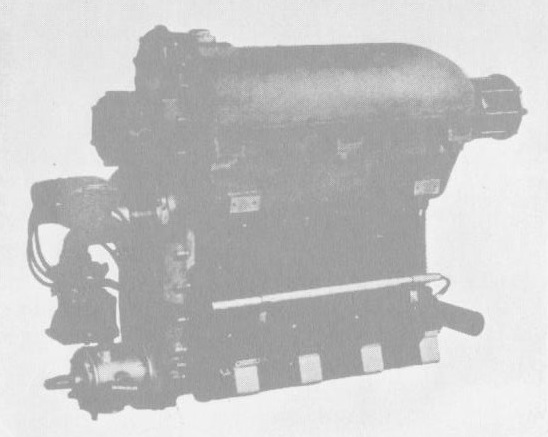
The engine featured one piece nickel iron cylinders with an underhead camshaft having all valve gears enclosed in a cast aluminium housing which could be removed without disturbing the engine timing. The camshaft was driven by a spur gear train. Gears were made of nitralloy steel, and a generator drive was provided.
Type: 4 cylinder inverted inline, air cooled
Rating: 100 hp at 2100 rpm
Displacement: 301 cu.in
Compression ratio: 5-1
Bore: 4 1/4 in
Stroke: 5 5/16 in
Length: 45 5/8 in
Width: 20 in
Weight: 300 lb
Fuel consumption: not more than .56 lb/hp/hr
Oil consumption: not more than .01 lb/hp/hr
Lubrication: Gear pump pressure to all parts, Three gear scavengingng pumps. One functioning on climp, another on glide.
Ignition: Bosch Dual Type FU4R
Carburation: Holley
Spark plugs: 2 per cylinder