Currie Wot

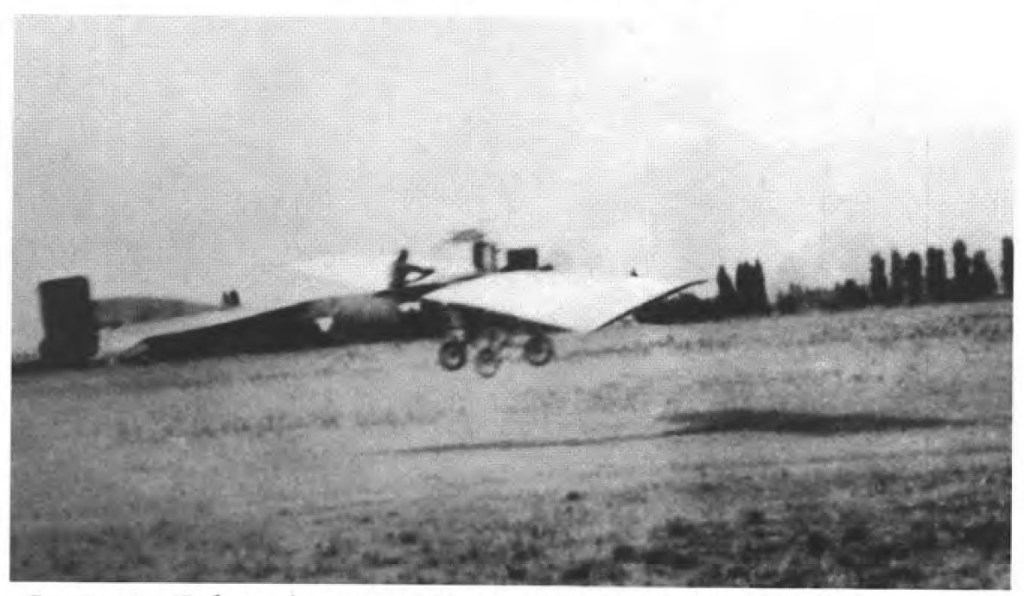
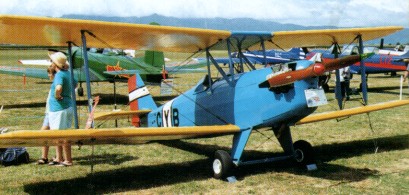
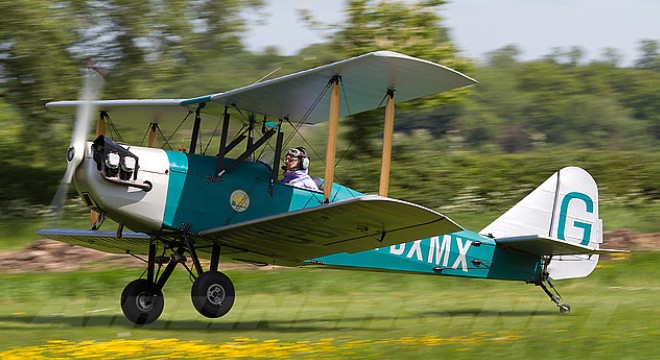
The Currie Wot is a single seat biplane designed by the late John Currie in Great Britain in 1937. Two were built by Cinque Ports Aviation at Lympne in 1937 but were destroyed in an air raid in 1940.

Several examples have been built by amateurs since then and a variety of engines fitted. These include the 37 h.p. lAP, 65 h.p. Mikron, 65 h.p. Continental and an experi¬mentally fitted Rover turbo-prop engine. The larger VW engine should also be suitable. The aircraft has recently been restressed to 6g at an A.U.W. of 900 lb. The fuselage is a conventional box structure, having spruce longerons and struts, and is plywood covered. The wings consist of four separate panels and a centre section, each having two solid spruce spars, built up girder ribs and fabric covering. Ailerons are fitted to the lower wings only. The empennage is a wooden structure, fabric covered. An alternative rounded rudder may be fitted. Longitudinal trim is obtained by an elevator trim tab. The undercarriage is made up of steel tube and incorporates rubber cord shock absorbers. A 12 Imp. gallon fuel tank is located behind the firewall.

After the War the design was revived by Viv Bellamy of the Hampshire Aero Club who built two machines and marketed plans until the rights were sold to Wot-builder Dr. J.H.B.Urmston, who marketed the type under the name of Botley Aircraft. Since then, Phoenix have been marketing the type.

An adaptable airframe, both the Isaacs Fury and SE.5 replicas have been built using the airframe.

The number of different engines and designs has led to a whole series of semi-official names for it. These have included:
Hot Wot – G-APNT fitted with a Walter Mikron II
Hotter Wot – G-APNT fitted with a Walter Mikron III
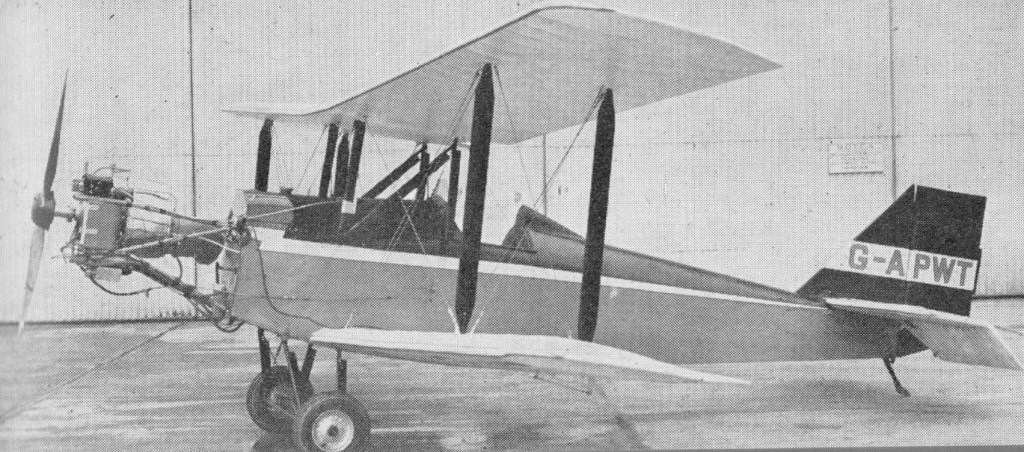
Jet Wot – G-APWT fitter with a Rover gas-turbine test-bed
Super Wot – G-AVEY with a Pobjoy and re-styled fuselage
Wet Wot – G-APNT and G-APWT with floats
Wot Special – G-AYMP with tail surface improvements
Phoenix Currie Wot
Rover gas turbine powered Currie Wot, early 1960

Gallery

Engine: Continental, 65 h.p.
Span: 22’ 1”.
Length: 18’ 3”.
Wing Area: 151 sq. ft.
Empty Weight: 550 lb.
Max Weight: 900 lb.
Wing Loading: 5.96 lb/sq. ft.
Max. Speed: 100 m.p.h.
Cruise Speed: 90 m.p.h.
Climb: 600 fpm.
Range: 340 miles.

Engine: Continental O-200, 100 hp.
Cruise: 75 kts.
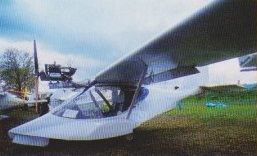
CUP Hydran

The Hydran amphibious flying boat has a composite covered aluminium tube structure.

Engine: Rotax 582, 65 hp
Wing span: 9.42 m
Wing area: 12.9 sq.m
MAUW: 450 kg
Empty weight: 330 kg
Fuel capacity: 50 lt
Max speed: 180 kph
Cruise speed: 150 kph
Minimum speed: 60 kph
Climb rate: 3 m/s
Seats: 2
Fuel consumption: 12.5-15 lt/hr
Price (1998): 88 000 000 Lr

Culver XPQ-15 / XTD3C

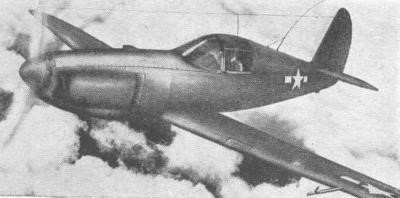
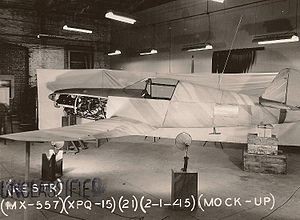
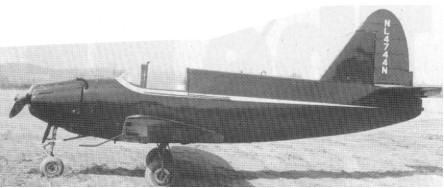
The Culver XPQ-15, also known as the XTD3C-1, was an American target drone developed by the Culver Aircraft Company late in World War II. The XPQ-15 was a low-wing monoplane of conventional design. It was powered by a Franklin O-405 opposed piston engine. Design work began in 1943.

Four examples of the XPQ-15 were built for evaulation by the United States Army Air Forces in 1945; two additional aircraft were tested by the United States Navy as the XTD3C-1. No production contract was placed.

Variants:

XPQ-15
USAAF variant; four produced.

XTD3C-1
USN variant; two produced, BuNos 29665-29666.

XPQ-15
Engine: 1 × Franklin O-405, 200 hp (150 kW)
Maximum speed: 220 mph (354 km/h; 191 kn)

Culver V / XPQ-15

Last Culver design started life on paper in 1942. This was the Model V (for Victory) which borrowed from the LCA and the LAR but differed quite considerably in fuselage layout, first flown September 1945. A Simpli Fly control system was fitted to make flying as easy as driving a car, but the aircraft was overweight and the control system prone to failure. It failed to compete in the post war market and only 378 were built before Culver went bankrupt.

Wings were similar in planform to earlier models, but had extra dihedral added to the outer wings. Power was provided by an 85hp Continental C 85 12 which gave a maximum speed of 135mph, a climb rate of 660 ft/min, a service ceiling of 13100 ft and a range of 625 miles. The fuselage had a forward opening canopy and the cockpit was level with the leading edge of the wing, giving the characteristic Y look.

Final model, the V 2, was designed to overcome some of the failings of the V. This grossed 1680 lbs, compared with 1600 lbs for the V, and performance was slightly down. Structurally, the V differed from earlier models in having a wing of semi monocoque structure, covered in plastic bonded plywood. Manually operated flaps were fitted, larger on the V than the V 2.

Four were built as drones designated XPQ-15.

The Culver V was put back into production briefly, in 1956 by the Superior Aircraft Co, and a further six aircraft built, powered by the 95hp Continental, but that was the end of the line. In 1987, of the 380 odd built, some thirty remain on the register.

Engine: Continental, 85 hp
Wingspan: 29 ft
Length: 20 ft 8.5 in
Height: 6 ft 9.5 in
Wing area: 125.9 sq.ft
Empty weight: 1070 lb
Loaded weight: 1600 lb
Cruise: 125 mph
ROC: 600 fpm
Service ceiling: 13,100 ft
Range: 700 mi

Culver NR-D / TD2C-1 / PQ-14

NR-D

The Culver NR-D radio-controlled target aircraft was designed to simulate enemy attacks. It featured an orthodox single-seat cockpit and could be controlled manually.

It was produced in quantity for both the US Navy and the USAF.

The Navy version was powered by a 150 hp Franklin 6ACT-298-J5 and designated TD2C-1, a total of 1198 being delivered.

The USAF versions were the PQ-14A and PQ-14B, and powered by the 150 hp Franklin O-300-11, 150 and 594 of the respective models were delivered.

There are civilian conversions of all three models.

Wingspan: 30 ft
Length: 19 ft 5.75 in
Height: 8 ft 4.5 in
Wing area: 103 sq.ft
Loaded weight: 1830 lb
Max speed: 175 mph at SL / 160 mph at 17,000 ft
ROC: 800 fpm
Range: 512 mi at 160 mph

Culver Dart / Cadet / LFA / LCA / Applegate-Weyant Dart

LCA Cadet

About fifty Dart Aircraft Co Darts were produced before the war, using one of three engines, the 90hp Lambert R 266 in the model G, the 90hp Ken¬Royce in the model GK and the 90hp Warner Scarab Junior in the model GW.
In 1939 the Dart Aircraft Co became the Culver Aircraft Co, and produced the new Culver Cadet. Rolled out at Port Columbus, Ohio, in February 1939, still called the Dart, the Culver L soon changed, its name to Cadet. The new model was announced in March 1940 and certificated under ATC 730 in September 1940. The first model was the LCA fitted with a 75hp Continental A 75 8 and later with the 80hp A 80 8. In 1941 it was offered with the 80hp Franklin 4AC 176 F3 as the model LFA. A further development was the LFA 90 with the 90hp Franklin 4AC 199 E3.
With a fuselage of semi monocoque wood construction the Cadet used stressed skin, plastic bonded plywood reinforced with longerons. The wings had an I beam main spar of laminated spruce and mahogany plywood. The leading edge was plywood covered back to the spar and the whole covered with fabric. Slots were built into the leading edge for improved control response at low speeds.
Undercarriage was retractable inwards into the wings, but the tailwheel was fixed. The fixed tail surfaces were of wood, covered in plywood, but the moving surfaces were of welded steel tube and fabric covered.
In general the Dart and the Culver were well liked. Both were short coupled and as a result were highly manoeuvrable. About 360 Cadets were built and probably about eighty were still around in 1987.
With Pearl Harbour the US economy was put on a war footing and the Cadet ceased production. Some were adapted as target drones, and the first PQ 8s were very similar to the LFA apart from the tricycle undercarriage necessary for radio controlled operation. The LAR 90 as Culver called it, was powered by a 90hp Franklin O 200 1 and 200 were built.
More powerful was the PQ 8A with a 125hp Lycoming 0 290 and a further 200 were built for the USAAF. Certificated in September 1941 under ATC 748, these were eligible for surplus sales post war, but only two were registered in 1948.
When Culver went out of business in 1946 Ray Applegate & Weyant, Tecumseh MI. acquired the rights to the Culver G Dart (ATC 674). About ten were built. powered by a 100hp Continental A-100 engine, before lack of sales halted production.

Dart GC with Lycoming O-320 N31696

The rights were bought by Superior Aircraft Co and then sold to California Aero Co of Tracy. They revived the model in 1966 as the Helton Lark 95 with a 90hp Continental C 90 16. Dimensions were similar to the Cadet, though the overall height was 6ft 10in due to the tricycle gear.

LCA Cadet
Engine: Continental, 75 hp
Wingspan: 26 ft 11 in
Length: 17 ft 8 in
Height: 5 ft 6 in
Empty weight: 720 lb
Loaded weight: 1305 lb
Max speed: 140 mph
Cruise: 120 mph
ROC: 800 fpm
Service ceiling: 17,500 ft
Range: 600 mi
Seats: 2