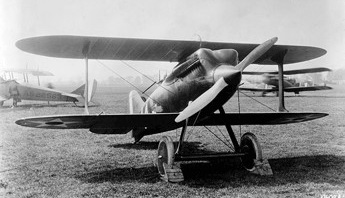
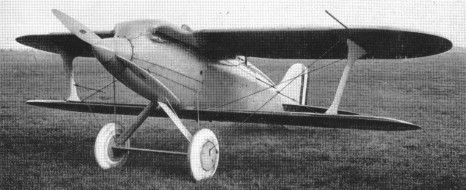
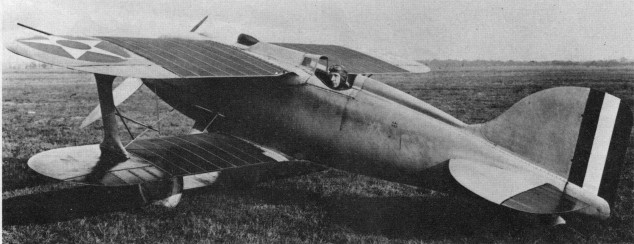
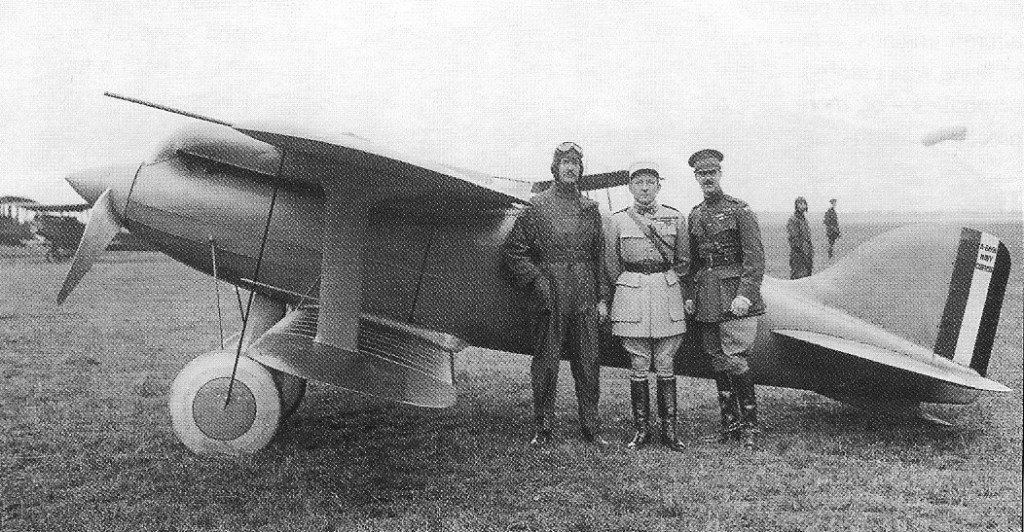
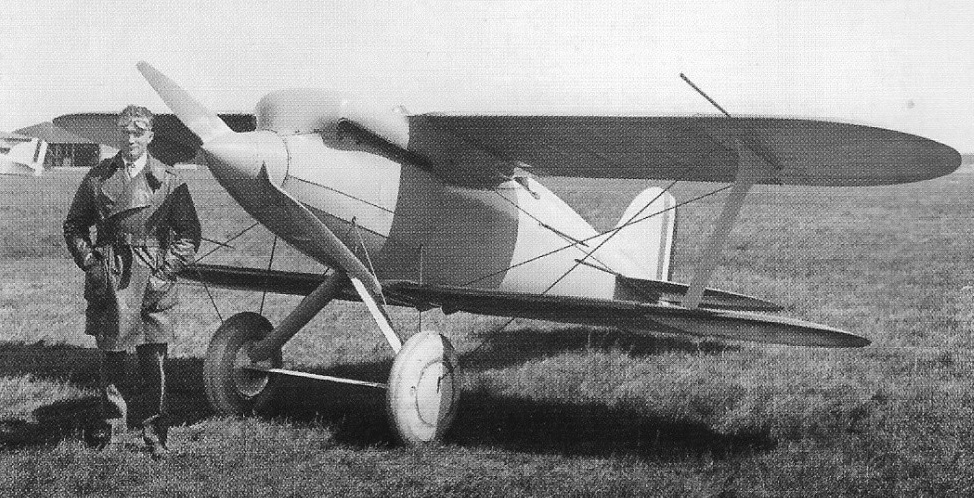
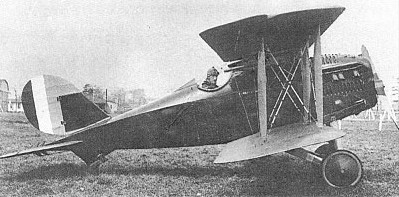
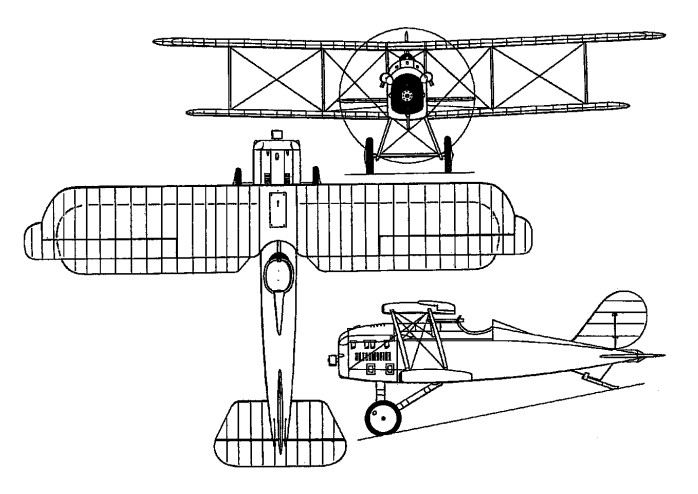
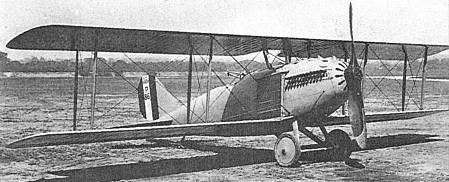
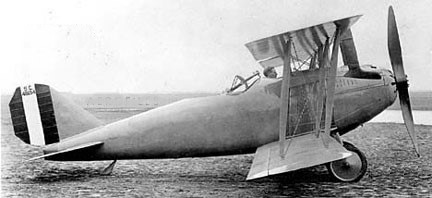
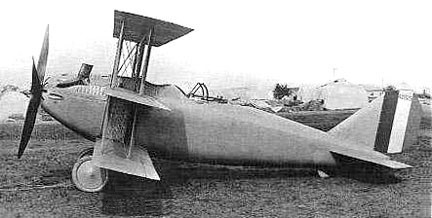
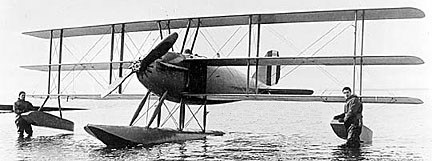
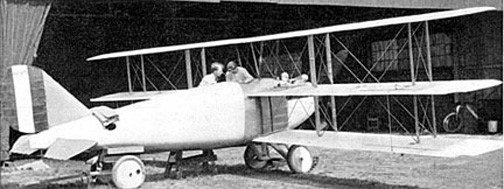
Also entered in the 1922 Pulitzer Race was a pair of Army Curtiss racers originally called CR-2 but later changed to R-6 (Model 2A). Curtiss built them two R-6 developed from the US Navy’s CR. The R-6s were considerably cleaner and a major contribution to drag reduction was the introduction of wing surface radiators.
Lt. Russell Maughan won the race in No. P-279 (68564) at 206 mph, and Lt. Maitland was second (68563) at 199 mph in No. P-278. Both airplanes then flew in the 1923 Pulitzer, Lt. Corkill placing sixth in P-278 at 216 mph, and Lt. Miller fifth in P-279 at 219 mph. In the 1924 Pulitzer, P-278 disintegrated at the start, killing Capt. Burt Skeel, while Lt. Brookley went on to place second at 215 mph in the 1922 winner. The R-6s held the speed record several times: Billy Mitchell flew P-279 (68564) at 224.28 mph in 1922; Russell Maughan flew it 237 mph in 1923, and then Maitiand flew P-279 240 mph a short time later. The Curtiss racers were making a lot of history.
In August 1920, Curtiss the company was forced into receivership. Clement Keys, a Canadian financier, obtained funds to manage the company’s debt and led it again to sound financial status. The Buffalo facility became the major facility, and the company remained the largest U.S. aircraft company through the 1920s. Its racing planes, including the CR-1 and CR-3, won several competitions.
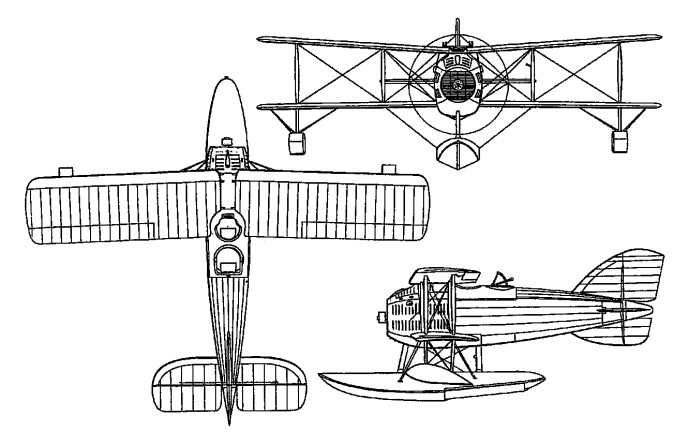
The 1925 Pulitzer saw the R3Cs in a joint Army/Navy project, with No. A-6978 and No. A-6979 going to the Navy, and No. A-7054 to the Army. The airplanes took the 1925 Pulitzer Race at record speed and left everyone else far behind. Army Lt. Cyrus Bettis was the winner in A-7054 at 249 mph, Navy Lt. AI Williams was second in A-6979 at 242 mph.
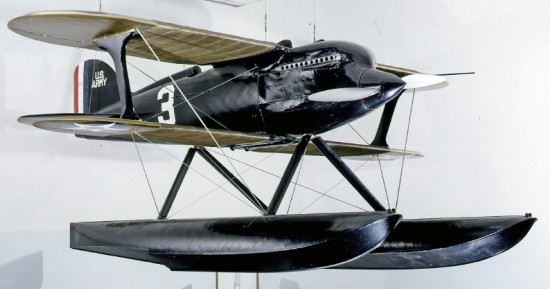
On Oct. 26, 1925, U.S. Army Lt. James H. Doolittle flew the Curtiss R3C-2 to victory in the Schneider Trophy Race on floats with an average speed of 374 km/h (232.17 mph). The next day he flew the R3C-2 over a straight course at a world-record speed of 395 km/h (245.7 mph).
In the Schneider Trophy Race of Nov. 13, 1926, this same airplane piloted by Lt. Christian F. Schilt, USMC, and powered by an improved engine, won second place with an average speed of 372 km/h (231.4 mph).
R3C-2
F2C and F3C were “paper” designations assigned to the R2C and R3C racing aircraft respectively.
R3C-1
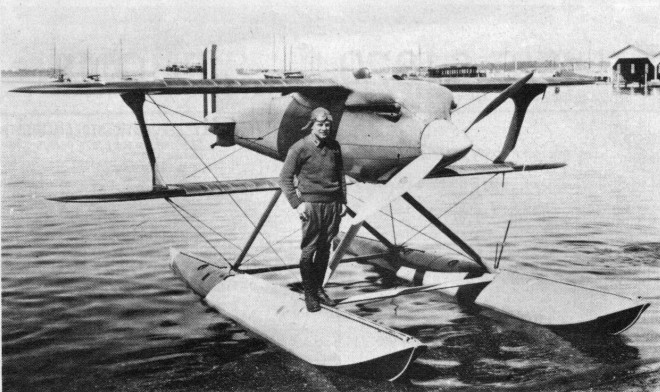
The R3Cs were modified into R3C-1s by the attachment of twin floats and entered in the Schneider Race of 1925. There they caused a sensation, being far and away the most streamlined water-borne flying machines the world had ever seen. In this they heralded the great racing seaplanes to come, for which the Schneider will always be remembered. Prior Schneider racers had been worthy efforts, but little more. From 1925 until the trophy was permanently retired in 1931, it would attract the most exciting aircraft in the world.
In 1925, however, it was strictly an intramural contest between the Army’s Jimmy Doolittle in the Pulitzer-winning A-7054, and the Navy’s George Cuddihy in A-6979 and Ralph Oftsie in A-6978.
On Oct. 26, 1925, U.S. Army Lt. James H. Doolittle flew the Curtiss R3C-2 to victory in the Schneider Trophy Race on floats with an average speed of 374 km/h (232.17 mph). The others failed to finish. The next day he flew the R3C-2 over a straight course at a world-record speed of 395 km/h (245.7 mph).
For the 1926 Schneider of Nov. 13, Doolittle’s A-7054 remained much as it had been, except that the pilot was Lt. Christian Schilt. Oftsie’s R3C-2 (A-6978) became the R3C-3 with the change from a Curtiss D-12 engine to a Packard 2A1500, and the addition of a slick, symmetrical cowling; pilot, Lt. William Tomlinson. The final R3C-2 (A-6979) got a new Curtiss V-1550 engine to become the R3C4, while retaining Cuddihy as pilot. Part of the reason for this major effort to gain speed can be explained by the rules of the Schneider Trophy, which awarded permanent possession to the nation which won three times in a row.
Tomlinson’s R3C-3 was wrecked during trials at Hampton Roads, Virginia. Cuddihy once again was forced to pull out before he had completed the race. Schlit did his best, averaging barely 1 mph faster than Doolittle’s 1925 winning speed, but not fast enough to catch deBernardi, who clocked 242 mph in his Macchi M-39. Schilt won second place with an average speed of 372 km/h (231.4 mph). Schilt’s airplane, repainted like the R3C-2 of Doolittle, is now at the USAF Museum, on loan from the National Air and Space Museum.
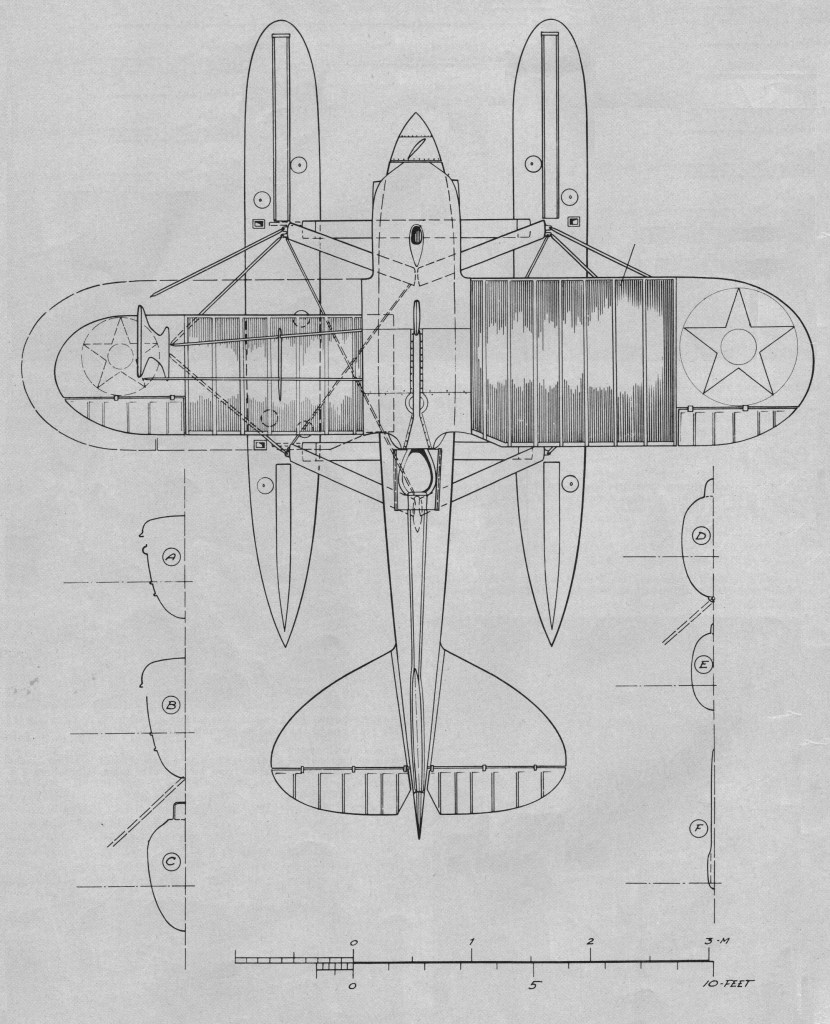
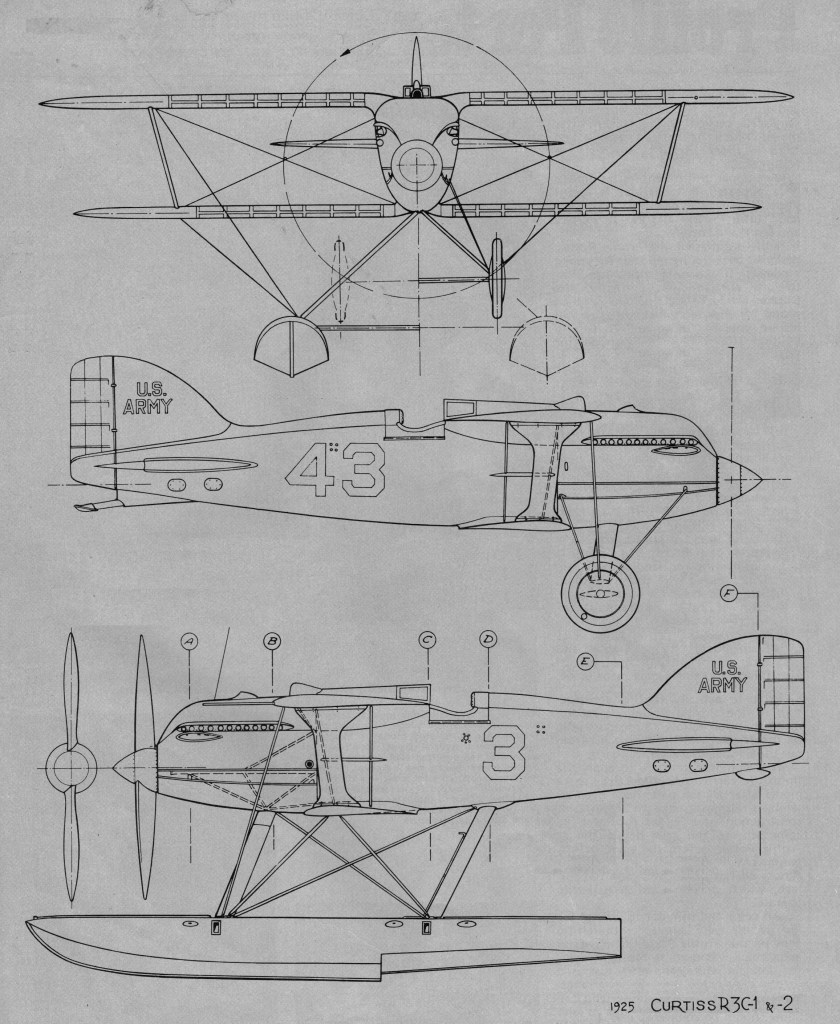
Curtiss R3C-2
Curtiss R3C-2 Wingspan upper: 6.71 m (22 ft.) Wingspan lower: 6.1 m (20 ft.) Length: 6.01 m (19 ft. 8 1/2 in.) Height: 2.46 m (8 ft. 1 in.) Weight: Empty: 975 kg (2150 lb.) Gross: 1152 kg (2539 lb.) Engine: (1925) Curtiss V-1400 V-12, water-cooled, 610 hp Engine: (1926) Curtiss V-1400 V-12, water-cooled, 665 hp Engine: Bore and Stroke: 12.382 cm (4.875 in.) x 15.875 cm (6.25 in.) Displacement: 22.95 liters (1400 cu. in.) Engine: Mfg. No. 9 Curtiss-Reed Propeller: Design: EX-32995 Two-Blades, Fixed-Pitch Serial No.: M-455 Material: Duralumin Diameter: 237 cm (92 in.) Pitch: 284 cm (112 in.)
Three 1923 R2C-1 were built (A6691/6692, and A7054). The second became R2C-2, and the first was sold to the Army to become R-8. Is also seen as paper designation F2C.
In the 1923 Pulitzer Curtiss had two new R2C-1s. A pair of larger, but more streamlined, Navy racers. AI Williams won the race in No. A-6692 at 244 mph, closely followed by Harold Brow in No. A-6691 at 242 mph. Brow later took the world speed record away from Maitiand’s R-6 with a run at 259 mph, only to be topped immediately by AI Williams with 267 mph.
R2C-1
F2C and F3C were “paper” designations assigned to the R2C and R3C racing aircraft respectively.
R-8 / R2C-1 A6691 was purchased from the USN for $1.00 and rebuilt by the Army as 23-1235. It crashed before the 1924 race.
R2C-1 with Lt. Alford Williams
The sole R2C-2 from 1924, A6692, was the winner of 1924 Pulitzer Trophy for seaplanes and 227.5 mph. The R2C-2, on 22’7″ twin floats, was developed into the R3C-1.
R2C-1 Engine: Curtiss D-12, 507 hp Length: 19 ft 9 in Wingspan: 22 ft 0 in Empty weight: 1,692 lb Gross weight: 2,112 lb Maximum speed: 267 mph Range: 173 miles Service ceiling: 31,800 ft Rate of climb: 2,380 ft/min Crew: One pilot
Curtiss produced a sucsessful post-World War I three seat two-bay biplane called the Oriole for the civilian market, with a moulded plywood fuselage and 90 hp Curtiss OX-5 V-8 engine.
Performance was improved when fitted with a Curtiss K-6 or C-6 (150-160 hp).
By 1921 surplus WW-1 machines like the Jenny were flooding the market, and Oriole production was tailed off.
With the closure of the Curtiss Oriole line, a number of complete fuselages became available and Ireland was able to secure these. With help from friends in the Curtiss design office, new wings were created for the Ireland Comet.
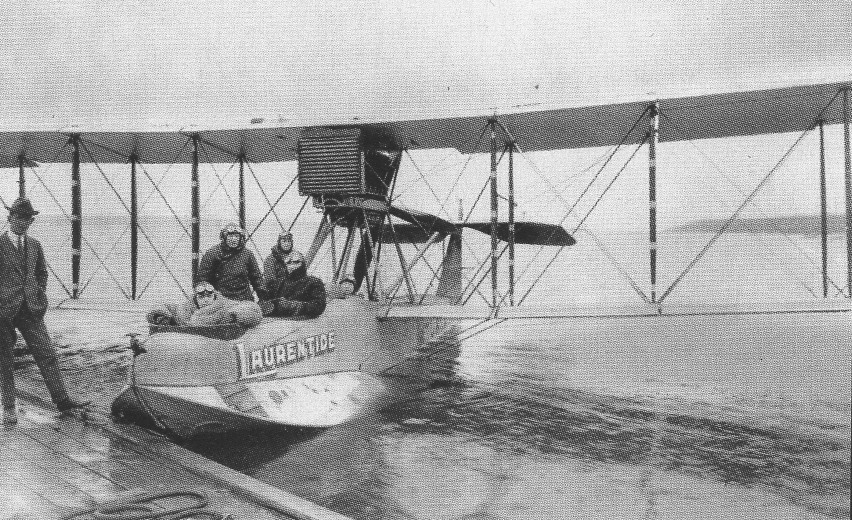
The Curtiss flying boat the HS-2L was used extensively in the war for anti-submarine patrols. Bases were built in Nova Scotia, France and Portugal for the purpose.
Standard Aircraft Corp contract-built 350 Curtiss HS-2L USN flying boats.
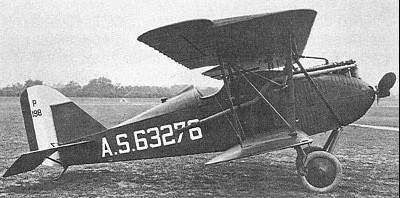
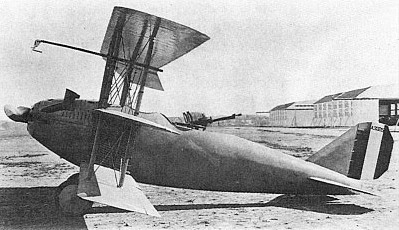
Designed by the US Army Engineering Division as a specialised single-seat night fighter, two prototypes of the PN-1 were built by Curtiss, powered by the 220hp Liberty L-825 six-cylinder water-cooled engine. Optimised for docile handling characteristics at the lower end of the speed range in order to ease operation from small blacked-out fields, the PN-1 was completed without interplane struts, but steel-tube N-struts were introduced to improve torsional stiffness before any attempt to fly the first prototype. Only one PN-1 was completed, and the results of any flight testing are not on record. It is known, however, that the sole prototype was used for static tests at McCook Field during 1921.
Take-off weight: 1048 kg / 2310 lb Empty weight: 740 kg / 1631 lb Wingspan: 9.40 m / 30 ft 10 in Length: 7.16 m / 23 ft 6 in Height: 3.12 m / 10 ft 3 in Wing area: 27.87 sq.m / 299.99 sq ft Max. speed: 174 km/h / 108 mph Range: 410 km / 255 miles
The first single-seat fighter of indigenous US design to achieve production status, the Model D was conceived around the 300hp Hispano-Suiza H eight-cylinder water-cooled engine. The first of four prototypes built by the Ordnance Engineering Corporation (Orenco) was completed in January 1919. Curtiss was assigned a production contract for 50 aircraft and undertook some redesign. This included the introduction of dihedral and overhanging, balanced ailerons, and revision of the engine installation. Of wooden construction with plycovered fuselage and fabric-covered wings, the Curtiss-built Model D utilised a 330hp Wright-built derivative of the Hispano-Suiza and carried an armament of two 7.62mm machine guns. Deliveries commencing in August 1921. One Model D was experimentally fitted with French Lamblin radiators attached to the fuselage sides, and another was fitted with a turbo-supercharger for high altitude trials.
Take-off weight: 1279 kg / 2820 lb Empty weight: 865 kg / 1907 lb Wingspan: 10.05 m / 32 ft 12 in Length: 6.54 m / 21 ft 5 in Height: 2.54 m / 8 ft 4 in Wing area: 25.36 sq.m / 272.97 sq ft Max. speed: 224 km/h / 139 mph
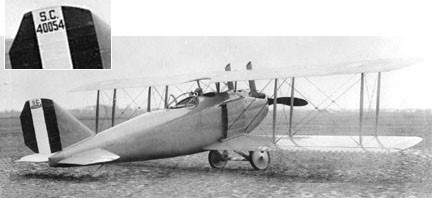
US Army interest in the 18-T prompted Curtiss to offer the same basic design in two-bay biplane configuration, and an order was placed by the US Army for two examples in August 1918. Known unofficially as the “Hornet”, the 18-B two-seat fighter employed an identical fuselage to that of the 18-T and a similar Curtiss- Kirkham K-12 engine. The proposed armament comprised two forward-firing Marlin guns and two Lewis guns on a flexible mount. The two prototypes were delivered to the US Army during the summer of 1919, AS40058 and AS40064, one being confined to static testing and the other crashing shortly after the commencement of flight trials. Further development was then abandoned.
Photo above clearly shows a tail number of “40054,” but all recorded registrations have that number as the 18T triplane.
Engine: Kirkham K-12, 400hp Wingspan: 11.41 m / 37 ft 5 in Length: 7.11 m / 23 ft 4 in Wing area: 28.43 sq.m / 306.02 sq ft Take-off weight: 1300 kg / 2866 lb Empty weight: 767 kg / 1691 lb Useful load: 1177 lb Max. speed: 257 km/h / 160 mph Seats: 2
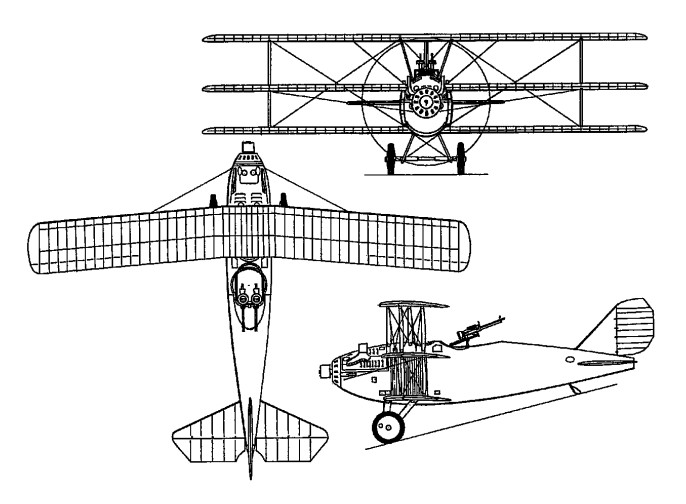
Designed by Charles B Kirkham, the Curtiss 18-T two-seat fighter triplane was ordered by the US Navy on 30 March 1918 when a contract was placed for two prototypes. The first (AS40065) was flown on 7 May 1918. Designed around the Curtiss-Kirkham K-12 water-cooled 12-cylinder engine of 350 hp and four-blade prop, the 18-T was a clean aerodynamic design by contemporary standards and featured a monocoque three-ply fuselage and side radiators positioned between the lower wings. The proposed armament was two forward-firing synchronized 7.62mm Marlin machine guns and two 7.62mm Lewis guns on a Scarff mounting in the rear cockpit.
The 18-T initially suffered some tail heaviness which was corrected by applying five degrees of sweepback to the wings for further trials. A max speed of 262km/h was achieved with full military load in August 1918, the 18-T being acclaimed as the world’s fastest aeroplane as a result.
Curtiss 18-T-1 A-3325
The US Navy promptly ordered two examples, the first (A3325) of which was delivered in February 1919 with a single float undercarriage.
In the summer of 1919, the first Army prototype (AS40054) was fitted with longer-span two-bay wings, these having a span and area of 12.38m and 37.16sq.m respectively and 5° of sweepback were added, and in this form the aircraft became the 18T-2 (A3326), the short-span version becoming the 18T-1 (AS40059). The 18T-2 established a world altitude record of 34,610 ft / 10640m on 18 September 1919 (pilot Roland Rohlfs), and a second 18T-2 was built by Curtiss for export to Bolivia, where it arrived in 1920.
Curtiss 18-T-2 Rohlf’s altitude setter A-3326
Both Navy ships, used as land racers, crashed at the 1923 NARs.
18T-1 Engine: Curtiss-Kirkham K-12, 350 hp Wingspan: 9.70 m / 31 ft 10 in Length: 7.11 m / 23 ft 4 in Height: 3.02 m / 9 ft 11 in Wing area: 26.76 sq.m / 288.04 sq ft Take-off weight: 1383 kg / 3049 lb Empty weight: 898 kg / 1980 lb Max. speed: 265 km/h / 165 mph Cruise speed: 145 mph Stall: 58 mph Ceiling: 22,000 ft Seats: 2
18T-2 Engine: Curtiss D-12, 400hp Wingspan: 40 ft 7 in Length: 28 ft 3 in Speed: 139 mph Ceiling: 21,000 ft
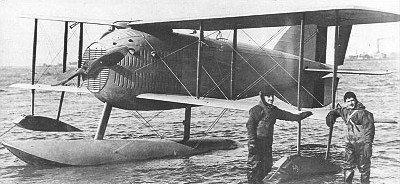
Designed by Capt B L Smith of the US Marine Corps as a two-seat patrol fighter floatplane for use in the Dunkirk-Calais area, the HA – known unofficially as the “Dunkirk Fighter” – was intended to combat the Brandenburg float fighters. The HA was built at the experimental plant of the Curtiss Engineering Corporation. Of conventional wooden construction with fabric skinning, the HA was powered by a 425hp Liberty 12 engine and proposed armament was two synchronized 7.62mm Marlin machine guns and two Lewis guns of the same calibre on a Scarff mounting in the rear cockpit. The HA was flown for the first time on 21 March 1918, but was found to be unstable longitudinally and seriously tail heavy. The initial test terminated in a crash. Curtiss was then awarded a contract for two further prototypes, the first of which, the HA-1, utilized salvaged components from the original HA and featured revised vertical tail surfaces, an annular-type radiator and relocated wings. The HA-1 demonstrated appreciably improved handling qualities, but was written off after a fire in the air. The third HA prototype, the HA-2, differed appreciably from the HA-1.
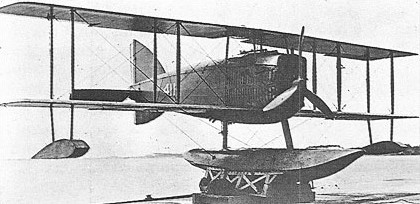
HA-2
The third HA float fighter prototype embodied considerable redesign as the HA-2. Powered by a 12- cylinder Liberty 12 water-cooled engine, like the preceding prototypes, the HA-2 had longer-span wings of marginally increased chord and gap, the upper wing being raised clear of the fuselage, the decking of which was lowered. The radiator was redesigned, but cooling problems were encountered and although the HA-2 proved more docile than the lighter HA-1, it possessed insufficient promise to warrant further development.
HA-1 Take-off weight: 1634 kg / 3602 lb Empty weight: 1111 kg / 2449 lb Wingspan: 10.97 m / 35 ft 12 in Length: 9.37 m / 30 ft 9 in Height: 3.23 m / 10 ft 7 in Wing area: 35.95 sq.m / 386.96 sq ft Max. speed: 203 km/h / 126 mph
HA-2 Take-off weight: 1772 kg / 3907 lb Empty weight: 1336 kg / 2 lb Wingspan: 12.80 m / 41 ft 12 in Length: 9.37 m / 30 ft 9 in Height: 3.48 m / 11 ft 5 in Wing area: 45.52 sq.m / 489.97 sq ft Max. speed: 190 km/h / 118 mph