The 1910 De Broucker biplane was designed and built by De Broucker in Belgium.
The 1910 De Broucker biplane was designed and built by De Broucker in Belgium.
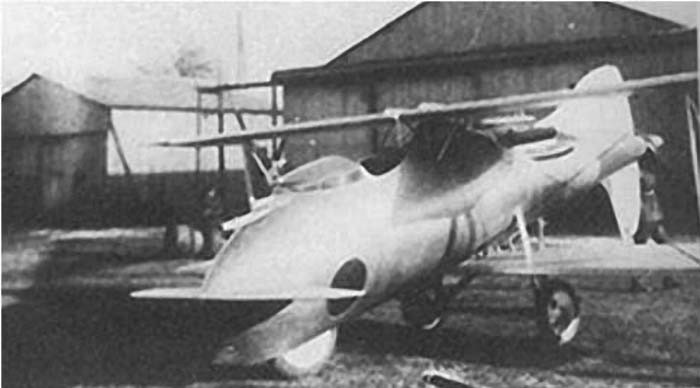
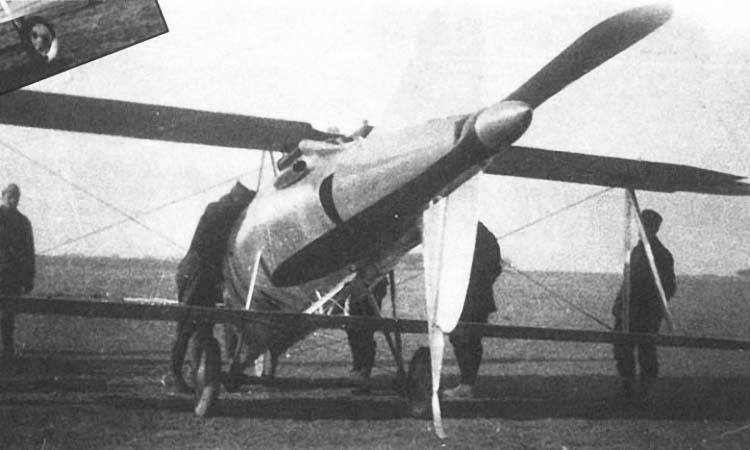
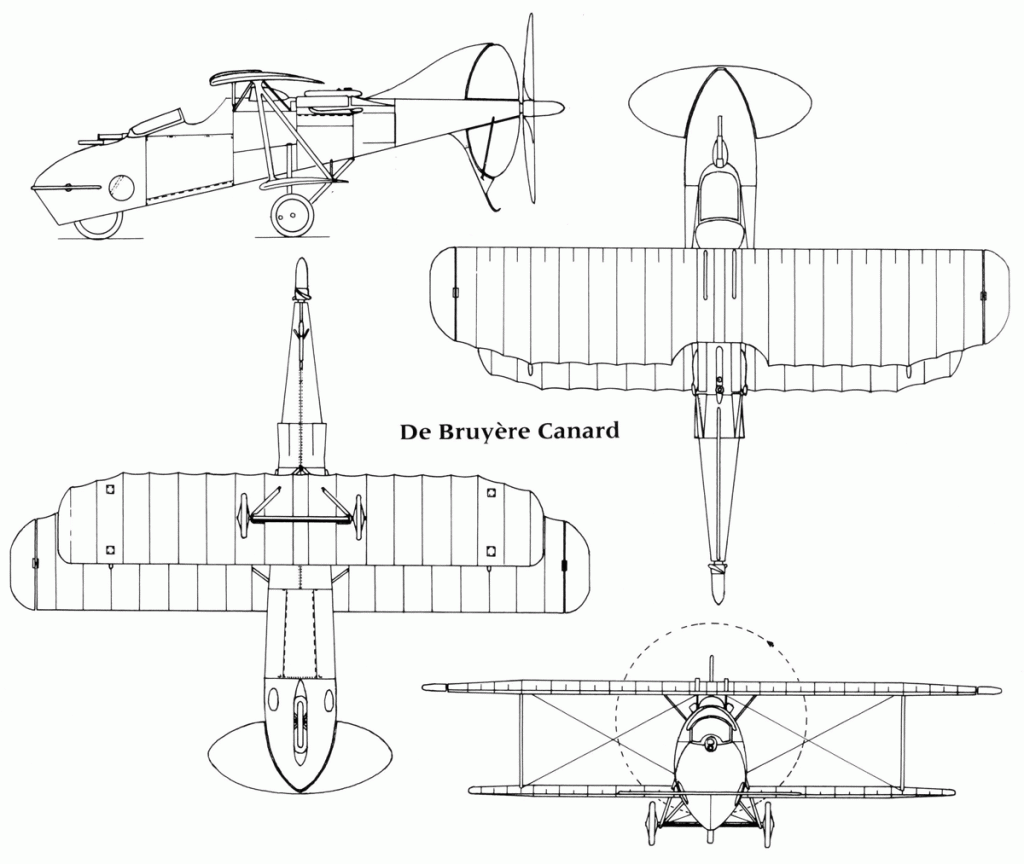
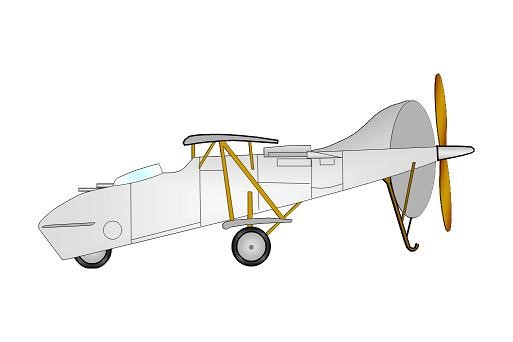
A fighter of the First World War created by French engineer Marcel de Bruyere in 1917, the C 1 was a biplane with equal-span, staggered wings supported by inverted V-struts. Pitch control came from a one-piece, all-moving canard foreplane, while roll was managed by full chord tip ailerons managed roll on the upper wing. The 150-horsepower Hispano-Suiza 8Aa engine was placed behind the wings.
A long shaft connected the engine to a pusher propeller mounted at the tail. The aircraft lacked a fixed horizontal stabiliser but had a short vertical fin and long tail skid to protect the rear-mounted propeller. Its tricycle landing gear and metal fuselage were extremely advanced for the time.
Large circular side windows gave reasonable downward visibility, and it was armed with a single Hotchkiss M1902 37mm cannon.

The fighter, designated de Bruyere C1, first flew in April 1917 from the Etampes test aerodrome in Belgium.
During the test flight, the plane climbed several meters, rolled over and crashed. The craft was not rebuilt and received no further development.
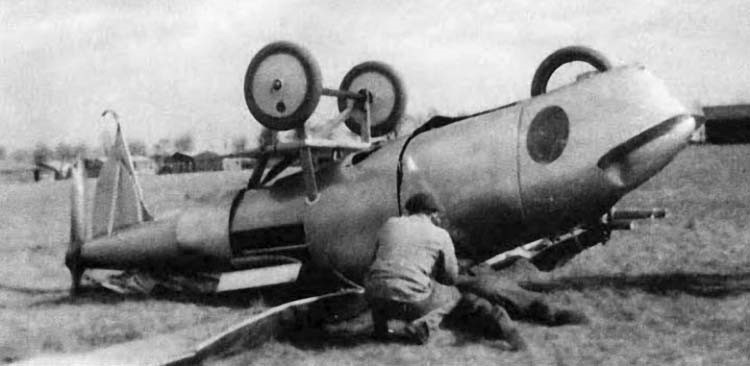
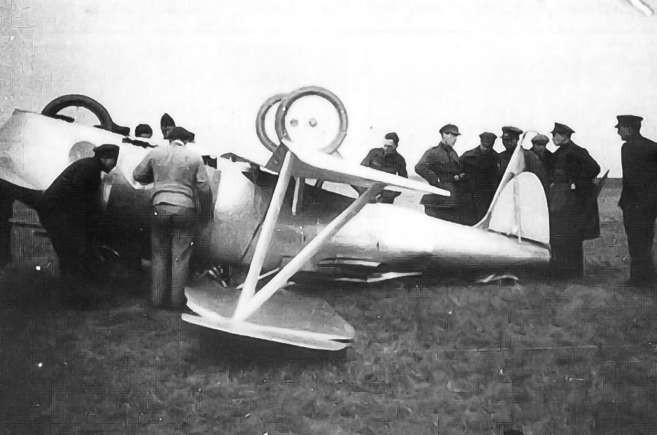
de Bruyere С1
Engine: 150 hp Hispano-Suiza 8a
Wing span: 8.20 m
Length: 7.50 m
Crew: 1
Armament: 1 x 37 mm Hotchkiss M1902
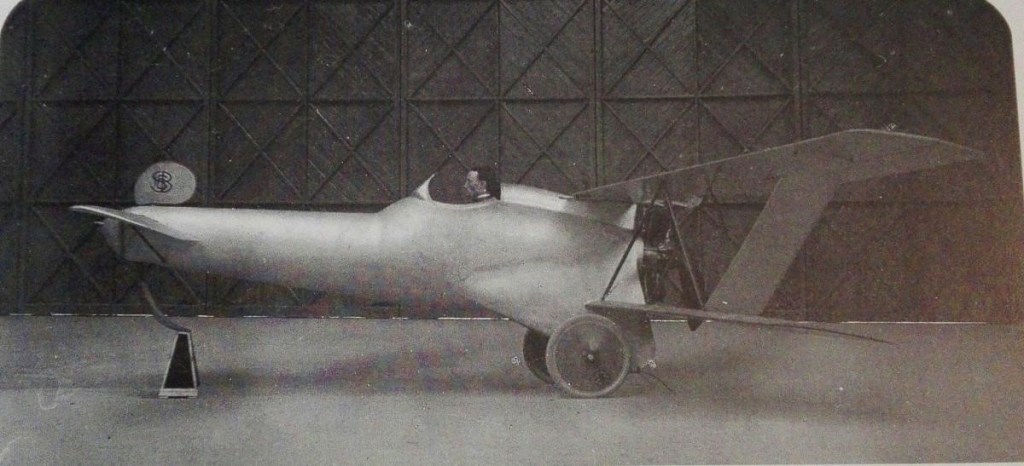
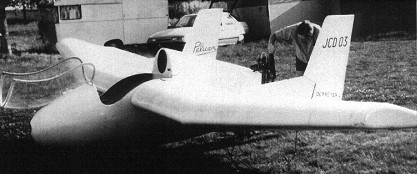
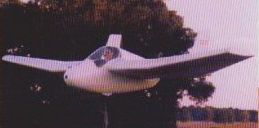
The “Pélican” flying wing was designed by Jean-Claude Debreyer based on the AV-36. Unlike that machine, however, it is not designed for soaring but only for inexpensive powered flight. The designer’s goal was to produce a machine that was easy to build, ultra-light and low in cost, which explains the choice of the flying wing configuration, the low aspect ratio of the wing and the tandem landing gear. The prototype was built of wood with a few laminated parts; the wing section was the same as that of the AV-36 (Fauvel F4 17%). The two-stroke engine, mounted at the rear of the short fuselage, between the two fins, drives a two-bladed propeller directly. The Air Est Services, based in eastern France, offers a kit version, built of composite materials, named JCD-03. It can be equipped with a 12 hp Solo engine or a 24 hp Koenig which gives a considerable improvement over the original performance figures.
The Pelican is transformed into the Eagle by substituting a 24 hp direct drive Konig for the Solo.
Wing span: 7.92 m
Length: 3.10 m
Wing area: 12.0 sq.m
Airfoil: Fauvel F4 17%
Empty weight: 85 kg
Max. weight: 175 kg
Engine: Solo 15 ch
Propeller diameter: 75 cm
Takeoff run: 150 / 200 m
Stall speed: 45 km/h
Cruise speed: 75 km/h
Endurance: 3 hours
Air Est JCD-03 Eagle
Empty weight: 90 kg
Wing span: 7.2 m
Wing area: 12 sq.m
Fuel capacity: 20 lt
Engine: Konig SC 430, 24 hp
MAUW: 200 kg
Seats: 1
Max speed: 130 kph
Cruise speed: 90 kph
Minimum speed: 40 kph
Climb rate: 3 m/s
Fuel consumption: 8 lt/hr
Kit price (1998): 45 000 F sm
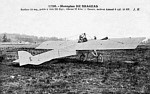
The 1911 De Brageas monoplane was designed and built by De Brageas in France.
Span: 36′
Length: 19’8″
Weight: 705 lb net
Speed: 50 mph
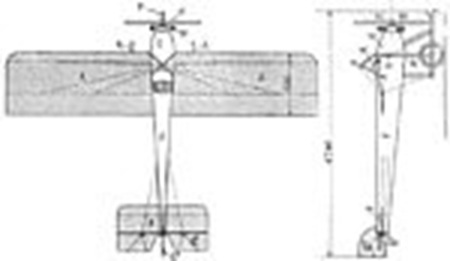
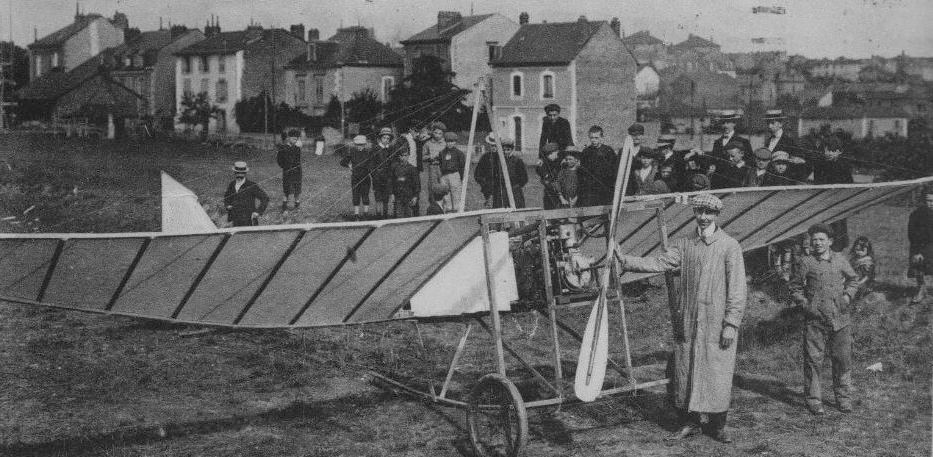
The Debort No.3 was a very simple tractor monoplane built in Limoges, France, in 1909/10 by Serge and Jack Debort.

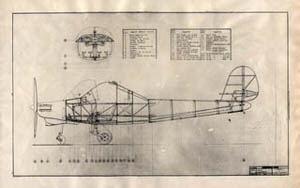
Having developed the all-metal single-seat Partenavia P.53 Aeroscooter earlier, Mario de Bernardi sought to improve the design as the two-seat de Bernardi M.d.B. 02 Aeroscooter. The aircraft was to be built by CAP in Bergamo, Italy.
The Aeroscooter is a low-wing, two-seat monoplane. The partial welded steel tube fuselage uses aluminum skins. The wing uses a wood spar. The tricycle landing gear uses trailing link suspension. The single-piece plexiglas canopy slides forward to open. All fuel is housed in the 20 l (5.28 US gal; 4.40 imp gal) header tank and 50 l (13.21 US gal; 11.00 imp gal) main tank behind the passenger’s seat.
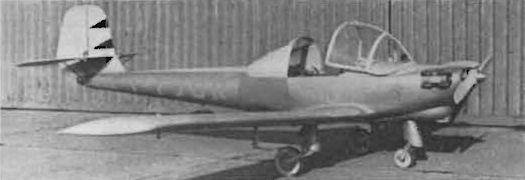
The prototype was built by De Bernardi with the assistance of two mechanics. In April 1959, De Bernardi died of a heart attack after flying a demonstration of the prototype at Rome Urbe Airport.
An example is on display at Museo Aeronautico Caproni di Taledo, Milano.
The daughter of De Bernardi was offering plans for a modernized version of the Aeroscooter using a Rotax 912UL engine to be flown under Italian microlight category.
M.d.B. 02 Aeroscooter
Engine: 1 × Agusta GA.70/0, 62 kW (83 hp)
Propeller: 2-bladed fixed-pitch
Wingspan: 9.5 m (31 ft 2 in)
Wing area: 8.300 m2 (89.34 sq ft)
Length: 5.5 m (18 ft 1 in)
Height: 1.70 m (5 ft 7 in)
Empty weight: 260 kg (573 lb)
Gross weight: 460 kg (1,014 lb)
Fuel capacity: 60 l (15.85 US gal; 13.20 imp gal)
Maximum speed: 210 km/h (130 mph, 110 kn)
Cruise speed: 190 km/h (120 mph, 100 kn)
Stall speed: 50 km/h (31 mph, 27 kn)
Range: 600 km (370 mi, 320 nmi)
Rate of climb: 6 m/s (1,200 ft/min) at sea level
Take-off run: 50 m (164 ft)
Landing run: 50 m (164 ft)
Crew: 2
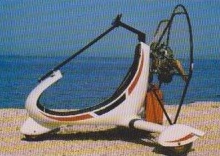
Calazzo Salvatore designed the Deadalo 2000 trike unit for paragliders and hang gliders. Engine options are Hirth, Zanzottera, and Vittorazi.
Empty weight: 40 kg
Fuel capacity: 20 lt
Engine: Hirth F-33, 28 hp
Seats: 1
Price (1998): 7 000 000 L
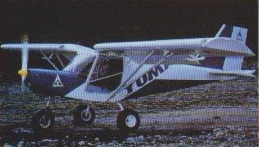
Manufactured in Italy, the Yuma is of all metal construction..
Engine: Rotax 912, 80 hp
Wing span: 8.2 m
Wing area: 12.5 sq.m
MAUW: 450 kg
Empty weight: 282 kg
Fuel capacity: 87 lt
Max speed: 175 kph
Cruise speed: 150 kph
Minimum speed: 40 kph
Climb rate: 4.5 m/s
Seats: 2
Fuel consumption: 16 lt/hr
Certification: Italy
Price (1998): 73,000,000 L
Kit price (1998): 40,000,000 L
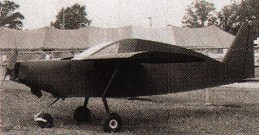
Circa 2008
Engine: Lycoming O-290, 108 hp
Cruise: 160 mph
Stall: 50 mph
Range: 500 sm
Rate of climb: 800 fpm
Takeoff dist: 500 ft
Landing dist: 550 ft
HP range: 85-160 hp
Fuel capacity: 26 USG
Empty weight: 600 lb
Gross weight: 1200 lb
Length: 18 ft
Wing span: 21 ft
Wing area: 60 sq.ft
Seats: 2
Cockpit width: 38 in
Landing gear: nose
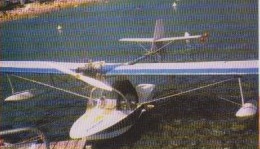
Appearing at the 1997 show at Blois the Termerair featres a fuselage in tube and fabric with laminated floats.
Engine: Rotax 582, 64 hp
Wing span: 10.50 m
Wing area: 16 sq.m
MAUW: 495 kg
Empty weight: 235 kg
Fuel capacity: 55 lt
Max speed: 140 kph
Cruise speed: 110 kph
Minimum speed: 60 kph
Climb rate: 3.5 m/s
Seats: 2
Fuel consumption: 12 lt/hr
Price (1998): 192,000 Fttc

