Williams WACO RTO

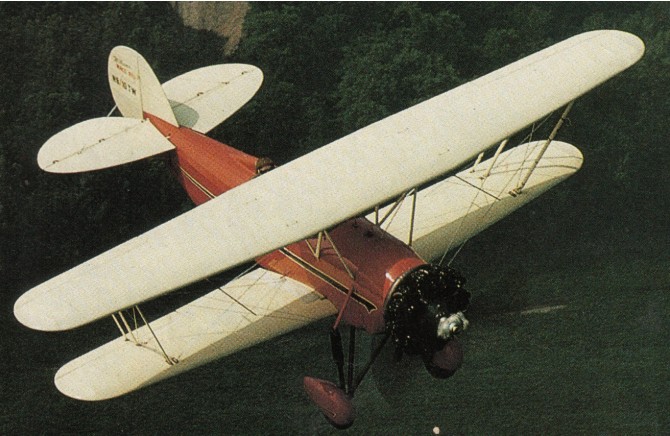
An 80% scaled replica version of the Waco ATO. Construction began in May 1983.
The four wing panels are identical but required 48 ribs built during 1983. Each panel contains 12 truss type spruce ribs, and the 6 foot centre section has nine constant chord ribs. The wings retain the original M-6 profile. The chord of the centre section ribs is 4 ft 1.5 in, and outboard ribs 2 ft 10.5 in. The spars are solid planks, the forward being 5 x 11/8 in and the rear spar 4 x 1 inch. The four ailerons each have six ribs and are equal span and chord. The wings are braced with dual straight 4130 steel outboard struts and N centre section struts, and streamlined stainless steel wires. The fuselage and tail components are welded 4130 with wood formers and stringers in the fuselage and wood fairings at the fin and stabiliser roots.
The tail spans 8 ft 10 in and rudder stands 3 ft 3 in. Rudder and aileron are cable controlled and the elevator through torque tubes. The main undercarriage is a welded outrigger type with Cleveland brakes, and a 5 ft 2 in tread. A Scott 3200 tailwheel holds an 8 inch tyre.
The first flight was in August 1987. Total cost: approx US$15,000.

Engine: Warner Super Scarab, 165-175 hp
Prop: Aeromatic 85 in
Seats: 2
Empty wt: 1085 lb
Loaded wt: 1630 lb
Wingspan: upper 24 ft lower 22 ft
Length: 18 ft
Height: 7 ft 2 in
Fuel cap: 31 USG
ROC 2500 fpm @ 70 mph
Cruise 65%: 105 mph
Stall: 55 mph

Williams Co, Beryl J

Venice & Pasadena CA.
USA

During 1911-1914, several single and two place open cockpit biplanes were built apparently following the Curtiss design as exhibition ships. Later models with fabric-covered fuselage and rounded wingtips made them quite modern for their day.

The 1911 original had a 60hp Hall-Scott motor and later versions 80hp Curtiss power.

Williams soloed his own creation at Hyde Park Aviation Field (Pasadena CA) on 26 August 1911 at age 19 as the world’s youngest licensed pilot, according to Aero Club of America officials.

Williams Aircraft Design W-17 Stinger

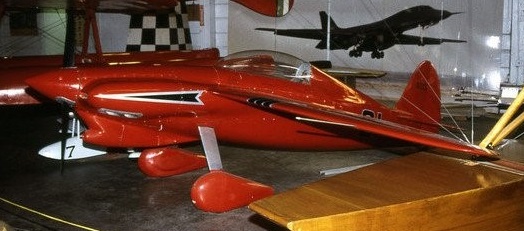
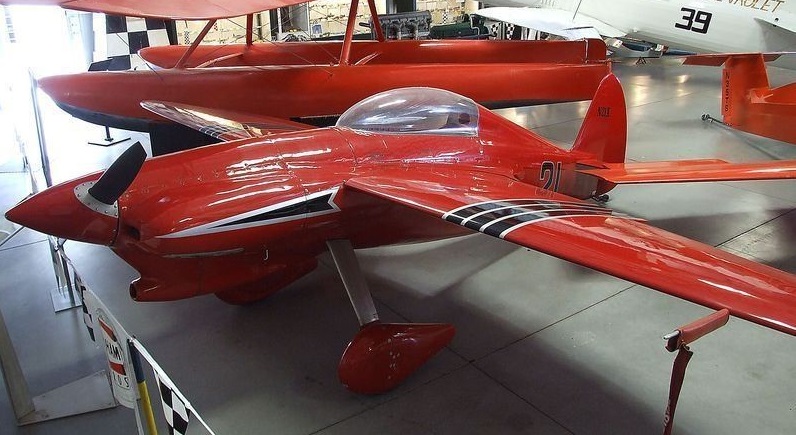
The Williams W-17 Stinger is an American homebuilt racing aircraft that was designed for Formula One Air Racing by Art Williams and produced by his company, Williams Aircraft Design of Northridge, California, introduced in 1971. The aircraft was at one time available in the form of plans for amateur construction, but only one was ever constructed.

The W-17 Stinger features a cantilever mid-wing, a single-seat enclosed cockpit under a bubble canopy, fixed conventional landing gear and a single engine in tractor configuration.

The aircraft fuselage is made from sheet aluminum in a monocoque structure. The wings are all-wood, with laminated spruce spars. Its 19.0 ft (5.8 m) span wing employs a NACA 64008 airfoil at the wing root, transitioning to a NACA 64010 at the wing tip. As the Formula One rules require, the engine is a 100 hp (75 kW) Continental O-200A powerplant.

The W-17 has an empty weight of 585 lb (265 kg) and a gross weight of 835 lb (379 kg), giving a useful load of 250 lb (110 kg). With full fuel of 8 U.S. gallons (30 L; 6.7 imp gal) the payload is 202 lb (92 kg).

Only one example of the W-17 Stinger was registered in the United States with the Federal Aviation Administration in 1971 (N21X). The sole example was raced at the Reno Air Races by pilot John P. Jones in 1973 and captured second place. It went on display at the Planes of Fame Air Museum.

W-17 Stinger
Engine: 1 × Continental O-200A, 100 hp (75 kW)
Length: 15 ft 10 in (4.83 m)
Wingspan: 19 ft 0 in (5.79 m)
Airfoil: Root: NACA 64008, wing tip: NACA 64010
Empty weight: 585 lb (265 kg)
Gross weight: 835 lb (379 kg)
Fuel capacity: 8 U.S. gallons (30 L; 6.7 imp gal)
Propellers: 2-bladed metal
Maximum speed: 260 mph (418 km/h; 226 kn)
Stall speed: 65 mph (56 kn; 105 km/h)
Crew: one

Willard-Curtiss

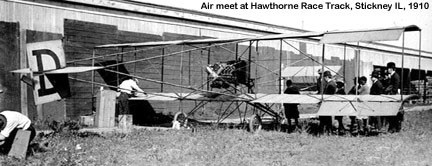
Charles F Willard, who had been leasing a Curtiss airplane for his exhibition flights, returned it, and reportedly designed a similar machine customized to his requirements, but still leased the motor from Curtiss (the one used on Curtiss’ Rheims Racer). This apparently was distinct from the 1910 Banshee Express, which he implied was his design, but was really another Curtiss product.

First flying on 12 August 1910, two were built, the second of which, christened simply The Express, had 50hp five-cylinder Gnôme rotary. Willard set a payload record with this craft by carrying two passengers with him on 14 August 1910.

Engine: Curtiss V-8, 63hp
Seats: 2

Wilksch WAM 120 / WAM 160

The Wilksch WAM series is a family of aero-engines for light and general aviation aircraft. WAM series engines are produced by Wilksch Airmotive in Gloucestershire, England. The engine outputs range between 100 hp (75 kW) and 190 hp (142 kW), and are suitable for both tractor and pusher configurations. Initially intended for homebuilt aircraft, the WAM engines may become certified for use on factory-built aircraft.

Wilksch engines are compression ignition engines which burn Diesel fuel or jet fuel. Aero-diesels are more efficient than the avgas engines more commonly found in general aviation aircraft. Kerosene jet fuel is ideal for jet turbines, but it lacks the lubricity of Diesel fuel. Accordingly, Diesel aero-engines that use jet fuel must have sufficient lubrication to compensate.

The WAM unit is a direct-drive two-stroke inverted inline triple with wet-sump, liquid cooling, supercharger, turbocharger and intercooler. Compression boost at startup comes via a supercharger, but once the engine is running, a turbocharger provides additional boost. Being inverted, the engine has its crankshaft at the top directly driving the propeller, and a camshaft at the bottom, immersed in sump oil. Charged air for combustion is introduced under pressure through a gallery of small ports, and exhaust gases are later expelled through a poppet valve in the cylinder head.

The intake ports are small enough to ensure that piston rings do not need to be pegged. Instead of using a gudgeon pin, each piston is connected to its connecting rod via a ball and socket joint, to enable the piston to rotate. This feature may be abandoned in favour of conventional gudgeon pins.

Fuel is filtered, and then supplied by a high pressure feed, surplus fuel being returned to the tank. Fuel injection is by IDI (indirect injection), whereby fuel is injected into a prechamber. A rather old-fashioned system, IDI was adopted for its simplicity and robustness.

Initial development was assisted with a UK government (DTI) grant. The prototype was a two-cylinder model capable of 80 hp (60 kW). The three-cylinder WAM120 produced 100–120 hp (75–89 kW), and the factory intended to produce a follow-up four-cylinder 160 hp (119 kW) motor to compete with engines such as the Lycoming O-360. However, funding proved problematic, and it became expedient to extend the product range by developing a larger capacity version of the three-cylinder motor. Wilksch are said to be still working on a four-cylinder motor.

The testbed aircraft for air trials were a Piper Cub a Shaw Europa and a Thorp T211. To date, some 20 aircraft have flown with WAM power, and one engine has been installed (in pusher mode) in a Staverton-based Rutan Long-EZ. In July 2009, Liberty Aerospace installed a WAM in the USA-built Liberty XL2 aircraft, and the company has agreed to assist Wilksch Airmotive in obtaining FAA certification for the WAM series. This cooperative effort bodes well for the future of Wilksch Automotive, and is expected to lead to the WAM engine becoming a specified option for the Liberty XL2.

Variants:
WAM120 three-cylinder engine
WAM 160 four-cylinder engine (proposed)

Applications:
Europa XS
Liberty XL2
Thorp T211
Rutan Long-EZ
Murphy Rebel
Jodel
Vans RV-9
Cosy

Specifications:
WAM120
Type: two-stroke inverted inline triple
Valvetrain: ohc (exhaust) & peripheral ports (inlet)
Supercharger: yes
Turbocharger: yes
Fuel system: IDI Fuel Injection
Fuel type: AVTUR or DERV
Oil system: wet sump
Cooling system: Liquid-cooled
Power output: 120 hp (89 kW) at 2,700 RPM