The 1909 Elbridge Engine Co model B is known to be a 4-cyl experimental engine sold to a Dr Green.
Piston
Elbridge Aero Special
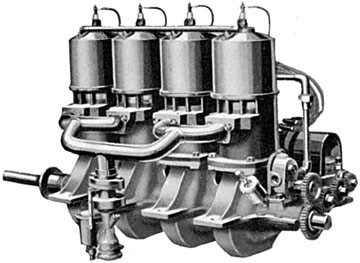
The Elbridge Engine Co Aero Special was produced in two versions.
The 1910 Aero Special was a six-cylinder inline water-cooled aero engine producing 60hp.
The 1911 Aero Special was a four-cylinder, inline, water-cooled valveless two-cycle, producing 40hp.
Elbridge A
The 1908 Elbridge Engine Co model A was a 2-cyliner, inline, water-cooled aero engine.
It produced 6-10hp from 77.32ci with a dry weight of 88 lb.
Elam Eurocub Mk.IV
Elam Eurocub has larger tail fin and elevator than the older Cuby and that gives a lower stall speed.
Stall: 32 kt / 37 mph / 59 kmh
Cruise: 85 kt / 98 mph / 157 kmh
VNE: 110 kt / 127 mph / 204 kmh
Empty Weight: 269 kg / 593 lbs
MTOW Weight: 450 kg / 992 lbs
Climb Ratio: 1200 ft/min / 6 m/s
Glide Ratio: 1:11
Take-off distance (50ft obstacle): 330 ft / 100 m
Landing distance (50ft obstacle): 330 ft / 100 m
ELA 08
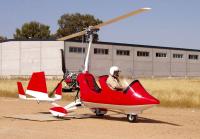
The main frame is made with stainless steel tubes and sheets cut with CNC laser machinery and welded by aeronautic welding in a TIG atmosphere. The main frame is designed and tested to support 5 Gs loads with maximum weight at takeoff. The rotor control system is duplicated to be able to pilot from both seats. Like the frame, it is made of stainless steel.
All of the gyro points are mounted on stainless steel ball bearings with ZZ protection. The two joysticks consist of a “top gun” type stick with rotor trim controls and radio button (ptt) controls.
The rotor head consists of parts tooled with a CNC machine. The parts are made of stainless steel, high strength steel and 7075 T6 hard aluminium. The bolts used are ISO certified.
The autogyro’s cabin is manufactured in carbon fibre and epoxy resin composite materials.
The 08 model’s cabin is equipped with two windscreens. The tail unit is manufactured in carbon fibre and epoxy resin. The tail unit’s frame design has been tested to the limit by Spain’s Civil Aviation Department and has shown its strength at speeds of up to 210 Km/hr.
The ELA rotor is manufactured in a combination of aluminium and fibreglass with epoxy resin. The blade can support traction loads of up to 26,000 Kg, whereas the top flight load does not exceed 6,500 Kg.
Standard Equipment for ELA 08 includes altímeter, airspeed, vertical speed, compass, engine and rotor rpm, cht, oil temperature, oil pressure, fuel pressure, trim position indicator, hour counter, “top gun” stick in front and back positions, mechanical prerotator, pneumatic rotor brake with parking system, pneumatic trim, back compartment glove box, wheel spats, landing light, 72 litre fuel tank, carbon fibre propeller, aluminium and carbon fibre rotor blades, carbon fibre cockpit, wheel spats and tail plane, front wheel cover, and stone guard.
Optional extras include egt, strobe light, manifold pressure, propeller spinner painted, rear instrumental panel with airspeed indicator, engine rpm, rotor rpm, altimeter, and fuel pressure.
R-100
Engine; ROTAX 912 UL
Empty weight; 237 kg
Maximum Take-off Weight; 550 kg
Total Payload; 306 kg
Range; 500 km
Min Speed at Level Flight; 30 km/h
Cruise Speed; 140 km/h
Take Off Distance – 1 person; 30 m
Take Off Distance – 2 persons; 80 m
Rate of Climb – 1 person; 7 m/s
Rate of Climb – 2 persons; 5 m/s
R-115
Engine; ROTAX 914 UL
Empty weight; 244 kg
Maximum Take-off Weight; 550 kg
Total Payload; 306 kg
Range; 500 km
Min Speed at Level Flight; 30 km/h
Cruise Speed; 150 km/h
Take Off Distance – 1 person; 20 m
Take Off Distance – 2 persons; 50 m
Rate of Climb – 1 person; >10 m/s
Rate of Climb – 2 persons; 8 m/s
ELA ELA-07
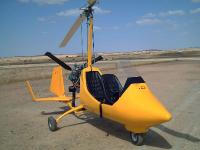
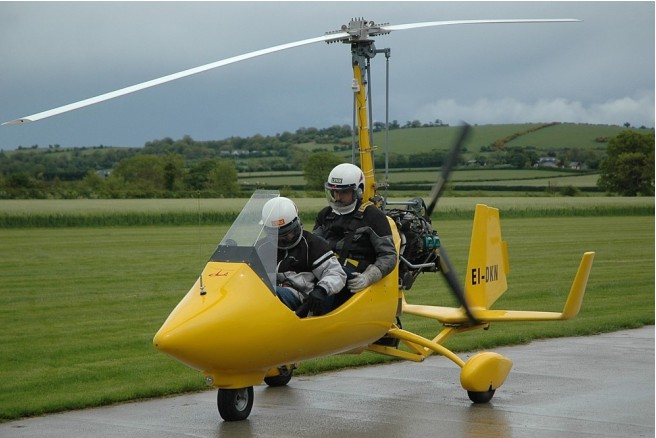
The main frame is made with stainless steel tubes and sheets cut with CNC laser machinery and welded by aeronautic welding in a TIG atmosphere. The main frame is designed and tested to support 5 Gs loads with maximum weight at takeoff. The rotor control system is dual to be able to pilot from both seats. Like the frame, it is made of stainless steel.
All of the gyro points are mounted on stainless steel ball bearings with ZZ protection. The two joysticks consist of a “top gun” type stick with rotor trim controls and radio button (ptt) controls.
The rotor head consists of parts tooled with a CNC machine. The parts are made of stainless steel, high strength steel and 7075 T6 hard aluminium. The bolts used are ISO certified, which guarantees their reliability and standardization. The rotor head houses the advanced pre-rotator and trim systems that are characteristic features of our autogyro.
The autogyro’s cabin is manufactured in carbon fibre and epoxy resin using state-of-the-art techniques for composite materials. Our plant has the right facilities for using advanced techniques, including air-conditioned cabins, curing furnaces and humidity control systems.
The 07 model’s cabin is equipped with a windscreen to protect the front seat.
The tail unit is manufactured in carbon fibre and epoxy resin. The tail unit’s frame design has been tested to the limit by Spain’s Civil Aviation Department and has shown its strength at speeds of up to 210 Km/hr.
The ELA rotor is manufactured in a combination of aluminium and fibreglass with epoxy resin. The rotor blades are manufactured yjr ELA plant and which has been certified by the Spanish Civil Aviation Department. The certification tests have proved that the blade can support traction loads of up to 26,000 Kg, whereas the top flight load does not exceed 6,500 Kg.
Standard equipment for the ELA 07 includes altímeter, airspeed, vertical speed, compass, engine and rotor rpm, cht, oil temperature, oil pressure, fuel pressure, trim position indicator, fuel level, hour counter, mechanical prerotator, pneumatic rotor brake with parking system, pneumatic trim, landing light, 72 liters fuel tank, carbon fibre propeller, carbon fibre cockpit and tail planes, aluminium and carbon fibre rotor blades, front wheel cover
stone guard . Optional extras include EGT, wheel spats, strobe light, manifold pressure, and dual controls.
Engine; ROTAX 912 ULS
Empty weight; 237 kg
Max Take-off Weight; 550 kg
Total Payload; 313 kg
Range; 500 km
Min Speed at Level Flight; 30 km/h
Cruise Speed; 140 km/h
Rate of Climb; 5-7 m/s
Take Off Distance; 30-80 m
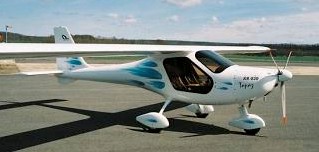
Ekolot KR 030 Topaz
Ekolot KR 010 Elf
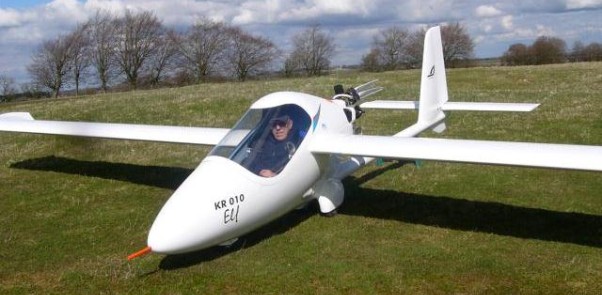
Jerzy Krawczyk, in addition to Ekolot’s Junior and Topaz, has several light aircraft, crop sprayer, and sailplane designs to his credit. In creating the self launching Elf sailplane, he employed composite sandwich and carbon structures to achieve the exceptional strength and durability required to pass UK BCAR Section ‘S’ airworthiness certification.
The Elf prototype used the JPX 330 engine which, unfortunately, was withdrawn from production in 2006 after over 20 years in the market. Fortunately, Compact Radial Engines in Canada has produced a very similar unit. This is 20% more powerful than the JPX and also employs a clutch which eliminates folding prop ‘chatter’ on start-up and allows the prop to fold whilst the engine is on idle. This engine has displayed instant re-start capability.
The Elf employs full span flapperons, and airbrakes, and has excellent rudder/stick co-ordination. The NN17-18 aerofoil possesses mild stall characteristics and overall, the handling conveys a strong sense of stability and security to the pilot.
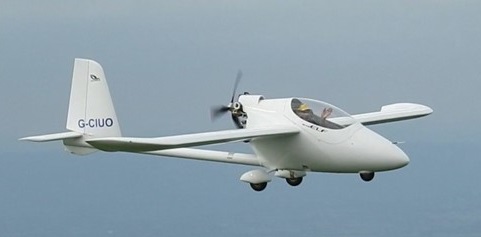
Production aircraft will have the more powerful Compact Radial engine and a 126cms prop with a projected climb rate of 500 ft/min.
Engine off, the Elf with it’s 120 ft/min sink rate is capable of slowing down to exploit the slightest lift and core the smallest thermal. This is where the fun and skill challenge begins and where, if the pilot falls out of lift into sink, he can be confident of a quick engine restart and climb back to the area of lift.
Prototype
Engine: JPX 330, 24 hp
Prop dia: 116cms , folding
Weight: 145 kg (with BRS)
Gross Weight: 260 kg
Area: 10.8 sq/m
Span: 11.2 m
Length: 5.7m
Aerofoil: NN18-17
Fuel Capacity: 15 litres (3 hours + reserve)
Proof Load: +6 / -3
Max Pilot Height: 1.9m (6’3”)
Max Pilot Weight: 100kg (220lbs)
Cruise: 50 mph at 5,100rpm
Max Climb: 400ft/min at 30mph
Stall: 27mph
Best L/D: 26.4:1, 150ft/min at 45mph
Min Sink: 120ft/min at 39 mph
Airbrake: 300ft/min at 45mph (13:1)
Fuel burn: 4.5 litres/hour
Ekolot KJ 05L Junior
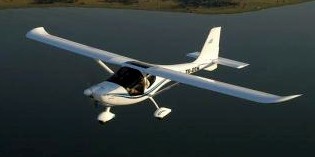
Stall: 35 kt / 40 mph / 65 kmh
Cruise: 86 kt / 99 mph / 160 kmh
VNE: 97 kt / 112 mph / 180 kmh
Empty Weight: 280 kg / 617 lbs
MTOW Weight: 480 kg / 1058 lbs
Climb Ratio: 1200 ft/min / 6 m/s
Take-off distance (50ft obstacle): 330 ft / 100 m
Landing distance (50ft obstacle): 490 ft / 150 m
2009 Price: 35000 EURO
Eklund TE-1
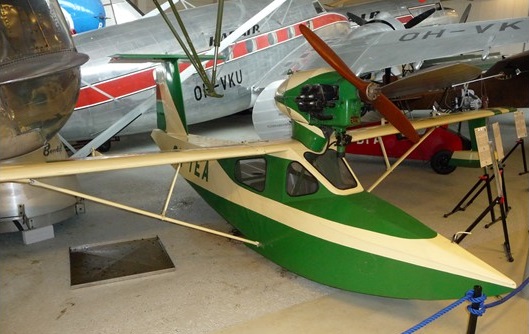
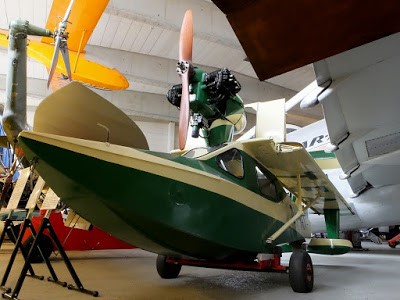
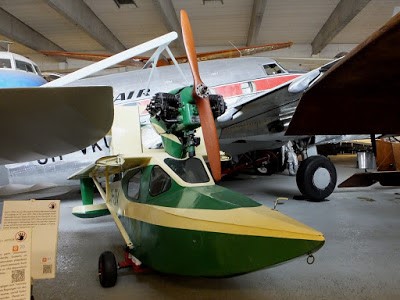
Originally designed by engineer Torolf Eklund as an amphibian with a 28 HP engine. The plane made its first flight on 23 February 1949. Underpowered, a 40 HP engine was installed and the landing gear removed, resulting in the world’s smallest flying boat.
The plane was in the aircraft register in 1954 – 1969 as OH-TEA Serial number: 1. Deposited at the Finnish Aviation Museum since 1981.