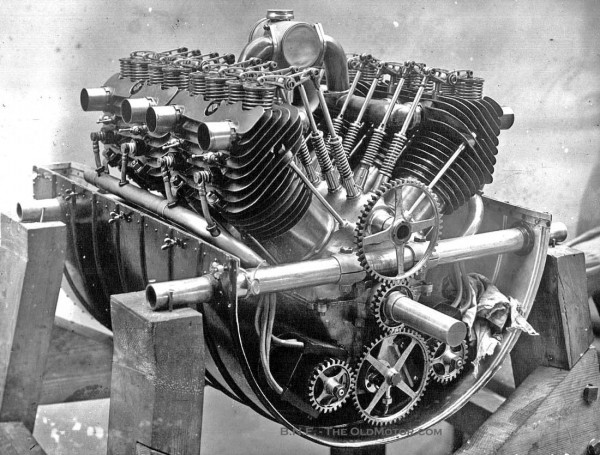
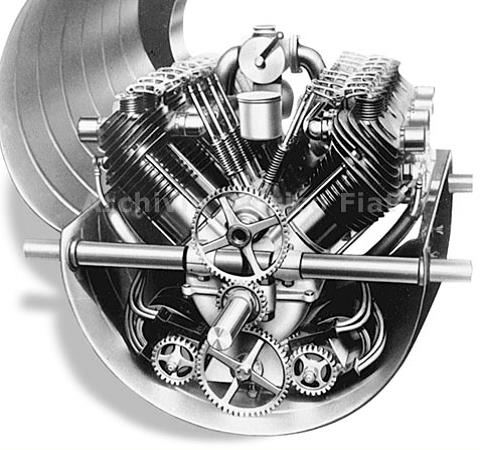
The 1908 V8 3.2 liter Fiat SA 8/75 was the first aero engine produced by Fiat Avio. The 50 hp OHV V-8 air-cooled aircraft engine was based on a race car engine, and first built in 1908; it was used experimentally, and noted for its excellent power to weight ratio. This engine was built for aircraft use only.
One carburettor feeds all eight cylinders. The ignition for each row of four cylinders is provided by a separate magneto.
The engine was soon followed by the widely used Fiat A.10.
An air-cooled 90 degree V Power: 50 hp at 2000 rpm. Bore: 2.95 in Stroke: 3.5 in / 90 mm
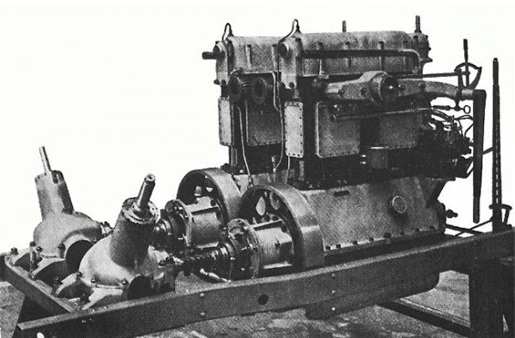
Two of the Fiat S.76 engines mounted side-by-side and set up to drive right-angle gearboxes. They powered a Forlanini F.5 dirigible, used in the war between Italy and Turkey during 1911-1912.
The Fiat A.80 was an 18-cylinder, twin-row, air-cooled, radial aircraft engine produced during World War II. Rated at 1,000 hp (745 kW), it was a more powerful development of the Fiat A.74.
A.80 Type: 18-cylinder air-cooled radial Bore: 140 mm (5.51 in) Stroke: 165 mm (6.50 in) Displacement: 45.72 L (2789.9 cu in) Length: 1,155 mm (45.47 in) Width: 653 mm (25.71 in) Height: 1,335 mm (52.56 in) Dry weight: 725 kg (1598.4 lb) Valvetrain: One intake and one sodium-cooled exhaust valve per cylinder Supercharger: Single Speed, Single Stage. 4,100 m rated altitude Fuel system: 1 Fiat carburettor Fuel type: 87 octane Cooling system: air-cooled Power output: 1,000 hp at 2,100 rpm at 4,100 m, 1,100 hp at 2,100rpm at Sea Level Compression ratio: 6.7:1 Power-to-weight ratio: 0.6 hp/lb at cruise speed
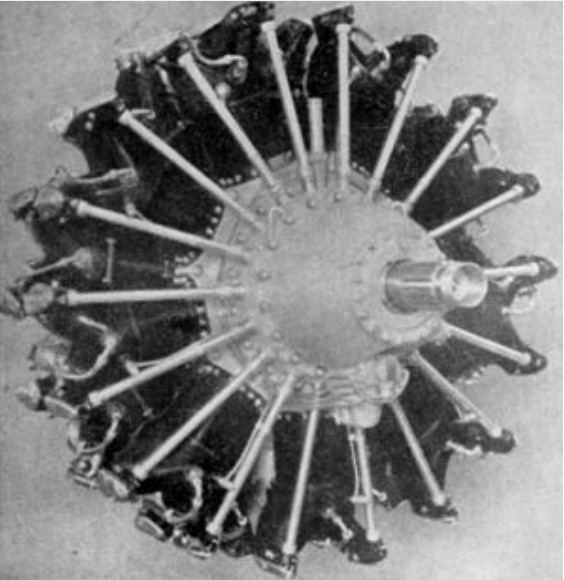
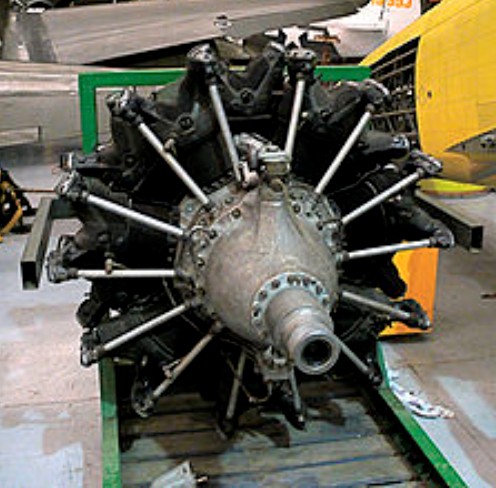
The Fiat A.74 was a two-row, fourteen-cylinder, air-cooled radial engine produced in Italy in the 1930s as a powerplant for aircraft. It marked a transition for Fiat from liquid-cooled inline engines, to large air-cooled radial engines. Fiat had made a number of smaller radial air engines over the years but the A.74 marked a major increase in power and size. The A.74 family was widely produced and spawned a number of related engines such as the A.76, A.80 and A.82. Each successive generation being larger and more powerful than the previous. The entire series grew from 14 cylinders to 18 cylinders with a power output of 870 hp to 1,400 hp.
Applications: CANSA FC.20 Fiat CR.42 Fiat G.50 Fiat RS.14 Macchi C.200
Variants: R.C.38 R.C.42
Specifications: A.74 Type: 14-cylinder air-cooled radial Bore: 140 mm (5.512 in) Stroke: 145 mm (5.709 in) Displacement: 31.25 L (1,906.9 cu in) Length: 1,044mm (41.13 in) Width: 653mm (25.71 in) Height: 1,195 mm (47.05 in) Dry weight: 565 kg (1,246 lb) Valvetrain: One intake and one sodium-cooled exhaust valve per cylinder Fuel system: 1 Stromberg carburettor Fuel type: 87 octane Cooling system: air-cooled Power output: 870 cv (858 hp, 640 kW) at 2,520 rpm at sea level (take-off power); 960 cv (947 hp, 706 kW) at 2520 rpm at 3,000 m (Emergency power) Compression ratio: 6.7:1 Power-to-weight ratio: 0.67 hp/lb
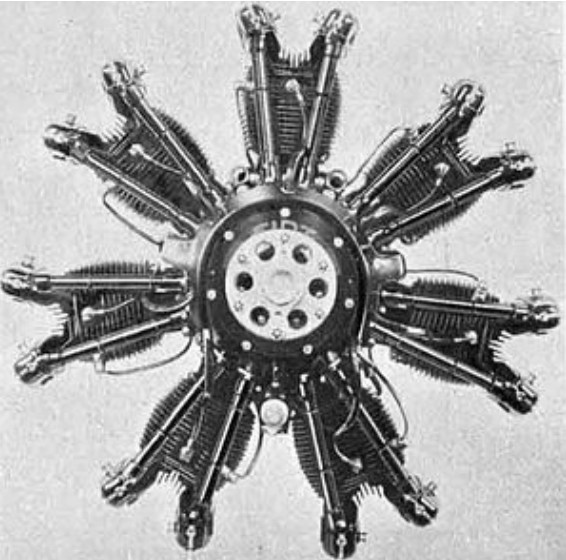
The Fiat A.54 was a seven-cylinder, air-cooled radial engine developed in Italy in the 1930s as a powerplant for aircraft. Amongst others, it powered the Ambrosini SAI.1 and SAI.2 racing aircraft.
Applications: Ambrosini SAI.1 Ambrosini SAI.2 Caproni Ca.100 Fiat G2.4 Jona J-6
Specifications: Type: 7-cylinder air-cooled radial Bore: 105 mm (4.13 in) Stroke: 120 mm (4.72 in) Displacement: 7.27 L (443.9 cu in) Length: 1,770 mm (69.69 in) Width: 734 mm (28.93 in) Height: 1,065 mm (41.93 in) Dry weight: 150 kg (330.7 lb) Valvetrain: One intake and one sodium-cooled exhaust valve per cylinder Fuel system: 1 Stromberg carburettor Fuel type: 74 octane Cooling system: Air-cooled Power output: 140 hp (104 kW) at 2,100 rpm Compression ratio: 5.5:1 Power-to-weight ratio: 0.42 hp/lb (0.7 kW/kg)
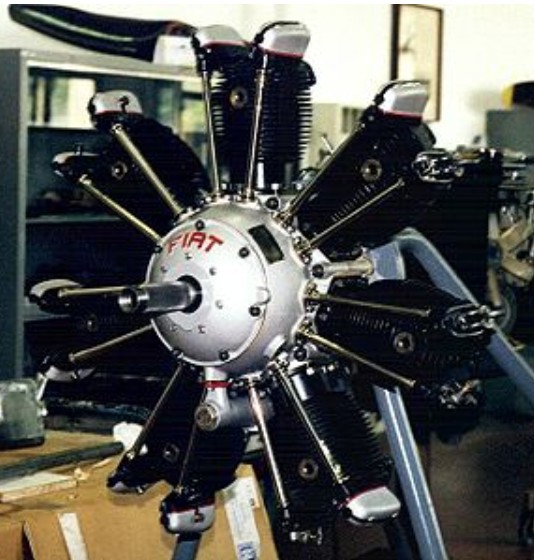
The Fiat A.50 was a seven-cylinder, air-cooled radial engine for aircraft use built in Italy in the 1930s. It was first run in 1928, it had a bore and stoke of 100 mm × 120 mm (3.94 in × 4.72 in)(6.6 L / 402.6 cuin) and was rated at 78 kW (105 hp) at 1,800 rpm.
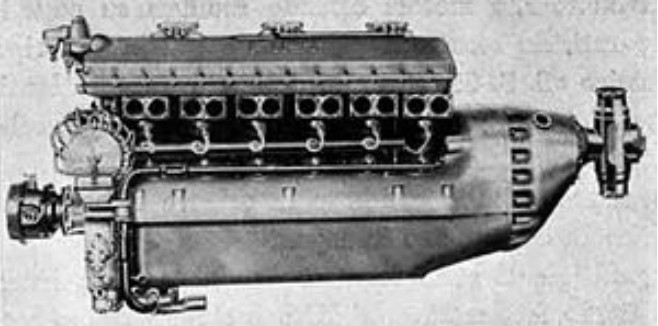
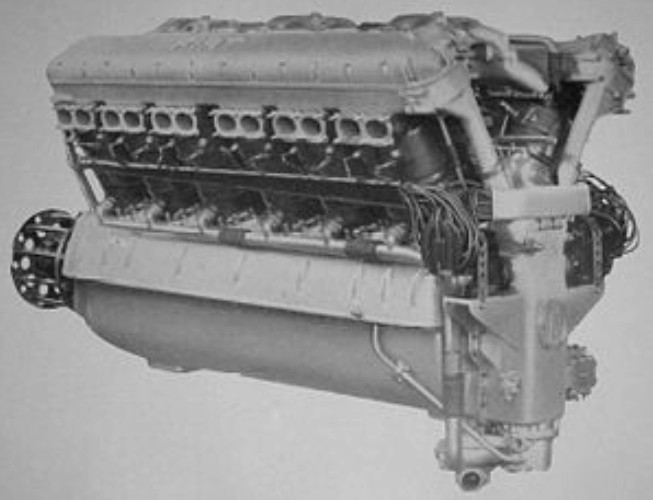
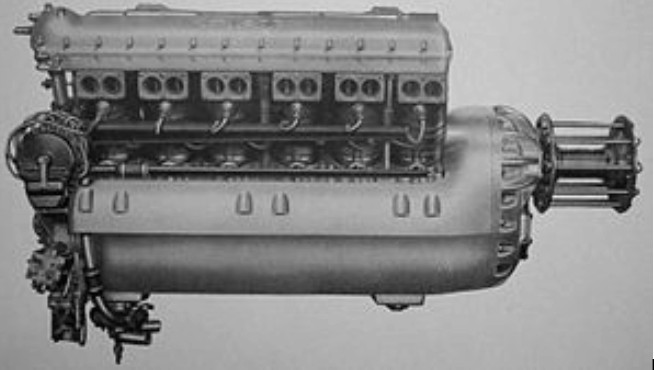
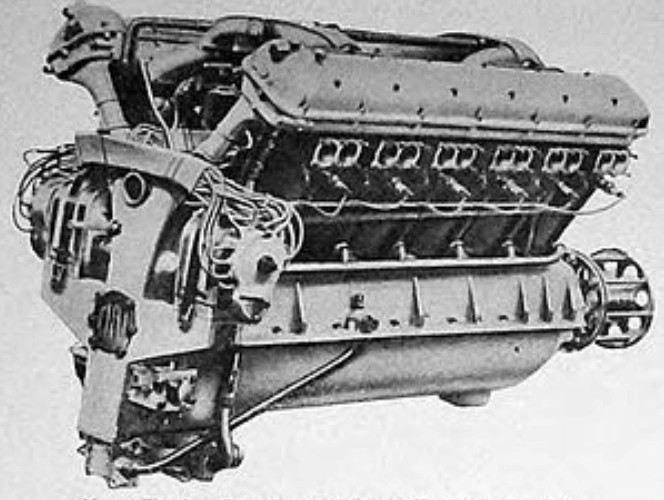
The Fiat A.30 R.A. was an Italian water-cooled V-12 aircraft engine from the 1920s, built in large numbers and serving with several air forces up to the beginning of World War II. It produced 447 kW (600 hp).
During the second half of the 1920s Fiat introduced several water-cooled aircraft engines, including the A.20, A.22, A24, A.25 and A.30. They were all upright V-12s with 60 degrees between the cylinder banks; capacities ranged between 18.7 L and 54.5 L (1,141-3,326 cu in) and power outputs between 320 kW and 745 kW (430-1,000 hp). Producing 447 kW (600 hp) from 24.0 L (1,464 cu in), the A.30RA was towards the low power end of these ranges. The R, (Riduttori – reduced), indicated that the output was geared down.
Many of the production A.30 R.A.s were fitted in Fiat’s own fighters and fighter trainers, particularly in the Fiat C.R.32. Both this aircraft type and the Meridionali Ro.37 remained in service with the Regia Aeronautica when Italy joined in World War II in 1940; by then the engine was seriously dated. Before the war similarly powered CR.30s had been sold to the air forces of Austria, China and Paraguay, the Austrian aircraft ending their service with the Luftwaffe after the Anschluss. Ultimately 2,679 A.30 R.A. and A.30 R.A.bis engines were built.
Variants: A.30 R.A. A.30 R.A.bis
Applications: CMASA MF.10 Fiat CR.30 Fiat CR.32 Fiat CANSA FC.12 IMAM Ro.37
Specifications:
A.30RA Type: water cooled 60 degree upright V-12 Bore: 135 mm (5.31 in) Stroke: 140 mm 5.51 in) Displacement: 24.0 L ( 1,464 cu in) Length: 1.751 m (68.94 in) Width: 653 mm (25.71 in) Height: 935 mm (36.82 in) Dry weight: Dry 480 kg (1,060 lb) Valvetrain: Two overhead camshafts, geared together, driving two inlet and two exhaust valves per cylinder. Housed under aluminium casings. Fuel system: Twin water heated Fiat carburetters mounted between cylinder banks, one serving each bank. Two spark plugs per cylinder, placed horizontally and opposite each other, supplied by two Marelli MF.12 magnetos. Oil system: One delivery pump and two scavenge pumps, in a single unit. Cooling system: water, with centrifugal pump. Reduction gear: 1.611:1 spur gear, lubricated via oil spout. Cylinders: Forged steel barrels, with closed, flat ends. Pistons: Aluminium alloy, two compression rings and one scraper ring above a fully floating gudgeon pin, with a second scraper ring below it. Crankshaft: Each six throw, seven bearings. Crankcase: Each an aluminium casting, split on crankshaft centre line. Bolted-on duralumin end caps. Power output: Normal, 447 kW (600 hp) at 2,000 rpm at sea level. Take-off, 596 kW (800 hp) at 2,900 rpm. Compression ratio: 8:1 Fuel consumption: 0.322 kg/kW/h (0.529 lb/hp/h)
During the 1920s Fiat introduced several water-cooled aircraft engines, including the A.20, A.22, A24, A.25 and A.30. They were all upright V-12s with 60 degrees between the cylinder banks; capacities ranged between 18.7 L and 54.5 L (1,141-3,324 cu in) and power outputs between 320 kW and 745 kW (430-1,000 hp).
The Fiat A.22 produced 708 kW (950 hp) and was used by the Regia Aeronautica for fifteen years to power their Fiat BR.2 and BR.3 bombers.
Producing 710 kW (950 hp) from 54.5 L (3,324 cu in), the A.25 was the largest and most powerful in the range. When Fiat were advised by the government to simplify their water-cooled product line, they focussed on the A.20, A.22 and A.30 models, so the A.25 was not further developed. They concentrated their higher power development effort on radial engines instead.
The only series produced types powered by the A.25 were the Fiat BR.2 and BR.3 single engine bombers. These began operating with the Regia Aeronautica in 1925. Some, used as trainers, were still in service in 1939.
Applications: Fiat BR.2 Fiat BR.3 Fiat BR.4
Specifications: Type: water cooled 60° upright V-12 Bore: 170 mm (5.31 in) Stroke: 200 mm (6.29 in) Displacement: 54.48 L (3,324 cu in) Dry weight: 841 kg (1,854 lb) Valvetrain: Two overhead camshafts, driven via enclosed, inclined shafts. The cams operate two inlet and two exhaust valves per cylinder. Housed under aluminium casings. Fuel system: Three water heated Fiat carburettors mounted between cylinder banks, one serving each bank. Four spark plugs per cylinder, supplied by two Marelli MF.12 magnetos. Oil system: One delivery pump and two scavenge pumps, in a single unit. Cooling system: water, with centrifugal pump. Cylinders: Forged steel barrels, with closed, flat ends. Pistons: Aluminium alloy, two compression rings and one scraper ring above a fully floating gudgeon pin, with a second scraper ring below it. Crankshaft: Each six throw, seven bearings. Crankcase: Each an aluminium casting, split on crankshaft centre line. Bolted-on duralumin end caps. Power output: normal, 708 kW (950 hp) at 1,700 rpm at sea level. Maximum, 745 kW (1,000 hp) at 1,900 rpm. Compression ratio: 5.25:1
The Fiat A.24 was an Italian water-cooled aircraft engine from the 1920s, built in modest numbers. It produced 520 kW (700 hp).
During the second half of the 1920s Fiat introduced several water-cooled aircraft engines, including the A.20, A.22, A24, A.25 and A.30. They were all upright V-12s with 60 degrees between the cylinder banks; capacities ranged between 18.7 L and 54.5 L (1,141-3,326 cu in) and power outputs between 320 kW and 745 kW (430-1,000 hp).
Producing 520 kW (700 hp) from 32.3 L (1,971 cu in), the A.24 was towards the centre of this range. When Fiat were advised by the government to simplify their water-cooled product line, they decided to focus on the A.20, A.22 and A.30 models so that the A.24 was not manufactured in large numbers.
Initial A.24version was ungeared, the A.24R had a geared output.
Applications: CMASA MF.5 Fiat BRG Savoia-Marchetti S.55A Savoia-Marchetti S.66
Specifications:
A.24R Type: water cooled 60 degree upright V-12 Bore: 140 mm (5.51 in) Stroke: 175 mm (6.89 in) Displacement: 32.3 L (1,971 cu in) Length: 1.770 m (69.69 in) Width: 735 mm (28.9 in) Height: 1.065 m (41.93 in) Dry weight: Dry 550 kg (1,213 lb) Valvetrain: Two overhead camshafts, geared together, driving two inlet and two exhaust valves per cylinder. Housed under aluminium casings. Fuel system: Twin water heated Fiat carburetters mounted between cylinder banks, one serving each bank. Two spark plugs per cylinder, placed horizontally and opposite each other, supplied by two Marelli MF.12 magnetos. Oil system: One delivery pump and two scavenge pumps, in a single unit. Cooling system: water, with centrifugal pump. Reduction gear: 1.545:1 spur gear, lubricated via oil spout. Cylinders: Forged steel barrels, with closed, flat ends. Pistons: Aluminium alloy, two compression rings and two scraper rings above fully floating gudgeon pin. Crankshaft: Each six throw, seven bearings. Crankcase: Each an aluminium casting, split below crankshaft centre line. Bolted-on duralumin end caps. Power output: 520 kW (700 hp) at 2,000 rpm, continuous. Compression ratio: 5.7:1 Fuel consumption: 0.302 kg/kW/h (0.496 lb/hp/h)
The Fiat A.22 was an Italian water-cooled V-12 aircraft engine from the 1920s. It produced 425 kW (570 hp) and powered several absolute world distance records as well as commercial passenger flights.
During the second half of the 1920s Fiat introduced several water-cooled aircraft engines, including the A.20, A.22, A24, A.25 and A.30. They were all upright V-12s with 60 degrees between the cylinder banks; capacities ranged between 18.7 L and 54.5 L (1,141-3,326 cu in) and power outputs between 320 kW and 745 kW (430-1,000 hp).
Producing 425 kW (570 hp) from 27.5 L (1,678 cu in), the A.22 was towards the middle of these ranges. When Fiat were advised by the government to simplify their water-cooled product line, they focussed on the A.20, A.22 and A.30 models. The A.22 was first run in 1926 and a “few hundred” were built.
The A.22 was best known for its contribution to some world long distance record flightsmade by the single engine landplane Savoia-Marchetti S.64, which used the specially adapted A.22 T version. Between 31 May and 2 June 1928 this aircraft flew non-stop for 7,665 km (4,763 mi) to capture the world closed circuit distance record. The flight lasted 58 hr 34 min; the two crew, Capt. Arturo Ferrarin and Major Del Prete took turns as pilot. A month later, the same crew set a new world straight line distance record of 7,187 km (4,467 mi), flying from Italy to Brazil in 47 hr 55 min. The closed circuit record was later taken by the French but a slightly revised S.64bis recovered it for Italy with a distance of 8,187 km (5,088 mi) flown in 67 hr 13 min on 31 May-2 June 1930.
The A.22 R powered more conventional, airline, flights in a Savoia-Marchetti S.66 three engine flying boat operated by Ala Littoria on the Rome-Cagliari-Tripoli and Rome-Athens-Alexandria routes.
Variants: A.22 Ungeared.
A.22 R Geared.
A.22 T Special version for Savoia-Marchetti S.64.
Specifications:
A.22 R Type: water cooled 60° upright V-12 Bore: 135 mm (5.31 in) Stroke: 160 mm (6.29 in) Displacement: 27.5 L (1,678 cu in) Dry weight: including propeller hub, 455 kg (1,004 lb) Valvetrain: Two overhead camshafts, driven via enclosed, inclined shafts. The cams operate two inlet and two exhaust valves per cylinderHoused under aluminium casings. Fuel system: Twin water heated Fiat carburettors mounted between cylinder banks, one serving each bank. Two spark plugs per cylinder, placed horizontally and opposite each other, supplied by two Marelli MF.12 magnetos. Oil system: One delivery pump and two scavenge pumps, in a single unit. Cooling system: water, with centrifugal pump. Reduction gear: spur gear, lubricated via oil spout. Cylinders: Forged steel barrels, with closed, flat ends. Pistons: Aluminium alloy, two compression rings and one scraper ring above a fully floating gudgeon pin, with a second scraper ring below it. Crankshaft: Each six throw, seven bearings. Crankcase: Each an aluminium casting, split on crankshaft centre line. Bolted-on duralumin end caps. Power output: normal, 425 kW (570 hp) at 1,900 rpm at sea level. Maximum, 462 kW (620 hp) at 2,100 rpm. Compression ratio: 5.5:1