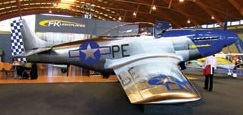
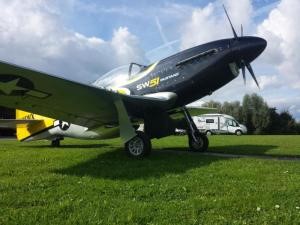
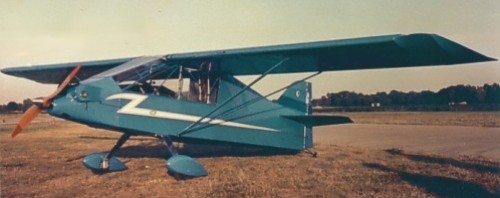
Designed by Peter Funk, the SW51 Mustang 70% scale version of the P-51, is a of all-composite carbon-fiber/honeycomb construction. The material is stained to look like aluminum.
The SW designation is due to FK-Lightplanes’ partnership with ScaleWings, which helped design the airplane. The SW51 took more than 40,000 man-hours to develop.
FK-Lightplanes can produce the airplane in one week and planned to certify the SW51 under the light sport aircraft category.
The European version has retractable gear and a 200 hp motor. The U.S. edition (either S-LSA or Experimental Amateur Built) has fixed gear and prop, and Rotax 912 or 914 power. Powered is by a 100-hp Rotax 912 ULS engine driving a fixed-pitch carbon fiber three-blade DUC propeller, expected cruise was around 150 knots. The airplane is able to withstand aerobatic maneuvers within +8 and -4 G.
The FK-Lightplanes SW51 took to the skies for the first time in late 2014, and serial number three, which was to be flying under an experimental exhibition airworthiness certificate, was expected to land in the U.S. by the year-end.
Price: $130,000 (2014 estimated).
Engine: Rotax 100 hp – 200 hp V Wingspan: 7.900 m Length: 6.889 m Height: 1.970 m Empty weight 295 kg MTOW: 600 kg MTOW S-LSA: 472.5 kg Ultimate load 600 kg: +8/ -4 G Vne: 370 kph Max speed: 280-350 kph Seats: 2 Undercarriage: electro-hydraulic retractable Fuel capacity: 116 lt (2 x 55 lt tanks)
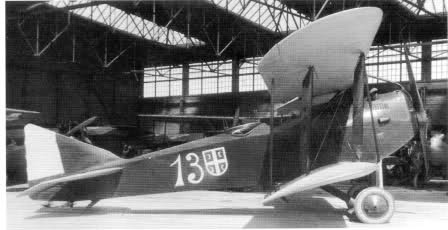
The Fizir F1V (Физир Ф1В – fizir prvi vojni – first military fizir – in Serbian) was the basis from which engineer Rudolf Fizir developed a series of single-engined, two-seat, reconnaissance biplanes fitted with different engines. Construction was carried out in the Yugoslav aircraft factories “Zmaj” and “Rogožarski” between 1928 and 1932.
During factory tests, on 8 October 1926 Pilot V. Striževski flew the aircraft from Novi Sad to Skopje to Mostar to Rajlovac (Sarajevo) to Zagreb and returned to Novi Sad (a distance of 1410 km) over a period of 8 hours and 40 minutes.
Zmaj built 15 of the Fizir F1V-Wright version and 5 Jupiter-engined Fizir F1M floatplanes for Naval Aviation in 1930. Zmaj was also responsible for conversion of several Fizir-Maybach trainers to Lorraine-Dietrich engines in 1932, which extended the service life of these machines under the new name Fizir-Lorraine 400 hp.
Fizir F1 – Prototype with Maybach MbIVa 260 hp engine, built in 1925 Fizir F1V-Maybach – Maybach MbIVa 260 hp engine (32 units built in 1928), Fizir F1V-Loren – Lorraine-Dietrich 12Eb 450 hp engine,one prototype, conversion of Fizir F1V-Maybach in 1928 + 15 conversions of F1V-Maybach using Lorraine-Dietrich 12dB 400KS engine in 1933 Fizir F1V-Hispano – Hispano-Suiza 12Ga, 450 hp engine, one prototype, conversion of F1V-Maybach in 1928) Fizir F1V-Wright – Wright Whirlwind J-5 220, 220 hp engine, (1 prototype + 15 copies in 1930) Fizir F1M-Jupiter – Navy seaplane (also known as “Big Fizir”) with Jupiter IAM 9AD 420,420 hp engine (5 planes built in 1930) Fizir F1G-Castor – Walter Castor 240 HP engine, (1 prototype in 1931) Fizir F1G-Titan – Walter Titan 230 HP engine, (1 prototype in 1931)
Fizir F1V Engine: 1 × Maybach MbIVa 7-cylinder radial, 190 kW (260 hp) Wingspan: 12.71 m (41 ft 8 in) Length: 10.21 m (33 ft 6 in) Height: 3.10 m (10 ft 2 in) Empty weight: 1,100 kg (2,425 lb) Gross weight: 1,450 kg (3,197 lb) Maximum speed: 176 km/h (109 mph; 95 kn) at sea level Service ceiling: 6,000 m (19,685 ft) Rate of climb: 3.46 m/s (681 ft/min) to 5,000 m (16,405 ft) Crew: 2
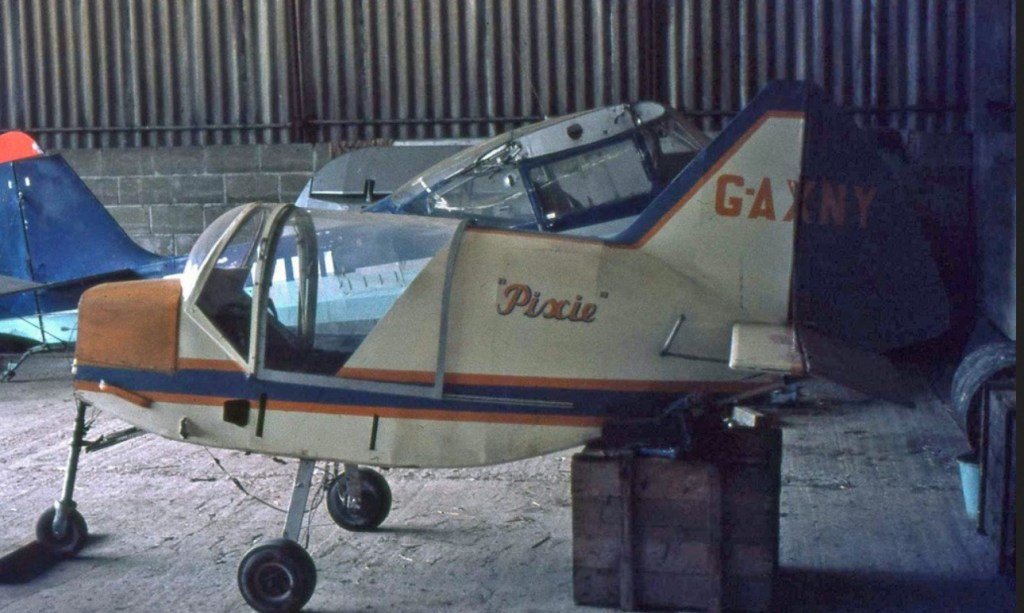
A single-seat low wing monoplane, fitted with tricycle undercarriage and a Volkswagon engine. It was based on the design of Ray Fixter. G-AXNY C/N sbs.1, built by Parkers of Spalding Ltd in 1969.
It undertook taxiing trials at Portland in September of that year, but did not fly.
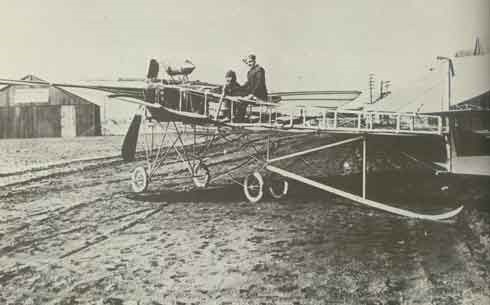
A 1911 American machine, this monoplane had folding wings, with the idea to drive the machine as a car on the ground using its elaborate 4-wheel undercarriage. It is told that the machine flew on three times for about 15-20 minutes each flight, the final flight at 50 foot height. The third time was disaster, the machine stalled, breaking ribs of the pilot (Charles Fity) and wrecking the propeller (and probably more …). When he came back the next day, he saw that his father had wrecked the complete machine. This was the end of the Fity aviation saga.
Ed Fisher first designed the Zippy Sport, which was officially introduced 1983 as a participant in the Dupont/Western Flyer design contest, and was marketed through Fishercraft. It is not the design prototype, but rather, the “proof of plans” aircraft. This “Sport Plane” was identified as an ARV, (Air Recreational Vehicle). At that time, designer, Ed Fisher flew the Zippy with a Cuyuna 430 dual carb engine, and a Winters 2:1 planetary gearbox. Top speed was about 110 mph Flying behind a 30-hp 430 RR Cuyuna, has a top speed of 115 mph. Designer Ed Fisher specializes in fast planes, many of them racers. Zippy Sport was de¬signed as a lightweight, folding-wing, trailerable, low-power aircraft with a ULF of +4.4 -3.1 G’s. Airfoil is the NAQR 4412 curve, with good stall characteristics and cruise. Wing is built up of ¾” by 61/2” solid spruce main spar and a 2” by 1” rear spar, ribs of sawn plywood or aluminum, leading edge aluminum sheet. Landing gear is of ½” by 5 ½ ,” aluminum spring tapering to 2” at the axle end. Go-Kart wheels and brakes are used. Ailerons and elevator are actuated by conven¬tional push/pull tubes, linked to a central joystick, Rudder is worked by rudder bar connected with 3/32” cables.
Over the next couple of years a full VW 1200 driving from the heavy end was fitted. Through, much of 1986, the aircraft was VW powered, while “debugging” flights took place. Green Sky Adventures had been interested in the Zippy’s development from the early stages. By 1986, the Rotax Service Center was in serious need of a test platform with a broad speed range to explore the effects of variable loads on small engines in general, and Rotax 2-strokes, in particular. A deal was struck with Ed Fisher, and by late fall of that year, Green Sky Adventures were flying a Rotax 503 powered Zippy Sport, enjoying it’s handling and speeds to 120 mph. Green Sky Adventures bought the “proof of plans” prototype Zippy Sport from Ed in 1986. The Zippy was flown to Oshkosh from NE Ohio in 1987. That year, the design prototype, N81ZS was trailered to Oshkosh by Ed, and the two aircraft were parked together on the homebuilt flightline. Through 1987 and some of 1988, hours were accumulated, and the aircraft was particularly useful for oil test runs, and propeller performance evaluations. During this period, another deal was struck with Ed, and the Zippy Sport design rights were acquired by Green Sky Adventures, selling a plans set at US$135. A stub axle failure in 1988 resulted in some substantial damage, taking the aircraft off line till early 1991, when it was relicensed with a new 43 HP Rotax 508 two cylinder 4-stroke engine. In subsequent years, Zippy Sport N83ZS has flown with 4 other Rotax engines, and countless propellers. It has been back to Oshkosh several times. The HKS 700-E is the 9 th engine for the test bed. The Zippy continues to function in it’s roll as test bed with the addition of the Green Sky Adventures, Inc HACman mixture control for the HKS 700-E and Rotax 912 series 4 strokes.
Engine 30-hp Cuyuna 430 MR Reduction unit Ultralight Technology 2:1 planetary drive Prop 54/36 Gross Wt: 610 lb Empty Wt. 340 lb Fuel capacity 5.5 USG. Wingspan 26 ft Length 17 ft l0 in Top 115 mph. Cruise 95 mph. Stall 35 mph Climb rate 750 fpm Takeoff run 360 ft Landing roll 650 ft
Engine: Rotax 503, 52 hp. HP range: 30-60. Height: 5 ft. Length: 17.83 ft. Wing span: 26.33 ft. Wing area: 100 sq.ft. Fuel cap: 11 USG. Weight empty: 421 lbs. Gross: 680 lbs. Speed max: 120 mph. Cruise: 100 mph. Range: 300 sm. Stall: 40 mph. ROC: 700 fpm. Take-off dist: 350 ft. Landing dist: 55 ft. Service ceiling: 15,000 ft. Seats: 1. Landing gear: tail wheel.
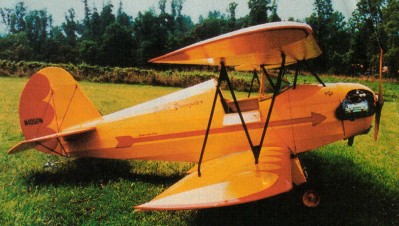
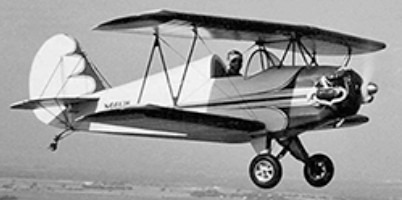
The Youngster “V” was designed, based on the Bücker Bü 133 Jungmeister, with all wood construction and short 350 build time. The cockpit accommodates up to 6’4″ pilots. This airplane offers a four-cycle VW engine and a 2315 airfoil with stainless wires and a bubble canopy. Enjoy an open cockpit on warm summer days and a fully enclosed cockpit for the winter. First flown in 1994, the V stands for VW and Rotax power is optional. It was designed to be affordable, but with the high quality you’ve come to know of Fisher Flying Products. The Youngster is gentle on the ground, but allows you to play with it in the air. The Youngster employs all wood construction using a Warner truss frame with 1/8″ birch ply skins in the fuselage. Stringers are placed along the fuselage sides and top turtledeck to form the fabric shaped fuselage. 1997 Youngster V kit price: US$3700. The Rotax powered kit sold for US$3400. Plans were US$200. By 2004, ten had been sold. 2009 Youngster V kit price: US$8750
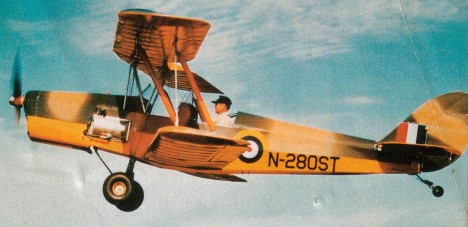
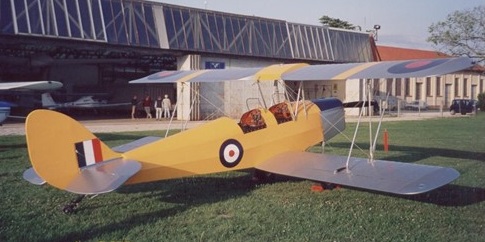
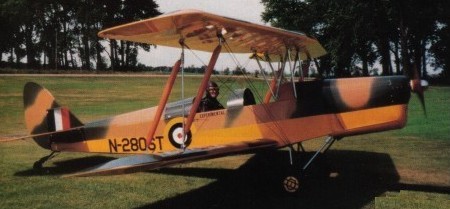
Steve Turner & Steve Lamberg developed the R-80 Tiger Moth as an 80% scale de Havilland Tiger Moth. Introduced and first flown in 1994, the original prototype fuselage was made of wood and powered with a Norton rotary engine. In 2000 the Tiger Moth was introduced with a 4140 steel tube fuselage. The kit cost approximately US$5000 more than the wood version and included a prewelded fuselage, vertical fin, rudder, stabiliser, and elevator. No welding is required by the builder. In 1997 the basic kit cost US$9300 with the quick build kit US$10,600. The Rotac 582, 618 or Subaru engines were options. Issues with the fuel consumption and cooling led to a change in 2000 to a LOM M132, 120 hp engine. LOM provided a wood propeller that matched that engine. At that time the engine cost US$12,000 and the propeller US$1800. The R-80 Tiger Moth is recommended for both first-time and experienced builders and only basic tools are needed in construction. Realistic estimates put construction time at 700 hours. The wood R-80 is straight-forward and strong. Aircraft grade epoxy adhesives are used throughout.
Initially, the airframe was designed by an aeronautical engineer. A design engineer was then brought in to assist during the actual construction and modification stage. The airframe was then tested, by an independent firm that specializes in structural analysis, to a limit of six positive and three negative g’s. At one point in this test, over 6,000 pounds of sandbags were on the R-80’s airframe-and it didn’t break. By 2001 the standard airframe kit cost US$16,500, and quick build airframe kit cost US$18,500. 2009 kit price: US$15,500
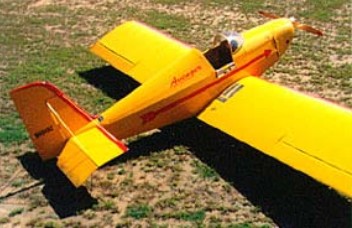
With the Rotax 503 or 1/2 VW the Avenger prototype will cruise at 80 mph at just 5,000 rpm on the Rotax 503, single carb 48 horsepower engine. With the removable canopy, the Avenger can be flown in the summer or the winter. Cabin heat can also be installed. Avenger V has 2″ narrower firewall for VW engines. It was designed to be inexpensive and to have a significant amount of room. It easily accommodates a 6’4″, 240 pound pilot. An all wood design suitable for VW and Subaru engines, the Avenger first appeared in 1994 and by 2004 fifty had been sold. Plans cost US$150, or US$165 for the Avenger V plans. The kit for the Avenger V was US$2795. Designed by Steve Turner & Steve Lamberg for all wood construction. Complete kits were available with quick 300 hour build to fly time.