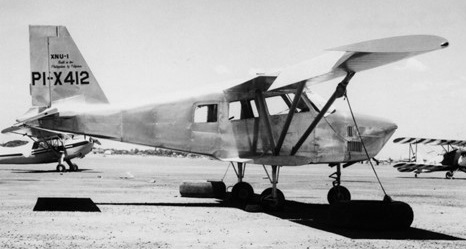
The designer/builder was American Mr. Jim Flemming, although the XNU-1 was built in the Philippines.
The all-metal aircraft was reportedly briefly tested during the late-1960s or early-1970s. The engine was reported as a 185hp Lycoming.
The designer/builder was American Mr. Jim Flemming, although the XNU-1 was built in the Philippines.
The all-metal aircraft was reportedly briefly tested during the late-1960s or early-1970s. The engine was reported as a 185hp Lycoming.
Tomasz Fleger of Warsaw (who already designed in 1911 a floatplane and airship) designed and built a small monoplane pusher in 1914, which, however, never flew.
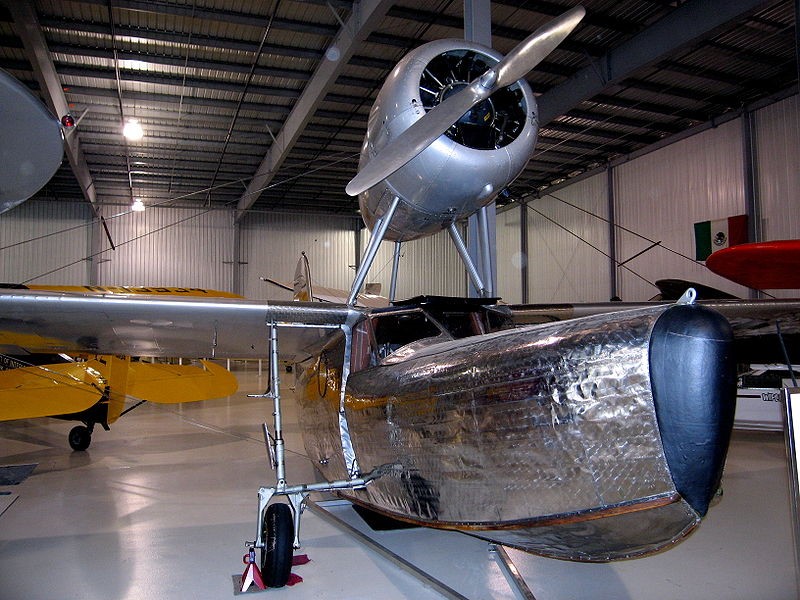
The Sea Bird was an amphibious utility aircraft designed in 1934–1935 by James C. Reddig for Fleetwings, Inc., of Bristol, Pennsylvania. While the aircraft’s basic configuration had a precedent in the design of the Loening “Monoduck” developed by the Grover Loening Aircraft Company as a personal aircraft for Mr. Loening (for whom Reddig worked from 1929 to 1933), the Sea Bird was unusual because of its construction from spot-welded stainless steel. It was a high-wing, wire-braced monoplane with its engine housed in a nacelle mounted above the wings on struts.
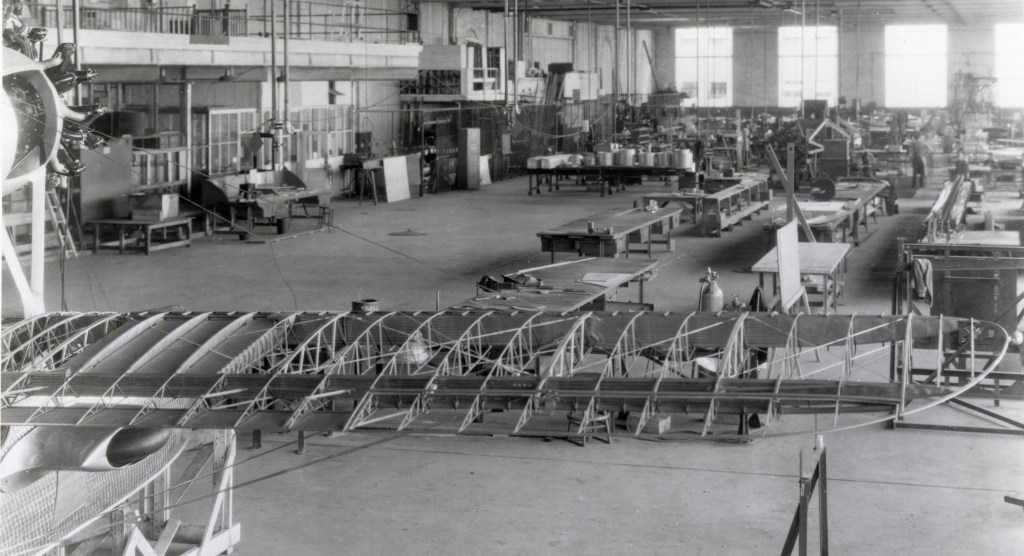
The pilot and passengers sat in a fully enclosed cabin.
First flying in 1936, Fleetwings initially planned to manufacture 50 production units, but at a price approaching $25,000 during the Depression, there proved to be no sustainable market and only five production F.5 Seabird were built.
The Sea Bird found use with private pilot owners and saw service with the oil support industry in Louisiana, including operation by J. Ray McDermott & Co.
Variants:
F-4 Sea Bird – 4-seat prototype (1 built)
F-5 Sea Bird – 5-seat production aircraft (5 built)
Powerplant: 1 × Jacobs L-5, 285 hp (213 kW)
Wingspan: 40 ft 6 in (12.34 m)
Wing area: 235 sq ft (21.8 m2)
Length: 31 ft 5 in (9.58 m)
Height: 12 ft 6 in (3.81 m)
Empty weight: 2,320 lb (1,052 kg)
Gross weight: 3,450 lb (1,565 kg)
Fuel capacity: 52 US gal (43 imp gal; 200 L)
Maximum speed: 150 mph (240 km/h, 130 kn) at sea level
Cruise speed: 133 mph (214 km/h, 116 kn)
Range: 400 mi (640 km, 350 nmi)
Service ceiling: 15,000 ft (4,600 m)
Rate of climb: 900 ft/min (4.6 m/s)
Crew: 1
Capacity: 3 passengers
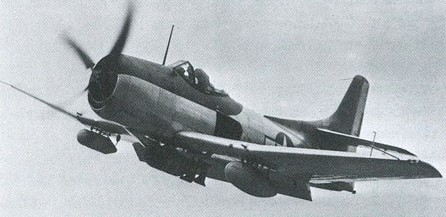
In early 1942 the U.S. Navy’s Bureau of Aeronautics (BuAer) was planning the replacements for the Curtiss SB2C Helldiver dive bomber and the Grumman TBM Avenger torpedo bomber. The aircraft was to carry the torpedo in an internal bomb bay. By late 1943 it became obvious that the proposed VBT design like the Douglas SB2D had drastically increased in size and weight. Therefore the U.S. Navy was initiating a smaller dive bomber design. The BuAer recognized the engineering workload for the major wartime programs and therefore assigned the design to companies without a major wartime production. BuAer selected Fleetwings at Bristol, Pennsylvania (USA), which was acquired by Henry J. Kaiser in 1943.
The XBK dive bomber program was initiated in February 1944 with a contract for two prototypes. To keep the airplane size down it was decided that all stores would be carried externally. A radar could be carried underneath the left wing. The dive brakes were of the lower and upper picket fence type at the inboard wing trailing edge. The horizontal tail was mounted on the tail fin above the fuselage. This feature should also avoid buffeting when the dive brakes were open. Unusual was the placement of the engine exhausts almost aft of the cockpit. It was hoped that this feature would significantly decrease drag.
A mockup inspection without engine was already in April 1944. The engine was installed in May 1944 and the completion of the first prototype was scheduled for November 1944. To speed up later production the U.S. Navy even constructed a new airfield at the Fleetwing plant. In early 1945 BuAer requested that the plane would be able to carry a torpedo. The weapon was fitted to a new centreline station and the designation was changed to BTK. The first XBTK-1 was finally completed in March 1945, making its first flight in May 1945.
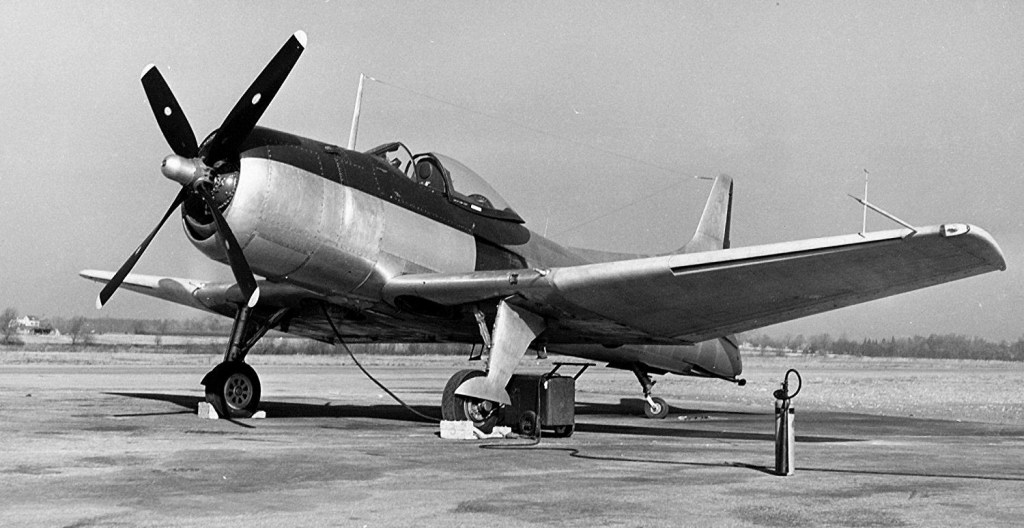
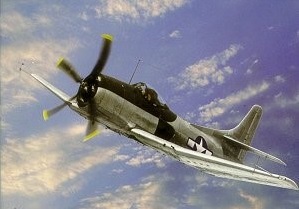
The flight testing revealed an inadequate engine cooling and a major fuselage vibration. These problems were corrected up to July 1945, and the R-2800-22W engine, which was already out of production, was replaced by the -34W. The flight testing continued at the U.S. Navy Naval Air Test Center at Naval Air Station Patuxent River, Maryland (USA), in August 1945. After the end of the Second World War the U.S. Navy cut orders to ten planes. The major redesign the NATC recommended was the use of a standard engine exhaust, as the cockpit temperature was very high and cockpit egress and access after an engine shutdown was extremely difficult. Also a new propeller should be installed. The plane was transported back to Fleetwings where redesign began. The second production aircraft first flew in March 1946 and featured built-in leading edge slots which greatly increased the stall performance of the aircraft. However, by early 1946 procurement of new planes was drastically cut down and the BTK found its role already filled by the Douglas AD Skyraider and Martin AM Mauler. In May 1946 it was decided to delay corrections of the design and complete five airframes already in production. Although a promising design, the U.S. Navy finally terminated the contract on 3 September 1946, as there was no need for the aircraft anymore. The five prototypes were scrapped.
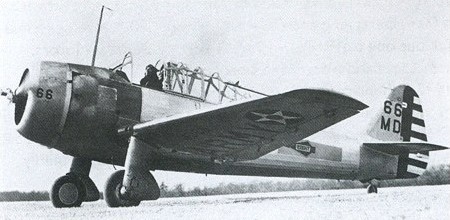
Designed as a Basic Trainer for the Army Air Force, the model 23 was fabricated out of stainless steel rather than aluminum or wood. Only 24 were built.
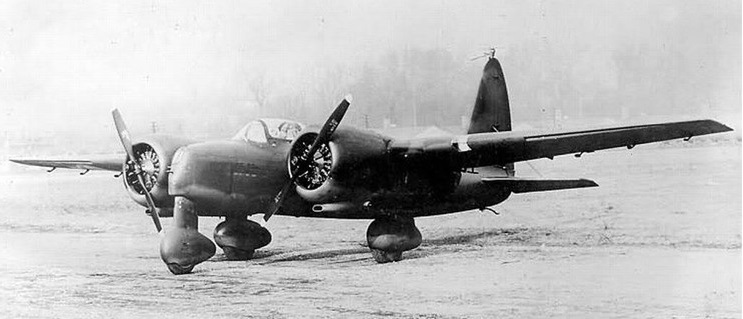
Development of the BQ-2 began on July 10, 1942, under a program for the development of “aerial torpedoes” – unmanned flying bombs – that had been instigated in March of that year. Fleetwings was contracted to build a single XBQ-2 assault drone, powered by two Lycoming XO-435 opposed piston engines, and fitted with a fixed landing gear in tricycle configuration; the landing gear was jettisonable for better aerodynamics.
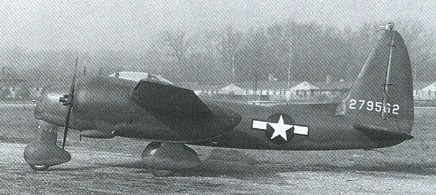
Together with the XBQ-1, the USAAF also ordered a single XBQ-2. This was to be identical to the XBQ-1 except for Lycoming XO-435-3 engines and a jettisonable landing gear. The XBQ-2 was not built, however, being replaced by a single XBQ-2A. The XBQ-2A replaced the XO-435 engines by two Lycoming R-680-13 radial engines.
The BQ-2 was optionally piloted; a single-seat cockpit was installed for ferry and training flights; a fairing would replace the cockpit canopy on operational missions. The BQ-2 was intended to carry a 2,000 pounds (910 kg) warhead over a range of 1,717 miles (2,763 km) at 225 miles per hour (362 km/h); the aircraft would be destroyed in the act of striking the target. A single BQ-1 was to be constructed as well under the same contract.
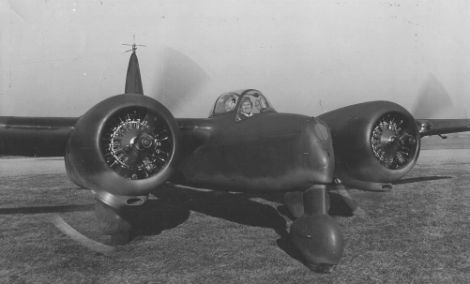
Following trials of the television-based command guidance system using a PQ-12 target drone, the XBQ-2A flew in mid 1943; following flight trials, the design was determined to be too expensive for operational use, and the program was cancelled in December of that year. The aircraft was subsequently redesignated as ZXBQ-2A to denote its obsolescence.
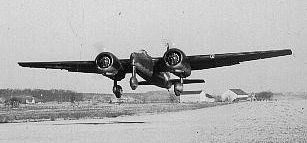
Variants: Fleetwings BQ-1
XBQ-2A
Engines: 2 × Lycoming R-680-13, 280 hp (210 kW) each
Wingspan: 48 ft 7 in (14.81 m)
Gross weight: 7,700 lb (3,493 kg)
Crew: 1 (optional)
Warhead: 2,000 pounds (910 kg)
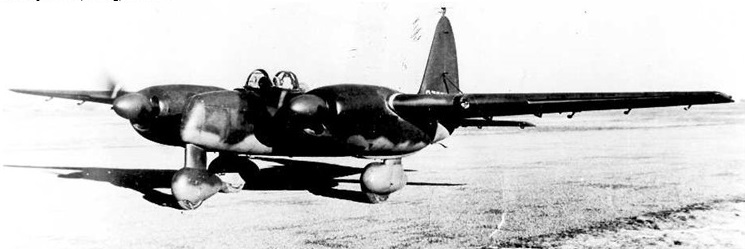
In March 1942, the USAAF initiated a program to develop radio-controlled assault drones, frequently called “aerial torpedoes” at that time. These aerial torpedoes were to be unmanned expendable aircraft (either purpose-built or converted from existing types), fitted with a large payload of high-explosive, remote-control equipment and a forward-looking TV camera. The drones were to be directed to the target by radio commands from a control aircraft, where the operator would “fly” the drone watching the video transmitted by the camera.
Development of the BQ-1 began on July 10, 1942. Fleetwings was contracted to build a single XBQ-1 assault drone, powered by two Franklin O-405-7 opposed piston engines, and fitted with a fixed landing gear in tricycle configuration. The aircraft was optionally piloted; a single-seat cockpit was installed for ferry and training flights; a fairing would replace the cockpit canopy on operational missions. The BQ-1 was intended to carry a 2,000 pounds (910 kg) warhead over a range of 1,717 miles (2,763 km) at 225 miles per hour (362 km/h); the aircraft would be destroyed in the act of striking the target. A single BQ-2 was to be constructed as well under the same contract.
Following trials of the television-based command guidance system using a PQ-12 target drone, and earlier trials of the XBQ-2A, the XBQ-1 flew in May 1944; however, the aircraft crashed on its maiden flight. Following the loss of the lone prototype BQ-1, the project was cancelled.
Variants: Fleetwings BQ-2
XBQ-1
Engine: 2 × Franklin O-405-7, 225 hp (168 kW) each
Wingspan: 48 ft 7 in (14.81 m)
Gross weight: 7,700 lb (3,493 kg)
Cruise speed: 225 mph (196 kn; 362 km/h)
Range: 1,717 mi (1,492 nmi; 2,763 km)
Crew: 1 (optional)
Warhead: 2,000 pounds (910 kg)
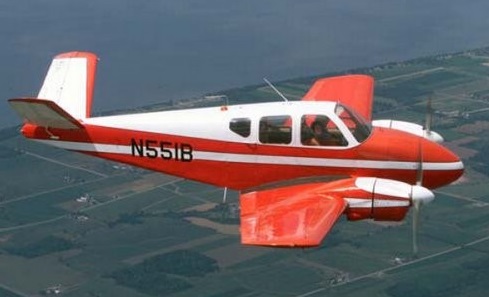
All of the twin V-tails are converted single-engine Bonanzas. A prototype flew in 1956 and was built by Mr. David G. Peterson and his Skyline, Inc. At the time, Peterson was chief pilot for Sinclair Oil Company in Tulsa, Okla¬homa.
To help sales, a Pan American World Airways pilot, ‘Chuck’ Banfe, flew a Super-V round the world, to and from Honolulu, between 15 and 24 October, 1960, covering some 21,000 miles (33,800 km) in 212 hours. This aircraft (originally c/n SV 101) was later rebuilt by Fleet as SV 116 and became the company’s demonstrator.
Rights then went to Oakland Airmotive (later renamed Bay Aviation) in 1959, who converted several Bonanzas renamed Oakland Super V. The modifications to twin engine were so extensive that the Super V was certificated as new aircraft by the FAA. Bay assigned construction numbers SV 110 and SV 111 but the aircraft were not built.
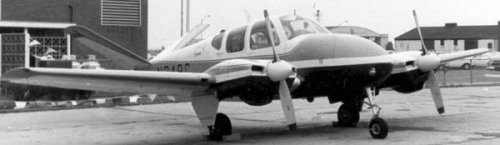
Bay sold tooling, engineering data and type certificate for the Super V to Fleet Aircraft, Inc., of Buffalo in 1961. Arrangements had been made in 1961 to move the basic conversion programme to Fort Erie, where work was started in January 1962. Several modifications and design improvements were made by Fleet, including new engine cowls for the Lycoming O-360-A1A engines which had replaced the A1B fuel-injection engines previously used; a nose-cone for a landing light; better soundproofing; an improved entry door; and a revised instrument panel. Canadian certification was also obtained. Five more were produced in 1962/1963.
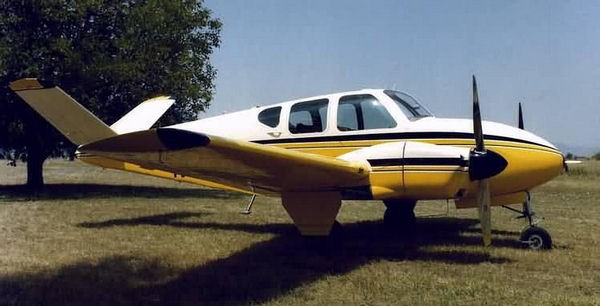
Although the structural details of the original Super-V were generally similar to those of the Bonanza, the modifications were extensive enough to require recertification as a new aircraft. The wings and fuselage were similar, but greatly strengthened, and engine mountings had to be designed for the wing. A glass-fibre fairing covered the nose, where the additional capacity was used for baggage. The leading edges of each wing were sealed to provide integral tanks for 30 US gal (114 litres), giving a total fuel capacity of 100 US gal (378 litres).
The five new Super-Vs built by Fleet in Canada were: SV 112 (N249C), SV 113 (N551B), SV 114 (N4559V), SV 115 (N1T) and SV 117 (N457B). The respective c/ns of the Bonanzas used for these conversions were D-1243, 1569, 1388, 422 and 1474. SV 110 and 111 were not built, and two SV 102 and 103, had by the end of 1963 been destroyed.
The Super V was not a marketing success and some 14 were actually produced.
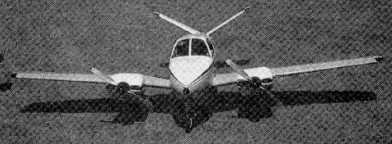
Engine: 2 x Lycoming O-360, 180 hp.
Empty wt: 2510 lbs.
MTOW: 3400 lbs.
Fuel cap: 100 USG.
Top speed: 210 mph.
Cruise: 190 mph.
ROC: 1550 fpm.
Vmc: 87 mph.
Fleet Super-V
Engines: 2 x 340hp Lycoming O-360-A1A
Wingspan: 32ft 10in (10m)
Length: 25ft 1in (7.65m)
Height: 7ft 1in (2.16m)
Empty weight: 2,200lb (998kg)
Maximum take-off and landing weight: 3,400lb (1,542kg)
Max speed: 210 mph (338 km/h)
Cruise: 190 mph (306 km/h)
Stall: 68 mph (109 km/h)
Climb at sea level: 1,550 ft/min (373 m/min)
Service ceiling: 20,000 ft (6,100 m)
Single-engine service ceiling: 7,000 ft (2,130 m)
Range max fuel 50 % pwr: 1,200 miles (1,930 km).
Seats: 4
Price: $33,800
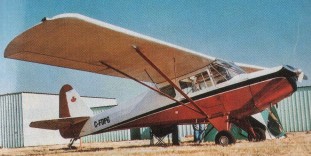
Circa 1946
Leaven Brothers of Canada produced a limited re-production of 1945 Fleet Model 80 Canuck, 1965-1966.
The Fort was the first all-metal monoplane built by Fleet Aircraft of Canada (Fort Erie); and it was intended as a cheaper version of the Harvard, also an intermediate trainer.
The Fleet Fort Model 60K was designed and built by Canadians in World War II. The Fort’s maiden flight occurred in 1940.
Initially, the RCAF did not want to order the Model 60K, and their doubts proved valid. The Fort was relatively easy for pilot trainees to master, thereby making it unsuitable for transition to combat aircraft. The RCAF took 100 on strength in 1941. Also, the RCAF decided that pilots who had soloed in Finches and Tiger Moths could proceed to Harvards without training on Forts. The Forts were then used to train wireless operators until the last Model 60K was retired in 1946.
Fleet 60K Fort I
Engine : Jacobs R-915-7, 330 hp
Wing Span : 36ft (11m)
Length : 26ft 10in (8.18m)
Height : 8ft 3in (2.5m)
Speed : 162 Mph (260km/h)
Seats: 2

