Flying K Enterprises Sky Raider

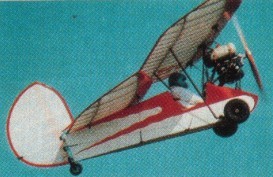
Sky Raider

Able to be built as an ultralight or experimental, the Sky Raider has slotted flaps. First flown in 1996, the kit sold for US$7900 in 1996, and a quick build wing kit option was available for an additional US$500 in 1997.

Sky Raider
Super Sky Raider

LSA kit plane. All Sky Raiders are made of a fully enclosed chrome-moly steel fuselage with optional doors and windows.

Super Sky Raider

The Super Sky Raider is designed with tandem cockpit and dual controls.

Variation:
Reality Easy Raider

Sky Raider Sky Raider / Super Sky Raider
HELP !! Looking for all info. for a Sky Raider 2 ; especially the MOST FORWARD and the MOST AFT locations from DATUM line. Thanks. Ron W.
Ron Wright May 2021
ron1@mtco.com

Sky Raider
Engine: Rotax 277, 28 hp
HP range: 28-50
Height: 5.2 ft
Length: 17 ft
Wing span: 26.2 ft / 8 m
Wing area: 110 sq.ft / 12.5 sq.m
Fuel capacity: 5 USG
Empty weight: 250 lb / 109 kg
Gross weight: 550 lb / 250 kg
Max speed: 160 kph
Top speed: 63 mph
Cruise: 63 mph / 120 kph
Stall: 27 mph / 37 kph
Range: 120 sm
Rate of climb: 600 fpm
Takeoff dist: 75 ft
Service ceiling: 11.000 ft
Seats: 1
Landing gear: tailwheel

Sky Raider
Engine: Rotax 447, 28 hp
HP range: 28-50
Wing span: 26.1 ft
Wing area: 98 sq.ft
Length: 17 ft
Empty weight: 253 lb
Gross weight: 550 lb
Fuel capacity: 5 USG
Cruise: 63 mph
Stall: 27 mph
Range: 140 sm
Rate of climb: 800 fpm
Takeoff dist: 75 ft
Landing dist: 75 ft
Seats: 1
Cockpit width: 24 in
Landing gear: tailwheel

Sky Raider II
Cruise: 80 mph
Stall: 36 mph
Range: 290 sm
Rate of climb: 1200 fpm
Takeoff dist: 75 ft
Landing dist: 75 ft
Engine: HKS 700E, 65 hp
HP range: 60-80
Fuel capacity: 14 USG
Empty weight: 390 lb
Gross weight: 950 lb
Length: 17 ft
Wing span: 28 ft
Wing area: 107 sq.ft
Seats: 2 tandem
Cockpit width: 27 in
Landing gear: tailwheel

Super Sky Raider
Jabiru 80 hp
Prop: GSC 60 in 2 blade
Wing Span wi wing tips 30 ft
Wing Area wi wing tips 107 sq. ft
Wing span wlo wing tips 28 ft
Wing area wlo wing tips 98 sq ft
Length 18 ft
Height 6 ft
Empty Weight 450 1bs
Gross Weight 1050 Ibs
Fuel Capacity 14 gal.
Fuel burn 4 USgal/hr at cruise
VNE 100 mph
Take Off Roll 75-100 ft
Ground Roll 75-100 ft
Climb Rate 1400 fpm
Cruise 80 mph
Stall wlo flaps 38 mph
Stall w/ Flaps 30 deg 32 mph
Width Folded 8 ft 2 in
Length Folded 21 ft 6 in
Gear Width 4 ft 8 in
Cabin Width 27 in
Super Sky Raider Standard Kit 2009 Price: US$15,995.00
Flying Flea Archive HM-160

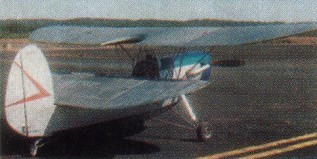
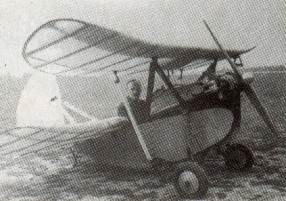
Flying Flea Archive USA offers plans for Henri Mignet’s Baby Pou HM 160 design. Construction is the original fabric covered wood.

Engine: Dagne, 25 hp
HP range: 20-35
Height: 6 ft
Length: 10.5 ft
Wing span: 15 ft
Wing area: 77 sq.ft
Fuel capacity: 6.2 USG
Empty weight: 242 lb
Gross weight: 472 lb
Top speed: 80 mph
Cruise: 65 mph
Stall: 20 mph
Rate of climb: 500 fpm
Takeoff dist: 100 ft
Landing dist: 150 ft
Seats: 1
Landing gear: nose or tail

Engine: DAF, ½ VW, 30 hp
Wing span: 4.57 m
Wing area: 7.16 sq.m
MAUW: 214 kg
Empty weight: 100 kg
Fuel capacity: 19 lt
Max speed: 130 kph
Cruise speed: 100 kph
Minimum speed: 35 kph
Climb rate: 2.5 m/s
Seats: 1
Plan price (1998): US$150

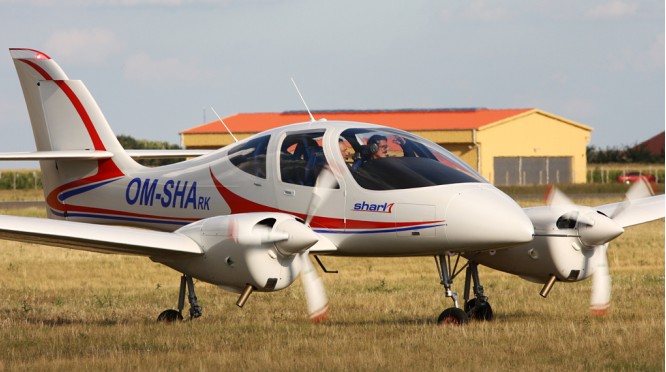
Fly-Fan Shark

The Fly-Fan Shark is a Slovak light aircraft designed by Frantisek Sustek and under development by Fly-Fan of Trenčín. The design was introduced at the Aero show held in Friedrichshafen in 2007 as a mock up and in 2011 as a flying aircraft. The aircraft first flew on 29 June 2011 and was intended to be supplied as a complete ready-to-fly-aircraft.

The Shark was designed with the goal of providing similar performance to other twin-engined light aircraft, but on 30% less power. It features a cantilever low-wing, a five-seat enclosed cabin, retractable tricycle landing gear and twin wing-mounted engines in tractor configuration.

The aircraft is made from Kevlar and carbon fibre. Its 11.4 m (37.4 ft) span wing employs a Jd 16 (40) 162 airfoil at the wing root, transitioning to a Jd 17 (40) 157 at mid-span and a Jd 15 (35) 136 at the wing tip. The wing has an area of 16.2 sq.m (174 sq ft) and mounts split flaps that can be extended 50 deg. The standard engines fitted are a pair of 160 hp (119 kW) Lycoming O-320-D1A four-stroke powerplants.

The aircraft has an empty weight of 1,221 kg (2,692 lb) and a gross weight of 1,500 kg (3,300 lb), giving a useful load of 279 kg (615 lb).

Engines: 2 × Lycoming O-320-D1A, 120 kW (160 hp)
Propellers: 3-bladed MT-Propeller or Hartzell Propeller constant speed, 1.78 m (5 ft 10 in) diameter
Length: 8.9 m (29 ft 2 in)
Wingspan: 11.4 m (37 ft 5 in)
Height: 3.07 m (10 ft 1 in)
Wing area: 16.2 m2 (174 sq ft)
Airfoil: wing root: Jd 16 (40) 162 airfoil, mid-span: Jd 17 (40) 157, wing tip: Jd 15 (35) 136
Empty weight: 1,221 kg (2,692 lb)
Gross weight: 1,500 kg (3,307 lb)
Cruising speed: 260 km/h (162 mph; 140 kn)
Stall speed: 140 km/h (87 mph; 76 kn)
Never exceed speed: 330 km/h (205 mph; 178 kn)
Range: 1,600 km (994 mi; 864 nmi)
Endurance: 8 hours
Maximum glide ratio: 16:1 at 160 km/h (99 mph)
Rate of climb: 10.6 m/s (2,090 ft/min)
Wing loading: 92.6 kg/m2 (19.0 lb/sq ft)
Crew: one
Capacity: four passengers

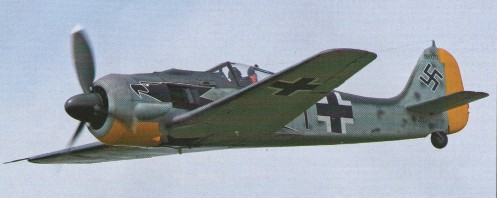
Flug Werk FW 190

Altogether 20 kits were manufactured, 16 sold to customers. Among them are three kits are as static FW 190 in museums.
The flight work crew assembled FW 190 A8/N (D-FWJS), including all corrections and rework of different systems, for a German customer. The oil cooling system received an additional “ring oil cooler. Combustion air of the Ash 82T is sucked in vertical, behind the engine. To give the copied FW 190 as authentic an appearance as possible a rework became necessary, with the help of the additional oil cooler.
Further substantial changes concerned the brake linings as well as a variation in type of the brake pumps, which are installed at the pedals.

FW-190A-8

The first flight of the D-FWJS was accomplished by test pilot Klaus Plasa.
The flight testing of D-FWJS and D-FWWC without the use of the flap system for takeoff and landing were accomplished. However the flaps were used in the flight, and a “Lastigkeitsänderung” is clearly noticeable around the transverse axis, which could be well trimmed. The FW 190 test flight report written by Professor Kurt Tank, says when driving flaps and undercarriage “Lastigkeitsänderungen” were not produced.
In the FW 190 flight work uses in the house developed fin adjustment devices, similarly those for the use in the ME 262 developed trim actuators. Original devices available, but such systems, e.g. original undercarriage introduction engines and Cyclo transmissions were not used for safety safety reasons. The production of the 40’s was shaped by scarcity of raw materials, a large number of these electrical trim engines did not have ball bearings, but only steel sockets, as “emergency substitute solution “. The original drives for the landing flaps this, which was not acceptable for safe flying operation now.
Flight testing of the first FW 190A-8/N began in July 2004, and was to continue in 2007 with test pilot Horst Philipp at the controls.

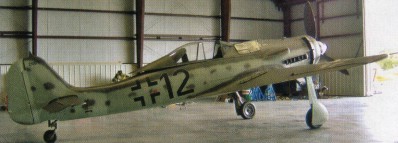
FW 190D-9/N “Dora”

At Gammelsdorf in Upper Bavaria, the Flug Werk company unveiled its first long-nose FW 190D-9/N “Dora”.
Substituting for the original Jurno 213A engine is an Allison V-1710 engine, specially modified by Bud Wheeler’s Pen nsylvania- based ACE Competition engines. The Allison unit is 500kg (1,1001b) lighter than the Jurno, so to compensate a specially constructed engine mounting has been manufactured from chrome-molybdenum steel. Wheeler has also extensively modified the reduction gear in order to achieve the same propeller speed as the FW 190A-8, so it will be possible to use the same blades as fitted to the radialengined version.
Specially manufactured exhaust pipes will ensure that this area of the 190D will look authentic from the outside.

Three FW 190D-9s will be built, with the first example going to a Florida-based owner once it is completed. The second aircraft is also due to be exported, but the third 190D will be retained by Flug Werk, together with one of the 1 90A-8s, and be used for display and film work.

The first of the Flug Werk FW 190D-9/N Doras was handed over to its owner Tom Blair at Kissimmee, Florida, 11 December 2007.

Flug Werk AP-51 Palomino

The AP-51 Palomino structural kit from FlugWerk, named “Palomino” in order to document it’s closeness to the P-51 Mustang, yet make it clearly discernable from the real P-51’s, so the new components do not end up on type certified Mustangs. This is a requirement by the FAA.
All of the AP-51 assemblies are manufactured from western materials, such as SAE 2024 and/or SAE 7075 aluminum alloys and SAE 4130 steel alloy, where called for, in high strength applications. The structures are built, following the standards of the original NAA manufacturing drawings and standards. Utilizing CNC-machinery FlugWerk manufacture all brackets, hinges for the tail-gear, all flying surfaces and the landing gear trunnion boxes: All of these new components are better in quality and strength than their sand-casted predecessors from wartime. The trunnion boxes are made using a 5-axis CNC mill.
The AP-51 wing profile demands absolute true coordinates, and the jigs which are utilized during the assembly processes are built following today’s aerospace industry standard. Each individual jig employs fold-down templates to assure correct profile conforming surfaces to the smallest fraction of an inch while the entire assembly is under construction. Before the jigs are used for any assembly wrok they are heat treated for the purpose of relieving any stresses that have built up during their welding assembly. The entire jigs are therefore put in a furnace for a given time. After heat-treating the jig’s structures, all critical surfaces are milled to their final dimensions and by that gain the purpose as measuring zero-coordinates. Even the assembly work is done in a climate-controlled environment.
The stamped and trued ribs are subject to corrosion proofing, employing the “Alodyne” process, followed by primer coating with two part Epoxy paint prior to assembly.
The final result is an airframe that is similar and in some regards better to the original structures.

The AP-51 Palomino airframe kit includes:

  • Engine mount, with smile but w/o lord mounts
  • Center fuselage with dog-house, inlet- outlet duct, windshield assembly and firewall with stamped, dished insert. P-51 D style.
  • Aft fuselage
  • Vertical stabilizer, with ventral fairing
  • Rudder ( for fabric covering ) with trim tab and balance weight
  • Horizontal stabilizer ( standard incidence is set for P-51 D )
  • Elevators ( for fabric covering ) with trim tab and balance weight, or
  • Elevators ( metal skinned ) with trim tab and balance weight
  • Wing, with left and right tip-extensions, body fairings, clamshell- and spade doors
  • Ailerons, left and right
  • Flaps, left and right
    All structures are built using brand new ALCOA/USA supplied aluminum extrusions and AN/MS hardware, also imported from the US.
    The 2010 price for the airframe kit in US $: 475.000 ex works” Gammelsdorf/Germany.