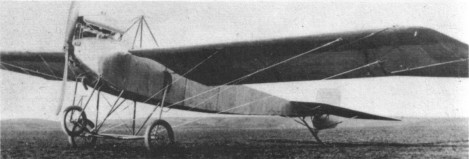
The M.I to M.IV were designed at the instructions of Fokker by a Mr Palm. With the failure of the M.IV he was fired, to be succeeded by Martin Kreutzer.
The M.I to M.IV were designed at the instructions of Fokker by a Mr Palm. With the failure of the M.IV he was fired, to be succeeded by Martin Kreutzer.
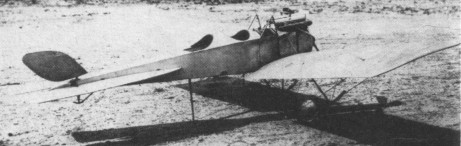
The M.I to M.IV were designed at the instructions of Fokker by a Mr Palm.
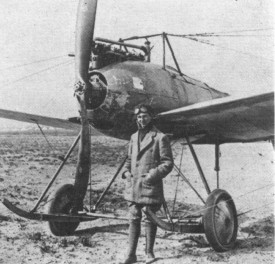
Fokker’s first big order was for ten M.II with a total value of 299,800 Marks. The aircraft had a 100 h.p. Argus or Mercedes engine. Its span was 13.2 metres, length 8.5 metres and the maximum speed was 100 kph.
Engine: 100 h.p. Argus or Mercedes
Wingspan: 13.2 m
Length: 8.5 m
Maximum speed: 100 kph
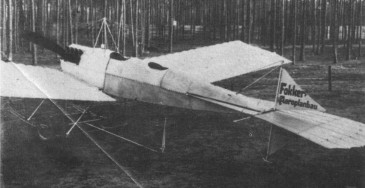
A picture postcard of 1913 depicted a Spin with enclosed cockpit. A variation of the Spin about which little is known. The fuselage is enclosed, like that of the M.II, but in a totally different manner.
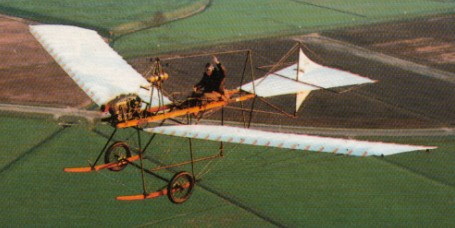
Fokker set to work on a new aircraft, at Nieder Walluf on the Rhine, with the help of boat builder Jacob Goedecker, who also wanted to fly. It was on this second Spin that Fokker taught himself to fly on the Grosser Sand at Gonsenheim. At the beginning of May 1911 he flew a few curves, following them with a complete cir¬cle a few days later. On May 12th von Daurn finally got his money’s worth when Fokker took him along as a passenger.
Fokker Spinne (Spin / Spin II / Spin variation) Article
Another goal was reached on May 16th, when Anthony Fokker obtained his pilot’s licence. He had agreed with von Daum that the latter would become the owner of the aircraft as soon as Fokker had gained his licence. Von Daum wanted to start training right away, but Fokker tried to talk him out of it because he had received an invitation from his former home, Haarlem, to give a flying demonstration on the Queen’s Birthday. There was money to be made, and he was afraid that von Daum would crash “his” aircraft again.
However, von Daurn could not be dis¬suaded. After a reasonable start to his fly¬ing attempts he suddenly seemed to forget everything he had previously learned, and dived into the ground from a height of 10 metres. He shook the bits and pieces from him, and advised Fokker to “take his damned aircraft away, and fly to hell with it”. Fokker purchased von Daum’s share in the venture for 1200 Marks, and so became the owner of the wreckage and, more importantly, the 50 h.p. Argus engine.
Meanwhile, a third Spin was being made by Goedecker, and on August 31, 1911 Fok¬ker gave his first flying demonstration over Haarlem.
The military version of the Spin was called the M.I.
The initial version was the A 1912; the later B 1912 had a 100 hp engine, and a few others were fitted with 70 hp Renaults.
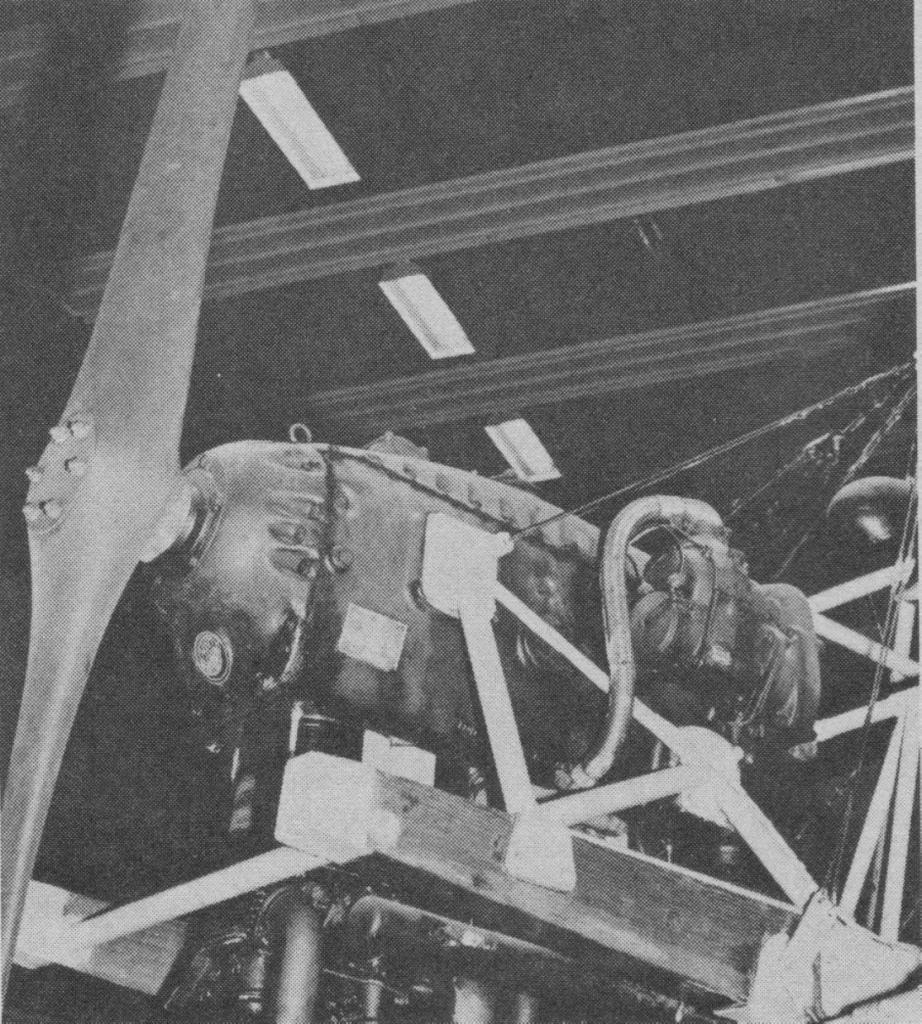
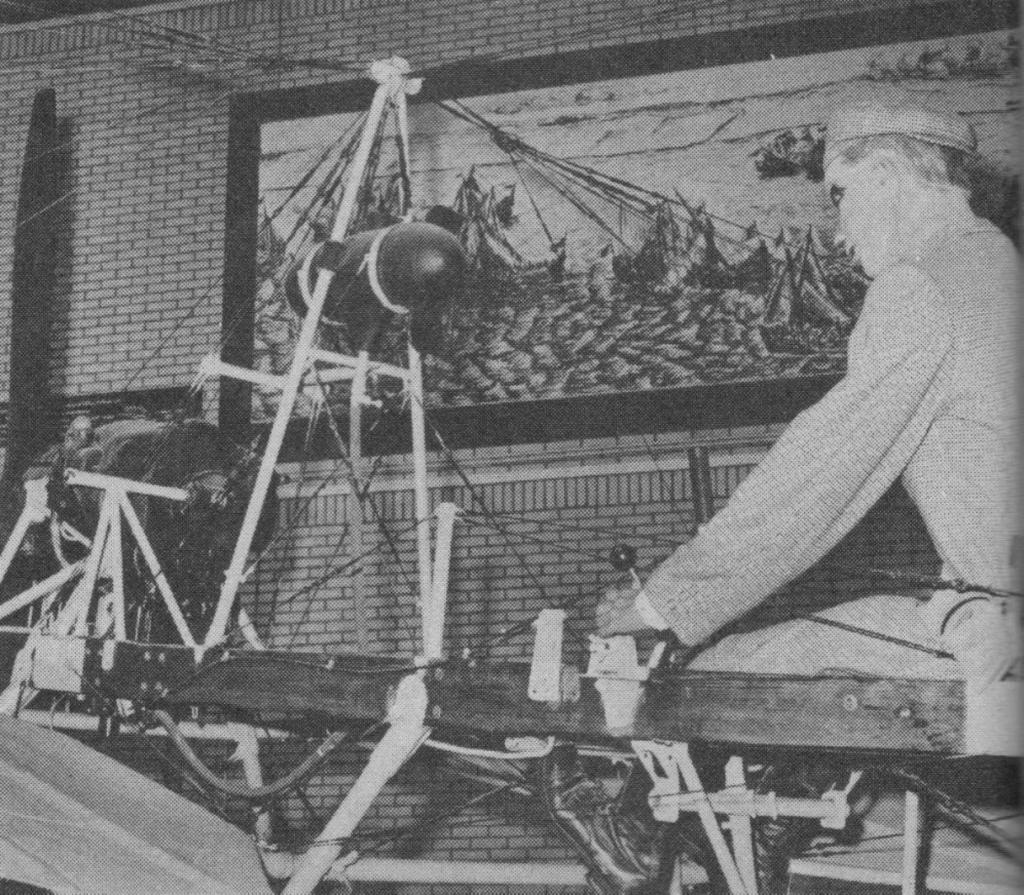
A replica of the 1911 Haarlem aircraft was made by the Fokker works in 1936. It was similar tubular steel and wood construction with same quality fabric cover, but the engine a more powerful Hirth 504 A-1 of 105 hp. Stored through WW 2 it was reassembled and reconditioned in 1953, then reconditioned again in 1959 for exhibition at the Aeroplanorama.
Gallery
1911 M1 2-seater monoplane
Span: 36’1″
Length: 26’3″
Weight empty: 849 lbs
Speed: 49 mph
Seats: 2
1911 Spinne (Spider)
Span: 36′
Length: 25’5″
Weight: 900 lb gross
Speed: 70 mph
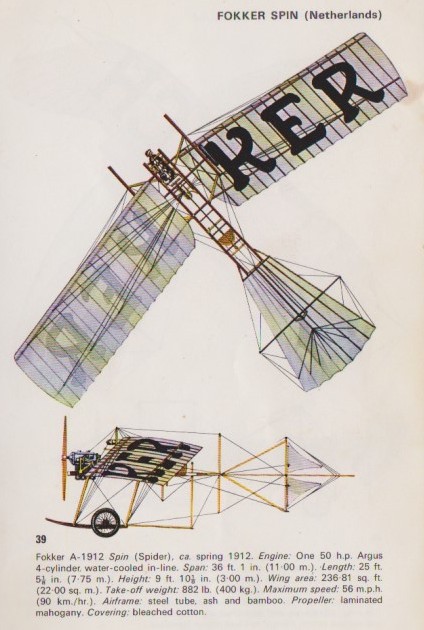
A-1912
Engine: One 50 hp Argus four¬ cylinder in line.
Prop: 2-¬blade.
Wing span: 36 ft 1 in (11.00 m).
Length: 25 ft 5 in (7,75 m).
Wing area: 236.81 sq.ft (22.00 sq.m).
Gross weight: 882 lb (400 kg).
Max speed: 56 mph (90 km/h).
Crew: 1.
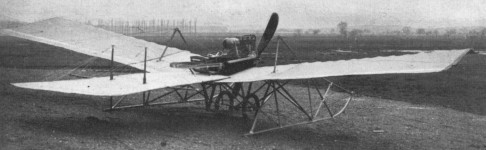
The first aircraft built by Anthony Fokker, the Spin of 1910. Anthony Fokker decided to build his own aeroplane. A fellow pupil from the school at Zahlbach, the 50 year old Lieutenant von Daum, became his partner, donating the cash for the engine, and Fokker contributed his knowledge, his labour and 1500 Marks. The machine, named the ‘Spin’ (Spider), was constructed in an empty Zeppelin shed at Baden Baden. By the end of 1910 it had been completed, and Fokker was able to make the first hops in it. To start with, the ‘Spin’ had no rudder, but this did not mat¬ter to Fokker, who went almost out of his mind with joy.
At Christmas 1910 he went home, only to be greeted with the sad tidings that von Daum had tried to fly the ‘Spin’ in Fokker’s absence and smashed into the only tree on the airfield during take off.
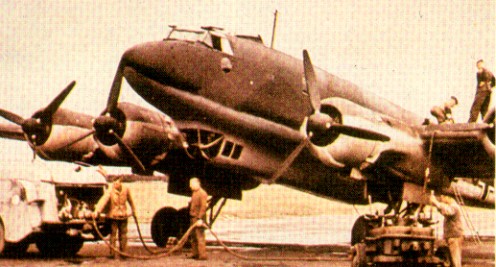
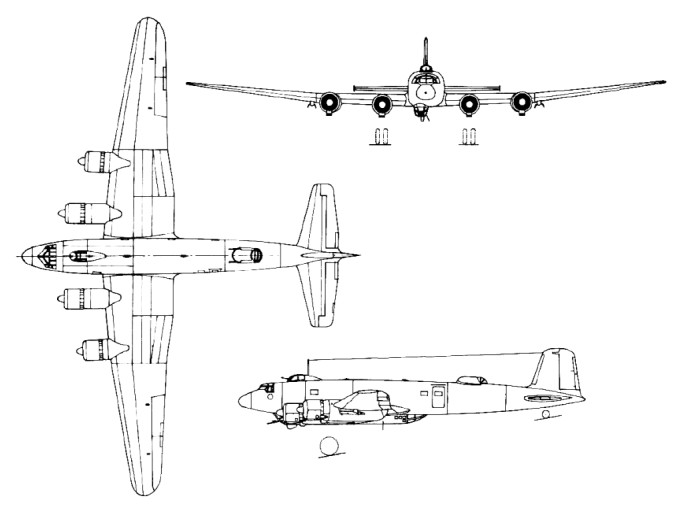
The Fw 200 Condor flew on 3 July 1937 in the form of the first prototype for a 26-passenger long-range airliner.
In 1938 the Fw200 first flew across the north Atlantic to New York, and to Tokyo later that year, but World War II prevented the establishment of proper schedules.
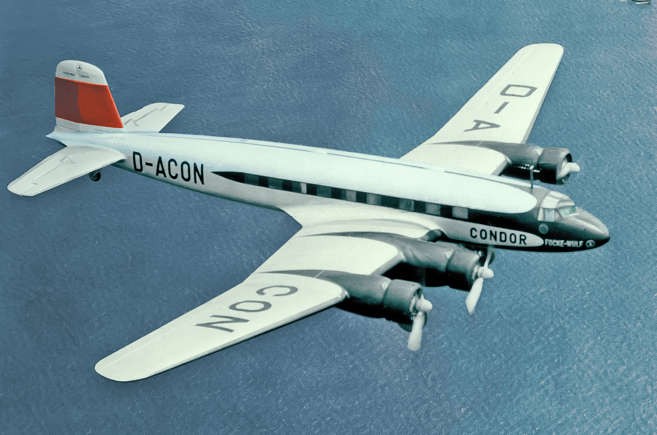
In 1938 the type confirmed its potential by capturing several world records, and about 10 airlin¬ers had been delivered to Brazilian, Det Danske Luftfartselskab Danish and German airlines before the outbreak of the Second World War. A few VIP transports had also been delivered. The B version powered by four 648kW BMW 132H engines. With the outbreak of World War II, Luft-Hansa’s Condors were impressed into the Luftwaffe as transports, while a small number being built for the Japanese Army (including a maritime reconnaissance conversion) were also taken over.
Focke-Wulf Fw-200 Condor Article
Thereafter, development was concentrated on the Fw 200C maritime version, starting with a small number of pre-production aircraft of basically commercial type. In this role the Condor’s long range was decisive, but there were constant problems with the integrity of the military version’s fuselage, which had a tendency to break in heavy landings.
The Fw 200C-1 introduced the long bomb-bay gondola beneath the fuselage, slightly offset to starboard. This contained a bomb aimer’s position at the forward end and gun positions at both the forward and aft ends. The guns were placed on hemispherical mountings with restricted movement. Total defensive armament comprised, according to sub-variant, one 7.9mm machine-gun, 15mm or 20mm cannon in a power-operated turret above the pilot’s cabin, one 13mm machine-gun in an aft dorsal position, two-four 7.92mm machine-guns for lateral fire, one 20mm cannon in the nose of the gondola and one 7.92mm or 13mm machine-gun or 20mm cannon in the tail of the gondola. Power was provided by four BMW 132H-1 engines in the Fw 200C-1 and C-2 versions and 700kW Bramo Fafnir 323R-2s in the C-3 and later aircraft.
Operated in small numbers against allied shipping during 1940, as well as for maritime reconnaissance and mine-laying duties, and from 1941 until the summer of 1944 it was used extensively against convoys and for U-boat cooperation. However, as early as 1943 purpose-designed maritime reconnaissance aircraft began replacing the Condor, whose activities had been curtailed by the introduction of Allied CAM merchant ships carrying expendable Hurricane fighters, long-range Beaufighters and Liberators.
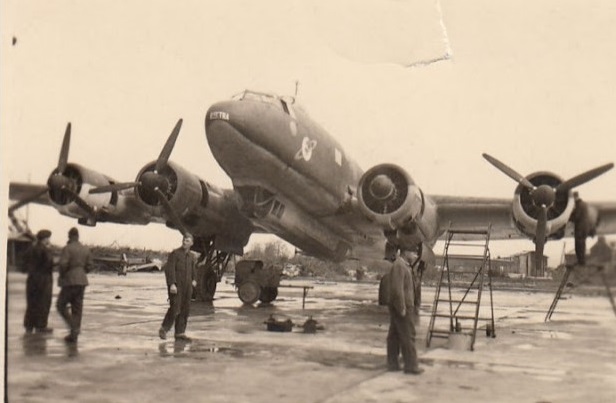
On Saturday 26 October 1940, a Focke-Wulf Fw-200 Condor took off under the command of 1st Lt. Burkhardt, second pilot, NCO Dörschel, flight mechanic; NCO Iwang; 1st radio operator; Airman 2nd Class Mix, 2nd radio operator; Dr Habich, meteorologist, on an armed reconnaissance and weather scouting mission over northwest Ireland. During this flight a large vessel with 3 smokestacks was sighted west of Ireland. Despite powerful anti-aircraft activity which inflicted serious hits on the attacking aircraft after its first assault, the German plane inflicted 2 severe hits on the ship in a total of 4 daring low-level attacks. As the plane was flying away, the ship showed a slight list and was burning along the whole length. Mission ‘weather reconnaissance’ was carried out at the conclusion of this success. The assaulted ship burned for 24 hours and the following day its wreck was sunk by a U-boat. The vessel was the passenger steamer ‘Empress of Britain’, which at 42,000 tons was the tenth largest ship in the international merchant fleet and did service as a troop transport vessel.
Some Condors were equipped to carry the Hs 293 anti-shipping missile under the outer engines. Otherwise they carried up to 2100kg of bombs.
Total production was 276 aircraft. Principal versions – Fw 200A (pre-production airliner), Fw 200B (production airliner with 850- hp/634-kW BMW 132 radials), Fw 200C-0 (pre-production military model), Fw 200C-1 (production type with 3,757-lb/1,750-kg bombload), Fw 200C-2 (improved C-1 with revised nacelles and underwing bomb racks), Fw 200C-3 (first major version with BMW Bramo 323 Fafnir radials and different armament in several subvariants), Fw 200C-4 (definitive production model with search radar), Fw 200C-6 (model with two Henschel Hs 293 anti-ship missiles), and Fw 200C-8 (revised missile-carrier).

Interest by the Japanese Army in the bomber version of the Fw-200 followed a visit to Japan in 1938. The Fw-200K Kurier version was originally intended for Japan and the allied code ‘Trudy’ was allocated. No deliveries were made.
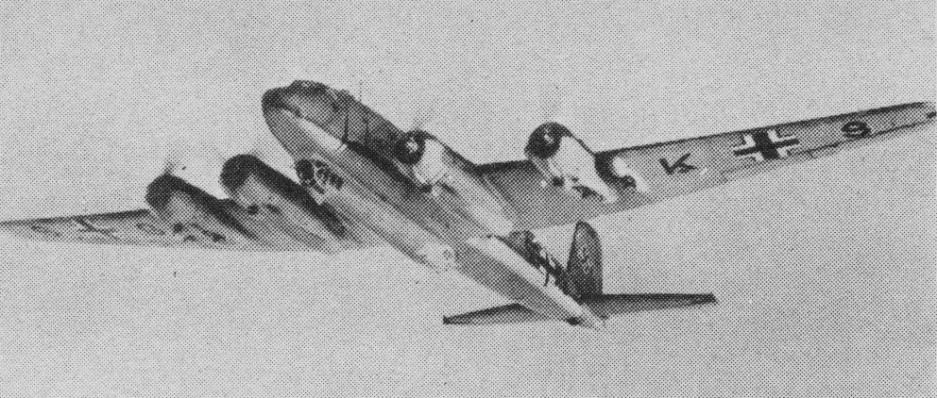
Focke Wulf FW 200 A Condor
Engines: 4 x BMW 132 G, 710 hp
Length: 78.248 ft / 23.85 m
Height: 19.685 ft / 6.0 m
Wingspan: 107.743 ft /32.84 m
Wing area: 1270.152 sqft / 118.0 sq.m
Max take off weight: 37485.0 lb / 17000.0 kg
Weight empty: 24089.6 lb / 10925.0 kg
Max. speed: 202 kts / 375 km/h
Landing speed: 58 kts / 107 km/h
Cruising speed: 181 kts / 335 km/h
Initial climb rate: 1377.95 ft/min / 7.00 m/s
Service ceiling: 24606 ft / 7500 m
Wing load: 29.52 lb/sq.ft / 144.00 kg/sq.m
Range: 956 nm / 1770 km
Crew: 4 + 26
Fw 200C-3/U4
Engines: 4 x Bramo 323R, 895kw
Max take-off weight: 24520 kg / 54058 lb
Empty weight: 17005 kg / 37490 lb
Wingspan: 32.85 m / 107 ft 9 in
Length: 23.45 m / 76 ft 11 in
Height: 3.3 m / 10 ft 10 in
Wing area: 119.85 sq.m / 1290.05 sq ft
Max. speed: 360 km/h / 224 mph
Cruise speed: 335 km/h / 208 mph
Ceiling: 6000 m / 19700 ft
Range: 3560 km / 2212 miles
Armament: 4 x 13mm machine-guns, 1 x 20mm cannon, 4 x 250kg bombs
Fw 200C-8 Condor
Engines: 4 x 1,200-hp (895-kW) BMW Bramo 323R-2 Fafnir
Maximum speed 224 mph (360 kph) at 15,750 ft (4,800 m)
Service ceiling 19,030 ft (5,800 m)
Range 2,175 miles (3,500 km)
Emptyweight 29,367 lb (12,950 kg)
Maximum take-off wieght 50,044 lb (22,700 kg)
Wing span 109 ft 1 in (33.25 m)
Length 78 ft 3 in (23.85 m)
Height 20 ft 4 in (6.20 m)
Wing area 1,270.2 sq ft (118.00 sq.m).
Armament: one 20-mm cannon, four 13.1-mm (0.52-in) machine guns, and one 7.92-mm (0.312-in) machine gun in nose, dorsal, beam and ventral positions, and two HS 293A missiles.
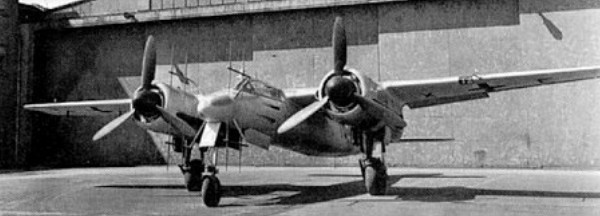
Inspired by the RAF’s de Havilland Mosquito, Kurt Tank created the Ta-154 in response to an urgent requirement for a night-fighter to protect Germany from the RAF’s bombers. The Ta-154 was a heavily armed two-seat, twin-engined aircraft made largely of wood.
The Ta 154V 1a 1st prototype TE+FE, Wn 100001 first flew on 01/07/1943, piloted by Sander, at Langenhagen, and on 07/07/1943, piloted by Kurt Tank at Langenhagen. Modifications to the engines changed them from Junkers Jumo 211F to 211N. Flight number 47 took place on 31/07/1943. On 05/08/1944 TE+FE suffered total destruction from air attack. The single seat V1 was not armed and tested general flight characteristics.
The Ta 154V2 – Ta 154A-1/R1, first flown on 10/09/1943 by Sander or Melhorm at Langenhagen, was to test endurance, radiators and flash-concealers. Equipped with the FuG 212 and MG 81Z armament and powered by
Junkers Jumo 211F and NR with water-methanol injection, Wn 100002, TE+FF was totally destroyed by air attack on 05/08/1944.
Ta154V3- Ta 154A-0/U1 Wn 100003, TE+FG, was first flown on 25/11/1943 by Bartsch at Langenhagen. On 10/01/1944 it was received at Rechlin. On 20/01/1944 it made a belly landing at Sorau, and had another accident on 12/04/1944. In August 1944 it was totally destroyed by air attack. A FuG 212C-1 then C-2 were installed and power wasJunkers Jumo 211F & Junker Jumo 211N. Four MG15/20 guns were fitted.
Ta 154 V4 Wn 100004, TE+FH, first flew on 10/01/1944 and was destroyed crash landing on 25/08/1944.
Ta 154 V5 – Ta 154A-4 Wn 100005, TE+FI was first flown on 25/02/1944, by Bartsch at Langenhagen, and delivered to Tranewitz for armement tests on 10/03/1944. Engine failure occurred on 07/04/1944. It was moved to Detmold for modification as a night fighter on 14/08/1944. The engines were Junkers Jumo 211N then Junkers Jumo 213.
Ta 154V6 – Ta 154A-4 was first flown on 18/03/1944, by Bartsch at Langehagen. From the 10/06/1944 to the 22/06/1944 it was tested at Rechlin. From 27/06/944 it was transformation into a night fighter at Detmold with 2 Junkers Jumo 213. Engines were Junkers Jumo 211N then 213A. The navigation indicator was a K 12.Wn 100006, TE+FJ.
Ta 154V6 – Ta 154A-4 Wn 100006, TE+FJ, was first flown on 18/03/1944, by Bartsch at Langehagen. From 10/06/1944 to 22/06/1944 tests were at Rechlin. On 27/06/944 it was transformation into a night fighter at Detmold with 2 Junkers Jumo 213. Junkers Jumo 211N then 213A were fitted. Course indicator – K 12.
Ta 154V7 Wn 100007, TF+FK, was first flown on 25/03/1944 and on 09/04/1944 damaged by air attack. 2 engine Junkers Jumo 211N with VS 11 props.
Ta 154V8 TF+FL first flew 08/04/1944 piloted by Sander, for tests of engines and performances. On 06/08/1944 it was destroyed after an engine fire and belly landing crewed by Otto/Rettig. Engines were Junkers Jumo 213A, and props VS 9.
The Ta 154V9 Wn 100009, TF+FM, was first flown 18/04/1944. Suffered an accident flown by Bartisch with Meyer as observer. The engines were Junkers Jumo 211N, and props VS 11.
Ta 154V10 Wn 1000010, TE+FN, first flew on 04/06/1944 at Langenhagen. 15/07/1944 was its last known flight. The engines were initially Junkers Jumo 213 with VS-8 props, the Junkers Jumo 213A-1, with VS-111 props.
Ta 154V11 Wn 1000011 was destined for static tests of series A.
Ta 154V12: Wn 1000012.
Ta 154V13: Wn 1000013.
Ta 154V14: Static test for the C series. Wn 1000014.
Ta 154V 15 – Ta 154A 2 was the prototype of the A-2, first flown on 06/04/1944, powered by Junkers Jumo 211R. Wn 1000015.
Ta 154V 16 Wn 1000016 first flew on 20/04/1944, powered by Junkers Jumo 211R engines.
Ta 154V 17 Wn 1000017 in 1944 was in the process of assembly at Erfurt but not completed.
Ta 154V 18 Wn 1000018 flew on 29/04/1944 with two engines Junker Jumo 211R engines.
Ta 154V 19 Wn 1000019 first flew on 01/07/1944, powered by two Junkers Jumo 211R.
Ta 154V 20 – Ta 154C1 Wn 120105 (0035) was the prototype for the Ta 154 C-1, but it was not completed when captured on 01/07/1944.
Ta 154V 21 – Ta 154C-2/3 Wn 120106 (0036), prototype for the Ta 154 C-2 then C-3, was not completed.
Ta 154V 22: 1st flown on 12/06/1944 by Sander at Langenhagen.
Unfortunately, the RAF reached the factory producing the specialized glue first and the production aircraft were assembled using a cheaper alternative. Three aircraft soon disintegrated in flight and production was stopped while a solution was sought. Hermann Goering, who knew little about the programme, accused Tank of sabotage, and an unrelated crash saw cancellation of the whole programme in August 1944. A plan to use some of the completed aircraft packed with explosives to blow up US bomber formations did not proceed.
Ta 154V 1
TE+FE Wn 100001
Engines: Junkers Jumo 211F, later 211N.
Seats: 1
Ta 154V2 – Ta 154A-1/R1
TE+FF Wn 100002
Engines: Junkers Jumo 211F and NR with water-methanol injection
Armament: MG 81Z
Ta154V3- Ta 154A-0/U1
Wn 100003, TE+FG
Engines: Junkers Jumo 211F & Junker Jumo 211N.
Armament: Four MG15/20guns.
Ta 154 V4
Wn 100004, TE+FH
Ta 154 V5 – Ta 154A-4
Wn 100005, TE+FI
Engines: Junkers Jumo 211N / Junker Jumo 213
Ta 154V6 – Ta 154A-4
Wn 100006, TE+FJ,
Engines: 2 Junkers Jumo 213 / Junkers Jumo 211N / Junkers Jumo 213A
Ta 154V7
Wn 100007, TF+FK
Engines: Junkers Jumo 211N
Props VS 11.
Ta 154V8
Wn 100008, TF+FL
Engines: Junkers Jumo 213A
Props: VS 9.
Ta 154V9
Wn 100009, TF+FM
Engines: Junkers Jumo 211N
Props: VS 11.
Ta 154 V10
Wn 1000010, TE+FN
Engines: Junkers Jumo 213, later Junkers Jumo 213A-1
Props: VS-8, later VS-111
Ta 154V 15 – Ta 154A 2
Wn 1000015
Engines; Junkers Jumo 211R.
Ta 154V 16
Wn 1000016
Engines: Junkers Jumo 211R
Ta 154V 18
Wn 1000018
Engines: Junker Jumo 211R
Ta 154V 19
Wn 1000019
Engines: two Junkers Jumo 211R.
Ta 154V 20 – Ta 154C1
Wn 120105 (0035)
Ta 154V 22
Engine: 2 x 1500hp Jumo 211R
Max take-off weight: 8930 kg / 19687 lb
Wingspan: 16.00 m / 52 ft 6 in
Length: 12.10 m / 39 ft 8 in
Height: 3.50 m / 11 ft 6 in
Max. speed: 650 km/h / 404 mph
Crew: 2
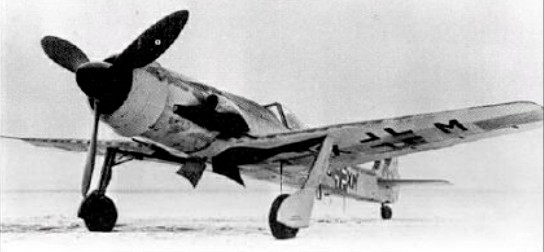
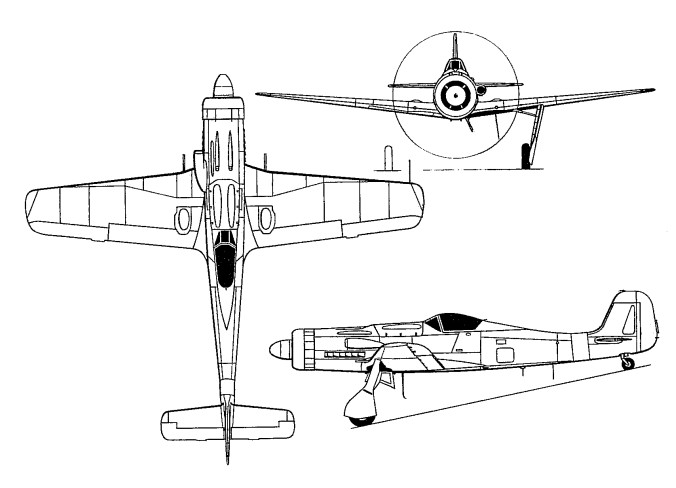
The Ta 152 was a development of the Fw 190D. Though the Ta 152 looked superficially like a Dora 9, it was actually intended to be an almost completely new design, with quite different structure and a DB 603 engine. The Ta 152A single prototype, GH+KW, first flew on 12/07/1944, but was destroyed the following day by accident.
V21/U1 (then V21/U2), V6 Werk NR 110006, V7 Werk NR 110007, and V8 Werk NR 110008), were tested between November 1944 and Febuary 1945.
Later much of the original 190 structure was restored, to speed production, and the 152 was built with both the DB 603 (152C) and Jumo 213 (152H) engines. The wings of the Ta 152C being similar in planform to those of the Dora 9, while those for the Ta 152H are of the high aspect ratio, long span variety. The FW 190C prototypes went on to be modified and used as prototypes for the Ta 152 H.
The Ta 152H was a high-altitude fighter, but appeared too late, and few became operational. The Ta 152s were
often used to protect jet fighter bases. 215 built.
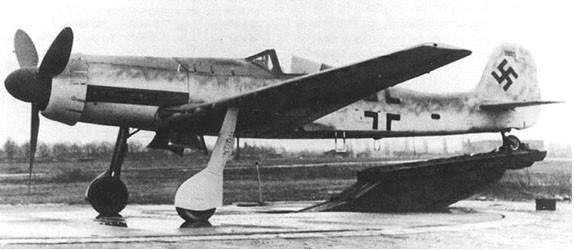
The Ta 152H-0 high-altitude version had a series of prototypes: V18/U2 (GH + KB), destroyed 08/10/1944, during its first flights; V20, Werk NR 0042, (GH + KQ), with 1 Jumo 213A; V21 Werk NR 0043; V29 W NR 0054, become the V29/U1 with cabin pressurisation; V1 W NR 11001, built in June 1944; V2 W NR 11002 in July 1944; V33/U1 W NR 0058,12/07/1944; V30/U1 W NR 0055 1 Jumo 213A (GH + KT), 06/08/1944; V3, V4 and V5; V 25 W NR 110025; Fw 190 V32/U2 with engine Jumo 213E-1. Followed up with Ta 152H-0 Werk NR 15001 – 150020, 10/1944. General armament of 3 guns, some with 5. Werk NR 15004 was the first of the R/11 with an automatic pilot.
Ta 152 V20
Engine: Junkers Jumo 213C, later, Junkers Jumo, 1750 hp, 1320 hp at 7000m, 1740 hp with GM-1
Ta 152A
Engine: Junkers Jumo 213C, 1780 hp at SL, 1600 hp at 5500 m, 2200 hp with water-methanol MV 50 injection
Prop: three-bladed wood Junkers VS-111 fixed pitch 3,50 m dia.
Wingspan: 14,44 m
Length: 10,192 m
Height: 3,37 m
Wingarea: 23,30 sq.m
Empty weight: 3473 kg
Normal takeoff weight: 4284 kg
Maximum takeoff weight: 4840 kg
Wing loading: 183.862 kg/sq.m
Power loading: 2.4 kg/hp
Vmax: 704 Kmh at 11300 m, 681 Kmh at 6500 m, 634 Kmh at 3000 m, 580 Kmh at SL
Vcruise: 480 Kmh at 4000 m
ROC: 2000 m in 2 min 15 sec, 10000 m in 7 min 15 sec
Ceiling: 13200 m
Range: 840 km
Armament: 2 x MT Rheinmetall MG 131, 13 mm, 2 x Mauser MG 151/20, 20 mm, 1 x Mk 108, 30 mm
Ta 152B-4/R-1
Engine: Junkers Jumo 213E
Armament: 3 x Mk 108, 30 mm
Prototype.
Ta 152B-4/R-2
Engine: Junkers Jumo 213E
Armament: 3 x Mk 108, 30 mm
Prototype.
Ta 152B-5/R-11
Engine: Junkers Jumo 213E-1, 1750 hp, 1320 hp at 9500m, 1740 hp with MW 50
Prop: metal three-blade fixed pitch
Wingspan: 11,00 m
Length: 10,80 m
Height: 3,38 m
Weight: 5450 kg
Vmax: 529 km/h at SL, 710 km/h at 9000 m, (with MW 50)
Ceiling: 11600 m
Range internal fuel: 1165 km
Armament: 2 x Mk 103, 30 mm / 1 x Mk 108, 30 mm (80 rds)
Seats: 1
Ta-152C
Engine: Junkers Jumo 213C
Wingspan: 36 ft 1 in
Length: 35 ft 5.5 in
Max speed; 463 mph at 34,000 ft
Range: 745 miles
Armament: 1 x 30mm cannon, 4 x 20mm cannon
Ta 152C-0
Engine: Daimler-Benz dB 603E, 1800 hp
Prop: three-bladed wood Junkers VS 111 fixed pitch
V21/U1 (then V21/U2)
V6
Werk NR 110006
V7
Werk NR 110007
V8
Werk NR 110008
Ta 152C-0/R-11
Prototype V 7 CI +XM
Engine: Daimler-Benz DB 603L, 1750 hp
Flown: 03/1945
Ta 153B
Engine: Junkers Jumo 213E with GM1 injection
Vmax: 706 Kmh at 10780m
Ta 152C-1
Engine: Daimler-Benz DB 603LA, 1750 hp or DB 603EM, 1800 hp
Flown 04/1945
Ta 152 C-1/R11
Engine Daimler-Benz DB 603LA, 2100 hp, 1750 hp at 9000 m, 1900 hp with MW 50
Prop: metal three-blade fixed pitch
Wing span: 11,00 m
Length: 10,80 m
Height: 3,38 m
Weight: 5300 kg
Maximum speed: 547 km/h at 0 m, 740 km/h at 9500 m (with MW 50)
Ceiling: 12200 m
Range: 1165 km
Armament: 2 x MG 151/20 (160 rds each), 2 x MG 151/20 (150 rds each), 1 x MK 108 (90 shells)
Seats: 1
Ta 152C-3
Engine Daimler-Benz DB 603LA, 2100 hp, 1750 hp at 9000 m, 1900 hp with MW 50
Prop: metal three-blade fixed pitch
Wing span: 11,00 m
Length: 10,80 m
Height: 3,38 m
Weight: 5300 kg
Maximum speed: 547 km/h at 0 m, 740 km/h at 9500 m (with MW 50)
Ceiling: 12200 m
Range: 1165 km
Armament: 2 x MG 151/20 (160 rds each), 2 x MG 151/20 (150 rds each), 1 x MK 103, 30mm
Seats: 1
Ta 152C-11/R-11
Reccon version with vertical camera
Abandoned in Febuary 1945
Ta 152E
As B-5 with vertical camera Rb-75/30
Engine: Junkers Jumo 213E
Nov 1944
2 protototypes: V 9 Werk NR 11009 and V 14 Werk NR 110014.
Ta 152H
Engine: Junkers Jumo 213E-1 with MW-50 injection and GM-1 boosting
Horsepower:
Take-Off: 1,750 hp at 3,250 RPM (2,050 hp w. MW 50)
Climb And Combat: 1,580 hp at 3,000 RPM
Maximum: 1,320 hp at 32,810 ft. (1,740 hp with GM 1 boost)
Propeller: Junkers wooden three 3.6 m (11 ft 9.75 in) dia.
Fuel Capacity: 364 Imperial Gallons (1618 lt)
Type: B4 (87 Octane)
Oil Capacity: 72 lt
GM-1 (Nitrous Oxide) Capacity: 85 liters
MW-50 (Methanol-Water) capacity: 140 lt
Wing span: 14.5m / 47 ft 6.75 in
Wing Area: 23.5sq.m (252.95 Sq. Ft.)
Length: 10.8m (35ft 5.25 in.)
Height: 4m (13 ft. 1.5 in.)
Wheel Track: 3.95m (12 ft. 11 in.)
Empty weight: 3,600kg (7,940 lbs.)
Loaded weight: 5,500kg (12,125 lbs.)
Maximum speed:
695km/h (431mph) at 10,500m (34,451 ft.)
750km/h (466mph) at 9,000m (29,529 ft.) with MW-50
760km/h (472mph) at 12,500m (41,012 ft.) with MW-50 and GM-1
Climb rate: 1000m/minute
Ceiling: 14,800m (48,560 ft.)
Range (Internal fuel): 1200km (745 Miles)
Armament:
One 30mm MK 108 mounted between the cylinder heads, firing through the propeller hub
Ammunition: 90 Rounds
Two inboard wing mounted 20mm MG151/20
Ammunition: 175 Rounds Each
(Occasionally outboard MG 151/20s as well, depending on model, some reconnaissance models were unarmed)
Bomb load: None
Avionics:
Revi 16B Gunsight
FuG 125 Navigation equipment (H-1/R-11 Only)
LGW-Siemens K 23 Autopilot
FuG 16ZY Radio Transmitter/reciever
BSK 16 Gun Camera
Crew: One

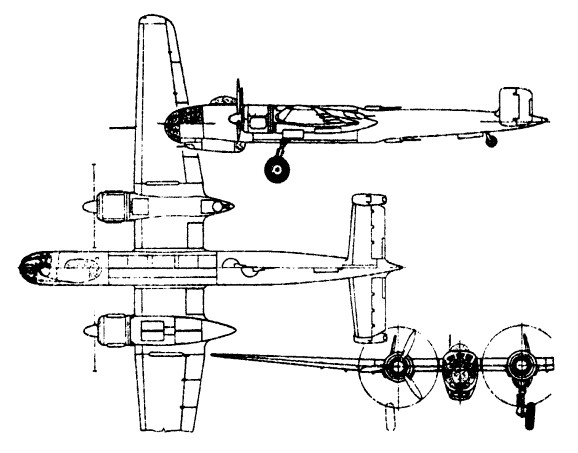
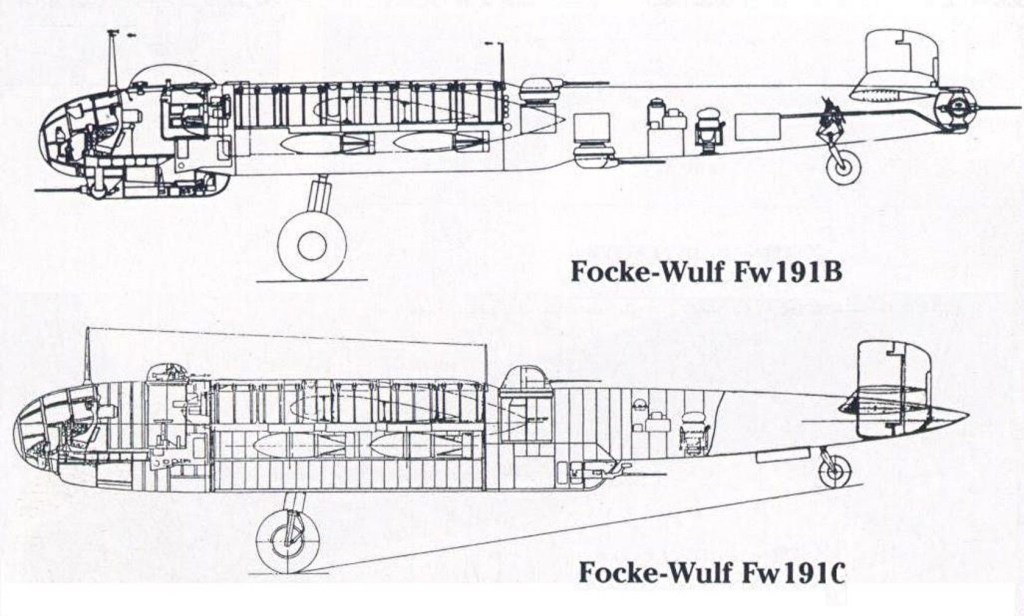
The Fw 191 was designed as a high-altitude, pressurised, bomber. Focke-Wulf built a technically complex machine around engines which did not exist, and the operation of the majority of the components was electric, which complicated problems. The second prototype had the elecric systems replaced by hydraulics. Development problems caused its abandonment. Three built.
Fw 191 V-1
Engines: 2 x BMW 801C1, 1600 hp
Props: three-bladed VDM fixed pitch
Wingspan: 26 m
Length: 19,63 m
Height: 5,50 m
Wingarea: 70,40 sq.m
Empty weight: 20400 kg
Power loading: 6,375 kg/hp,
Ceiling: 8500 m
Range: 3500 km without bombs, 1400 km with load
Armament: 3 x MG 151 20mm, 4 x MG 81 7,92mm
Crew: 5
1st prototype, 1941,
Fw 191 V-2
Engines: 2 x BMW 801C1, 1600 hp
Props: three-bladed VDM fixed pitch
Wingspan: 26 m
Length: 19,63 m
Height: 5,50 m
Wingarea: 70,40 sq.m
Empty weight: 20400 kg
Power loading: 6,375 kg/hp,
Ceiling: 8500 m
Range: 3500 km without bombs, 1400 km with load
Armament: 3 x MG 151 20mm, 4 x MG 81 7,92mm
Crew: 5
Fw 191 V-6
Engines: 2 x Junkers Jumo 22, 2500 hp
Props, three-blade metal VDM fixed pitch.
1st flight: 12/1942
Fw 191 B
Engines: 2 x Daimler-Benz DB 610, 2870 hp
Props: three-bladed VDM fixed pitch
Wingspan: 26 m
Length: 19,63 m
Height: 5,50 m
Wingarea: 70,40 sq.m
Empty weight: 23.587 kg
MTOW: 25310 kg
Wing loading: 335/359,517 sg/sq.m
Power loading: 4,109/4,409 kg/hp
Vmax: 565 km/h at 3960 m, 630 km/h at 9450 m
ROC: 450 m/min
Ceiling: 8780 m
Range: 3860 km at 490 km/h, 1800 km at 565 km/h.