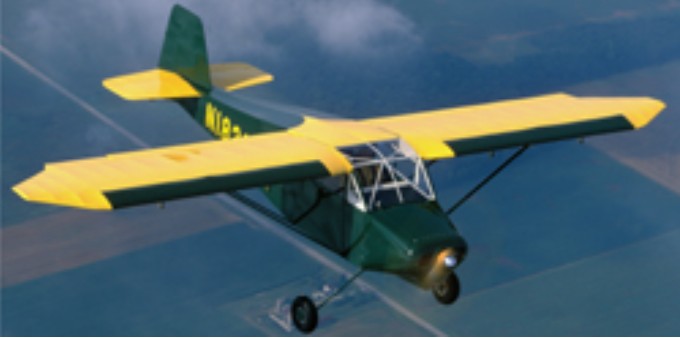
Sylvester “Steve” Wittman built two types of airplanes: Racing machines and Travel machines. The ancestors of these two blood lines were Chief Oshkosh and Buttercup. The Buttercup was built as a utility hauler, and there was only one made, in 1937, NX/N18268. Initially powered by a 50hp Lycoming O-145, then an 85hp Continental A-85, he flew it all over the western hemisphere, from Alaska to Bermuda, Florida to Oregon. The Buttercup almost made it into production (cancelled due to WWII) coming to the interest of Fairchild as a four-place project, called the ‘Big X.’ One plane was built for them by “Witt” – a 4-place, 6 cylinder, 130 HP Franklin powered prototype.
The real genius of the Buttercup design is Wittman’s claim of 38-40 mph (indicated) slow-flight speed and a near 150 mph top speed, and all on 85 hp! The high speed is vintage Wittman, the low speed is due to an ingenius flap-coupled, retracting lead edge design (seen in today’s airliners). Earl Luce of LuceAir, Inc. has ‘revived’ the Buttercup, featured in the April 2003 issue of Sport Aviation. Kits and fabricated assemblies for the Buttercup are available from Aircraft Spruce.
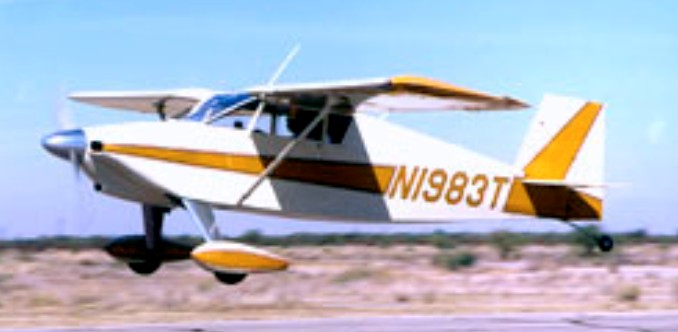
The Tailwind (prototype) W-8C, a two-seat high wing monoplane, built and first flew in 1953. So suc-cessful was this aircraft that plans were made available to amateur builders.
The Tailwind is a side by side, two seat, high wing, strut-braced, cabin monoplane. The wing consists of two separate panels, each incorporating wooden spars and ribs, internal wire bracing and plywood covering. An NACA 4309 aerofoil section is used. The ailerons and flaps are of steel tube construction, and are fabric covered. The fuselage is a chrome molybdenum steel tube structure, and is fabric covered. A cabin door is incor¬porated in each side. The empennage, like the fuselage, is built up of welded steel tube, and is fabric covered. The main undercarriage incorporates round spring steel main legs, and 500 x 5” wheels. The wheel track is 5’ 5”. A 20 Imp. gallon fuel tank is installed in the fuselage behind the firewall.
The W-8L Tailwind, powered by a Lycoming engine, was built in 1954. Revisions have been made to allow the use of the 150-hp Lycoming, 145-hp Continental and the Olds/Buick 215-cu.in. V-8s. The Oldsmobile Tailwind was built in 1974.
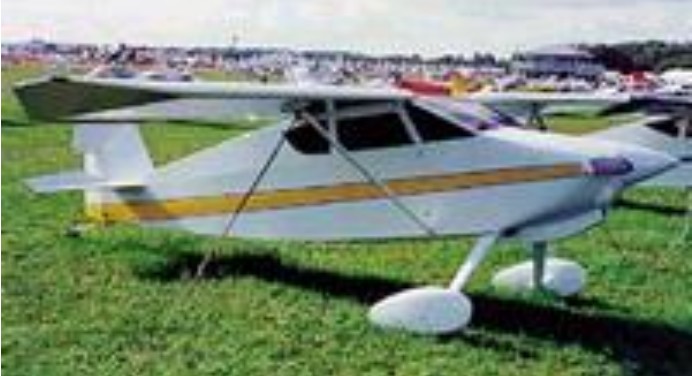
Wittman W-10 Tailwind built by Jim Clement
Wittman W-9 N4JB
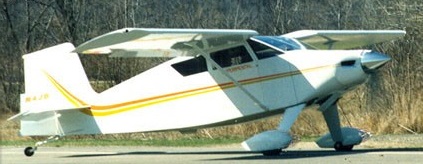
The W-9L Tailwind, with a tricycle landing gear, was built in 1958. Based on the W-8, the prototype N374 was powered by a 160hp Lycoming O-320-B1A.
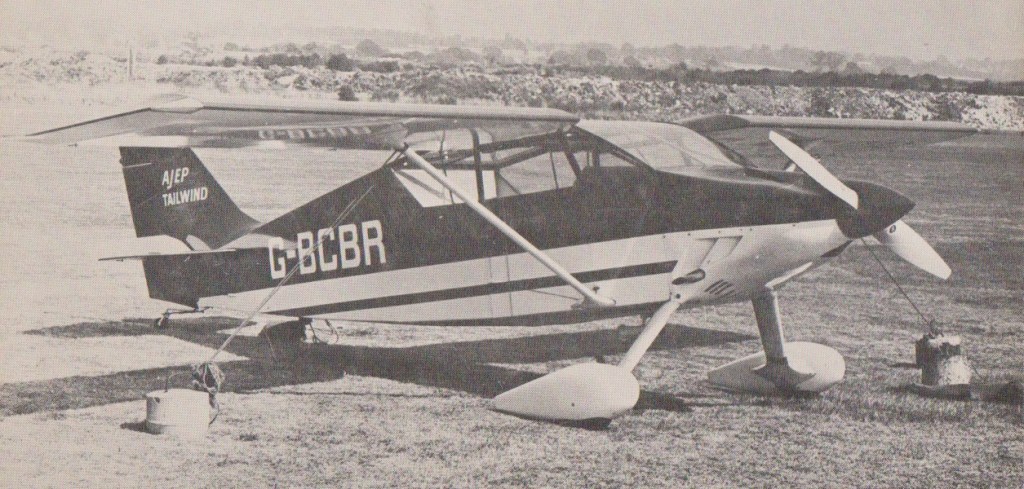
In 2009 available as kit or plans from Aircraft Spruce & Specialty Co. Plan Price $180.00. AJEP Developments in the UK offered kits to construct modified version of Whittman Tailwind homebuilt aircraft.
AJEP Tailwind G-BCBR September 1975 at Luton
Aircraft Spruce acquired the rights to the Tailwind in January 1996 and is became the exclusive distributor for plans and materials kits, the W-10 replacing the W-8.
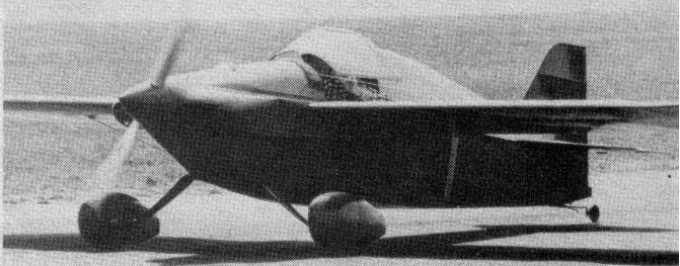
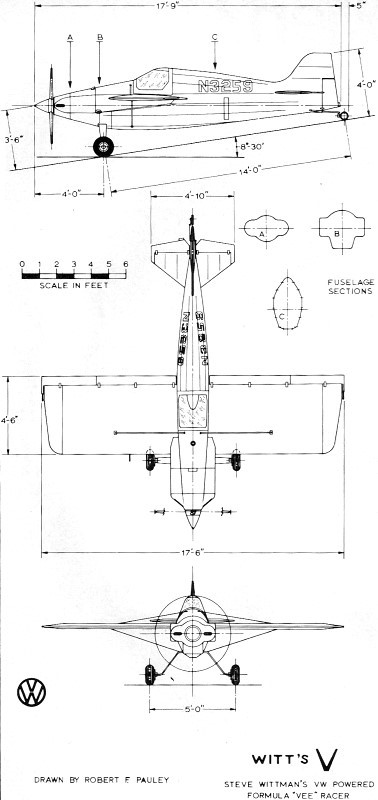
This was a single-seat mid-wing monoplane powered by a 96 cu.in. converted Volkswagen engine, for Formula V air racing. N3259 was built in 1970 and raced 1971-1989. Wittman has had it up to 170-mph.
Steve sold blueprints for this design and about 10 have been built. Aircraft Spruce & Specialty was planning to put the Witt’s V blueprints back on the market.
Engine: VW 1600cc, 60-65hp Wingspan 16’8” Length 18’2” Gross Wt. 700 lb Empty Wt 430 lb Fuel capacity 10 USG Top speed 170 mph Cruise 150 mph Stall 48 mph Climb rate 1000 fpm Takeoff run 800 ft Range 400 sm Seats: 1
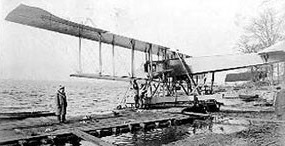
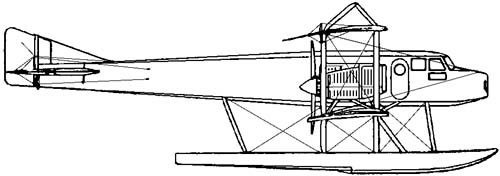
One of the largest seaplanes then in existence, the plane was built by Witteman-Lewis Aircraft Corp in 1923 for an intended transatlantic flight by the two Swedish aeronauts.
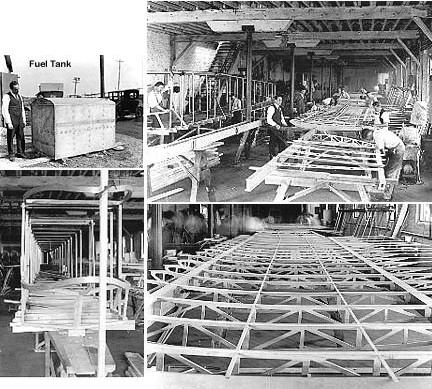
Sundstedt-designed, linen-covered balsawood floats of 32′ length, all else was of ash and spruce construction; 750-gallon fuel tanks.
It crashed in a test flight in Feb 1919 and was considered beyond economical repair.
Designed by Mike Wittaker in 1974, the MW-2B Special, nick-named Buzzabout, was a single-seat all metal low wing monoplane with a twin boom tail and tricycle undercarriage.
To be powered by a VW engine driving a pusher propeller fitted into a ducted shroud, designed by Dowty-Rotol.
Backed by Charles Robertson (Developments) Ltd, the prototype, G-BDDX. c/n 001, PFA.41-10106, was being built at Bodmin, UK, in August 1975 with a first flight expected in early 1976.
Around 1923, three Wissler Airplane Co WA-9 open cockpit biplanes featuring side-by-side seating were built, plus 4 unidentified planes built by others at Indianapolis and Sidney using various surplus Wissler components.
The 1922 Wissler Airplane Co WA-6 was a two place open cockpit biplane. With about 100 hours flying time logged, it ended up in a treetop on 2 August 1922 upon experiencing aileron problems, was extensively damaged, and was not repaired.
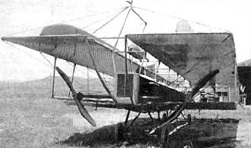
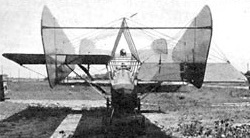
Engineer Bronisław Wiśniewski built at Grażewski Factory a monoplane with 20hp engine in 1912 but the construction details and information about flights are unknown.
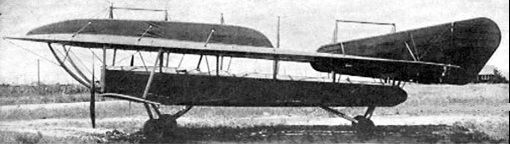
A 1920 experimental single place, open cockpit mid-wing monoplane with wings mounted in a folded-back manner above two outboard 7′ propellers, shaft-driven by a 90hp Maximotor (later replaced by 300hp Hisso). The stability of this design was proved in low-level test flights, and offered a 1:28 glide ratio and spin-proof characterictics. Twin tails, with elevators serving also as ailerons for banking. Although the War Department reportedly expressed interest, nothing came of the novel concept.
The War Dept assumed security and forbade any publicity.



 All Aero