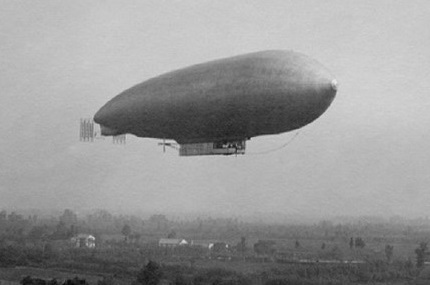
Built in 1918 for the Royal Italian Army (Regio Esercito), the F.6 made one single military mission before the armistice.
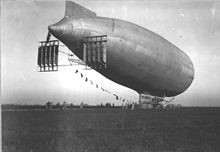
Propulsion: Four Isotta Fraschini IV-B, 180 hp
Volume: 15,000 cu.m
Built in 1918 for the Royal Italian Army (Regio Esercito), the F.6 made one single military mission before the armistice.
Propulsion: Four Isotta Fraschini IV-B, 180 hp
Volume: 15,000 cu.m
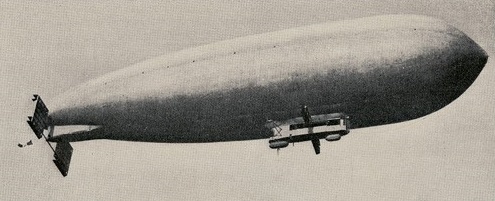
The F.5, ordered by the Army and arriving in 1917, carried a crew of five, full defensive armament, a quantity of bombs, and travelled at an altitude of 6100m (20,000ft).
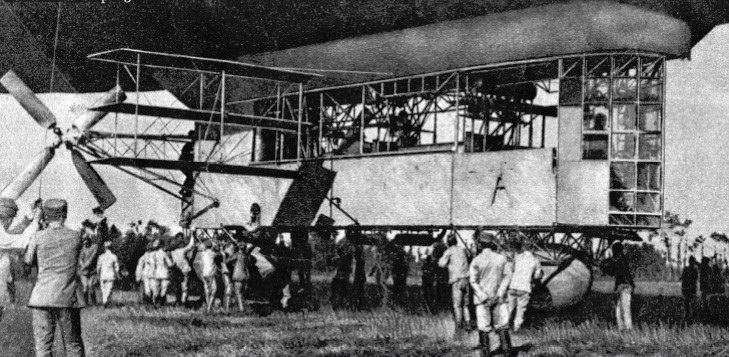
Of light construction in proportion to its size, the envelope was divided into several compartments with a strong, yet flexible internal keel, which allowed the nacelle to be frmly attached to the hull of the airship.
The F.5 was decommissioned on 6 February 1918, then at Baggio, on the western outskirts of Milan, the F.5 met a firey end when it burnt in is hanger on 25 March 1919.
Propulsion: Two FIAT S.76-A, 250 hp
Props: 4 blade
Volume: 17,783 cu.m / 628,000 cu.ft
Length: 300 feet (91 m)
Maximum width: 66 feet (20 m)
Gas cells: 12
Max speed: 75 kph / 46.6 mph
Diameter: 20m / 65.6 ft
Flight ceiling: 20,000 feet (6,100 m)
Payload: 20,227 lb (9175 kg)
Crew: 5: commander, two officers, two mechanics
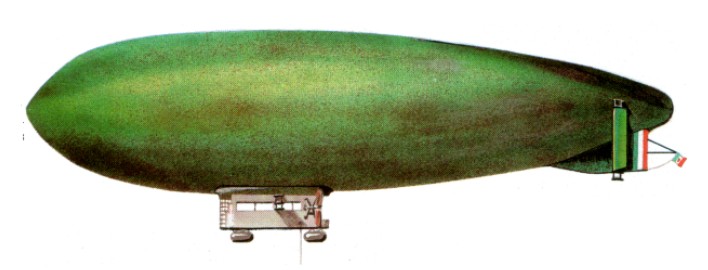
Manufactured by the Società Leonar¬do da Vinci in Milan, the ‘Forlanini’ class airships (designed by Enrico Forlanini and the firm’s engineer Luigi Crescentini) may be regarded as the most successful of the Italian semi¬rigid vessels, winning a number of re¬cords during the years immediately preceding World War 1. Early versions had carried their structural girder externally, but this was eventually placed within the hull as a truss from which the central car with its crew compartment, motors and flotation bags protruded, the leading edge being glazed and an unusual tri¬plane set of control surfaces being car¬ried at each side of the F.3. To the rear of the car the propellers, arranged as pushers, were carried on outriggers with an extended linkage to the en¬gines, the reversible propellers being capable of variable pitch.
An interesting design feature of the envelope was its double surface with a space between the inner and outer fabric, which served as a ballonet to maintain the shape of the envelope. In addition a climbing well was included together with a ladder by which to gain access to a platform on top of the hull.
There were five initial ‘Forlanini’ airships with progressively improved performance, the best showing a rate of climb of 1000 m (3,300 ft) per minute. One such airship setting up an endur¬ance record of eight hours, in the course of which the average altitude maintained was 3960 m (12,992 ft) although at one time 5335 m (17,503 ft) was attained.
Perhaps the most unusual feature of the Forlanini was the construction of the tail. This did not terminate in the conventional cruciform pattern but had instead a robust ventral fin of thick section. To each side of this and below the centreline a series of high aspect ratio rudders was carried (five to a side) with biplane horizontal surfaces above and below.
A Forlanini F.3 was built to a British Admiralty order in 1913, and to be known as Naval Airship No.11, but ws appropriated by the Italian Government at the outbreak of war in 1914. Two further airships of this design, No.12 and No.13, were to be built under licence by Armstrong Whitworth but were not proceeded with due to pressures of other war work.
A considerably smaller Forlanini airship was the ‘P’ class (Piccolo, or small) with a fixed vertical fin and out rigged rudders at the ends of very wide span elevators. This model was 63.0 m (206 ft 8.3 in) in length, with a diameter of 12.0 m (39 ft 4.4 in).
P Class
Propulsion: Four FIAT S.54-A, 80 hp
Volume: 13,790 cu.m
Maximum speed: 80 km/h
Flight endurance: 24 hr
Useful payload: 6 tonne
Forlanini F.3
Type: sea patrol and bombing airship
Powerplant: two 74. 6-kW (100-hp) Fiat A six-cylinder water-cooled piston
Maximum speed 80 kph (50 mph)
Service ceiling 5480 m (17979 ft)
Range 650 km (404 miles)
Useful lift 2720 kg (5997 lb)
Diameter 20.34 m (66 ft 8.8 in)
Length 95.1 m (296 ft 11.4 in)
Volume 13800 cu.m (487,343 cu ft)
Forlanini F.3
Engines: 2 x Isotta Fraschini V5 8-cyl, 180 hp
Envelope: 421,000 cu.ft
Length: 234 ft
Diameter: 58 ft
Height: 73 ft
Gross lift: 11.5 ton
Disposable load: 4.2 ton
Speed: 40 mph
Range: 600 miles
Crew: 10
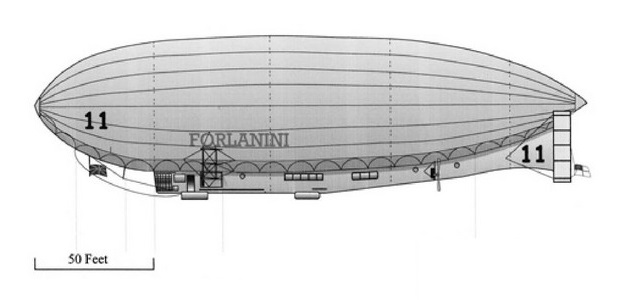

Enrico Forlanini designed and built a series of dirigibles, notably, in 1912, the Città di Milano, dedicated to his beloved home town. It showed exceptionally good characteristics of stability and controllability that won Forlanini international renown.
The F.2’s gondola was divided in three compartments: the command cabin, passenger cabin, and machine room. For safety all the material was treated with a fire suppressant and the envelope was double-skinned.
A coning tower was situated at the bow connected to a deep, V-shaped keel, which allowed access to the eight separate gas bags and the engine cars in a similar arrangement to the Zeppelins. The gass bags were in turn enclosed within an annular air ballonet positioned between the gas bags and outer cove. The 2 inch air space served the double purpose of acting as a ballonet and as an insulating air cushion to minimisw the effects of external temperature changes on the hydrogen gas.
Owned by the Royal Italian Army (Regio Esercito) and first flown on 17 August 1913, the Città di Milano completed 43 flights.
On 9 April 1914 the Città di Milano made an emergency landing during a storm, then was damaged by trees and terrain while moored. While attempting to deflate gas cells, it caught fire and was destroyed.
Propulsion: Two Isotta Fraschini petrol engine, 80 hp
Volume: 12,000 cu.m / 421,000 cu.ft
Length: 72 m
Gas cells: 12
Maximum speed: 70 km/h / 40 mph
Flight ceiling: 2400 m
Useful payload: 5 tonne
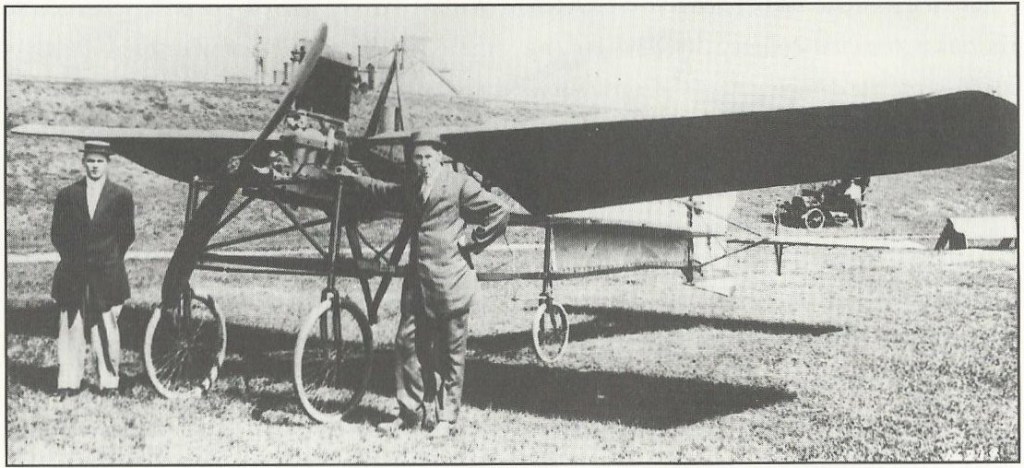
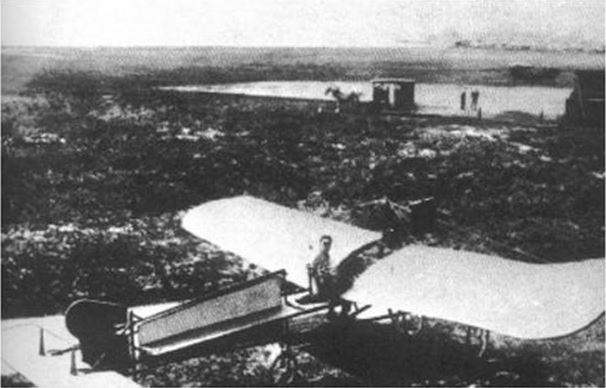
Edsel Ford, the son of automobile pioneer Henry Ford, worked part time in the Ford factory where, in 1909, he met a Ford employee, Charles Van Auken, who had bought construction drawings for a Bleriot XI monoplane.
Knowing that Edsel was deeply interested in aviation, his father asked several Ford employees to help Van Auken build the airplane. Ford also donated a 28-horsepower Model T engine.
The airplane was test flown by Van Auken on the Ford farm in Dearborn, Michigan. It rose a few feet above the ground, then settled back in a cloud of dust. Henry suggested the airplane needed more power and gave Van Auken a “hopped-up” engine.
A second flight attempt was made from the Fort Wayne parade grounds in Detroit in 1910. The airplane staggered into the air, but Van Auken lost control and crashed into a tree.
The 1927 Ford O-145 was a 36 hp, four-cylinder horizontally opposed air-cooled aero engine. With 143.1ci, it weighed 118 lb.
The only recorded use for flight was in the Ford Flivver lightplanes.
Henry Ford never pursued the idea of offering an aviation engine, although his models T and A auto motors were quite popular among home-builders in the ’20s.
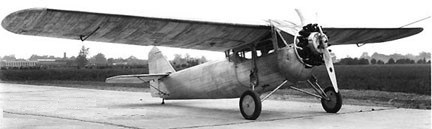
Designed by William Stout, Ford’s planned all-metal entry for the executive market was good for only one test flight. Piloted by Edward Hamilton, NX1085 proved to be tail-heavy to the extreme and was reportedly scrapped later that year.
Engine: 225hp Wright J-5
Wingspan: 45’0″
Gross weight: 3700 lb
Seats: 5
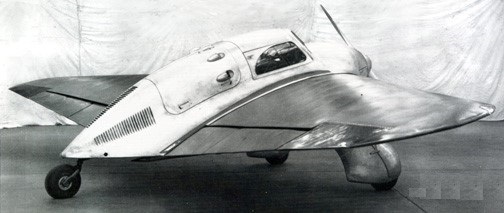
Designed by Henry Karcher the 1932 Ford 15-P was a tailless delta-wing experiment with rear-mounted motor, and a driveshaft running between the seats. Metal-clad fuselage, fabric-covered wings; full-panted gear. One was built, NX999E (some photos show NC402 which was a dummy registration), which made a few short test flights, but was damaged in an accident, and placed in storage. Although the license for this “flying wing” project was briefly renewed in 1936, there is no company record of further development.
15-P
Engine: Ford V-8, 115hp
Wingspan: 34’0″
Length: 14’0″
Range: 500
Seats: 2
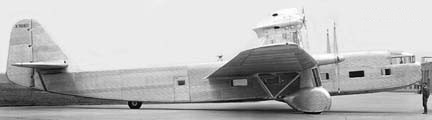
The 1930 10-A design study only went as far as a wind-tunnel model with four engines, two of them pylon-mounted in a tractor-pusher configuration. The design continued in the 12-A of 1931. The 12-A was a modified 10-A design with three engines (planned for 1000hp Hispano-Suiza + two 575hp P&W Hornet). Not built, but design elements went into the 14-A.
The 1932 Ford 14-A, NX9660, involved elements from the 10-A and 12-A designs, and was the last of the Ford Tri-Motors. Pullman-style seats converted into berths in the four main, climate-controlled, eight-passenger compartments. Wing motors, with four-blade propellers, were buried, and the third was pylon-mounted atop the fuselage; compressed air starters.
It was completed by Stout Metal but never flew and was cut up in 1933.
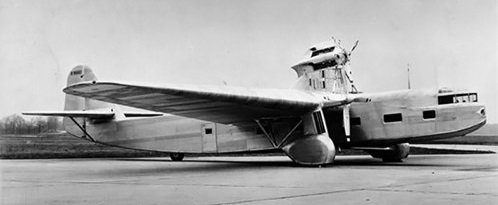
Engines: 2 x 715hp/533-kW Hispano-Suiza, 1 x 1,100-hp/820-kW Hispano-Suiza
Wing span: 110’0″ / 33.5 m
Length: 80’10” / 24.4 m
Seats: 40
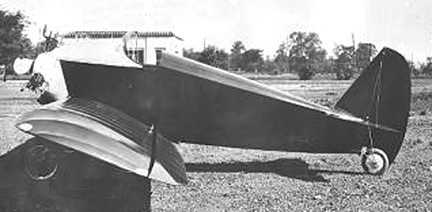
Ford demanded a one man airplane that would fit in his office. Otto Koppen took the measurements and locked himself up with one of Ford’s master craftsmen. The result was the 1926 Ford Flivver. The #1 unregistered Fliver single place open cockpit low wing monoplane was powered by a 36 hp Anzani, featured full-span combination flap/aileron, and cost $498 (original estimate).
The Fliver was flown only by two people; one was Charles Lindbergh, who saw it in Ford’s hangar during his triumphal tour of the United States.
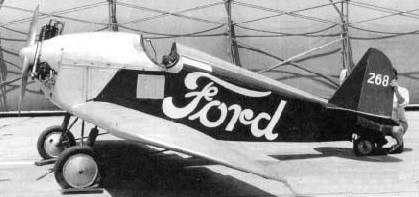
Koppen designed a second Flivver, registered N268, a different craft in spite of its superficial resemblance to the first. In front was a Ford-developed 2-cylinder motor, created to break a world record in the 1,100 pound class. The 960 miles from Dearborn, Michigan to TitusAlle, Florida on 55 gallons of fuel. Unfortunately, the following day the pilot took it out for a short flight that turned out to be his, and the airplane’s, last. The engine quit and the airplane went into the ocean. It floated ashore the next day; matchsticks that had been stuck in the fuel vents to prevent condensation, were still in place.
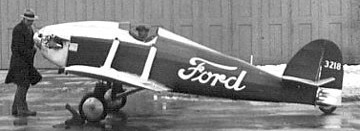
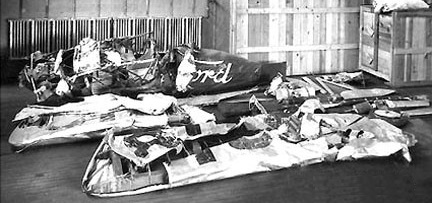
Both the #3 and #4 were registered N3218, and were powered with Ford motors. On 25 February 1928, #3 crashed in Florida, killing test pilot Harry Brooks and Henry Ford was so shaken by the tragedy that he ordered further production of small planes halted.
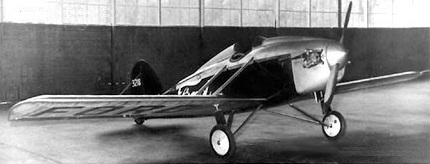
The wreckage of #3 was either restored or used as basis for restoration as #4 for display in the Ford Museum.
Engine: 36hp Anzani
Wingspan: 21’9″
Length: 15’6″
Max speed: 85-95 mph
Cruise speed: 80 mph
Stall: 30 mph

