The 1909 Grandjean monoplane was designed and built by Rene Grandjean in Switzerland.
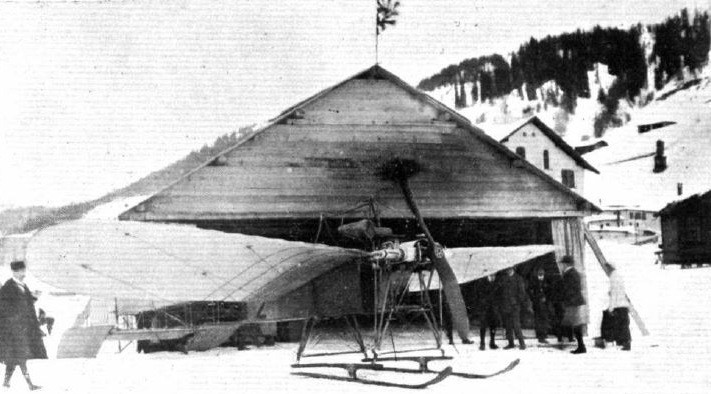
In December 1911 René Grandjean was invited at Davos to fly and here he got the idea to build a ski undercarriage. On 2 February 1912 he made the first take off and landing on skis in Switzerland. His self-built Blériot-like plane was powered by an opposed four-cylinder Oerlikon engine.
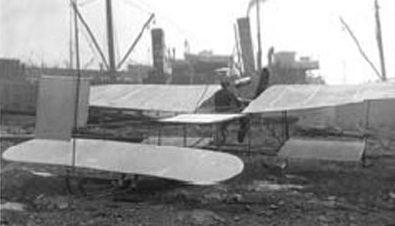
Constructed by engineer Einar Lilloe Gran, the first motorised airplane in Norway had a wing span of 10 meters and cost 12,000 kroner to build. Powered by a 30 hp 2-cylinder Darracq motor, the monoplane was originally put on display in Oslo during March 1910, and then taken to Ringerike where several attempts to get the machine airborne were made, but without any significant results.
The 1913 Gramaticescu monoplane was designed by G. Gramaticescu (who died before the plane was finished) in Romania, and built by M. Herbster in France.
Appearing in 1914, the Grahame-White Military Biplane was designed by J.D. North as a conversion of the floatplane produced to take part in the Circuit of Britain seaplane race.
Powered by a 100 hp Monosoupupe-Gnome engine, it was damaged during a practise flight and, as the 1914-18 War prevented the seaplane race from being flown, it was rebuilt as a military landplane. It was not adopted for production.
Engine: 100 hp Monosoupupe-Gnome Wingspan: 27 ft 10 in Length: 26 ft 6 in Max speed: 80 mph Landing speed: 42 mph
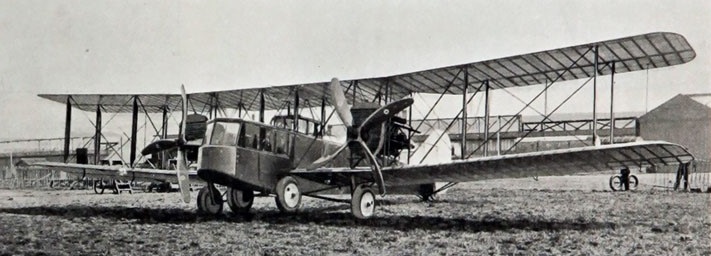
The Grahame-White G.W.E.7 was a twin-engined transport biplane, designed by M Boudot and built by Grahame-White Aviation Company at Hendon.
With folding wings, it seated four passengers in a glazed compartment between the centre section struts in the nose with the pilot behind. Powered by two 320 hp (239 kW) Rolls-Royce Eagle V piston engines.
Finally completed post-war, the only G.W.E.7, registered G-EALR was first flown in 1919.
It was damaged beyond repair in a forced landing at Hendon in the same year. The damaged remains were burned in 1920.
Engines: 2 × Rolls-Royce Eagle V, 320 hp (239 kW) each Wingspan: 60 ft 0 in (18.29 m) Length: 39 ft 0 in (11.89 m) Empty weight: 5785 lb (2624 kg) Gross weight: 7947 lb (3605 kg) Maximum speed: 116 mph (186 km/h) Crew: 2 Capacity: 4
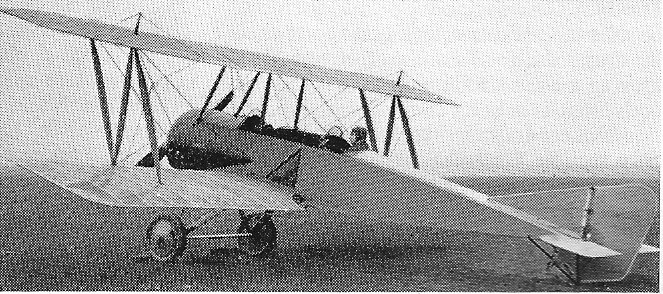
The Grahame-White G.W.E.6 Bantam was a single-seat sporting biplane, designed by M Boudot the Bantam was a conventional biplane powered by a nose-mounted 80hp (60kW) Le Rhône rotary engine with a single open cockpit.
Two examples were built of this small single-seat sporting biplane, and registered K.150 (G.W.E.6) and K.153 (G.W.E.6A), and a third example was flown in South Africa in the 1920s.
Two aircraft took part in the 1919 Aerial Derby at Hendon Aerodrome, but neither finished the race.
The E.6 was developed into the Express Air Mail aircraft.
Engine: 1 × Le Rhône 9C, 80 hp (60 kW) Wingspan: 20 ft 0 in (6.1 m) Length: 16 ft 6 in (5.03 m) Empty weight: 640 lb (290 kg) Gross weight: 995 lb (451 kg) Maximum speed: 100 mph (160 km/h) Crew: 1
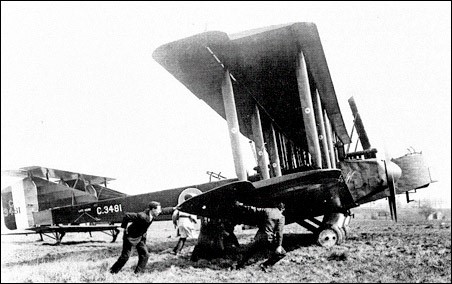
In 1918, the Grahame-White Aviation Company of Hendon, London developed a large, long-range heavy bomber intended to equip the Royal Air Force. The resulting design, the E.IV Ganymede, was a three-engined, twin-boom biplane with four-bay wings. Two of the engines were located at the front of the booms, driving tractor propellers, while the third engine was installed at the rear of the central nacelle, driving a pusher propeller.
A biplane tail unit with three fins and rudders spanned the gap between the two main fuselage booms. The two pilots and a bomb-aimer/gunner were accommodated in the central nacelle, while additional gunners cockpits were provided in each of the fuselage booms, with Scarff ring mountings for a machine gun together with a tunnel opening under the fuselages to allow the gunners to repel attacks from below.
It was intended that the Ganymede be powered by three 400 hp (298 kW) Liberty engine, but concerns about the availability of the American-built Liberty resulted in considerably less powerful Sunbeam Maori engines being specified when an order was placed for three prototypes. The first of these prototypes, serial number C3481 was completed late in 1918. While it was tested by the Air Ministry during 1919, the RAF had little interest in purchasing a new heavy bomber, and the remaining two prototypes were cancelled.
It is the first known type to carry the “E” letter used on all of Grahame-White’s latter models.
After being damaged in a landing accident in 1919, Grahame-White rebuilt the Ganymede into a civil airliner, becoming the E.9 Ganymede. The central engine was removed completely, while the two remaining engines were replaced by 450 hp (336 kW) Napier Lions. The nacelle was rebuilt with two pilots in an open cockpit ahead of a glazed cabin housing 12 passengers. The modified aircraft was granted a Certificate of Airworthiness on 12 September 1919, with the Aircraft registration G-EAMW, but was destroyed in a fire in September 1920.
E.4 Ganymede Engines: 3 × Sunbeam Maori, 270 hp (201 kW) each Wingspan: 89 ft 3 in (27.21 m) Wing area: 1,660 ft² (154.3 m²) Length: 49 ft 9 in (15.17 m) Height: 16 ft 0 in (4.88 m) Empty weight: 11,500 lb (5,227 kg) Loaded weight: 16,000 lb (7,273 kg) Wing loading: 9.64 lb/ft² (51.8 kg/m²) Maximum speed: 105 mph (91 knots, 169 km/h) at sea level Power/mass: 0.051 hp/lb (0.083 kW/kg) Endurance: 9 hours Guns: 3x .303 in (7.7 mm) Lewis guns, One in nose of central nacelle and one in each outer fuselage Crew: Five
The 1919 Grahame-White “Instructional” was an obscure twin-cockpit biplane trainer with dual controls and a Le Rhone engine. It was reportedly completed but there is no indication that it was flown