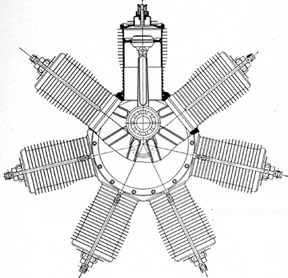
The Hendee Mfg Co Indian Rotary was a 7-cylinder air-cooled rotary aero engine producing 50hp@1100rpm from 513ci with a dry weight of 185 lb.
The Hendee Mfg Co Indian Rotary was a 7-cylinder air-cooled rotary aero engine producing 50hp@1100rpm from 513ci with a dry weight of 185 lb.

The Hendee Mfg Co Indian V-8 circa 1911 was a water cooled Vee 8-cylinder producing 65hp from 452.4ci and a dry weight of 200 lb.
Used by Glenn Curtiss for long-distance flights at the Harvard Aviation Meet.
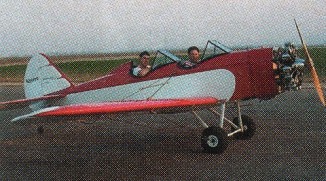
An LSA kit or plans built plane circa 2010. The kit, including engine, cost US$15,995.
Cruise: 105 mph
Stall: 45 mph
Range: 290 sm
Rate of climb: 1000 fpm
Takeoff dist: 400 ft
Landing dist: 500 ft
Engine: Rotec R2800, 110 hp
HP range: 85-150
Fuel capacity: 16 USG
Empty weight: 800 lb
Gross weight: 1320 lb
Length: 22 ft
Wing span: 28 ft
Wing area: 120 sq.ft
Cockpit width: 27 in
Landing gear: tailwheel
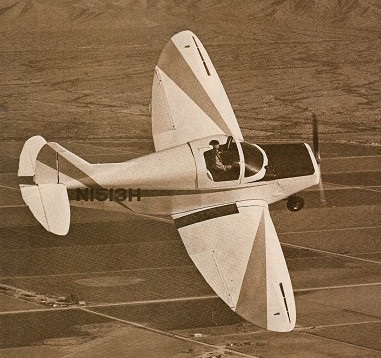
When Culver went out of business in 1946 the rights were bought by Superior Aircraft Co and then sold to California Aero Co of Tracy. They revived the model in 1966 as the Helton Lark 95 with a 90hp Continental C 90 16. Dimensions were similar to the Cadet, though the overall height was 6ft 10in due to the tricycle gear.
There is some doubt as to how many Larks were built, but seventeen constructor’s numbers were allotted and not all may have been completed. The last to be built, c/n 9517, was N5017J.
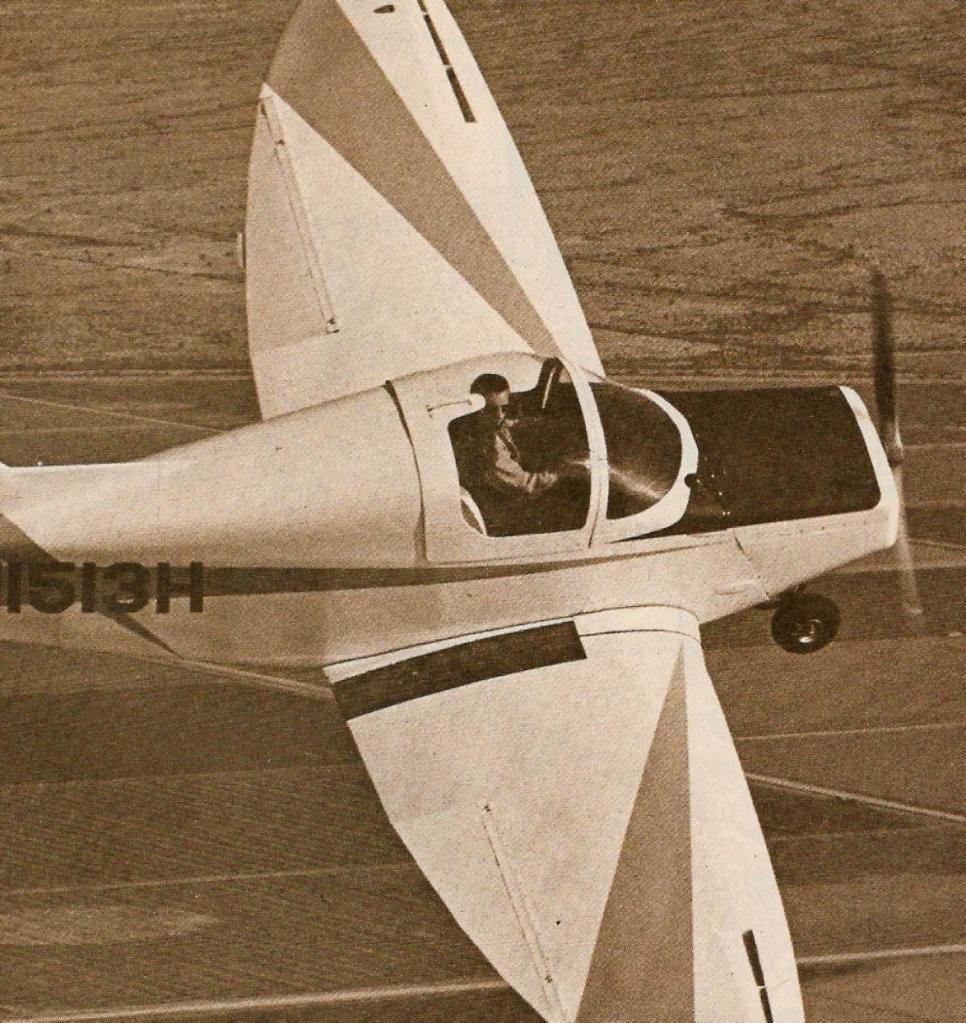
Further developments on the drone theme followed the PQ 8 and the NR D was built as the PQ 14A and PQ 14B for USAAF use and as the TD2CA for the Navy (which used a few TDCs from PQ 8 contracts). About 2,570 were built for use by the two services. Basic power was the 150hp Franklin O 300 11.
Post war limited type certificate LTC 28 was granted in December 1947 and a few were registered, there being eleven listed in the 1959 statistical survey, and one, N4744N was still in existence fairly recently There was a strong similarity with the Cadet, but the fuselage was lengthened and a larger fin and rudder fitted to counter increased power, plus tricycle undercarriage.
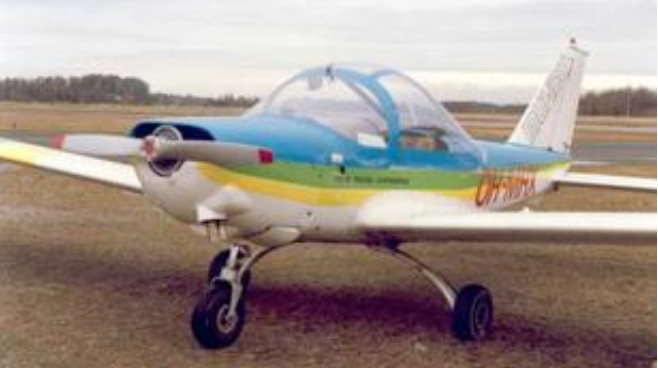
The PIK-19 Muhinu was a light aircraft developed in Finland in the early 1970s for use as a glider tug and flight trainer. It was a low-wing cantilever monoplane of conventional configuration, with an enclosed cockpit and fixed, tricycle undercarriage. Its construction was of composite materials throughout, a novel approach at the time. Some unique design details were used in the construction of the Muhinu -e.g., the wing was made of one-meter (3 ft) panels, thus avoiding big female molds for the wing. Both the fuselage and wing were made of glass-epoxy- honeycomb sandwich. The main landing gear was also made of fiberglass-epoxy by the filament winding process.
When the PIK-19 flew for the first time in 1972, it was only the fourth aircraft in the world made of these materials.
The project was undertaken as a joint venture by the Finnish government and the Helsinki University of Technology. Its “PIK” designation belongs to a sequence of designations applied to the aircraft designed and built by the university’s gliding club, Polyteknikkojen Ilmailukerho, although this was not a project by the club. Design work commenced in 1969 under the leadership of Jukka Tervamäki, Ilkka Rantasalo and Pekka Tammi and the prototype flew on 26 March 1972. This project involved many skilled young engineers and graduates from the University: Ilkka Rantasalo, Pekka Tammi, Hannu Korhonen, Markku Hiedanpää, Erkki Haapanen, Olof Lagerkrantz, etc.
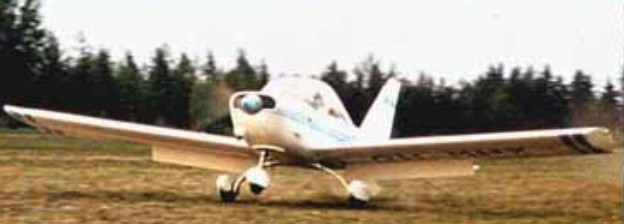
In 1978 the Pik-19 was re-powered with a 180 hp Lycoming 0-360 engine.
Plans for production in series were never realised, and the single prototype (OH-MHX) was the only example ever built. Over the next 21 years, it accumulated 5217 hours of flying time and some 40,000 glider tows. It was destroyed in a crash in June 1994 when the engine failed at low altitude.
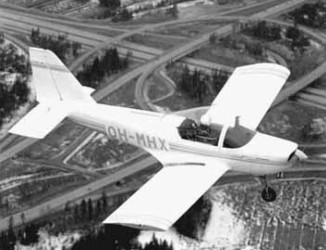
Engine: 1 × Lycoming O-320-B2BC, 120 kW (160 hp)
Propellers: 2-bladed McCauley1A-175/GM-8241 for towing and 1C-172/MGM-7657 for other tasks, Both fixed pitch, metal blades.
Length: 6.90 m (22 ft 8 in)
Wingspan: 10.00 m (32 ft 10 in)
Height: 2.60 m (8 ft 6 in)
Wing area: 14.00 sq.m (150.7 sq ft)
Aspect ratio: 7.14
Airfoil: NACA 632415
Empty weight: 560 kg (1,235 lb) equipped
Max takeoff weight: 840 kg (1,852 lb)
Fuel capacity: 150 L (33 Imp gal; 40 US gal)
Maximum speed: 240 km/h (149 mph; 130 kn)
Cruising speed: 220 km/h (137 mph; 119 kn) maximum, 75% power
Stall speed: 83 km/h (52 mph; 45 kn) flaps down
Never exceed speed: 310 km/h (193 mph; 167 kn)
Range: 950 km (590 mi; 513 nmi) maximum fuel, no reserves, 65% power
Rate of climb: 7.00 m/s (1,378 ft/min)
Wing loading: 60.0 kg/sq.m (12.3 lb/sq ft)
Take-off to 15 m (50 ft): 240 m (787 ft)
Landing from 15 m (50 ft): 220 m (722 ft
Crew: Two
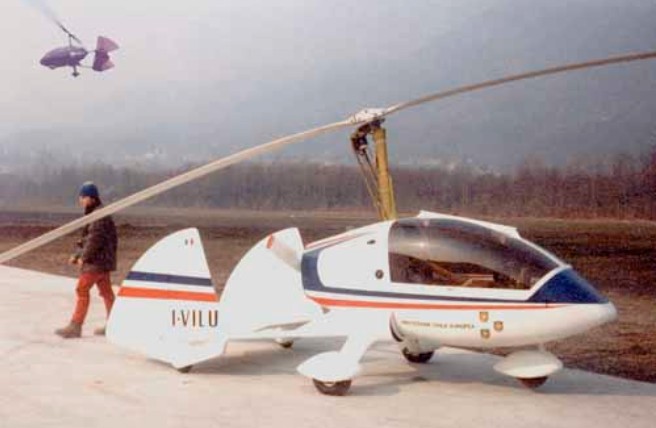
In 1980 Vittorio Magni of Italy had designed a new, two-seat autogyro with a 150 hp Lycoming engine. The machine got the project name MT-7 (Magni-Tervamaki). Vittorio later redesignated the machine as VPM S-2.
The calculations and general design blueprints were delivered to Vittorio, who was responsible for all the detail design. He also built the machine together with his son. The machine was completed in 1985, and it also flew well.
Some years later the machine was lost in an accident in France. The control rods had been bent in road transport by a truck.
Magni continued the development of autogyros and has designed a series of gyros which all seem to have the rotor head and blade design of JT-5 and MT-7.

The Helmy Aerogypt was built at Heston by its Egyptian designer in 1938.
The Silent Racer was originally marketed as a single seater with retractable undercarriage and folding prop. The later Silent Racer Chronos 12 two seater had a fixed undercarriage and prop, but retained the integral fairing.
Silent Racer Chronos 12
Empty weight: 185 kg
Wing span: 9.87 m
Wing area: 12.9 sq.m
Fuel capacity: 65 lt
Certification: Vz
Engine: Hirth 2704, 50 hp
MAUW: 450 kg
Seats: 2
Max speed: 140 kph
Cruise speed: 100 kph
Minimum speed: 65 kph
Climb rate: 2.5 m/s
Fuel consumption: 10 lt/hr
Price (1998): 19 900 DM
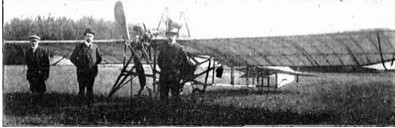
This monoplane had a 25 hp Hilz engine, a span of 10 m and an overall length of 9 m. It made jumps of 100 m in 1911, but the builder, Theodor Hellmund of Siegburg, Germany, considered fitting a more powerful engine.
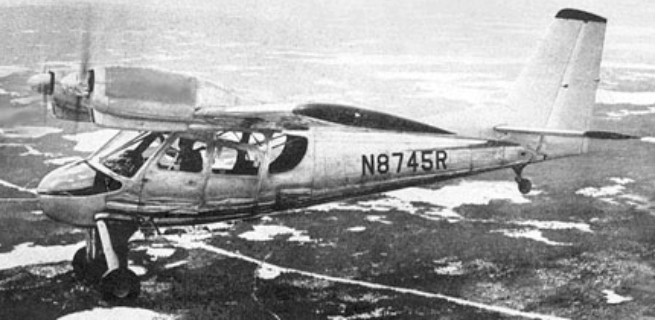
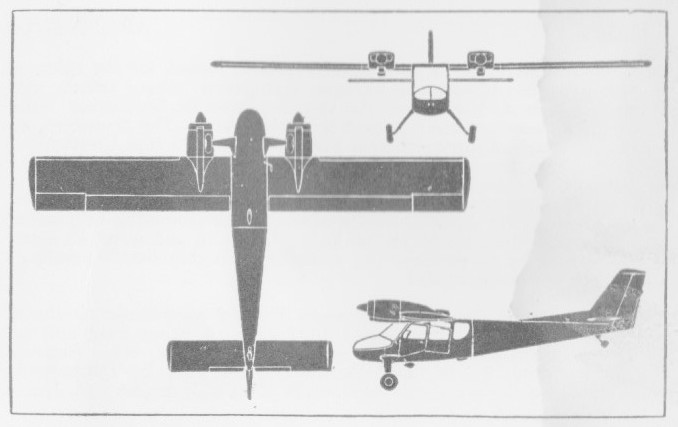
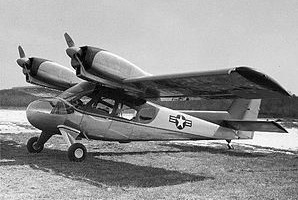
Known by Helio as the model H-500 this STOL aircraft mounted twin Lycoming engines on top of the high-set wing, close to the fuselage. With the engines mounted in this manner, lateral and over-the-nose visibility were much improved while the propellers were kept clear of cabin doors and away from possible debris damage during rough field operations. This was a tail-wheel design, so the vertical component of propeller thrust assisted STOL take-off performance from rough fields. Fully automatic full-span, leading-edge slats were fitted along with high-lift flaps.
Full span automatic leading slots are monocoque and hollow. Spoilers or “interceptor” blades protrude through upper surface of the wing, forward of main spar. They are interconnected with the ailerons and rise only when aileron is deflected more than 4 degrees. Magnesium is usd as a weight saver n the rudder and horizontal tail in the skins aft of the main spar on each surface. Horizontal tail is one piece all-flying type with anti-balance and trim tab. Vertical stabiliser is sweptback 25.5 degrees.
Flown for the first time in 1960, Faa certification was obtained late in 1963.
In 1964 the USAF Air Commandos were testing the Helio U-5A at Hurlburt AFB (Fla). The USAF ordered seven for tests.
In 1967 or 68, work was started on a redesign of the Twin Courier in a tricycle-gear configuration for the commercial market, since many firms which desired STOL capability had regulations which required multi-engine aircraft. The company ran out of money and the project was terminated.

The aircraft structure of the Helio Stallion, a single-engine turboprop version of the more successful Helio Courier, was based on the design of the Twin Courier.
The Twin Courier could seat six and first flew in April 1960, being awarded FAA certification on June 11, 1963. (The Twin Courier met FAA requirements marginally and was certificated to meet immediate needs for service in Vietnam, on the understanding that the design would not be marketed commercially. Thus, the redesign.) Only seven examples were built, these receiving the United States Armed Forces designation U-5A. One was reported to have been evaluated by US Army Special Forces.
Official Air America records preserved at the Air America Archives do not mention such an aircraft, but there are three ways to explain why Twin Couriers were mentioned to have been in service with Air America:
In the summer of 1965, Air America pilot William Andresevic, who had flown the regular Helio extensively in Laos, was ordered to fly a Helio Twin Courier to Bolivia for evaluation by the US Embassy.
After some operational use in Bolivia, it was returned to an airstrip in Virginia.
In 1962, the USAF evaluated 2 U-5A Twin Couriers, 59-5955 and 59-5956, at Hulburt for use by the air commandos. “90336” is possibly a fake serial for 59-5956.
Operators were Aviation Research Centre, India, Indian Intelligence Bureau, Air America, CIA and United States Air Force.
U-5A Twin Courier
Powerplant: 2 × Lycoming O-540-A2B or -C2C air-cooled flat-six, 250 hp (190 kW) each
Propellers: 2-bladed Hartzell, 7 ft 0 in (2.13 m) diameter
Length: 32 ft 0 in (9.75 m)
Wingspan: 41 ft 0 in (12.50 m)
Height: 8 ft 10 in (2.69 m)
Wing area: 242 sq ft (22.5 m2)
Empty weight: 3,126 lb (1,418 kg)
Max takeoff weight: 5,850 lb (2,654 kg)
Maximum speed: 185 mph (298 km/h; 161 kn) at sea level
Cruise speed: 166 mph (144 kn; 267 km/h) (econ cruise, 60% power) at 10,000 ft (3,050 m)
Range: 1,500 mi (1,303 nmi; 2,414 km) (max fuel)
Service ceiling: 19,500 ft (5,944 m)
Rate of climb: 1,640 ft/min (8.3 m/s)
Crew: 1
Capacity: 5 passengers