The first of the Army’s designated VTOL research aircraft was a continuation of the work to develop a ‘flying platform’. The idea for a machine of this kind, making use of kinesthetic control (in which the pilot leans in the direction he wishes to go) is attributed to Charles H. Zimmerman and dates back to 1940.
In the early 1950s, N.A.C.A. (the forerunner of N.A.S.A.) undertook a research programme at Langley Laboratory to prove the idea. Three types of aircraft were studied, each capable of carrying one man who stood on a platform, and supported, respectively, by a rotor, a ducted fan and compressed air. Subsequently, the Army placed contracts for further development of a rotor type flying platform by de Lackner (the Aerocycle) and of the ducted fan type by Hiller. The Hiller Helicopter Company had by this time already completed some studies in conjunction with Charles Zimmerman, in 1947, but no free flights were then achieved. A contract was placed with the company in 1953 for the construction of a prototype under Office of Naval Research supervision and this flying platform achieved its first successful untethered flight in February 1955.
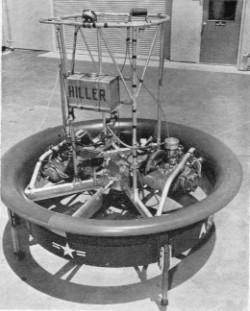
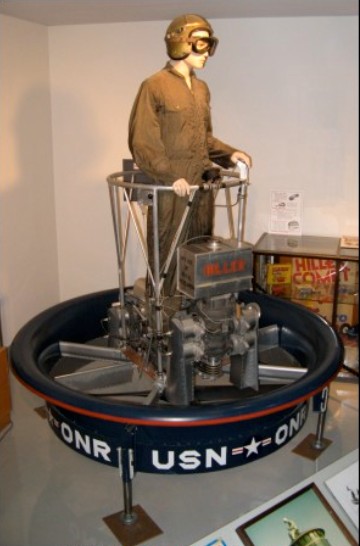
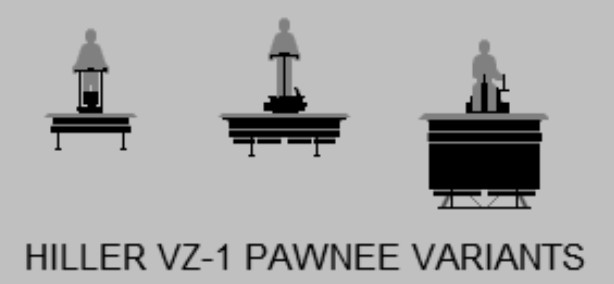
The Pawnee featured a pair of contra-rotating rotors spinning inside a duct with a diameter of 1.5 meters (5 feet). Each rotor was driven by its own 30 kW (40 HP) two-stroke engine. The pilot stood above the duct, surrounded by a circular handrail and protected by a safety harness. He controlled the engines with a twist-grip throttle and leaned to guide the aircraft. The duct improved safety during takeoff and landing. The duct also provided additional lift, since there was a horizontal “lip” around its top edge that curved down into the duct. The airflow into the duct resulted in low air pressure above the lip, and the pressure difference between the top and bottom of the lip generated a net upward force, providing as much as 40% of the total lift of the aircraft.
In practice, speeds of up to 15 m.p.h. were achieved. Hand controls included the throttles to control vertical movement and a control to apply power deferentially to the two propellers in order to keep the platform headed in the right direction.
The Pawnee handled very well in flight tests. The machine was then modified with longer landing gear legs to increase ground clearance, and eight vanes were mounted underneath the duct to improve flight control.
Results of the trials with their early platform were sufficiently promising for the Army to award Hiller a second contract, in 1956, for two larger examples of the flying platform. These were designated W‑ I E (serials 56‑6944 and 56‑6945).
VZ-1E
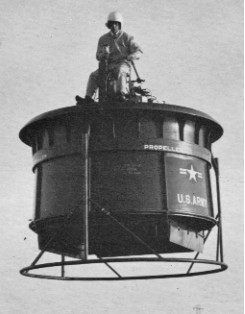
In the W 1E, the diameter of the duct was increased to 8 ft. and the chord was more than doubled. Three interconnected 30 kW (40 HP) Nelson H 56 engines supplied power to the counter rotating propellers. Controls were modified to be similar to those in a helicopter and the pilot had a rudimentary seat.
First flight of the W 1E (56 6944) was made on February 4th, 1955. It was delivered to the Army in 1959 but no further development occurred.
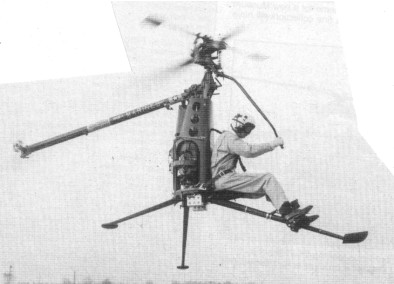
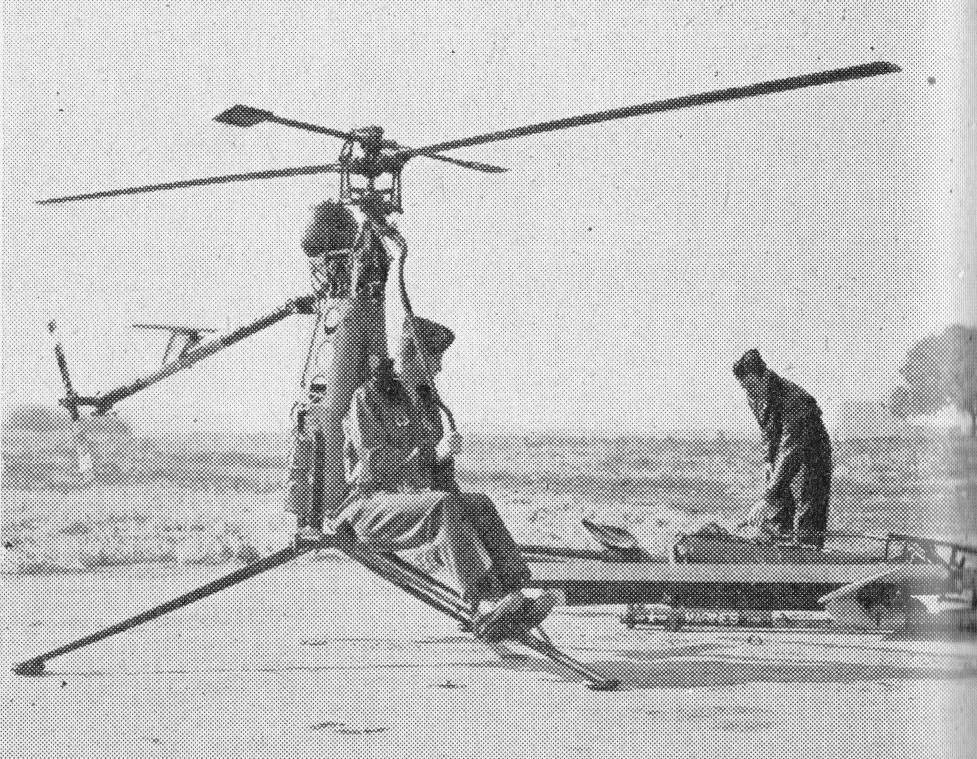
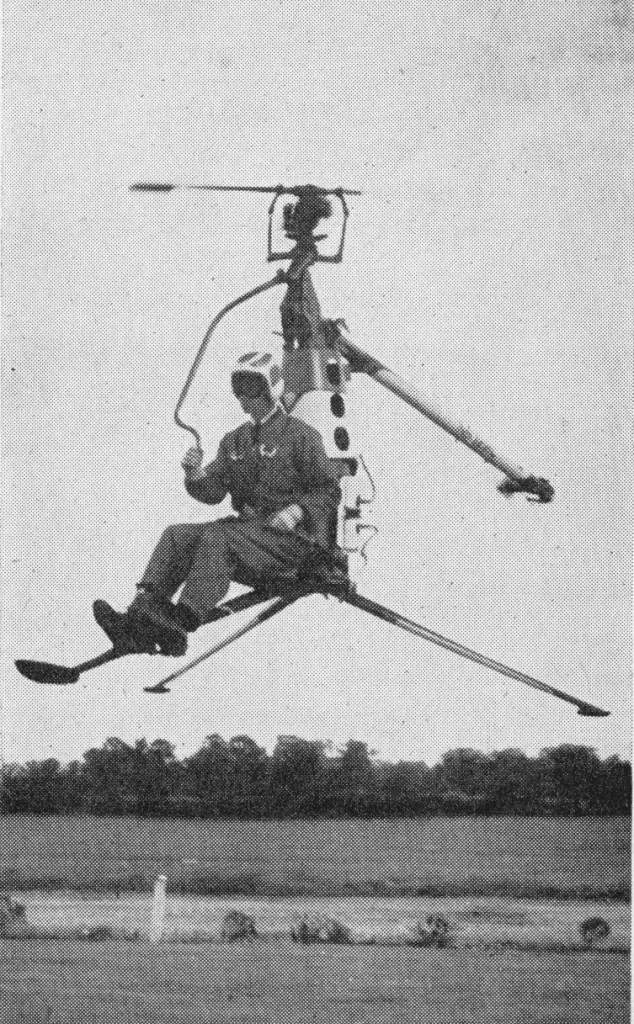
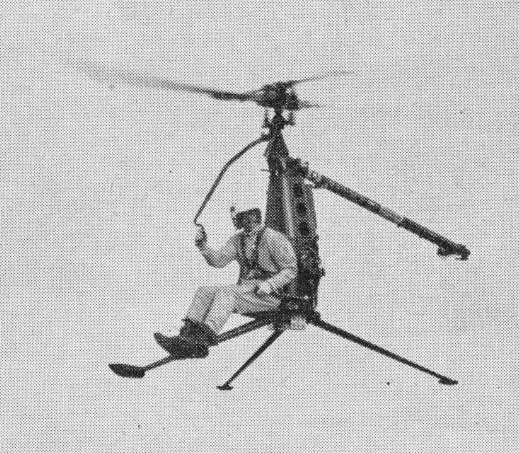
On January 10, 1957, the US Navy announced the successful first flight of the one man collapsible Rotorcycle, developed for the US Marine Corps by Hiller Helicopters of Palo Alto, California. Hiller was one of two companies selected during 1954 to design and build a one man helicopter but the idea was not wholly successful and it failed to achieve full production status after initial flight testing was completed by July 1957. Designated XROE 1, this was a unique one-man helicopter which could fold into a small package for easy transportation or parachute delivery. Weighing less than 250 lbs it was powered by a Nelson four cylinder opposed, two cycle, air cooled petrol engine manufactured by Barmotive Products Inc a single rotor, eighteen feet in diameter and positioned above the pilot’s head, provided lift, with a small tail rotor located in a tubular boom compensating for torque. The entire helicopter was held together by quick release pins and could be assembled by one person. Although not literally a ‘strap on the back’ machine, the XROE 1 approximated closely to this idea, since the pilot sat on what appeared to be a bicycle seat, with the engine just behind him. The US Marine Corps intended to use the XROE 1 for observation, liaison, small tactical missions, such as escape and evasion, pilot rescue and any other James Bond’ type drama.
Transmission of the Rotorcycle incorporated a single spiral bevel gear set and an over-running clutch while the fuel system was of the gravity feed type. Official Marine Corps specification data indicated that the XROE 1 could be folded or assembled in the field in less than five minutes and, for aerial drops to downed pilots or stranded troops, the folded Rotorcycle fitted into a streamlined container suitable for external transportation on a fixed-wing aircraft. It was expected to enter service by Septembr 1959.
During May 1958, while on a European sales tour, the Hiller XROE 1 Rotorcycle was demonstrated at Elstree aerodrome, Herts. On this occasion, two men assembled the machine in just three minutes, a rather slow time according to the manufacturers who stated that the record stood at one minute fifty seconds. Although based around a Marine Corps specification, the XROE 1 was evaluated by both Germany and Switzerland, the licensee in Europe being Helicop Air of Paris and the estimated cost was $10,000 for production machines.
Demonstration in England 1955
In November 1958, a contract was signed for a batch of ten Rotorcycles to be built by Saunders Roe at its Eastleigh, Southampton factory, on the basis that it would cost less to build a small batch of XROE 1s in the United Kingdom than in the USA. Helicop Air of Paris, Hiller’s agent in Europe, was responsible for handling the contract which was quite unique.
Using materials from the USA, Saunders Roe built the jigs and tools, manufactured the gearing, transmission components and the structure. All proprietary items, including the engine, electrics, main rotor blades and instruments, were also supplied from the USA. The Rotorcycles were completed in accordance with Hiller drawings.
Saro-built Rotorcycle
The control technique was known as the Hiller Rotormatic system while, in place of a landing gear, the Rotorcycle was supported on three tapered aluminium alloy spring tubes.
The fate of the majority of the XROE 1 Rotorcycles after leaving the Eastleigh factory of Saunders Roe is not known, but the type was evaluated for the Marine Corps at the Naval Air Test Centre and the published performance figures are based on this evaluation. Three Rotorcycles all designated YROE 1 were also assessed by NASA at their Ames facility at Moffett Field, California, YROE 1s ‘4020’ ‘4021’ and ‘4024’ being delivered there on November 16, 1962. The serial numbers applied to the YROE 1s tonsisted of four digits only, this system not conforming to the more familiar BuNo’s as used by the Bureau of Aeronautics to identify US Navy and US Marine Corps aircraft and helicopters. Two examples of the Hiller YROE 1 Rotorcycle reside in museums situated within just a few miles of each other. The first specimen ‘4020’ is in a private museum owned by James S Ricklefs of Rick Helicopters Inc. of San Carlos, California. This one has an intact manufacturer’s plate which revealed the following interesting information: Manufacturer’s model 1033: Customers model YROE4: Serial No 6: Customer’s serial No 4020: Contract No 59 6022: Engine type YO 65 2. Accepted 21 June 1960. Manufactured by Saunders Roe Lid. England under agreement from International Engineering Research & Development, Luxembourg under licence from Hiller Aircraft Corporation, USA. Restored by John Trome 1980. The second YROE 1, 14021′, was discovered in The Flying Lady Museum which is owned by Irv and Jan Perch and located at Morgan Hill, near South County Airport, some 65 miles south of San Francisco.
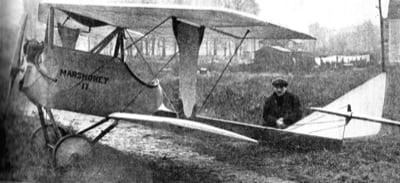
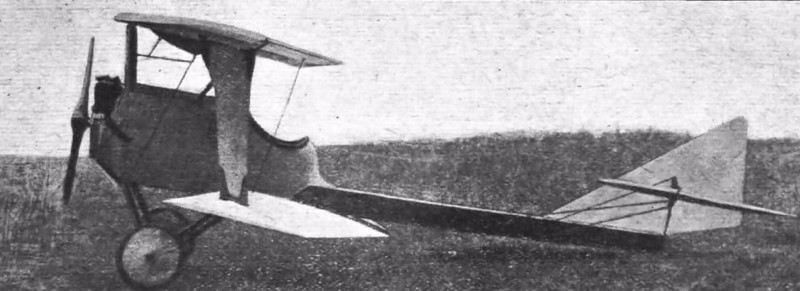
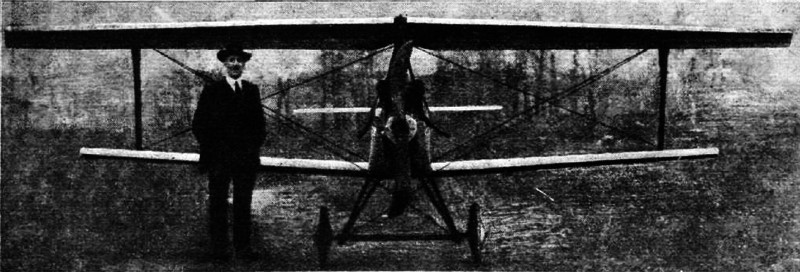
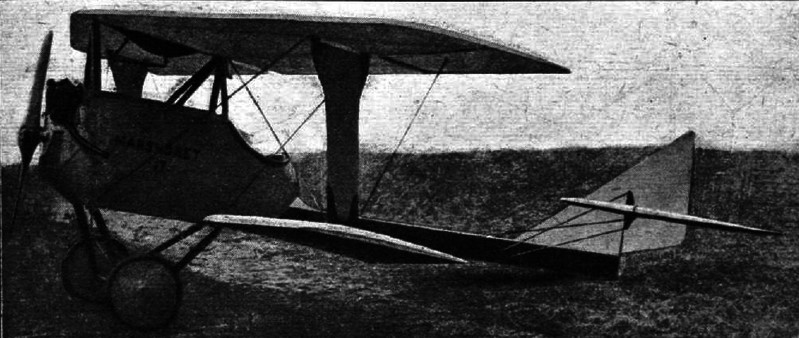
The Hild-Marshonet biplane was designed and built by Frederick Hild and Edward Marshonet of Hempstead, New York, in 1919. It had no fuselage as such, the pilot being seated in a streamlined nacelle. An outrigger of boxed cantilever construction supporting the empennage was attached directly behind the pilot’s seat. It had a single-boom tail and swept back wings.
It was powered by a 20 hp-Spainhour V-twin engine.
The plane could be taken apart in minutes.
Span: 24 ft Length: 19 ft Empty weight: 450 lb Loaded weight: 700 lb Speed: 65 mph Price $2,000.
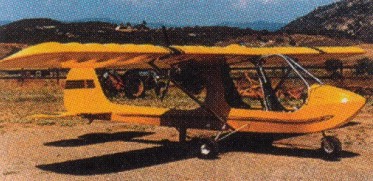
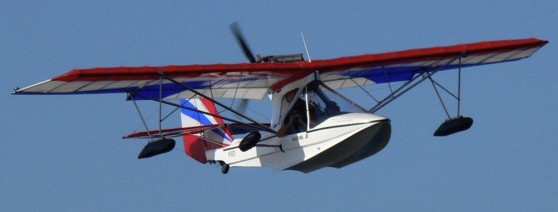
Receiving the “Best New Design” award at Oshkosh 1984 the Buccaneer was a conventional double-surface high-wing, three-axis control ultralight. Powered by a Rotax 277 single-cylinder, it came in three models — open framework, pod, and retractable amphibian. The landing gear was taildragger, or retractable/amphibian, using reinforced fiberglass hull & sponsons. Centre mounted joy stick, rudder pedals, tailwheel steerable through rudder pedals. Later marketed by Keuthan Aviation as the Buccaneer SX and Buccaneer II, and by Arnet Pereyra Inc as the Aventura 1 HP/A and Aventura II A. A modified version, retrofitable to Buccaneers was marketed by Advanced Aeromarine as the Mallard. The Mallard was available as a conversion for existing Buccaneers or as a complete kit. First flown in 1993. Although produced as an amphibious flying boat, the Buccaneer can be converted to a land plane by removing the boat hull and floats.
The Aero Adventure Aventura II Sport is a new model designed to minimize the expense and complexity of buying, building, and flying a two seat Aventura. With a strong 65 H.P. Rotax 582, the complete kit started at only $33,400. This is by far the most inexpensive two place amphibian on the market. Invest 250 hours of assembly time and this plane will be flying you and a friend anywhere. The 100 H.P. 4-Stroke Rotax 912ULS with its 18 gallon fuel tank allows a solid 3 hours of flight with reserve. $44,900 for the complete kit. The Aventura II XLR has a new engine cowling available, a new graphics package, an amazing new panel with AVMAP’s daylight readable GPS, a VSI, mode-C transponder, and more. Electric gear with indicator lights, differential hydraulic brakes, carpeting, headliner, 600-6 Soft Turf Tires, a 100 H.P. Rotax 912 ULS with an Air Box, a custom stainless steel exhaust, a warp drive 3-blade nickel edge prop and a spinner.
The Arnet Pereyra Buccaneer SX first flew in May 1986. The Arnet Pereyra Buccaneer II first flew in March 1984. The Arnet Pereyra Aventura UL and HP first flew in March 1995. The Arnet Pereyra Aventura II first flew in June 1995.
Buccaneer (Land) Empty wt: 228 lbs. Empty weight (De Luxe) 250 lbs. Wing span: 35 ft. Wing area: 147 sq.ft. Aspect ratio 8:1 Length: 17 ft 6 in Fuel cap; 4.5 USG. Construction: Aluminium, Dacron. Engine: Rotax 277 (268cc) 28hp. Max wt: 500 lbs. Stall speed: 20 mph. Max speed: 51 mph. Vne: 75 mph. Climb rate: 600 fpm @ 28 mph. Design limit: +5, -3.5g. Glide ratio: 8-1. Wing loading: 3.4 lbs/sq.ft. Power loading: 17.86 lbs/hp. Pilot weight category 90-225 lbs all models.
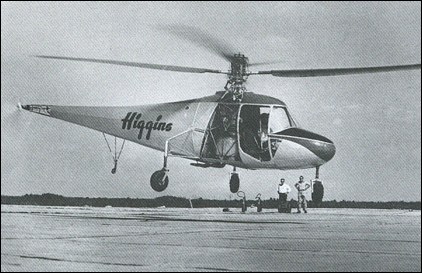
In 1942 an Aircraft Division was formed in Higgins Industries Inc, owned by Andrew Higgins, with the object of manufacturing transport aircraft for the United States Air Force. There was also a Helicopter Division concerned with building and perfecting a helicopter designed by Enea Bossi. This small two-seater helicopter had a main four-bladed rotor, consisting of two two-bladed rotors a few inches apart, and a small two-bladed tail rotor. The latter was fixed to the end of the upward-rising tail so that the tail rotor hub was at approximately the same level as the main rotor. The two-place, side-by-side cabin interior was designed to resemble as closely as possible that of a lightweight aircraft with a wheel control column and a standard panel of flying instruments. The fuselage is entirely covered, has a forward section with metallic skin, while the tail is covered with fabric. There is a small, two-bladed, vertical tail rotor and a fixed tricycle landing gear. The pitch-control and clutch-control levers look much like the gearshift on a car. The rudder pedals resemble brake and clutch pedals of an automobile.
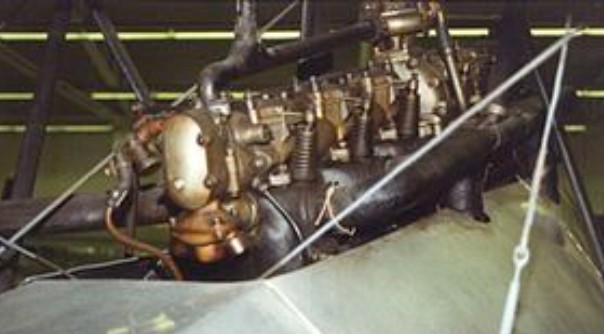
In 1914 Otto Hieronimus manufactured the six-cylinder Hiero E, also known as the Hiero 6 engine which was derived from earlier 4-cylinder engines. The Hiero engine like the Austro-Daimler powered many of Austria’s World War I aircraft. Hiero aircraft engines were designed by Otto Hieronimus, a famous Austrian auto racer of the early 1900s. His initial designs were liquid-cooled inline engines built by the Laurin & Klement Automobile Works of Austria.
The Hiero E had a 135 mm x 180 mm bore/stroke (15.46L / 943.4cuin) and delivered 200-230 hp. The engine had the typical features of an inline vertical 6-cylinder: aluminum bed, cast iron cylinders, one inlet and one exhaust valve per cylinder controlled by bars and rockers, with the cam-shaft in the bed, and dual ignition by two Bosch magnetos. During World War I, the highly regarded Hiero engines were built under license by Essler, Warschalowski & Company of Vienna and the Breitfeld-Daněk company of Czechoslovakia. A point of recognition of Hiero engines compared with other Central Powers OHC inline’s is that the intake was on the right and the exhaust on the left. After World War I, production was continued by the Avia company and powered a number of their early aircraft.
Variants: Hiero 145hp: 145 hp (108.1 kW) (probably designated Hiero B or Hiero C ) Hiero 185hp: 185 hp (138.0 kW) (probably designated Hiero D) Hiero E: 200 hp (149.1 kW) – 230 hp (171.5 kW)
Hiero E Type: 6-cyl in-line Water-cooled Bore: 135 mm (5.31in) Stroke: 180 mm (7.09in) Displacement: 15,459 cc (943cu in) Designer: Otto Hieronimus Valvetrain: overhead-cam Cooling system: water Power output: 200 – 230 hp (149 – 172 hp)
From 8 Febuary to 15 May 1914, four Turkish airmen flew a 2500 km long-haul flight – Istanbul-Damascus-Jerusalem-Cairo-Alexandria, in a Blériot XI. To commemorate this in part tragic, but very successful in the end, flight, the Turkish state television TRT decided to film a recreation.
In 2001 HIBM built two modified, but flyable replicas of the aircraft. Because the replicas corresponded little to the original Blériot XI aircraft, there was some discord. With two Blériot AK-2000X aircraft a re-enactmet of the same route of 1914 was carried out during 15 May -18 June 2001.
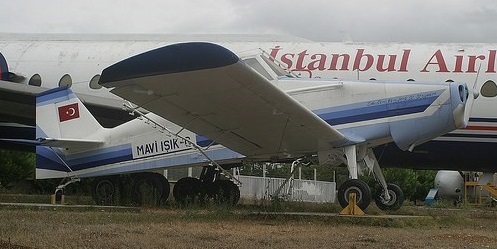
In 1978 2.HIBM constructed and developed the Mavi Isik 78-XA-1 agricultural aircraft. The maiden flight (TC-TXA) was successfully conducted in February 1979 in Kayseri. The sequent Mavi Isik-B (1980) and Mavi Isik-G-1 (1983) were developed from the prototype. It did not enter series production. Instead, Turkey bought Pezetel M-18A Dromader agricultural / fire-fighting aircraft.