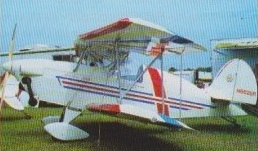
Huff-Daland XLB-1

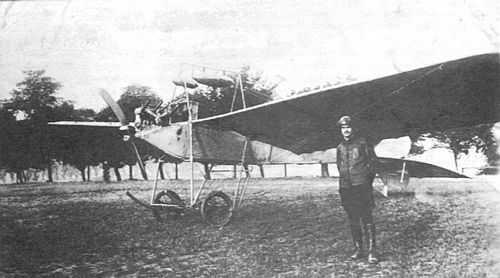
Keystone Aircraft Corpora¬tion built a total of 220 aircraft in the US Army Air Corps LB (light bombardment) category, venturing briefly also into the B (bombardment) and HB (heavy bombardment) classifications. All except ten of the LBs were twin engined aircraft, but had their origins in the single–engined XLB 1 prototype and nine pre series LB 1 biplanes produced in 1925 by Key¬stone’s predecessor company, Huff Daland and Co Inc of Ogdensburg, New York, which became Keystone in March 1927.

The XLB-1 three-seat, single-engine light bomber was tested in 1923, mount¬ing an 800 hp Packard and was developed as the twin-engined XLB-3, with a crew of five. The basic LB 1 airframe was redesigned by Keystone in 1927 as the twin engined XLB¬3A.

Hudson Tri-Motor

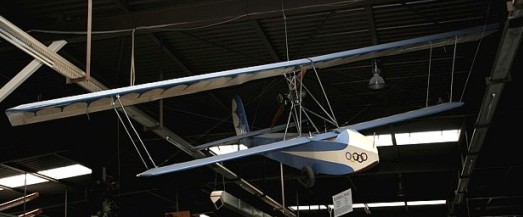
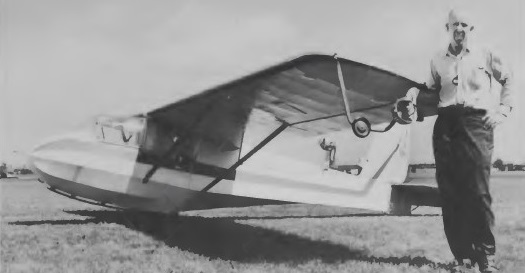
Devised and made by Mr Sandy Hudson Jr, a law enforcement operator of Black Mountain, North Carolina, the Tri-Motor is a powered conversion of a Schweizer SGU 1-19 single-seat sailplane fitted with three West Bend go-kart engines producing a total of 17.3hp and each driving a 2ft 1 in diameter two-blade wooden pusher propeller. Two West Bend Model 70013 engines are mounted on pylons on each side of the fuselage aft of the cockpit and between the wing bracing struts, and a West Bend Model 70012 is carried on a pylon on top of the rear fuselage in front of the fin. The total fuel capacity is approximately 2 US gallons, a small separate tank for the rear engine being mounted on the fin leading edge.

This powered conversion of SGU 1-19 N91817 was started in May 1962 and completed in September 1963 at a cost of $1,000; Mr Hudson won an award for the lowest powered aircraft with the Tri-Motor at the 1963 Fly-In of the Experimental Aircraft Assocation.

The standard SGU 1-19 is a utility and training single-seater of early postwar design with an all wood constant chord fabric-covered wooden wing with two spruce spars, spruce and mahogany plywood ribs and a ply leading edge. The fuselage is a fabric-covered welded chrome-molybdenum steel tube structure, and the landing gear is an unsprung monowheel with a single skid mounted on rubber blocks ahead of it, and a rubber-mounted tailskid. The tailplane and elevators are fabric-covered welded steel tube surfaces, the tailplane being braced, and the fin and rudder are either of fabric covered wooden construction when the SGU 1-19 is supplied in kit form for amateur builders, or of fabric covered steel and aluminium alloy when factory built. The pilot could sit in an open cockpit, or a transparent canopy could be provided as an optional ‘extra’.

Tri-Motor
Span: 36 ft 5 in
Length: 21 ft 0 in
Height: 5 ft 6 in
Empty weight: 449 lb
Max weight: 670 lb
Max level speed: 55 mph at sea level (power on)
Cruising speed: 45 mph (power on)
Rate of climb: 150 ft/min at sea level
Take-off run: 750 ft (power on)
Endurance: 8 min
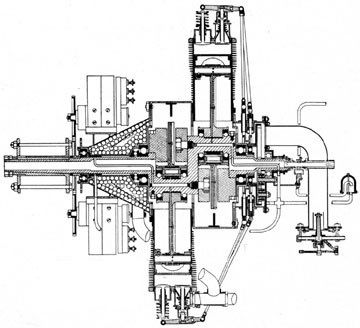
Hubertec Thermik

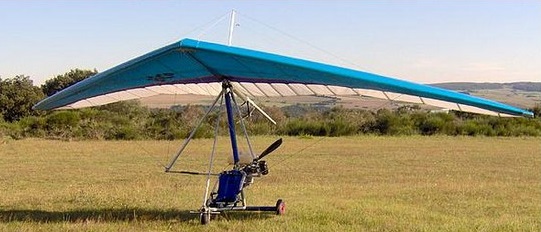
The Hubertec Thermik (English: Thermal) is a German ultralight trike, designed and produced by Hubertec of Aach, Rhineland-Palatinate. The aircraft was supplied as a complete ready-to-fly-aircraft.

The company is an industrial prototyping and exercise machine specialist that decided to produce an ultralight trike design as a sideline project.

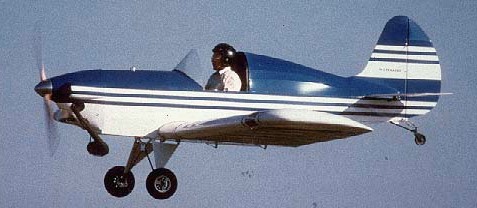
HPK SP-1

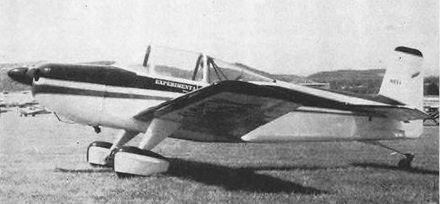
Designed and built by Harold Hayden, Robert Kinney, Arthur Payne and Reno Benner in their spare time, over about five years, near Bristol, PA, USA.

Fuel is carried in the wing tips. Flaps are fitted.

Engine: Lycoming O-235-C1, 115 hp
Wing span: 25 ft
Wing area: 99 sq.ft
Length: 19.1 ft
Height: 8 ft 1 in
Gross weight: 1300 lb
Fuel capacity: 36 USG
Cruise: 145 mph
Wing loading: 13 lb/sq.ft
TO dist: 400 ft
Stall: 50 mph

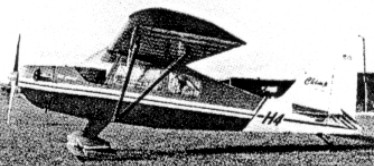
Howland H-4 Chimp

Speed max: 100 mph.
Cruise: 63 mph.
Range: 100 sm.
Stall: 31 mph.
ROC: 650 fpm.
Take-off dist: 200 ft.
Landing dist: 250 ft.
Service ceiling: 14,000 ft.
Engine: Rotax 377, 35 hp.
HP range: 35-65.
Fuel cap: 5 USG.
Weight empty: 315 lbs.
Gross: 550 lbs.
Height: 6 ft.
Wing span: 28 ft.
Wing area: 112 sq.ft.
Seats: 1.
Landing gear: tail wheel.

Howland H-3 Pegasus / Classic Aero H-3 Pegasus

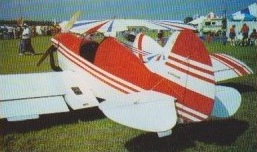
The H-3 Pegasus is a low-wing, open cockpit monoplane by noted lightweight sportplane designer Bert Howland. It features a lightweight fuselage, based on TIG-welded, square aluminum tubing that weighs only 18 pounds. The internal construction of the wings features a cantilevered design that eliminates struts and cables. Powerplant range is 28 hp to 55 hp. The prototype H-3 first flew in 1988 and won the “The Most Innovative Unltralight” award at Sun ‘N Fun 1989. The design was also designated “Best Commercial Ultralight’ at the 1990 event. The H-3 is not an ultralight vehicle as defined in FAR Part 103. Gross weight of the Pegasus is between 500 and 595 lbs. Pegasus plans cost $250 in 2009 and were available from Classic Aero Enterprises.

Speed max: 60 mph.
Cruise: 55 mph.
Stall: 27 mph.
ROC: 600 fpm.
Take-off dist: 200 ft.
Landing dist: 250 ft.
Service ceiling: 8,000 ft.
Engine: Hirth F263, 31 hp.
HP range: 28-65.
Fuel cap: 5 USG.
Weight empty: 252 lbs.
Gross: 555 lbs.
Height: 4.75 ft.
Length15 ft.
Wing span: 25 ft.
Wing area: 110 sq.ft.
Seats: 1.
Landing gear: tail wheel.

Classic Aero H-3
Engine: Hirth 2703, 55 hp
Wing span: 7.6 m
Wing area: 10 sq.m
MAUW: 226 kg
Empty weight: 114 kg
Fuel capacity: 45 lt
Max speed: 100 kph
Cruise speed: 88 kph
Minimum speed: 43 kph
Climb rate: 3 m/s
Fuel consumption: 12 lt/hr
Seats: 1
Plan price (1998): US$250

Howland H-2 Honey-Bee / Classic Aero H-2 Honey-Bee

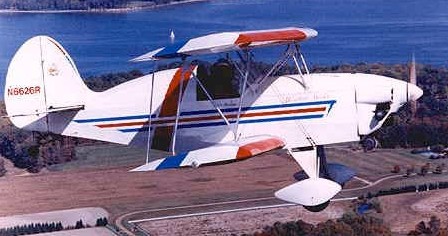
The H-2 Honey Bee is a lightweight aerobatic biplane first flown in 1986. With the H-2, designer Bert Howland introduced the technique of TIG-welding the fuselage from square 6061-T6 aluminum tubing, yielding a strong and rugged fuselage frame that weighs only 24 pounds. The airfoil on the 4 equal span wings is 6-1/2” thick and features 7 aluminum-capped foam ribs per panel with a D-cell leading edge spar and a C-section rear spar. Design load factor is +8g to -6g.
The prototype and early versions used engines in the 40-46 horsepower range, but the designer later moved up to an engine of 65 horsepower as standard. The plans provide a two or four aileron option for those who wish a more responsive roll rate. When that option is selected, together with an engine in the 85 horsepower range or better (such as the Hirth F-30), and with an inverted fuel system, the H-2A is suitable for use in competition aerobatics up to the International Aerobatic Club’s “intermediate level.”
In 1992, an H-2A Honey Bee was named “Best” in the combined Ultralight/Lightplane category during the EAA East Coast Fly-In at Wilmington, Delaware.
The aircraft has been powered with engines from 40 to 95 hp. Homebuilder plans cost $250 in 2009 and consist of 40 engineering drawings and designer construction notes.

Classic Aero H-2A Honey Bee

Speed max: 68-80 mph.
Cruise: 55-68 mph.
Stall: 25-35 mph.
ROC: 400-850 fpm.
Take-off dist: 125-200 ft.
Landing dist: 150-275 ft.
Service ceiling: 8,000 ft.
Engine: Hirth 2705, 65 hp.
HP range: 40-95
Prop: 60-69in.
Fuel cap: 7.5-12 USG.
Weight empty: 335-496 lbs.
Gross: 550-725 lbs.
Length: 15.75 ft.
Wing span: 19 ft.
Wing area: 140 sq.ft.
Seats: 1.
Landing gear: tail wheel.
Design load at 550 lbs: +8,-6g.

Classic Aero H-2A Honey Bee
Engine: Hirth 2706, 65 hp
Wing span: 5.8 m
Wing area: 13 sq.m
Empty weight: 150 kg
MAUW: 270 kg
Fuel capacity: 40 lt
Max speed: 130 kph
Cruise speed: 108 kph
Minimum speed: 48 kph
Climb rate: 6 m/s
Fuel consumption: 12 lt/hr
Seats: 1
Plan price (1998): US$250